Mealybugs on Syngonium Albo: Causes, Checks & Fixes
Quick answer
Mealybugs on Syngonium Albo show up as white cottony clusters in leaf axils, node wrinkles, and stem forks along the vine. First step: move the plant away from others and dab every visible bug with 70% isopropyl alcohol on a cotton swab before any spray.
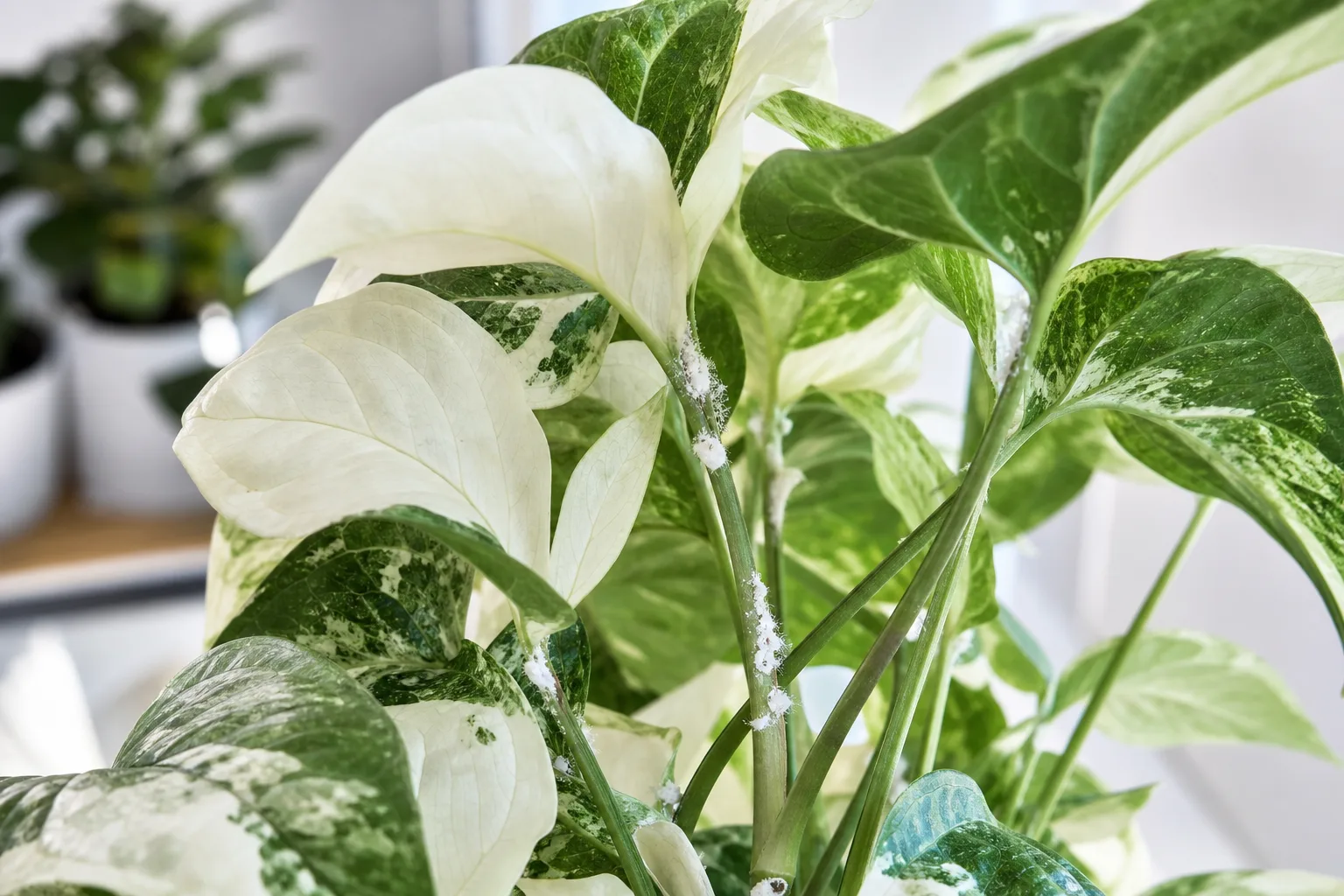
Mealybugs on Syngonium Albo: Causes, Checks & Fixes
This guide covers mealybugs on Syngonium Albo. See also the general Mealybugs guide, watering, and light pages for this plant.
Mealybugs on Syngonium Albo: Causes, Checks & Fixes
Quick answer
Mealybugs on Syngonium Albo (Syngonium podophyllum ‘Albo Variegatum’) look like white cottony or waxy clusters tucked into leaf axils, node wrinkles, and the forks where climbing stems branch. They pierce sap from the vine, weaken slow new growth, and leave sticky honeydew that can turn into black sooty mold on arrow-shaped leaves.
First step: isolate the plant and dab every visible cluster with a cotton swab dipped in 70% isopropyl alcohol. Mealybugs hide in the protected crevices of vining aroids long before the infestation looks obvious on white-and-green foliage. Alcohol kills on contact but does not reach eggs in crevices-so inspection comes before spraying anything else.
What mealybugs look like on Syngonium Albo
The earliest sign is usually cottony white wax at the point where an arrow-shaped leaf meets its stem-not on the flat leaf face, where natural albo variegation can mimic pale patches. On Syngonium Albo, leaves sit close along climbing or trailing stems, so mealybugs often sit in tight axils across several nodes before you notice stickiness or yellowing on white sectors.

Mealybugs symptoms on Syngonium Albo - compare with healthy tissue on the same plant.
Typical signs on Syngonium Albo overview:
- White, fluffy masses at nodes, stem crotches, and the crown where vines emerge from soil
- Slow-moving oval insects under the wax if you poke a cluster with a toothpick
- Shiny, sticky honeydew on leaf surfaces or the pot rim below infested sections
- Black sooty mold growing on dried honeydew
- Yellowing or limp leaves on an otherwise watered vine-sap loss, not drought
- Ants climbing the pot, moss pole, or trellis to harvest honeydew
- Stunted new leaves with distorted variegation when feeding hits growing tips
Newly hatched crawlers lack wax and can walk to neighboring plants, but most colonies stay clustered where leaves overlap on shelf trails and climbing supports. Root-feeding mealybugs are less common on syngonium than on African violet, but check the soil line and inner pot wall if stems look clean yet the plant keeps declining.
Why Syngonium Albo gets mealybugs
Mealybugs are not caused by a syngonium-specific disease-they are sap-feeding insects in the family Pseudococcidae that colonize stressed or newly introduced plants. Indoor conditions favor them: warm room temperatures, no natural predators, and year-round host plants. Philodendron and related aroids are among the houseplants most commonly infested.
This cultivar adds a few risk factors:
Many hiding places. Vining growth packs leaf axils along each stem, especially where the plant climbs a moss pole or trails from a shelf. Mealybugs prefer protected crevices-the same joints where you take stem cuttings. A single missed node can restart an infestation after treatment.
Slow recovery from sap loss. Syngonium Albo grows more slowly than solid-green arrowhead vines because heavy white variegation means less chlorophyll. Heavy feeding on new tips stalls variegated growth for weeks; the plant cannot outgrow damage as quickly as a non-variegated syngonium.
Stress from care mismatches. Low light weakens the plant, reduces variegation, and stretches internodes, leaving more soft tissue exposed. Chronic overwatering-already a primary risk for this aroid-produces soft stems and damp soil surfaces that stressed plants tolerate poorly. Over-application of nitrogen fertilizer combined with regular watering stimulates tender new growth where mealybugs prefer to lay eggs.
Introduction from outside. Mealybugs commonly hitchhike on nursery syngoniums, philodendrons, or outdoor plants brought inside for winter. Skipping quarantine is the most frequent entry route-not random bad luck.
How to confirm the cause
Work through these checks before treating:
- Location of white material - Mealybugs sit in axils and on stems. Mineral dust or hard-water spots wipe off dry; mealybugs leave a waxy residue and often a pink smear when crushed.
- Movement - Disturb a cluster. Mealybugs move slowly; scale stays fixed; powdery mildew rubs off as a powder without insects underneath.
- Stickiness - Honeydew confirms active sap feeding. Dry white patches without stickiness may be old wax shells or unrelated residue.
- Pattern along the vine - Colonies cluster at nodes and stem forks. Uniform stippling across leaf faces points to spider mites instead.
- Plant stress context - Is the pot wet while leaves yellow? That combination fits mealybug sap loss plus possible overwatering stress-not simple underwatering.
- Nearby plants - Inspect other aroids in the same room. Shared colonies mean isolation failed or crawlers spread.
If you find firm brown or tan bumps glued flat to stems with no cotton, suspect scale insects instead-treatment overlaps but alcohol dabbing alone may not suffice on mature scale covers.
First fix for Syngonium Albo
Move the plant away from other houseplants and dab every visible mealybug with 70% isopropyl alcohol on a cotton swab.
Work stem by stem. Lift each arrow-shaped leaf and swab the axil behind it. Pay extra attention to the crown where vines emerge from soil, moss-pole ties, and anywhere stems fork. Crush egg masses-the dense white ovisacs-when you see them.
Do not shower the plant or spray soap on day one until you have mapped how far the infestation spread. Soaking soil while hunting stem pests adds unnecessary moisture to an aroid already prone to rot when mix stays wet. Do not repot or fertilize during active infestation.
Test alcohol on one leaf if you are unsure about sensitivity; wait 24 hours before treating the whole plant.
Step-by-step recovery
After the alcohol pass, continue in this order based on severity:
Light infestation (a few clusters on one vine)
- Repeat alcohol dabbing every three to five days for two weeks, checking new axils each time.
- Wipe honeydew off leaves with a damp cloth so sooty mold does not spread.
- Keep the plant isolated until you see no new cottony masses for 14 consecutive days-eggs hatch on staggered schedules indoors.
Moderate infestation (multiple stems or sticky leaves)
- Complete a thorough alcohol dab session first.
- Follow with insecticidal soap or horticultural oil labeled for houseplants, covering undersides of leaves, all axils, and stem joints. Soaps and oils kill on contact only; they have no residual action.
- Repeat every five to seven days for two to three cycles to catch crawlers as they emerge.
- Spray in a well-ventilated area and let foliage dry before returning the plant to its display spot.
Heavy infestation (colonies throughout, ants present, stunted new growth)
- Prune the worst-coated vine sections with clean scissors-bag and discard cuttings, do not compost indoors.
- Run the alcohol and soap sequence above on what remains.
- If stems are still firm and roots healthy, persist with weekly checks for a month. If most of the plant is coated and new growth has stopped despite treatment, discarding may protect the rest of your collection.
Hold fertilizer until new variegated leaves look normal for two weeks. Syngonium Albo does not need extra nitrogen while recovering from sap loss.
Recovery timeline
First week: Cottony masses should shrink after alcohol dabbing; sticky leaves may still feel tacky until you wipe them.
Two to three weeks: No new white clusters on previously cleaned axils is the key milestone. Crawlers hatch continuously indoors, so a single treatment never finishes the job.
Four to eight weeks: New variegated arrow leaves should emerge without wax or stunting on a saved plant. Because Syngonium Albo is a slow grower, full vine recovery takes longer than on solid-green syngonium-judge success by clean new nodes, not instant fullness.
Worsening signs: Spreading colonies after three soap cycles, blackening stem bases (possible rot from over-wetting during treatment), or total loss of new growth mean escalation or disposal.
Old yellow leaves will not green up again. Trim them for hygiene once the pest is controlled.
Lookalike symptoms
- Soft brown scale - Flat or domed bumps fixed to stems; scrape test reveals a shell, not fluff. Alcohol helps but may need repeated scraping.
- Powdery mildew - White dust on leaf faces that rubs off evenly; no insects or honeydew underneath.
- Hard-water or dust residue - Dry white film on leaf tops; wipes away without pink smear or wax threads.
- Variegation - Natural white sectors are flat on the leaf blade, not raised cotton in axils.
- Spider mites - Fine stippling and webbing on leaf undersides, not clustered wax at nodes.
- Fungus gnats - Small flies above wet soil; unrelated to stem cotton unless you also have root mealybugs at the soil line.
What not to do
Do not return the plant to its shelf after one alcohol session-eggs in hidden axils hatch within days.
Avoid drenching the soil with alcohol or soap unless you confirmed root mealybugs; syngonium roots suffer in saturated, treated mix.
Do not boost fertilizer to “help recovery”-soft new growth attracts another wave of pests.
Skip systemic insecticides on casually kept houseplants unless you accept long residual chemicals and label restrictions; they are reserved for high-value plants that cannot be replaced.
Do not mist heavily while honeydew and sooty mold are present-wet foliage in moderate light invites fungal leaf spots on thin variegated leaves.
Wear gloves when pruning heavily infested stems; Syngonium Albo is toxic to cats and dogs if chewed, and sap can irritate skin.
Prevention on Syngonium Albo
- Quarantine new plants for at least two weeks before placing them near climbing vines.
- Inspect axils during weekly watering-rotate pots and moss poles so every node gets light and your eyes.
- Maintain bright indirect light so variegation stays strong and growth stays compact, not stretched and soft.
- Water when the top inch of soil dries-not on a schedule that leaves the aroid mix sitting wet.
- Avoid heavy nitrogen feeds during spring push; monthly half-strength fertilizer is enough for this slow cultivar.
- Wipe dust from leaves occasionally so you can spot wax early on white patches.
- Keep pets away from treated plants until sprays dry; arrowhead vine contains calcium oxalate crystals harmful if ingested.
When to worry
Escalate or consider discarding when:
- Mealybugs reappear on every stem after three full treatment cycles
- Ants persist on the pot despite cleaning honeydew-they protect colonies
- Stem bases soften while soil stays damp-pest stress plus rot overlap
- No clean new growth appears within two months on a plant that lost most of its leaves
A lightly infested Syngonium Albo with firm stems and healthy roots almost always saves with patient axil-by-axil work. A plant coated head to toe in a crowded collection may cost less to replace than to risk spreading crawlers to every aroid in the room.
Conclusion
Mealybugs on Syngonium Albo reward methodical inspection more than a single heroic spray. The variegated climbing vine hides pests in leaf axils until honeydew or stunted tips give them away. Isolate first, dab with alcohol on every cluster you can reach, then repeat on a schedule until two weeks pass with no new cotton. Match watering and light to this slow cultivar’s needs so recovered growth comes back clean-not stressed and vulnerable to the next hitchhiker.
When to use this page vs other Syngonium Albo guides
- Syngonium Albo watering guide - Use for routine moisture checks before assuming mealybugs is the main issue.
- Syngonium Albo problems hub - Browse all 1 common issues on this species.
- Yellow Leaves on Syngonium Albo - Different entry point when symptoms overlap with mealybugs.