Wilting on Syngonium Albo: Causes, Checks & Fixes
Quick answer
Wilting on Syngonium Albo looks the same for opposite problems-lift the pot before you water. A light dry pot means underwatering; a heavy wet pot with a softening stem base means stop watering and inspect roots.

Wilting on Syngonium Albo: Causes, Checks & Fixes
This guide covers wilting on Syngonium Albo. See also the general Wilting guide, watering, and light pages for this plant.
Wilting on Syngonium Albo: Causes, Checks & Fixes
Quick answer
Wilting on Syngonium Albo is one of the most misleading symptoms in houseplant care because limp arrow-shaped leaves can mean the roots are too dry or too wet and dying. The white-splashed foliage collapses the same way in both cases, so the leaves cannot tell you which problem you have.
First step: lift the pot and check moisture in the top inch before you change anything. A light, dry pot with firm stems means the plant needs a deep drink. A heavy, wet pot-especially with a softening stem base-means stop watering and inspect roots. Adding water to a wet, wilted syngonium is the mistake that turns recoverable stress into fatal stem rot-plants exposed to excess moisture show wilting even when the mix is saturated.
What wilting looks like on Syngonium Albo
On this variegated arrowhead vine, wilt shows up as loss of turgor-the arrow-shaped leaves hang instead of holding their usual angle, and soft stems may lean or fold. The pattern matters more than the fact that something looks sad.
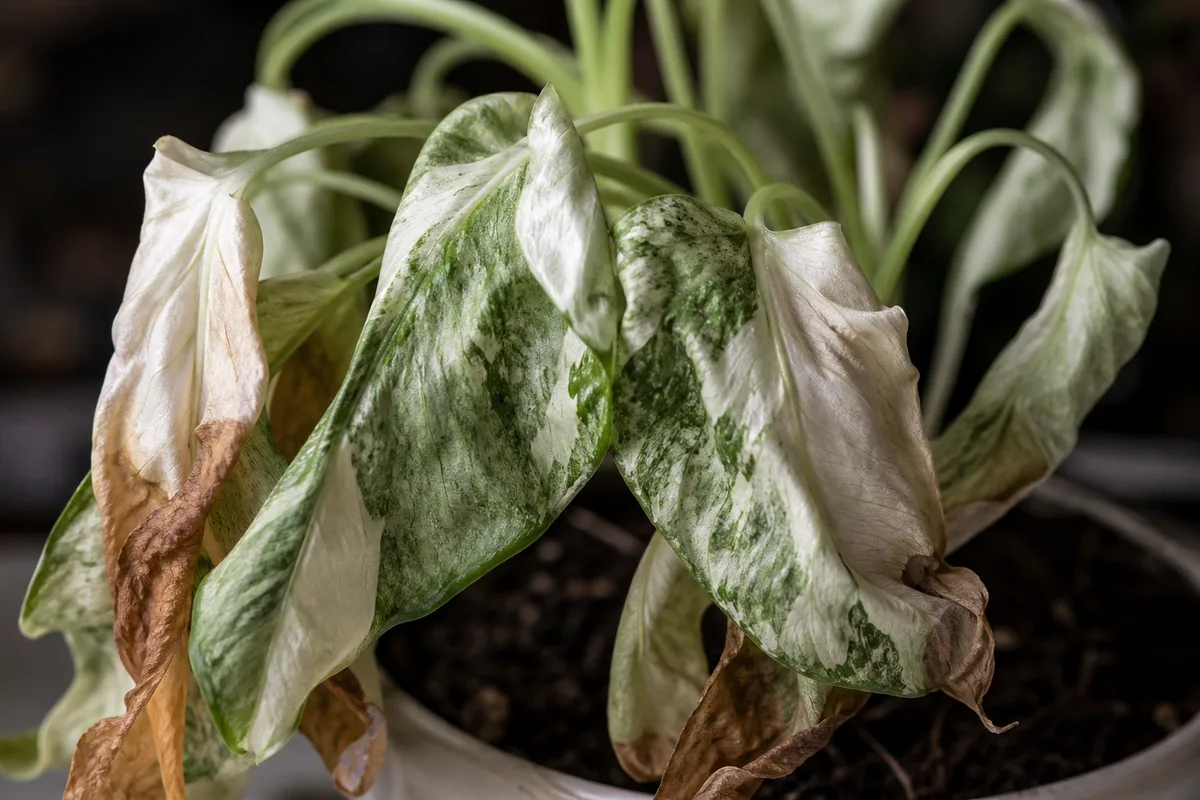
Wilting symptoms on Syngonium Albo - compare with healthy tissue on the same plant.
Dry-wilt signs:
- Pot feels noticeably lighter than after a recent watering
- Top inch of mix is dry; lower mix may still hold some moisture
- White variegated sectors turn crisp or papery before green tissue
- Leaf edges curl inward or brown at the margins
- Stems stay firm when you pinch the base
- Plant often perks up within hours after a thorough soak
Wet-wilt signs:
- Pot stays heavy for days after the last watering
- Mix feels soggy at the surface or smells sour near the drainage hole
- Lower leaves yellow while the plant still looks limp
- Stem base at the soil line softens, darkens, or feels mushy
- White patches may brown or soften from the base upward
- No improvement after watering-in fact, wilt may worsen
Temporary wilt after a care change:
- Occurs within a few days of Syngonium Albo repotting guide, a sudden move to brighter light, or a cold draft
- Stems remain firm and soil moisture reads normal
- Improvement within 24 to 72 hours once conditions stabilize
Syngonium Albo is not a succulent-it cannot store much water in its stems-so it shows water stress quickly. Variegated tissue has less chlorophyll and often displays stress before solid-green sections, which is why collectors sometimes misread crisp white edges as a humidity problem when the real issue is inconsistent watering.
Why Syngonium Albo wilts
Understanding why this aroid wilts helps you pick the right fix instead of cycling through random care changes.
Underwatering and dry root zones
When the mix dries too far or too often, fine root hairs die back and cannot move water fast enough to support transpiration. Syngonium Albo light guide, warm rooms, small pots, and airy aroid mix all speed dry-down. Collectors sometimes underwater albo cuttings or newly rooted plants because they fear rot-but chronic dryness produces the same limp leaves as a single missed watering, just slower.
Hydrophobic mix compounds the problem. If soil pulls away from pot walls and water runs straight through the drainage hole, the root ball may stay dry at the core while the surface looks briefly damp.
Overwatering and root oxygen loss
Syngonium podophyllum is easily grown indoors but needs well-drained potting media and cannot sit in stale water. Excess moisture reduces oxygen in the soil, damages fine roots, and triggers rot fungi. The plant then wilts even though water is abundant-a paradox that catches many growers who assume limp leaves always mean thirst.
Low light slows water use, so albo in dim corners stays wet longer and overwatering risk rises. Oversized pots, dense peat-heavy mix without bark or perlite, blocked drainage holes, and saucers left full of water all keep roots anaerobic. White variegation does not need constantly wet soil to stay white; soggy roots usually destroy nodes before they protect foliage.
Root rot progression
Once rot fungi infect roots, transport fails. Lower leaves yellow, stems soften at the base, and wilt spreads despite wet mix. This is the urgent pattern-delay makes crown collapse more likely.
Heat and light stress
Moving a syngonium suddenly into stronger filtered light or placing it near a hot window increases transpiration faster than roots can supply water. Afternoon wilt that recovers by evening often fits this pattern when soil moisture is adequate and stems stay firm. Acclimating over one to two weeks prevents the shock.
Repotting and transplant shock
Disturbed roots after repotting may underperform for several days, especially if the plant was watered heavily right after the move or placed in a pot much larger than the root ball. Temporary wilt with firm stems and normal moisture usually resolves once roots settle-provided the mix is not kept wet “to help it recover.”
How to confirm the cause
Work through these checks in order. Stop as soon as one pattern clearly fits.
- Pot weight - Lift the container for changes in weight. Light and dry suggests underwatering; heavy and wet suggests root stress or rot.
- Top-inch moisture - Push a finger into the upper layer. Dry with firm stems confirms dry wilt. Wet or cool with limp leaves confirms you should not add more water yet.
- Stem base firmness - Pinch the lowest inch of stem above the soil. Mushy or collapsing tissue means inspect roots immediately.
- Smell and drainage - Sour odor from the drainage hole or water sitting in the saucer for days supports overwatering or rot.
- Leaf pattern - Crispy white edges with dry mix point to drought. Yellow lower leaves with wet mix point to failing roots.
- Recent history - Note repotting, a light move, travel, or a schedule change within the past week. Temporary wilt from shock looks different from progressive wet wilt.
If dry and wet signs conflict-light pot but soft stem, or wet surface with dry core-unpot carefully and look at root color and texture. Healthy roots should be light-colored and firm. Dark, mushy roots that slip off a central strand confirm rot.
First fix for Syngonium Albo
Lift the pot, confirm moisture, then act on that result alone-do not water by habit.
- If the pot is light and the top inch is dry: Water thoroughly until excess drains from the bottom, then empty the saucer. If media has pulled away from the sides of the pot, bottom-soak the pot in room-temperature water for 20 to 30 minutes, then drain completely.
- If the pot is heavy and the mix is wet: Do not water. Move the plant to bright indirect light with good airflow so the mix dries. If the stem base is soft or roots smell sour, unpot, trim mushy roots with clean shears, let cuts air-dry briefly, and repot into fresh chunky aroid mix in a appropriately sized pot with open drainage.
Do not fertilize, mist heavily, or repot on day one unless you have confirmed mushy roots or failed mix. Do not move a wilted plant into direct sun hoping to “dry it out”-that burns variegated tissue and increases water demand.
Step-by-step recovery
After the first fix, follow the path that matches your diagnosis.
Recovering from dry wilt
- Soak until the full root ball is evenly moist, then drain.
- Keep bright indirect light and moderate humidity while the plant rehydrates.
- Remove only leaves that stay fully collapsed and brown after 48 hours-living tissue may firm up.
- Resume checking the top inch before the next watering; do not jump to a fixed weekly schedule.
- If dry wilt recurs often, assess whether the pot is too small, light is too strong, or mix is too airy for your Syngonium Albo watering guide.
Recovering from wet wilt and root rot
- Stop all watering until you have inspected roots.
- Unpot gently and rinse away old mix to see root color.
- Trim brown, mushy roots back to firm white tissue; sterilize shears between cuts.
- Let trimmed roots and any stem cuts callus for a few hours in air-not sealed in wet mix.
- Repot into fresh, sterile, well-draining aroid mix; use a pot only slightly larger than the trimmed root mass.
- Water once lightly to settle mix, then let dry-down begin before the next full soak.
- If the stem base is already black and hollow, salvage firm nodes as cuttings rather than trying to save the whole plant.
Wear gloves when handling cut tissue-syngonium sap contains calcium oxalate crystals that irritate skin and the plant is toxic to pets if chewed.
Recovering from temporary shock
- Hold care steady: normal light target, no extra fertilizer, no second repot.
- Keep soil moisture in the usual partial dry-down range-not wet, not bone dry.
- Wait 72 hours before deciding the plant is failing; shock wilt often resolves without dramatic intervention.
Recovery timeline
Mild dehydration usually shows firmer leaves within a few hours to one day after proper soaking. Moderate underwatering with some crispy white edges may take one to two weeks for clean new growth to replace damaged tissue; old browned variegation rarely reverts to white.
Wet wilt from early root damage can stabilize in one to two weeks after trim-and-repot if the stem base stays firm. Judge success by new unfurling leaves and firm stems, not by old yellow foliage standing back up. Severe crown involvement may take three weeks or longer and may require propagation from healthy nodes.
Temporary shock wilt often improves within 24 to 72 hours once light and moisture stay consistent.
Lookalike symptoms to rule out
Drooping without full wilt on lower leaves only, with otherwise firm stems and normal moisture, may be natural aging or slight underwatering-not the same as whole-plant collapse.
Low humidity stress can crisp white leaf edges on albo, but stems usually stay firm and soil moisture reads normal. Raise humidity if edges brown in dry winter air, but still check the pot-humidity alone does not fix wet roots.
Spider mites cause stippling and fine webbing; leaves may curl but typically do not show the pot-weight split between dry and wet wilt. Inspect undersides if humidity is high yet edges still crisp.
Cold damage after exposure below roughly 50°F (10°C) can blacken soft tissue overnight. That is tissue death, not reversible wilt-trim damaged sections after the plant stabilizes in warm conditions.
Mistakes to avoid
Do not water every wilt without checking soil first-the most common fatal error on syngonium is watering an already wet plant.
Do not keep soil constantly moist to “protect” white variegation; albo needs oxygen at the roots like any aroid.
Do not repot repeatedly while the plant is limp unless roots are confirmed mushy; extra disturbance slows recovery.
Do not place a wilted plant in direct sun; variegated arrowhead leaves burn quickly and lose more water.
Do not fertilize a stressed plant hoping to push new growth-feed only after watering rhythm and roots are stable.
Do not ignore a soft stem base while waiting for leaves to perk up; crown rot moves faster than foliage recovery.
Syngonium Albo care cross-check
Wilting often traces back to a mismatch between how fast Syngonium Albo overview uses water and how you supply it. Bright indirect light keeps variegation stable and helps the pot dry on a predictable cycle. Well-draining aroid mix with bark and perlite prevents the anaerobic conditions that cause wet wilt. Water when the top inch dries during active growth, and reduce frequency when light and temperatures drop in winter.
Moderate to high humidity around 50 to 65 percent supports leaf texture but does not replace correct root-zone moisture. After purchase or repotting, give the plant two to three weeks of boring, consistent care before changing multiple variables at once.
How to prevent wilting next time
Build a moisture-check habit instead of a calendar habit. Lift the pot at the same time every few days until you learn its light versus heavy feel. Always use containers with drainage holes and empty saucers after watering. Match pot size to the root mass-oversized pots stay wet too long for slow-growing albo.
Acclimate to brighter spots gradually after moving the plant. Quarantine new purchases and inspect roots if a pot arrives unusually heavy or smells off. Separate infected plants if you confirm rot, and take cuttings only from firm, healthy tissue.
When to worry
Seek aggressive intervention-not more water-when wilt persists more than 48 hours after a confirmed deep soak on dry soil, when wilt worsens despite wet soil, when the stem base softens or blackens, or when most roots are mushy and slip away from the core. At that stage, propagation from firm nodes above healthy tissue may be the realistic save path.
If stems stay firm, roots look pale, and wilt resolved after one corrective watering, you are likely past the urgent window-focus on prevention rather than emergency repotting.
When to use this page vs other Syngonium Albo guides
- Syngonium Albo watering guide - Use for routine moisture checks before assuming wilting is the main issue.
- Syngonium Albo problems hub - Browse all 1 common issues on this species.
- Yellow Leaves on Syngonium Albo - Different entry point when symptoms overlap with wilting.