Drooping Leaves on Water Lettuce: Causes, Checks & Fixes
Quick answer
Drooping water lettuce rosettes usually mean heat stress, overcrowding, insufficient light, or poor water quality-not leaf disease. First step: check water temperature, spacing, and whether roots still hang freely in clean dechlorinated water.
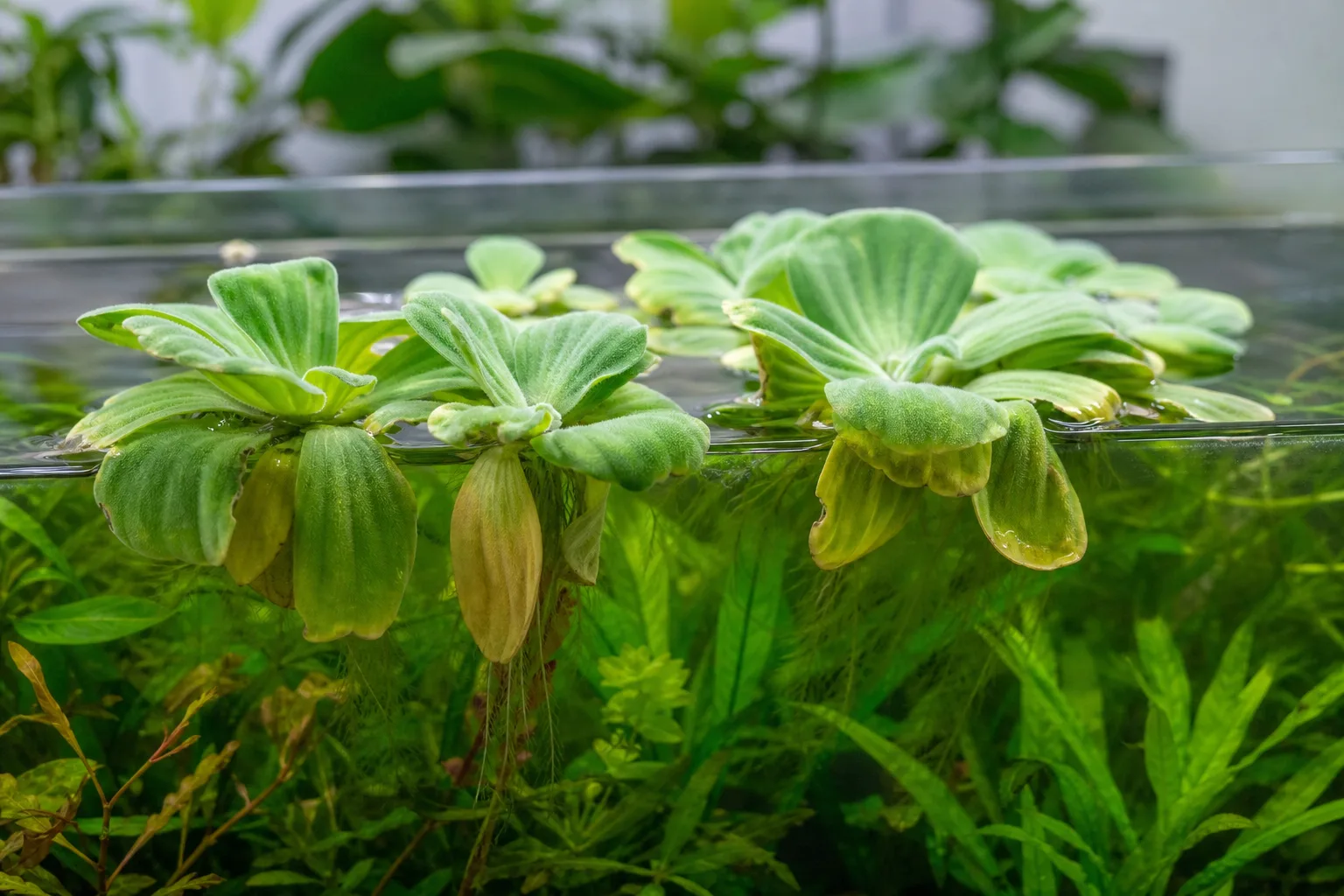
Drooping Leaves on Water Lettuce: Causes, Checks & Fixes
This guide covers drooping leaves on Water Lettuce. See also the general Drooping Leaves guide, watering, and light pages for this plant.
Drooping Leaves on Water Lettuce: Causes, Checks & Fixes
Quick answer
Drooping leaves on water lettuce (Pistia stratiotes) mean the rosette cannot maintain turgor-the soft floating leaves lose rigidity and sag, curl under, or sink partially. Water lettuce has no soil; it lives entirely on water chemistry, temperature, light, and root access to dissolved oxygen. UF/IFAS describes it as a free-floating aquatic plant that spreads rapidly in warm nutrient-rich water.
First step: check water temperature, rosette spacing, and root condition in clean dechlorinated water. Do not dump fertilizer into a stressed tank on day one. Fix heat, crowding, or water quality first.
What drooping leaves look like on water lettuce
Healthy water lettuce forms a flat rosette of pale green leaves with a quilted texture, floating on the surface with feathery roots trailing below. Drooping shows up as:
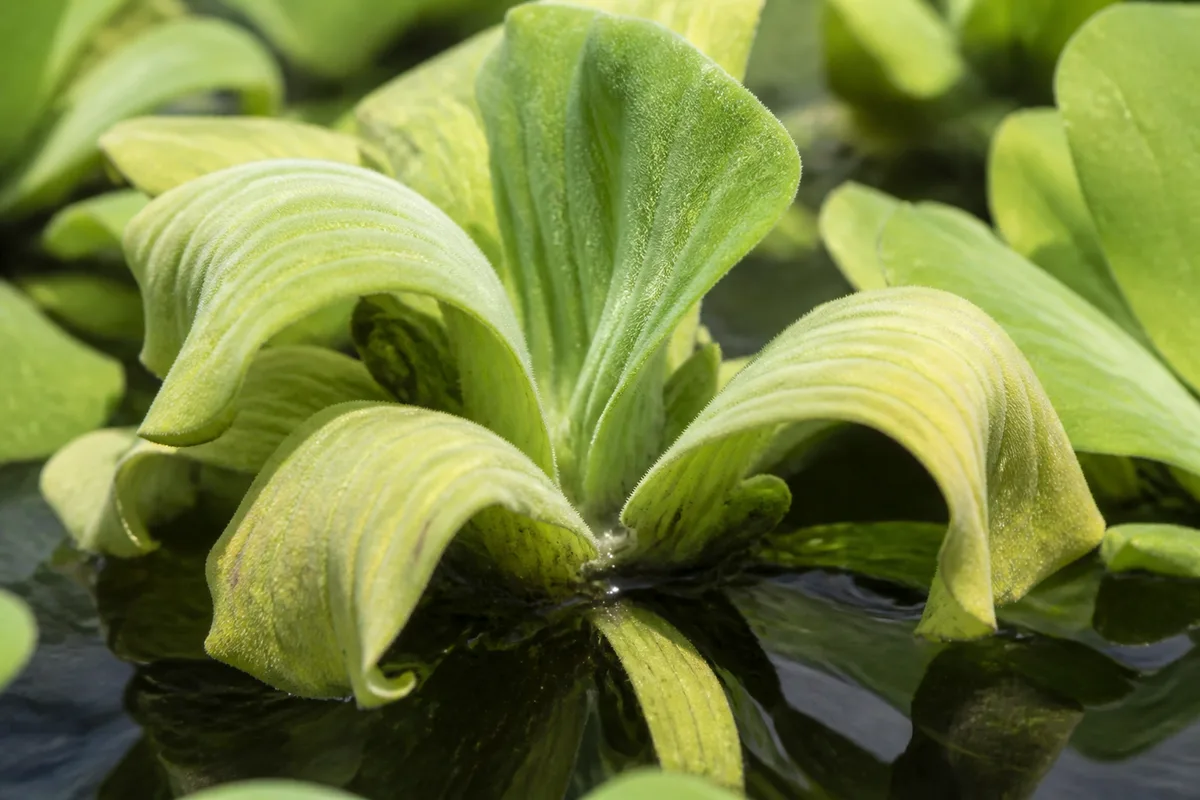
Drooping Leaves symptoms on Water Lettuce - compare with healthy tissue on the same plant.
- Limp, folded, or curled leaves that no longer lie flat on the water surface
- Rosettes tilting or partially sinking instead of floating level
- Yellowing or translucent centers on stressed plants
- Brown or mushy root tips when oxygen or water quality fails
- Plants stacked on top of each other in overcrowded bowls or pond corners
- Afternoon wilt that recovers overnight-classic heat stress signature
Water lettuce is native to tropical and subtropical fresh water. Cold tap water or unheated indoor bowls below 18°C (64°F) can shock roots and cause immediate droop unrelated to disease.
Why water lettuce droops
Heat stress and afternoon wilt
Water lettuce thrives in warm water. UF/IFAS notes optimal growth in warm, nutrient-rich water. Small uncovered bowls on sunny windowsills can exceed 30°C (86°F) by afternoon. Leaves lose turgor in heat; they often recover overnight when water cools-unless stress repeats daily.
Overcrowding and self-shading
Water lettuce reproduces fast. When rosettes stack three deep, lower plants are shaded, roots tangle, and competition for light and oxygen increases. The bottom layer droops first while top plants still look fine.
Insufficient light
In dim indoor tanks, rosettes stay small and weak. Moderate to bright aquarium or pond light supports the photosynthesis that keeps leaves firm. Low light produces pale, floppy growth that droops at the slightest heat spike.
Poor water quality and stagnant conditions
Chlorinated tap water, stagnant unfiltered bowls, decomposing debris, and algae blooms reduce dissolved oxygen at the root zone. Roots turn brown; rosettes sag. USGS notes water lettuce forms dense mats that can alter water chemistry-tight mats in small containers amplify stagnation.
Nutrient imbalance (secondary)
Water lettuce pulls nutrients from water. Completely pure distilled water with zero minerals can produce pale weak growth over weeks. Excess organic waste from overfeeding fish causes algae and root decline-not a first-day fix with more fertilizer.
Cold shock
Sudden exposure to cold tap water or outdoor ponds below tolerance causes rapid wilt. Tropical floating plants do not harden off like terrestrial herbs.
How to confirm the cause
Work through these checks in order:
- Water temperature - Measure at midday. Above 32°C (90°F) suggests heat wilt; below 18°C (64°F) suggests cold shock.
- Spacing - Can each rosette float flat without sitting on another? Count rosettes per liter of water.
- Root color - Healthy roots are pale green-white and feathery. Brown, black, or slimy roots mean water quality or oxygen failure.
- Water smell and clarity - Sour smell or thick algae film points to stagnation. Clear dechlorinated water with gentle movement is the target.
- Light level - Note hours of direct or strong aquarium light. Dim corners produce chronically weak rosettes.
- Recovery pattern - Afternoon sag that firms up by morning is heat; permanent sag with brown roots is environmental decline.
The first fix to try
Thin overcrowded rosettes, move the container to moderate bright light, and refresh with clean dechlorinated water at 21–27°C (70–80°F). Remove plants with brown mushy roots. Give remaining rosettes open surface area so each floats flat with roots trailing freely.
Do not add fertilizer until plants hold turgor for several days.
Step-by-step recovery
- Remove decaying rosettes - Pull out plants with black slimy roots or disintegrating centers. They will not recover and foul the water.
- Thin the mat - Leave one rosette per roughly 15–20 cm of open surface in small bowls; more space in aquariums.
- Refresh water - Partial change with dechlorinated water at room temperature to warm. Avoid ice-cold tap shocks.
- Improve light - Move to a bright window or add aquarium lighting 8–10 hours daily for indoor culture.
- Add gentle movement - A small air stone, filter return, or fountain surface ripple increases oxygen at roots without blasting rosettes underwater.
- Control heat - Shade afternoon sun on small bowls; avoid metal containers that heat fast on windowsills.
- Stabilize nutrients - In fish tanks, let fish waste supply nutrients. In plant-only bowls, a drop of aquatic fertilizer after recovery is optional-never dose a collapsed colony.
Recovery timeline
| Stage | What to expect |
|---|---|
| 24 hours | Heat wilt often recovers overnight when water cools |
| 3–5 days | Remaining rosettes should float flat if roots are healthy |
| 1–2 weeks | New daughter rosettes emerge from centers in warm bright water |
| Ongoing | Thin weekly or the mat will overcrowd and droop again |
Old yellowed outer leaves do not green up-remove them and judge by new center growth.
Lookalike symptoms
| Pattern | What you see | Likely cause |
|---|---|---|
| Afternoon heat wilt | Sag by day, firm by morning | High water temperature |
| Overcrowding | Bottom layer droops, top fine | Self-shading and root tangle |
| Root rot in water | Brown slimy roots, sour smell | Stagnant poor-quality water |
| Low light weakness | Pale small rosettes, chronic flop | Insufficient light |
| Cold shock | Sudden wilt after water change | Water too cold |
Mistakes to avoid
- Adding fertilizer to a collapsed tank - Fix water first.
- Keeping every daughter plant - Thin aggressively; water lettuce spreads exponentially.
- Deep submersion - Rosettes must float; pushing them underwater drowns the crown.
- Small unshaded bowls on hot windowsills - They cook by afternoon.
- Ignoring fish overfeeding - Excess food rots and crashes water quality.
When to worry
Treat as urgent when:
- Roots turn black and slimy across most rosettes
- Water smells sour within days of a change
- The entire mat sinks and disintegrates
- Algae coats every surface and oxygen crashes
In those cases, salvage a few healthy rosettes into a clean container rather than trying to save the whole mat.
How to prevent drooping next time
Thin free-floating mats weekly before they stack. Keep water in the warm range water lettuce expects. Provide moderate to bright light and gentle surface movement. Partial water changes beat letting small bowls go stagnant. Never crowd a shallow decorative bowl-use an open aquarium or pond section where rosettes can spread flat.
When to use this page vs other Water Lettuce guides
- Water Lettuce watering guide - Use for routine moisture checks before assuming drooping leaves is the main issue.
- Water Lettuce problems hub - Browse all 3 common issues on this species.