Whiteflies on ZZ Plant: Causes, Checks & Fixes
Quick answer
Whiteflies on ZZ Plant show up as tiny moth-like insects on leaflet undersides and a white cloud when you brush arching petioles. First step: isolate the plant the same day you see flying insects, then wash every reachable leaflet underside with lukewarm water before applying repeat treatments.
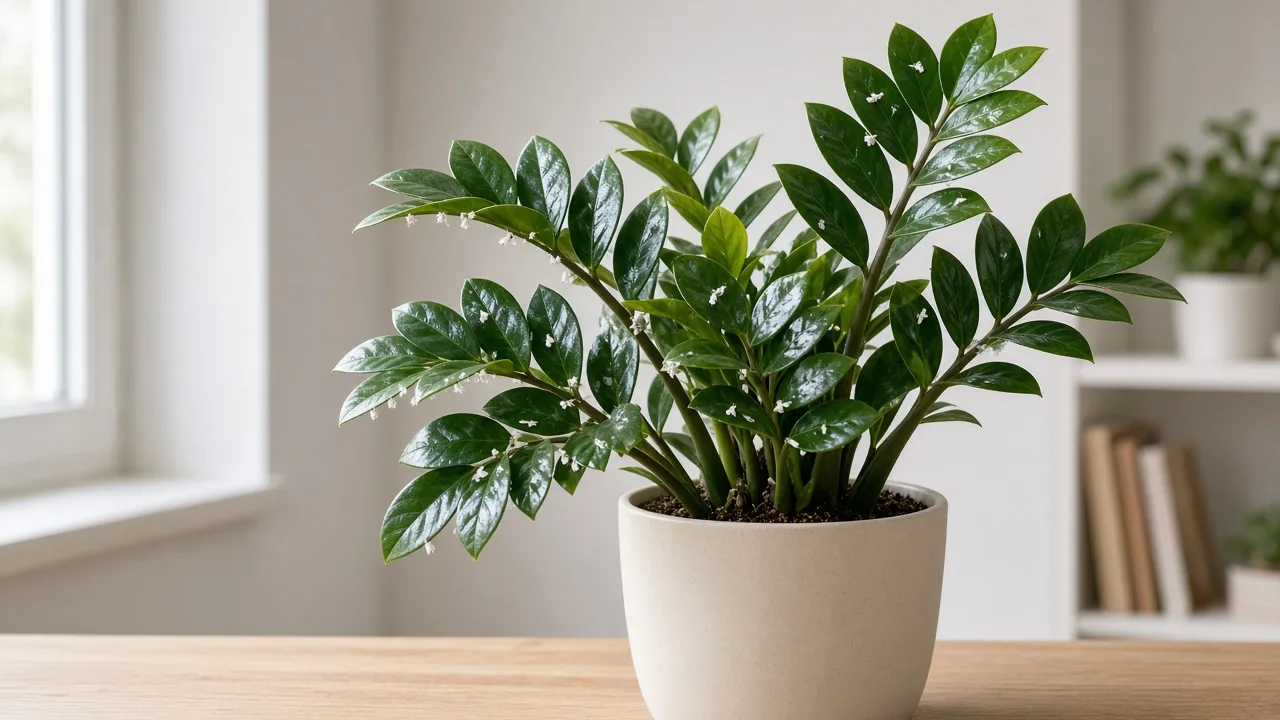
Whiteflies on ZZ Plant: Causes, Checks & Fixes
This guide covers whiteflies on ZZ Plant. See also the general Whiteflies guide, watering, and light pages for this plant.
Whiteflies on ZZ Plant: Causes, Checks & Fixes
Quick answer
Whiteflies are piercing-sucking insects that feed on leaf undersides. On ZZ Plant (Zamioculcas zamiifolia), adults look like tiny white moths tucked under glossy oval leaflets along arching petioles. Disturb the foliage and a white cloud of insects rises before they resettle. Immobile nymphs look like flat pale disks glued to the same surfaces.
For general whitefly biology and life cycle, see our whiteflies guide. On ZZ Plant, pests concentrate on the undersides of glossy leaflets, along the rachis where leaflets meet the thick petiole, and at the rhizome crown where soft new shoots emerge—places a quick glance at the shiny upper canopy will miss.
First step: isolate the plant the same day you see flying white insects, then wash every reachable leaflet underside with lukewarm water.
What whiteflies look like on ZZ Plant
Healthy ZZ plants carry thick, arching petioles that rise directly from underground rhizomes—each petiole holds glossy, oval leaflets with a waxy upper surface. Whiteflies exploit the flat undersides of those leaflets and the tight spaces where multiple petioles crowd together at the rhizome crown.
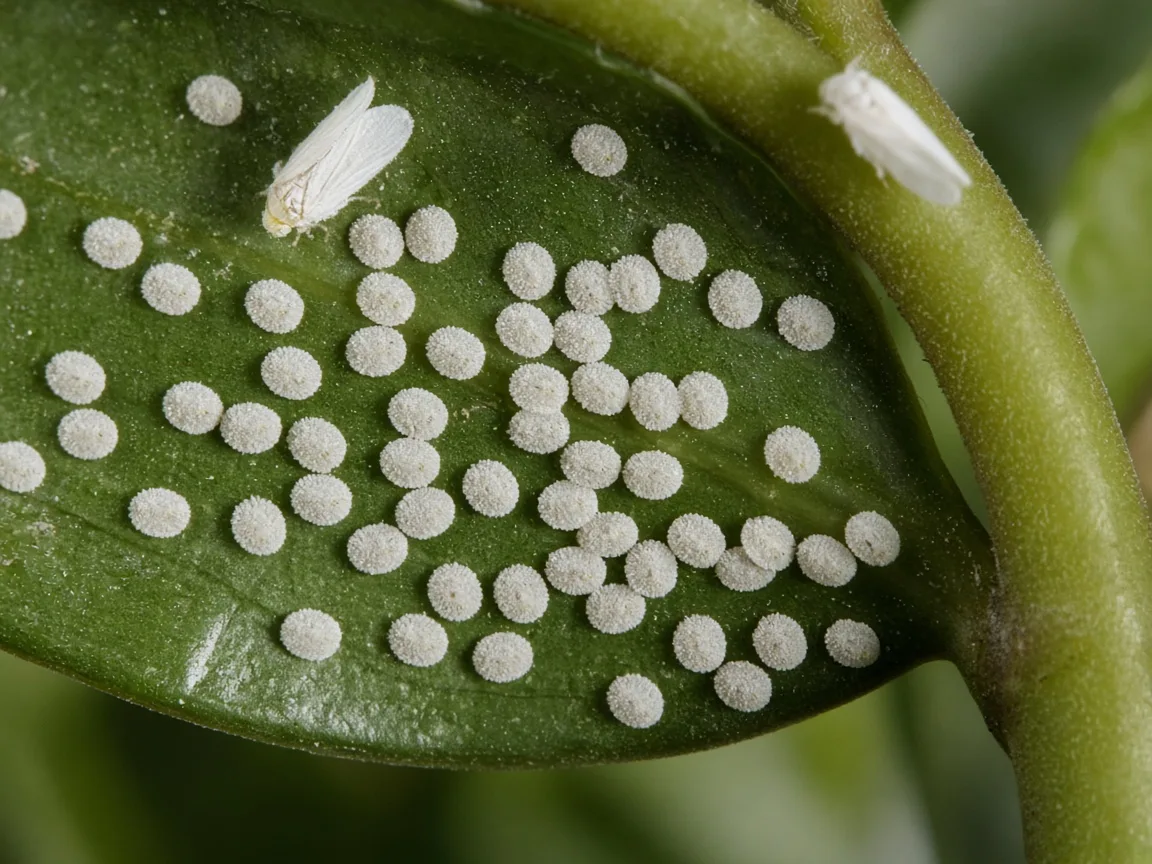
Whitefly nymph disks on a ZZ Plant leaflet underside—flat pale ovals distinct from the glossy green tissue above.
Typical signs:
- A sudden white cloud when you water, move, or tap arching petioles
- Tiny moth-like adults, about 1/16 inch long, resting on leaflet undersides
- Flat, oval, pale nymphs glued to the same surfaces after crawlers settle
- Sticky, shiny honeydew on upper leaflets, pot rims, or shelves below
- Black sooty mold growing on honeydew-coated foliage
- Yellowing, mottling, or stunted new shoots when feeding is heavy
Whiteflies differ from spider mites on ZZ Plant, which cause fine stippling and silk webbing without flying adults. They differ from mealybugs, which form cottony wax clusters at petiole bases and rhizome crowns rather than flat disks across leaflet backs. Thrips leave silvery streaks and distorted young growth, not a white flying cloud.
Unlike fluoride brown tips, whitefly damage comes with live insects, stickiness, or sooty mold—not isolated tip burn on otherwise clean leaflets.
Why ZZ Plant gets whiteflies
Whiteflies are not unique to ZZ plants, but this species’ arching architecture, slow growth, and forgiving care rhythm make infestations easy to overlook.
Glossy upper surfaces hide the colony. ZZ leaflets shine from across the room while nymphs feed underneath. The waxy cuticle on upper leaflet faces can look pristine even when undersides carry honeydew and flat nymph disks.
Infrequent handling windows. Because ZZ needs water only when soil is completely dry throughout—often every two to four weeks—you may not disturb petioles often enough to catch the first white cloud. Pests benefit from plants that sit undisturbed on office shelves.
Rhizome-crown hiding spots. New shoots emerge soft at the soil line where thick petioles radiate from the rhizome. Whiteflies and aphids both favor tender tissue at the crown before spreading to mature arching petioles.
Indoor warmth with no predators. Homes stay warm enough for whiteflies to reproduce throughout the year. Outdoor natural enemies do not reach indoor ZZ plants unless you deliberately release beneficials.
Nursery hitchhikers and crowded plant shelves. New stock often arrives with eggs on leaflet undersides. Inspect new plants before placing them among others. Crowded shelves of ZZ, snake plant, and pothos let adults fly between pots on shared watering days.
Do not overwater in response. Honeydew sticky leaflets are not cured by soggy soil. Increasing water invites overwatering and rhizome rot while whiteflies persist on dry upper foliage.
How to confirm the cause
Work through these checks in order:
- Disturbance test — Tap or gently shake an arching petiole over white paper. Adults fly up and resettle on undersides. That cloud is the fastest whitefly confirmation on ZZ Plant.
- Underside inspection — Lift each thick petiole with bright sidelight. Look for flat pale nymph disks and powdery white adults along the rachis and leaflet bases.
- Rhizome crown check — Crouch at soil level. Inspect where petioles emerge from the rhizome and any new shoots pushing up—colonies often start on young tissue before spreading to mature arching petioles.
- Honeydew and ants — Sticky residue on glossy upper leaflets or ant trails on the pot rim strongly support sap-feeder diagnosis.
- Neighbor scan — Check pots on the same shelf. Whiteflies spread by flight and contact between touching arching petioles.
- Stress cross-check — Confirm soil is not waterlogged and rhizomes feel firm. Uniform yellow leaflets from overwatering alone lack flying insects and flat nymph disks; both problems can overlap on one plant.
If you see flying white adults plus nymphs on undersides with honeydew, whiteflies are confirmed. Treat before populations overlap multiple life stages across the whole plant.
First fix for ZZ Plant
Isolate the plant the same day you see flying white insects, then wash every reachable leaflet underside with lukewarm water.
Isolate infested plants away from others immediately—whiteflies fly short distances and hitchhike on hands, tools, and touching leaves.
Wash undersides systematically:
- Support each arching petiole from underneath so you do not snap thick stems
- Rinse with lukewarm water strong enough to knock off crawlers and soft-bodied nymphs
- Work from outer petioles inward, including leaflet clusters at the rhizome crown and any new shoots
- Wrap the pot in plastic or a bag so gritty mix does not get saturated during shower rinsing
- Let the plant drain fully afterward—ZZ rhizomes dislike sitting in soggy mix after repeated washes
Water sprays remove eggs and crawling juveniles when you reach the surfaces sprays miss on dense arching foliage. Repeat washing every few days before escalating to soap or oil.
Make this single correction before repotting, fertilizing, or pruning heavily—you need to see whether the population drops.
Step-by-step recovery
Once isolation and the first wash are done, follow this sequence:
- Day 0 — isolate, wash every underside, set yellow sticky traps near the canopy to catch adults and monitor decline.
- Days 5–7 — repeat wash; apply insecticidal soap or horticultural oil labeled for whiteflies, coating undersides thoroughly. Contact sprays have no residual activity, so coverage matters more than brand.
- Days 10–14 — third wash and spray cycle; inspect neighboring plants that were nearby before isolation.
- Week 3 onward — if no adults fly on disturbance and undersides show no new nymph disks, move to weekly checks. If whiteflies persist, continue five- to seven-day intervals through at least three generations—one spray rarely finishes the job once colonies are established.
- Trim optional — once pests are gone, remove badly yellowed leaflets at the petiole base for appearance; they will not regain full gloss.
Wear gloves when handling rinsed foliage—ZZ Plant contains calcium oxalate crystals that irritate skin and are toxic to pets.
Recovery timeline
Existing yellowed or honeydew-coated leaflets on ZZ Plant rarely return to full glossy green. Expect visible marks on damaged tissue for months—or until you remove affected petioles. What you should see within two to three weeks of consistent treatment is no new yellowing on previously clean leaflets, no fresh honeydew, and stable or slowly improving new shoots.
Because ZZ grows slowly, full cosmetic recovery can take a full growing season. Greenhouse whitefly can complete a generation in about three to four weeks indoors, which is why missed repeat treatments restart the colony so quickly.
If three treatment cycles pass and you still see flying adults or spreading nymph disks, escalate by treating shelf mates, switching to horticultural oil, or discarding a heavily infested specimen to protect the collection.
What not to do
- Do not increase watering after rinsing — wet gritty mix is a bigger long-term threat to ZZ than whiteflies. Let the pot dry completely before the next drink per the watering guide.
- Do not spray upper leaflet surfaces only — nymphs live on undersides; top-only coverage misses most of the colony on arching petioles.
- Do not stop after one spray — eggs and shielded nymph stages survive a single application; repeat every five to seven days until two clean weeks pass.
- Do not return the plant to a shared shelf early — whiteflies fly to neighbors within days if isolation ends too soon.
- Do not fertilize while infested — feeding pushes soft new shoots that sap feeders prefer.
- Do not assume sticky leaflets mean scale alone — check for flying adults; whiteflies and scale insects can coexist on the same plant.
- Do not ignore pet safety — ZZ Plant is toxic to cats and dogs; wash hands after handling infested foliage and keep rinsed leaves away from pets.
Lookalike symptoms on ZZ Plant
| What you see | More likely cause | How to tell apart |
|---|---|---|
| Flying white adults + nymph disks + honeydew | Whiteflies | Disturbance cloud; flat disks on undersides |
| Cottony white wax at petiole bases | Mealybugs | Mealybugs guide — no flying cloud |
| Silvery streaks; no flying cloud | Thrips | Thrips guide |
| Fine stippling + webbing | Spider mites | Spider mites guide |
| Crispy tips only; no honeydew | Fluoride, low humidity | Brown tips guide |
| Soft mushy petiole base; wet soil | Overwatering | Overwatering guide |
ZZ’s thick glossy leaflets can look “off” for several reasons. Whiteflies are the right diagnosis when a disturbance test produces a white cloud, flat nymph disks are present on undersides, and sticky honeydew confirms active sap feeding.
ZZ Plant care cross-check
Whiteflies exploit care gaps more than they override good practice. Cross-check these basics while treating:
- Light — ZZ Plant light guide keeps growth steady; a plant in a dark corner recovers more slowly after heavy feeding damage.
- Watering — water only when soil is dry throughout; drought tolerance does not protect against pests, but overwatering during stress adds rhizome risk without helping whiteflies.
- Leaf hygiene — monthly inspection of both leaflet sides removes dust that hides honeydew and makes undersides easier to check.
- Quarantine — new ZZ plants should sit apart for two to three weeks, matching extension guidance to isolate new plants before mixing them with healthy ones.
How to prevent whiteflies next time
- Inspect leaflet undersides monthly—even if you water only every few weeks.
- Quarantine new purchases for at least two to three weeks; disturb-test petioles before placing beside established plants.
- Keep pots spaced so arching ZZ petioles do not touch neighboring foliage.
- Check the whole shelf whenever one plant shows honeydew or a white cloud.
- Avoid heavy nitrogen fertilizer in spring that pushes soft shoots whiteflies favor.
- Wipe honeydew promptly so sooty mold does not block light on slow-growing leaflets.
A healthy ZZ plant with clean undersides, stable soil drainage, and normal dry-down between waterings is less likely to hide a whitefly colony until it becomes severe.
When to worry
Escalate quickly if:
- Honeydew coats multiple leaflets or drips onto shelves below.
- Ants farm sticky residue on the pot rim.
- New shoots yellow or stall despite good light.
- Whiteflies appear on other plants in the same room.
- You have completed three treatment cycles and still see flying adults on disturbance tests.
At that point, heavily infested plants may need to be discarded—bagged before removal—to protect the rest of your collection.
Practical checks
Urgency check
Treat as urgent when a white cloud appears on multiple petioles, honeydew spreads week to week, or more than one plant on the shelf shows flat nymph disks. A few adults on one outer leaflet with no honeydew gives you more time to confirm before full treatment.
Best inspection order
For ZZ Plant, inspect leaflet undersides along the rachis, petiole bases at the rhizome crown, then neighboring plants, then placement relative to crowded office shelves. Confirm with a disturbance test over white paper before spraying.
Severity note
This issue is marked medium for ZZ Plant—a triage clue, not a guarantee. A small early colony on one petiole is manageable; honeydew across a multi-stem floor specimen with collection spread is high severity in practice.
Whitefly confirmation rule
Do not treat as whiteflies until you have flying adults on disturbance plus flat nymph disks or honeydew on undersides. Tip browning alone points elsewhere.
Escalation point
Move to discard-or-aggressive-treatment if three weekly treatment cycles fail, honeydew returns on clean leaflets, or whiteflies reappear on plants that were never treated because they looked “clean.”
ZZ prevention note
ZZ Plant belongs where you can lift each arching petiole monthly without the pot sitting in a hot dry air stream all day. Water only when soil is completely dry throughout. Arching petioles on a crowded shelf are a predictable whitefly bridge—not a failure of the plant, but a placement and inspection signal.
When to use this page vs other ZZ Plant guides
- ZZ Plant watering guide — Use for routine moisture checks before assuming whiteflies is the main issue.
- ZZ Plant problems hub — Browse all common issues on this species.
- Mealybugs on ZZ Plant — Different entry point when cottony wax appears without flying adults.
- Thrips on ZZ Plant — Different entry point when silvery streaks dominate without a white cloud.
- Spider mites on ZZ Plant — Different entry point when fine stippling and webbing appear without flying insects.
Related ZZ Plant guides
- ZZ Plant overview
- ZZ Plant watering
- ZZ Plant light
- ZZ Plant soil
- Mealybugs on ZZ Plant
- Thrips on ZZ Plant
- Spider mites on ZZ Plant
- Aphids on ZZ Plant
- ZZ Plant problems
Related tool
Use the Pest Identifier Tool to narrow causes for whiteflies on this plant before changing multiple variables at once.