Table of Contents
What a Decorative Pebble Tray Is
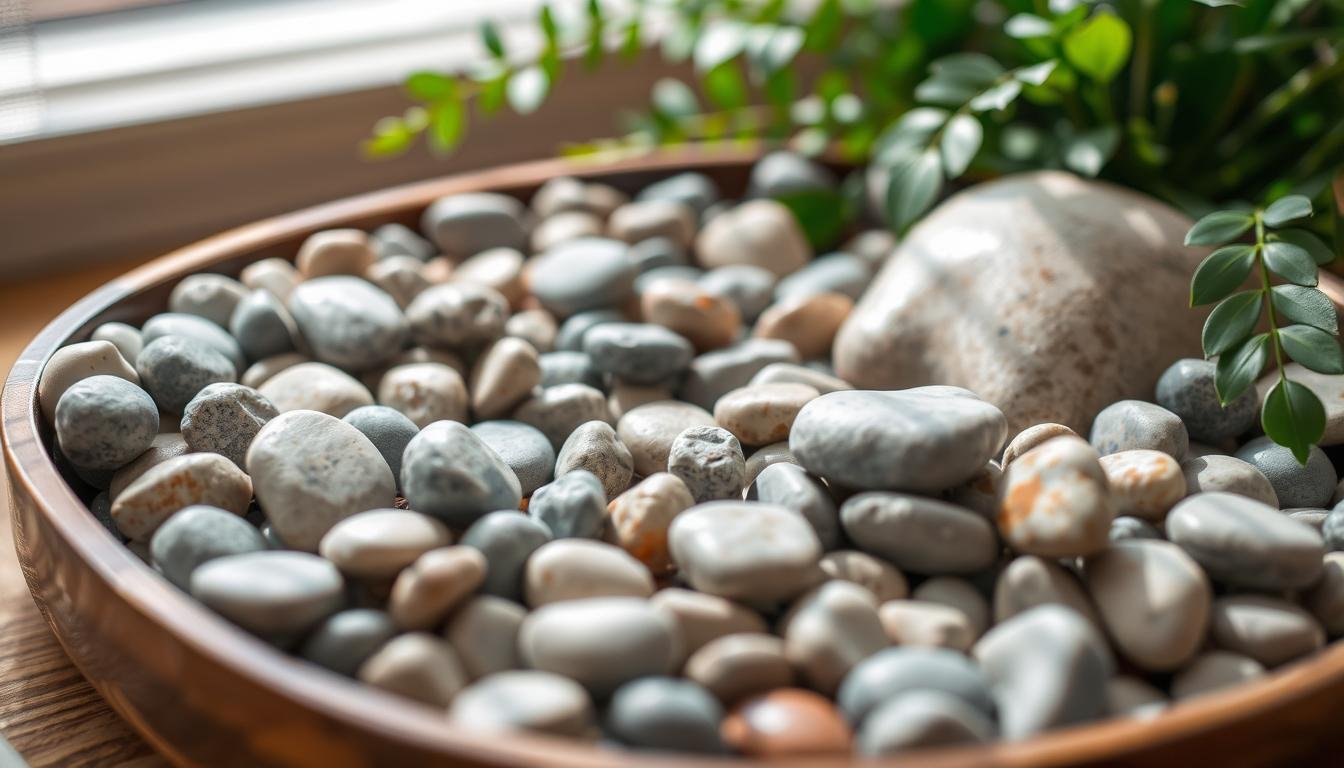
A decorative pebble tray is a shallow tray or saucer filled with pebbles, stones, marbles, or similar filler that sits under or around a potted plant. It does two jobs at once. First, it catches excess water and protects your shelf, sill, or tabletop. Second, if you add water beneath the top layer of stones, it can create a small pocket of extra humidity around the plant as that water evaporates. Extension guidance and houseplant sources all agree on the key rule: the pot should rest on the stones, not in standing water. (Extension | University of New Hampshire)
That functional definition matters, but for styling, the real appeal is visual. A plain plastic saucer usually looks accidental. A well-built pebble tray looks finished. It adds texture, hides water marks, softens the gap between pot and furniture, and makes even a basic nursery pot feel more deliberate. In a room where plants are part of the decor rather than just a hobby, that difference is huge.
The best decorative pebble trays also solve a quiet design problem: many indoor plants look top-heavy. You have leafy growth above and a thin little base below. A textured tray visually widens the base, gives the plant more presence, and helps it sit in the room with more balance. That is why a pebble tray can work as both a care tool and a styling device, especially for shelf plants, windowsill clusters, and coffee-table arrangements.
Do Pebble Trays Actually Help Plants?
Yes, but with limits. A pebble tray can provide a modest, localized humidity boost around certain plants, especially in dry indoor air. University and extension guidance consistently describes the effect as real but small, and most useful when plants are grouped or when the air is not being dispersed quickly by strong drafts or heavy circulation. Better Homes & Gardens recently echoed that point through horticulturist Justin Hancock: pebble trays can work, but they are more effective for smaller, lower-growing plants than for tall specimens in open, fast-moving air. (Extension | University of New Hampshire)
That matters because people often expect a pebble tray to behave like a humidifier. It does not. A humidifier changes the air in the room. A pebble tray changes the air immediately around the plant, and usually only a little. That means pebble trays make the most sense when your goal is support, not rescue. They can help reduce stress on humidity-loving plants, especially if your home gets dry in winter, but they are not a cure-all for serious low-humidity problems. (Extension | University of New Hampshire)
As a practical styling choice, that small-but-real effect is still useful. Many decorative plant accessories look good and do nothing. A pebble tray, when set up correctly, at least earns its footprint. It can improve the presentation of the plant and modestly improve the plant’s immediate environment. That combination is why it keeps showing up in current houseplant guides and comparison pieces. (Homes and Gardens)
The Plants That Benefit Most
Pebble trays make the most sense for humidity-loving houseplants. Reliable sources repeatedly point to tropical foliage plants such as ferns, orchids, philodendron, monstera, prayer plants, calathea, peace lily, and parlor palms as good candidates. The Royal Horticultural Society also recommends raising ambient humidity for plants such as bird’s nest fern, stromanthe, monstera, and philodendron melanochrysum, naming pebble trays as one valid method. (RHS)
There is also a visual logic here. These plants often have softer, broader, more dramatic foliage. They tend to look better in styled tray setups because the lush leaves contrast nicely with stone, ceramic, and terracotta. A narrow snake plant in a sharp modern pot can look great on a bare saucer. A calathea or fern usually benefits from more texture at the base. The tray grounds the plant visually and echoes the softness of the foliage.
A good rule is simple: if the plant naturally suits a more humid feel and already reads as lush, a pebble tray can support both the plant and the styling. That is why trays often work best under tabletop tropicals, shelf clusters, and lower-growing foliage plants where the humidity effect stays close to the leaves.
Where Pebble Trays Fall Short
Pebble trays are not ideal for every plant. Succulents, cacti, and other dry-loving plants do not need the added humidity effect, and styling them with a water-based pebble tray can be more gimmick than help. Even if the pot stays above water, the tray still introduces moisture into the immediate zone around plants that usually prefer drier conditions. Sources that discuss plant suitability repeatedly frame pebble trays as best for tropical, humidity-loving plants rather than universally useful accessories. (The Spruce)
They also fall short with larger plants. A massive monstera on the floor in an airy living room is not going to get a dramatic humidity benefit from a tiny tray hidden under one side of the pot. Hancock’s point is useful here: the taller the plant or pot, the less meaningful the effect tends to be. If the plant is large, the room is drafty, or your indoor humidity is very low, a humidifier is simply the better tool. (Better Homes & Gardens)
Then there is the maintenance problem. A neglected tray full of mineral residue, algae film, or murky water stops looking styled and starts looking forgotten. Decorative does not mean maintenance-free. A pebble tray works best when it is treated like part of the display, not an afterthought sitting under it.
How to Choose a Tray That Looks Intentional
The tray itself matters more than most people think. If it looks flimsy, the entire setup looks improvised. A good tray should feel proportionate to the plant, broad enough to create a visual frame, and waterproof enough to handle refills and runoff without staining your furniture. Extension and care guides often stress practical width because wider trays improve evaporation area and stability. That same width also improves the look. A tray that extends slightly beyond the pot feels designed; a tray exactly the same size as the pot usually disappears or looks cramped. (The Spruce)
For styling, ceramic is usually the strongest choice. It looks intentional, feels substantial, and works across modern, organic, and classic interiors. Terracotta is warmer and more relaxed, especially with earthy stones and matte pots, but unsealed terracotta can wick moisture and may be less forgiving on wood surfaces. Glass can work in bright spaces when you want the tray to feel light rather than heavy. Metal can be striking, but it is harder to keep looking good around water unless it is properly finished.
Match the tray to the room, not just the plant. If the room already has warm wood, linen, and natural fiber textures, a cold shiny tray can feel disconnected. If the room is crisp and minimal, a rough rustic tray may feel forced. The tray should act like a bridge between the pot and the furniture around it.
Best Pebbles, Marbles, and Filler Options
The filler changes the whole mood of the setup. Natural river pebbles are the easiest win because they look organic, hide mineral marks fairly well, and work in almost any room. White stones look cleaner and more sculptural, but they show algae and residue faster. Glass pebbles or marbles bounce light beautifully in bright spots and can make a simple tray feel more styled, though they can also tip into craft-store territory if the colors are too loud. LECA is useful if you want a more plant-focused look with added texture and porosity, but it reads more utilitarian than decorative unless paired carefully. (Max and Miles Plants)
Keep scale in mind. Tiny gravel can look messy. Oversized stones can make small pots look awkward. Medium pebbles usually strike the best balance because they lift the pot above the water line, create visible texture, and still look refined. Mixes can work, but only when the palette is tight. Too many colors or too much contrast turns the tray into visual noise.
If you want the tray to look expensive, reduce the palette. One tray, one dominant stone finish, one clear relationship to the pot. That is usually enough. You do not need novelty stones, fake gems, or decorative clutter around every plant. Most of the time, restraint looks better.
Decorative Pebble Tray Ideas
A good plant styling tray should suit the plant, the pot, and the room. The goal is not to create a tiny landscape under every houseplant. The goal is to make the base of the plant look considered, clean, and visually grounded while still being easy to maintain. These ideas work because they keep that balance.
Minimal Ceramic and White Stone Tray
This is the cleanest version and the easiest to fit into modern homes. Use a matte ceramic tray in white, cream, greige, or soft stone, then fill it with smooth white or pale gray pebbles. Pair it with a plant that has strong leaf shape, like a small monstera, philodendron, peace lily, or bird’s nest fern. The neutral base lets the foliage do the talking.
What makes this setup work is contrast control. The tray and stones are quiet, so the plant becomes the focal point. That is especially useful on shelves, side tables, and desks where too much texture below the plant can look busy. Keep the pot simple too. If the pot already has a bold pattern, the white stone tray can start fighting it. This idea works best when at least two of the three elements—tray, stones, pot—stay restrained.
Visually, this is the safest choice when you want a room to feel calm. It also photographs well, which explains why pared-back plant displays keep showing up in current plant-styling and interior trend content. (MataramToto)
Terracotta and River Rock Tray
If your room leans warm, earthy, or handmade, go the opposite direction. Use a shallow terracotta tray or warm-toned ceramic saucer with natural river rocks in mixed taupe, charcoal, sand, and muted brown. Pair it with trailing pothos, a fern, a prayer plant, or a compact palm. This setup feels more relaxed and organic than the minimalist white-stone version.
The reason this style works is that it layers textures that already belong together. Terracotta, natural stone, woven baskets, light wood, and green foliage all speak the same visual language. You do not need anything glossy or overly polished. In fact, a little variation helps. A few irregular stones can make the tray feel more natural and less staged.
This is also a forgiving choice for real life. River rock tends to hide water spots better than pale decorative stones, and the warmth of the tray keeps the whole setup from feeling sterile. If you want a tray that can survive daily use without looking precious, this is one of the best directions.
Glass Pebble Tray for Bright Rooms
A glass pebble tray works best where light can hit it. Think bright kitchens, sunrooms, bathroom windows, or airy corners with reflective surfaces. Use a clear, smoked, or lightly tinted glass tray with clear marbles, frosted pebbles, or a mix of neutral glass stones. Pair it with orchids, fittonia, small ferns, or other compact plants where detail matters.
The strength of this setup is light play. Glass catches reflections, brightens the base of the plant, and makes the whole display feel lighter. That is useful when a heavy ceramic tray would make the space feel crowded. It also helps smaller plants feel more elevated instead of lost on a flat surface.
The risk is obvious: cheap-looking materials ruin the effect fast. Loud colored marbles can make the setup feel childish. Too many stones can make it look crowded. Keep the palette quiet and the tray shape simple. Done well, this idea feels polished. Done badly, it looks like leftover vase filler.
Long Tray for Grouped Plants
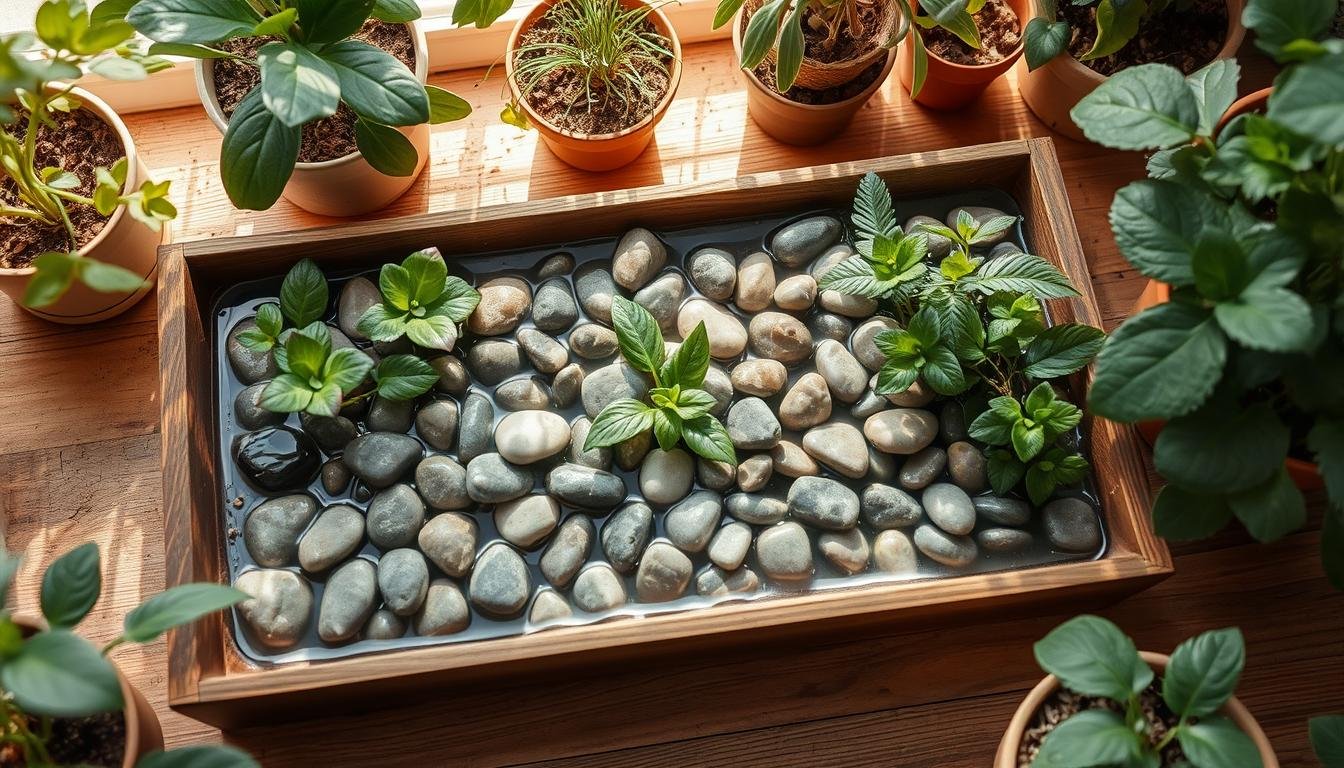
A long, narrow tray is one of the smartest ways to style multiple small plants without creating clutter. Current houseplant guidance also notes that grouped plants can make humidity strategies more effective, which gives this layout both visual and practical logic. (Extension | University of New Hampshire)
Use a rectangular or oval tray on a shelf, dining console, or windowsill. Fill it with mid-size stones and place two to four small pots on top, leaving visible breathing room between them. The trick is variety with control. Mix leaf shapes and plant heights, but keep the tray, stone palette, and pot finishes coordinated. A calathea, fern, and pothos can look great together if the containers are visually related.
This setup solves a common plant-styling problem: the lonely lineup. When several little pots sit next to each other on separate saucers, the arrangement can feel random. A shared tray turns them into one composition. It also makes care easier because runoff stays contained and the whole grouping reads as one intentional display rather than several unrelated objects.
Dark Stone Tray for Contrast Styling
If your plant has pale variegation or a light-toned pot, a dark stone tray can be the move. Use matte black, charcoal, or deep brown stones in a low-profile tray under a variegated philodendron, marble queen pothos, peace lily, or white ceramic pot. The dark base creates strong contrast and gives the plant more visual weight.
This works especially well in rooms with black accents, darker furniture, or more dramatic styling. A white pot on dark stones feels sharper than the same pot on beige pebbles. The contrast pulls the eye downward and makes the full silhouette of the plant feel more complete.
The warning here is to avoid making everything dark. If the pot, tray, stones, and furniture are all heavy, the plant can disappear instead of pop. You need some visual lift somewhere—lighter foliage, lighter potting surface, or nearby negative space. Contrast is the point, not darkness for its own sake.
Mistakes That Make Pebble Trays Look Cheap
The fastest way to ruin a decorative tray is overdoing it. Too many filler types, overly bright glass gems, novelty stones, shells, figurines, and random add-ons usually make the setup look cluttered rather than styled. A tray should support the plant, not compete with it. The more decorative elements you pile in, the more the plant stops feeling like the star.
Another common mistake is bad proportion. Tiny tray under a large pot? It looks unstable. Oversized tray under a tiny nursery pot? It looks accidental. The tray should feel like a clean frame around the pot, not like an unrelated plate. This is why practical care advice about tray width aligns so well with styling advice: a tray that gives the plant enough room usually looks better too. (The Spruce)
The third mistake is neglect. Mineral crust, cloudy water, algae, dust, and fallen leaves kill the effect fast. Pebble trays need occasional rinsing and water refreshes. If you are not willing to keep the tray clean, use a plain dry saucer and style the plant another way. A simple setup that stays clean always looks better than a fancy setup that looks stale.
The last mistake is ignoring the room. A Zen-style dark stone tray in a bright cottage kitchen may feel out of place. A glossy glass setup in a rustic room can feel too slick. You do not need every plant display to match perfectly, but the materials should at least belong in the same visual world as the rest of the space.
How to Build and Maintain One
Start with a waterproof tray or saucer that is wider than the pot and stable enough to sit flat. Add a layer of medium pebbles, river stones, marbles, or another filler that can hold the pot above the water line. Then pour in water until it sits below the top of the stones. The pot should rest securely on the filler while the drainage hole stays out of standing water. That setup is consistently recommended across extension and plant-care guidance because it avoids waterlogging the roots. (Extension | University of New Hampshire)
Once the structure is right, treat it like part of your display. Wipe the tray edge. Rinse the stones now and then. Refill the water before it goes fully dry if you are using the tray for humidity support. If you see film, residue, or odor, empty it, wash it, and rebuild it. A pebble tray is a low-effort styling tool, but it is not a zero-effort one.
If you want the setup to stay looking intentional, keep these standards in place. Use one dominant material language. Match the tray to the room. Keep the pot above the water. Do not let runoff and refill water turn the tray murky. And be honest about the plant. If it is a dry-loving cactus, style it with a handsome saucer instead. If it is a fern struggling in winter air, a decorative pebble tray can actually pull double duty.
Conclusion
The best decorative pebble tray ideas for plant styling do not chase novelty. They solve real problems elegantly. They protect surfaces, help some plants with a modest humidity boost, and make the base of a plant look intentional instead of unfinished. That is why the simplest setups usually win: good tray, good scale, good stone choice, clean maintenance.
If you want the safest formula, start with a ceramic or terracotta tray, medium neutral pebbles, and a humidity-loving plant that already suits a softer, layered look. Then style from the room outward, not from the accessory inward. When the tray fits the pot, the plant, and the space, it stops looking like a plant hack and starts looking like design.
FAQs
Are pebble trays good for all houseplants?
No. They make the most sense for humidity-loving houseplants such as ferns, calathea, philodendron, orchids, and prayer plants. They are far less useful for cacti, succulents, and other plants that prefer drier conditions. Sources on plant suitability consistently frame pebble trays as targeted tools rather than all-purpose accessories. (RHS)
How often should you clean and refill a pebble tray?
Refill it whenever the water level drops below the level needed for evaporation, and clean it often enough that residue, algae, and stale water do not build up. In warmer or drier periods, that may mean topping it up more frequently because evaporation speeds up. Plant-care guides also note that trays need regular checking, especially during hotter weather. (The Spruce)
Can decorative stones or marbles replace natural pebbles?
Yes, as long as they are clean, stable, and able to keep the pot above the water line. Natural river pebbles usually look the most organic, while glass marbles and decorative stones can work well in brighter or more modern spaces. The choice is less about plant biology and more about scale, stability, and the visual style you want.
Do pebble trays stop overwatering damage?
No. A pebble tray does not fix overwatering by itself. It only helps avoid extra root risk if the pot is sitting above the water instead of directly in it. Extension guidance is clear that letting the pot stand in water can lead to waterlogged soil and root damage. (MSU Extension Service)
Where should a pebble tray sit for the best visual effect?
Put it where the tray can actually be seen as part of the composition: shelves, windowsills, side tables, consoles, and grouped plant displays work especially well. From a care standpoint, pebble trays also tend to be more useful in relatively contained areas and around grouped plants than in drafty, open spots where the humidity effect disperses quickly. (Extension | University of New Hampshire)