Table of Contents
Pebble Tray vs Humidifier for Indoor Plant Care
If you want the blunt answer, a humidifier is the stronger tool. A pebble tray can raise humidity a little in the immediate area around a plant, which can be enough for small, low-growing, mildly humidity-loving plants in a dry home. A humidifier is better when you need a reliable, measurable increase across a wider space, especially for tropical plants that actually react badly to dry winter air. That basic split is consistent across extension advice, botanical garden guidance, and current expert-led plant articles. (Extension | University of New Hampshire)
The mistake people make is treating these two options like they do the same job. They do not. One is a low-cost, low-impact humidity nudge. The other is a room-level humidity tool that can materially change conditions when used well. If your calathea is crisping up beside a heating vent, a decorative tray of wet stones is not in the same league as a properly sized humidifier and a hygrometer. (Extension | University of New Hampshire)
What Each Method Actually Changes
Pebble Tray
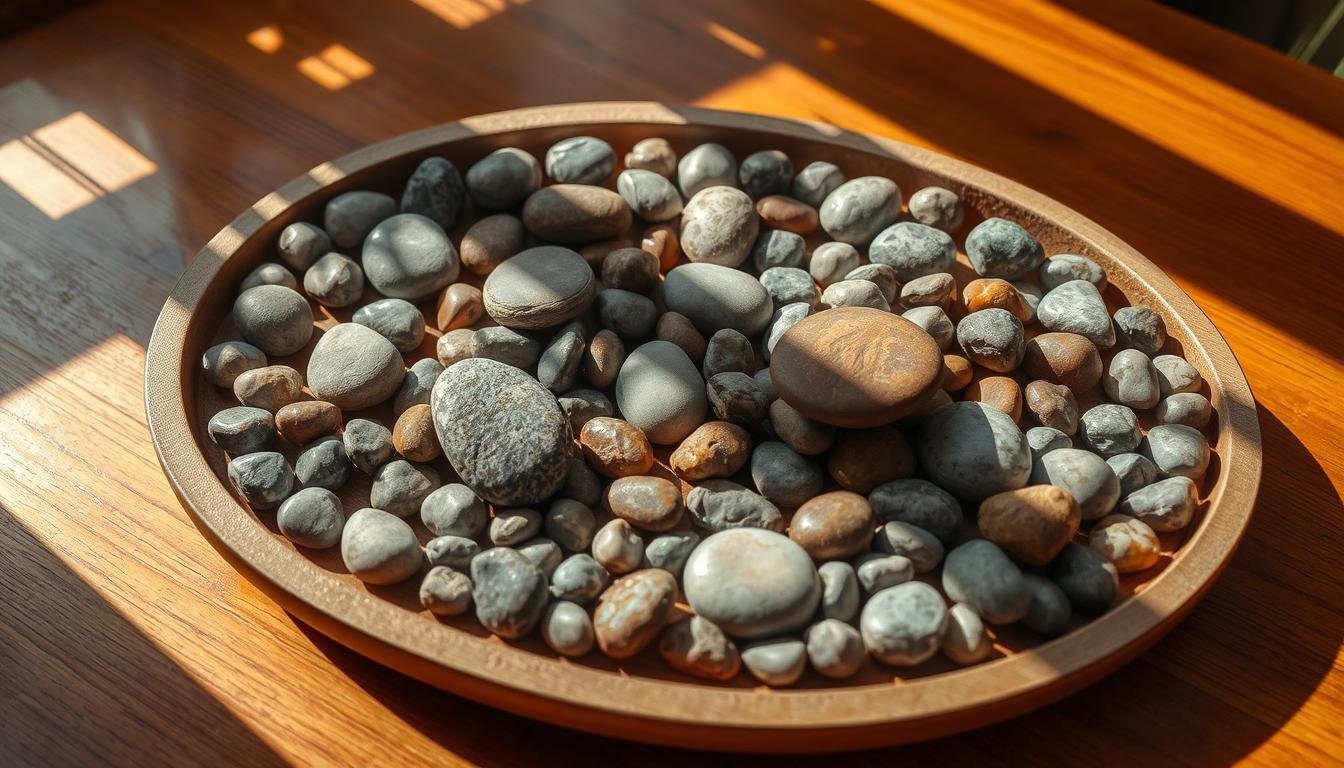
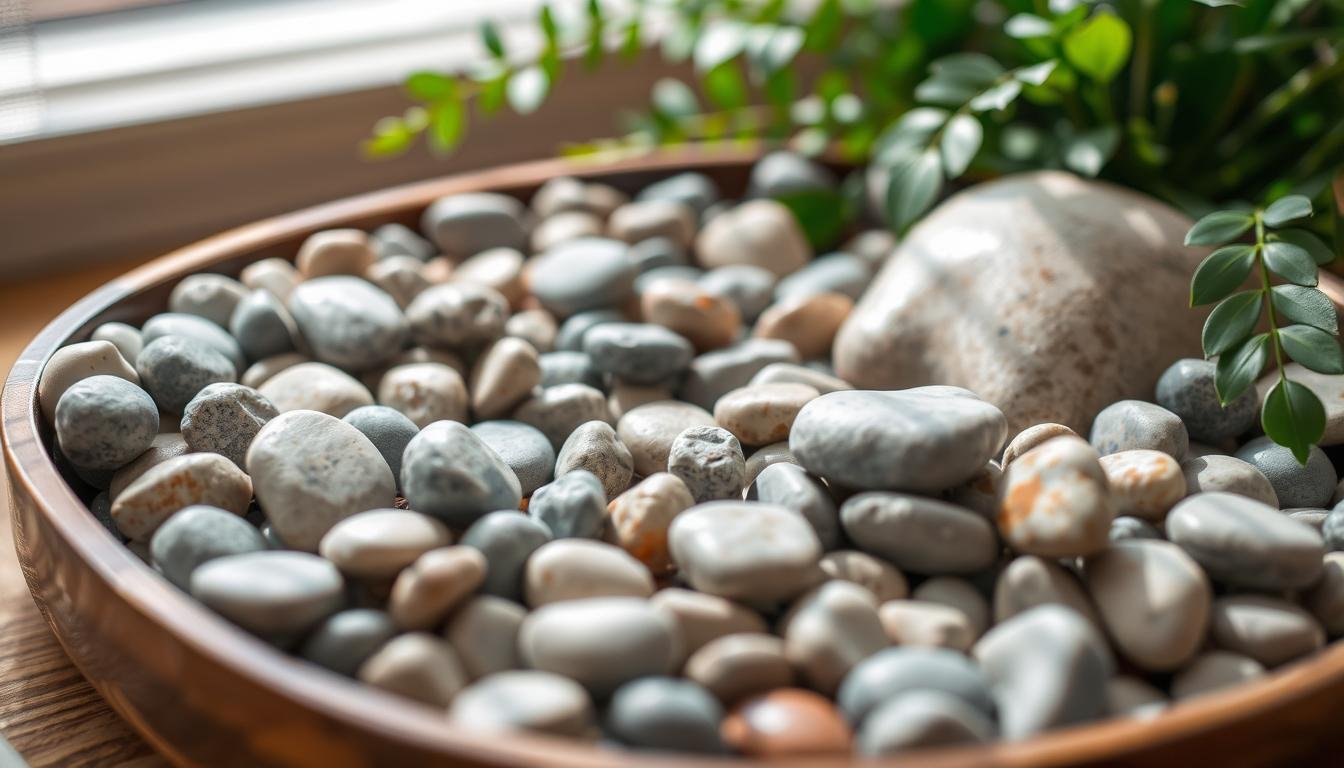
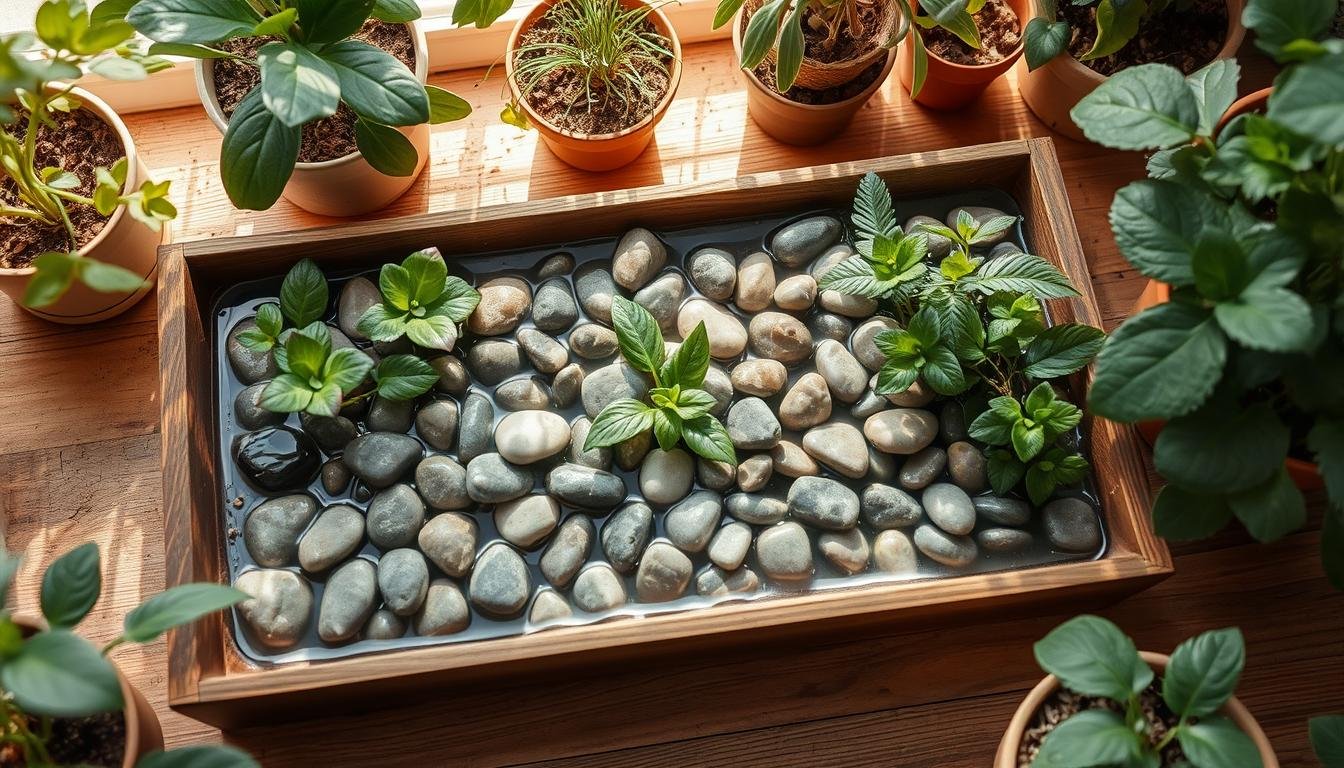
A pebble tray is simple: you place pebbles in a shallow tray, add water to just below the top of the stones, and set the pot on the pebbles so the roots are not sitting in water. As the water evaporates, it can increase humidity in the air immediately around the plant. Extension and botanical sources still recommend the method, but the key qualifier matters: the effect is local and modest, not a room-wide solution. (Missouri Botanical Garden)
That distinction is what usually gets lost online. Pebble trays are not fake, but they are often oversold. They are most plausible for short plants sitting close to a wide tray in relatively still air. Once air circulation disperses that moisture, or the plant sits far above the water source, the benefit drops fast. (Better Homes & Gardens)
Humidifier
A humidifier actively adds moisture to the room air. That makes it a different category of tool, not just a stronger version of a tray. University extension guidance points to portable humidifiers as the option that provides the most benefit for dry indoor plant conditions, and product testing on current models shows why: tested units were able to increase humidity by double-digit percentages in measurable ways across hours of operation. (Extension | University of New Hampshire)
That does not mean every plant owner needs one. It means a humidifier gives you control. You can target a room, monitor the result with a hygrometer, and hold conditions in a range that sensitive plants actually notice. The tradeoff is maintenance, electricity, upfront cost, and the need to avoid turning a healthy room into a damp one. (US EPA)
Why Humidity Matters More Than Most Growers Think
Humidity affects how quickly plants lose water through their leaves. When indoor air is dry, transpiration pressure rises, and plants that evolved in humid tropical conditions can start showing stress even when their soil moisture looks fine. University and botanical sources tie low humidity to common symptoms like brown leaf edges, drying foliage, and poor performance in moisture-loving groups such as ferns, orchids, and some calatheas. (Missouri Botanical Garden)
The useful benchmark is this: the EPA recommends keeping indoor humidity between 30% and 50% for the home environment, while plant guidance from botanical and extension sources often notes that many houseplants do well around 50%, and some more humidity-hungry species prefer higher ranges around 70% to 80%. That creates a practical tension. What is ideal for a fern is not always ideal for the whole room, your walls, or your own comfort. Plant care gets easier when you stop chasing “maximum humidity” and start aiming for enough humidity for the plant without pushing the room into problems. (US EPA)
This is also why blanket advice fails. A pothos in average room conditions is not the same case as a maidenhair fern in forced-air winter heat. If your home already sits near the upper end of the safe household range, a humidifier may be unnecessary. If your room drops below 30% in winter, even “easy” tropicals may look rougher than they should. Illinois Extension notes that many homes fall below 30% humidity in winter, which explains why houseplant humidity debates spike every cold season. (Illinois Extension)
Pebble Trays: Best Uses and Limits
A pebble tray makes sense when your goal is modest. It is cheap, silent, non-electric, easy to set up, and useful for growers who need a small humidity boost around a compact plant. Current expert commentary and extension guidance are aligned on the best-fit cases: small, low-growing plants, especially those kept on shelves, desks, or windowsills where you are trying to soften dry air rather than transform the whole room. Think fittonia, selaginella, or other compact humidity-lovers rather than tall floor plants. (Better Homes & Gardens)
The limit is scale. Pebble trays do not change the room. They barely change the plant’s environment unless the geometry helps you: wide tray, low plant, minimal airflow, regular refilling. Better Homes & Gardens’ recent expert piece puts it plainly: pebble trays increase humidity in the immediate vicinity of the plant and are better suited to smaller, lower-growing plants, while larger plants are better served by a humidifier. Brooklyn Botanic Garden takes a similarly restrained line, calling trays less effective than humidifiers and warning about extra maintenance. (Better Homes & Gardens)
There are also side effects. Constantly wet surfaces can encourage fungus gnats, algae, mineral residue, and occasional mold if trays are ignored. That does not make pebble trays a bad method. It means they are not maintenance-free décor. If you are going to keep a tray wet for weeks, you need to clean it. Otherwise you trade dry-air stress for a messier kind of problem. (Brooklyn Botanic Garden)
Humidifiers: Best Uses and Limits
A humidifier is the better choice when humidity is a real growing constraint rather than a minor tweak. That usually means tropical plants in winter, multiple humidity-loving plants grouped in one room, dry-air homes with forced heating, or species that show clear stress in average household air. University of New Hampshire Extension says a portable humidifier near the plants and a humidity sensor provide the most benefit in dry indoor conditions, which is about as practical as advice gets. (Extension | University of New Hampshire)
This is where humidifiers earn their cost. In recent testing, Better Homes & Gardens reported that its top plant-friendly model raised humidity nearly 15% on a low setting and 28% on high at 2 feet away after eight hours in a 430-square-foot room. Other tested models produced even larger local increases at short range, though performance tapered with distance. That matters because it confirms what plant owners actually need to know: a decent humidifier can create measurable change, not just a theoretical one. (Better Homes & Gardens)
The catch is that humidifiers demand discipline. The EPA advises emptying portable humidifier tanks, drying surfaces, and refilling daily, plus cleaning portable units every third day. The CDC adds that germs can grow in humidifiers and spread through the mist, and recommends distilled water or boiled-and-cooled water to reduce growth and mineral issues. So yes, humidifiers work better than pebble trays. They also punish lazy maintenance harder. (US EPA)
Pebble Tray vs Humidifier: Side-by-Side
Here is the practical comparison that matters most:
| Factor | Pebble Tray | Humidifier |
|---|---|---|
| Humidity impact | Small, local boost | Stronger, measurable boost |
| Best for | Small low-growing plants | Tropical plants, groups, dry rooms |
| Upfront cost | Very low | Moderate to high |
| Ongoing effort | Refill and clean tray | Daily water changes and regular cleaning |
| Coverage | Immediate area only | Part of a room or full room, depending on size |
| Noise / power | Silent, no electricity | Uses power, may make noise |
| Main risk | Gnats, algae, stagnant tray | Germ growth, mineral buildup, over-humidifying |
That table makes the decision easier because the real comparison is impact versus simplicity. Pebble trays win on cost and convenience. Humidifiers win on performance and control. If you are trying to rescue a struggling calathea collection in a dry apartment, the stronger tool is obvious. If you have one small fern and want a low-effort humidity nudge, a tray may be perfectly reasonable. (Extension | University of New Hampshire)
The bigger insight is this: a pebble tray is a micro-adjustment; a humidifier is an environmental intervention. Once you frame it that way, you stop asking which one is “best” in the abstract. You start asking what problem you actually have. That is the better question, and it leads to better plant care. (Extension | University of New Hampshire)
How to Choose Based on Plant Type
Some plants genuinely care about this decision. Calatheas, ferns, fittonias, many orchids, and selaginella tend to show low-humidity stress faster than mainstream houseplants. For these plants, a pebble tray can help around the edges, but a humidifier usually gives you a better shot at stable foliage, especially if you grow several together or your room is dry. Current extension and botanical guidance consistently points in that direction. (Home & Garden Information Center)
Other plants are more forgiving. Pothos, philodendrons, snake plants, ZZ plants, and many common aroids can tolerate typical indoor conditions much better, even if they still appreciate moderate humidity. Clemson’s current pothos guidance, for example, lists a preference of 50% to 70% humidity, but that does not mean every pothos owner needs a humidifier. It means the plant will grow best in that range while often remaining perfectly serviceable outside the sweet spot. (Home & Garden Information Center)
That is why the smartest choice is plant-specific, not trend-specific. A lot of people buy humidifiers because social media made humidity look universally essential. It is not. Sensitive plants need it more. Tough plants can often get by with better placement, less hot airflow, smarter watering, and maybe a pebble tray or grouped setup. Spend your money where the plant’s biology actually justifies it. (Extension | University of New Hampshire)
How to Choose Based on Room, Climate, and Season
Your room matters as much as your plant. A bright bathroom with regular steam is already a humidity zone. A living room with forced-air heat, long winter runtime, and vents pushing warm dry air across leaves is the opposite. Illinois Extension notes that winter indoor humidity often drops below 30%, and the EPA says the broader home target should usually stay between 30% and 50%. Those two facts explain why the same plant can thrive in one room and crisp up in another. (Illinois Extension)
Climate matters too. In already humid regions or seasons, you may not need to add moisture at all. In cold climates where heating strips moisture from the air for months, a humidifier becomes much easier to justify. The same goes for apartments with sealed windows, compact rooms full of tropical plants, or shelf setups where airflow quickly dries leaves. A pebble tray is a small correction; a humidifier is what you use when the whole room is working against the plant. (Extension | University of New Hampshire)
Seasonality is the hidden lever. Many plant owners think a plant suddenly became “dramatic” in winter, when the real change is environmental. Lower humidity, warmer drafts, shorter days, and heater cycles combine into a very different growing context. That is why a humidifier may be seasonal rather than permanent. You may need it from late fall through early spring and barely use it at all once the ambient air improves. (Illinois Extension)
How to Set Up a Pebble Tray So It Helps Instead of Hurts
If you are going to use a pebble tray, do it properly. Start with a tray or saucer that is wider than the pot, add clean pebbles, and fill with water to just below the top of the stones so the pot sits above the waterline. That detail matters because roots sitting directly in water can create a completely different problem: saturation and root stress. Multiple extension and expert sources repeat this point for a reason. (Missouri Botanical Garden)
Placement matters too. The closer the foliage is to the moisture source, the more likely the plant gets at least some benefit. A huge floor plant standing a foot above a narrow tray is a weak setup. A compact plant over a wide tray is better. Refill the tray as the water evaporates, and clean the tray and stones regularly so you do not build up algae, residue, or pest-friendly muck. (Better Homes & Gardens)
The right expectation keeps this method useful. Do not set one up and assume your humidity problem is solved. Use it for small plants, mild dryness, or as part of a broader approach that also includes grouping plants and keeping them away from vents. A pebble tray works best when it is treated as a supporting tactic, not a miracle device. (Extension | University of New Hampshire)
How to Use a Humidifier Without Creating New Problems
Using a humidifier well starts with sizing and placement. Choose a unit suited to the room, not just the plant count, and use a hygrometer so you can see the result instead of guessing. Put the humidifier close enough to benefit the plants, but not so close that leaves stay wet from direct mist contact for long periods. Recent product testing also suggests that distance matters: humidity gains are stronger close to the machine and weaken farther away, which is exactly why room size and placement matter. (Better Homes & Gardens)
Maintenance is non-negotiable. The EPA recommends emptying and drying portable humidifier tanks daily and cleaning them every third day. The CDC says germs can live in humidifiers and spread through the mist, and suggests distilled or boiled-and-cooled water to reduce contamination and mineral issues. If you live in a hard-water area and ignore cleaning, you are not just running a plant tool. You are running a machine that can collect scale, grime, and microbial growth. (US EPA)
The final rule is not to overdo it. Indoor humidity that is too high can create home problems even if a fern would love it. The EPA’s broader guidance to keep homes around 30% to 50% and below 60% is useful guardrail logic here. Aim for enough humidity to reduce plant stress, not enough to make window frames sweat and mold easier to grow. Good plant care should not create bad building care. (US EPA)
Conclusion
For most plant owners, the decision is simple once you stop treating these tools as equals. Choose a pebble tray when you want a cheap, quiet, low-stakes humidity boost for a small plant. Choose a humidifier when you need real control over dry indoor air. That is the clearest, most honest answer the evidence supports. (Extension | University of New Hampshire)
A pebble tray is not useless. It is just limited. A humidifier is not automatically necessary. It is just more effective when the problem is real. The smartest move is to match the tool to the plant, the room, and the season, then verify the result with a hygrometer instead of relying on wishful thinking. That approach saves money, avoids plant stress, and keeps your setup grounded in what actually changes the environment. (US EPA)
FAQs
Do pebble trays actually work for indoor plants?
Yes, but only to a point. Pebble trays can raise humidity a little in the air immediately around a plant, which is why extension resources and botanical gardens still mention them. The more accurate takeaway is that they are locally helpful, not broadly transformative. They work best for compact plants over wide trays and lose effectiveness as plant height, airflow, and room dryness increase. (extension.umd.edu)
Is a humidifier worth it for common houseplants like pothos and philodendron?
Usually, only if your home air is especially dry or the plant is showing clear stress. Many common houseplants tolerate average indoor humidity better than ferns, calatheas, or fittonias, even if they grow best in moderate humidity. A humidifier becomes easier to justify when winter air is very dry, you have multiple tropical plants together, or you want tighter control over conditions. For a single easy plant in a decent room, it is often optional rather than essential. (Home & Garden Information Center)
What humidity level is best for indoor plants?
There is no single perfect number for every houseplant, but a practical baseline is around 50% for many common houseplants, with some tropical species preferring higher humidity in the 70% to 80% range. At the same time, the EPA recommends keeping the home environment around 30% to 50%, ideally not pushing indoor humidity too high. The smart target is to give sensitive plants more humidity where needed without over-humidifying the whole room. That often means a local strategy, a seasonal humidifier, or plant grouping rather than trying to turn your entire house into a greenhouse. (US EPA)
Can too much humidity harm houseplants?
Yes. Plants need humidity, but they also need airflow and sane room conditions. Excess humidity can encourage leaf disease, mold, and stagnant conditions, and some sources also warn that wet trays can contribute to fungus gnats or fungal problems if they are not cleaned. Good humidity supports plant health; excessive humidity paired with poor ventilation creates a different set of headaches. (Brooklyn Botanic Garden)
Should I use distilled water in a humidifier for plants?
In many cases, yes. The CDC recommends distilled water, or boiled-and-cooled water, to reduce germ growth in humidifiers, and current product testing also points to mineral buildup as a real maintenance issue, especially with tap water and harder water supplies. Distilled water is not magic, but it can reduce white dust, scaling, and cleaning headaches. If you are running a humidifier regularly near plants, it is one of the easiest ways to keep the machine cleaner and the output more predictable. (CDC)