Table of Contents
Why Pebble Trays Often Fall Short
Pebble trays are popular because they are cheap, simple, and look harmless. The idea is straightforward: water evaporates from the tray and raises humidity around the plant. That logic is not completely wrong, but the real effect is usually modest and local. Current extension guidance still lists pebble trays as an option, yet the same sources place humidifiers, grouping plants, and enclosed environments in a stronger position when the goal is meaningful humidity support. (Extension | University of New Hampshire)
That distinction matters because many people are not trying to add “a little” humidity. They are trying to stop crispy leaf edges on a Calathea, keep a fern from browning, or help an orchid hold buds in a dry, heated room. In that situation, a pebble tray can be a small assist, but it is often not enough to move the needle in a consistent way. If your plant is struggling in air dried out by heating vents, radiators, or winter indoor conditions, you need a method with more reach and more control. (Yard and Garden)
There is another reason people get disappointed: they confuse humidity problems with watering problems. Dry air can cause browning, curling, or bud drop even when soil moisture is fine. Adding more water to the pot does not fix low ambient humidity, and overwatering to compensate can push the plant toward root trouble instead. Good humidity strategy starts by treating air moisture as its own variable, not as a side effect of watering more often. (Extension | University of New Hampshire)
What Humidity-Loving Houseplants Actually Need
Humidity is simply the amount of moisture in the air, usually discussed as relative humidity. For a lot of houseplants, average indoor air is acceptable. For tropical species, it may be merely tolerable rather than ideal. The gap gets worse in winter, when indoor heating can drive humidity well below what many foliage plants evolved to handle. Several extension sources place the comfortable range for many common houseplants around 40% to 60% RH, while more humidity-demanding tropicals often perform better above that. (Extension | University of New Hampshire)
A Practical Relative Humidity Range for Most Houseplants
If you want a useful rule instead of a perfect rule, this one works: most ordinary houseplants are fine around 40% to 60% relative humidity. That includes many easy growers that do not punish you for normal home conditions. Once you drop well below that, especially during winter, sensitive plants may start showing dry tips, edge browning, curling, or stalled growth. A cheap hygrometer is worth more than guesswork because it tells you whether you are dealing with a real humidity problem or just assuming you are. (Extension | University of New Hampshire)
Plants That Usually Need More Than Average Indoor Air
Some plants clearly want more. The RHS advises 60% humidity or higher for plants such as Stromanthe ‘Triostar’, and similar guidance shows up for humidity-sensitive foliage plants like Calathea and certain orchids. Ferns, prayer plants, anthuriums, and many tropical understory plants often look acceptable in average humidity for a while, then slowly start showing stress. Succulents and cacti are the opposite case: raising humidity aggressively for them can be unnecessary or even counterproductive. (RHS)
A few signs point toward low humidity rather than a fertilizer or pest problem. Brown leaf margins, papery tips, leaf curl, and bud drop are common clues, especially when they appear during cold months or in rooms with forced-air heating. None of those symptoms proves humidity is the only issue, but they are enough to justify checking the room’s RH before you start changing everything else. Measured air beats plant-care folklore every time. (Yard and Garden)
The Best Pebble Tray Alternatives at a Glance
Not all alternatives do the same job. Some raise humidity for an entire zone. Some create a small local microclimate. Some are best for one plant, while others help a whole shelf. This is the fastest honest comparison:
| Method | Best for | Strength | Main drawback |
|---|---|---|---|
| Humidifier | Multiple plants or a room corner | Most reliable and controllable | Needs cleaning and monitoring |
| Grouping plants | Small collections | Cheap, passive microclimate | Mild effect only |
| Terrarium / cabinet / cloche | Small humidity-loving plants | Strong localized humidity | Ventilation and disease risk |
| Naturally humid room | Bathroom/kitchen growers | Uses existing conditions | Light may be limiting |
| Moss pole / damp media nearby | Aroids and climbing plants | Helps aerial roots and local zone | Not a room-wide fix |
That table is the real decision point. If you need a broad, measurable increase, use a humidifier. If you need a targeted humidity pocket for a few small plants, think grouping, terrarium, or a cabinet. If you just want a tiny bump and already have decent room conditions, a tray-based solution may still have a place, but it should not be your only move for high-humidity plants. (Extension | University of New Hampshire)
Humidifiers: The Most Reliable Upgrade
If the question is “What works better than a pebble tray?” the clearest answer is a humidifier. University and extension guidance repeatedly puts portable humidifiers near the top because they can raise humidity in a way you can actually measure with a sensor. That consistency matters more than the theoretical elegance of evaporation from a tray. A pebble tray may help a little; a humidifier can change the environment enough to stop the plant from fighting the room every day. (Extension | University of New Hampshire)
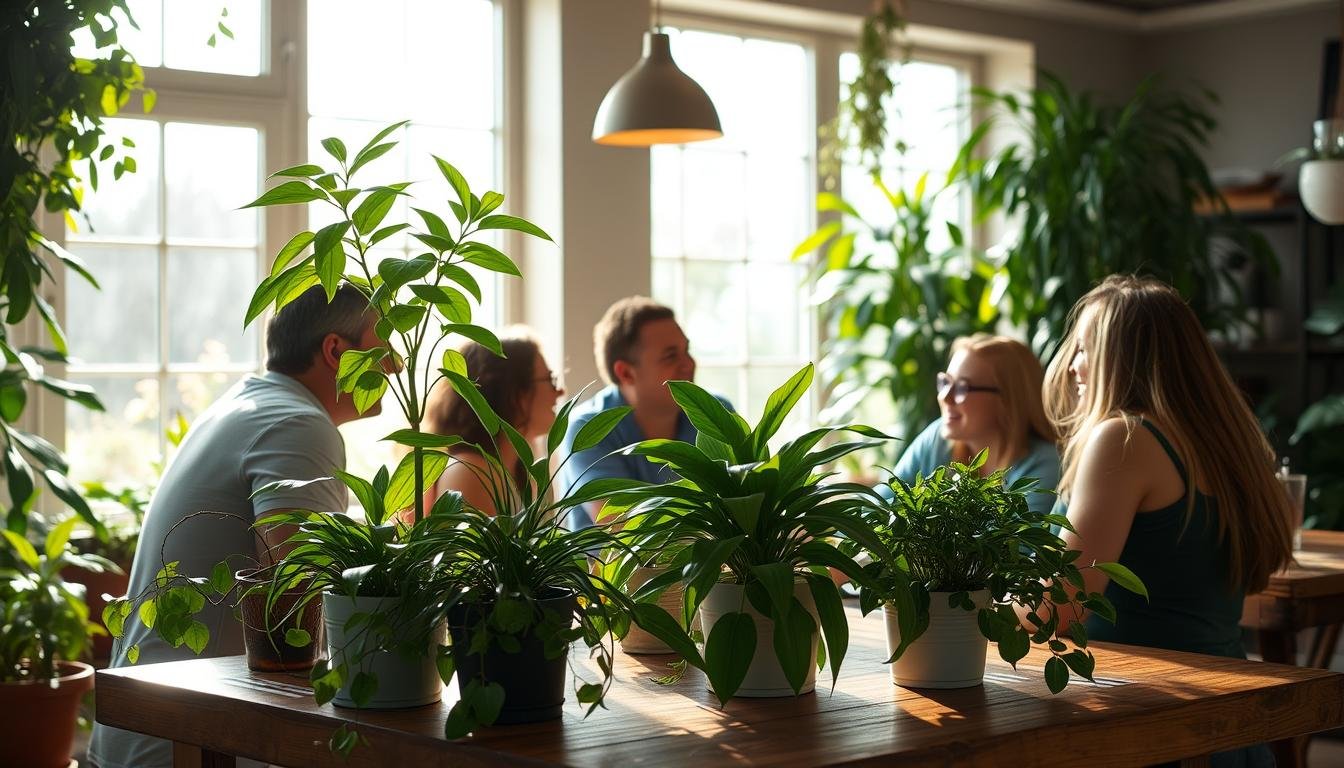
Humidifiers also scale better. If you have one Calathea, a tray might feel worth trying. If you have a shelf of ferns, philodendrons, and orchids, you will almost always get better results from a humidifier serving that whole zone. The method is especially useful in winter, when heated indoor air can stay stubbornly dry for months. It is also the cleanest answer for people who want results without turning their home into a science project of trays, bowls, moss, and improvised covers. (Extension | University of New Hampshire)
How to Place and Run a Humidifier Without Causing Problems
A humidifier works best when you treat it like climate control, not decoration. Put it close enough to influence the plant area, but not so close that leaves stay wet from constant mist contact. Use a hygrometer nearby so you can see what the plants are actually getting. The goal is not to blast everything with moisture; it is to create a stable range that suits the species you are growing. (Extension | University of New Hampshire)
Cleaning matters just as much as placement. Dirty humidifiers can spread mineral residue and biological growth, which is bad for both plants and indoor air quality. If you push humidity too high without airflow, you can trade dry tips for fungal problems. That is why “more humidity” is not automatically “better humidity.” The right target is measured, moderate, and tied to the plants you actually own. (extension.okstate.edu)
Grouping Plants to Create a Small Humid Zone
Grouping plants is one of the simplest alternatives because it uses the plants’ own moisture release to create a microclimate. As water evaporates from soil and leaves, the air around a cluster becomes a bit more humid than the air in the rest of the room. Extension sources continue to recommend this because it is easy, low-cost, and often good enough for plants that need a moderate bump rather than greenhouse conditions. (Extension | University of New Hampshire)
This works best when you have several plants with similar needs and place them close enough to function as a group. A lone plant next to a drafty window does not create a microclimate. A tight cluster of tropicals on a shelf, away from vents, can. The effect is still limited compared with a humidifier, but it is one of the highest-value no-cost changes you can make. (Extension | University of New Hampshire)
The main caution is airflow and disease pressure. You do not want leaves packed so tightly that air becomes stagnant and damp all the time. Grouping works best when the plants are close, not crammed. Think “shared humidity pocket,” not jungle traffic jam. (MU Extension)
Terrariums, Cabinets, and Other Enclosed Setups
For small plants that truly like humidity, enclosed setups can outperform almost every casual alternative. A closed terrarium holds humidity far better than an open container, and even open terrariums can maintain a more stable moisture environment than a normal room. Extension guidance is clear on this point: enclosed containers retain the most humidity, which is exactly why they suit small, humidity-tolerant plants so well. (MU Extension)
This is one of the smartest moves for plants that need a humid atmosphere but do not need a lot of space. Tiny ferns, fittonias, some begonias, mosses, and other small tropicals often respond better to enclosure than to constant attempts to humidify an entire room. The same logic applies to plant cabinets and glass cloches: you are controlling a smaller air volume, so the humidity is easier to hold steady. That is efficient, and it avoids the futility of trying to turn a whole dry house into a cloud forest. (MU Extension)
Why Ventilation Matters as Much as Humidity
Enclosures are powerful because they trap moisture. That is also why they can go wrong. Missouri and Oklahoma extension guidance warns that closed terrariums retain more humidity but also carry a greater disease risk if moisture builds too aggressively and air stays stale. Too much condensation is not a badge of success; it is often a signal that the setup needs venting. (MU Extension)
The fix is simple: match the enclosure to the plant and vent when needed. A terrarium is excellent for moisture-loving, slower-growing plants that tolerate high humidity. It is a bad fit for large growers, desert plants, or anything prone to rot in stagnant conditions. High humidity works best when it is paired with sane moisture management and at least some airflow. (Yard and Garden)
Naturally Humid Rooms Can Do Part of the Work
Some rooms already give you a head start. Extension sources specifically mention bathrooms, kitchens, and laundry rooms as naturally more humid spaces that can suit sensitive houseplants better than dry living rooms or plant stands near heating sources. If the room also has usable light, this can be one of the easiest upgrades you make. (UA Cooperative Extension)
The catch is obvious: humidity alone does not grow plants. Many bathrooms are humid but too dark for anything beyond the toughest low-light species. So the real question is not “Is the bathroom humid?” It is “Does this room combine enough light, stable temperature, and decent humidity for this plant?” When the answer is yes, relocation can beat gadget-shopping. (UA Cooperative Extension)
This also explains why placement near vents is such a common mistake. Dry moving air strips moisture from leaves and works against every other humidity tactic. Even a humidity-loving plant can struggle if you put it directly in the path of hot forced air and then expect a pebble tray to compensate. Remove the stress source first; then add the humidity boost. (Extension | University of New Hampshire)
Moss Poles, Damp Media, and Localized Moisture
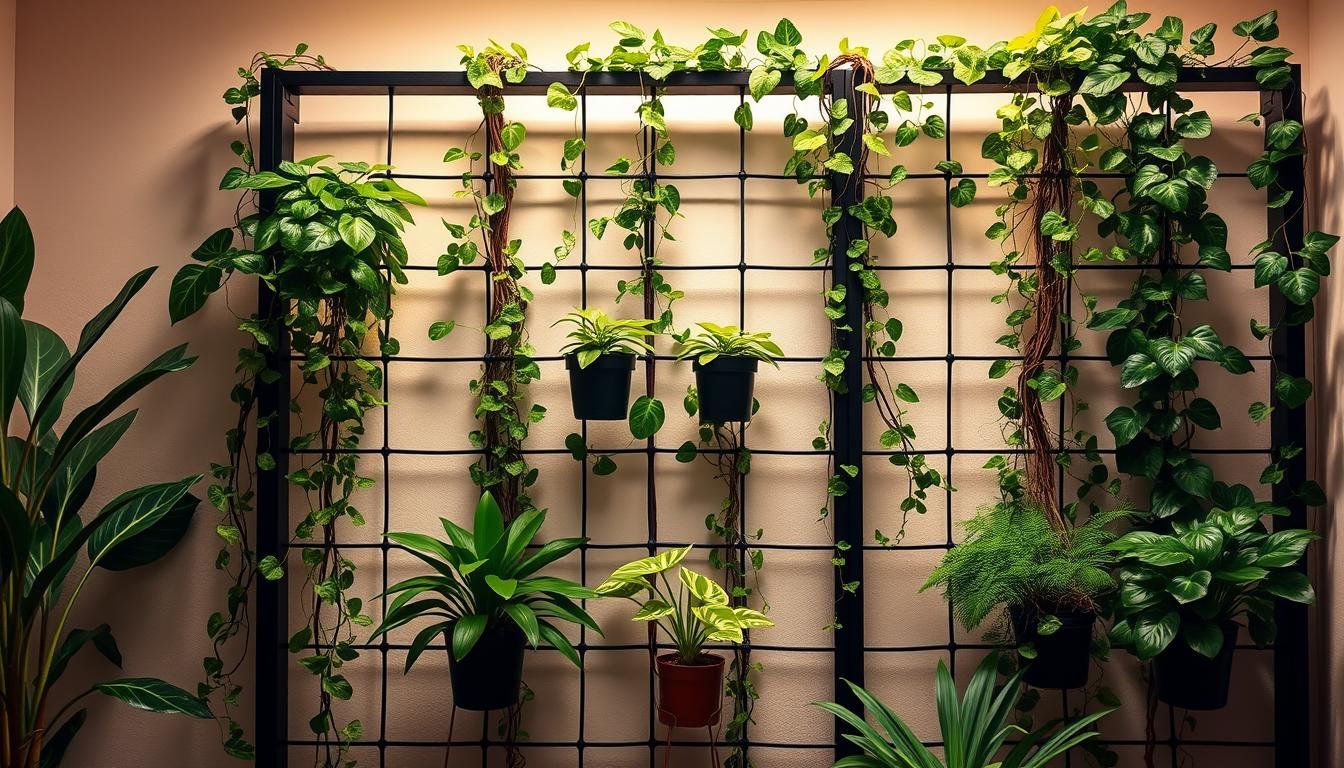
Not every humidity fix needs to change the whole room. Some plants, especially climbing aroids like philodendrons and monsteras, benefit from moss poles or other damp support structures because they create a moister local zone around aerial roots and new growth. That is not the same thing as raising room humidity, but it can still improve performance in a meaningful way. It is a good example of solving the plant’s actual need instead of chasing a universal number. (Gardening Know How)
There is a similar logic behind damp sphagnum moss or double-potting approaches sometimes mentioned by extension sources. These methods do not turn dry air into tropical air, but they can create a slightly moister immediate environment around the container. That makes them a niche alternative, not a dominant one. They work best as support methods for plants that already have decent conditions, not as rescue tools for severe indoor dryness. (Content Hub)
If you grow climbing tropicals, this is one of the more sensible “alternative” paths because it ties the humidity help to the part of the plant that actually uses it. A moss pole that stays lightly moist can encourage stronger attachment and more mature leaf development in some aroids. It still does not replace a humidifier when the whole room is sitting at desert levels, but it can be a smart layer in the overall setup. (Gardening Know How)
Weak Fixes, Half-Truths, and Methods People Overrate
The most overrated humidity fix is casual misting. Extension guidance has been blunt for years: misting may raise humidity only very briefly unless repeated frequently throughout the day, which makes it a poor tool for true humidity modification. In some cases, wet foliage can also encourage spotting or disease, especially if moisture lingers in cool conditions or on plants that dislike it. (Biology LibreTexts)
That does not mean misting is always useless. It means misting is usually temporary leaf wetting, not durable air-moisture control. If someone enjoys it and their plant tolerates it, fine. But it should not be sold as a serious replacement for a humidifier, enclosure, or smarter placement. A method that lasts minutes should not be confused with a climate change that lasts all day. (Purdue University)
The second half-truth is the idea that any wet object near a plant is basically as good as a pebble tray. Surface area, airflow, temperature, and room dryness all shape how much evaporation you actually get. More important, even a functioning evaporation source may still be too weak relative to the room’s dryness to matter much. That is why stronger alternatives are less about clever substitutions and more about changing the scale of the humidity intervention. (Extension | University of New Hampshire)
Common Mistakes That Keep Humidity-Loving Plants Unhappy
One mistake is trying to solve low humidity by watering more. Dry leaf tips do not automatically mean the soil needs to stay wetter. If anything, that habit can create the worst of both worlds: roots sitting too wet while foliage still suffers from dry air. Air problems and root-zone problems overlap in symptoms, which is why a hygrometer and a simple check of soil moisture are more useful than instinct. (Master Gardeners of Northern Virginia)
Another mistake is treating all houseplants as if they want rainforest air. Many common houseplants are comfortable around ordinary indoor humidity, and succulents or cacti may actively dislike excessive dampness. Humidity should match the plant, not the trend. High humidity is a tool, not a universal virtue. (Extension | University of New Hampshire)
A third mistake is ignoring the room itself. Vents, radiators, sunny windows that overheat by day, and chilly drafts at night can all work against your humidity efforts. Before buying anything, ask whether the plant is simply in the wrong location. Good placement is not glamorous, but it often fixes more than people expect. (Extension | University of New Hampshire)
The last mistake is chasing “high humidity” without measuring it. Plant care gets much easier when you stop guessing. A hygrometer tells you whether your room is actually dry, whether your humidifier is doing enough, and whether your terrarium or cabinet is staying too wet. Once you can see the number, you can stop improvising and start adjusting. (Extension | University of New Hampshire)
Conclusion
The best pebble tray alternatives are the ones that match the scale of the problem. If your room is genuinely dry and your plants are humidity-sensitive, a humidifier is the strongest all-around solution because it gives you measurable, repeatable control. If you want a cheaper or more targeted fix, grouping plants, using a terrarium or cabinet, moving plants to naturally humid rooms, or adding localized moisture support like moss poles can all work in the right setup. (Extension | University of New Hampshire)
The key is to stop asking whether a substitute is clever and start asking whether it is powerful enough for the plant in front of you. A fern with crispy fronds in a heated room needs more than a decorative tray. A philodendron that is otherwise healthy may only need better placement and a bit of local support. Measure humidity, match the method to the plant, and use the simplest solution that actually changes the environment. (Yard and Garden)
FAQs
What can I use instead of a pebble tray for plants?
The best alternatives are a portable humidifier, grouping plants together, terrariums or plant cabinets, and placing humidity-sensitive plants in naturally humid rooms like bathrooms or kitchens when light allows. Which one makes sense depends on whether you need to help one small plant or change conditions for a larger group. For broad, reliable humidity improvement, humidifiers are the strongest option. For a smaller local boost, grouping or enclosure usually gives better value. (Extension | University of New Hampshire)
Do pebble trays actually increase humidity?
Yes, but usually only a little and mostly right around the plant. Authoritative sources still mention them, but they are rarely presented as the best solution when humidity needs are serious. They can help as a mild support measure, especially when combined with better placement, but they are not the most effective answer for humidity-demanding tropical plants in very dry indoor air. (Extension | University of New Hampshire)
Is a humidifier better than a pebble tray for houseplants?
In most real-world cases, yes. A humidifier can create a measurable change in relative humidity across a plant area, while a pebble tray usually offers a smaller, less consistent effect. If you are trying to keep calatheas, ferns, stromanthes, or orchids happy through dry winter air, a humidifier is the more dependable tool. It also scales much better when you have several plants in one zone. (Extension | University of New Hampshire)
Should I mist plants to increase humidity?
Usually not as your main strategy. Misting can briefly wet leaves, but extension guidance says it is of doubtful effectiveness for meaningful humidity modification unless repeated frequently throughout the day. In some plants and conditions, persistent moisture on leaves can create spotting or disease issues. It is fine as an occasional care step for species that tolerate it, but it is weak as a standalone humidity fix. (Biology LibreTexts)
What humidity level do most indoor plants prefer?
A practical target for many houseplants is around 40% to 60% relative humidity, while more humidity-loving tropicals often do better around 60% or higher. The exact need depends on the plant. Succulents and cacti usually want drier air, while calatheas, ferns, and some orchids often show stress sooner when humidity drops too low. The smartest move is to measure the room and match the target to the plant species rather than using one number for everything. (Extension | University of New Hampshire)=