Table of Contents
What a Pebble Tray Actually Is
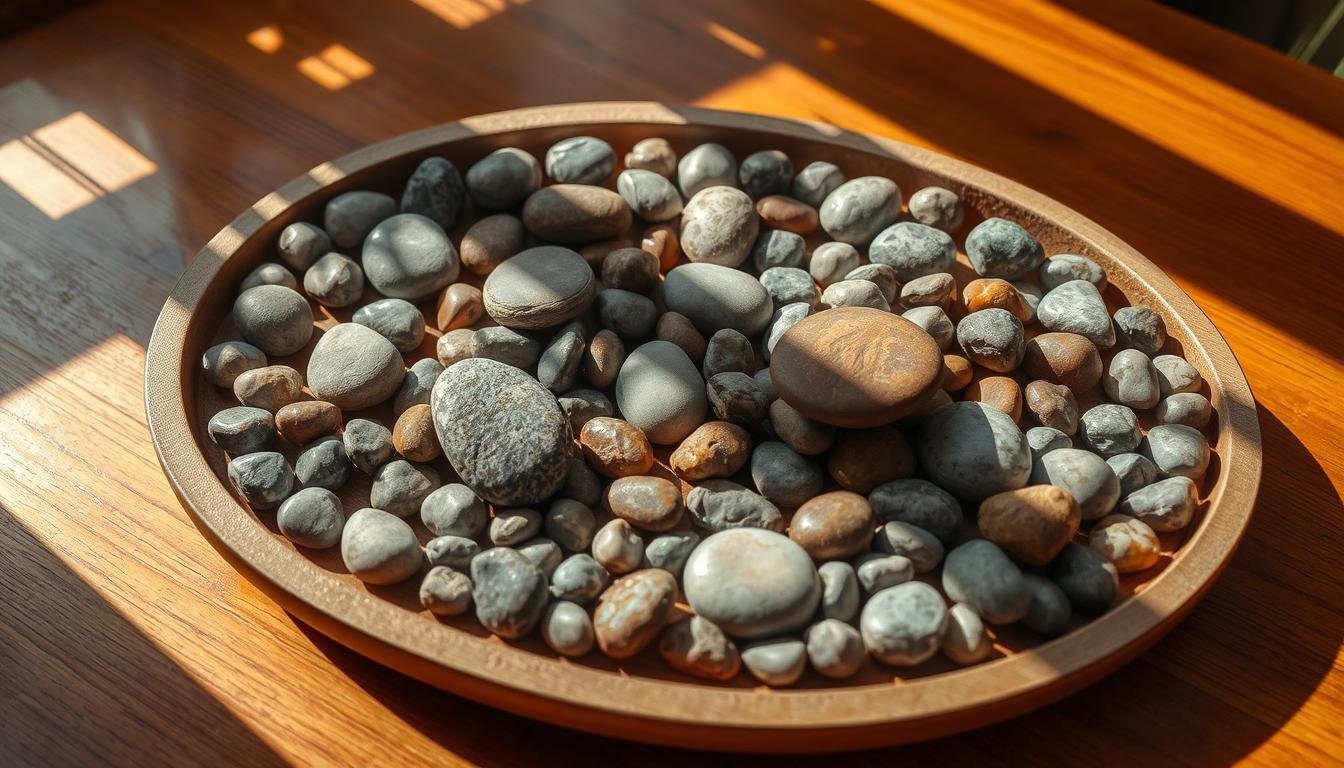
A pebble tray is a shallow tray or saucer filled with stones and a small amount of water, with the plant pot resting above the water line rather than inside it. The point is simple: as water evaporates, it can raise humidity in the air immediately around the plant. Extension and horticulture sources still recommend pebble trays as one option for adding localized moisture, especially for indoor plants dealing with dry air. The key detail is the one many people miss: the pot should not sit directly in water, because that shifts the setup from humidity support to a root-rot risk. (Illinois Extension)
That makes pebble trays less like a full-room humidity system and more like a microclimate tool. They are cheap, low-tech, easy to set up, and easy to overestimate. If you treat them like a magic fix for every tropical plant in a heated home, they will disappoint you. If you treat them like one modest piece of a larger care routine, they make a lot more sense. (Better Homes & Gardens)
Why Humidity Matters for Indoor Plants
Many common houseplants come from environments where the air carries more moisture than the average heated or air-conditioned room. The University of New Hampshire Extension says most houseplants, aside from cacti, succulents, and a few others, prefer roughly 40% to 60% relative humidity, while tropical species may prefer 70% to 80%. Illinois Extension also notes that many homes in winter drop below 30% humidity, which helps explain why plants that looked fine in one season suddenly start crisping at the edges in another. (Extension | University of New Hampshire)
Humidity matters because plants lose water through their leaves as part of normal transpiration. When indoor air gets too dry, that water loss can outpace what the plant can comfortably replace, especially if the plant is also dealing with bright light, heating vents, or inconsistent watering. Dry air does not kill every plant, and it is not the cause of every brown leaf tip, but it is a real stressor for moisture-loving foliage plants. Pebble trays belong in this conversation because they try to soften that environmental stress without changing the entire room. (Extension | University of New Hampshire)
Signs Your Plant May Need More Humidity
Low humidity usually shows up in ways plant owners recognize fast but diagnose poorly. UNH Extension points to dry, brown, brittle leaf margins as a common sign that a plant may need more humidity, and the RHS notes that dry air can also contribute to shrivelled, crispy leaves, brown tips and edges, and early dropping of leaves, buds, or flowers. These symptoms can overlap with underwatering, salt buildup, or root issues, so humidity should be part of your diagnosis, not the whole diagnosis. (Extension | University of New Hampshire)
Dry air can also make some pest problems more likely to show up or feel worse. The RHS regularly flags spider mites as a concern on humidity-loving indoor plants, and stressed foliage plants tend to be less forgiving overall. That does not mean a pebble tray is pest control. It means that keeping humidity closer to what a plant likes can reduce one source of stress in the larger care picture. (RHS)
Where a Pebble Tray Fits in a Plant Care Routine
The best place for a pebble tray is not at the center of your routine. It belongs in the supporting-cast category, alongside plant grouping, smart placement, and seasonal adjustments. If your plant is getting the wrong light, sitting in dense soil, staying soggy, or living next to a heating vent, adding a pebble tray will not solve the core problem. A good routine still starts with the basics: correct light, proper watering, drainage, stable temperature, and a potting mix that matches the plant. The tray becomes useful after those essentials are already in place. (Extension | University of New Hampshire)
That is why pebble trays work best as a refinement tool. You use one when your plant generally looks healthy but the room runs a bit dry, especially in winter, or when a plant wants slightly more humidity than your home naturally offers. They also make more sense when you want a simple, silent, no-electricity option for a small area rather than a whole-room fix. In practical terms, they are most at home on a shelf, windowsill, or tabletop where you are caring for a few smaller plants and can keep an eye on water levels without effort. (Better Homes & Gardens)
The Plants That Benefit Most
Current expert guidance is pretty consistent here: small, low-growing, humidity-loving plants are the best match. Better Homes & Gardens, citing Costa Farms horticulturist Justin Hancock, says pebble trays work best with a very wide tray and a low-growing plant, and he specifically points to plants such as fittonia, creeping ficus, hemigraphis, and selaginella. The logic is straightforward. The closer the foliage sits to the zone where evaporation is happening, the better chance the plant has of feeling that extra moisture. (Better Homes & Gardens)
RHS plant profiles also repeatedly pair pebble trays with humidity-loving plants such as bird’s nest fern, Stromanthe sanguinea ‘Triostar’, Monstera deliciosa ‘Variegata’, Philodendron melanochrysum, Anthurium crystallinum, Syngonium, Kentia palm, Alocasia, and Monstera dubia. That does not mean every one of these plants will thrive on a pebble tray alone. It means pebble trays are considered a reasonable support tool for species that appreciate higher humidity, particularly when the plant is compact enough for localized humidity to matter. (RHS)
Plants That Usually Do Not Need Pebble Trays
If you grow cacti, many succulents, or plants that tolerate drier indoor air well, pebble trays are usually unnecessary. UNH Extension explicitly separates most houseplants from cacti and succulents when discussing humidity preferences, and houseplant guidance in general treats arid-adapted plants as poor candidates for extra humidity interventions. Snake plants, ZZ plants, jade plants, haworthia, and many desert cacti are usually fine without a humidity boost and can be happier in average indoor air than in a damp microzone. (Extension | University of New Hampshire)
There is also a practical point here. The more drought-tolerant the plant, the easier it is to confuse helpful humidity support with unnecessary fussing. Plant care gets better when the routine matches the plant’s native preferences instead of forcing every species into the same setup. A pebble tray is not harmful if used correctly under a dry-air-tolerant plant, but it is often pointless. In a crowded routine, pointless steps tend not to last. (Better Homes & Gardens)
Do Pebble Trays Actually Work?
Yes, but only within a narrow lane. Multiple extension sources and the RHS still recommend trays of damp pebbles or pots set over pebbles and water as a way to increase humidity around the plant, not across an entire room. The wording matters. University and horticultural guidance does not frame pebble trays as a dramatic solution. It frames them as a modest humidity aid, often listed alongside grouping plants and humidifiers rather than above them. (Illinois Extension)
The more honest answer is this: pebble trays are real but limited. They can make sense for the right plant in the right setup, especially when you need a slight humidity bump rather than a major environmental change. They are not snake oil, and they are not a substitute for understanding your room conditions. That middle ground is where most plant owners should land. (Better Homes & Gardens)
What They Can Realistically Do
What a pebble tray can do is create a small pocket of extra moisture right near the tray as water evaporates. UNH Extension says pebble trays can help a little by adding moisture to the air, and BHG’s expert guidance says they can be useful for small, low-growing houseplants when the tray is wide enough. That is the realistic standard: not a tropical greenhouse effect, just a subtle local improvement that may reduce dry-air stress for certain plants. (Extension | University of New Hampshire)
That small improvement can still matter. If you have a fittonia on a shelf, a fern in a dry apartment, or a compact prayer-plant relative that gets crispy edges every winter, a pebble tray may take the edge off enough to improve appearance and stability. It is especially useful when paired with other low-effort choices such as moving the plant away from heating vents, keeping it near other plants, and monitoring humidity with a simple sensor or hygrometer. Used that way, the tray becomes part of a layered routine rather than a lone hero. (Extension | University of New Hampshire)
Their Biggest Limits
The biggest limit is air movement. Hancock’s explanation is blunt and useful: homes circulate air, so the farther you get from the tray, the more that humidity disperses through the room. That means taller plants, larger plants, and plants with foliage sitting well above the tray are less likely to benefit in a meaningful way. It also means that if your home is extremely dry, the tray’s effect can get swallowed by the room fast. (Better Homes & Gardens)
The second limit is expectation. A pebble tray does not replace a humidifier when you need a true environmental change. UNH Extension says a portable humidifier near the plants provides more benefit, and Maryland Extension says an automatic humidifier can provide extra humidity for plants and people in the home. If you are trying to keep a cluster of calatheas, alocasias, and anthuriums happy through a harsh winter, a pebble tray may be part of the answer, but it is rarely the whole answer. (Extension | University of New Hampshire)
How to Set Up and Maintain One Correctly
The setup is simple enough that the mistakes stand out. Start with a wide, shallow tray or saucer, add clean pebbles or marbles, then pour in water so the water line sits below the top of the pebbles. The pot should rest on the pebbles with the base and drainage holes staying above the standing water. That basic method is echoed across current guidance because the tray only works as intended when evaporation happens without the roots sitting in water. (Better Homes & Gardens)
Maintenance matters more than many quick guides admit. As the water evaporates, refill it so the tray does not become decorative gravel with no humidity effect. Rinse the tray and pebbles from time to time so mineral residue, algae, and grime do not build up. If your home has hard water, the tray can start looking rough faster, so occasional cleaning is part of using one well. BHG specifically recommends refilling as needed and cleaning the tray periodically, which is practical advice because a neglected tray can become an ugly, stagnant afterthought. (Better Homes & Gardens)
Placement also changes how useful the tray is. Put it where the plant actually lives, not somewhere convenient but disconnected from its daily conditions. Keep the plant away from blasts of dry air from heating or cooling vents when possible, because dry forced air can strip away the small benefit the tray creates. Pebble trays work best when the rest of the environment is at least somewhat cooperative. They are not strong enough to overpower a bad location. (Extension | University of New Hampshire)
Pebble Trays vs Other Humidity Methods
Compared with other options, pebble trays win on cost, simplicity, and zero electricity. They lose on power and consistency. A humidifier changes the air in a more measurable way, which is why extension sources consistently rank it as the stronger option when humidity is a real issue. Grouping plants together can also create a useful local microclimate, and terrariums or glass enclosures can hold high humidity naturally for plants that suit that environment. (Extension | University of New Hampshire)
Misting sits in a similar category to pebble trays: sometimes helpful, often overvalued, and very dependent on plant type and home conditions. The RHS includes misting as one option for several humidity-loving species, but recent gardening coverage also notes that misting is debated and can be a poor fit for some plants, especially arid-adapted ones or plants prone to leaf issues. In practice, pebble trays usually beat misting on consistency because they work passively over time rather than in a short burst. Humidifiers beat both when you need a stable humidity increase. (RHS)
A simple comparison helps:
| Method | Best for | Main strength | Main weakness |
|---|---|---|---|
| Pebble tray | Small humidity-loving plants | Cheap, easy, localized | Limited effect |
| Humidifier | Multiple plants or very dry rooms | Strongest humidity boost | Costs more and needs cleaning |
| Grouping plants | Compatible plants in one area | Builds a shared microclimate | Modest impact |
| Misting | Select species, occasional support | Fast and easy | Brief effect, not ideal for every plant |
| Terrarium / enclosure | Plants that love enclosed humidity | Holds moisture well | Not suited to every plant |
That table is the practical answer most people need. If your issue is mild and your plants are small, a pebble tray can earn its place. If your issue is chronic, room-wide, or severe, you will usually get better results from a humidifier, better plant placement, or a combination of methods. (University of Maryland Extension)
Common Mistakes That Cancel the Benefit
The first mistake is letting the pot sit in water. Illinois Extension warns directly against it, and for good reason. Once roots stay wet, you are no longer supporting humidity; you are creating a drainage problem. If a pot has drainage holes and those holes rest in standing water, the potting mix can stay too wet, which is exactly what many indoor plants do not need. (Illinois Extension)
The second mistake is using a tray that is too small or pairing it with a plant that is too large. Current expert commentary makes this point clearly: the wider the tray and the lower the plant, the more likely the setup is to do anything useful. A narrow saucer under a large floor plant is mostly cosmetic. The same goes for placing a tray under a tall pot where the foliage sits far above the evaporation zone. (Better Homes & Gardens)
The third mistake is expecting a pebble tray to correct every symptom that looks like “humidity.” Brown tips can also come from underwatering, salt buildup, inconsistent watering, damaged roots, or poor water quality. Leaf drop can reflect temperature stress or placement. If the tray becomes your first answer to every houseplant problem, you will misread what the plant is actually telling you. A better routine uses pebble trays as one small adjustment after you have ruled out the obvious basics. (Extension | University of New Hampshire)
The last mistake is ignoring hygiene and context. Standing water that is never refreshed is not ideal, and a tray placed beside a heater will always be fighting uphill. Pebble trays work best in clean setups, in stable locations, and for plants that truly want a bit more ambient moisture. Used casually, they become clutter. Used intentionally, they are simple and effective enough to keep. (Better Homes & Gardens)
Conclusion
A pebble tray for plants fits best into a care routine as a small, supportive humidity tool, not a headline solution. It can help certain small, humidity-loving houseplants by adding a little moisture to the air right around them, especially during dry indoor seasons. It is most useful when the plant is low-growing, the tray is wide, the water sits below the pebbles, and the rest of the routine is already solid. (Better Homes & Gardens)
That is really the bottom line. If you want a cheap, low-effort way to slightly improve conditions for a fern, fittonia, small philodendron, or similar tropical plant, a pebble tray can absolutely make sense. If you need to raise humidity in a serious way, protect larger plants, or stabilize a very dry room, go straight to a humidifier or a broader environmental fix. The smartest plant care routines are rarely built on one trick. They are built on matching the tool to the actual problem. (University of Maryland Extension)
FAQs
Is a pebble tray enough for a calathea or fern?
Sometimes, but not always. A pebble tray may be enough for a small calathea or fern in mildly dry conditions, especially if the plant is grouped with others and kept away from vents. If your room is very dry or the plant is already showing strong stress, a humidifier is usually the more reliable option because it changes the room conditions more meaningfully. (Better Homes & Gardens)
Can I use LECA or clay pebbles instead of stones?
Yes. The exact material matters less than the function. You need a stable layer that keeps the pot above the water while allowing evaporation from the tray. Some current plant-care guides note that clay pebbles can absorb and slowly release water, but the bigger priority is still correct water level, pot separation from standing water, and regular cleaning. (treleaf)
Should the pot sit directly in the water?
No. That is one of the fastest ways to turn a humidity aid into a watering problem. Extension guidance is consistent that the pot should sit on the pebbles, above the water, not in it. Keeping the roots and drainage holes out of standing water helps you avoid waterlogged soil and potential root rot. (Illinois Extension)
How often should I clean a pebble tray?
There is no universal schedule, because it depends on evaporation rate, dust, algae growth, and your water quality. In a practical routine, check it whenever you refill it and clean it when you see buildup, film, or residue. Current expert guidance recommends topping up water as it evaporates and rinsing the tray and pebbles periodically to keep the setup clean and working as intended. (Better Homes & Gardens)
Do pebble trays help with brown leaf tips right away?
Usually not right away. If low humidity is part of the problem, a pebble tray may help gradually by reducing ongoing dry-air stress, but existing brown tissue will not turn green again. You will judge success by healthier new growth, fewer fresh crispy edges, and better overall stability over time. Brown tips can also come from several non-humidity causes, so it is worth checking watering, light, salts, and root health too. (Extension | University of New Hampshire)