Table of Contents
What a Fiddle Leaf Fig Actually Is
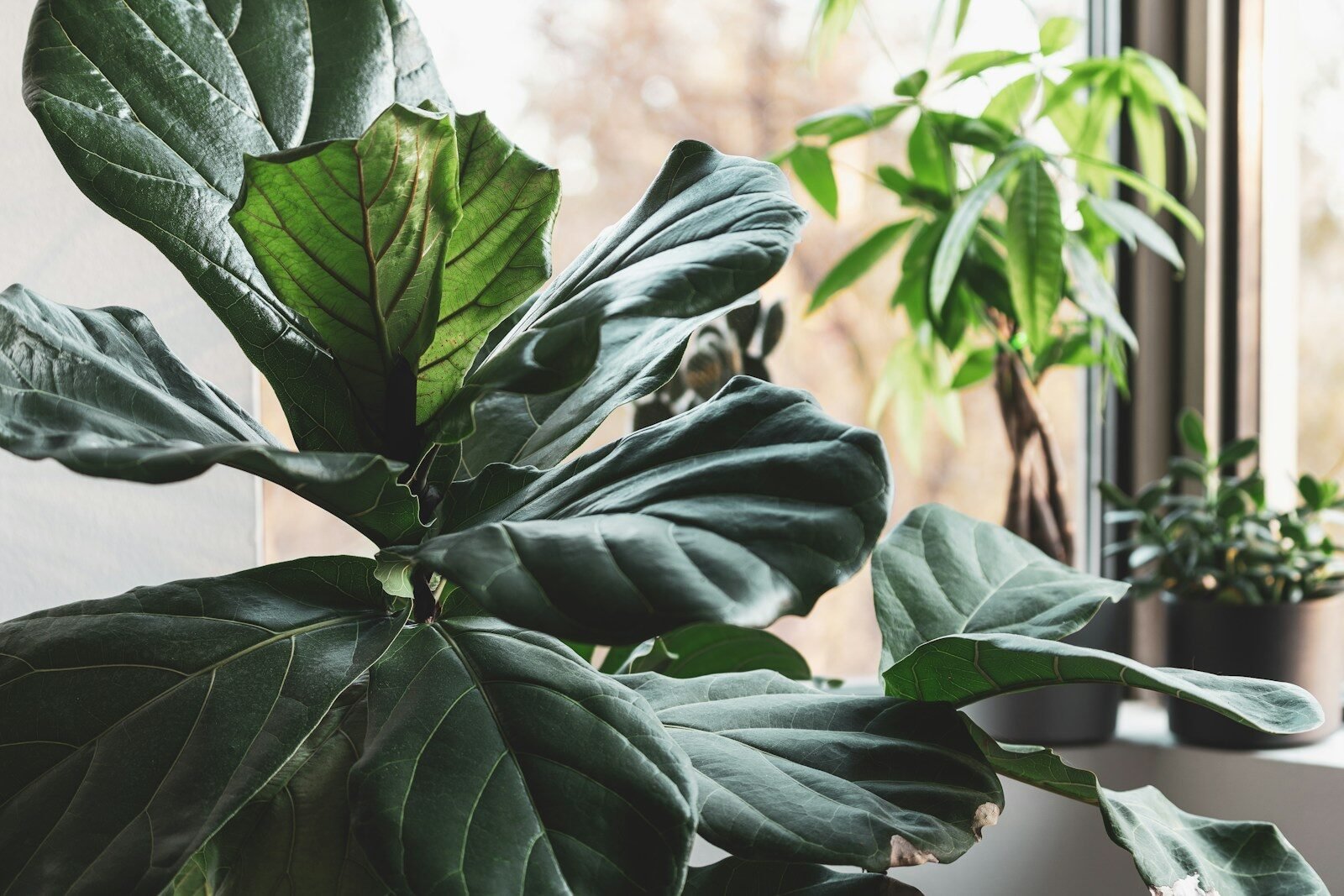
The fiddle leaf fig, or Ficus lyrata, is a tropical broadleaf evergreen native to West and Central Africa. Indoors, it is usually grown as an upright statement plant that reaches roughly 2 to 10 feet tall as a houseplant, with big leathery leaves that can reach impressive size even in containers. That dramatic look is the reason people buy it. The problem is that many people treat it like a generic houseplant, and it is not one. It behaves more like a light-hungry indoor tree that dislikes abrupt changes and punishes sloppy watering. (Plant Toolbox)
That reputation for being “fussy” is partly deserved, but it is also overstated. Most failed plants trace back to a short list of issues: weak light, wet soil, unstable placement, poor drainage, or too many changes at once. Once you understand those pressure points, care gets much easier. The goal is not to baby the plant. The goal is to give it a stable setup and stop doing the things that trigger stress. (Plant Toolbox)
Light: The Make-or-Break Variable
A healthy fiddle leaf fig wants bright indirect light and can handle some direct sun, but not every kind of sun in every room. North Carolina Extension lists bright indirect light or partial shade as the sweet spot and notes that the plant needs protection from harsh afternoon sun. That matters because the plant grows large leaves that need strong light to support steady growth, but those same leaves can scorch if you swing from low light to intense exposure too fast. (Plant Toolbox)
If your plant sits in a dim corner because it “looks good there,” that is usually the first mistake. A fiddle leaf fig in poor light often becomes leggy, slows its growth, holds wet soil for too long, and drops leaves more easily because low light reduces how much water the plant actually uses. Stronger light does not just help growth. It also lowers the odds of chronic overwatering by helping the pot dry at a healthier pace. (Ideal Home)
How much light is enough indoors
In practical terms, place the plant close to your brightest window, ideally where it gets long hours of strong ambient light. A few feet from a bright east or south window often works well, though the exact spot depends on your climate, glass, season, and how intense afternoon sun gets in your space. Rotate the pot every so often if growth starts leaning toward the light source, but do not drag the plant around the house constantly. Ficus in general do not love repeated relocation, and UF/IFAS specifically advises avoiding extra stress such as moving, pruning, repotting, or fertilizing right after plants are placed indoors. (Ask IFAS – Powered by EDIS)
When direct sun helps and when it burns
Direct sun is not automatically bad. Sudden, strong afternoon sun is the issue. Brown or bleached patches can signal leaf scorch, especially if a plant moves from a lower-light area into intense exposure without time to adapt. If you want to increase direct sun, do it gradually over a week or two rather than in one jump. That gives the foliage time to acclimate instead of burning the leaves you waited months to grow. (Plant Toolbox)

Watering: The Rule Is Not a Schedule
The biggest care mistake with fiddle leaf fig watering is following a calendar instead of the soil. Recent care guidance consistently recommends checking the soil first rather than watering every Saturday out of habit. A solid starting rule is to water when the top about 2 inches / 5 cm of the potting mix feels dry, then water thoroughly and let excess drain away. In brighter, warmer conditions that may be every 7 to 10 days during active growth. In cooler, darker months it can stretch to every 2 to 3 weeks, sometimes longer. (Ideal Home)
This is why watering advice online often sounds contradictory. Two healthy plants in different homes can need water at completely different intervals because pot size, soil mix, root mass, window exposure, temperature, and humidity all change how fast the soil dries. The right approach is to learn your plant’s rhythm, not memorize somebody else’s schedule. That shift alone solves a surprising number of problems. (Ideal Home)
How to tell when the soil is ready
Stick a finger into the mix near the root zone, not just around the dry outer edge of the pot. If the upper layer is dry and the pot feels lighter than usual, it is probably time. If the soil is still damp, wait. Room-temperature water is a smart choice, and any standing water left in a saucer should be emptied so roots are not sitting in moisture they did not ask for. (Ideal Home)
A moisture meter can help if you routinely misread the soil, especially in large decorative pots where the surface dries faster than the root ball. It is not essential, but it can be useful for beginners who keep alternating between overwatering and panic drought. Think of it as a training wheel, not a requirement. (Ideal Home)
What overwatering looks like before root rot gets worse
Overwatering does not always mean “too much water at once.” More often it means watering again before the mix has had time to breathe. Early signs include yellowing leaves, leaf drop, a pot that stays heavy for too long, and dark brown spots near the base of the leaf. Once roots spend too long in soggy soil, root rot follows. That is one of the most common reasons fiddle leaf figs decline fast. (Better Homes & Gardens)
The fix is not just “water less.” You also need to look at the whole setup: light level, drainage holes, soil texture, and pot size. A plant in weak light and dense soil can stay wet long after the top surface looks dry. That is why overwatering and poor drainage usually travel together. (Better Homes & Gardens)
Soil, Pot Choice, and Drainage
A fiddle leaf fig wants a moist but well-drained growing medium. NC State describes its preference as moist, well-drained, loamy soil, and modern care guides keep landing in the same place: airy mix, drainage holes, no stagnant water. The roots need moisture, but they also need oxygen. A dense, heavy mix that stays soggy is an invitation to root problems. (Plant Toolbox)
What kind of mix works best
A good indoor mix usually combines houseplant or potting soil with drainage boosters such as perlite and sometimes bark. You are aiming for a mix that holds enough moisture to keep the root ball from drying out instantly but still drains freely after watering. That balance matters more than chasing a magic branded formula. If water disappears straight through and the root ball stays dry, the mix is too coarse. If the soil stays swampy for days, it is too dense. (Ideal Home)
Why pot size matters more than most people think
Pot size is where people sabotage otherwise decent care. A pot that is far larger than the root ball holds extra soil, and extra soil holds extra moisture. Better Homes & Gardens recommends choosing a pot only 2 to 3 inches wider than the root ball when repotting to avoid excess wet mix hanging around unused. That advice is simple and useful because it protects you from one of the most common root rot setups: a modest plant floating in a giant decorative pot. (Better Homes & Gardens)
Drainage holes are not optional. They are the difference between control and guesswork. Without drainage, you are hoping the bottom of the pot is behaving better than it usually does. It usually is not. (Ideal Home)
Humidity, Temperature, and Placement
This plant likes medium relative humidity and warm indoor temperatures. NC State notes that it performs best above 55°F, and BHG notes that dry air can contribute to brown spotting, with humidity in the 30% to 50% range generally working better than very dry indoor conditions. The point is not to turn your living room into a rainforest. It is to avoid extremes. (Plant Toolbox)
A stable environment beats heroic interventions. Fiddle leaf figs often tolerate ordinary homes just fine when light is strong and the plant is kept away from stress points. Problems tend to show up when the plant is parked beside a blasting vent, right next to a cold draft, or in a spot where light and temperature swing sharply from day to night. (Plant Toolbox)
The stability this plant wants
Think warm, bright, and consistent. If the plant has been doing well in one spot, do not move it every few weeks because you are redecorating. UF/IFAS guidance for interior ficus production warns against stacking stresses such as moving, pruning, repotting, and fertilizing all at once after placement. That is commercial guidance, but the principle applies perfectly indoors: one change at a time. (Ask IFAS – Powered by EDIS)
Drafts, vents, heaters, and cold windows
Brown spots, leaf drop, and overall sulking often trace back to airflow and temperature stress. NC State specifically notes that brown spots can show up with temperature fluctuations from heating or cooling vents, and leaf drop can happen from too much or too little water. That combination is why winter can be rough on this plant. Many owners blame water when the real issue is dry heated air, cooler glass, shorter days, and a pot that now dries much more slowly. (Plant Toolbox)
Feeding, Growth, and Seasonal Care
A fiddle leaf fig grows most actively in spring and summer, which is when fertilizer makes the most sense. BHG notes that a fertilizer with a 3-1-2 N-P-K ratio is a common fit for leafy tropical growth. You do not need to overcomplicate this. Feed during active growth, stop or reduce during slower seasons, and do not fertilize a stressed plant just because it looks unhappy. That often adds pressure rather than solving the cause. (Better Homes & Gardens)
When to fertilize and when to stop
Start feeding once you see active growth resume and the plant is otherwise stable: decent light, no obvious rot, no recent major move, no repot shock. During fall and winter, growth often slows and so should feeding. Fertilizer is not plant caffeine. It cannot compensate for low light, damaged roots, or a bad watering routine. (Ask IFAS – Powered by EDIS)
What changes in spring, summer, fall, and winter
Seasonal care mostly means adjusting expectations. In spring and summer, you may water more often, feed more regularly, and consider pruning or repotting if needed. In fall and winter, growth slows, water demand drops, and mistakes around overwatering become more common because the plant is using less moisture. That is also the time to watch for cold drafts, low humidity, and dimmer light. (Ideal Home)
Pruning, Branching, Repotting, and Propagation
Pruning is not just cosmetic. It is how you guide shape, control height, and sometimes encourage branching. A tall single-stem plant can look great, but many people prefer a fuller canopy. Cutting above a node during active growth can help push new branching, though the plant’s response depends on health, light, and timing. The best candidates for pruning are stable plants already growing well, not ones that are barely hanging on. (Ideal Home)
How to shape a taller or bushier plant
For a bushier form, prune just above a node where you want new growth to emerge. Use clean tools and avoid taking off too much at once. If you remove healthy stem sections, you can often use them for stem cuttings, which NC State lists as a recommended propagation strategy for Ficus lyrata. Pruning works best when the plant is getting enough light to support regrowth. Without that, you may end up with slower recovery and lankier new growth. (Plant Toolbox)
Repotting without causing more stress
Repot only when the plant actually needs it: roots circling tightly, roots emerging from drainage holes, watering becoming unusually difficult, or growth stalling despite otherwise solid conditions. Spring is usually the easiest time because the plant is entering active growth. Choose a pot only slightly larger, refresh with a loose, well-draining mix, and avoid stacking stress by repotting and hard-pruning and changing the light at the same time. (Ideal Home)
Common Problems and How to Fix Them
Most fiddle leaf fig problems are readable once you stop looking for one universal cause. The leaves tell a story, but you have to match the symptom with the setup. Brown at the edges means something different from dark spots near the base. Yellowing means something different when the soil is wet than when the pot is bone dry. Diagnosis gets easier when you read the plant in context: soil moisture, light, drainage, airflow, and recent changes. (Better Homes & Gardens)
Brown spots and crispy edges
Brown spots are usually about water, humidity, sun, or pests. Dark brown spots near the base of the leaf often point to overwatering and possible root rot. Brown edges that look dry or crisp are more often linked to underwatering, low humidity, or a root system that dries too hard between waterings. Bleached or scorched patches suggest too much direct sun. Scattered damage can also come from pests such as mealybugs, spider mites, aphids, or scale. (Better Homes & Gardens)
The fix depends on the pattern. Wet soil and dark lower spots call for drainage and watering corrections. Crispy margins call for better watering consistency and less dry stress. Burned leaves mean relocating the plant away from harsh direct exposure. Pest damage means isolation, cleanup, and treatment, often with washing and neem oil or another houseplant-safe control. One symptom, one cause, is rarely how this plant works. (Better Homes & Gardens)
Leaf drop, yellow leaves, and stalled growth
Leaf drop is a classic stress response. NC State notes it can happen from both too much and too little water, and temperature swings make things worse. Yellowing often tracks with overwatering first, especially if the mix stays wet for too long. Stalled growth can mean the plant is simply in a low-growth season, but it can also signal weak light, exhausted soil, or a root system that is either cramped or unhealthy. (Plant Toolbox)
If your plant stops growing, do not jump straight to fertilizer. First check the light. Then check how long the mix stays wet. Then inspect whether the roots are packed tight or failing. Growth problems usually come from environment and roots before they come from nutrients. (Ask IFAS – Powered by EDIS)
Pests and pet safety
As a houseplant, fiddle leaf fig should be monitored for scale, aphids, mealybugs, thrips, and spider mites. Pests often hit harder when the plant is already stressed by poor light, watering mistakes, or dry air. Cleaning leaves helps more than appearance; Clemson HGIC recommends wiping smooth leaves with a damp cloth, which removes dust and can make it easier to spot early infestations. (Plant Toolbox)
There is also a safety issue. The ASPCA says fiddle leaf fig is mildly toxic to dogs and cats, with small ingestions potentially causing gastrointestinal irritation, and sap can irritate the skin. NC State also lists the plant as toxic if ingested and notes symptoms such as oral irritation, drooling, vomiting, and difficulty swallowing. So if you have curious pets or toddlers, placement matters. (ASPCA)
Conclusion
Good fiddle leaf fig care is less about secret tricks and more about getting five things right: strong light, controlled watering, fast drainage, stable placement, and patient adjustments. That is the entire game. Once those are in place, fertilizer, pruning, and repotting become useful tools instead of emergency fixes. Most struggling plants do not need more attention. They need fewer mistakes. (Plant Toolbox)
If you want the simplest path to a healthier plant, start here: move it to better light, check the soil before watering, make sure the pot drains, and stop making multiple big changes at once. That is how a dramatic indoor tree stops acting dramatic. (Ask IFAS – Powered by EDIS)
FAQs
Is fiddle leaf fig hard to care for?
It is not the easiest houseplant, but it is not impossibly difficult either. Its reputation comes from reacting quickly to poor light, overwatering, and sudden environmental shifts. Once the setup is right, care becomes much more predictable. (Plant Toolbox)
Should I mist my fiddle leaf fig?
Misting is not a cure-all. It may briefly raise surface moisture, but it does not reliably solve a dry room. For persistently dry air, a better move is stable placement away from vents plus a humidifier if needed. Cleaning the leaves with a damp cloth is useful; constant misting is not essential. (Home & Garden Information Center)
Can a fiddle leaf fig recover from root rot?
Yes, sometimes. Recovery depends on how much healthy root tissue remains and whether you correct the cause fast. The usual recovery path is to stop chronic overwatering, remove dead roots, repot into a loose draining mix, and improve light so the plant can use water more efficiently. (Better Homes & Gardens)
How fast does a fiddle leaf fig grow indoors?
Growth is usually moderate rather than explosive. NC State describes the species as having a medium growth rate, and as a houseplant it often reaches 2 to 10 feet over time when conditions are strong. Light, root health, and season make a huge difference in how fast that happens. (Plant Toolbox)
Where is the best place to put a fiddle leaf fig?
The best place is near a bright window with strong indirect light, steady temperatures, and no direct blast from vents, heaters, or drafty doors. Avoid deep corners and avoid harsh afternoon sun unless the plant is acclimated to it gradually. In most homes, the right location solves more problems than any product you can buy. (Plant Toolbox)