Table of Contents
What a Pebble Tray Is
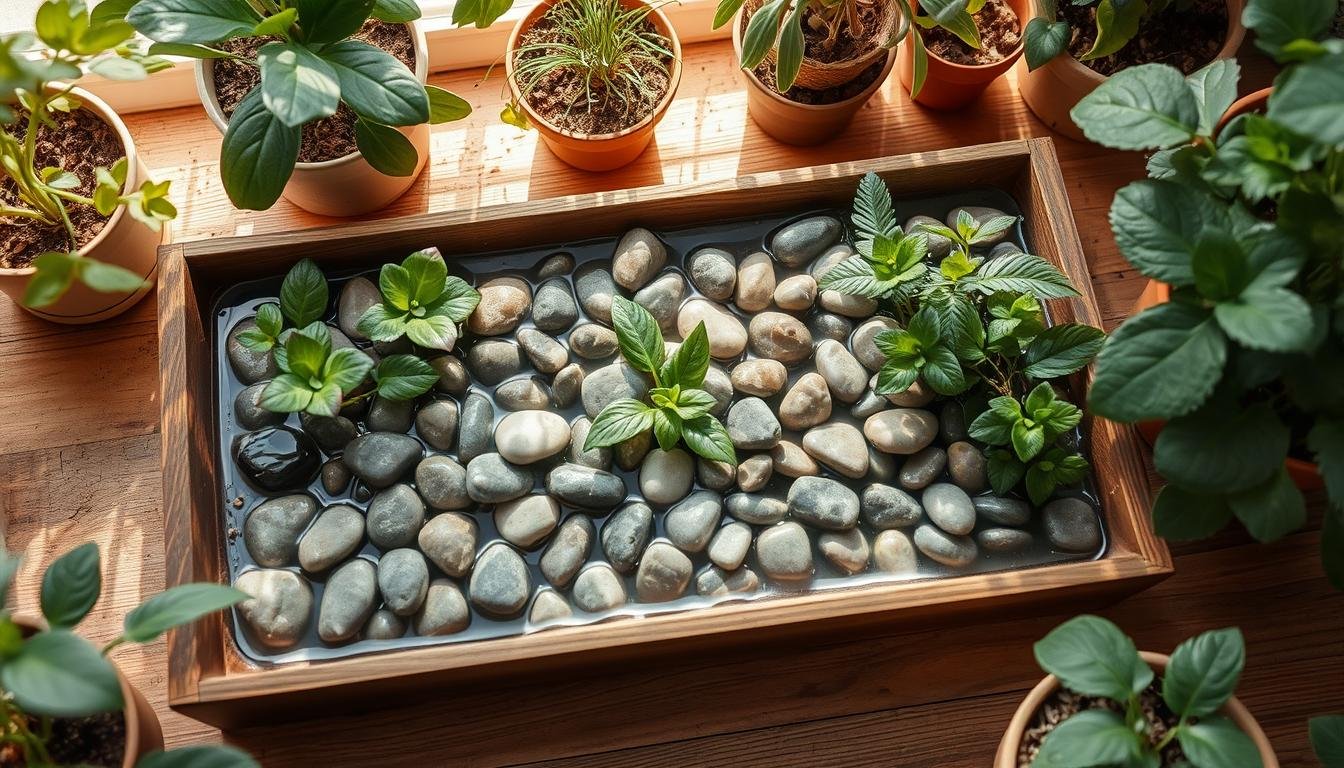
A DIY pebble tray is exactly what it sounds like: a shallow waterproof tray filled with pebbles and a small amount of water, placed beneath or around a potted plant to create a more humid pocket of air. The pebbles keep the pot above the water line, which matters because the goal is to raise local humidity through evaporation, not soak the roots. It is cheap, simple, low-tech, and easy to build with items many plant owners already have at home. That mix of convenience and low risk is why pebble trays keep showing up in plant care advice. (University of Maryland Extension)
What makes the idea attractive is that it solves a real indoor problem. Most homes, especially during heating season, are drier than many tropical houseplants prefer. University of Maryland Extension says most indoor environments lack enough humidity for healthy indoor plants, and the University of New Hampshire Extension says portable humidifiers help the most, while pebble trays can still add a little moisture around the plant. (University of Maryland Extension)
Why Houseplants Care About Humidity
Humidity affects how quickly plants lose water through their leaves. When indoor air is dry, moisture leaves the leaf surface faster, and that can show up as brown tips, crisp edges, curling, drooping, stalled growth, or leaves that never look fully comfortable, even when watering seems fine. Dry air is not the only reason those symptoms happen, but it is a common part of the puzzle for tropical foliage plants. (University of Maryland Extension)
Not every plant wants the same air. University guidance makes the broad split clear: most indoor foliage plants benefit from more humidity, while cacti and succulents are the main exceptions. The RHS profiles go further and show how wide the range can be: a bird’s nest fern may want 60% humidity or higher, a variegated monstera can prefer 60% to 80%, and some anthuriums may want around 70% or more. That is why a one-size-fits-all answer rarely works in plant care. (University of Maryland Extension)
How a Pebble Tray Works
The mechanism is simple. Water in the tray evaporates, and that evaporation adds moisture to the air immediately around the plant. Because the pot is resting on pebbles rather than sitting directly in water, the roots stay separated from standing water if the tray is set up correctly. In plain terms, the tray is trying to create a small, local humidity bump, not turn your whole room into a greenhouse. (University of Maryland Extension)
That distinction matters more than most articles admit. A pebble tray works at the scale of a microclimate, not an entire room. Better Homes & Gardens notes that pebble trays mainly increase humidity in the plant’s immediate vicinity, and UNH Extension makes a similar point by saying pebble trays can help a little, while a portable humidifier provides the most benefit. If you go in expecting a tray to fix bone-dry air across a large living room, you will probably be disappointed. (Better Homes & Gardens)
Do Pebble Trays Actually Work?
Yes, but with limits. A pebble tray can make sense when your plant needs a modest boost, your indoor air is only somewhat dry, and you are trying to improve conditions right around a pot or a small cluster of plants. Extension and RHS guidance still recommend trays as one of several valid ways to increase ambient moisture around humidity-loving houseplants, which tells you the method is not nonsense. (University of Maryland Extension)
The problem is scale. Pebble trays are not strong enough to solve every humidity issue, and they are not a replacement for a humidifier when the air is truly dry or the plant is especially demanding. That is the honest middle ground: the tray is useful as a small, localized assist, not a miracle device. Readers usually need that sentence more than another cheerful tutorial. (Extension | University of New Hampshire)
Where Pebble Trays Help Most
Pebble trays tend to make the most sense for small to medium houseplants, especially ones with clear sensitivity to dry indoor air but that do not require constant greenhouse-level humidity. They are also more practical when used in still-air areas rather than in places blasted by heating vents, air conditioning, or strong fans. If the moisture can linger around the leaves instead of getting stripped away immediately, the tray has a better shot at doing something noticeable. (Extension | University of New Hampshire)
They also work better as part of a system. Grouping plants together, using a tray, and keeping the plant away from drafts can create a more stable local environment than relying on one trick by itself. UNH Extension explicitly recommends grouping plants to create a microclimate and says bathrooms or kitchens can also be more favorable because they naturally hold more humidity than many other rooms. (Extension | University of New Hampshire)
Where They Fall Short
A tray falls short when a plant’s humidity demand is high and the room is seriously dry. That is common in winter, especially in heated homes. If you are trying to keep a demanding calathea, fern, anthurium, or alocasia happy in a dry room without measuring humidity, a pebble tray may help at the margins but still not be enough to stop browning and stress. (RHS)
It also falls short when people use it incorrectly. A tiny saucer under a large plant canopy will not do much. A pot sitting directly in water is not a humidity strategy; it is a root rot setup. And if the tray is crusted with fertilizer salts, algae, or stale water, the “easy humidity fix” becomes one more source of mess. (Platt Hill Nursery)
Best Plants for Pebble Trays
Pebble trays make the most sense for tropical foliage plants and other houseplants that naturally prefer moderate to high humidity. Based on current RHS guidance, good candidates include bird’s nest fern, stromanthe, monstera, philodendron, anthurium, syngonium, kentia palm, and alocasia. These plants vary in how much humidity they want, but they share one trait: dry indoor air can push them into stress faster than tougher, drier-climate plants. (RHS)
That does not mean every plant on that list needs a tray. Some, like syngonium and kentia palm, can often tolerate average household conditions better than more sensitive species. Others, like certain anthuriums or moisture-loving ferns, may outgrow what a tray can realistically provide. The smart move is to treat the tray as a support tool matched to the plant and the room, not as a blanket rule for all indoor greenery. (RHS)
Plants That Usually Do Better Without One
Most succulents, cacti, and other arid-adapted plants do not need a pebble tray and may actively prefer drier air. University of Maryland Extension makes the exception clear: most indoor plants benefit from added humidity, but cacti and succulents are the main group that usually do not. For these plants, better care usually means bright light, sharp drainage, and restraint with watering rather than trying to raise humidity around them. (University of Maryland Extension)
There is also a practical reason to skip the tray for plants that are already borderline wet. If you are dealing with overwatering, heavy soil, poor drainage, or a pot that never dries properly, adding a humidity setup can distract you from the real issue. Dry leaf tips do not automatically mean “needs more moisture in the air.” Sometimes they mean mineral buildup, root stress, inconsistent watering, or heat exposure. The tray is a tool, not a diagnosis. (Extension | University of New Hampshire)
Materials and Setup Choices
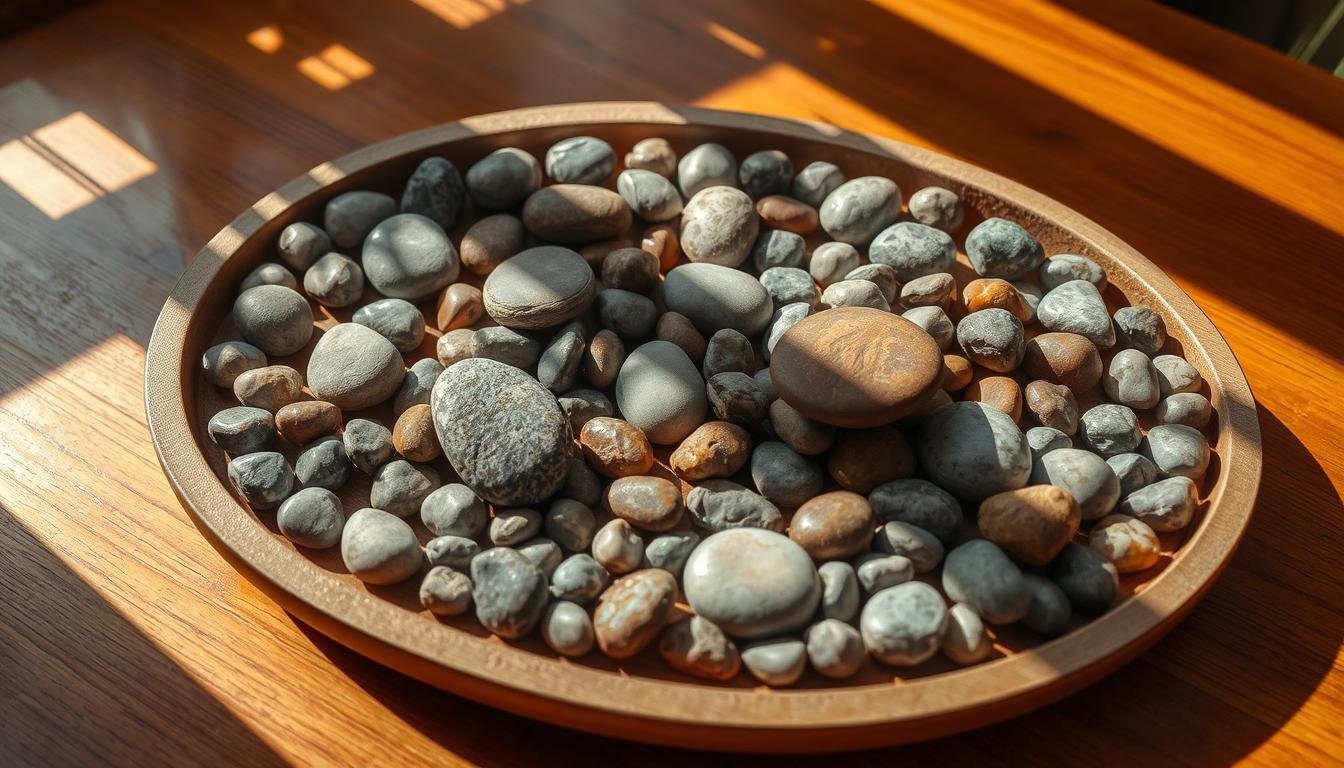
The supplies are uncomplicated: a waterproof tray or saucer, clean pebbles or small stones, and water. You can use decorative river rocks, gravel, or lightweight clay pebbles as long as the tray itself does not leak and the surface is stable enough to support the pot. A tray that extends beyond the pot footprint works better than one that barely fits the base, because more exposed water surface generally means more evaporation. (The Spruce)
The best tray material is usually glass, glazed ceramic, plastic, or metal with a protective finish. Unglazed terracotta can wick moisture, and trays that are too shallow can evaporate quickly without giving you much consistency. If you want the easiest version, use the saucer you already have under a nursery pot. If you want a prettier display, use a decorative tray that is wide enough to hold both pebbles and the pot without wobbling. (Flora Grubb Gardens Plant Nursery)
How to Make a DIY Pebble Tray
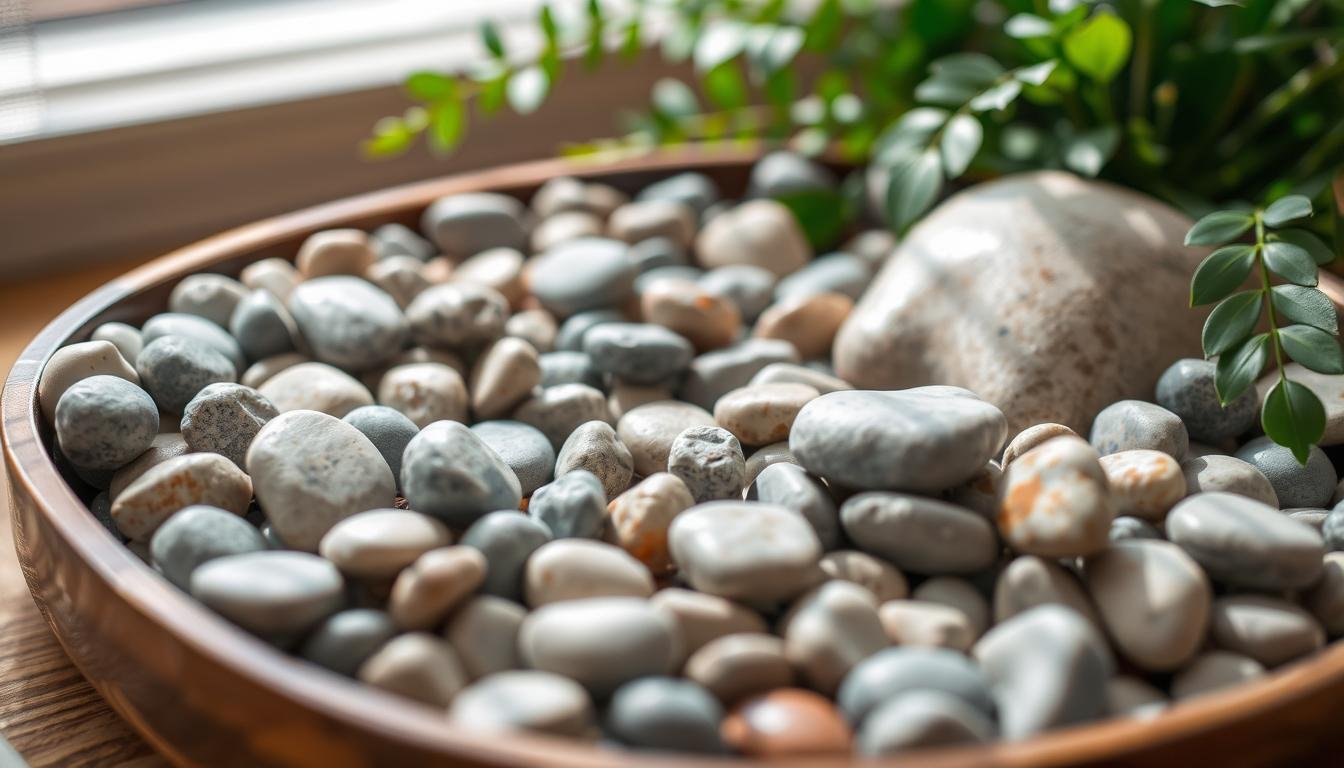
Making one takes minutes. Put a layer of pebbles in a waterproof tray, add water so the water line stays below the top of the pebbles, then place the plant on top. That is the whole build. The only rule you absolutely cannot break is keeping the bottom of the pot out of standing water. (The Spruce)
A short version looks like this:
- Choose a waterproof tray or saucer.
- Add a generous layer of pebbles.
- Pour in water until the tops of the pebbles still sit above the water line.
- Set the pot on the pebbles, not in the water.
- Refill as the water evaporates. (The Spruce)
Pick the Right Tray Size
Size affects performance. A tray that is only a hair wider than the pot can work, but a wider tray gives evaporation more surface area and usually creates a better local humidity zone. Some practical guides recommend at least an inch wider than a small pot and several inches wider for larger pots, which is a sensible rule because tiny trays under broad foliage do very little. (treleaf)
Think about canopy, not just container. If the leaves spread far beyond the pot, the tray should support that reality. A small saucer under a wide fern or calathea is like trying to humidify a room with a teacup. Match the tray to the air space you are trying to influence. That is where most DIY setups quietly fail. (Better Homes & Gardens)
Add Pebbles and Water Correctly
Use enough pebbles to create height and airflow under the pot. Then add water only until it sits just below the pebble tops. That way, the water can evaporate while the pot stays elevated. If the water climbs over the pebble line and touches the drainage holes or base of the nursery pot, you have changed the system from “humidity tray” to “bottom watering without control.” (Platt Hill Nursery)
The water itself does not need to be fancy. Tap water is usually fine for the tray, though hard water may leave mineral residue over time. If your plant is sensitive and you already use filtered or distilled water for watering, you can use the same for the tray, but the bigger issue is cleanliness, not purity. Evaporation works either way. (RHS)
Place the Plant the Safe Way
The safest setup is a plant in a pot with drainage holes, sitting on top of the pebbles so excess water from normal watering can still drain away. That separation matters because many humidity-loving plants also hate wet feet. Calathea, monstera, philodendron, and many others want moisture and humidity, but they still need oxygen around their roots and protection from soggy conditions. (RHS)
Where you place the tray also matters. Keep it away from heating vents, harsh direct sun that overheats the roots, and strong drafts that strip away whatever moisture is accumulating nearby. If possible, place humidity-loving plants together. The tray works best when the surrounding environment is not actively fighting it. (Extension | University of New Hampshire)
Common Mistakes to Avoid
The most common mistake is letting the pot sit directly in water. That is the quickest way to invite root problems. The second is using a tray that is too small to matter. The third is expecting the tray to fix every sign of stress, when the real cause may be poor watering habits, low light, mineral buildup, pests, or hot dry airflow. Good plant care is rarely one-variable math. (Platt Hill Nursery)
Another common mistake is neglecting cleanup. Stagnant water and dirty pebbles can become ugly fast, especially if fertilizer runoff drains into the tray. Salt crust, algae, and biofilm do not mean the tray is dangerous by default, but they do mean it is time to rinse it out. A simple humidity tool should stay simple. The minute it becomes a swampy science project, it stops being useful. (Extension | University of New Hampshire)
Pebble Tray vs Humidifier vs Misting
If you want the short answer, here it is: a humidifier is the strongest and most reliable option, a pebble tray is a mild local helper, and misting is the least dependable method for raising humidity over time. UNH Extension explicitly says a portable humidifier near the plants can provide the most benefit, while pebble trays help a little. University of Maryland Extension also says it is questionable whether misting really increases humidity, which lines up with the lived experience of many indoor growers. (Extension | University of New Hampshire)
| Method | Best for | Main upside | Main downside |
|---|---|---|---|
| Pebble tray | Mild local humidity boost | Cheap, simple, passive | Limited reach |
| Humidifier | Consistent humidity for demanding plants | Strongest measurable effect | Costs more, needs cleaning |
| Misting | Temporary surface moisture, plant-specific use | Fast and easy | Short-lived and unreliable for room humidity |
A tray is usually the best choice when you want a low-cost, low-effort boost for one plant or a small grouping. A humidifier is the better call when you grow humidity-hungry plants regularly, your home is dry for long stretches, or your plant keeps showing low-humidity stress despite decent watering and placement. Misting can still have niche uses, but it is not the same thing as changing the plant’s environment in a stable way. (Extension | University of New Hampshire)
How to Tell Whether It’s Helping
Do not guess. Use a hygrometer if you want a real answer. UNH Extension recommends monitoring humidity levels with a sensor, and that advice is better than relying on folklore. If the number near the plant nudges upward and the plant’s new growth looks cleaner, softer, and less crispy, the tray is probably contributing something useful. If the meter barely changes and the plant still struggles, the tray may be too small or too weak for the situation. (Extension | University of New Hampshire)
Plants also give slower visual feedback. You are looking for less edge browning, fewer curled leaves, steadier unfurling, and less stress during dry spells, not overnight transformation. Old damage usually will not reverse. The more useful signal is whether new leaves come in healthier than the last batch. That is how you judge most plant-care changes, and humidity is no different. (RHS)
Cleaning and Maintenance
A pebble tray is low maintenance, not no maintenance. Refill the water as it evaporates, empty and rinse the tray when you see film or mineral crust, and wash the pebbles periodically so fertilizer runoff and dust do not build up. If you use hard water, expect residue faster. If you bottom-water plants separately, keep that distinct from the pebble tray so you do not accidentally leave roots soaking longer than intended. (The Spruce)
Maintenance is also a chance to check whether the tray still makes sense. Maybe your plant moved into a bathroom and no longer needs the extra help. Maybe winter ended and the room is naturally less dry. Or maybe your plant collection has grown enough that a small humidifier now makes more sense than keeping six trays topped off. Good plant care gets better when you stop treating every setup as permanent. (Extension | University of New Hampshire)
Conclusion
A DIY pebble tray is a good tool when you use it for what it is: a simple, cheap way to create a small humidity boost around a plant. It is most useful for tropical houseplants that dislike dry indoor air, and it works best when the tray is properly sized, the pot stays above the water, and the surrounding environment is not full of drafts and heat blasts. That is the version worth copying. (University of Maryland Extension)
It is not a cure-all. If your home is very dry or your plant is especially humidity-hungry, a tray may help but still not be enough. In that case, a humidifier, better placement, grouping plants, or a more suitable plant choice will do more than forcing a weak setup to work harder than it can. The smartest plant care decision is usually the one that admits limits early. (Extension | University of New Hampshire)
FAQs
How much water should be in a pebble tray?
Add enough water that it sits below the top of the pebbles. The water should evaporate into the air, but the pot itself should not sit in it. If the base of the pot or the roots stay in standing water, you raise the risk of root rot instead of humidity. (Platt Hill Nursery)
Do pebble trays work for all houseplants?
No. They are most useful for humidity-loving tropical plants and least useful for cacti, succulents, and plants that already prefer dry air. Even among tropicals, some only need a mild boost while others need more than a tray can provide. (University of Maryland Extension)
Can a pebble tray replace a humidifier?
Usually not. A tray can help in the immediate area around a plant, but a humidifier is more consistent and stronger when you need a meaningful increase in indoor humidity. If a plant keeps showing low-humidity stress, the humidifier is usually the better next step. (Extension | University of New Hampshire)
How often should I clean a pebble tray?
Clean it whenever you notice algae, mineral crust, fertilizer residue, or stale water smell. In many homes, a quick rinse every week or two and a more thorough wash periodically is enough. The point is to keep the tray from becoming grimy or letting residue build up around the pot. (Extension | University of New Hampshire)
Why are my leaves still getting brown tips even with a pebble tray?
Because brown tips are not caused by humidity alone. Dry air can contribute, but so can irregular watering, hard water, excess fertilizer salts, hot drafts, root stress, and species-specific sensitivity. A tray may be helping a little while another problem is still doing the damage. That is why it helps to check humidity with a hygrometer and review the whole care setup, not just one fix. (Extension | University of New Hampshire)