Table of Contents
What a Pebble Tray Really Is
A DIY pebble tray is exactly what it sounds like: a shallow base filled with pebbles that creates a stable, good-looking surface for items that tend to leave puddles behind. In a bathroom, that usually means soap, a dispenser, a toothbrush cup, or a small plant near the sink. In a kitchen, it can hold dish soap, a scrub brush, a sponge caddy, or a herb pot that would otherwise leave a damp ring on the counter. The point is not just decoration. A good pebble tray creates a little space between wet items and the tray base, so drips can settle below the objects instead of keeping everything constantly soggy.
That same basic idea also shows up in plant humidity trays. Current gardening guides still recommend a watertight tray, pebbles, and water placed below the pebble line so the plant sits above standing water rather than in it. The wider tray helps create a more humid microclimate around the plant, and the pot should stay above the waterline to avoid waterlogged soil and root rot. That matters here because it shows the basic design principle is sound: elevate the object, let moisture sit below, and avoid direct long-term contact with standing water. (The Spruce)
The bathroom-and-kitchen version is a little different. You are not building a humidity tool first. You are building a durable drainage-friendly tray that also happens to look better than a plain plastic catch tray. That difference changes the material choices. A plant tray can be loose pebbles and water. A sink-side tray has to deal with soap scum, toothpaste flecks, grease mist, cleaning products, splashes, and constant handling. If you ignore that, you end up with something that feels clever on day one and annoying by day ten.
Why a Pebble Tray Works So Well in Wet Spaces
Bathrooms and kitchens create the same problem in different ways: water lands where you do not want it, then sits there. A soap bar dissolves faster when it rests in a puddle. A dish brush drips onto the counter. A hand soap bottle leaves a sticky ring. A mini plant pot sweats after watering. A pebble tray fixes that by creating texture, airflow, and drainage in one move. It is the same logic behind raised soap dishes and boot trays filled with stones: keep the item above the moisture instead of inside it.
Moisture control is not cosmetic. The EPA is blunt about it: the key to mold control is moisture control, and wet areas should be dried within 24 to 48 hours to help prevent mold growth. The CDC adds that indoor humidity should stay no higher than 50% when possible, and that bathrooms and kitchens should be ventilated with fans that vent outside. That matters for a pebble tray because the tray itself is not the problem; trapped moisture is. If the tray keeps water contained but never dries, you have built a tiny mold habitat. If it allows drips to collect temporarily and then dry out with airflow and regular cleaning, it becomes a useful tool instead. (US EPA)
There is also a practical styling benefit. Pebbles visually soften hard spaces full of tile, quartz, porcelain, chrome, and glass. A tray like this can make a builder-grade sink area look more intentional without forcing a full decor theme. That is why the idea keeps resurfacing across different DIY formats, from pebble bath mats to pebble soap dishes to small decorative trays. The concept is attractive because it solves a real problem while adding texture. The trick is building one that is easy to live with, not just easy to photograph. (Curbly)
Where to Use It
By the Bathroom Sink
The bathroom sink is the most obvious place for a pebble tray, and for good reason. This is where daily clutter collects: soap, toothbrushes, razors, face wash, a small candle, a tray for rings, maybe a hand cream tube. Put those items directly on the counter and you get water halos, product drips, and messy edges that make the whole vanity look dirtier than it is. Put them on a pebble tray and the area instantly feels more controlled. The tray creates one visual zone, and the pebbles hide minor drips until you are ready to rinse or wipe them away.
This setup works best when you stay realistic about size. A small vanity needs a tight tray that holds only the daily basics. If you try to turn it into a catch-all for every product in your routine, it stops being practical and starts becoming visual clutter with stones underneath. Smooth pebbles are the smart choice here because they are easier to wipe than rough jagged rocks, and similar-height stones create a flatter top surface so bottles do not wobble. If the tray will sit close to daily splash zones, a 100% silicone kitchen-and-bath sealant makes more sense than a generic craft glue because it is built for waterproof, mold-resistant sealing in wet interior areas. (This Old House)
A bathroom tray also lives or dies by ventilation. Even a well-built tray can get funky if the room stays damp for hours after every shower. The CDC recommends reducing humidity, improving airflow, fixing leaks, and using bathroom exhaust fans vented outside. In practical terms, that means your tray will stay cleaner longer if it sits in a bathroom that actually dries out. A pebble tray is a moisture-management accessory, not a substitute for basic ventilation. (CDC)
Beside the Kitchen Sink
At the kitchen sink, the tray does a slightly different job. It is less about a spa look and more about containing chaos. Dish soap, hand soap, a scrubber, a sponge, and maybe a small brush all tend to leave a wet, grimy patch behind. A DIY pebble tray creates a simple raised surface that helps these items drip into the tray instead of spreading across the countertop. That makes cleanup faster and protects the counter from the constant damp ring that often builds up around sink tools.
The kitchen version needs stronger material discipline. Grease mist, food splatter, and soap residue are harder on a tray than toothpaste and hand soap. If the tray is going near food-prep space, look for a cured silicone product rated for kitchen and bath use. For example, DAP 100% Silicone Kitchen, Bath & Plumbing Sealant states that, once cured and washed, it meets the FDA regulation cited for incidental food contact, and it is marketed for sinks, backsplashes, vanities, countertops, and fixtures. That does not mean your tray becomes a cutting board. It means the product is a better fit for a wet kitchen zone than a random all-purpose glue from the junk drawer. (Lowe’s PDF)
The kitchen is also where stone choice matters more than people expect. Natural stone can be sensitive to acidic cleaners depending on composition. The Natural Stone Institute recommends mild, non-acidic cleaners because calcareous stone, in particular, can react badly to acidic solutions. So if you are the kind of person who cleans everything with vinegar, pause before using unsealed natural stones. A tray made with polished glass pebbles or sealed smooth stones can be easier to maintain than raw porous rock. (Natural Stone Institute)
For Soap, Brushes, Bottles, and Small Plants
A pebble tray does not need to serve only one category of object. In real homes, the most useful version often mixes function. You might place a soap dispenser and a tiny plant together near the kitchen sink. In the bathroom, you might keep a bar soap on one side and a small cup for rings or hair ties on the other. The tray works because it creates one stable, washable base for items that otherwise scatter drips around the room.
It also crosses over nicely into small indoor plant care. Pebble tray guides for plants still recommend a watertight tray, stones, and water kept below the top of the pebbles so the pot stays out of standing water. Humidity-loving plants can benefit from that setup, especially when the tray is wider than the pot. So if your bathroom or kitchen already has a small plant near a bright sink or window, the tray can do double duty: better styling and a mild humidity boost. Just keep the plant pot above the water level. Once the drainage hole sits directly in water, you have stopped helping the plant and started increasing the risk of root rot. (The Spruce)
There is one limit worth stating clearly. A pebble tray is best for small daily-use zones, not heavy storage. It is great for a soap bottle, sponge, brush, hand towel ring dish, or little herb pot. It is not great for five full-size toiletries, heavy glass containers, or anything that tips easily. Think of it as a micro-organization tool, not a replacement for full sink storage.
What You Need
Best Base, Pebbles, and Adhesive Choices
The best base is a shallow, watertight tray with a lip high enough to contain drips but low enough to look clean on a counter. Ceramic trays look polished. Metal trays can work, but only if they are rust-resistant or well-coated. Plastic is cheap and practical, especially if you plan to cover most of it with pebbles anyway. A plant saucer can work beautifully for a simple version, and wider trays are better if you want to use the tray under a plant because a broader surface supports better evaporation. Avoid absorbent bases such as unsealed terracotta in sink-side use, especially on wood surfaces, since wicking can create the exact moisture issue you were trying to prevent. (Flora Grubb Gardens Plant Nursery)
For pebbles, aim for smooth stones with relatively similar thickness. That one choice solves half the common complaints. Similar-height stones make it easier for bottles and soap dishes to sit level. Smooth stones are easier to wipe clean. Polished pebbles or decorative river rocks often work better than rough landscaping gravel because they are less likely to trap residue and less likely to scratch nearby surfaces. If you want a more natural look, you can use garden stones, but they need a serious wash and full drying first. Even plant-tray guides that allow garden stones still stress using clean rocks. (The Spruce)
Now the important part: adhesive choice. If you want a loose-fill tray where the pebbles can be removed and rinsed, you may not need glue at all. That is often the smartest option for a tray meant to hold soap or a plant pot because it is easy to deep-clean. If you want a fixed decorative tray, 100% silicone kitchen-and-bath sealant is usually the safest practical pick for wet interior spaces because it is waterproof, flexible, and mold-resistant. This Old House recommends pure silicone where a fully waterproof barrier is required, and current kitchen-and-bath product sheets from GE and DAP describe these sealants as waterproof, flexible, and suitable for wet bathroom and kitchen applications. Epoxy can also work, but it creates a more rigid bond and is less forgiving if your tray base flexes or you need to replace a stone later. (This Old House)
How to Make It
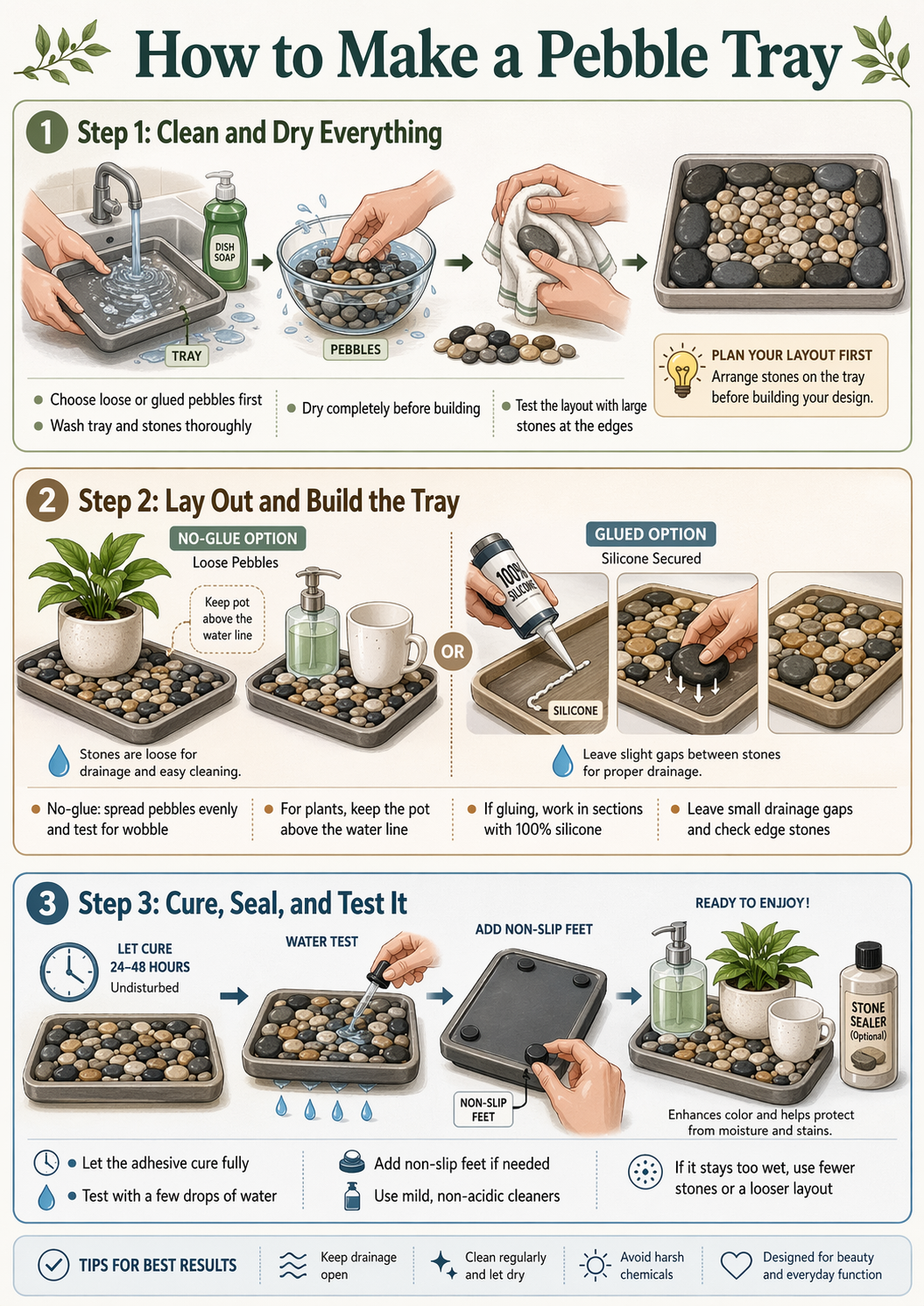
Step 1: Clean and Dry Everything
Start by choosing the tray’s purpose before you build it. That sounds obvious, but it changes the whole project. A loose pebble tray works best if you want easy cleaning or plant use. A glued pebble tray works best if you want a decorative soap-and-bottle tray that stays visually arranged. Once you decide that, clean the tray thoroughly with soap and water, rinse it, and let it dry completely. Do the same with the pebbles. Any dust, grit, soap residue, or moisture under the stones will weaken adhesion and make the finished tray look dull.
Drying matters more than people think. Silicone and other sealants bond better to clean, dry surfaces, and manufacturers often specify cure performance around proper application conditions. If you trap moisture under stones, you are adding the exact ingredient mold needs later. The EPA’s guidance is simple: moisture control comes first. So do not rush the drying stage just because it is the boring part. If you want the tray to last, this is where that starts. (US EPA)
Before you glue anything, place the dry stones in the tray and build your layout. Start with the largest stones near the edges, then fill the middle with smaller ones. This trial run helps you avoid awkward gaps and obvious height differences. It also lets you decide whether you want a tighter, almost tiled look or a looser arrangement with visible tray showing through. For most sink-side trays, tighter spacing looks cleaner and holds small items more securely.
Step 2: Lay Out and Build the Tray
If you are making a no-glue tray, this step is easy: spread the pebbles in an even layer, test your objects on top, and remove any wobble-causing stones. For a plant tray, keep enough depth so the pot can rest above any water you add later. Plant guides consistently recommend keeping the water below the top of the pebble line so the container stays out of standing water. That same principle is useful even for bathroom and kitchen versions because it keeps the top surface drier. (The Spruce)
If you are gluing the stones down, work in sections. Add a modest bead of 100% silicone to the underside of each pebble or directly onto the tray, then press the stone down firmly. Do not overdo the adhesive. Excess squeeze-out looks messy, blocks drainage gaps, and makes cleanup harder later. A little spacing between stones can be helpful because it gives water somewhere to go. You are not building a flat mosaic floor; you are building a functional raised surface. The tray should still have micro-channels that allow drips to settle lower than the objects resting on top.
Check your edge stones carefully. These create the finished look, and they are the most visible if they sit crooked. Every few minutes, place the actual items you plan to store on the tray to test stability. A soap dispenser that leans is not charming. A cup that rocks is worse. Fix those issues while the adhesive is still workable, not after it cures.
Step 3: Cure, Seal, and Test It
Once the stones are in place, stop touching the tray and let the adhesive do its job. Cure time depends on product and conditions, but it is never wise to assume “dry to the touch” means fully ready. GE Advanced Silicone 2 Kitchen & Bath says it can be ready for water exposure in as little as 30 minutes, while the DAP technical sheet says to allow 24 hours for full cure. That difference is exactly why you should follow the specific product directions rather than a random internet rule of thumb.
After curing, test the tray in the simplest way possible. Put a few drops of water on it. See where the water goes. If it pools badly around a stone cluster, you may have made the surface too tight and flat. If objects slide, add non-slip feet to the tray base or move it to a less slippery counter. If you used natural stone and want extra stain resistance, a stone-safe sealer can help, but make sure it is compatible with the specific stone type and the tray’s intended use. Do not throw random acidic cleaners at the finished tray later; natural stone guidance is clear that mild, non-acidic cleaners are the safer bet. (Natural Stone Institute)
A final reality check helps here. A pebble tray should contain moisture, not hoard it. If the finished tray holds so much water that it stays wet for long stretches, simplify it. Fewer stones, a wider tray, or a looser layout often works better than a dense, overbuilt design.
Conclusion
The best DIY pebble tray is not the fanciest one. It is the one that fits the way you actually use your bathroom or kitchen. If you want easy maintenance, go with a loose pebble tray in a watertight base. If you want a more permanent, styled piece, use smooth stones and a 100% silicone kitchen-and-bath sealant designed for wet spaces. Keep the tray small enough to be useful, easy enough to clean, and open enough to let water settle below the objects instead of around them. (This Old House)
The bigger idea is simple: wet spaces work better when moisture has somewhere controlled to go. That is why pebble trays work for sink-side clutter, for bar soap that should not sit in a puddle, and even for certain small houseplants that benefit from a humidity tray setup. Just respect the limits. Ventilate the room, clean the tray regularly, use non-acidic cleaners on stone, and do not confuse a decorative project with moisture-proofing. The tray can make the space cleaner, sharper, and easier to manage, but only if it is built with water in mind from the start. (The Spruce)
FAQs
Can I make a pebble tray without glue?
Yes, and in many cases that is the better choice. A no-glue pebble tray is easier to deep-clean, easier to re-style, and better for plant use because you can remove the stones and rinse everything separately. It works especially well for a simple bathroom or kitchen catch tray where the goal is just to lift soap bottles or a small pot above pooled moisture. If the tray is not being moved around much, loose pebbles are often more practical than a permanently bonded layout. (The Spruce)
What glue works best for a bathroom or kitchen pebble tray?
For wet indoor areas, 100% silicone kitchen-and-bath sealant is usually the smartest option. Current guidance from This Old House says pure silicone is the right choice where a fully waterproof barrier is needed, and product sheets from GE and DAP describe their kitchen-and-bath silicone sealants as waterproof, flexible, and mold- or mildew-resistant. That combination matters because sink-side trays deal with daily splashes, movement, and cleaning. Craft glue may hold for a while, but it is rarely built for that environment. (This Old House)
How do I stop mold on a pebble tray?
The answer is not just “clean it more.” Mold control starts with moisture control. The EPA says wet areas should be dried within 24 to 48 hours, and the CDC recommends keeping indoor humidity at or below 50% when possible, using exhaust fans in kitchens and bathrooms, and fixing leaks quickly. For the tray itself, empty standing water, rinse off residue, let the tray dry fully between deep cleans when possible, and avoid packing the stones so tightly that water cannot evaporate. If mold appears on hard surfaces, the CDC says household products, soap and water, or a bleach solution within its guidance can be used. (US EPA)
Can I use real river rocks from outside?
You can, but only if you clean and dry them thoroughly first. Outdoor stones can carry dirt, algae, mineral deposits, and grime that will make your tray look bad fast. They can also vary wildly in thickness, which makes bottles and cups wobble. Many plant-tray guides allow clean garden stones, but for bathroom and kitchen use, store-bought decorative pebbles or polished river rocks are often easier because they are more consistent in size and easier to wipe down. If the stones are natural and unsealed, use mild, non-acidic cleaners rather than acidic products that can damage certain stone types. (The Spruce)
Is a pebble tray practical in a small kitchen?
Yes, if you keep the scope tight. In a small kitchen, the tray should solve one problem, not try to solve all of them. A narrow tray beside the sink that holds hand soap, dish soap, and one scrubber can make the counter feel calmer and cleaner without stealing useful prep space. The key is using a tray that is shallow, stable, and easy to wipe around. Once it gets oversized or overloaded, it stops being practical and becomes another thing to clean around.