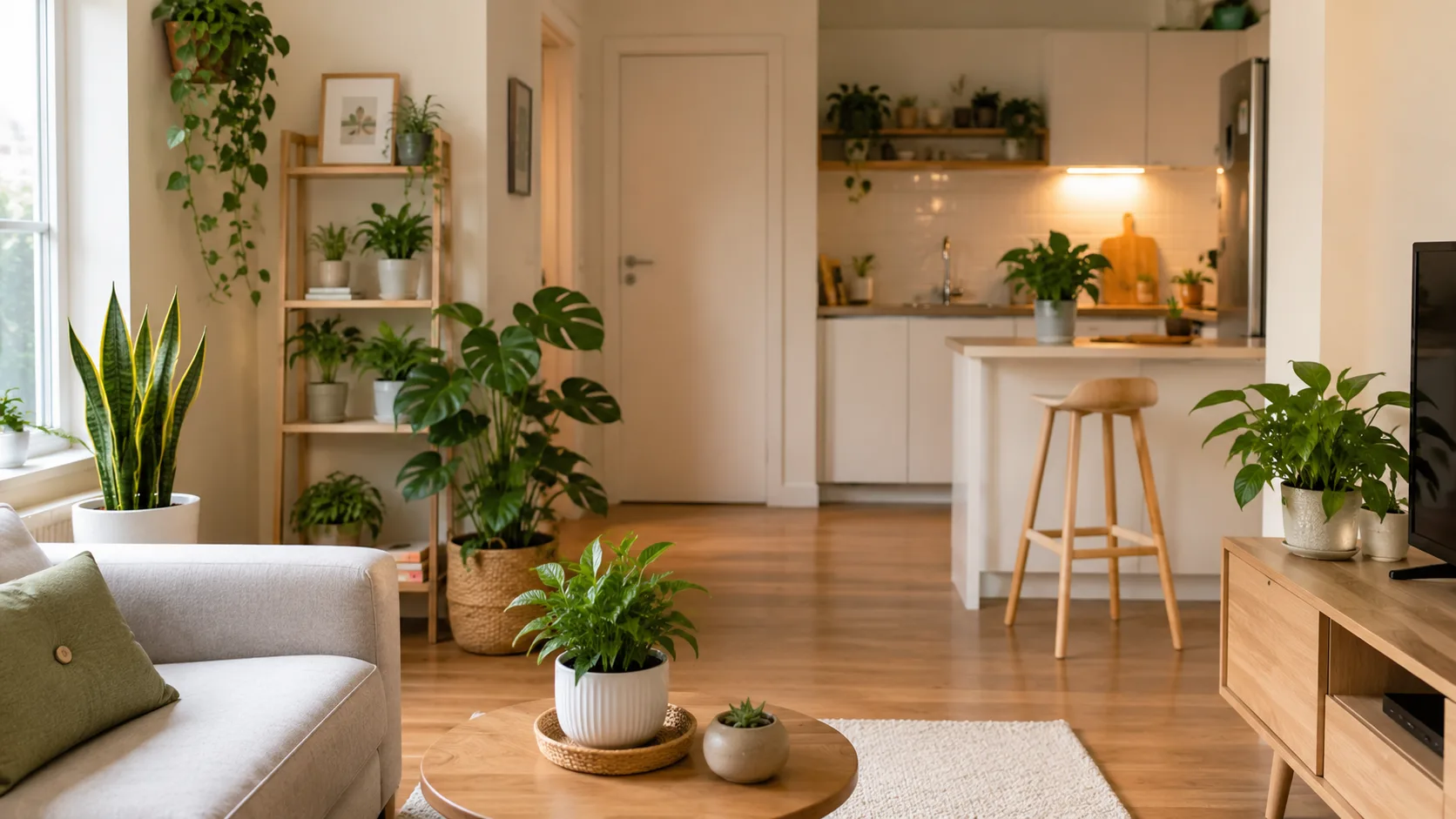
A small apartment rewards plants that earn their square footage: compact mature size, flexible light placement, and care that survives busy schedules—not species that need a dedicated plant room within eighteen months. The best apartment plants use shelves, sills, and ceiling height instead of spreading across the only clear floor patch in front of the sofa.
This guide compares ten space-efficient picks by footprint, light range, watering rhythm, and realistic studio placement. For trailing options overhead, see Best Hanging Indoor Plants. For desk-scale specimens, see Best Small Indoor Plants.
The ten best plants for small apartments are pothos, pilea peperomioides, snake plant, ZZ plant, peperomia, spider plant, parlor palm, jade plant, string of pearls, and tillandsia. They differ more than apartment listicles admit: pothos vines need pruning; pilea stays tabletop-sized; tillandsia needs no soil but demands bright light and soak discipline.
What “Small Apartment” Means for Plant Choice
Floor footprint: Mature width and height in a standard pot—not nursery size at purchase.
Vertical use: Trailing or upright habits that use wall hooks and shelf tiers.
Light flexibility: Species that perform in one-window studios where the brightest spot is also the living area.
Repotting cadence: Slow growers reduce soil bags and repot mess in tight kitchens.
Renter reality: Plants that tolerate moves, irregular HVAC, and occasional travel without collapsing.
Editor note (studio layout): In a typical studio, the window wall is also the TV wall. A six-inch pilea on a floating shelf often fits better than a floor fiddle leaf fig that blocks the only walkway—measure walkway clearance before buying height.
Quick Pick: Best Apartment Plant for Your Layout
For one-window studios, choose snake plant or ZZ plant for the dimmer back of the room and pothos near the glass.
For shelf clusters without soil spread, choose tillandsia on a bright bathroom ledge or peperomia on a desk.
For Instagram-friendly round leaves in a six-inch pot, choose pilea peperomioides—compact until you propagate dozens of pups.
For pet-aware renters, choose spider plant or parlor palm—ASPCA non-toxic—placed where cats cannot reach spiderettes.
For sunny sills in tiny kitchens, choose jade plant or string of pearls—both want bright light and infrequent water.
How We Chose These Ten Plants
We ranked LeafyPixels species by:
- Indoor footprint — stays reasonable in 4–8 inch to 10–12 inch pots for years.
- One-window flexibility — tolerates bright to medium indirect across a single room depth.
- Beginner forgiveness — survives travel and inconsistent watering better than calathea or fiddle leaf fig.
- On-site care depth — full species hubs on LeafyPixels.
Monstera and bird of paradise are excellent plants but poor small-apartment defaults unless you commit to pruning and large corners—we left them to other lists intentionally.
Small-Apartment Plant Comparison Table
Pothos
Best for: First apartment plant, shelf softening, hanging baskets
Difficulty: Easy
Light: Medium to bright indirect
Water: Top dry-down
Best placement: Cabinet top near window, ceiling hook
Pet safety: Toxic if ingested (ASPCA)
Pothos delivers maximum visual impact per square foot—one pot can trail across a bookshelf and read as “many plants.” In studios, that is efficient until vines reach the TV.
Why it works: Fast growth shows progress in a small space; tolerates one-window light gradients.
Care tip: Trim vines every few months to keep paths clear.
Common mistake: Letting pothos own the walkway because growth feels rewarding—trim and propagate instead.
Avoid this plant if: You need a naturally self-limiting size without pruning.
Useful care guides:
Pilea Peperomioides
Best for: Desks, nightstands, narrow shelves
Difficulty: Easy to medium
Light: Bright indirect
Water: Moderate; let top dry slightly
Best placement: Shelf within five feet of window
Pet safety: Non-toxic to cats and dogs (ASPCA)
The “coin plant” stays compact and upright—rare among trendy houseplants. Pups appear on runners; share them instead of accumulating ten pots in a studio.
Why it works: Small footprint with strong visual identity; does not need floor space.
Care tip: Rotate weekly; stems lean toward glass fast.
Common mistake: Keeping pilea in a dim back corner because the pot is small—leaves shrink and stems stretch.
Useful care guides:
Snake Plant
Best for: Dim studio back wall, bedroom corner
Difficulty: Easy
Light: Low to bright
Water: Very dry
Best placement: Floor beside sofa, hallway
Pet safety: Toxic if ingested (ASPCA)
Snake plant is the slim vertical plant when you have no floor width but need height. It tolerates partial shade on the dark side of a one-window room better than most on this list.
Why it works: Architectural line without spread; survives travel weeks.
Care tip: Use a heavy cachepot so tall leaves do not tip on carpet.
Common mistake: Overwatering because the apartment feels “dry”—snake plant still wants dry soil.
Useful care guides:
ZZ Plant
Best for: Modern studios, low-water households
Difficulty: Easy
Light: Low to bright indirect
Water: Very dry
Best placement: Entry table, living room corner
Pet safety: Toxic if ingested (ASPCA)
ZZ plant adds glossy volume without monstera’s spread. Rhizomes store water—useful when you travel for work.
Why it works: Upright habit, slow growth, tolerates dimmer apartment zones.
Care tip: Wipe leaves twice a year; dust blocks scarce light in studios.
Common mistake: Overpotting into a huge decorative planter “for stability”—extra wet soil rots rhizomes.
Useful care guides:
Peperomia
Best for: Desks, kitchen windowsill, grouped shelf
Difficulty: Easy
Light: Medium to bright indirect
Water: Moderate dry-down
Best placement: Small pot on bright shelf
Pet safety: Non-toxic (ASPCA)
Peperomia species stay physically small in pots—ideal when you want variety without a jungle. Leaves are often succulent-thick, forgiving brief dry spells.
Why it works: True tabletop scale; non-toxic for many pet apartments.
Care tip: Avoid cold draft from AC blowing directly on leaves.
Common mistake: Confusing baby rubber plant peperomia with rubber plant Ficus elastica—very different size trajectories.
Useful care guides:
Spider Plant
Best for: Hanging baskets, high shelves
Difficulty: Easy
Light: Bright indirect
Water: Moderate
Best placement: Ceiling hook near window
Pet safety: Non-toxic (ASPCA)
Spider plant uses vertical air space—critical in studios where floor area is premium. Spiderettes can be trimmed or propagated instead of letting them drape to the sofa.
Why it works: Pet-friendlier trailing option; fast feedback on watering.
Care tip: Brown tips? Try filtered water and stable humidity.
Common mistake: Hanging too low where cats bat spiderettes—raise hook height.
Useful care guides:
Parlor Palm
Best for: Soft texture, north window studios
Difficulty: Easy to medium
Light: Low to bright indirect
Water: Moderate
Best placement: Narrow floor corner
Pet safety: Non-toxic (ASPCA)
Parlor palm gives palm fronds without areca’s space demands. Growth is slow—honest for apartments that cannot host a seven-foot floor tree.
Why it works: Slim clumping habit; non-toxic for pet studios.
Care tip: Do not prune the growing crown—only trim brown fronds.
Common mistake: Expecting fast bushiness in a single north window—growth is gradual.
Useful care guides:
Jade Plant
Best for: Sunny kitchen sill, bright studio window
Difficulty: Easy
Light: Bright to direct sun
Water: Very dry
Best placement: South or west sill
Pet safety: Toxic if ingested (ASPCA)
Jade plant is a compact succulent tree for apartments with real sun. It stays smaller than fiddle leaf fig and needs water rarely.
Why it works: Small-pot bonsai-like habit; tolerates sunny sills.
Care tip: Ensure shelf rated for heavy wet pot weight.
Common mistake: Watering weekly because it is “by the sink”—jade wants dry soil.
Useful care guides:
String of Pearls
Best for: High bright shelf, narrow ledge
Difficulty: Medium
Light: Bright indirect
Water: Dry between soaks
Best placement: Elevated near window, out of traffic
Pet safety: Toxic if ingested (ASPCA)
String of pearls adds cascading texture without pothos width—strands are fragile, so elevation matters in tight layouts.
Why it works: Dramatic trail in a small pot footprint.
Care tip: Water when pearls pucker slightly; rot from overhead daily misting is common.
Common mistake: Placing in a dim bathroom because it “looks spa”—needs bright light to stay full.
Useful care guides:
Tillandsia
Best for: Bathroom ledge, wall mount, no soil clutter
Difficulty: Easy to medium
Light: Bright indirect
Water: Soak and dry cycle
Best placement: Bright bath window, kitchen rack
Pet safety: Non-toxic (ASPCA)
Air plants suit micro-apartments where soil bags and drip trays feel excessive. Tillandsia are epiphytic bromeliads that need brightness and disciplined soaking—not mist-only care.
Why it works: Zero potting soil on counters; mounts on vertical space.
Care tip: Shake dry after soaking so water does not sit in the base.
Common mistake: Keeping tillandsia in a steam-only bathroom without window light—mold follows.
Useful care guides:
Apartment Plant Mistakes to Avoid
- Buying floor trees before measuring walkway clearance
- Placing ten small pots before learning one dry-down rhythm
- Ignoring vertical space — one hook often beats three floor pots
- Choosing trailing plants without pruning plan
- Overwatering in dim back corners where soil never dries
Conclusion
Small apartments need one strong plant per zone more than a crowded collection. Start with pothos or pilea near the window, snake plant or ZZ plant deeper in the room, and spider plant or tillandsia if you want height without floor use. Match pet needs with spider plant, peperomia, pilea, parlor palm, or tillandsia when toxicity matters.
Measure light once, buy one plant, learn its soil timing, then add deliberately—not every shelf on move-in weekend.
Related guides
How This List Was Reviewed