Best Low Light Indoor Plants - Ranked for Dim Rooms
Indoor plants that tolerate low-light rooms, offices, and north-facing windows.
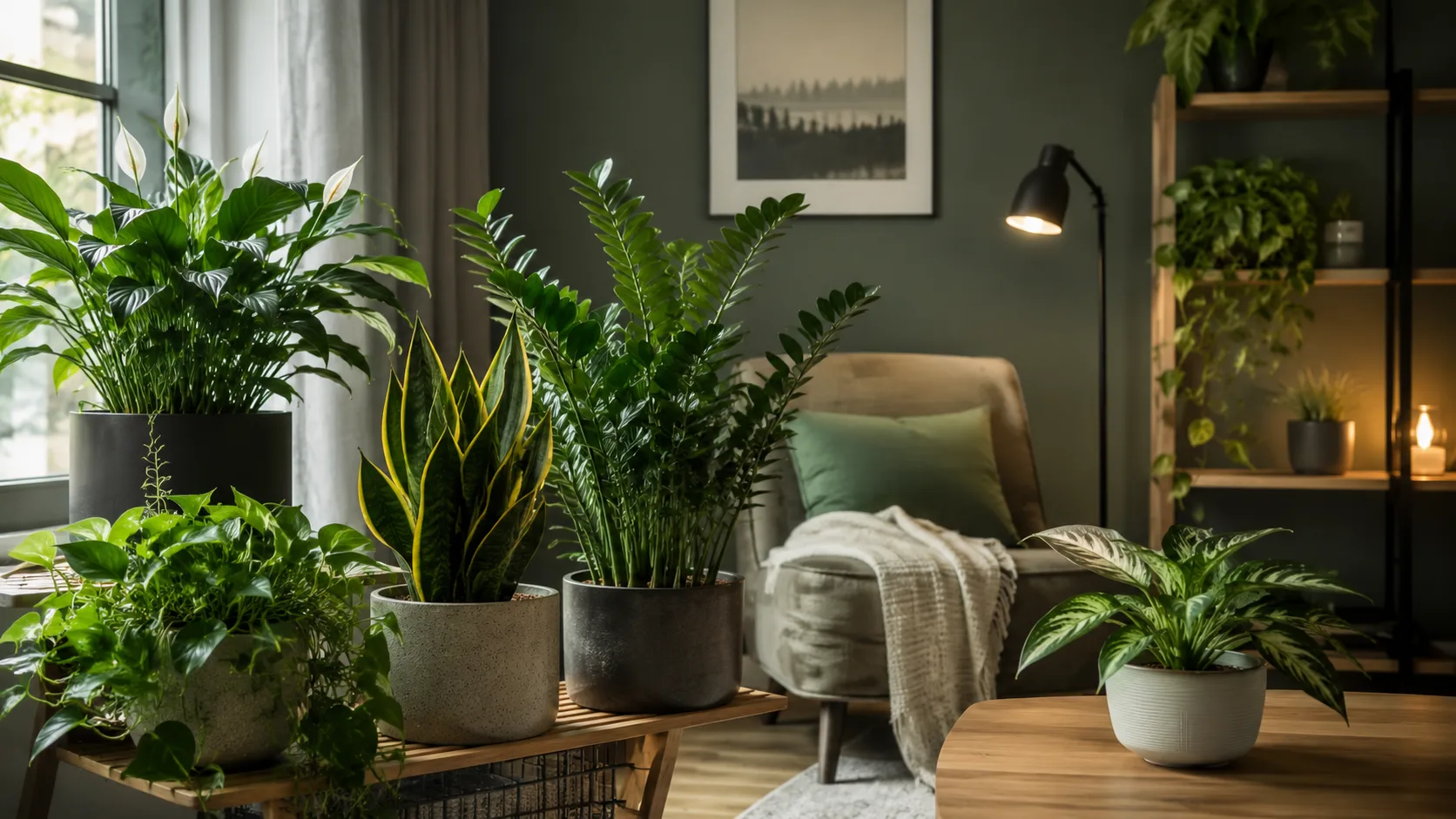
Best Low Light Indoor Plants
Quick recommendation
Snake plant, ZZ plant, and pothos top our list for dim spaces.
Best Low Light Indoor Plants - Ranked for Dim Rooms
Indoor plants that tolerate low-light rooms, offices, and north-facing windows.
Quick recommendation
Snake plant, ZZ plant, and pothos top our list for dim spaces.
A low-light room is not a punishment sentence for houseplants—it is a placement puzzle. The best low-light indoor plants are species that tolerate dim corners, north-facing windows, and office fluorescents without collapsing the first time you travel for a week. They are not magic. “Low light” still means some usable brightness reaches the leaves for several hours a day, and even the most forgiving plants grow slower, stay smaller, and show fewer new leaves when light is thin.
This guide goes deeper than a ranked bullet list: what low light actually means indoors, how we chose six species, a comparison table for fast decisions, and plant-by-plant trade-offs with links to full species care on LeafyPixels.
The six best low-light indoor plants for most homes are snake plant, ZZ plant, pothos, aglaonema, dracaena, and parlor palm. They are not interchangeable. Snake plant and ZZ plant survive the dimmest corners; pothos and aglaonema add trailing or patterned foliage; dracaena gives height in tight spaces; parlor palm softens a room when you want a palm that will not demand a south window.
One expectation deserves clearing up early: low-light-tolerant plants are often sold as “thrives anywhere” plants. University extension guidance consistently treats light as the first limiting factor for indoor success—before watering rhythm, humidity, or fertilizer. A plant labeled low light usually maintains in dim rooms; it grows when light improves or you add a grow light. Treat dim placement as a honest trade-off, not a free pass to ignore placement entirely. (University of Maryland Extension)
Low light is a relative term. Outdoors, shade has measurable intensity. Indoors, distance from the window, outdoor obstructions, wall color, and season all change how much light reaches a pot—even when the room looks “bright enough” to you.
For practical home use, low light usually means:
Low light is not:
Use a simple shadow test on a clear day. Hold your hand between the plant and its light source. If you see a soft but readable shadow, many foliage plants can maintain. If there is barely a shadow, you are in true low light—survivable for snake plant and ZZ plant, stressful for most others unless you supplement. If leaves feel hot within an hour of direct sun, you are past low light into direct exposure.
Distance matters more than compass direction alone. A plant eight feet from a large south window may receive less usable light than one on a north windowsill. Re-check placement in late winter, when lower sun angle and shorter days push many “fine in summer” spots into true dim light.
For windowless or very dark rooms, see Grow lights complete guide for indoor plants before buying a plant and hoping it adapts.
For the dimmest corners and forgetful waterers, choose snake plant or ZZ plant. Both store water in thick tissue, tolerate irregular watering, and hold foliage for months when growth slows in low light. Snake plant gives upright architectural lines; ZZ plant adds glossy paired leaflets on arching stems.
For trailing softness on a shelf or cabinet, choose pothos. It is more forgiving than most vining tropicals in medium-to-low indirect light and tells you quickly when it needs water by slightly softening leaves—easier to read than a succulent-type plant that looks unchanged for weeks.
For patterned foliage without a bright sill, choose aglaonema. Chinese evergreen cultivars bring silver, pink, or red variegation to north windows and office desks. Variegated forms need slightly more light than solid-green types to keep their color.
For height in a narrow corner, choose dracaena. Dracaena marginata and related cane types grow upright on slim trunks, so they add vertical structure without the floor spread of a palm or monstera.
For a palm look in a north window, choose parlor palm. It handles low to bright indirect light better than areca or majesty palm and fits apartments where a large sun-loving palm would brown and decline.
For pet-aware homes, note that pothos, dracaena, and ZZ plant are listed by the ASPCA as toxic to cats and dogs if chewed. Parlor palm is listed as non-toxic. Snake plant and aglaonema also carry toxicity listings—keep plants out of reach if pets nibble foliage, and contact your veterinarian or ASPCA Animal Poison Control at 888-426-4435 if ingestion occurs. (ASPCA Toxic and Non-Toxic Plants)
These six were selected for documented low-light tolerance, beginner-friendly care, nursery availability, and deep LeafyPixels follow-up care—not because they are the only houseplants that tolerate shade.
We filtered the LeafyPixels plant database for species whose light guidance and extension references support low to medium indirect light indoors, then ranked by:
/plants/{slug}/ hub plus light and watering topic pages you can open after purchase.Cast iron plant, peace lily, and Chinese evergreen varieties also tolerate low light and appear elsewhere on LeafyPixels lists. This guide focuses on six editorially distinct profiles with the strongest combination of dim-room tolerance and existing care clusters. Peace lily needs more consistent moisture than snake plant or ZZ plant; cast iron plant is excellent but slower and less widely stocked in small nurseries—reasonable alternates if your room is dim and you tend to underwater.
| Plant | Best For | Typical Indoor Size | Light Tolerance | Water Rhythm | Pet Safety (ASPCA) | Main Trade-Off |
|---|---|---|---|---|---|---|
| Snake plant | Dim corners, offices, beginners | 1–4 ft tall; slow spread | Very high | Dry; weeks between drinks | Toxic if ingested | Very slow growth in deep shade |
| ZZ plant | Modern interiors, low water | 2–3 ft tall; upright | Very high | Dry; rhizome stores water | Toxic if ingested | Leggy stems if extremely dim |
| Pothos | Shelves, trailing, fast feedback | 6–10 ft vines over time | High | Moderate; soft leaves signal thirst | Toxic if ingested | Variegation fades in very low light |
| Aglaonema | Patterned foliage, desks | 1–3 ft tall; bushy | High | Moderate; dislikes soggy soil | Toxic if ingested | Pink/silver cultivars need brighter spots |
| Dracaena | Narrow corners, height | 4–6 ft on canes | High | Moderate dry-down | Toxic if ingested | Lower leaves drop as cane grows |
| Parlor palm | North windows, soft texture | 2–4 ft over years | High among palms | Moderate; slow dry in dim light | Non-toxic | Slow growth; not a instant floor tree |
Use the table to shortlist, then open the species hub for watering rhythm in your room. Low light slows evaporation—soil stays wet longer than the same plant would in a bright window.
Best for: the dimmest acceptable corners, travelers, office desks, beginners who forget to water.
Difficulty: Easy
Light: Low to bright indirect; tolerates deep shade longer than most
Water: When soil is dry deep; often every 2–4 weeks in dim light
Best placement: North window, hallway table, bedroom corner away from the pane
Pet safety: Toxic to cats and dogs if ingested (ASPCA)
Typical indoor size: 1–4 ft tall depending on cultivar
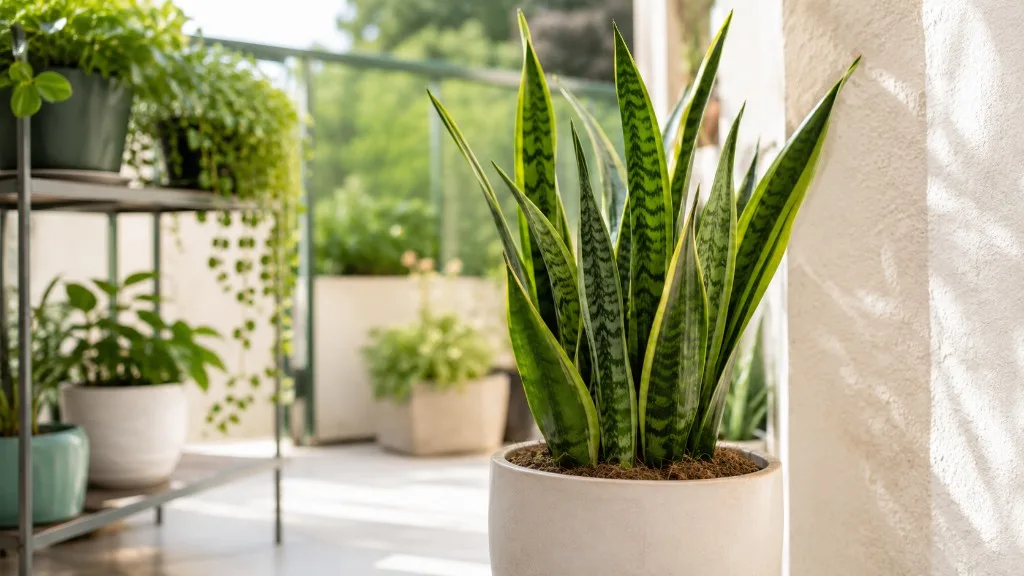
Why it fits: Snake plant (Dracaena trifasciata) is the benchmark low-light survivor. NC State Extension notes it tolerates very low light while preferring partial shade with limited direct sun. Thick leaves and rhizomes store water, so the plant enters a slow survival mode in dim rooms instead of wilting within weeks. (NC State Extension)
Who it’s for: Renters with north-facing bedrooms, office workers with one window across the room, and anyone who wants a plant that still looks intentional when growth pauses.
Care reality: In low light, snake plant may produce no new leaves for months and variegated cultivars may revert toward solid green. That is normal—not a sign the plant is dying. Soil dries slowly in dim corners, so watering on a weekly calendar is the fastest way to kill an otherwise indestructible plant. Check the pot, not the calendar.
Common mistake: Treating “low-light tolerant” as “water sparingly means once a month everywhere.” A snake plant in a large pot in a dim, cool room may need water only every few weeks; the same plant in a small pot near a heat vent dries faster even with low light.
Limitation: Snake plant is not a fast filler plant in shade. If you want trailing volume or a lush palm look within a year, choose pothos or parlor palm instead.
Useful care guides:
Best for: modern interiors, low-water households, dim living rooms.
Difficulty: Easy
Light: Low to bright indirect
Water: Dry down most of the soil; rhizome holds reserves
Best placement: Side table away from the window, office floor plant, low-light entryway
Pet safety: Toxic to cats and dogs if ingested (ASPCA)
Typical indoor size: 2–3 ft tall; spreads slowly
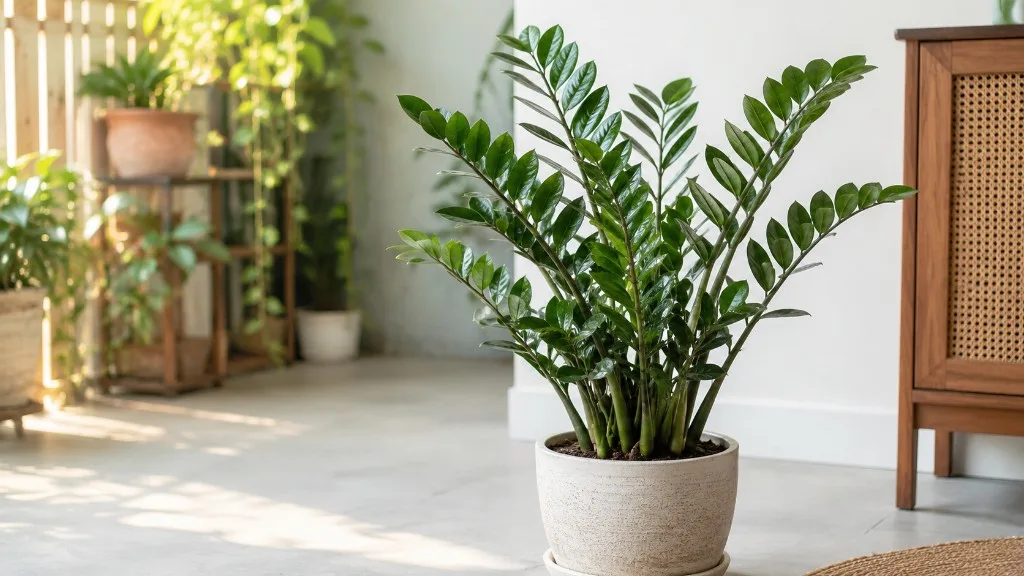
Why it fits: ZZ plant (Zamioculcas zamiifolia) stores water in potato-like rhizomes under the soil, giving it exceptional drought tolerance. It handles fluorescent office light and north-room ambient brightness when many tropicals would yellow and drop leaves.
Who it’s for: People who want a glossy, upright plant without the spiky look of snake plant, and anyone who travels frequently.
Care reality: ZZ plant grows slowly in low light and may produce fewer new stems per year. Glossy leaves can look unchanged while the plant is quietly idle—do not compensate with extra water. Wipe dust from leaves twice a year; in dim rooms, dust blocks more of the little light available.
Common mistake: Overpotting into a huge decorative container “so I won’t have to repot.” Extra soil volume stays wet longer in low light, increasing rhizome rot risk. Keep the pot proportional to the root ball.
Limitation: ZZ plant is not pet-safe and is not a trailing or flowering display plant. Extremely dim spots can produce leggy, spaced leaflets on weak stems.
Useful care guides:
Best for: shelves, bookcases, hanging baskets, beginners who want visible growth.
Difficulty: Easy
Light: Medium to low indirect; tolerates dimmer spots than most vines
Water: When top soil dries; leaves soften slightly when thirsty
Best placement: Top of cabinet, bathroom with frosted window, office shelf with ambient daylight
Pet safety: Toxic to cats and dogs if ingested (ASPCA)
Typical indoor size: Trailing vines 6–10+ ft over time; trim to control
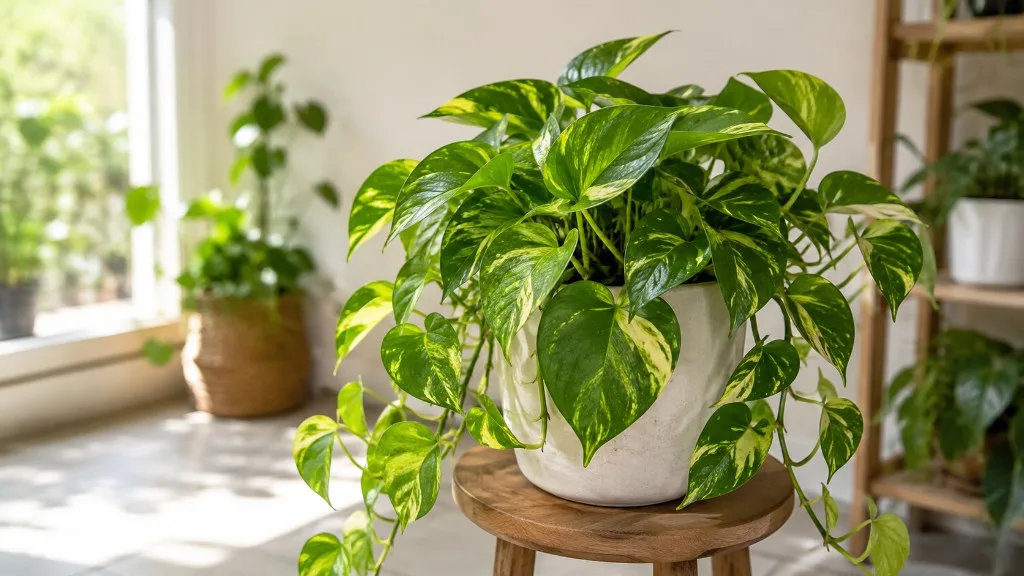
Why it fits: Pothos (Epipremnum aureum) is one of the most adaptable common houseplants. It tolerates low light better than most trailing tropicals and gives fast visual feedback—leaves perk up within hours after watering, which helps beginners learn soil timing.
Who it’s for: Renters who want one plant to soften a room quickly, and anyone who prefers cascading foliage over upright succulents.
Care reality: In low light, pothos grows slower with smaller leaves and golden or white variegation may shrink toward solid green. That is the plant optimizing chlorophyll, not a disease. Trim long bare stems to encourage bushier growth near the pot.
Common mistake: Keeping pothos in a dim corner and watering on the same schedule as a plant in a bright window. Low light means slower water use—soggy soil leads to yellow leaves and root issues often blamed on “low light stress.”
Limitation: Pothos is toxic to pets and rarely looks full and variegated in the deepest shade. For a pet-safe trailing option, see Best Pet-Safe Indoor Plants—most safer vines need more light than pothos.
Useful care guides:
Best for: patterned foliage, desks, north windows, color without flowers.
Difficulty: Easy to medium
Light: Low to medium indirect; solid green types take deepest shade
Water: Moderate; let top inch dry; avoid constant wet soil
Best placement: North windowsill, office desk, side table in bright living room
Pet safety: Toxic to cats and dogs if ingested (ASPCA)
Typical indoor size: 1–3 ft tall; bushy clump
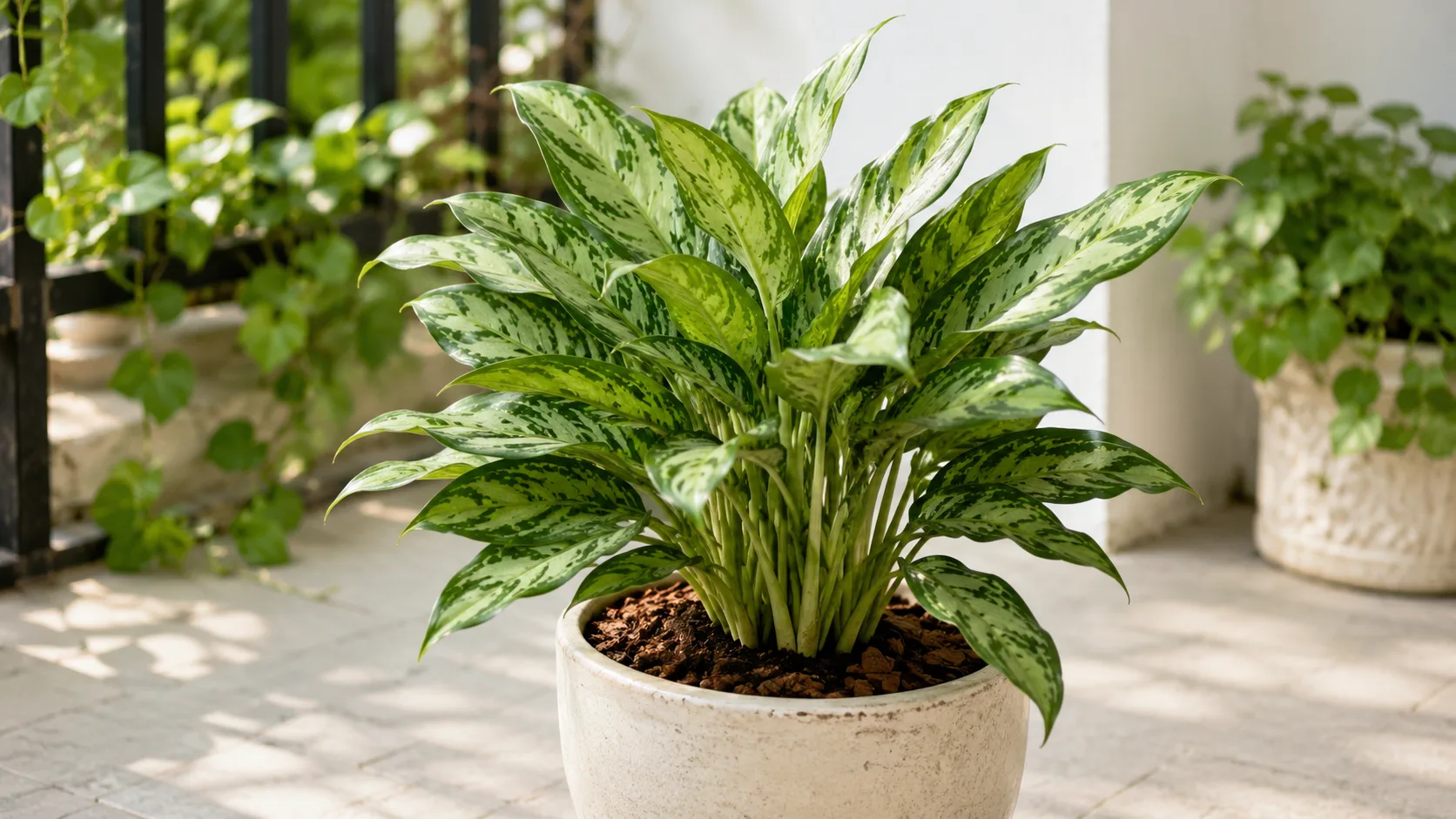
Why it fits: Aglaonema—Chinese evergreen—is a classic understory foliage plant bred for indoor color. Solid-green varieties handle the dimmest spots in this group better than pink or silver cultivars, which need slightly more light to hold variegation.
Who it’s for: People bored by plain green leaves but not ready for the humidity demands of calathea, and office workers who want a compact plant with visual interest.
Care reality: Aglaonema tolerates low light but dislikes cold drafts and soggy soil more than snake plant does. In a dim room, soil stays wet longer—reduce watering frequency before moving the pot farther from the window. Brown tips often trace to fluoride-heavy tap water or dry air from heating vents, not light alone.
Common mistake: Buying a bright pink cultivar for a deep interior spot because the tag said “low light.” The plant may survive while losing the color you paid for. Match cultivar to brightness: Silver Bay and solid-green types for dimmer rooms; Red Valentine and heavy pink types for north windows with open sky or brighter offices.
Limitation: Aglaonema is not pet-safe and will not trail or reach ceiling height. It is a tabletop and floor-cluster plant, not a vertical statement tree.
Useful care guides:
Best for: narrow corners, vertical height, apartments with limited floor width.
Difficulty: Easy
Light: Low to bright indirect
Water: Partial dry-down; sensitive to fluoride in tap water
Best placement: Hallway corner, bedroom nook, living room beside furniture
Pet safety: Toxic to cats and dogs if ingested (ASPCA)
Typical indoor size: 4–6 ft on multi-stem canes indoors
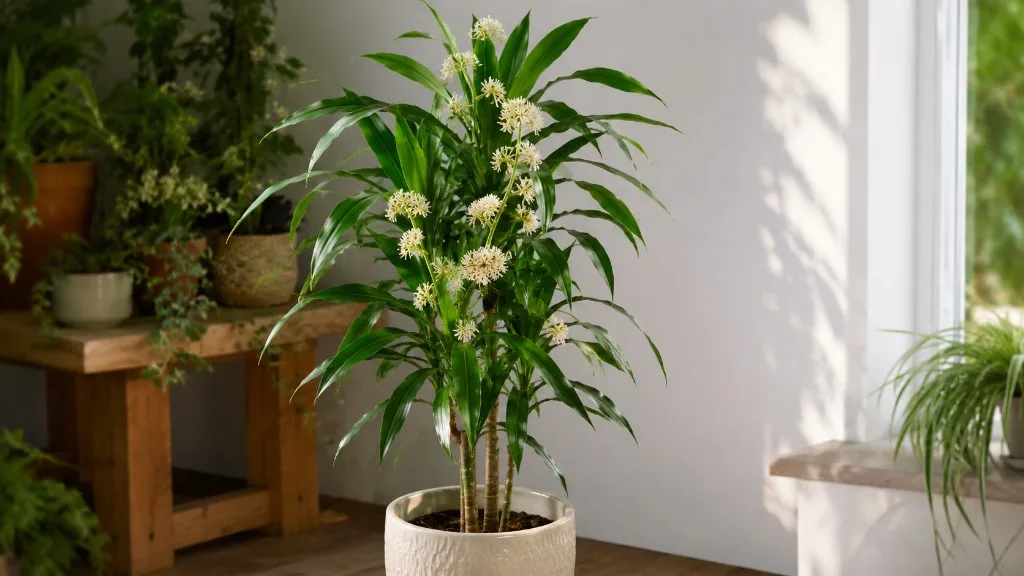
Why it fits: Dracaena—especially marginata types—puts height on a slim footprint, making it useful where a spreading palm would block walkways. It tolerates moderate and low indirect light better than fiddle leaf fig or bird of paradise and fits the “I need a tall plant for a dim corner” request more honestly than high-light trees.
Who it’s for: Apartment dwellers, office managers filling a corner, and beginners who want structure without a massive pot.
Care reality: Dracaena in low light grows slowly and may drop older lower leaves as the cane extends—normal aging, not always an emergency. Brown leaf tips often come from fluoride and salts in tap water; use filtered water or let tap water sit overnight if tips persist after you fix watering.
Common mistake: Placing dracaena in a closed cachepot with no drainage exit because the corner is decorative. Low light already slows dry-down; trapped water accelerates root decline.
Limitation: Dracaena is toxic to pets and will look sparse and leggy in very dim light compared to snake plant. It is height without fullness unless you provide bright indirect light or supplemental lighting.
Useful care guides:
Best for: north windows, soft tropical texture, pet-aware homes.
Difficulty: Easy to medium
Light: Low to bright indirect; among the best palms for dim rooms
Water: Moderate; top soil dry-down; slower use in low light
Best placement: North windowsill, living room back from east window, office with ambient daylight
Pet safety: ASPCA-listed non-toxic to cats and dogs
Typical indoor size: 2–4 ft over years; slow to reach ceiling height
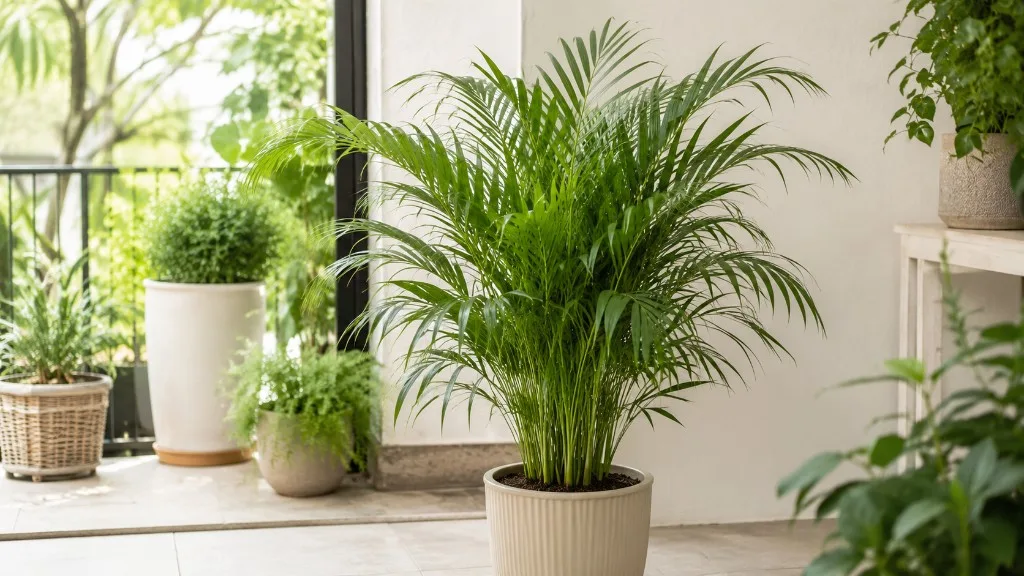
Why it fits: Parlor palm (Chamaedorea elegans) evolved as a rainforest understory species. NC State Extension notes it can adapt to low-light conditions in shaded or north-facing windows while preferring bright indirect light for best growth. That makes it one of the few palms that honestly belongs on a low-light list. (NC State Extension)
Who it’s for: People who want palm fronds without south-window sun, and pet owners who need a non-toxic floor or table plant.
Care reality: Parlor palm grows slowly—especially in low light. A 6-inch nursery pot may take years to become a dramatic floor plant. Fronds emerge from the center; brown tips on older lower fronds are common in dry winter air. Do not prune the growing crown.
Common mistake: Comparing parlor palm to areca or majesty palm and expecting fast, bushy growth in the same dim spot. Those palms typically need brighter light and more consistent moisture. Parlor palm rewards patience, not frequent repotting.
Limitation: Parlor palm will not fill a large corner quickly in a dim room. For faster vertical impact in low light, dracaena or snake plant serve better—even though they lack the soft frond texture.
Useful care guides:
Plants in dim rooms share one hidden risk: soil that stays wet too long. Low light reduces transpiration, so the same watering that worked in summer near a window will rot roots in winter three feet farther back.
Before you add a second plant, learn the dry-down rhythm of the first:
For species-neutral watering technique, open How to Water Indoor Plants the Right Way before you settle on a schedule.
Start with the light you actually have, not the room you wish you had. Snake plant and ZZ plant handle the dimmest acceptable corners; pothos and aglaonema add softer or trailing foliage; dracaena builds height in tight spaces; parlor palm delivers palm texture and ASPCA-listed pet safety where fronds matter more than speed.
Buy one plant for the exact spot you measured with the shadow test, learn how fast the soil dries there for two weeks, then expand. If the spot fails the shadow test at noon, plan on a grow light rather than another “unkillable” label. Once you shortlist a species, open its hub—snake plant, ZZ plant, pothos, aglaonema, dracaena, or parlor palm—and match watering to that room, not to a generic weekly rule.
Related guides
This Best Low Light Indoor Plants plant list was researched and written by . Plant picks, rankings, and suitability notes for Best Low Light Indoor Plants are checked against LeafyPixels plant metadata, care requirements, pet-toxicity references, and practical indoor suitability.
We prioritize sources that hold up under scrutiny:
The LeafyPixels editorial team then reviews the draft for clarity, step-by-step usefulness, and fit with real apartment and home conditions-not ideal greenhouse setups. When guidance changes materially, we update the page and note the revision date.