25 Colorful Houseplants for Every Room and Light Level
Choose colorful houseplants for shelves, corners, and bright windows. Compare foliage, light, maintenance, pet safety, and the tradeoffs that affect each pick.
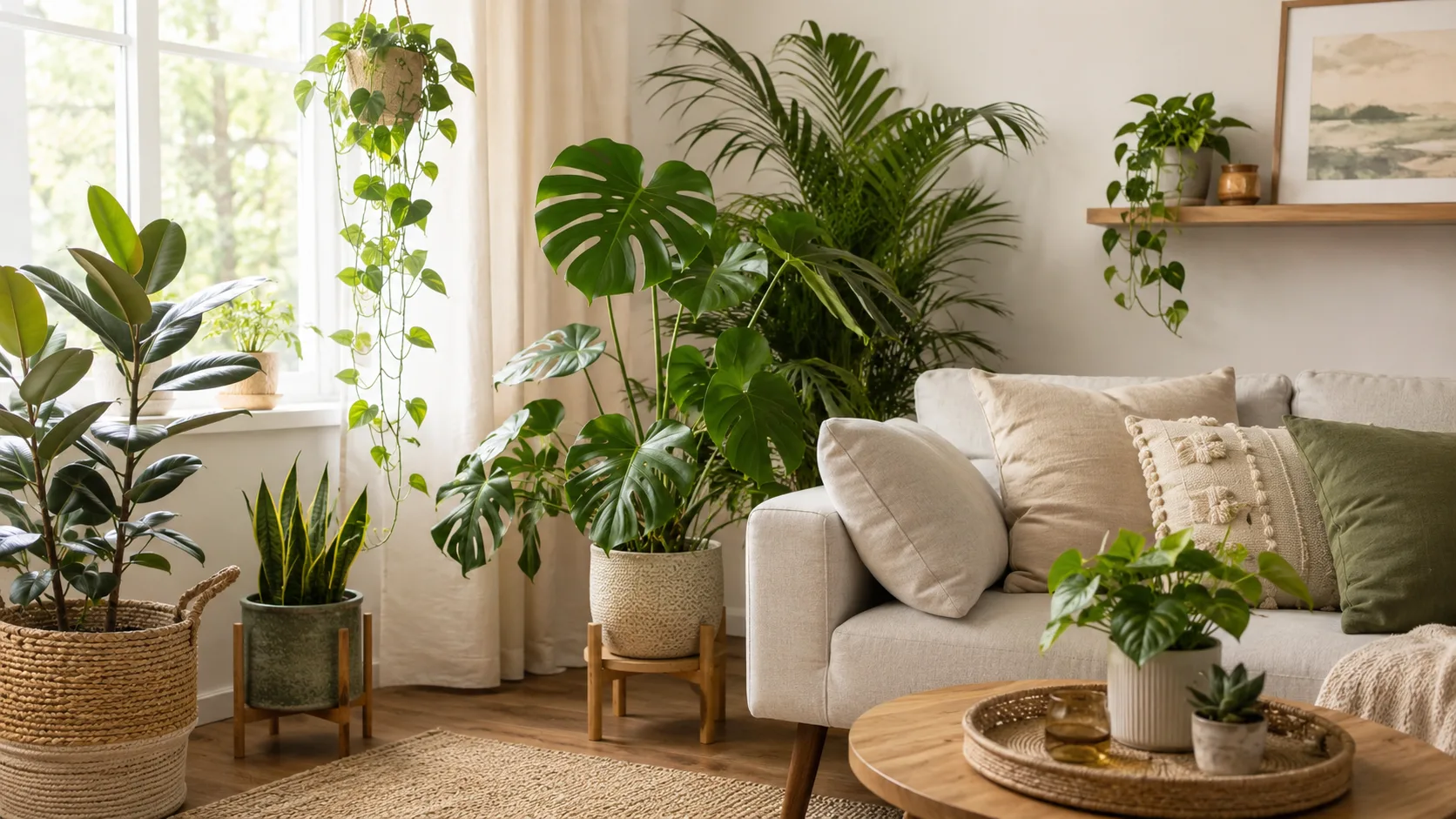
A colorful houseplant can do more than fill an empty corner. Its leaves can repeat an accent color, soften a hard-edged shelf, or provide the pattern a room is missing. The best choice, though, is not simply the plant with the brightest leaves. It is the plant whose mature shape and light needs suit the spot where you actually want to display it.
This list spans compact silver-veined foliage, tall rubber plants, purple vines, and rosette succulents. Start with light and footprint, then choose a plant for the color and shape you want.
What to Check Before Choosing Color
Read the light in the actual room
“Bright room” is too vague to guide a purchase. A plant on a sill directly behind clear south- or west-facing glass may get intense sun, while a plant several feet back from that window receives much less. Curtains, trees outside, overhangs, season, and the length of the day all change the exposure. Observe the intended spot through a typical day before shopping; compare the light there with the spot where the plant is currently thriving at the nursery if you can.
Most colored tropical foliage performs best in bright, indirect light: close enough to a bright window to receive strong daylight, but shielded from harsh midday sun. Succulents such as echeverias are different; they need much brighter exposure to stay compact. Some plants tolerate lower light, but tolerance means they can persist, not that they will keep compact growth or vivid color indefinitely. The RHS explains that inadequate light can produce weak, pale, or stretched growth, while its houseplant guidance cautions that a summer sunbeam can scorch foliage in a spot that may be helpful in winter. RHS light guidance and houseplant selection advice are useful when a room’s conditions are uncertain.
Choose a color role, not a random leaf
Think about what you want the plant to do visually. One upright rubber plant can anchor a bare corner; a small fittonia can add a detailed pattern at eye level; a trailing tradescantia can soften the edge of a bookcase. Several bright plants scattered around a room may compete with each other, while a repeated accent—such as burgundy leaves echoed in a cushion or pot—makes the choice feel deliberate.
Variegation means that a plant has patches, streaks, or zones of more than one color in its foliage. Those markings can read like a print, whereas a solid dark purple or burgundy leaf works more like a block of color. The Royal Horticultural Society uses that distinction in its foliage guidance; indoors, it gives you a simple design test: choose pattern when the room needs texture, and a more solid leaf when it needs a calmer color accent. RHS guidance on variegated foliage
25 Colorful Houseplants, Grouped by Their Design Job
Each profile pairs a plant’s visual role with a condition that affects its appearance. Check a mature plant photo and cultivar label before buying.
Tall or sculptural foliage
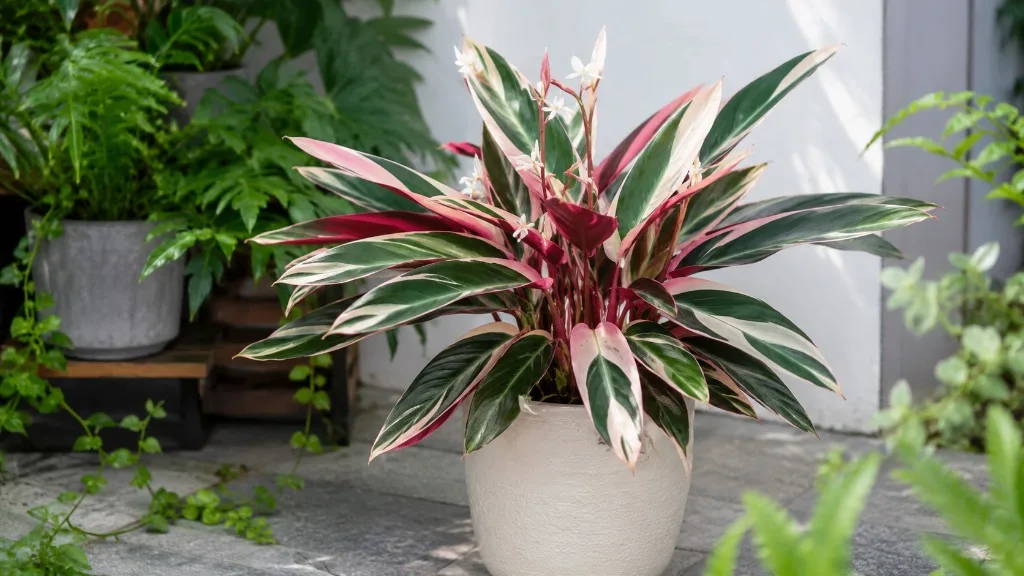
1. Stromanthe ‘Triostar’ has long leaves brushed with cream and pink, with burgundy undersides that reveal themselves when the foliage moves. Its upright, spreading silhouette suits a low plant stand or the side of a sofa where the leaf pattern can be seen from more than one angle. Give it bright filtered light, steady warmth, and evenly moist—not soggy—mix; dry air and missed watering can leave the leaf edges ragged, so it is a better focal point for a room where you can keep a routine.
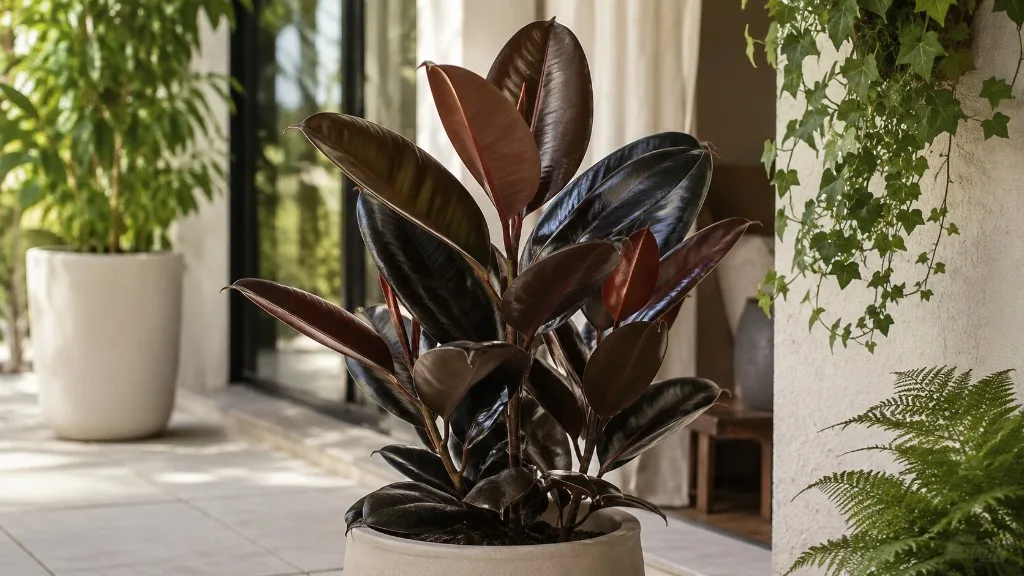
2. Burgundy rubber plant (Ficus elastica ‘Burgundy’) contributes large, glossy leaves that read as deep green from across the room and reveal red-burgundy undersides up close. One well-proportioned specimen can balance a tall lamp or cabinet without adding a busy pattern. It appreciates strong indirect light and room to grow; the ASPCA lists Indian rubber plant as toxic to pets, so keep its sap and foliage away from animals and children, and leave space around the pot rather than wedging it into a narrow walkway.
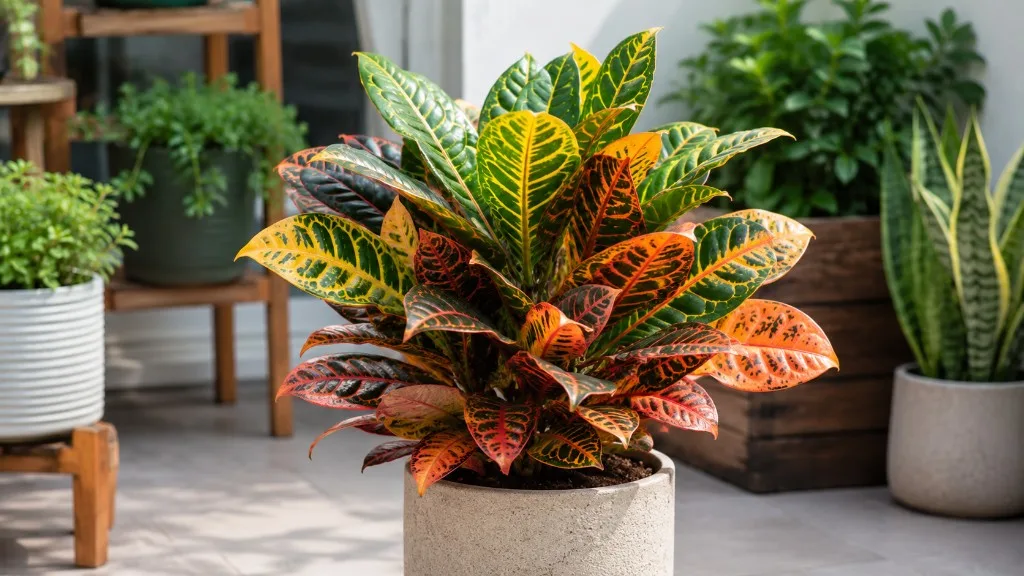
3. Croton (Codiaeum variegatum) is the choice when the room can handle a genuinely multicolored focal plant. Its thick leaves may combine green, yellow, orange, red, or pink, but color patterns differ sharply among cultivars. Place it near a bright window and acclimate it gradually if moving it into stronger light. Crotons can react to cold drafts or abrupt changes by dropping leaves, so they work best in a warm, stable location rather than a frequently opened door or chilly window. NC State Extension also warns that croton sap can irritate skin and soft tissue; wear gloves when pruning and wash your hands after handling it (NC State Plant Toolbox.
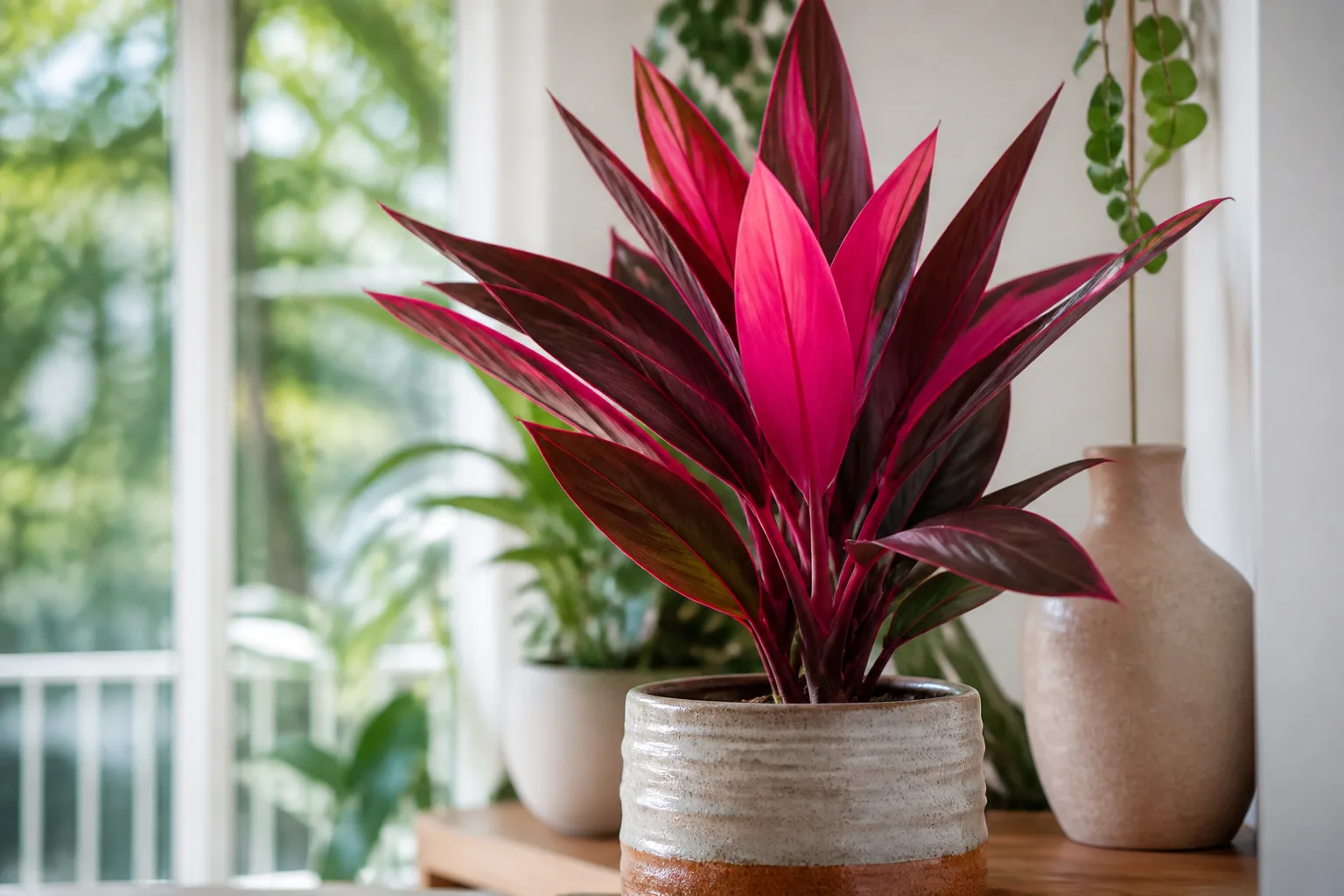
4. Ti plant (Cordyline fruticosa) brings a narrow, upright spray of burgundy, red, or magenta leaves, giving a room a vertical accent where a wide rubber plant would crowd the furniture. It needs a warm, bright position to maintain strong growth, and a mature plant can be larger than the nursery pot suggests. The ASPCA lists ti plant as toxic to cats and dogs; if a pet chews foliage, choose another species or use a truly inaccessible room rather than relying on a tall pot.
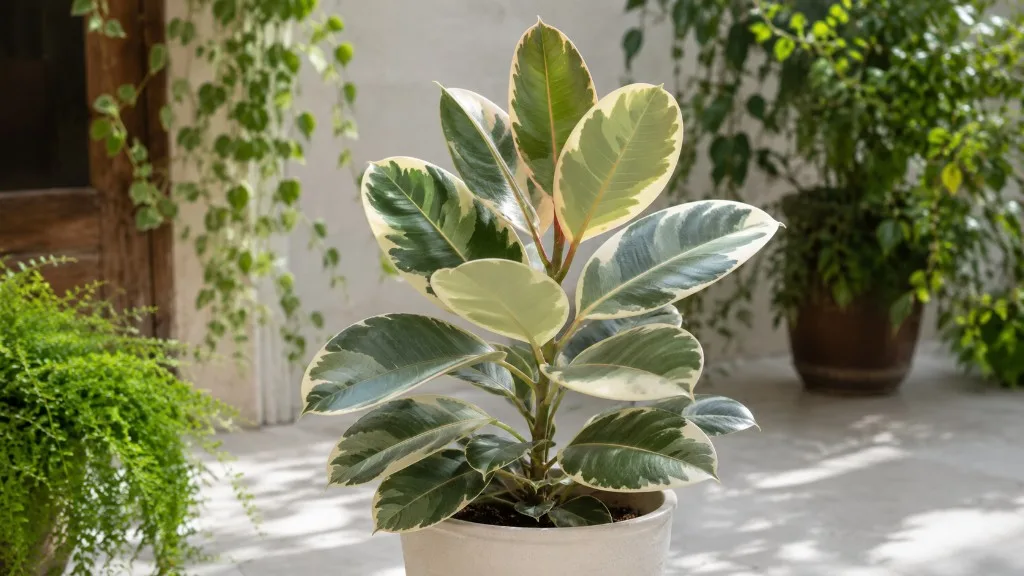
5. Variegated rubber plant (Ficus elastica ‘Tineke’ or a similar cultivar) trades the burgundy form’s dark mass for cream, pale green, and sometimes pink-blushed new leaves. The lighter margins make the plant stand out against a darker wall, but the leaves need good indirect light to keep their pattern easy to see. Treat it as a substantial floor plant as it grows, and remember that it shares the rubber plant’s sap and pet-access concerns.
Patterned leaves that add texture
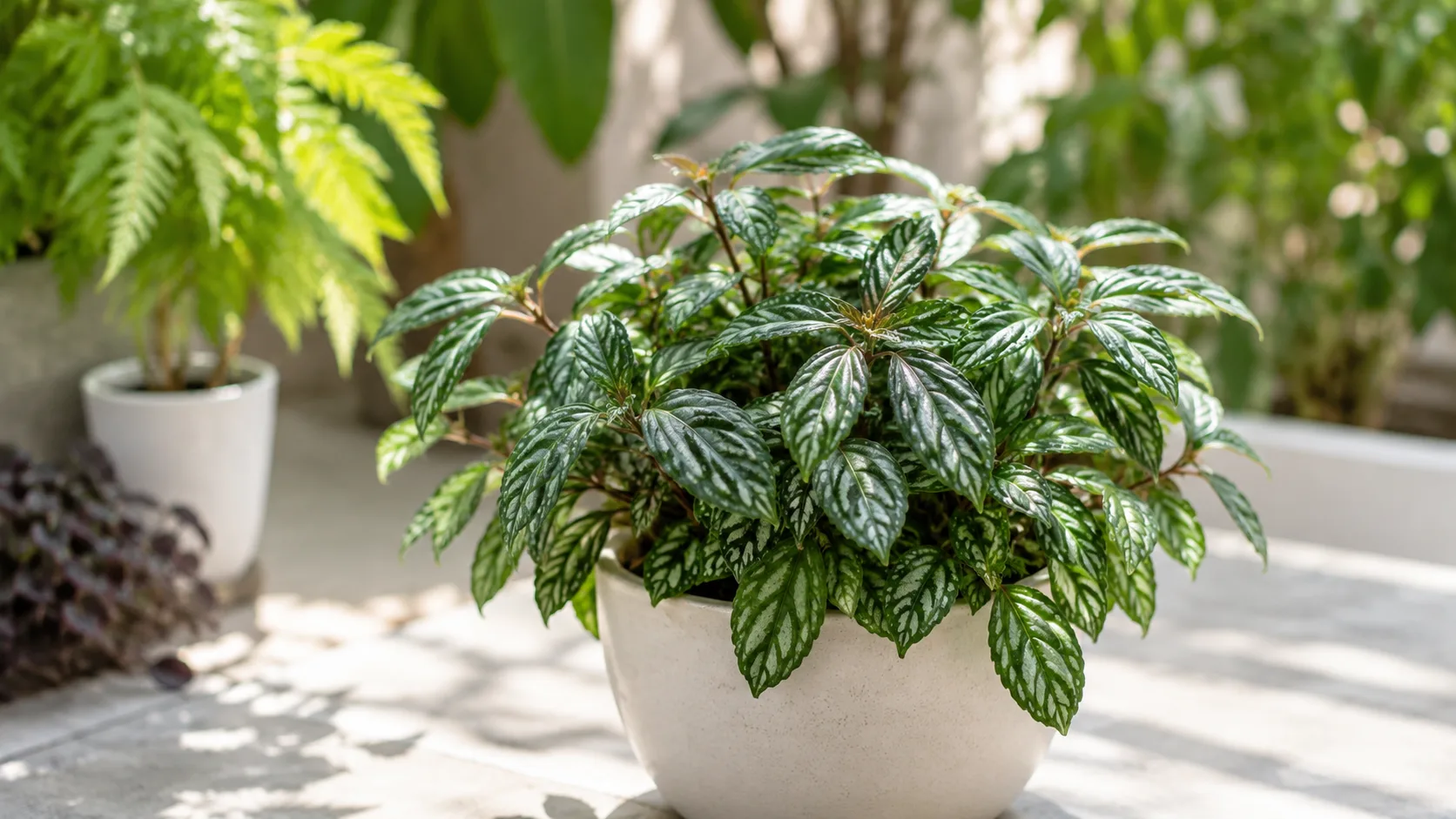
6. Aluminum plant (Pilea cadierei) has small, quilted green leaves marked with silvery bands. Its compact scale makes it useful on a desk or a bright bookcase, where a tall plant would block objects behind it. It looks especially effective beside a matte ceramic pot because the leaf surface already supplies shine and pattern. Give it bright indirect light and pinch growing tips if stems begin to stretch; it is not a good choice for a dark shelf far from a window.
7. Chinese evergreen (Aglaonema) comes in cultivars with silver, cream, pink, or red patterns, so it can be selected to either blend with a neutral room or become a clear accent. The broad leaves make a fuller silhouette than a small tabletop plant, yet many varieties stay manageable indoors. It tolerates less intense light than many vividly colored choices, although the exact cultivar matters. The ASPCA includes Chinese evergreen among insoluble calcium oxalate houseplants, which can irritate pets if chewed, so keep access in mind before using it in a low stand.
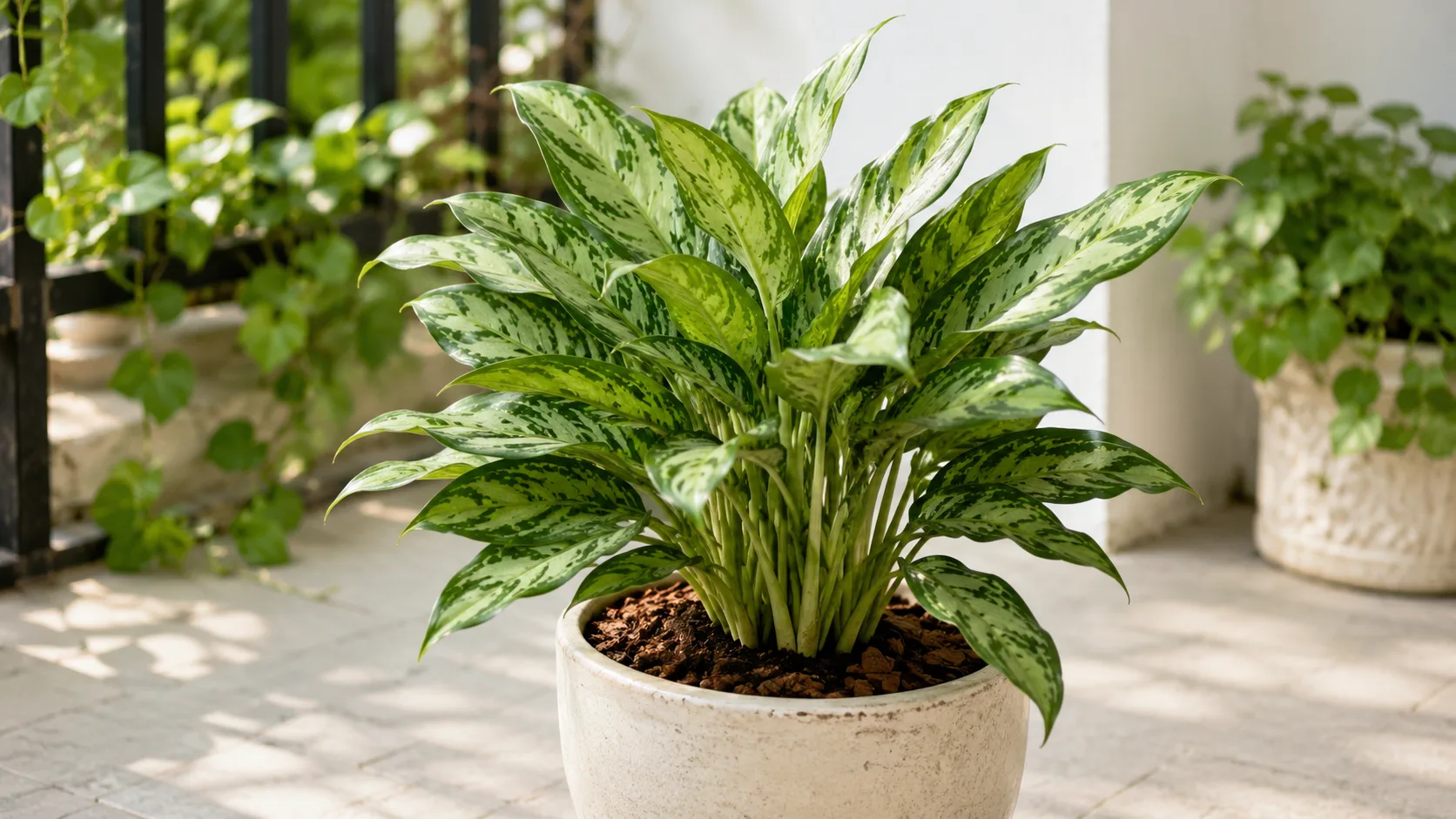
8. Bromeliad is a broad plant family rather than one predictable look. Many indoor types form a crisp rosette and develop a colorful central bract—often mistaken for the flower itself—that can make a small pot feel like a complete centerpiece. Check the exact variety, because care and shape vary. After flowering, the original rosette may gradually decline while producing offsets; consider those pups a normal next phase, not a failure of your decor plant. A bright position helps, but harsh sun through hot glass can still damage leaves.
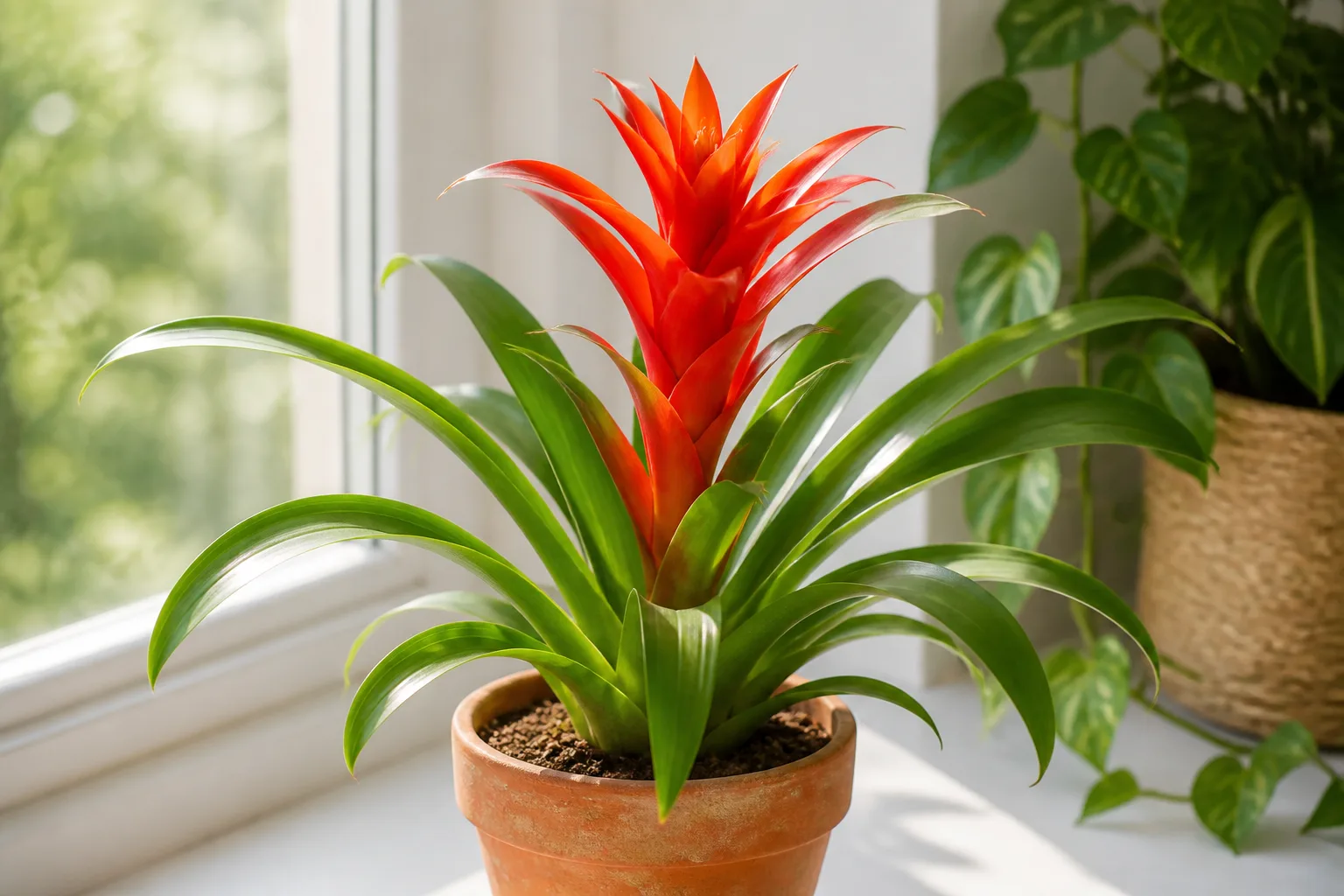
9. Rex begonia (Begonia rex-cultorum) is a compact foliage showpiece with leaves that can swirl or ripple through silver, red, purple, pink, and green. Its patterned surface works well where people can see it close up, such as an end table or the front of a plant shelf. It generally needs bright, indirect light, careful watering, and airflow around its leaves; constantly wet foliage or a waterlogged pot invites problems. The ASPCA lists rex begonia as toxic to cats and dogs, so check its placement in a pet household.
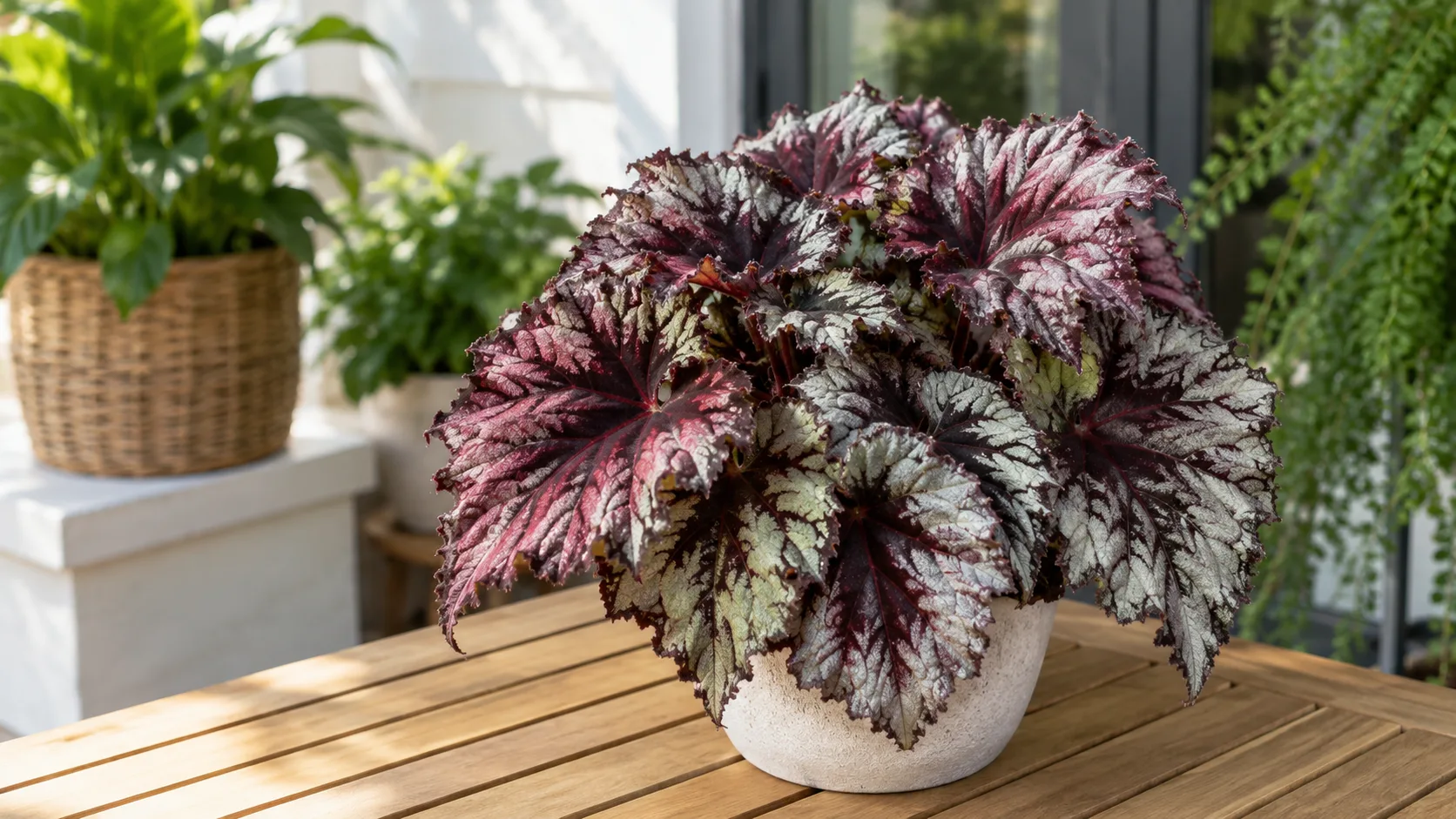
10. Calathea and Goeppertia varieties are grown for patterned leaves rather than dependable flowers. Depending on the species, the design may be a feathered stripe, pale windowpane, or dark underside, which makes one plant useful as a detailed accent against simple furnishings. Buy by the actual species or cultivar instead of assuming every plant sold as “calathea” has the same pattern or care needs. Bright indirect light, warmth, and attention to soil moisture suit many types; dry indoor air can make the edges look less polished.

Pink, red, and purple accents
11. Polka dot plant (Hypoestes phyllostachya) uses small pink, red, or white speckles across green leaves, like a lively fabric print in miniature. Its small size makes it an easy way to test a color in a room without committing to a large floor plant. Set it where it gets bright filtered light and pinch the tips to keep it bushy. In lower light it can stretch toward the window, making a once-dense pot look sparse; use it as a close-up accent rather than a permanent centerpiece.
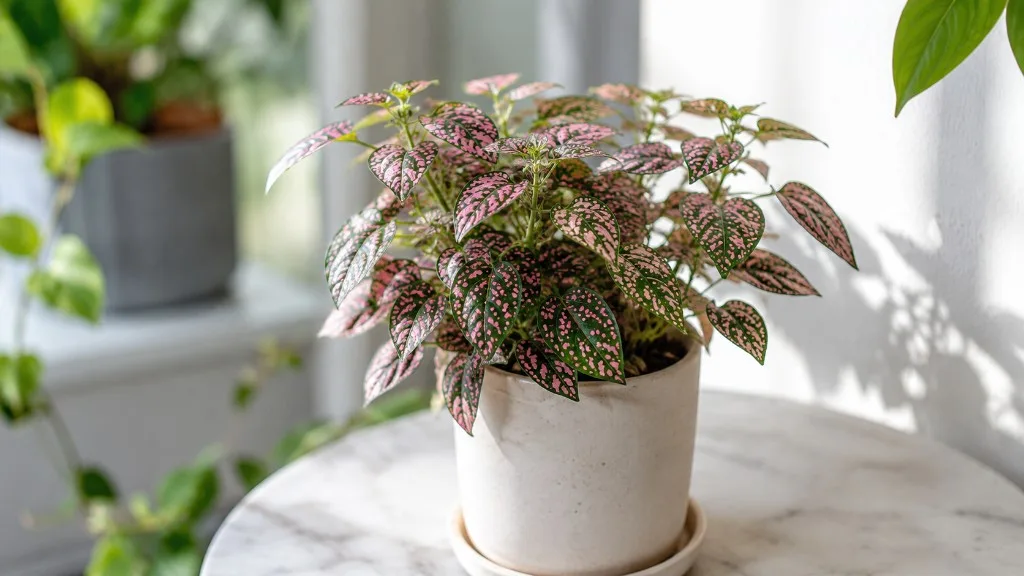
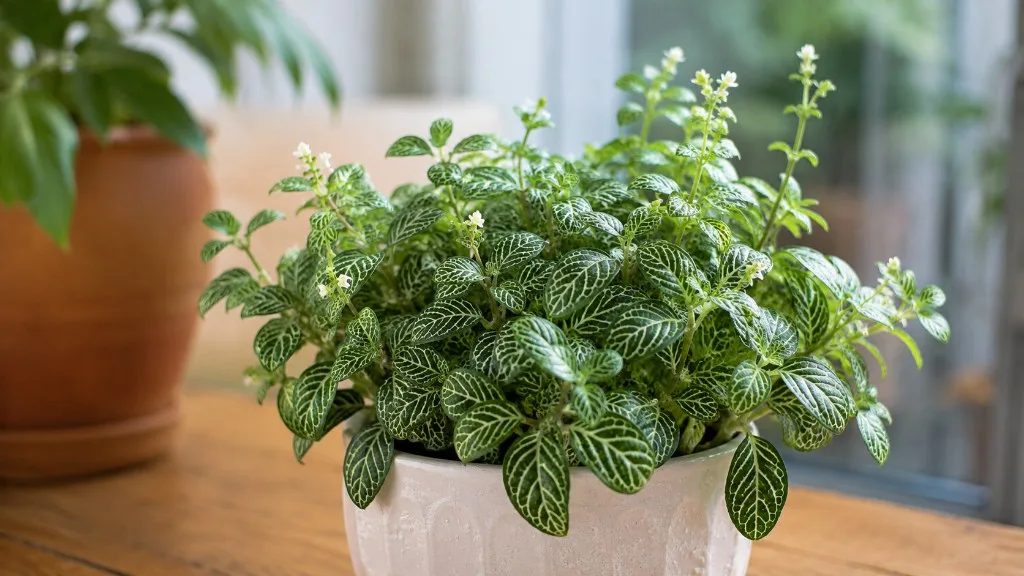
12. Nerve plant (Fittonia albivenis) brings a different pattern: fine white, pink, or red veins that trace across dark green leaves. It stays low and compact, so it suits terrariums, shallow displays, or a humid bright bathroom better than a high, dry shelf. Keep the mix from repeatedly drying out, while still allowing excess water to drain. A dramatic wilt can follow a missed watering, but repeated cycles of severe drying and saturation are stressful; a consistent spot and watering check are more attractive than a rescue routine. Better Homes & Gardens also notes Fittonia’s preference for evenly moist soil and humid rooms in its reviewed foliage-plant guide.
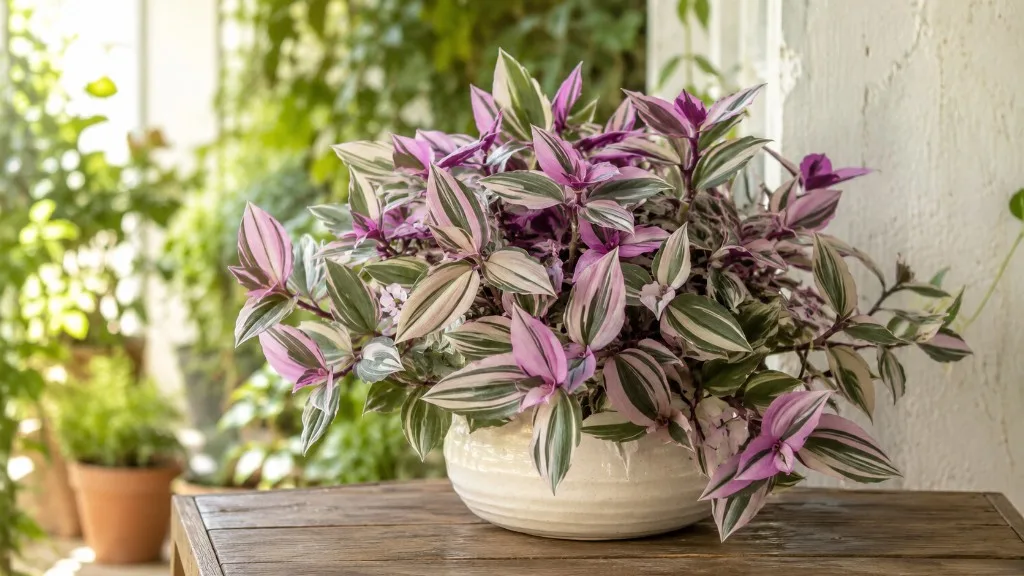
13. Tradescantia ‘Nanouk’ has fleshy leaves striped in pink, cream, green, and sometimes purple. Its slightly upright then trailing habit lets it work in a hanging pot or on a tall shelf where the pale pink stripes catch natural light. Bright indirect light usually shows the pattern well; hot direct afternoon sun may scorch the leaves. Give its stems room to cascade, and pinch the tips when the plant gets lanky. ASPCA’s inch-plant entry is for a different Tradescantia species, so check the exact botanical name for ‘Nanouk’ before treating it as pet-safe; a trailing position is not pet-proof.
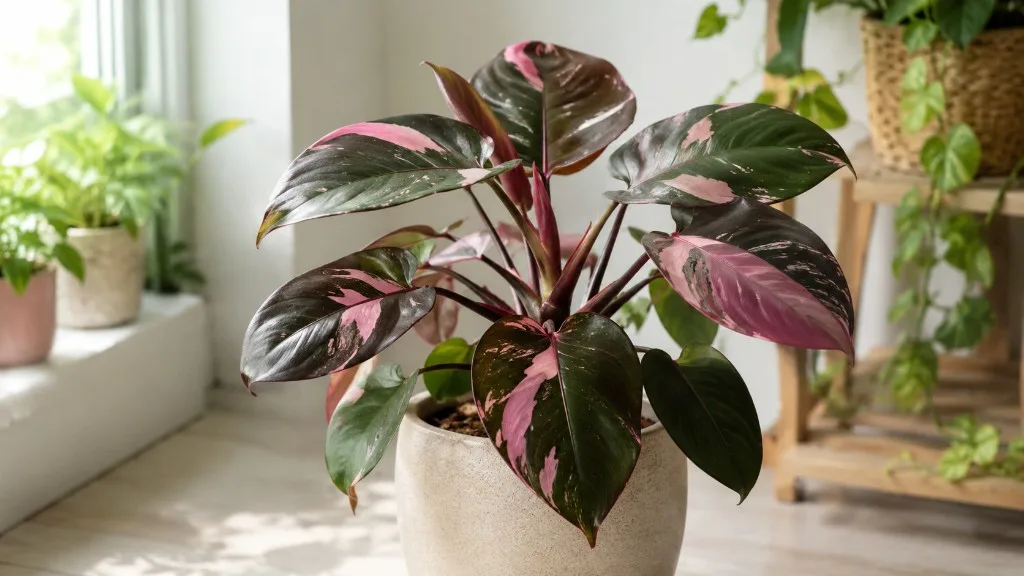
14. Pink Princess philodendron (Philodendron erubescens ‘Pink Princess’) offers green leaves with pink sectors that can vary from one leaf to the next. It makes a strong single accent because its coloration is already busy; a plain pot and quiet background keep the foliage readable. Bright indirect light supports growth, but the pink areas themselves do not photosynthesize like green tissue, so a leaf that is mostly pink is not automatically a sign of a stronger plant. It is a philodendron, a group ASPCA identifies as toxic to pets if chewed.
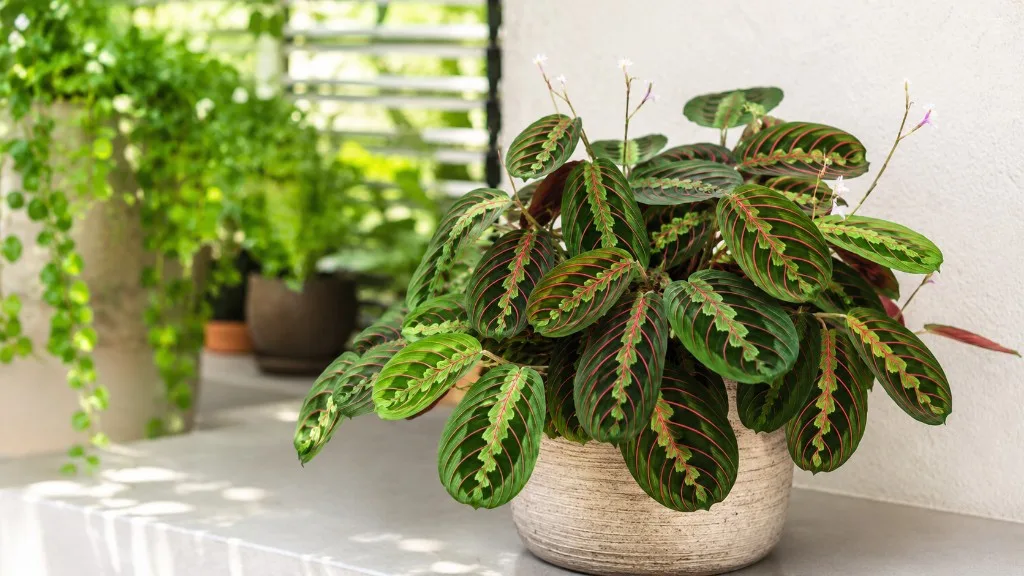
15. Prayer plant (Maranta leuconeura) has oval leaves marked by contrasting green zones and red or pink veins. It is a softer, lower-growing option than an upright philodendron and often looks good on a shelf with enough clearance for its leaves to spread. Its leaf positions change between day and night, adding a subtle sense of movement. Keep it in bright indirect light and avoid letting the root ball dry hard; if the air is very dry, expect the leaf edges to need more attention than the room’s decor does.
Compact plants for shelves and desks
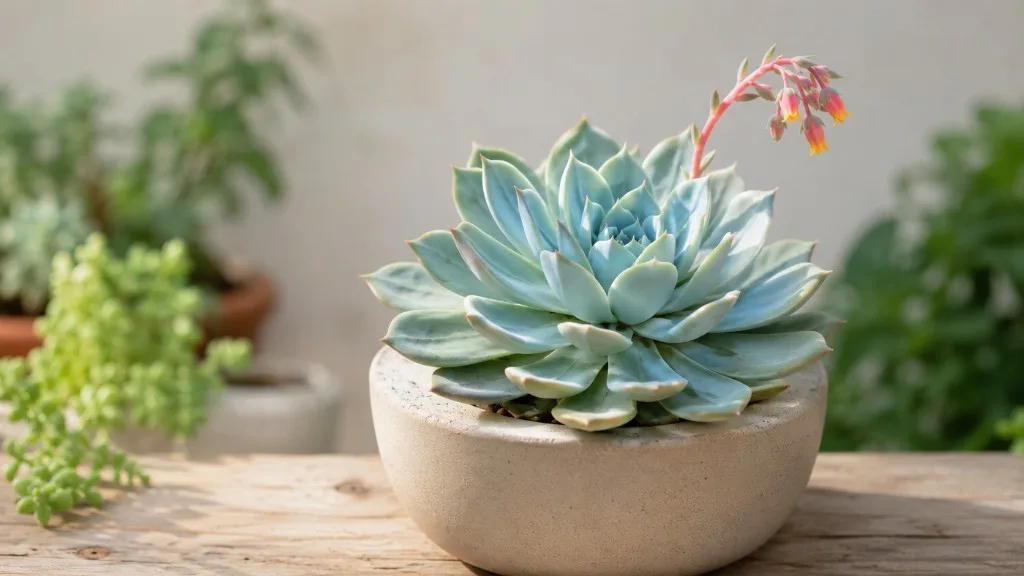
16. Echeveria forms a precise rosette in shades that may appear blue-gray, green, dusty pink, or burgundy. Its geometry suits a sunny sill, a bright desk, or a grouped arrangement of small pots. This is not a plant for a dim shelf: insufficient light can make the rosette stretch and lose its compact shape. Give it several hours of bright light, with gradual acclimation to direct sun, and use a potting mix and container that drain quickly. A decorative cachepot is fine if you empty standing water after watering.
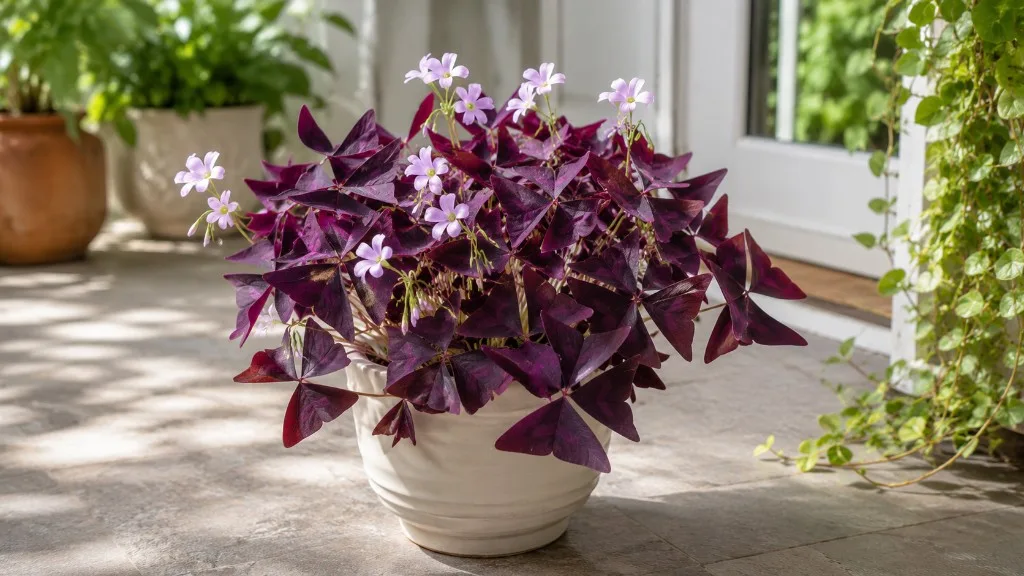
17. Purple shamrock (Oxalis triangularis) brings triangular leaves in a deep plum-purple that fold or droop during darkness and may rest seasonally. That daily movement makes it feel less static than a typical foliage accent, while the deep color is easy to repeat in a room palette. It prefers bright indirect light; a few gentle hours of sun can deepen growth if the plant is acclimated. When leaves die back, check whether the plant has entered dormancy before discarding it or keeping its pot constantly wet. The ASPCA lists shamrock as toxic to cats and dogs, so keep it from pets and children.
18. Peperomia ‘Rosso’ is a compact rosette with ridged green-and-silver upper leaves and a red underside that shows when viewed from above or at eye level. Use it as a small-scale accent on a desk, bedside table, or front row of a shelf; those red undersides are details best seen at arm’s length. Thompson & Morgan’s foliage houseplant guide also highlights the red undersides of ‘Rosso’ and the pink ribs of prayer plant as color details worth noticing. It does not need the footprint of a large tropical plant, and its thick leaves store some water, so the root zone should not stay saturated. Bright indirect light helps the leaf contrast; its decorative pot should still have drainage or a removable nursery pot inside.
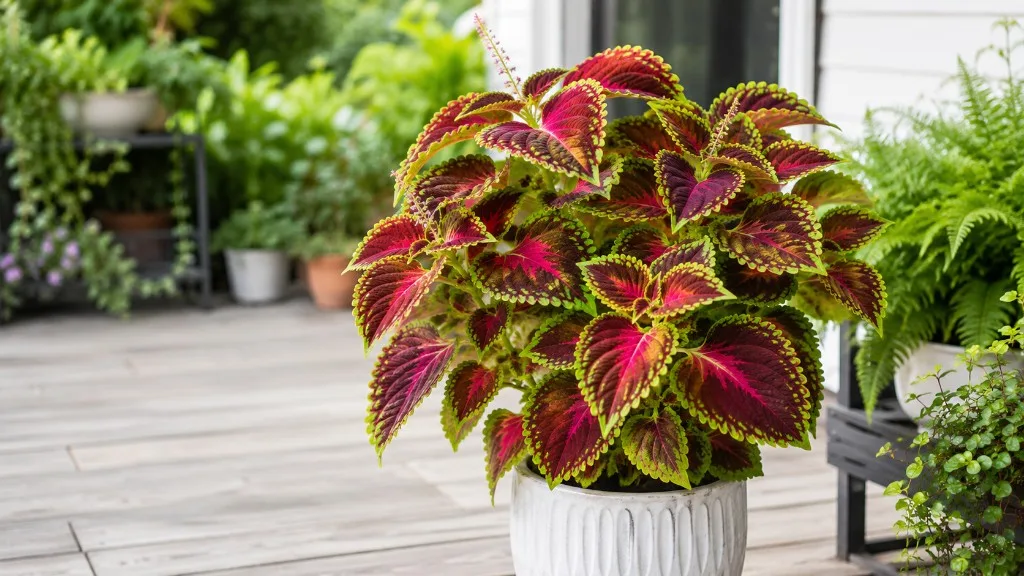
19. Coleus (Plectranthus scutellarioides) offers almost any combination of pink, burgundy, yellow, lime, and green, with leaf shapes that range from broad to deeply scalloped. It can be grown indoors if the room is bright, but it is naturally fast-growing and may need regular pinching to retain a dense shape. Choose it when you want a vivid, changeable accent and do not mind pruning or replacing it if it becomes leggy. NC State Extension identifies the ornamental plant as Coleus scutellarioides and warns of possible skin irritation after contact with its leaves. The ASPCA entry titled “Coleus” uses a different scientific name, so it does not settle the pet-safety status of the ornamental coleus discussed here; verify the exact variety before buying for a pet household (NC State Plant Toolbox; ASPCA Coleus entry).
20. Purple velvet plant (Gynura aurantiaca) has green leaves covered with fine purple hairs that catch the light like velvet. The texture is its main decor value, so it looks best where the foliage can be viewed closely rather than lost in a large mixed display. Give it bright indirect light and a loose, well-drained mix; overwatering can spoil the appearance quickly. As stems lengthen, trim them to maintain a compact mound or allow them to trail. It is a short-lived, fast-growing accent for people comfortable with occasional renewal.
Trailing and architectural finishing plants
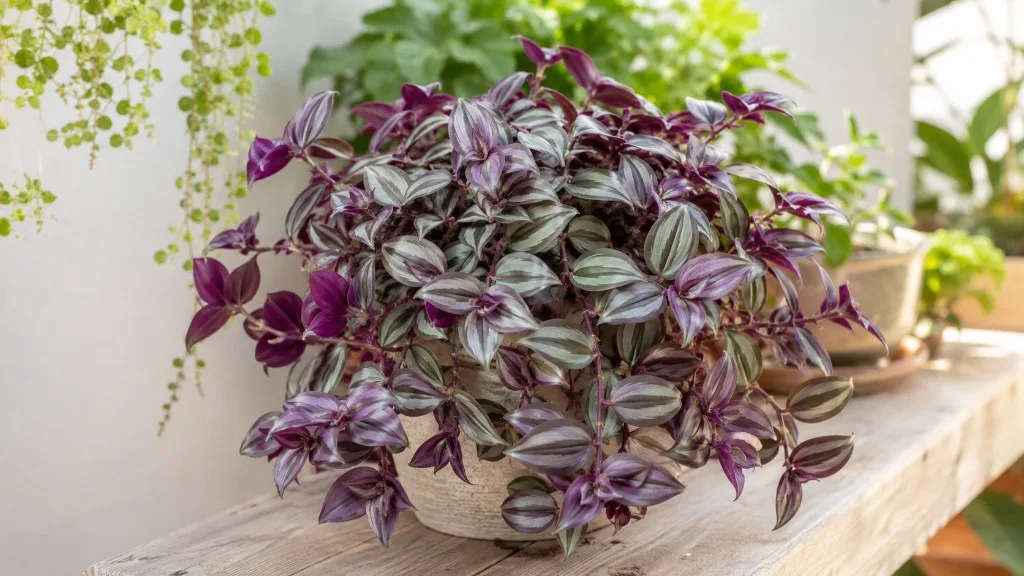
21. Spiderwort (Tradescantia zebrina) combines silvery stripes with purple undersides on leaves that trail readily. Put it on a shelf edge or in a hanging basket where the stems can drape without brushing a pet’s favorite perch. Bright indirect light keeps the stripes legible, and trimming long stems encourages a fuller display. Older sections can become bare, so occasional cuttings can refresh the pot. The ASPCA’s inch-plant entry is for a different Tradescantia species, so verify the botanical name for T. zebrina rather than assuming that a common-name listing covers every spiderwort. Keep trailing stems away from pets that chew foliage.
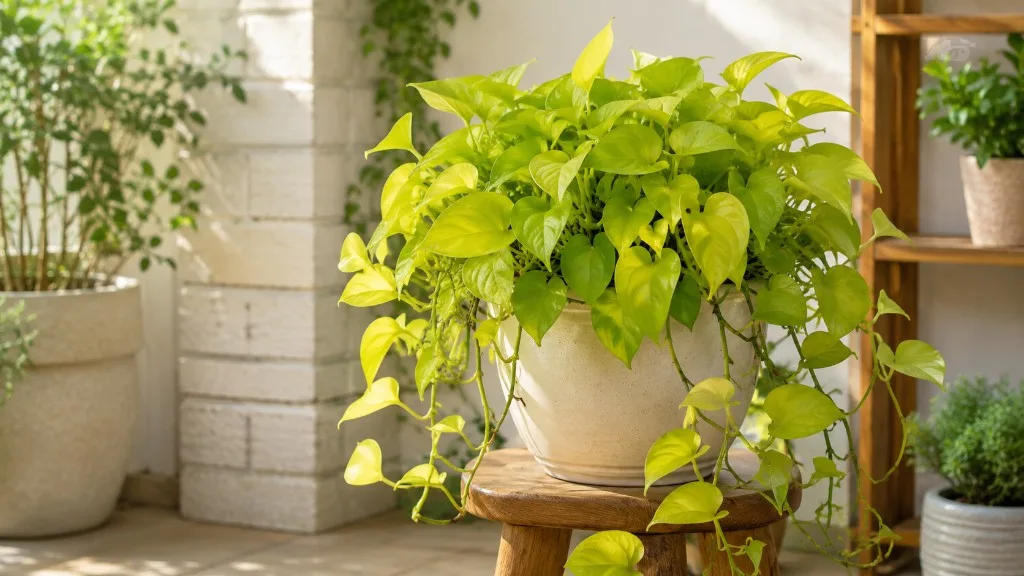
22. Neon pothos (Epipremnum aureum ‘Neon’) supplies a clear chartreuse note and a flexible trailing shape. Use it to draw the eye along a bookshelf or soften the corner of a cabinet; its color contrasts especially well with dark wood, navy, or deep green. The plant can tolerate moderate indoor light, but a brighter indirect position better preserves the vivid tone and tighter growth. The ASPCA identifies pothos as an insoluble calcium oxalate houseplant that can irritate pets if chewed. Put trailing stems beyond an animal’s reach only if that reach is genuinely inaccessible.
23. Philodendron Florida Ghost is prized for new leaves that may emerge cream or nearly white before maturing toward green. That color shift means the plant’s appearance changes over time rather than staying uniformly pale, a useful feature if you want a living focal point instead of a static white accent. Give it bright indirect light, warmth, and room for its growth habit; avoid scorching direct sun on pale new foliage. It is a philodendron, so apply the same pet-access caution as for other members of the genus.
24. Philodendron ‘Royal Queen’ adds dark burgundy-to-green foliage for rooms that need depth instead of another pastel accent. The color can look nearly black in low indoor light, but that visual darkness should not be confused with a plant that thrives in a dark corner. Use it where indirect daylight is still strong enough to support growth, and pair it with a light pot or nearby silver foliage for contrast. It is also a philodendron; keep it away from pets that might chew leaves.
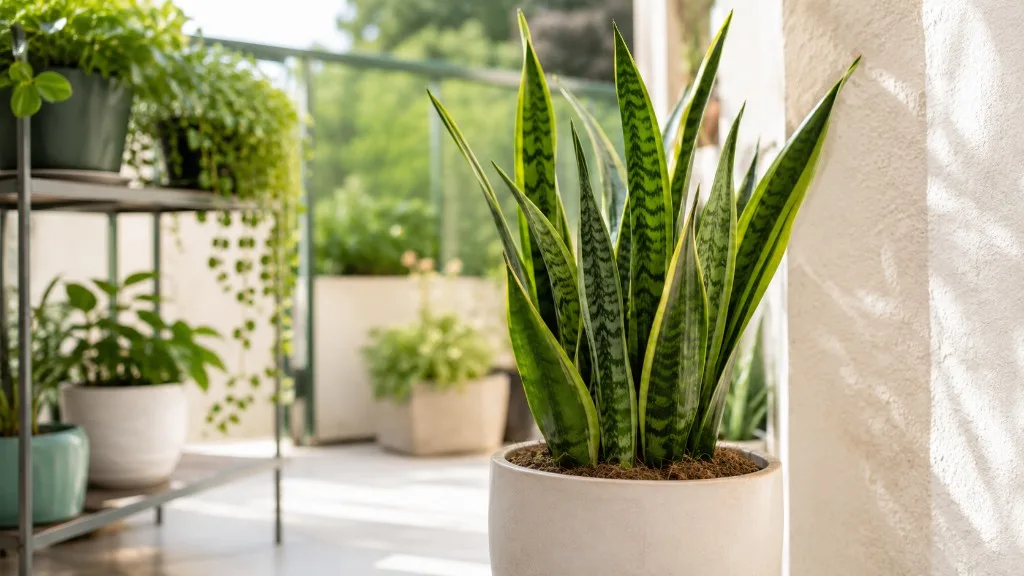
25. Snake plant (Dracaena trifasciata) brings upright, sword-shaped leaves, and variegated cultivars such as ‘Laurentii’ add a yellow margin. It gives a room a crisp vertical line in a footprint that is narrower than a rubber plant’s, and it handles infrequent watering better than the moisture-loving choices above. It will tolerate less bright conditions, but color and growth are usually stronger with useful natural light. Allow the mix to dry well between waterings; the ASPCA lists snake plant as toxic to cats and dogs.
Match the Plant to the Room
Low-light rooms need realistic expectations
A north-facing room or a spot far from a window can still hold a plant, but the color choices narrow. Try a Chinese evergreen or snake plant when you want a forgiving shape, then accept that the foliage may be less vivid or growth slower than a bright-window specimen. Do not buy a sun-hungry echeveria, coleus, or croton for a deep corner just because its leaves look colorful at the store. An inexpensive grow light can help when natural light is inadequate, but a decorative lamp bulb is not necessarily a plant light.
Bathrooms can suit plants that appreciate more humidity, such as fittonia or some calatheas, only if the room also has daylight. A humid, windowless bathroom is not automatically a good plant room: humidity cannot replace light. Similarly, a sunny sill is not always ideal for every plant; sheer curtains can soften intense midday rays, and moving a plant farther from the glass can prevent scorch. The RHS recommends considering changes across seasons and between rooms, because light, temperature, and humidity vary indoors rather than staying fixed year-round.
Check pet access before choosing a plant
“Colorful houseplant” and “pet-safe houseplant” are separate shopping filters. ASPCA guidance identifies pothos, Chinese evergreen, and philodendron among common insoluble calcium oxalate plants; chewing these can irritate a pet’s mouth and digestive tract. The ASPCA also lists rex begonia, inch plant, ti plant, shamrock, rubber plant, and snake plant as toxic to cats and dogs. Check the exact botanical name against the ASPCA plant database before you buy, and ask your veterinarian about a plant your animal has already eaten. Common names can obscure species: NC State identifies decorative coleus as Coleus scutellarioides, while the ASPCA page titled “Coleus” names a different plant. Neither the shared label nor a general genus note replaces a check of the exact plant you are buying. Do not assume a hanging basket is unreachable: cats climb, vines drop, and leaves fall within reach.
If your pet regularly mouths foliage, the most dependable decorative choice is one your veterinarian confirms is appropriate for that animal—or a nonliving accent in the same color. Keep nursery tags or a clear plant photo so you can identify the species accurately if there is an exposure. For suspected ingestion, contact a veterinarian or ASPCA Animal Poison Control promptly instead of waiting for symptoms. ASPCA’s houseplant safety guidance explains why common names alone are not enough for identification.
Keep Colorful Foliage Looking Its Best
Color is partly a growing-condition issue and partly a cultivar trait. Some variegated plants produce less patterned growth when light is poor; other plants maintain their basic leaf color but become stretched and sparse. If new leaves are smaller, growth leans toward the window, or the spaces between leaves lengthen, first compare the plant’s current light with its previous location. Move it closer to bright filtered light in small steps rather than exposing it abruptly to strong direct sun. Gradual adjustment reduces shock and makes it easier to see whether the new position helps.
Water by checking the potting mix, not by using one schedule for a whole colorful collection. A fittonia or stromanthe that dries severely may droop, while an echeveria or peperomia left wet for days is more vulnerable to root trouble. Make sure the pot has drainage, pour off water from the cachepot, and match the interval to the plant, the light, and the season. Wipe broad leaves gently when dust dulls their surface; avoid polishing products, which can leave a residue rather than improving the plant’s health.
Do not try to intensify leaf color by overfertilizing. More fertilizer does not turn a green cultivar into a pink one, and excess salts can damage roots or leaf edges. Buy a cultivar with the color you want, provide its normal light needs, and rotate the pot occasionally for even growth. The RHS notes that light fuels plant growth and that weak, pale, or spindly shoots can signal inadequate exposure; this is a better first diagnostic than adding fertilizer whenever foliage looks less vivid.
Make the Pot and Grouping Part of the Design
A pot should support the plant’s visual scale instead of competing with its leaves. Patterned foliage—rex begonia, nerve plant, or aluminum plant—often looks clearer in a quiet solid pot. A plant with a simpler silhouette, such as a snake plant or burgundy rubber plant, can carry a more textured container. Repeat one color, material, or finish elsewhere in the room to make the plant feel connected to the furniture rather than dropped into the space as an afterthought.
When grouping plants, combine different heights and leaf shapes but keep their care needs compatible. A sunny echeveria should not share a dark, moist terrarium with fittonia simply because the colors complement each other. A practical arrangement might put a stromanthe on a low stand, a peperomia on the middle shelf, and a tradescantia trailing from the top—provided each spot receives suitable light and any toxic foliage stays inaccessible. Leave enough space for air movement and for you to inspect leaves, rotate pots, and water without soaking books or furniture.
Conclusion
Colorful houseplants work best as living decor when the design and growing conditions agree. Match the plant to the room’s light and footprint, then check its care needs and exact pet-safety information. A suitable choice is more likely to stay healthy and keep its place in the room.