23 Flowering Houseplants for Every Light and Space
Compare 23 flowering houseplants by light, bloom cycle, and care. Find a realistic match for your window and learn what helps each plant flower again.
Flowering houseplants range from repeat-blooming African violets to bulbs grown for a single winter display. Choose by the window and bloom cycle you can support, not flower color alone: light, temperature, and growth stage determine whether a nursery bloom returns.
Some show color through bracts or spathes, not petals. A bromeliad’s bracts can last for months while its tiny flowers fade quickly; a peace lily’s white spathe frames its flower spike. Learn what kind of display each plant offers before buying.
Choose by window before you choose by flower color
Observe the actual spot where the pot will live. South- and west-facing windows may provide direct sun; east-facing windows usually give gentler morning light, while curtains, trees, season, and distance from the glass change what reaches the leaves. A room that feels bright to you may still be too dim to set buds.
For bright indirect light, shortlist African violet, anthurium, Phalaenopsis orchid, peace lily, and many bromeliads. For direct sun or a grow light, consider geranium, lavender, desert rose, crown of thorns, or flowering maple. Shade may keep some foliage alive, but rarely supports repeated flowering.
Match the bloom cycle to your expectations: African violets and orchids can flower in cycles; bromeliads and silver vase plants offer long-lasting bracts; cyclamen and clivia are seasonal; paperwhites are often a one-display project. Species sold under similar common names can have different needs, as this Gardener’s Path comparison illustrates.
Bright, filtered light: steady tropical color
These suit bright rooms without prolonged, scorching midday sun. If they make leaves but no blooms, check light before reaching for fertilizer.
African violet
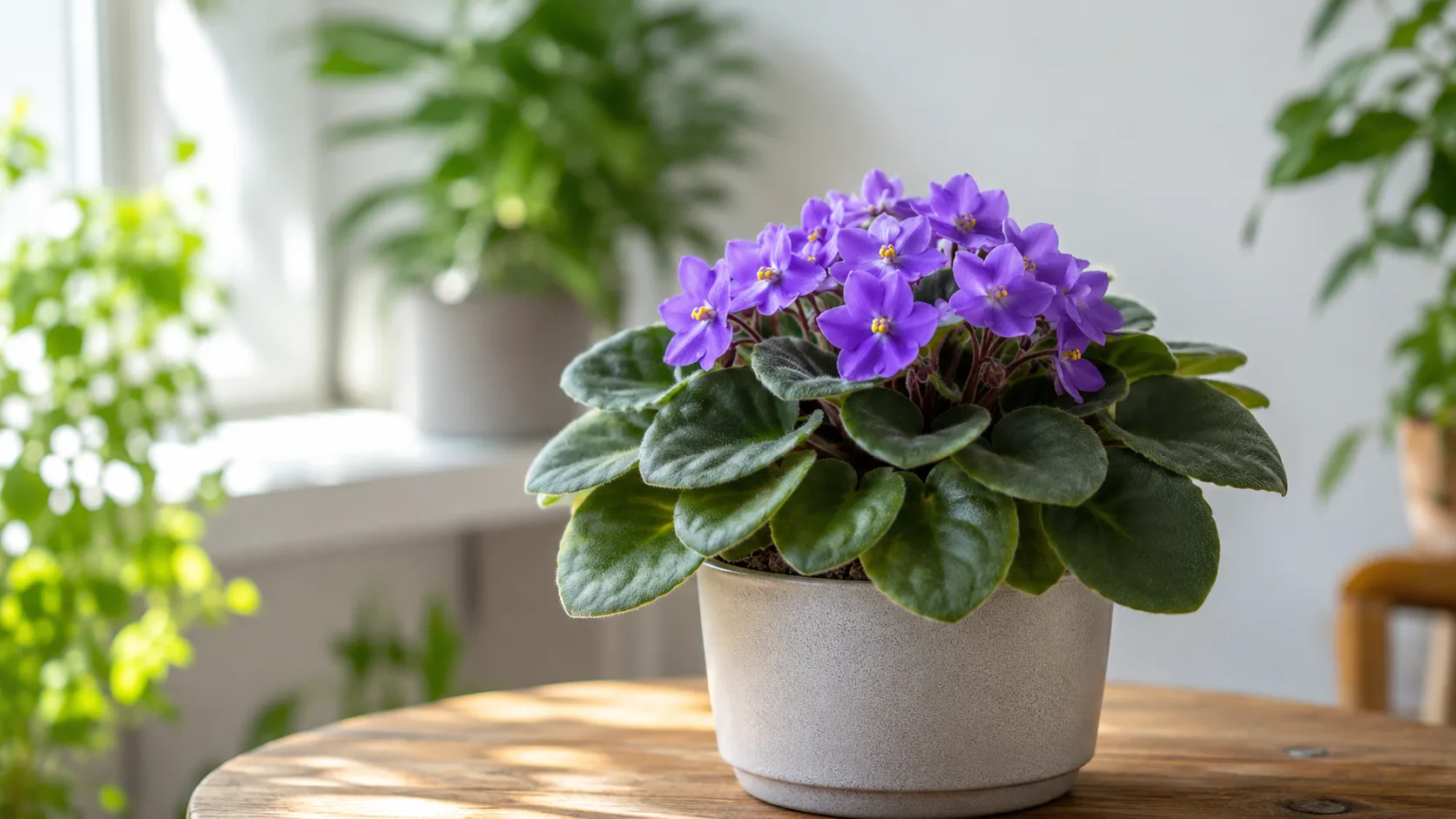
African violet (Streptocarpus sect. Saintpaulia) is one of the strongest choices for compact, repeat color. It stays small enough for a shelf or windowsill, and flowers can appear in successive flushes when the plant receives bright filtered light, steady warmth, and an evenly moist but airy mix. Better Homes & Gardens notes that African violets can bloom several times a year, but that result still depends on enough light and healthy growth.
Keep water off the fuzzy leaves when possible, especially in a cool room, and empty the saucer after watering. Remove spent flower stalks at the base so the plant can put energy into new growth; do not bury the crown or move it into harsh sun to force faster flowering. A modest plant light can help if every window is dim, but it should illuminate the foliage rather than bake it.
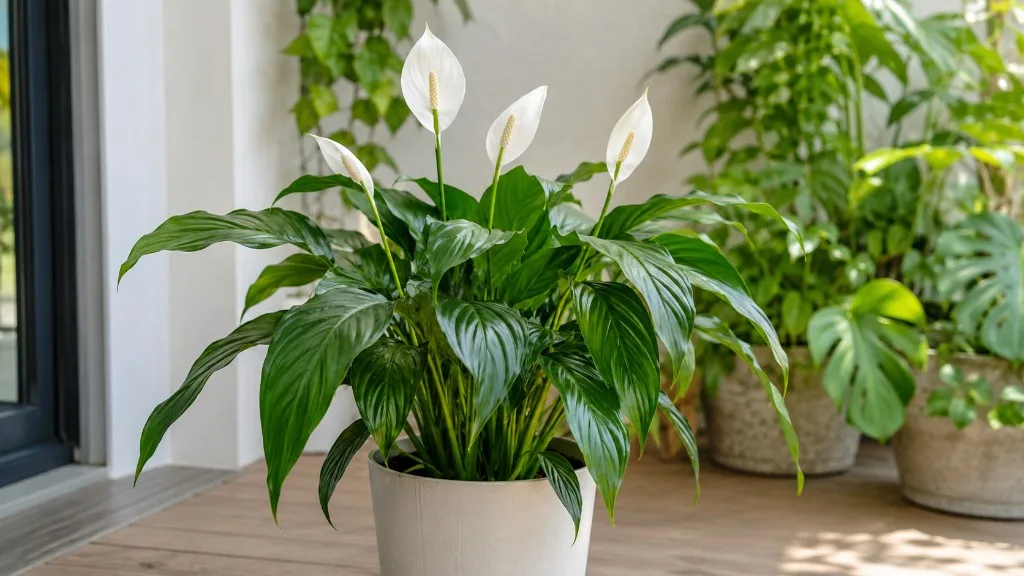
Peace lily
Peace lily (Spathiphyllum) earns its place for its glossy foliage and upright white spathes, but it is more dependable as a foliage plant than as a constant flower machine. It tolerates lower light better than many entries here, though brighter indirect light usually improves the chance of spathes. Let the upper layer of potting mix begin to dry, then water thoroughly and drain the saucer instead of keeping the roots waterlogged.
The white structure can turn green as it ages; that is a normal part of the display, not a sign that the plant needs a stronger feed. If an established plant has stopped flowering, improve the light gradually and check that the pot drains before changing fertilizer. The ASPCA lists peace lily as toxic to cats and dogs because it contains insoluble calcium oxalates, so place it where pets cannot chew it and contact a veterinarian or poison-control service after an ingestion.
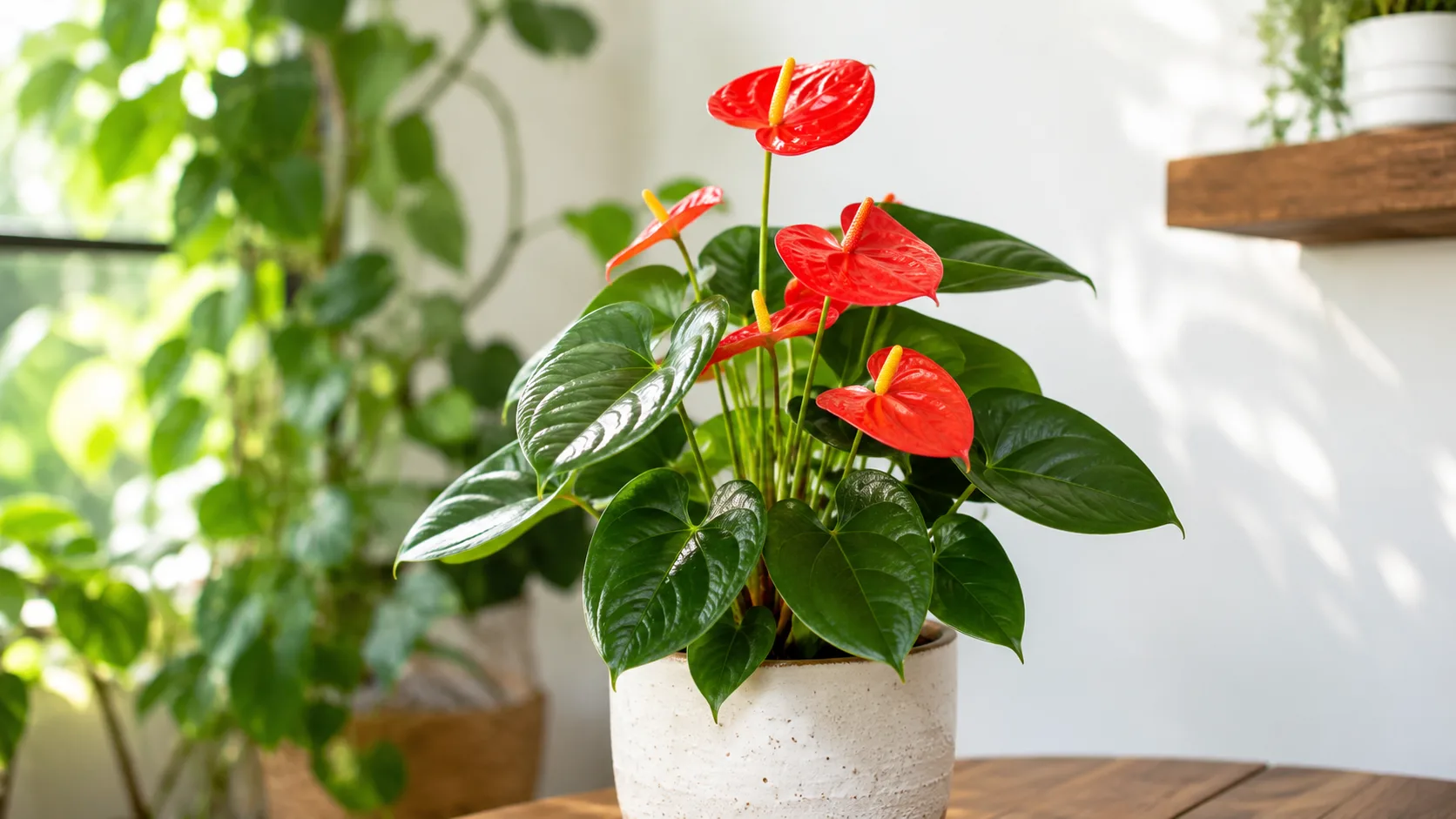
Anthurium (Anthurium andraeanum) produces glossy, heart-shaped spathes in red, pink, coral, or white, often with a long-lasting display. Give it bright filtered light, warmth, and a loose mix that drains; a dark corner may preserve leaves but will rarely support a convincing flowering cycle. It is a better choice for someone who can keep a warm, bright room consistently comfortable than for a cool, drafty sill.
Bromeliad is a family, not one exact plant, so check the label for the genus and care instructions. Many sold as flowering houseplants have a colorful central bract that lasts far longer than the small flowers; after the rosette finishes, it generally produces offsets rather than flowering from that same center again. Choose it for a long display and future pups, not a promise of monthly rebloom.
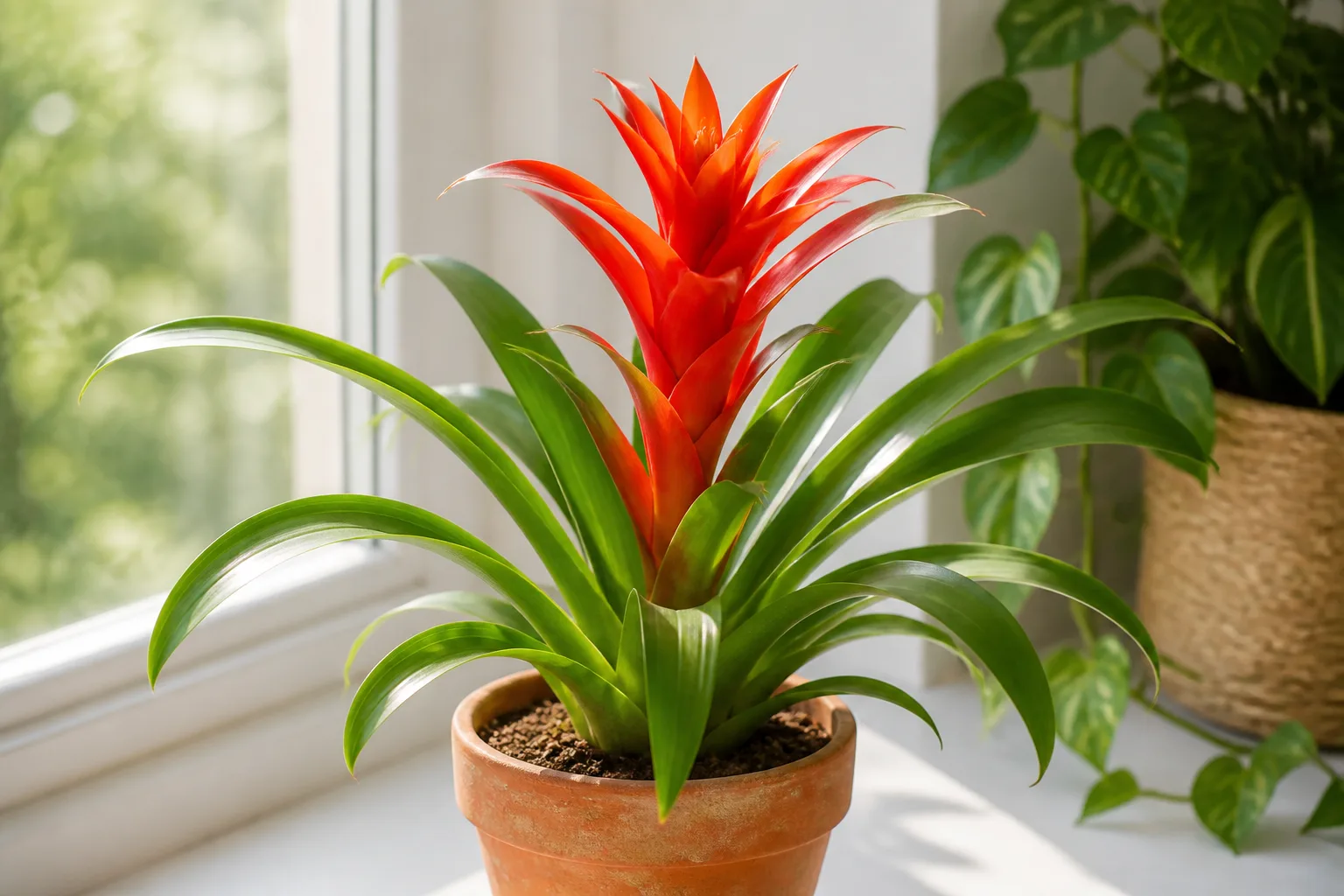
Silver vase plant (Aechmea fasciata) is a particularly architectural bromeliad, with silver-striped leaves and a durable pink bract. Bright indirect light suits it, and the central rosette flowers once before producing offsets. Watering instructions vary across bromeliads, so follow the species label rather than treating every plant in the family as if it uses the same “cup” method.
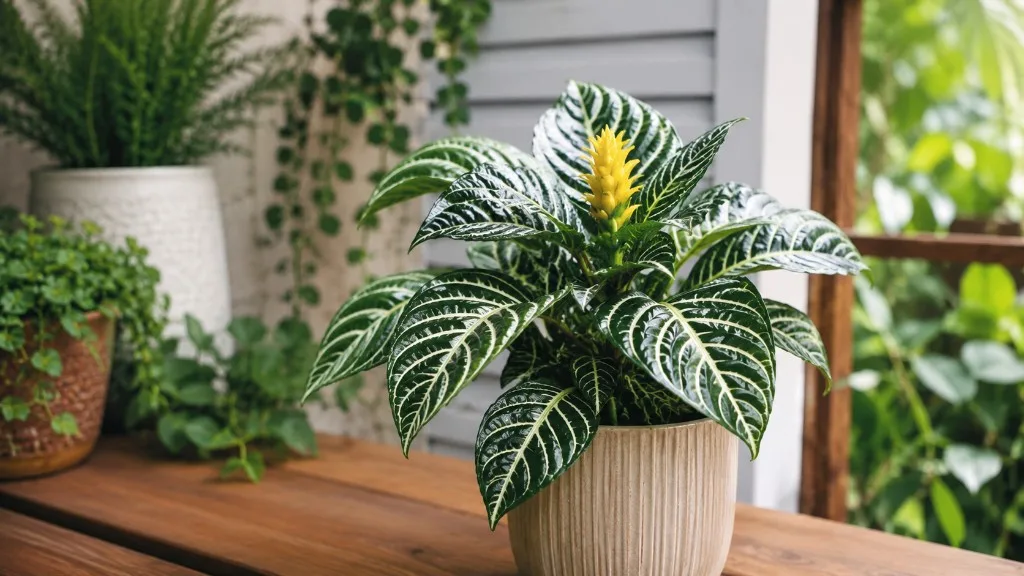
Zebra plant (Aphelandra squarrosa) pairs boldly striped leaves with a golden bract when it is happy. It needs bright indirect light, warmth, and a potting mix that stays evenly moist without sitting in water; dry heat and sudden swings can make it sulk. Pick this one for its foliage first, because its bract is a bonus that takes more stable conditions than a kalanchoe’s store-bought flower cluster.
Compact seasonal bloomers for a windowsill
Seasonal plants flower more predictably when you work with their cycle. After a display fades, the plant may need rest, continued light for its leaves, or simply be ready for replacement after a one-time indoor show.
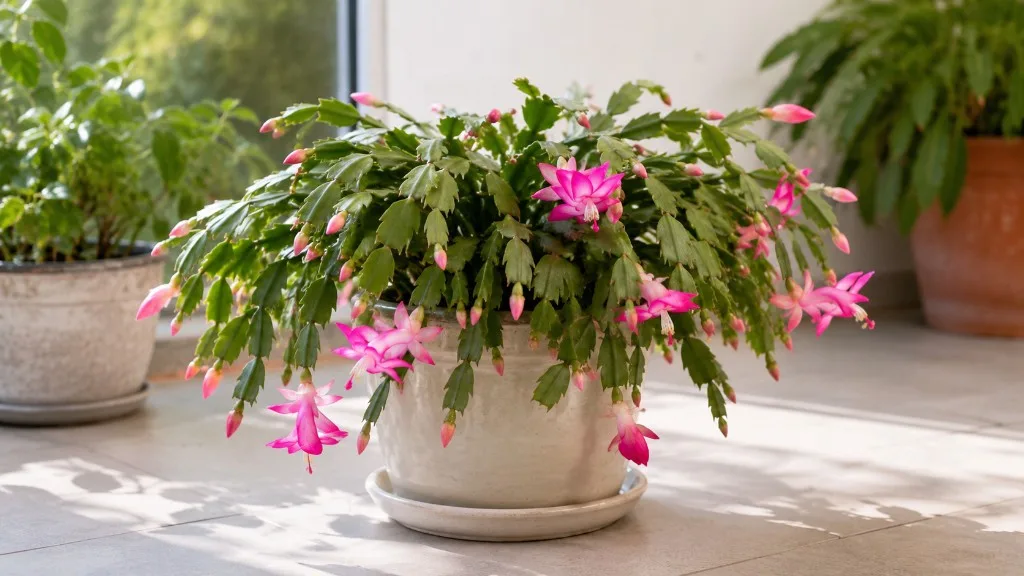
Christmas cactus
Christmas cactus (Schlumbergera × buckleyi) makes arching stems and tubular flowers in winter colors, and a mature plant can live for years. Flowering is tied to seasonal cues such as longer nights and cooler conditions, so a warm room with lights on late into the evening can delay or reduce bud set. Keep it in bright indirect light, water when the mix begins to dry, and avoid shifting or rotating it once buds are visible.
“Holiday cactus” also includes Thanksgiving and Easter relatives with different timing and stem shapes. For flowers near a particular holiday, buy a plant already in bud; the common name does not guarantee its schedule. After flowering, allow a short recovery before normal growth care resumes.
Phalaenopsis orchid
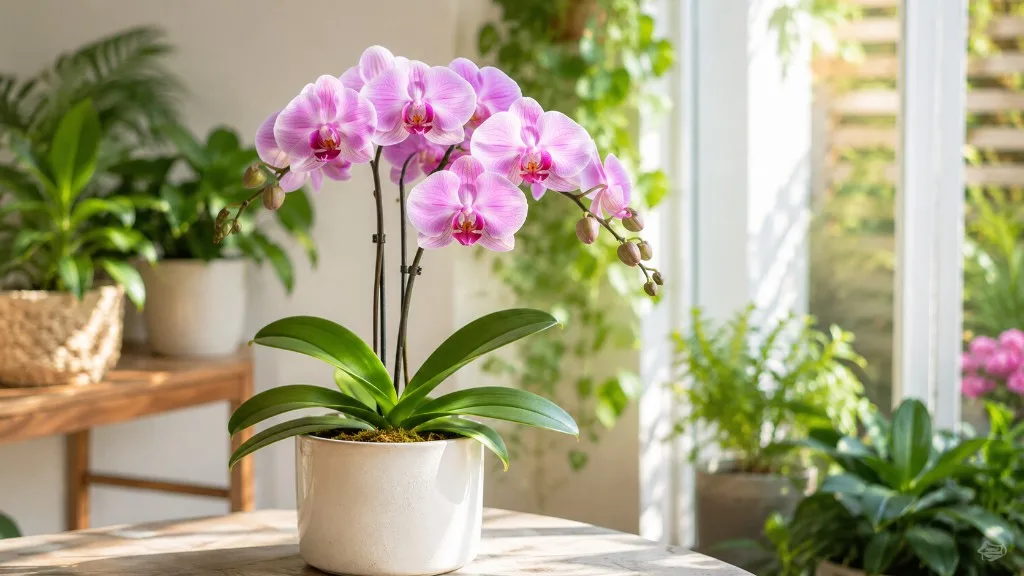
Phalaenopsis orchids, or moth orchids, are the most accessible orchids for a warm home because their flowers can last for weeks and they do not require a cold winter dormancy. Put the plant near a bright window out of scorching midday sun, and use a ventilated orchid pot with bark or another airy medium instead of dense garden soil. Water when the roots and medium are approaching dryness, then let excess water drain away from the crown.
After flowers fade, a healthy plant may branch from a green spike or grow a new one later, but neither is guaranteed on a fixed schedule. Light and maturity matter more than bloom fertilizer, and a store-bought flower may reflect greenhouse conditions rather than your room.
Clivia (Clivia miniata) carries orange or yellow flower clusters above strap-like leaves and commonly blooms in late winter or spring. It needs bright indirect light while growing and a cooler, drier rest to set buds; keeping it warm and wet all year can mean leaves without flowers. Give it a stable place and avoid repeatedly upsizing the pot, since it often flowers better when its roots are somewhat snug.
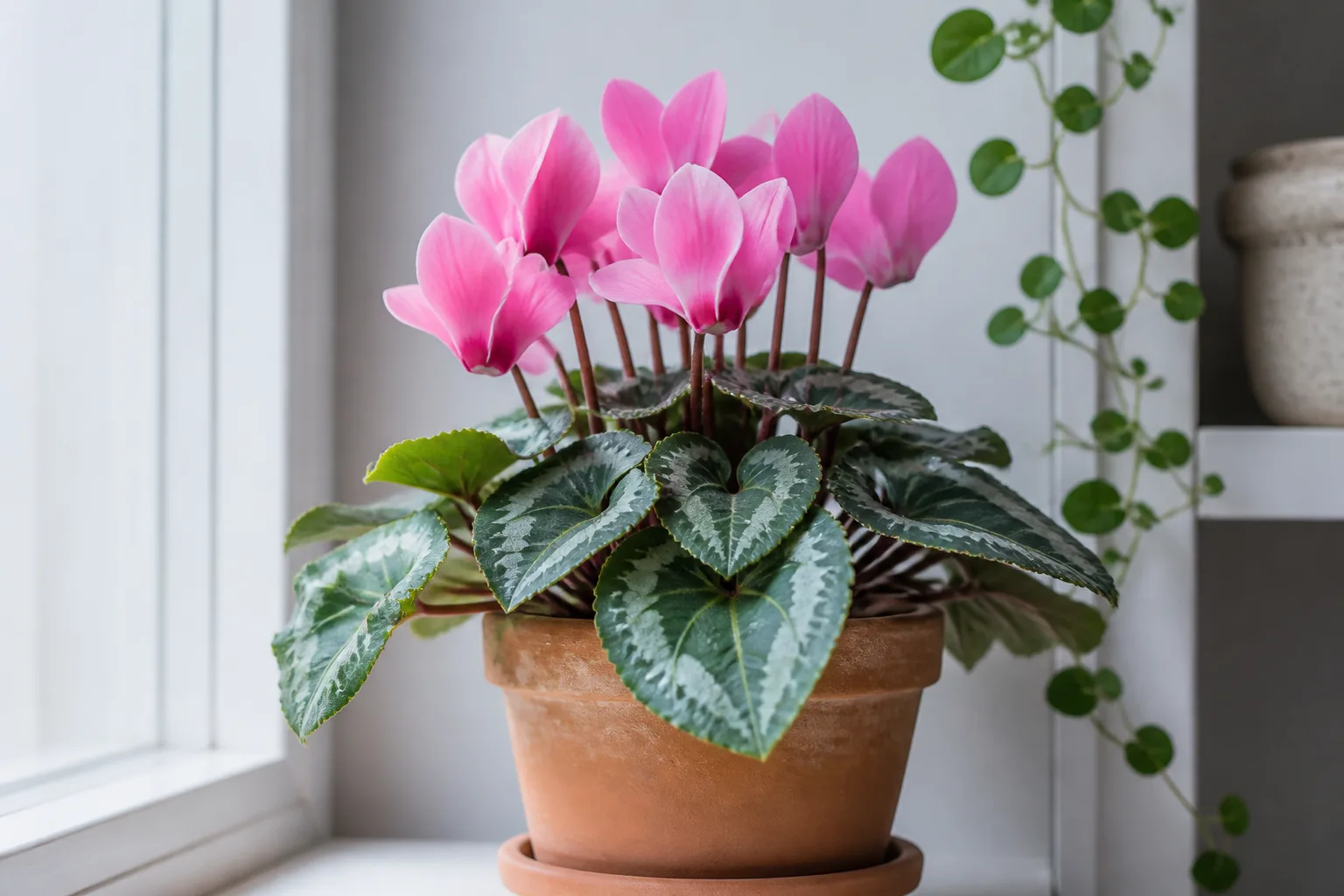
Cyclamen (Cyclamen persicum) is a cool-season plant with swept-back petals and patterned leaves. It often declines when a warm home pushes it out of its preferred flowering season, so treat drooping or yellowing leaves in hot weather as a possible dormancy cue rather than automatically adding water. Keep it cool and bright while in bloom, water around the edge of the pot, and never leave the tuber sitting in a puddle.
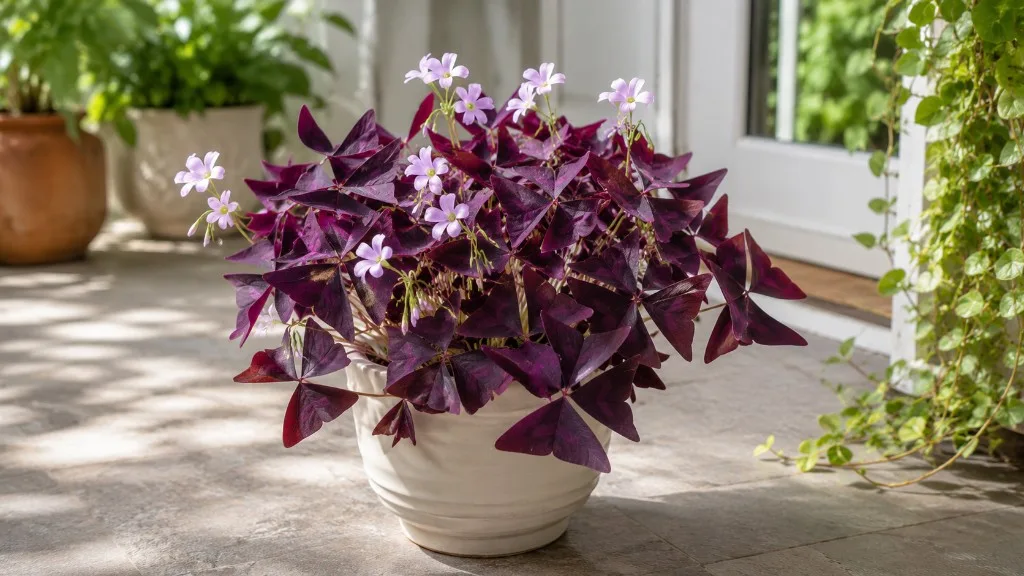
False shamrock (Oxalis triangularis) brings purple, triangular leaves and small pale flowers, with foliage that folds at night or during stress. Give it bright indirect light and allow the surface of the mix to dry slightly between thorough waterings. It may go quiet and lose leaves during a rest period; if the tubers are firm, reduce watering and wait for renewed growth instead of discarding the pot.
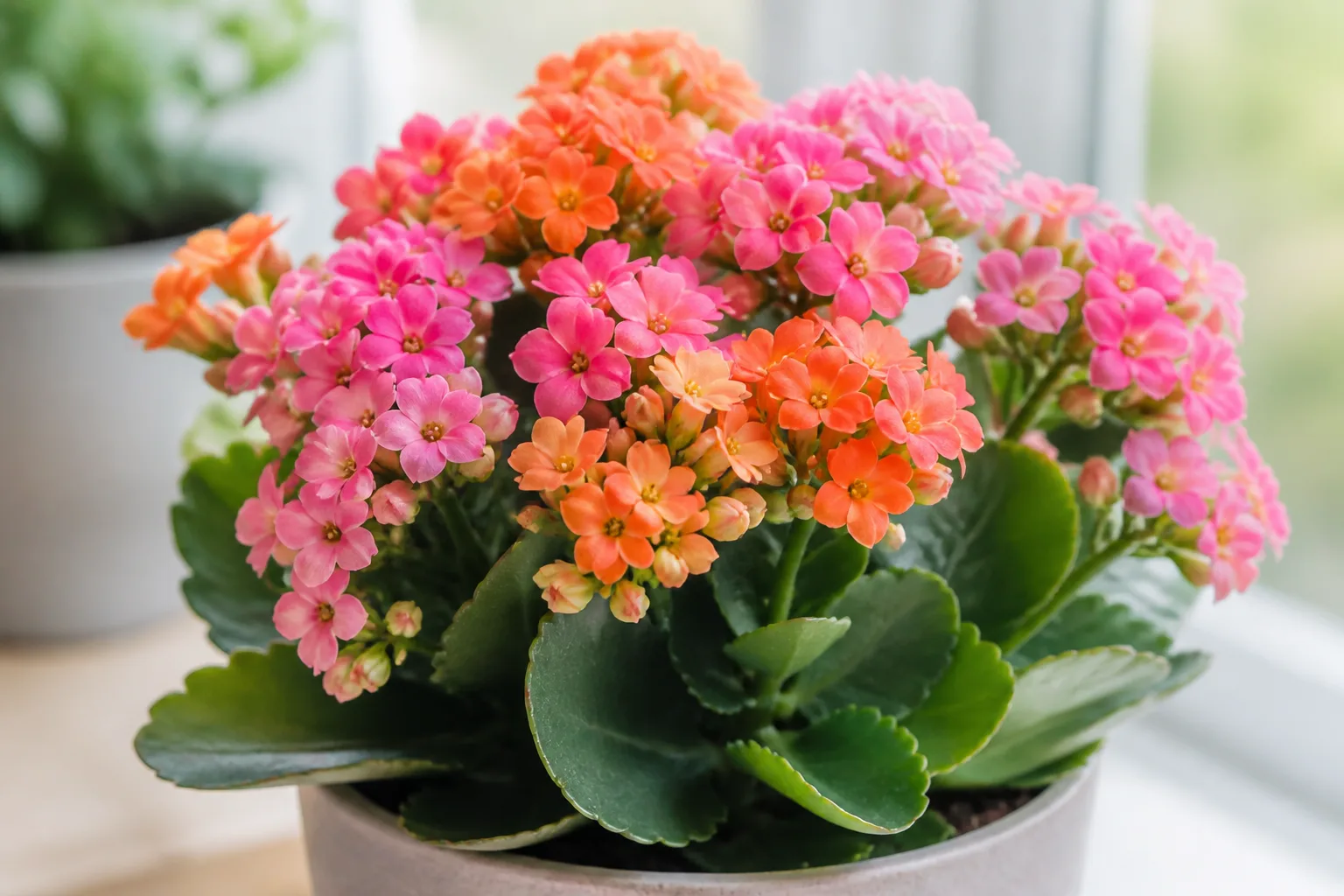
Kalanchoe (Kalanchoe blossfeldiana) is a compact succulent with clusters of red, orange, pink, yellow, or white flowers. It is among the simpler choices for a sunny sill: let the mix dry more than you would for a tropical plant, and provide strong light without keeping the roots wet. The nursery bloom can last a long time, but a second flush requires a healthy plant and the appropriate seasonal light-dark cycle; it is not a continuous bloomer just because the shop label says “easy care.”
Paperwhite narcissus (Narcissus papyraceus) grows quickly from bulbs and can flower indoors without the chilling that many spring bulbs require. Penn State Extension explains that paperwhites typically bloom within weeks when started in a cool, sunny location, while warm, dim conditions can make stems weak and floppy. Think of paperwhites as a planned winter centerpiece: after forcing, the bulbs often lack enough stored energy for a strong repeat indoor display.
Gloxinia (Sinningia speciosa) has velvety leaves and broad, bell-shaped flowers, often with striking white edges or speckles. Keep it in bright indirect light and water the soil rather than soaking the leaves or crown. After a flowering cycle, it may rest and lose foliage; let the tuber remain in its pot and restart careful watering when fresh growth returns instead of keeping dormant soil constantly wet.
Fragrant climbers and plants that flower on new growth
These plants reward a sunny, warm growing spot and enough room for stems to stretch. Their flowers may be fragrant or carried above foliage, but they are less forgiving of a dim shelf than their small nursery pots suggest.
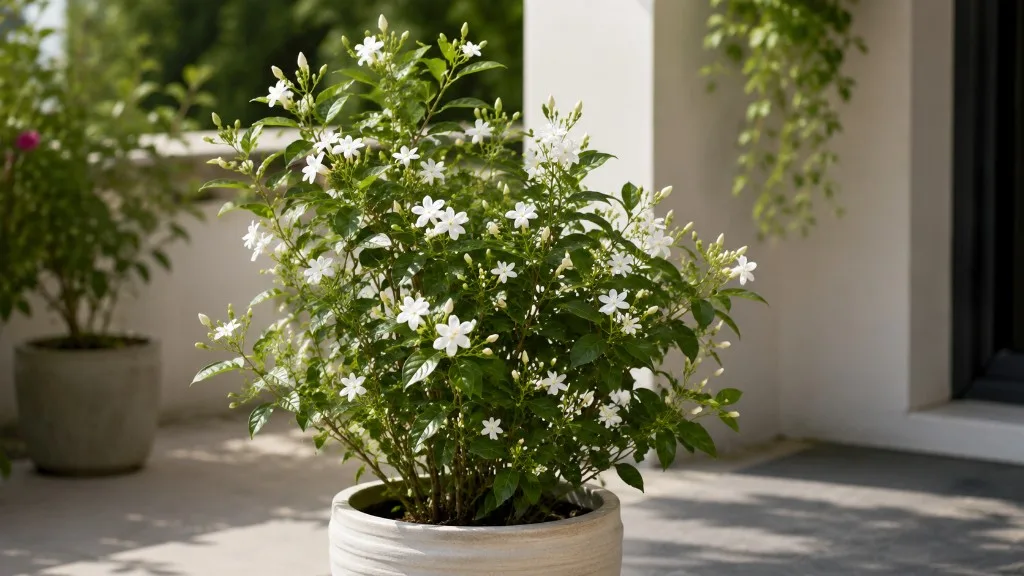
Jasmine
Jasmine is a broad common name, so check the tag: pink jasmine (Jasminum polyanthum) and Arabian jasmine (J. sambac) have different habits and bloom timing. Both need strong light to flower indoors, and their fragrance can be intense when several flowers open together. Give a climbing type a narrow trellis or allow it to trail, keep the mix evenly moist while actively growing, and avoid a dark room where vines lengthen but buds fail.
Jasmine is an excellent choice near a bright window or on a sheltered balcony in warm weather, not a dependable low-light plant. If scent triggers headaches or sensitivities in your household, place it in a ventilated room rather than beside a bed. Prune lightly after a main flush so you shape the plant without cutting off every stem that could carry the next flowers.
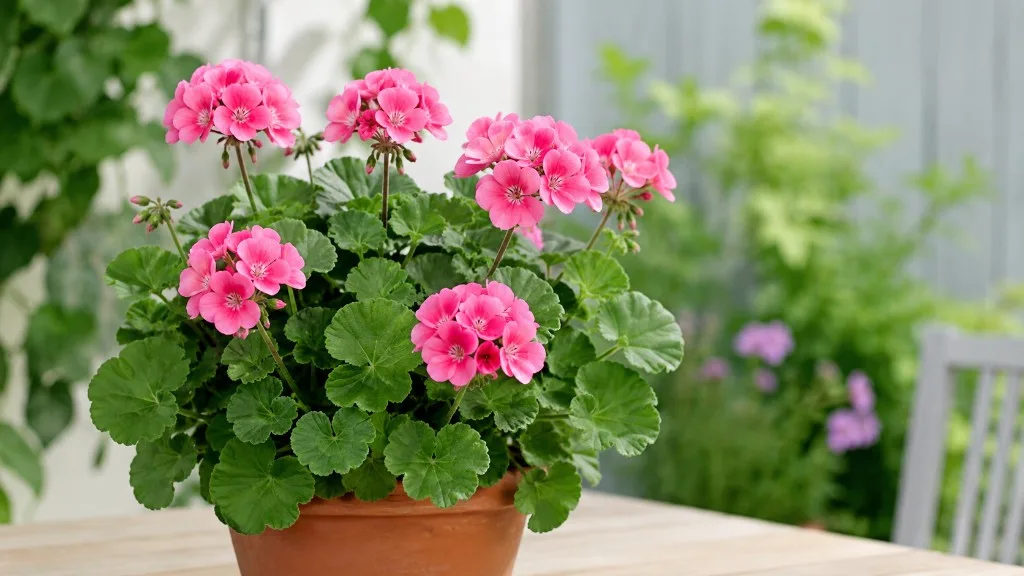
Geranium
Geraniums sold as houseplants are usually florist or garden pelargoniums (Pelargonium), not hardy perennial geraniums. They need several hours of strong light or a very bright window, plus a pot with drainage; in a dim room they become leggy and flower sparsely. Remove faded clusters and turn the pot occasionally so new growth stays balanced toward the glass.
Move a geranium outdoors for a brighter season if temperatures allow, acclimating it over several days. Before bringing it back inside ahead of frost, inspect for pests. Think of it as a sunny-window plant, not one that thrives in any room.
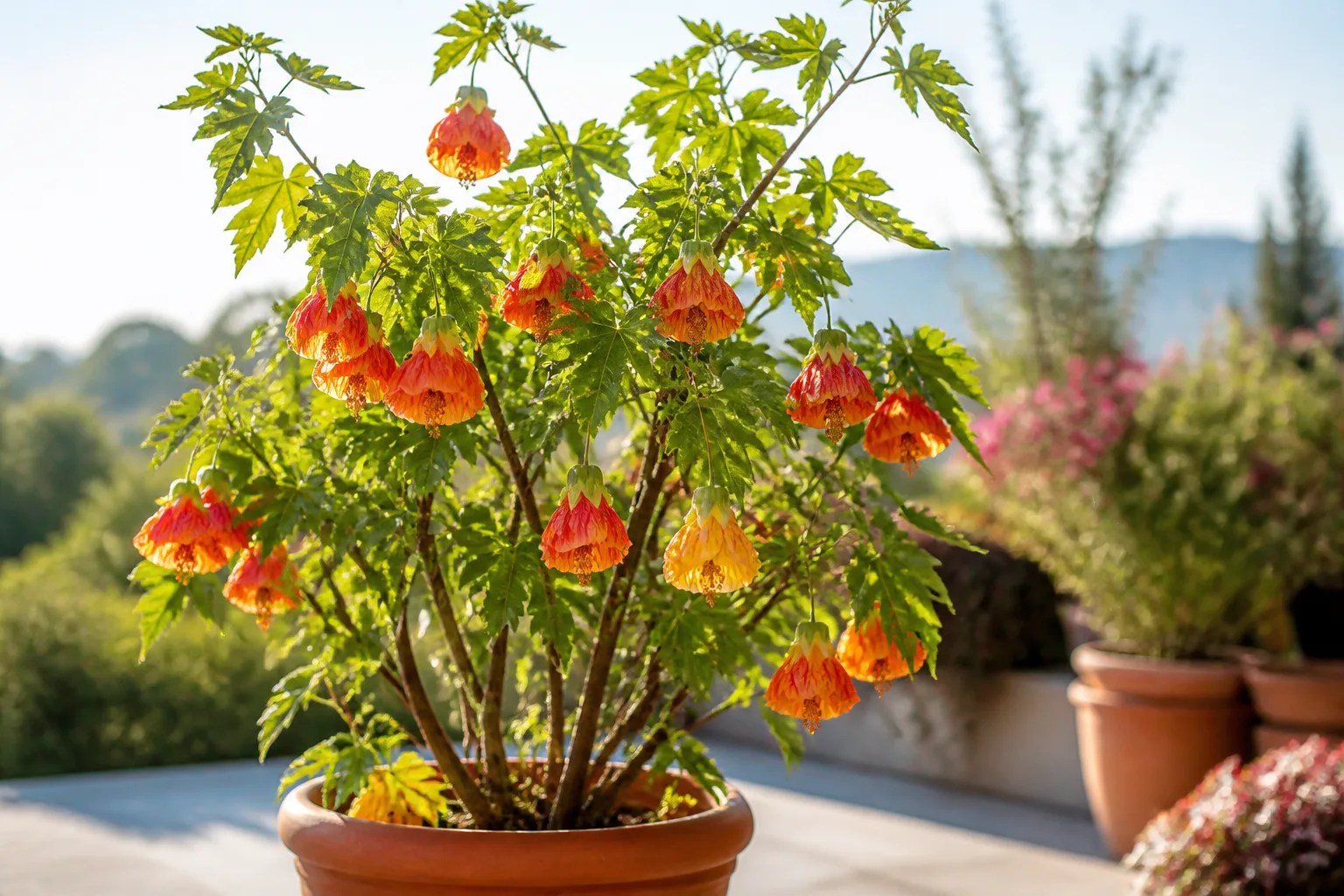
Flowering maple (Abutilon) is not a maple tree; it is a shrubby mallow with hanging, bell-like flowers in warm colors. It takes a sunny window, regular moisture with good drainage, and room for pruning, so it suits a large bright room or protected porch better than a narrow shelf. Pinch or prune to keep the shape full, but leave healthy new growth if you want buds.
Brazilian fireworks has red bracts that reveal violet flowers, while patterned leaves add color between bloom periods. Give it bright filtered light, warmth, and even moisture; low light favors leaves over flowers. Its compact size suits a warm, bright table better than a dark shelf.
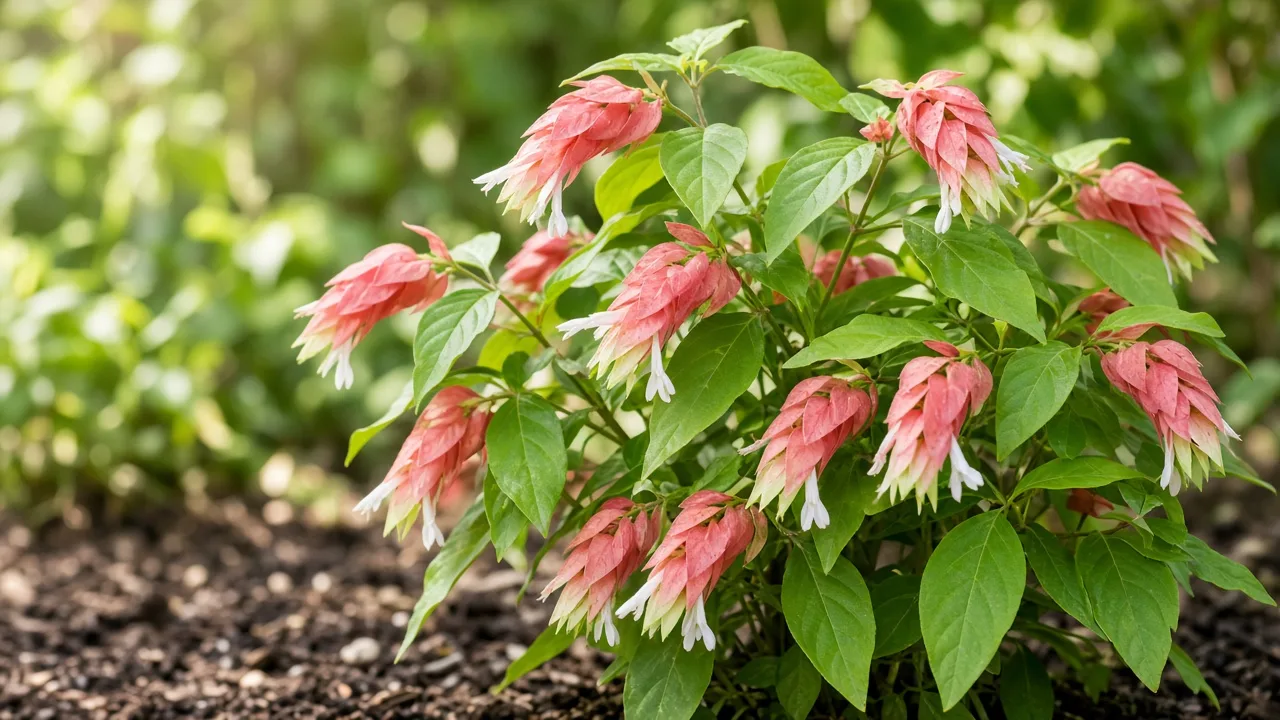
Shrimp plant (Justicia brandegeeana) has arching spikes of overlapping pink bracts and small white flowers, as described in the Royal Horticultural Society profile. It suits a warm, bright room or sheltered patio and can be pinched to encourage branching. Check the botanical name when buying: the classic shrimp plant is Justicia brandegeeana, while Aeschynanthus radicans is generally sold as lipstick plant.
Sun-hungry and statement plants
The plants in this group can be rewarding, but they need more light, space, or careful placement than a typical coffee-table plant. If your home has no sunny window, choose them for foliage and form only if you can add a grow light; do not buy one expecting flowers in a north-facing room.
Desert rose
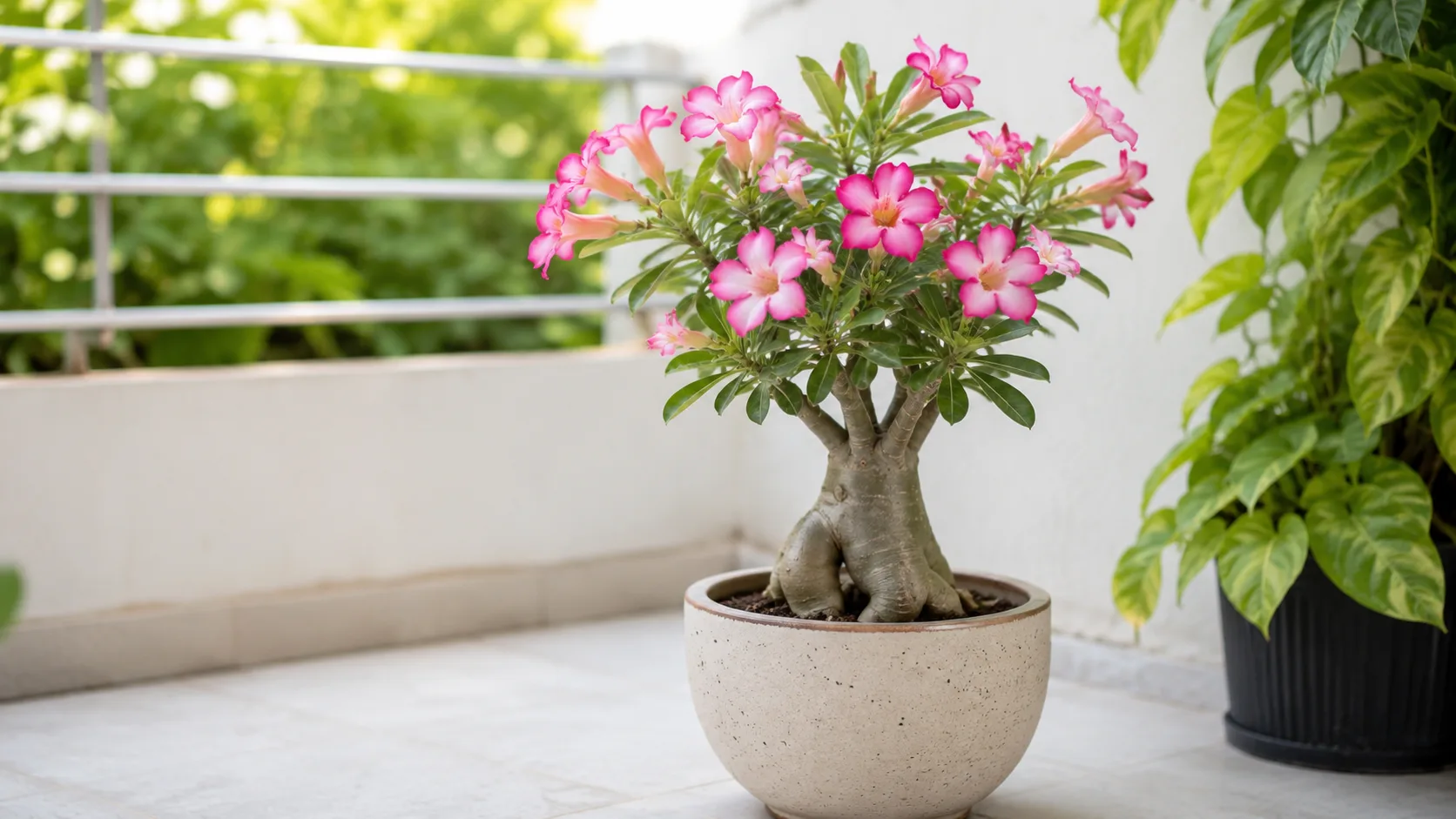
Desert rose (Adenium obesum) stores water in a swollen stem and produces vivid flowers when it is mature, warm, and growing in strong light. It wants a gritty, fast-draining mix and a period of reduced winter watering when growth slows; staying wet in cool conditions is a bigger threat than missing a weekly drink. Place it in the brightest available window, and move it into stronger sun gradually if it has been raised indoors or in shade.
This slow-growing succulent is not an instant-bloom guarantee: a young seed-grown plant can take years to flower. Keep it away from pets and children who chew plants, and wear gloves when pruning because its sap can irritate skin.
Bird of paradise
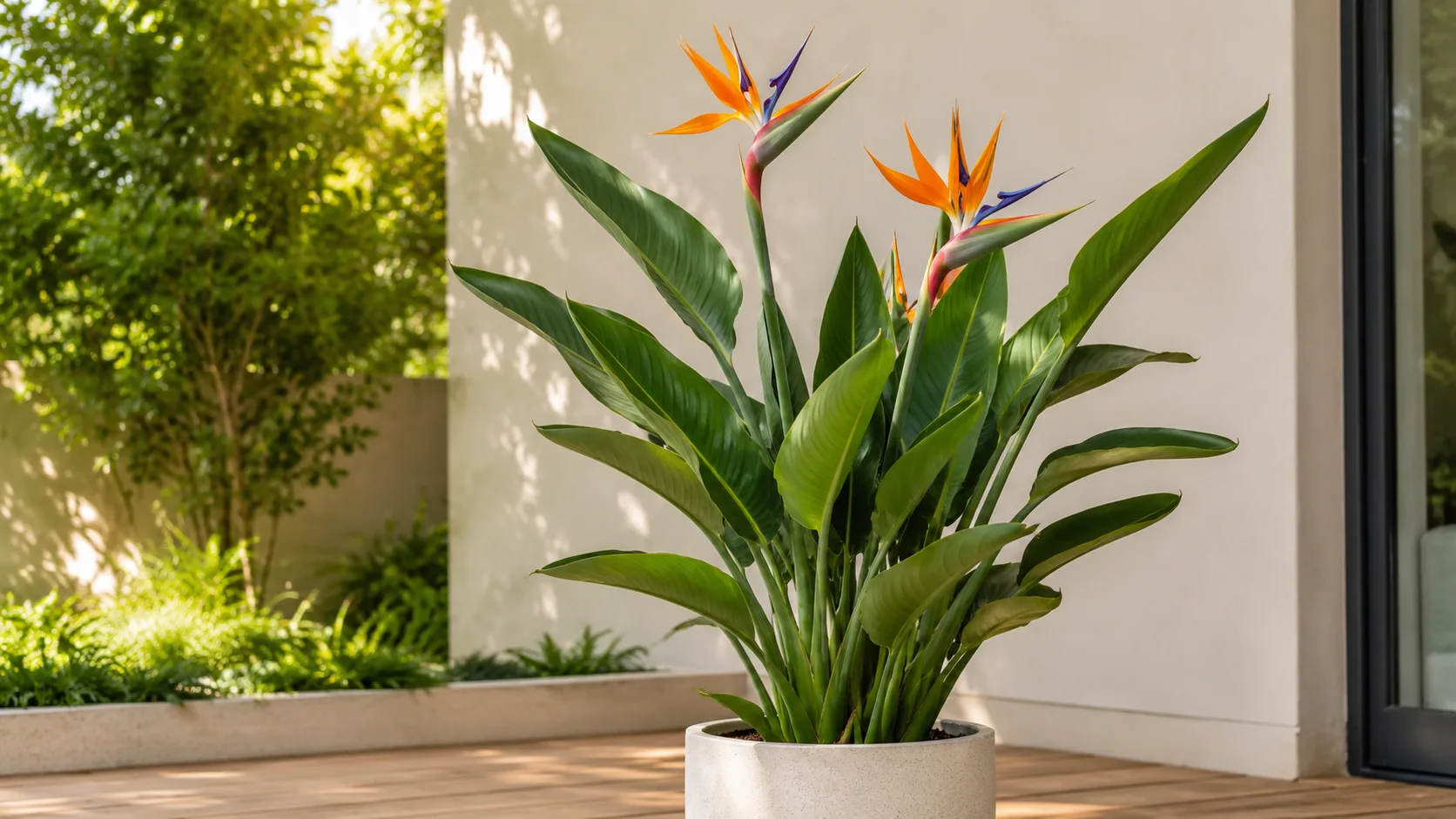
Bird of paradise (Strelitzia reginae) gives a sculptural, tropical look, but indoor flowering is a long-term goal rather than a routine reward. It needs a large, bright position, considerable headroom, and a mature, established plant before the distinctive orange-and-blue flower can appear. A small specimen in a dim corner is likely to provide impressive leaves, not the crane-like bloom shown on a plant tag.
Choose it only if you have floor space and a very bright window. Keep leaves clear of cold drafts, and avoid overpotting a young plant into soil that stays wet. If the room cannot support its size, a smaller flowering plant will be easier to manage.
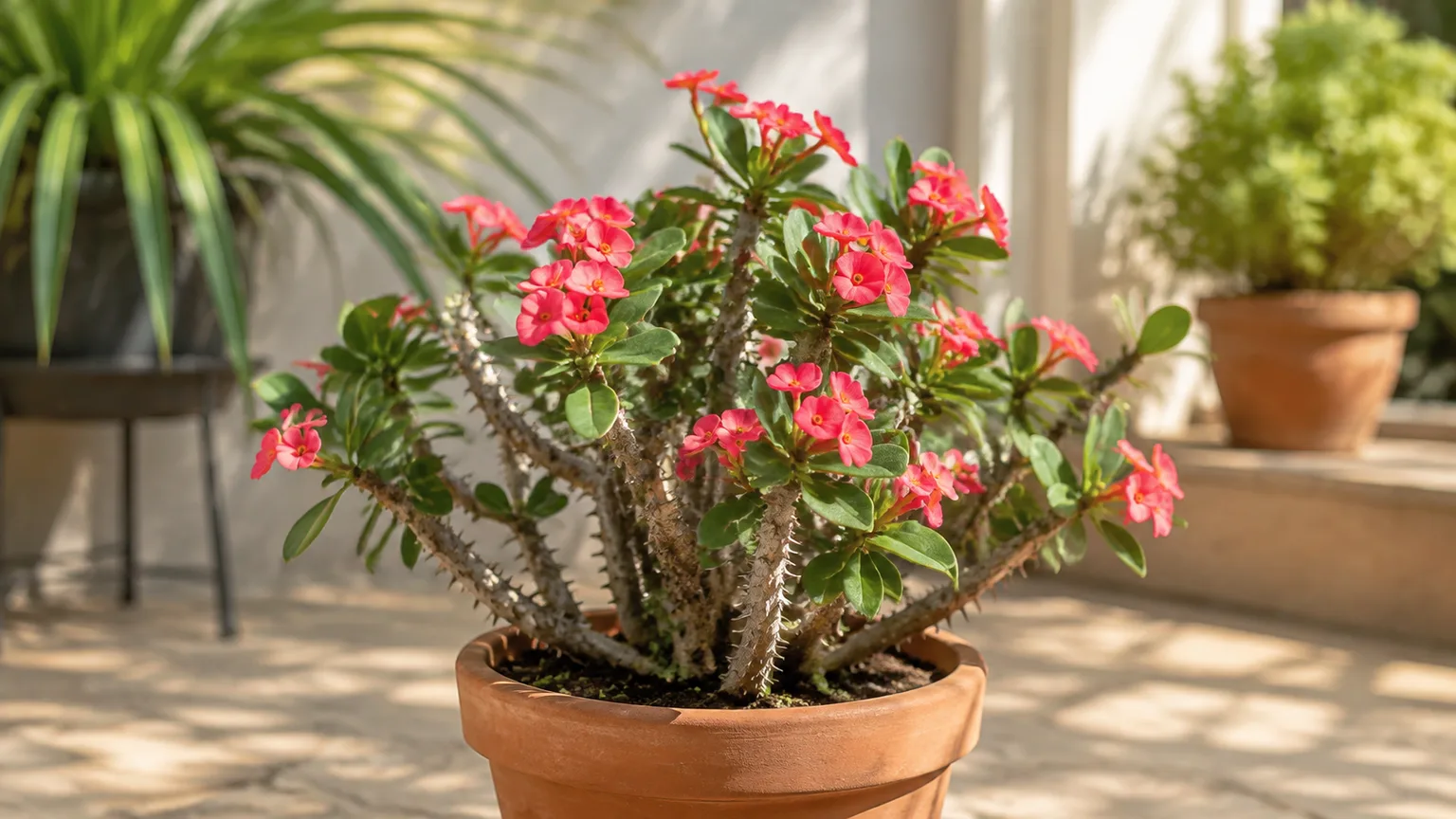
Crown of thorns (Euphorbia milii) is a thorny succulent with small flowers surrounded by colorful bracts. It appreciates strong sun and a dry-down between waterings, making it more forgiving of missed watering than of a dark, damp location. Its sharp spines and milky sap make it a poor choice for a narrow passage, a child’s play area, or a home where pets investigate every pot.
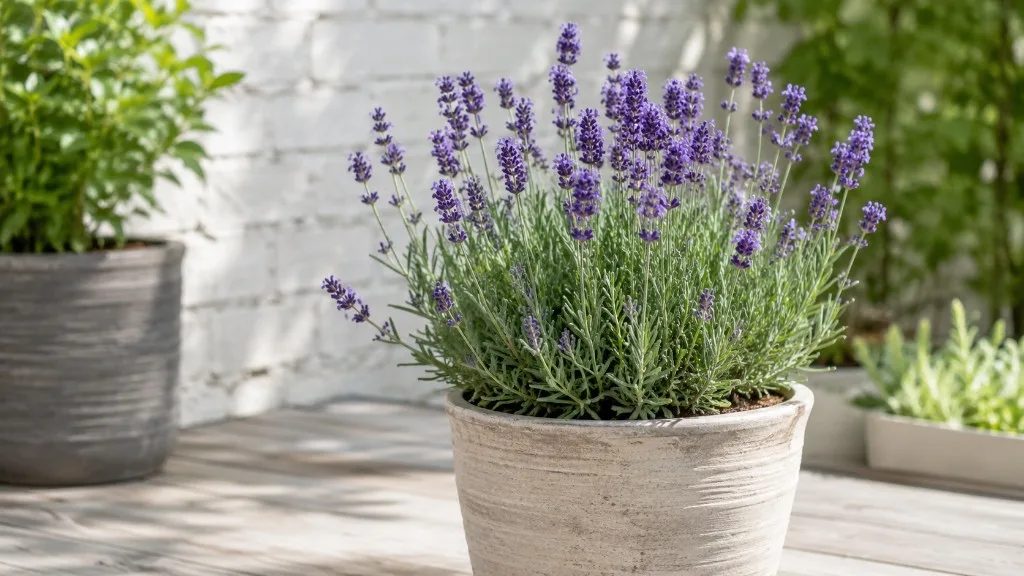
Lavender can flower indoors only when given far more sun and airflow than many living rooms provide. Use a compact variety, the brightest available window or a strong grow light, and a gritty mix in a pot with drainage; avoid humid corners and frequent small sips of water. If you want dependable lavender flowers, a sunny balcony or outdoor container is usually easier than trying to turn an ordinary room into a Mediterranean climate.
How to help an indoor flowering plant bloom again
First match light to the species rather than moving every plant into direct sun. African violet, anthurium, and Phalaenopsis generally do better with bright filtered light, while geranium, lavender, and desert rose need much stronger exposure. A sheer curtain or a few feet back from the window can protect tropical foliage, but a shade-loving label does not mean a flowering plant can bloom in darkness.
Next, identify the plant’s cycle. A holiday cactus needs seasonal cues, clivia benefits from a cool rest, cyclamen slows in warm weather, and paperwhite forcing is often a one-display project. For bromeliads, the original rosette’s flowering is usually a single event; continue caring for it while offsets grow, rather than trying to force the same center to repeat.
Keep the roots healthy during active growth: use a pot with drainage, water according to how quickly the mix dries, and feed lightly with a balanced houseplant fertilizer only when the plant is growing. Extra phosphorus does not compensate for weak light, an immature plant, or waterlogged roots. Change one condition at a time and give the plant several weeks to respond so you can tell what helped.
Why flower buds drop before they open
Bud drop commonly follows a sudden change: a plant moves from greenhouse light to a dim room, a pot shifts between warm and cold air, or the roots swing between bone dry and soggy. Check the potting mix first, then look for a stable bright location away from heater vents, exterior-door drafts, and hot afternoon glass. Once buds form, avoid repeated moving and do not rotate plants that are especially sensitive to position changes.
If leaves look healthy but buds never form, check light and seasonal timing before increasing fertilizer. If buds shrivel alongside wilting or yellowing, inspect drainage and roots; water stress may be the cause. Check under leaves for pests and use a pesticide only after identifying the pest and confirming the product is labeled for indoor plants.
Check pet safety and household fit before buying
Houseplants are not automatically safe for pets. The ASPCA lists peace lily as toxic to cats and dogs; other choices here have thorns, irritating sap, or bulbs that should not be chewed. Check the botanical name against a current veterinary or poison-control reference, and call promptly if an animal eats part of a plant.
Consider fragrance, size, and foot traffic, too. Jasmine can overpower a small bedroom, bird of paradise can outgrow a shelf, and crown of thorns can catch sleeves or curious hands. A good household fit is more likely to remain in its ideal light.
Conclusion
For the best odds of indoor flowers, match the plant’s bloom cycle to your brightest suitable window. African violets, anthuriums, and Phalaenopsis can rebloom in bright filtered light; seasonal plants need rest, while lavender and desert rose demand stronger sun. Choose for the conditions you can provide, not a fertilizer promise.