15 Plants With Scented Leaves for a Fragrant Garden
Find 15 plants with scented leaves, from thyme and bee balm to bayberry and lavender, plus the light, soil, placement, and safety details each needs.

A fragrance garden does not have to depend on flowers. Many plants carry aromatic compounds in their leaves, so a path-side clump can release a minty, resinous, citrusy, or herbal note when someone brushes past. Some plants give off a detectable scent without contact, but for most of the choices below the aroma is strongest when foliage is gently rubbed or crushed; the Royal Horticultural Society’s guide to scented foliage recommends using that touch-released quality as part of sensory planting.
The practical question is not simply which plant smells best. It is whether the plant’s light, moisture, mature size, and spreading habit match the place where you want to smell it. A low thyme mat belongs near a sunny path; sweet woodruff is a better candidate for a shaded, moisture-retentive bed; an eastern hemlock is a tree, not a compact herb with a strong perfume.
| If you want… | Start with… | Check before planting |
|---|---|---|
| A scent released by light contact along a path | Catmint, bee balm, lavender | Leave enough room for mature width and pollinators |
| A low plant that can soften a sunny path edge | Creeping thyme | It needs drainage and tolerates only occasional foot traffic |
| Fragrance in bright shade | Sweet woodruff | Its rhizomes can make a broad mat |
| A woody screen with aromatic leaves | Northern bayberry | Allow for its eventual shrub size and suckers |
| Silvery foliage for a hot, dry border | Russian sage or wormwood | Both need drainage; wormwood varies by species |
| A tree-scale evergreen accent | Eastern hemlock | Confirm there is room and the site stays cool and moist |
Northern Bayberry: a woody, resin-scented screen
Northern bayberry (Myrica pensylvanica, also sold under the genus name Morella) is a rounded, multi-stemmed shrub whose leathery leaves have small resin glands underneath. Crush one leaf gently and it releases a distinctive, warm bay-like fragrance; the scent is an added feature rather than a cloud that perfumes the whole yard. Penn State Extension notes that the shrub is especially useful in coastal conditions and that crushed leaves emit the characteristic aroma.
Use bayberry where you have room for a natural screen or informal hedge, rather than squeezing it into a narrow perennial border. It tolerates a range of difficult conditions, but growth and leaf retention vary by region; in colder parts of its range it is deciduous, while milder coastal sites may keep foliage longer. If you want the waxy gray fruits, remember that male and female plants are separate and fruit depends on pollination; a single plant still provides scented leaves. Watch for root suckers and remove them early if you want a defined boundary.
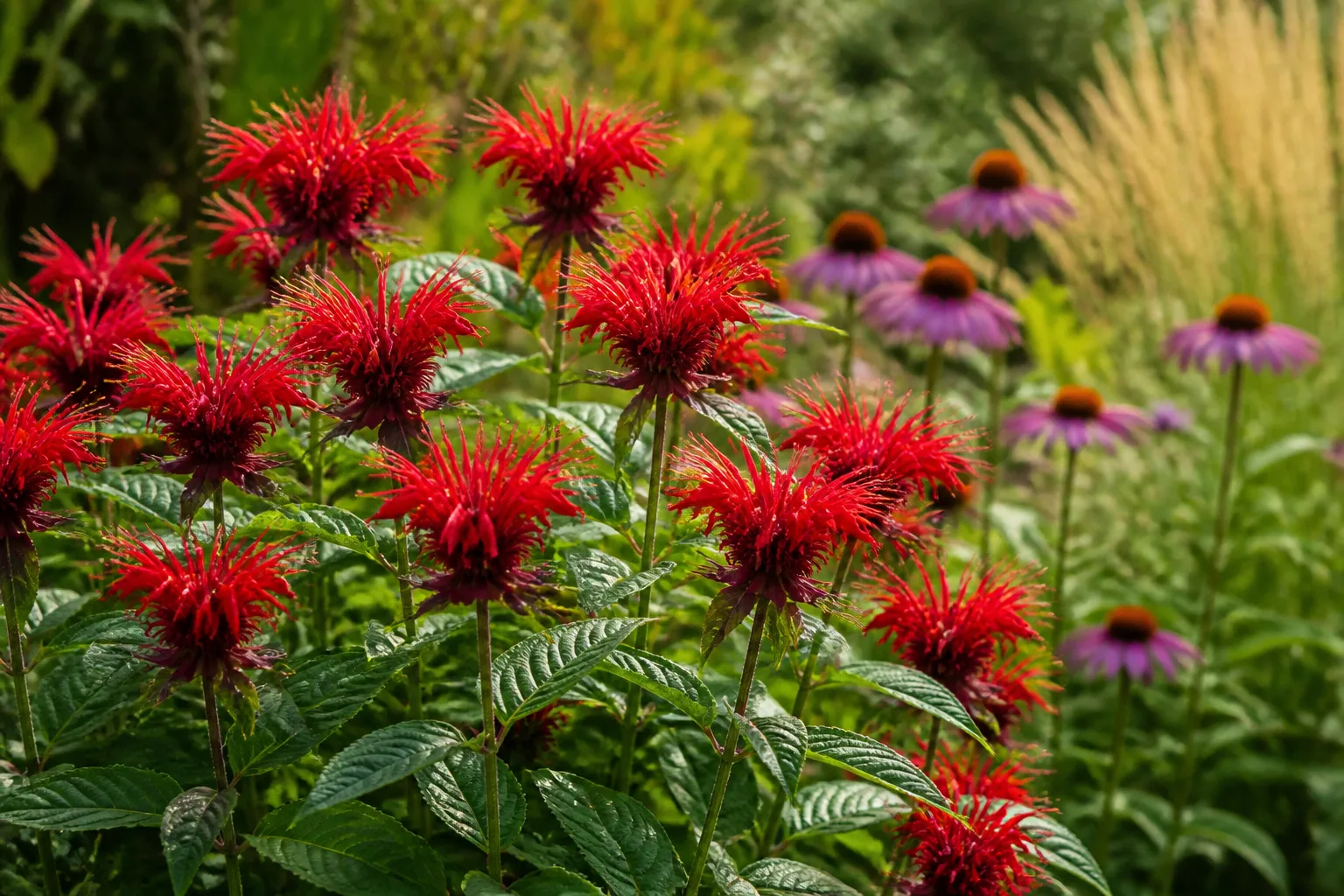
Bee Balm: minty foliage for a moist pollinator bed
Bee balm (Monarda spp.) belongs to the mint family, and its leaves often smell minty, citrusy, or oregano-like when crushed, depending on species and cultivar. The flowers attract pollinators, but foliage is the reason to put a clump near a route where a person can brush it. In a dry, still border, the leaves may remain relatively quiet until touched, so do not expect it to scent a patio like a flowering jasmine.
Species matter. Scarlet bee balm (M. didyma) generally prefers consistently moist but well-drained soil and can spread by stolons; wild bergamot (M. fistulosa) often handles drier sites better. NC State Extension’s bee balm profile says M. didyma prefers moist, well-drained soil and that its leaves have a minty aroma when crushed; the profile also notes that crowded plants are susceptible to powdery mildew. Give the clump air around it, water at the soil rather than constantly wetting foliage, and check its spread once or twice each season. That combination keeps an aromatic planting from turning into a congested, mildewed patch.
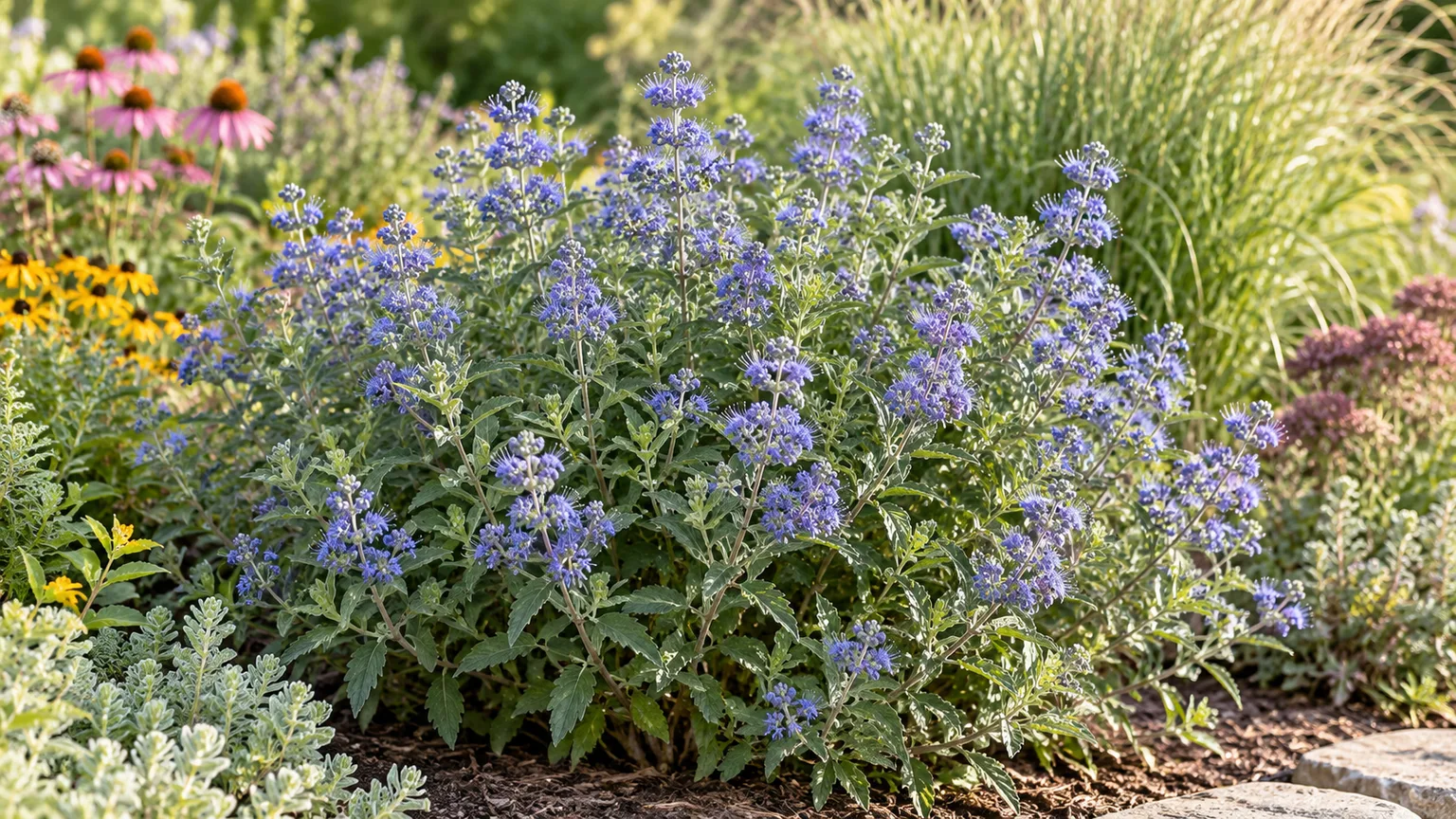
Bluebeard: aromatic leaves on a sunny small shrub
Bluebeard (Caryopteris × clandonensis) is a compact deciduous shrub, usually grown as much for its late-season blue flowers as for the minty fragrance released by crushed leaves. It is one of the more useful choices when a sunny border needs a small woody plant rather than another herbaceous perennial. Its fragrance is easiest to notice when you brush the foliage; blooms also attract bees and butterflies in late summer.
Give it full sun and loose, well-drained soil. NC State Extension describes bluebeard as roughly 2 to 3 feet tall and wide, drought-tolerant once established, and susceptible to crown rot in poorly drained ground. In colder climates, stems may die back close to the ground, which is not automatically a sign the plant has failed; prune dead growth in late winter and allow new shoots to emerge. Do not compensate for weak flowering with heavy fertilizer: overfeeding can produce lanky growth. NC State’s bluebeard profile covers its soil and pruning needs.
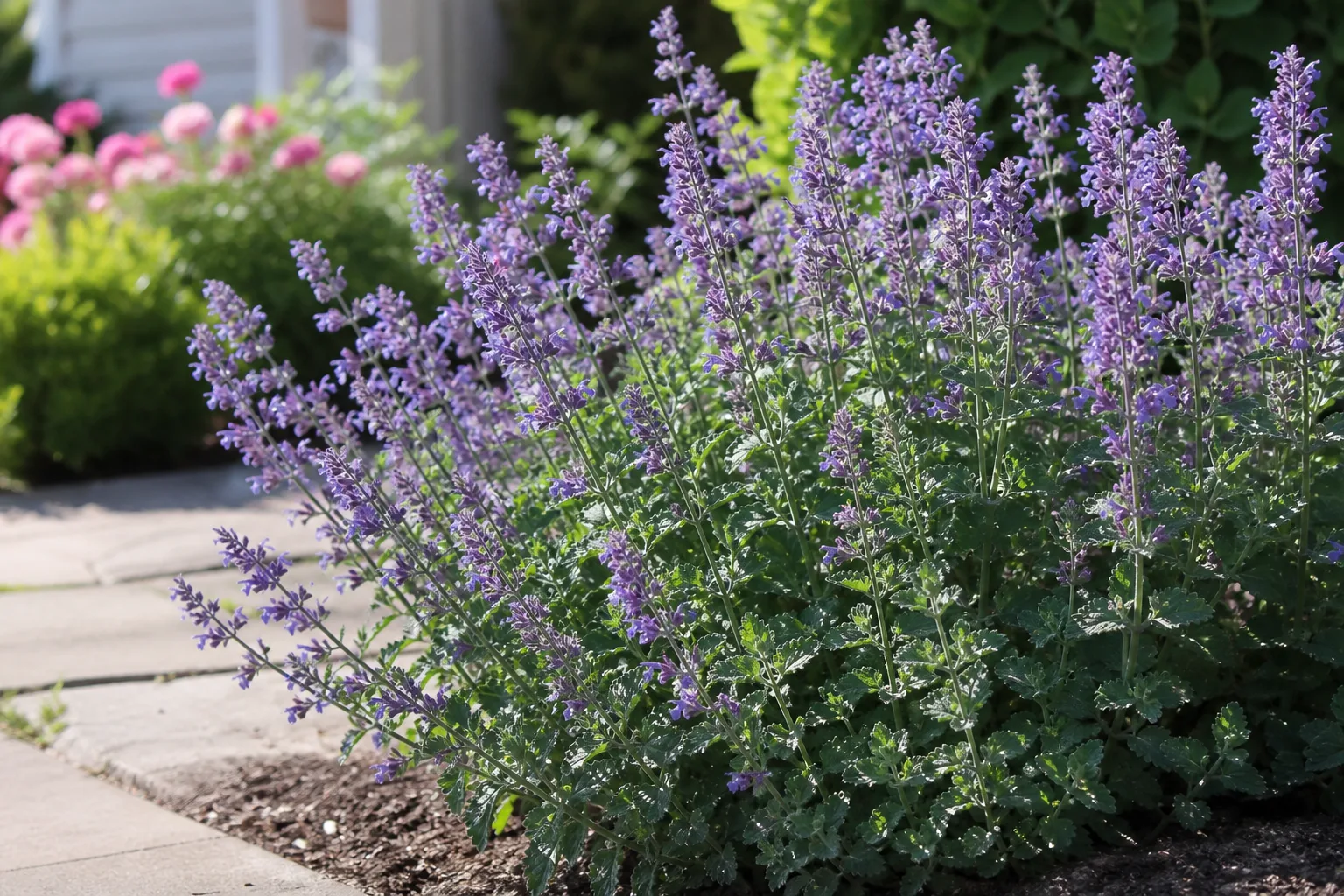
Catmint: a path-edge perennial with touch-released scent
Catmint is a common name for ornamental Nepeta species and hybrids, often with gray-green foliage and blue or lavender flowers. Many varieties release a pleasant herbal, sometimes lemony, scent when brushed or crushed. A compact selection can soften a border edge, while larger forms can make a low, loose mound; read the plant tag because “catmint” does not identify one uniform size or growth habit.
Most catmints flower best in sun and need soil that drains well. Shearing spent flower stems after the first flush can encourage a tidier mound and another round of growth, but cutting is optional if you prefer seed heads or a natural look. Catmint and catnip are related, not interchangeable: catnip is Nepeta cataria and is often considered more strongly aromatic, while ornamental catmints are commonly chosen for their floral display and shape. NC State Extension’s Nepeta profile covers the genus’s fragrant foliage, site needs, and uses. BBC Gardeners’ World’s catmint guide explains this distinction and describes the range of forms.
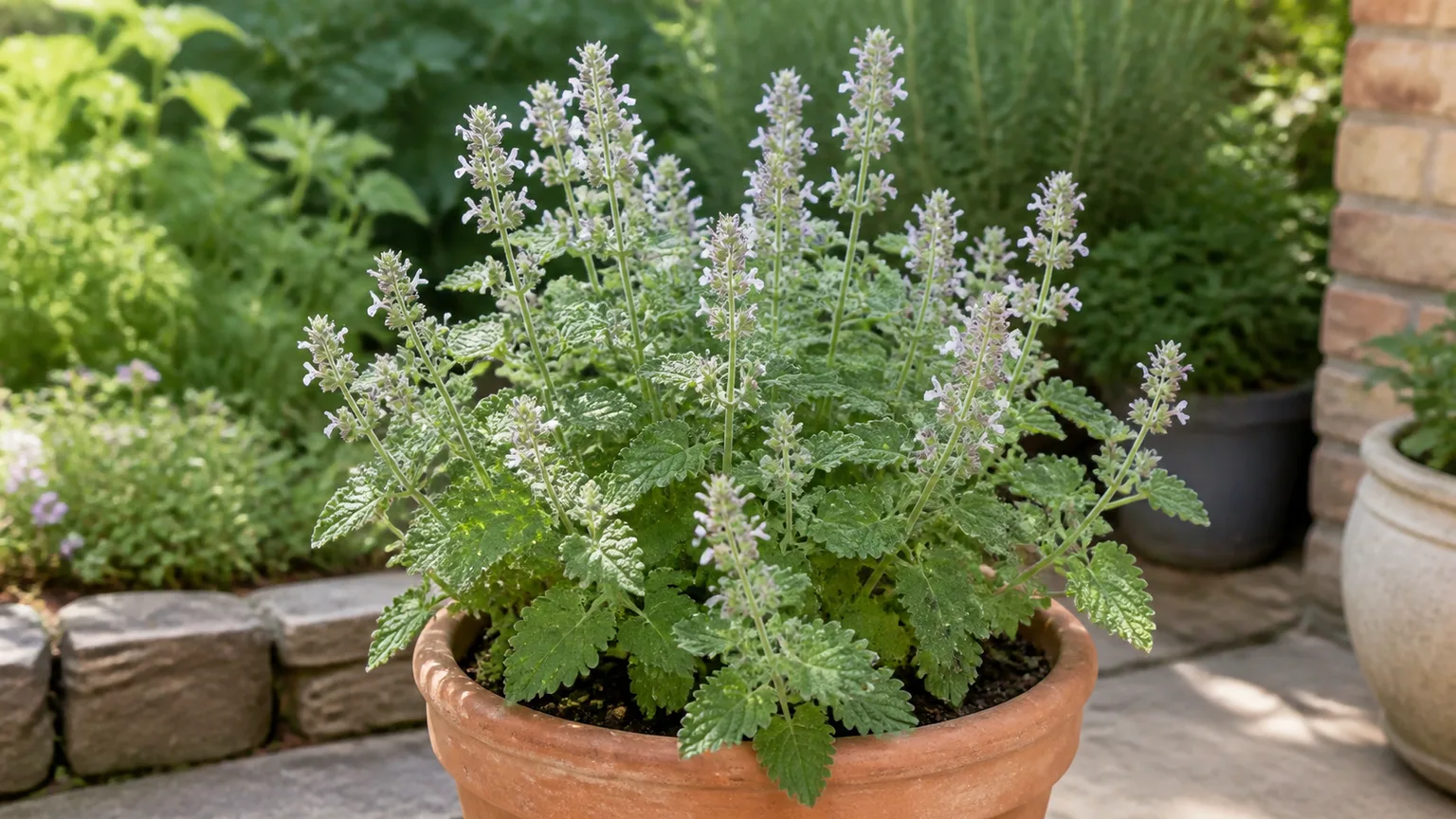
Catnip: a stronger aroma with a self-seeding habit
Catnip (Nepeta cataria) has coarsely toothed, gray-green leaves and a strong minty aroma that cats may find attractive. Its fragrance is mainly released when the leaves are handled, and the plant is generally more useful as a sensory or herb-garden plant than as a tightly clipped ornamental. Some cats rub or roll on it, so a small cluster beside a path may be flattened if neighborhood cats have access.
Give catnip sun to partial shade and reasonably free-draining soil. It can self-seed and become weedy, so use a pot or a contained bed if you want to keep it from popping up among smaller perennials. Do not confuse its popularity with a reason to let pets eat unlimited foliage; NC State Extension notes in its catnip profile that some cats may experience vomiting or diarrhea after eating the plant. For a neater display with a similar garden role, choose a compact Nepeta cultivar instead.
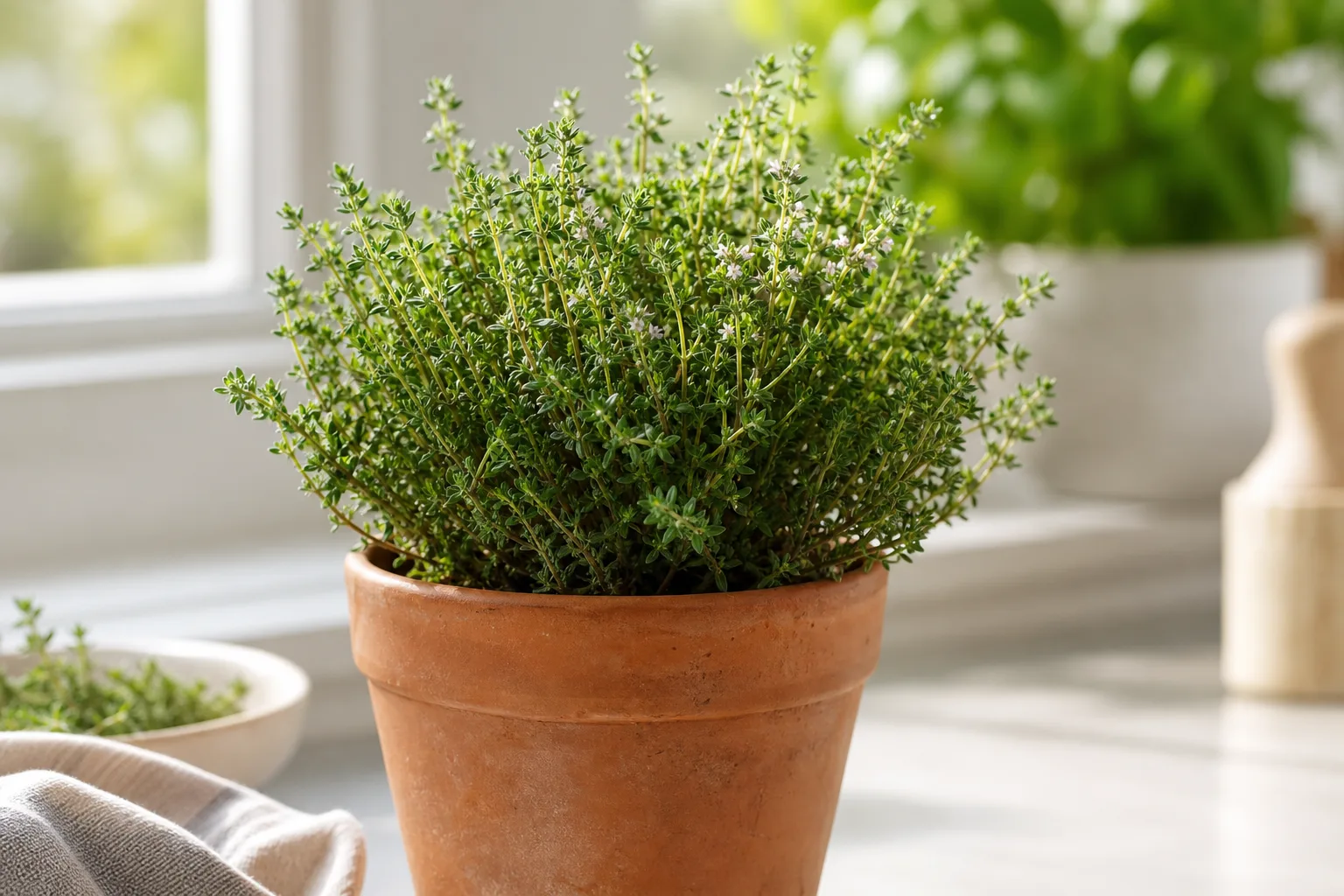
Creeping Thyme: fragrance underfoot in a dry, sunny spot
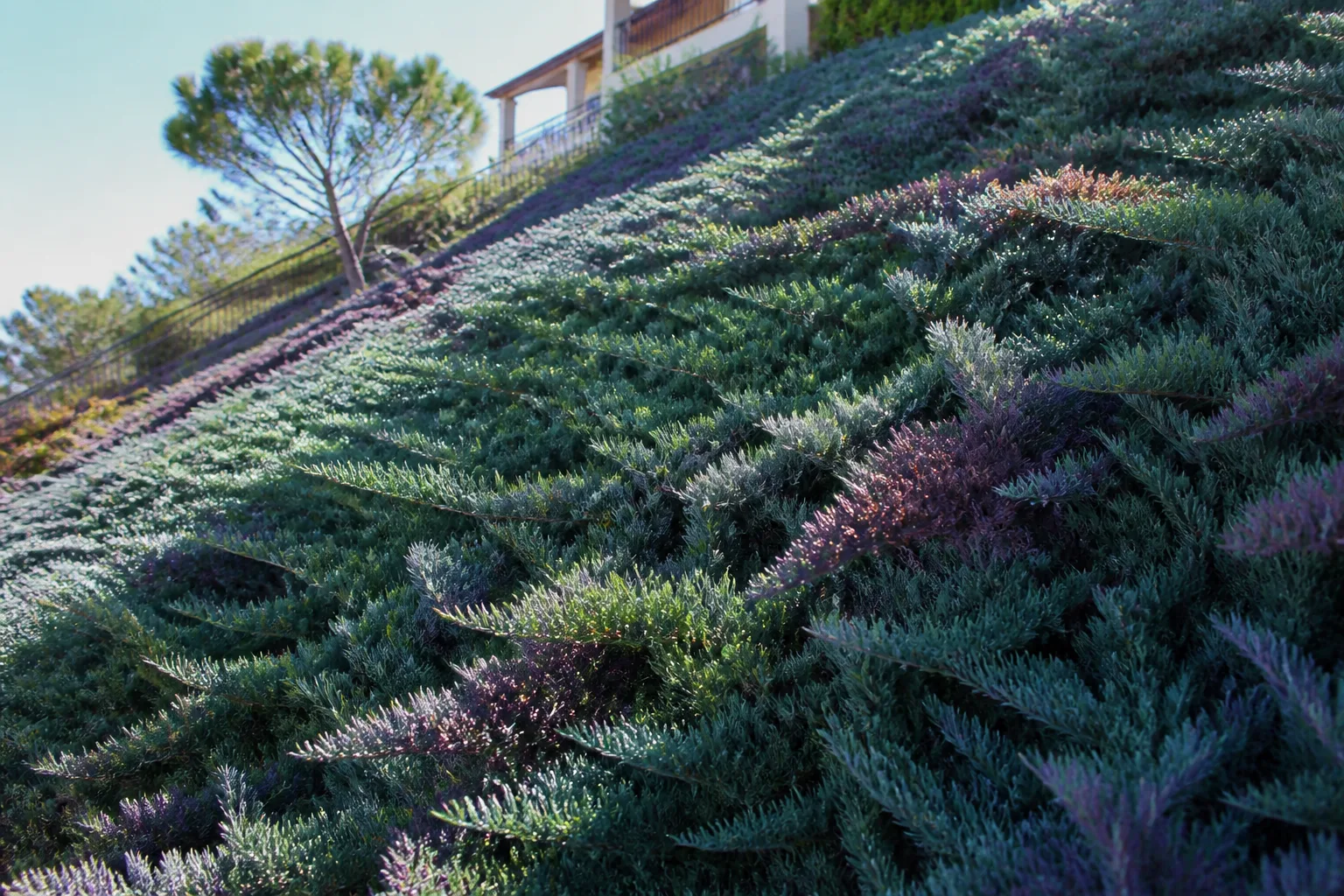
Creeping thyme (Thymus serpyllum and related low-growing species) forms a close mat with tiny leaves that release a savory, minty aroma when brushed or lightly stepped on. That makes it a natural choice between stepping stones or along a path edge, where a foot occasionally grazes the foliage. It is not a replacement for turf on a busy route: repeated hard foot traffic can break stems and open bare patches.
Choose full sun and sharply drained soil. NC State Extension’s creeping thyme profile creeping thyme as a fragrant ornamental groundcover suited to sandy, gritty, or rocky soil, and warns that soggy ground can lead to rot. It is also different from common culinary thyme (T. vulgaris); some creeping selections have a less useful flavor and should not automatically be treated as kitchen herbs. Trim lightly after flowering if the mat becomes woody or uneven, and replace old bare centers rather than burying them under extra soil.
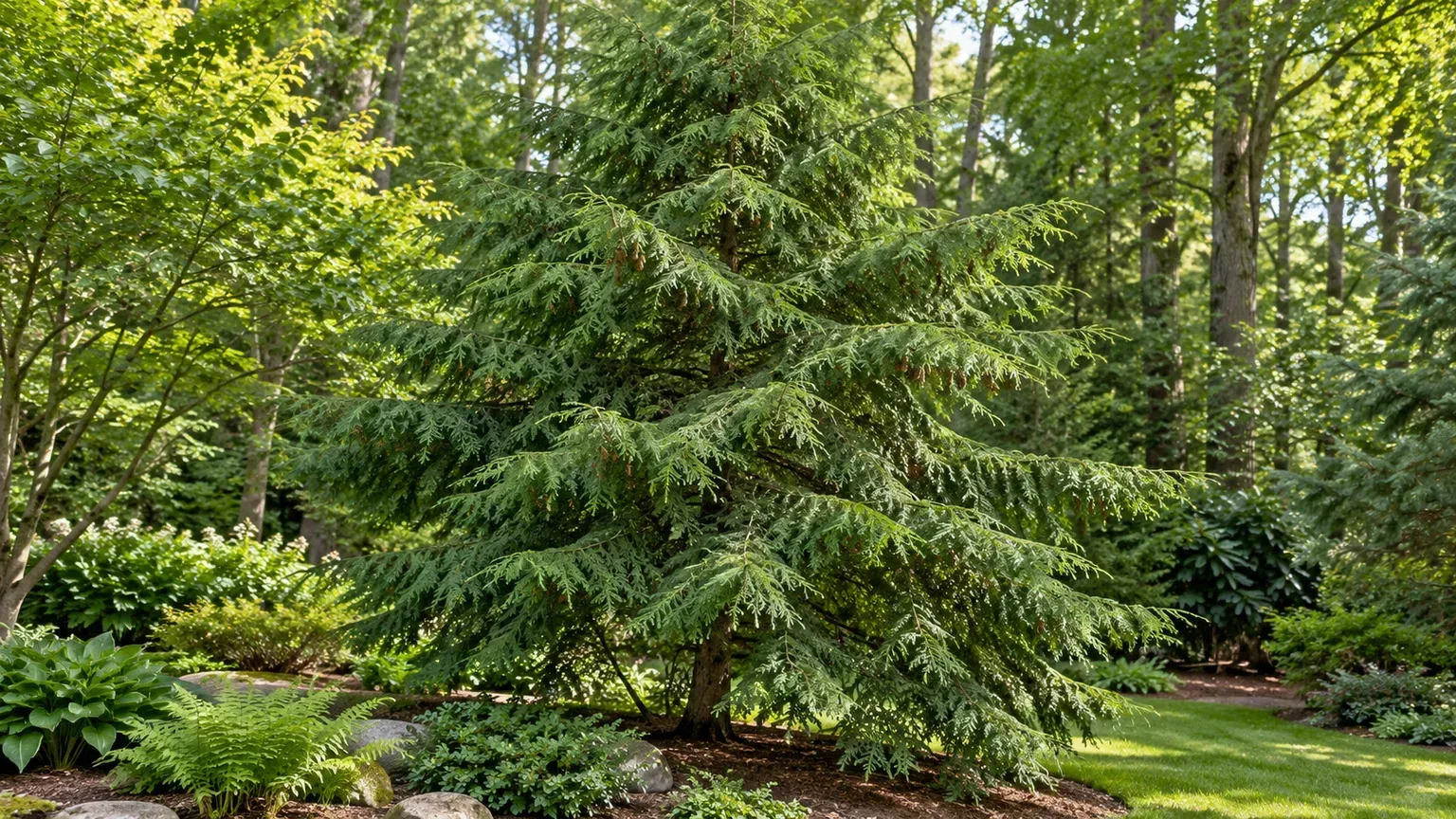
Eastern Hemlock: subtle evergreen scent at tree scale
Eastern hemlock (Tsuga canadensis) is a graceful native conifer with short, flattened needles, not a scented herb or a shrub for a tight bed. The needles release a sweet, lemony scent when crushed, but it is a close-range aroma rather than an all-day cloud; a recent biological flora account of Tsuga canadensis describes that scent. Choose the tree for year-round structure and shade, with fragrance as an added sensory feature when you are close enough to touch the needles.
Mature trees can reach tens of feet tall, although nursery cultivars differ considerably in size. Penn State Extension describes eastern hemlock as preferring acidic, moist soil with good drainage and tolerating full sun to shade; hot, dry exposure is a poor fit. Check local hemlock woolly adelgid guidance before planting because the insect is a serious regional threat. Also be precise about the name: this guide means Tsuga canadensis. Poison hemlock is the unrelated herb Conium maculatum, which is toxic; do not identify or handle an unknown plant by the word “hemlock” alone. See Penn State’s eastern hemlock guidance and poison hemlock identification.
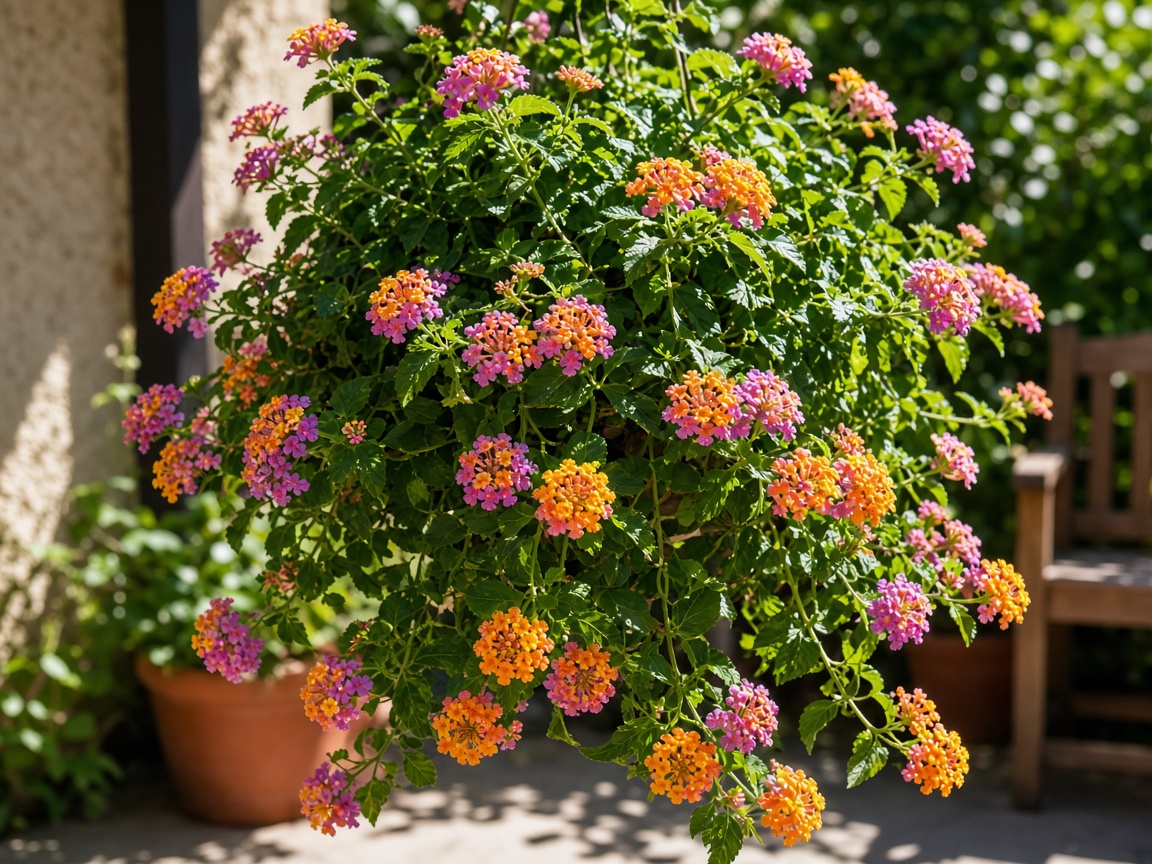
Lantana: pungent foliage for warm-climate color
Lantana (Lantana camara) is a heat-loving shrub or annual grown mainly for its colorful flower clusters. Its leaves also have a strong, often pungent or citrusy scent when crushed, but people disagree about whether that smell is pleasant. That is a good reason to plant it where you can enjoy the blooms without placing it where every passerby must brush the foliage.
Give lantana full sun and soil that drains well. In warm regions it may persist as a shrub; in colder climates frost usually ends the season, so gardeners grow it as an annual or overwinter a container. NC State Extension’s lantana profile that it can spread aggressively in suitable climates and that foliage or sap may irritate skin. The ASPCA lists L. camara as toxic to cats, dogs, and horses if eaten, so do not plant it where curious pets routinely chew leaves or berries. Regional naturalization and invasive status vary; check local guidance rather than assuming a cultivar is harmless because it is sold at a nursery.
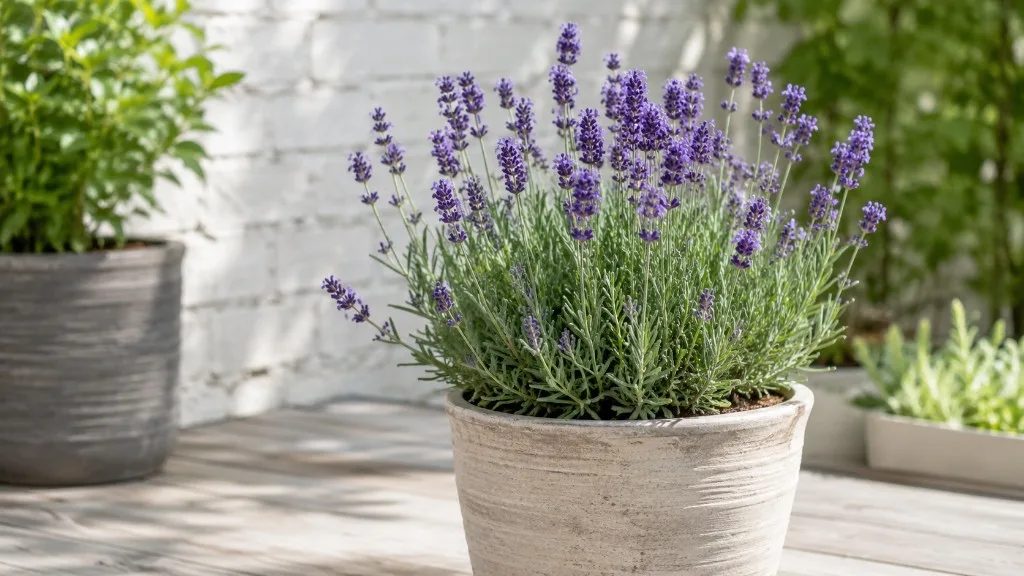
English Lavender: classic aroma in flowers and leaves
English lavender (Lavandula angustifolia) is one of the clearest examples of a plant with fragrant flowers and fragrant foliage. The narrow gray-green leaves release a lavender scent when brushed, while the flowers provide a stronger seasonal perfume and can be dried. If you want leaves you can smell as you pass, plant it near a walkway or seating area rather than at the back of a deep border.
The usual failure is wet soil, not lack of fertilizer. Lavender needs full sun and free drainage; heavy, persistently damp soil can shorten its life, especially in winter. The RHS identifies English lavender and its hybrids as among the hardier lavender types, but container roots are more exposed to cold and wet than plants in the ground. Trim lightly after flowering to keep the shrub compact, and avoid cutting far into old woody stems that may not reshoot. The RHS lavender growing guide explains the differences among types and the importance of drainage.
Russian Sage: silvery foliage for dry borders
Russian sage (Salvia yangii, formerly Perovskia atriplicifolia) has finely divided silver-gray leaves with an herbal aroma when crushed. Its airy blue flower panicles are showier than the foliage, but the leaves add texture and scent throughout the growing season. It works best where a loose, upright shape can be seen from a path or bench, not where a gardener expects a dense, clipped hedge.
Plant it in full sun and well-drained soil, then water while it establishes. Once settled, it is more tolerant of dry conditions than many leafy perennials; rich soil and excessive watering can encourage floppy growth. It is not culinary sage despite its common name, so do not harvest it as a seasoning. The RHS profile for Salvia yangii describes its aromatic leaves and dry-site preferences. Leave the stems through winter if you like their structure, then cut back in spring as new growth appears.
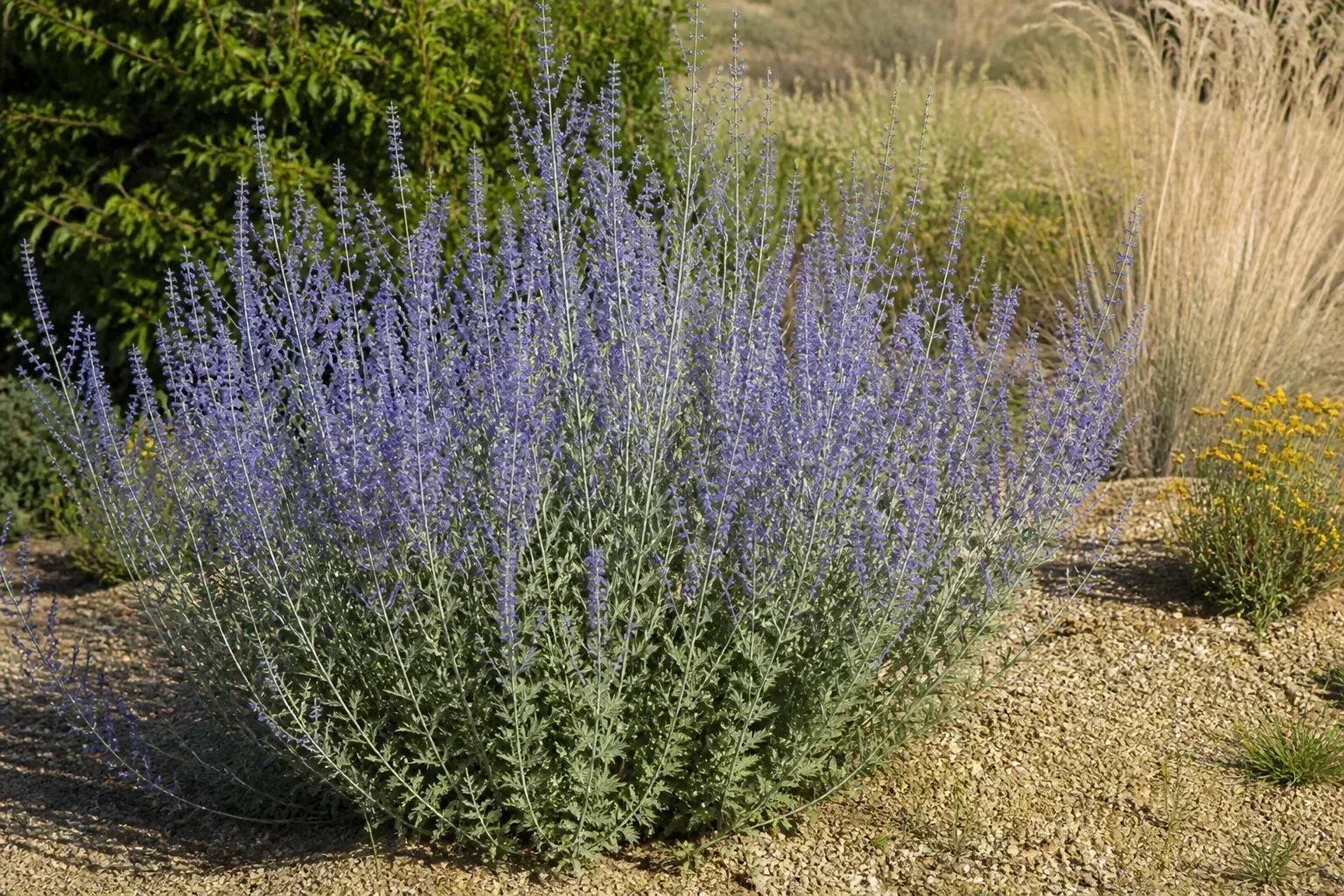
Sweet Woodruff: hay-scented leaves for shade
Sweet woodruff (Galium odoratum) forms a low carpet of whorled leaves and small white spring flowers in shade or partial shade. Fresh foliage has a mild scent, while drying makes its characteristic hay-like fragrance more noticeable. It is a useful option beneath deciduous trees or along a shaded bed edge where lavender and thyme would become thin, but it is not a fast-filling substitute for a lawn.
The plant spreads by rhizomes and can expand well beyond the original clump in moist soil. Plant it where a broad groundcover is welcome, or use a root barrier or container to keep the edge defined. The RHS describes G. odoratum as a vigorous mat-former with leaves that smell of hay when dry and notes that it can spread widely in suitable conditions. Keep the soil moist but not waterlogged while it establishes; once a mat forms, thinning the edge is often easier than trying to pull out the entire planting.
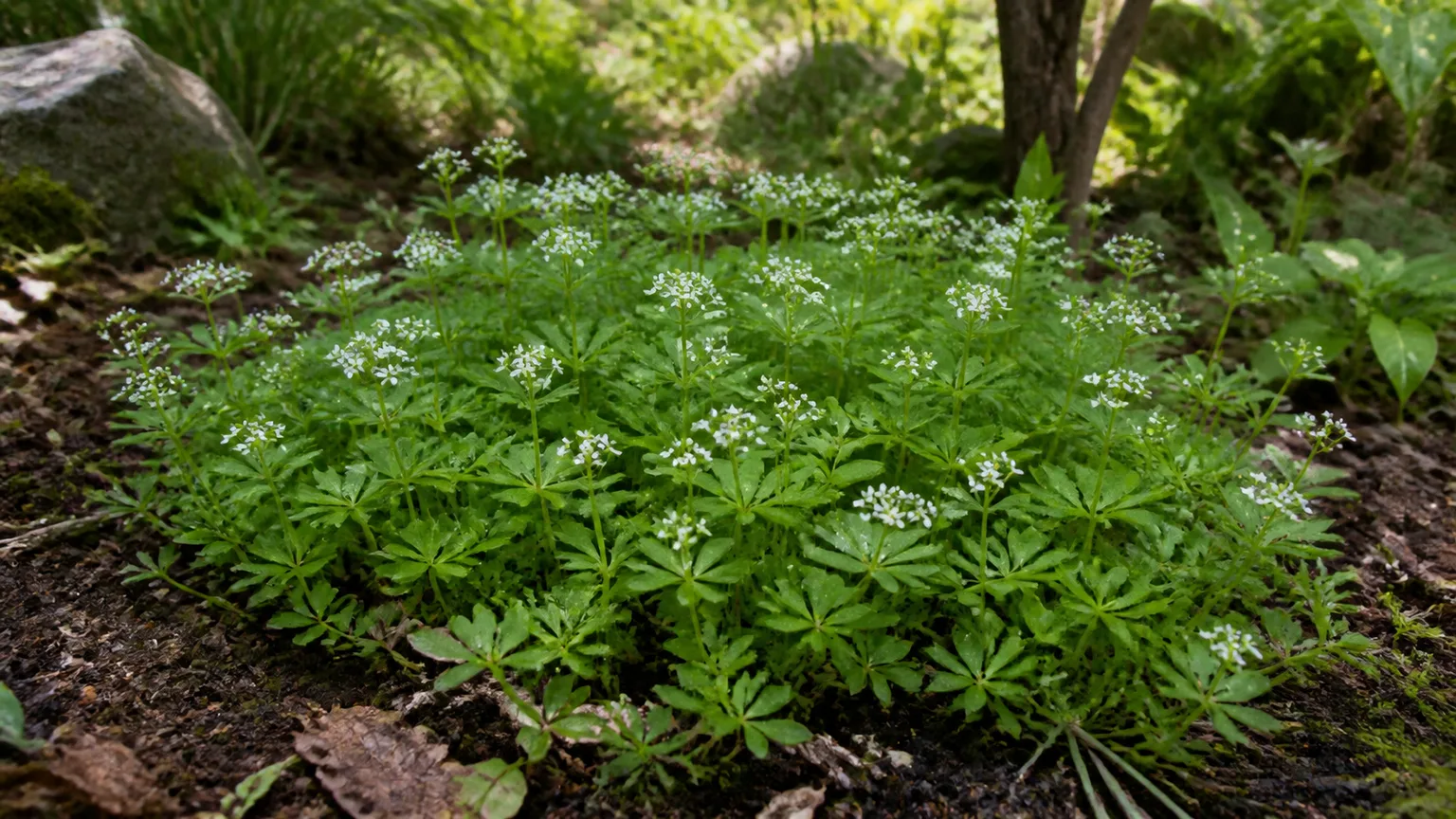
Tansy: pungent leaves, with serious spread and safety cautions
Tansy (Tanacetum vulgare) has finely divided leaves with a camphor-like, pungent odor when crushed and clusters of button-shaped yellow flowers. It can attract attention in a naturalistic planting, but it is a poor choice for a small, carefully controlled border. Aromatic foliage is not a benefit if the plant’s roots or seeds are likely to escape the area.
NC State Extension’s tansy profile notes that common tansy spreads rapidly by rhizomes and prolific seed, is a noxious weed or restricted in some regions, and contains thujone. The agency also says its leaves can cause contact dermatitis and that the plant can be toxic to people and some livestock if eaten. Check local noxious-weed lists before considering it; in many gardens, a better-behaved aromatic perennial is the sensible choice. If you already grow it where it is allowed, wear gloves and long sleeves when handling it, and remove flower heads before they set seed without putting plant material where livestock can reach it.
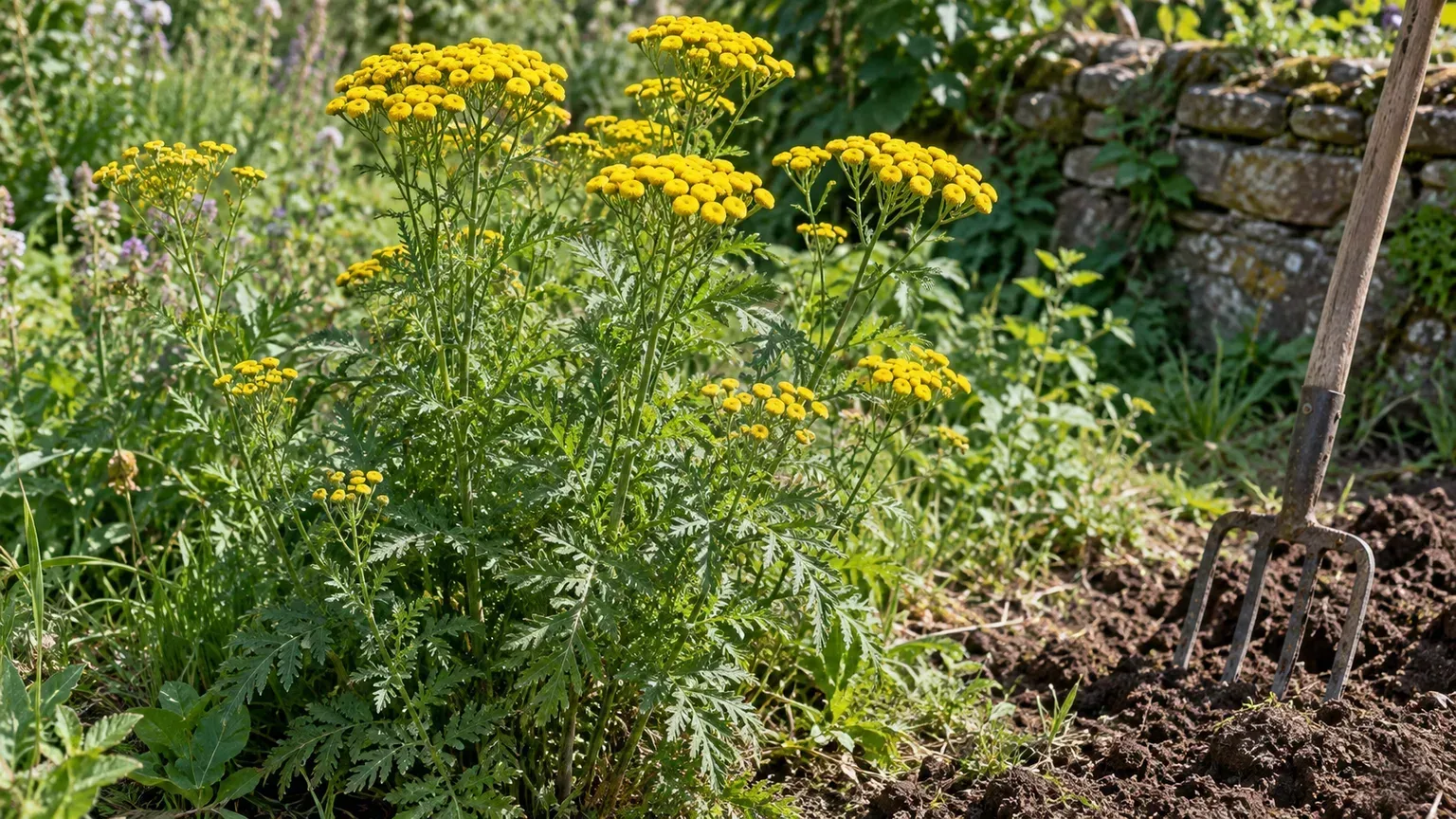
Tricolor Sage: ornamental color with culinary-sage aroma
Tricolor sage is a variegated cultivar of common sage, Salvia officinalis ‘Tricolor’. Its green, cream, and purple leaves carry the familiar savory aroma of culinary sage, while the color makes it useful at the front of a sunny border or in a pot near the kitchen. The purple tones tend to show more strongly in good light, but scorching afternoon sun in a very hot climate can still stress a container plant.
Give sage full sun and a free-draining site, especially in wet-winter climates. It handles short dry spells once established, but a new plant should not be left to dry out completely before roots settle. Trim lightly to keep it compact and replace old, woody plants when new growth becomes sparse. Although the cultivar shares a species with culinary sage, only eat leaves when the plant is positively identified and was grown without treatments that are not labeled for edible crops. The RHS’s sage growing guide distinguishes culinary Salvia officinalis from other plants commonly called “sage.”
Wormwood: silver foliage with a species-dependent scent
“Wormwood” can refer to several Artemisia species, and their size and garden behavior differ. Artemisia schmidtiana ‘Silver Mound’ makes a low, soft silver cushion; A. ludoviciana cultivars such as ‘Silver King’ grow taller and can spread. Many have strongly aromatic leaves, but the smell can be sharp or medicinal rather than sweet. Pick the botanical name and cultivar before buying instead of assuming every wormwood is the same plant.
Most ornamental artemisias prefer full sun, lean soil, and excellent drainage; persistently wet soil can rot them. NC State Extension describes the genus as valued for aromatic foliage but cautions that some species contain compounds that can be toxic to people, pets, or livestock. Do not ingest ornamental wormwood or make tea from it, and check the spread of the exact species you choose. A contained, dry border or gravel garden lets the silvery leaves stand out without letting an assertive plant overrun a neighboring bed.
Yarrow: ferny leaves and a spreading perennial habit
Yarrow (Achillea millefolium) has finely divided, fern-like foliage with a medicinal, green scent when crushed. It is usually planted for its flat flower clusters and drought tolerance, but the leaves add fragrance and texture even before the flowers open. Use it in a sunny, well-drained bed, meadow-style planting, or pollinator border where its natural spread is acceptable.
Yarrow travels by rhizomes and can also seed itself, so it may be too assertive for a tiny formal bed. Fertile soil, shade, or excess moisture can make stems flop; give plants sun and divide or thin a crowded patch when it grows beyond its allotted space. Do not mistake “aromatic” for “safe to taste”: the ASPCA lists yarrow as toxic to dogs, cats, and horses if ingested. Its potential to spread and pet risk matter more than whether the foliage smells pleasant to a person passing by.
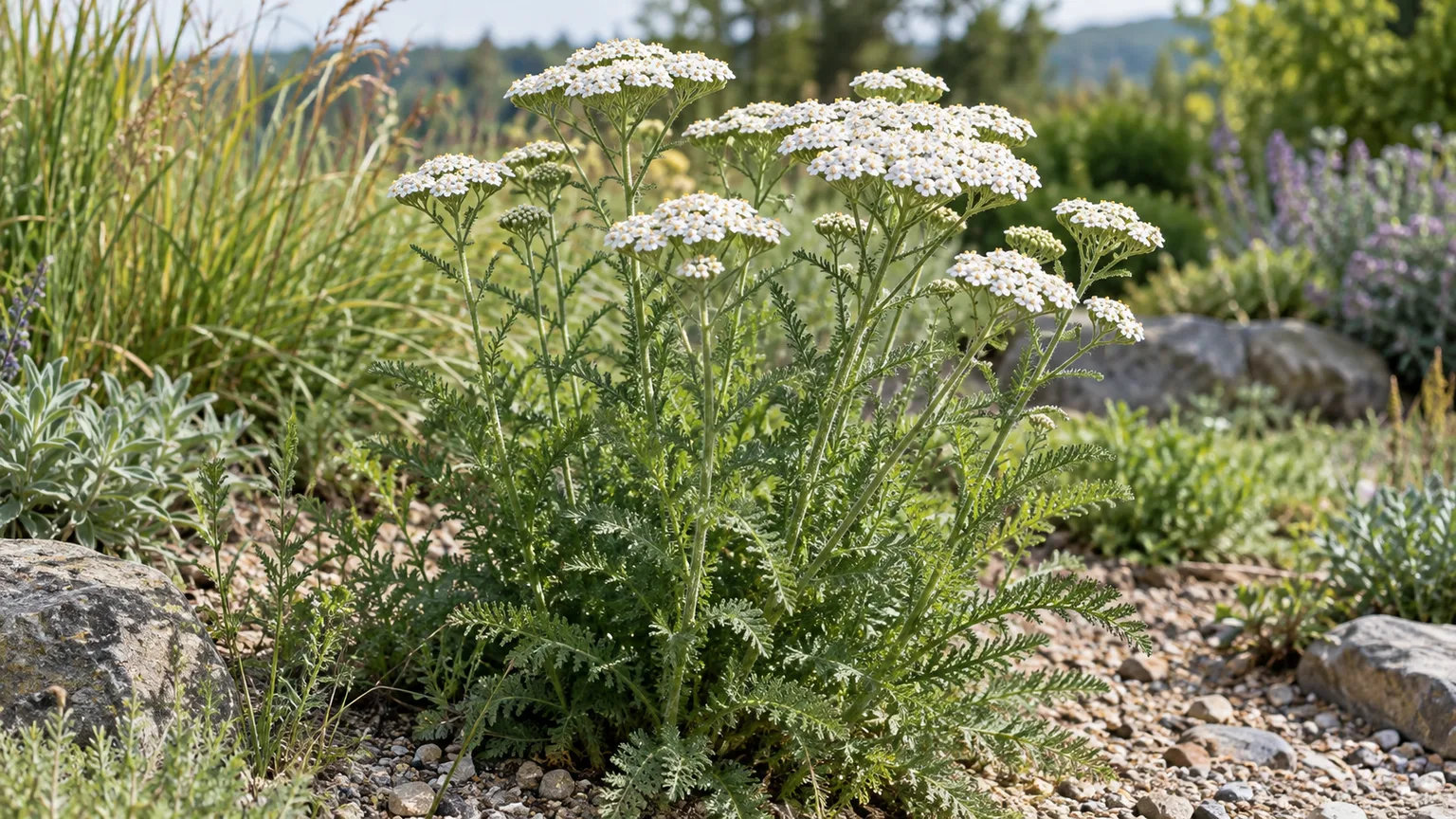
Choose by light, moisture, and available space
Start with the spot, then narrow the list by scent. For a dry, sunny path edge, compare creeping thyme, lavender, catmint, and bluebeard; they do not all have the same height, but each needs good drainage. A partly shaded bed points toward sweet woodruff, while a moist, sunny border can suit bee balm. If the soil stays wet in winter, avoid trying to “fix” the site with plants that need sharp drainage; raise the bed or choose species adapted to those conditions.
Next, compare the mature footprint rather than the pot on the sales bench. Northern bayberry and eastern hemlock need room for woody growth, while thyme and sweet woodruff spread laterally. Tansy and some wormwoods deserve a hard look at local invasive guidance before purchase. A container can control some spread and let you move a tender plant indoors, but it also dries faster and may need winter protection; it is not a universal substitute for choosing a suitable plant.
Put fragrance where you can notice it
Most scented foliage is a close-range experience. Plant catmint, thyme, bee balm, or lavender beside a path, gate, patio step, or seat where a sleeve or hand can brush a leaf. A path-edge planting is more effective than scattering the same plants across a large lawn, because the fragrance is released at the point of contact rather than carried reliably across the yard. Put stronger or divisive scents—such as lantana or wormwood—farther from a frequently used doorway until you know how you respond to them.
Layer plants by height and season without crowding them. Low thyme can occupy the edge, catmint or bee balm can rise behind it, and bayberry or hemlock can provide structure farther back. Leave access for pruning and inspection; a scented garden is less enjoyable if you must step into a bed or damage stems to reach the plants. Do not rely on scented foliage alone to repel deer or insects: fragrance may be noticeable to people, but it is not a dependable barrier.
Check spread, toxicity, and seasonal needs
Before you buy, check three things on the plant label and with local extension guidance: botanical name, mature size, and regional status. “Sage,” “hemlock,” “mint,” and “wormwood” cover plants with important differences. Confirm whether a plant is invasive or restricted in your region, particularly tansy and lantana, and contain rhizomatous or self-seeding species if you do not want them beyond their bed.
Scent does not tell you whether a plant is edible or safe for a pet. Lantana, yarrow, tansy, and some Artemisia species have documented toxicity concerns; poison hemlock is a different and highly toxic plant from eastern hemlock. Keep unknown foliage out of mouths, wear gloves when a plant’s extension profile warns of skin irritation, and ask a veterinarian or poison-control service for advice after suspected pet ingestion. Finally, match seasonal care to the plant: tender lantana may need to be treated as an annual, lavender needs a dry winter root zone, and bluebeard or Russian sage may look dead before spring growth returns.
Conclusion
The most rewarding plants with scented leaves are the ones you can smell without asking them to do a job they are not suited for. Choose thyme or catmint for a sunny path, sweet woodruff for shade, bee balm for a moist pollinator bed, and bayberry or hemlock only when you have space for a shrub or tree. Then plant where touch can release fragrance and give the foliage room to grow.
Before planting, check the botanical name, drainage, mature size, spread, and local safety guidance. Aromatic leaves can add a quiet sensory layer to a garden, but that benefit works best when fragrance, site conditions, and household needs all fit together.