English Daisy Care Guide: How to Grow Bellis perennis
English daisy care for beds and pots: learn seed sowing, moisture, bloom timing, summer heat, and how to control unwanted spread while keeping spring color.
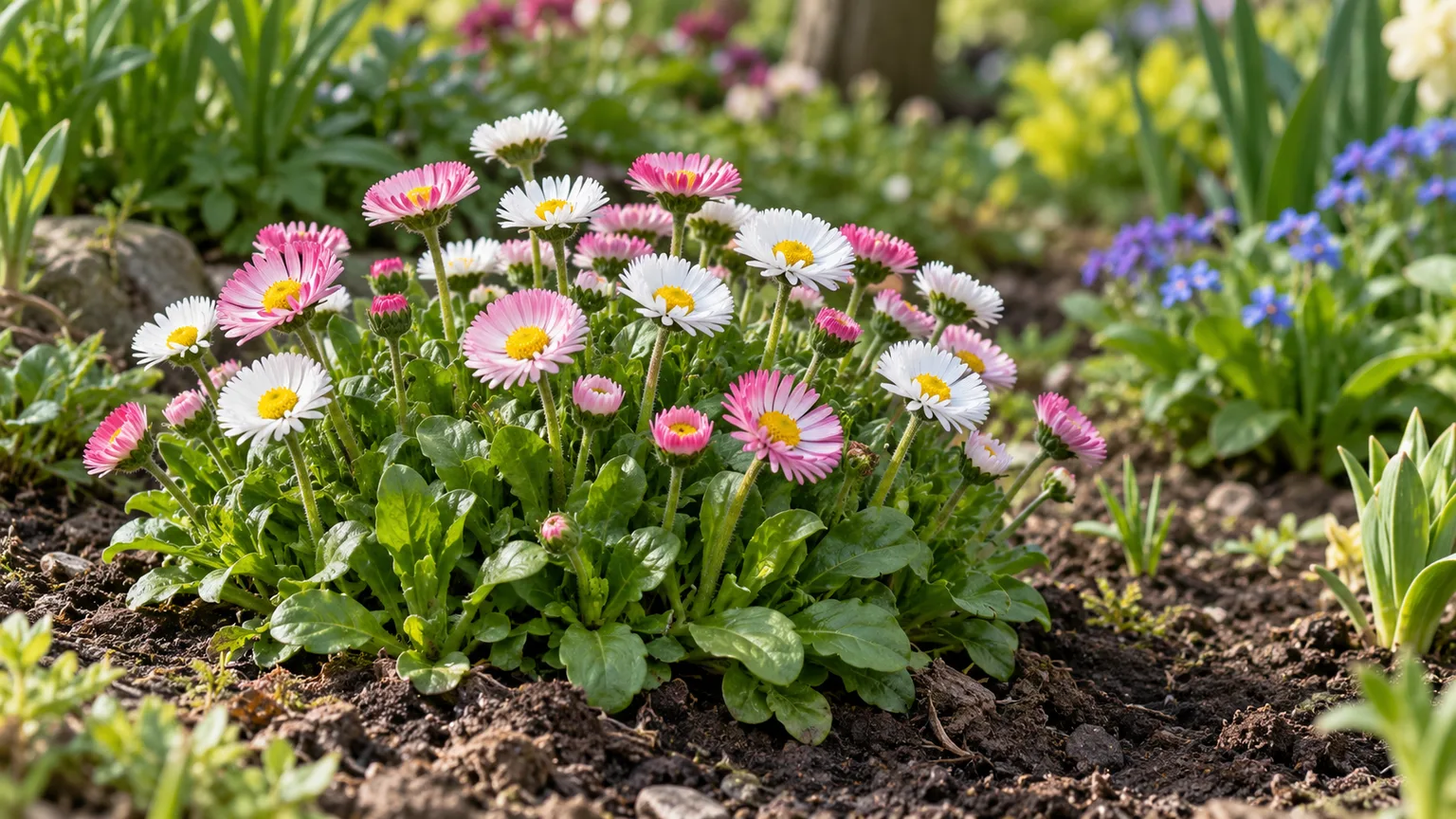
English daisies are small, cool-season flowers that bring a dense flush of white, pink, or red blooms to borders, containers, and spring plantings. Their care is simple when conditions suit them: give them sun or light shade, soil that holds moisture without staying soggy, and a plan for summer heat and seed spread. The important decision is not whether they can survive in every garden, but whether your climate and site can keep them attractive through the season you want them for.
The common name covers a particular plant, Bellis perennis, rather than every daisy with a yellow center. It is a useful distinction: English daisies stay low in a leafy rosette, flower close to the foliage, and are happiest when cool weather supports steady growth. A gardener in a mild spring climate may enjoy a long display; in a hot-summer garden, it often makes more sense to grow them as seasonal color and replace them when heat finishes the show.
Know the English daisy before you plant
Bellis perennis belongs to the aster family, Asteraceae. Its leaves form a low basal rosette, and each flower sits above it on a short, mostly leafless stalk. The flowers can be single, semi-double, or densely double; their rays may be white, pink, or red, often around a yellow center. Typical plants are compact, about 3 to 6 inches tall and 3 to 9 inches wide, although cultivar and growing conditions affect the final size. The NC State Extension Plant Toolbox records those dimensions and the rosette habit, while the Royal Horticultural Society’s Bellis profile describes the genus as perennial and rosette-forming, with flowers from early spring into late summer.
English daisy is also called common daisy or lawn daisy, names that hint at how readily it can appear outside a formal flower bed. It should not be confused with oxeye daisy (Leucanthemum vulgare) or Shasta daisy (Leucanthemum × superbum). Those plants are taller, with larger flower heads held well above their foliage; English daisy makes a tight carpet of small leaves and low blooms. If a nursery tag simply says “daisy,” check the botanical name before buying, especially if you have limited space or want to manage spreading.
The compact scale makes English daisies effective along a path edge, at the front of a border, in a rock garden, or in a window box. They can also fill gaps around spring bulbs once the bulbs’ foliage begins to mature. MyGardenLife’s English daisy profile also lists containers, rock gardens, and spring-bulb combinations as useful placements. Because their flowering period overlaps with other cool-season plants, they work best as one layer in a seasonal composition rather than as the only plant expected to carry a bed through hot summer weather. A simple grouping of several plants usually reads more clearly than one isolated daisy tucked among taller, denser perennials.
Life cycle, hardiness, and bloom season
Botanically, English daisy is a herbaceous perennial, but that label does not promise a permanent clump in every garden. It may behave as a short-lived perennial or biennial, and gardeners often grow it as an annual where summer heat reduces vigor or where the plants are removed after their spring display. In cooler regions, it may persist and reseed; in warm regions, it is commonly planted during the cool part of the year and treated as seasonal bedding. NC State Extension describes the plant as perennial but notes that people in northern parts of the United States often grow it as an annual; its profile also emphasizes its decline in summer heat.
A practical way to plan is to separate winter survival from summer performance. A plant can tolerate cold and still fade when prolonged heat arrives, so a hardiness-zone number alone does not predict how long it will look good. The broad range commonly associated with English daisies is USDA zones 4 through 8, but local summer temperatures, overnight warmth, shade, moisture, and soil drainage can shift the outcome. Think of them as cool-weather flowers first, and use your own spring and summer conditions to decide whether to plant them in fall, early spring, or both.
The main bloom flush is in spring and early summer. NC State lists a typical flowering period around May through July, with occasional flowers later when conditions remain favorable. In cooler weather, plants may continue to send up blooms; when days and nights become hot, flowering and foliage often thin or stop. A few late flowers do not mean that summer heat is harmless, and a plant that declines in midsummer is not necessarily suffering from a disease or failing because you missed a fertilizer application.
Choose a site that stays cool and evenly moist
Light: morning sun, afternoon shade in heat
English daisies flower best with bright exposure, but they are not heat-loving summer bedding plants. In a cool spring, a sunny bed can support compact growth and a generous bloom flush. Where sunlight is intense and afternoon temperatures rise quickly, choose a spot with morning sun and light afternoon shade; the shade reduces heat stress without putting the plants in deep darkness.
Use the appearance of the site through the day to make the decision. A border that gets morning light and is shaded by a building or taller plants after midday can suit English daisies better than a south-facing bed that reflects heat from paving. In a cool climate, more sun may be fine; in a hot spring or warm-winter region, shade during the hottest hours can extend the useful season. If a container sits on a balcony, move it away from a heat-reflecting wall when the weather warms.
Soil: moisture-retentive but never waterlogged
The best soil stays evenly moist while allowing excess water to drain. English daisies tolerate different soil textures, but their shallow roots struggle when the root zone repeatedly dries out. Improve sandy soil with compost to help it hold water; for heavy soil, use a raised bed or a looser planting area rather than trying to make a persistently waterlogged spot work. Avoid burying the crown under mulch or soil because moisture trapped against the center can encourage rot.
A fertile bed usually needs little extra feeding. Work a modest amount of finished compost into the planting area if the soil is poor, but do not assume that a stronger fertilizer mix will produce more flowers. Excess nutrients can push leafy growth, and overfeeding does not correct an unsuitable hot or dry site. Aim for a soil structure that balances moisture retention with airflow around roots.
Planting nursery-grown English daisies
Choose healthy plants with firm green leaves and no mushy centers. Set them out during cool weather—often in spring, or in fall where the ground is workable and winters are not severe enough to damage newly rooted plants. In warm-winter climates, fall planting can let them establish while temperatures are mild and put on a stronger display before the hottest season. Avoid planting into midsummer heat unless you can provide reliable moisture and temporary shade.
Space plants according to their label and the visual effect you want. For a continuous edging, closer spacing fills in sooner but makes it easier for the plants to compete and self-seed into a dense patch; wider spacing leaves room for airflow and companion plants. Set the root ball at the same level it grew in its nursery pot, with the leafy crown at the soil surface. Water thoroughly after planting so soil settles around the roots, then keep the bed evenly moist while new growth appears.
A light mulch can help keep moisture steady, but use it sparingly around a low rosette. A thick layer can cover the crown or hide small volunteer seedlings you may want to remove. Keep mulch pulled back from the base of the plant and inspect the bed periodically for new seedlings beyond the intended edge.
Growing English daisies from seed
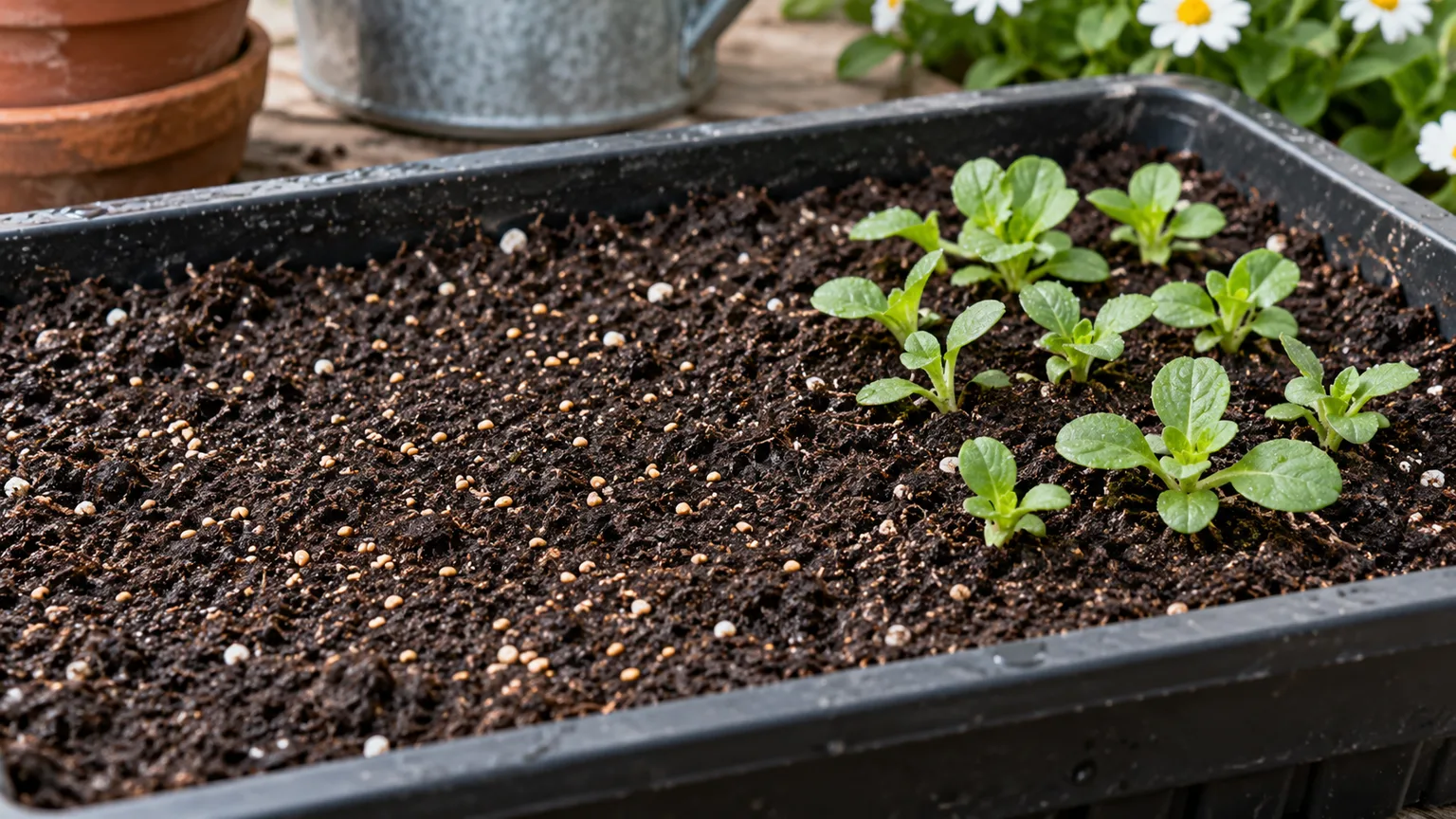
English daisy seeds need light to germinate, so sow them on the soil surface rather than burying them under a layer of mix. Seed is a good choice when you want a broad drift, many plants for an edging, or the option to let a few flowers naturalize. Buy seed of a named cultivar if a particular color or flower form matters; seedlings from a mixed or open-pollinated planting may not all match the parent plant.
For a small batch, start seed indoors in shallow trays or small pots several weeks before your intended planting date. Fill the container with a fine, moist seed-starting mix, scatter the seed across the surface, and press it gently so it makes contact without being covered. Keep the surface from drying out—clear humidity cover can help, but vent it once seedlings emerge—and provide bright light. The Gardening Channel’s English daisy growing guide likewise recommends surface sowing in moist mix; germination time still varies with temperature, seed freshness, and moisture. At room temperature, germination often takes about two to three weeks, though those conditions can make it slower or faster.
To sow outdoors, choose a cool spell in early spring or fall, loosen the soil surface, and water it before scattering the seeds. Press them lightly into the damp surface, then use a gentle spray to keep the top layer moist until seedlings appear. Do not use a forceful hose stream, which can wash tiny seeds into clumps or bury them. Thin crowded seedlings once they are large enough to handle, leaving enough room for each rosette to develop and air to move between plants.
If germination seems poor, first check whether the seed was buried or whether the surface dried out. Both can prevent success even if the seed itself is viable. A tray covered deeply with potting mix can look tidy but is a poor setup for this light-sensitive seed; conversely, seed left exposed to strong sun and dry wind may lose moisture before it sprouts. A fine seed-starting mix, a shallow sowing, and gentle, consistent moisture solve more problems than extra fertilizer.
Watering and fertilizing without forcing growth
Water when the surface begins to dry, then soak the root zone rather than sprinkling a little water over the leaves each day. Newly planted daisies need closer attention until they root in; established plants may need little help in cool, rainy weather and more frequent checks during a dry spell. A finger pressed into the soil near the rosette is a simple test: if the root-zone soil is dry, water; if it is still cool and damp, wait. The goal is even moisture, not saturated soil.
Containers dry more quickly than beds, and sandy beds dry sooner than loam or clay. Adjust by weather and soil feel instead of following a fixed calendar. If plants wilt during a warm afternoon but recover in the evening, heat may be part of the problem; if the soil is dry several inches down, water deeply. Persistent wilt with wet soil points to a drainage or root problem, so adding more water may make it worse.
Feed sparingly. In an ordinary garden bed, compost incorporated before planting may provide enough fertility for a short seasonal display. If growth is weak and the soil is poor, use a balanced, labeled fertilizer at the label rate while plants are actively growing; do not add a high-phosphorus dose just to force buds, and do not apply concentrated fertilizer to dry soil. Too much fertilizer can produce softer, leafier growth and will not compensate for summer heat, poor drainage, or insufficient light.
Growing English daisies in containers
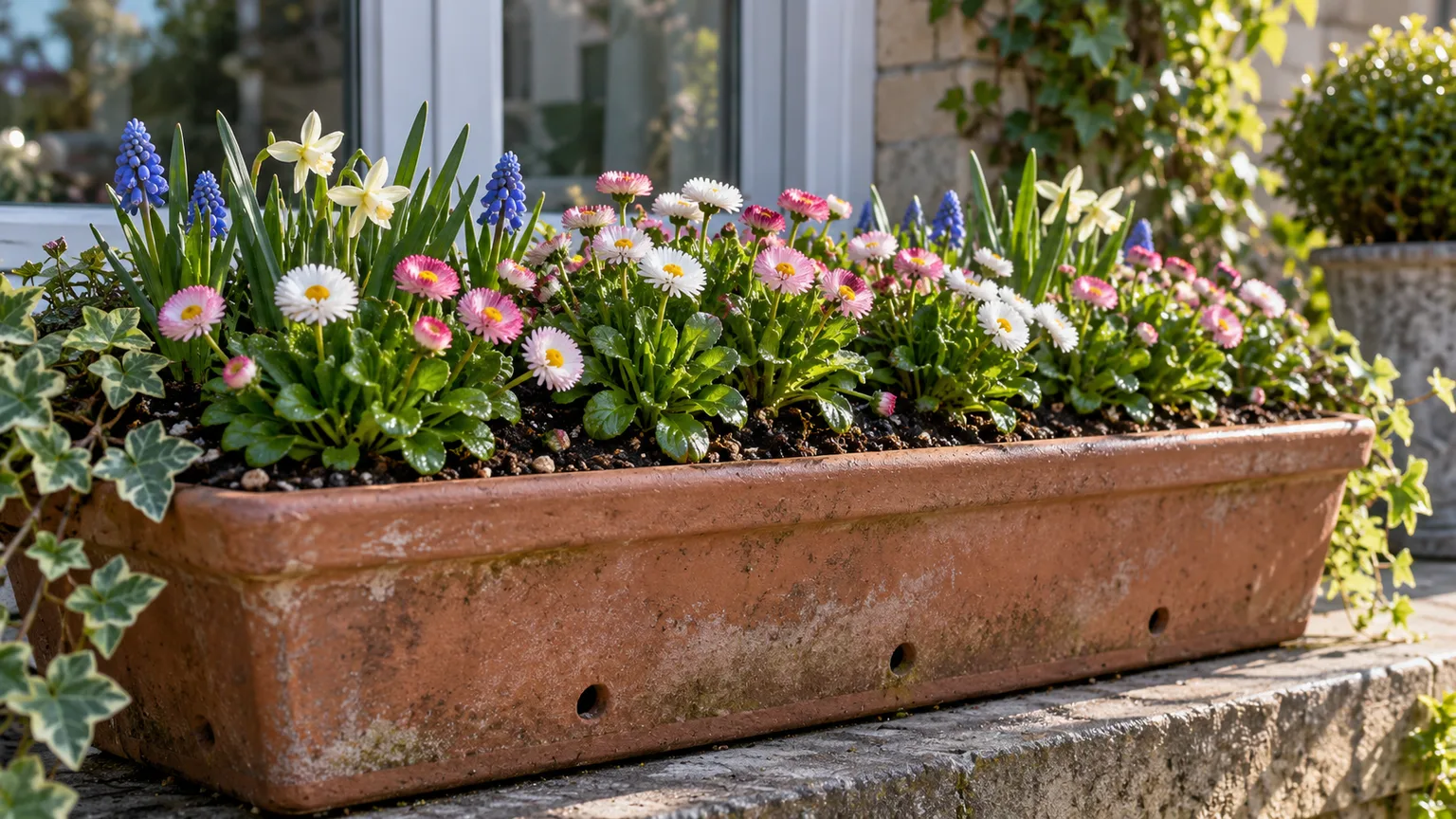
A pot or window box is useful when you want a contained spring display or need to prevent self-sown plants from spreading into a lawn. Choose a container with several drainage holes and enough volume to buffer moisture swings. Use a quality potting mix that drains but does not dry instantly, and plant the rosette at the surface rather than burying its center. A shallow container can work for these small plants, but it requires more frequent watering than a larger pot.
Place the container where it receives bright light and stays cool, with afternoon shade when spring days become warm. Avoid a hot wall, dark metal pot, or sun-baked balcony if you cannot check water often. Water until excess drains from the bottom, empty a saucer that holds standing water, and check moisture daily during warm or windy weather. Because a small pot has little soil reserve, the plant may dry out even when a nearby garden bed remains moist.
Treat a container planting as seasonal color, not as a promise of a year-round houseplant. The plant can be overwintered in conditions within its local hardiness range, but a warm indoor room is usually too hot and dry for good long-term performance. After flowering, decide whether the plant remains healthy enough to keep, whether you want to collect seed, or whether replacing it with a plant suited to summer makes more sense.
Choosing a variety for flowers and garden use
English daisy cultivars range from simple, open flowers to rounded pompon forms. Single and semi-double forms show a visible yellow center, while densely double selections look like small buttons and may come in white, pink, rose, or red. Plant labels often group several colors into one mix, so read the label if matching a precise palette matters. All of these are still Bellis perennis; the difference is in flower form, color, vigor, and how well a selection suits your planting plan.
The Galaxy series is sold in several colors and is often used for low edging or mass planting. Tasso Pink and Tasso Strawberries and Cream offer fuller flowers in pink, cream, and white tones; Pomponette is a frilly, rounded double form; and the Habanera series includes bicolored flowers such as white rays tipped in red. The RHS recognizes named Habanera selections within the species, including ‘Habanera White With Red Tips.’ Availability and exact colors vary by seed or plant supplier, so trust the current packet or pot label over a color photo that may show a different strain.
For a naturalistic edge, use single or semi-double forms among other low spring plants. For a formal pot or compact border, a uniform double-flowered cultivar can look more deliberate. If seedling appearance and predictable color matter next year, buy fresh seed or plants from the named cultivar rather than relying on volunteers; saved seed may not come true to type, particularly where multiple varieties flower together.
Getting more flowers and deciding when to deadhead
A strong bloom display starts with healthy plants established before hot weather. Provide bright light, moisture, and a cool site rather than trying to extend flowering with extra feeding. When the first flowers fade, inspect the plant: if new buds are still forming and the weather is mild, remove spent heads to tidy the display and limit seed production. This can keep the bed looking clean, but it cannot prevent the seasonal slowdown that heat causes.
Deadheading is optional if you want the plant to reseed. Leave a few flower heads to mature where you want seedlings, and remove the rest before seed disperses if you want to keep the planting contained. If you do not want any volunteers, cut off faded heads before they dry and shed seed, then pull seedlings while they are small. A clean-up after the main bloom flush is easier than trying to remove a mature carpet spreading through turf later.
Do not remove every faded flower automatically if the planting’s purpose is naturalization. A handful of seed heads can renew an informal patch, while a border near a lawn or natural area benefits from more careful deadheading. Make the decision based on where you are willing to see seedlings next season, not on a blanket rule that every daisy needs the same pruning.
Dividing established plants
Division is useful for a healthy clump that has expanded beyond its space or begun to thin in the center. Do it in early spring before a heavy flush of flowers, or in early fall when temperatures are cooler and the soil can stay moist. Lift a section with a spade, separate it into pieces that each have roots and leafy growth, and replant them promptly at the original depth. Water the divisions well and keep them from drying while they re-establish.
Use division to move plants within a controlled border, not as a way to spread them into unapproved areas. English daisies can also multiply by seed, so a newly divided planting may still need deadheading or edge checks if you want a strict boundary. If a plant is declining from summer heat or poor drainage, dividing it into the same conditions will not solve the underlying problem; change the site or treat the planting as seasonal.
Keeping self-seeding inside its intended space
English daisies spread by seed and can also form spreading crowns or rhizomes. In a cool, moist setting, a small patch may expand into a dense lawn-like carpet, which some gardeners welcome and others find difficult to contain. Before planting, think beyond the bed where the first plants will sit: can you tolerate seedlings in nearby turf, between pavers, or around other low-growing flowers? If not, grow them in containers or choose a different cool-season plant.
To contain a bed, remove faded heads before seeds ripen, inspect the perimeter every few weeks during and after flowering, and pull volunteers while they are small. A defined edging may help make the patch easier to monitor, but it will not stop seed from moving beyond the boundary. Avoid scattering seed broadly near native plantings, wild areas, or a lawn where you want a uniform turf.
The Invasive Plant Atlas of the United States classifies English daisy as exotic and displays a state list supported by a regional listing source; the Atlas also cautions that its distribution map is incomplete. This is a reason to check your state, county, or local invasive-plant guidance—not evidence that English daisy is legally or ecologically invasive everywhere. If local authorities identify it as a concern, do not plant it, and remove established plants before seed disperses.
Troubleshooting heat, wilt, pests, and disease
Flowers stop during summer. This is often a temperature response. If foliage is still firm and the soil is moist, keep the plant cool, give it afternoon shade, and accept that flowering may pause until conditions improve. Do not respond by repeatedly fertilizing; that adds nutrients without removing the heat stress.
Leaves wilt or look limp. Check the soil before watering. Dry soil calls for a thorough drink, followed by a moisture check over the next few days; wet soil calls for better drainage and less water. If the center of the rosette turns soft or dark, remove affected material and assess whether the planting site remains too wet. Avoid placing mulch over the crown.
Plants make leaves but few flowers. Consider their age, available light, and seasonal timing before changing fertilizer. Newly established seedlings may need time to mature, while a shaded site can reduce flowering. If the plant has already bloomed and temperatures are rising, a natural summer decline is more likely than a nutrient deficiency.
Leaves show mining trails, distortion, or small patches of rust. NC State Extension lists the European pepper moth, root-knot nematodes, and rust among possible issues, while also noting that serious insect or disease problems are uncommon. Remove badly affected leaves or plants, clean tools after cutting diseased tissue, and avoid keeping the planting excessively wet. If a suspected soil pest repeatedly affects plants, ask a local extension office to confirm the cause before treating soil; symptoms alone do not reliably identify a nematode problem.
Safety around children and pets
Do not treat English daisy as a food crop just because some references describe its young leaves or flowers as edible. The NC State Extension record also assigns Bellis perennis a medium poisoning severity, lists possible digestive symptoms after ingestion, and notes contact dermatitis; it explicitly warns that risk can vary by the amount and part eaten and by individual sensitivity. For a home garden, the safest practical choice is not to harvest it for food unless you have reliable, species-specific guidance from a qualified professional.
Keep seeds, cut flowers, and pulled plant material away from young children and animals that chew plants. The ASPCA page labeled “Daisy” identifies Chrysanthemum species, so it should not be taken as a toxicity assessment for every plant with “daisy” in its common name. If a person or pet eats English daisy or develops a reaction after handling it, contact a medical professional or veterinarian and share the botanical name; do not try to diagnose or treat the exposure from a common name alone.
Conclusion
English daisies are rewarding spring flowers when you can give them cool weather, bright light, and soil that stays moist without becoming waterlogged. Sow seeds on the surface, set nursery plants with their crowns exposed, and use deadheading or containers if volunteers would be a problem. Plan for summer heat to shorten the display, and check regional invasive guidance before planting where naturalization could create trouble.