Worst Flowers for Hummingbirds: What to Keep and Add
Learn why crocuses, marigolds, roses, and other popular flowers may draw few hummingbirds, when to keep them, and which native nectar plants to add nearby.
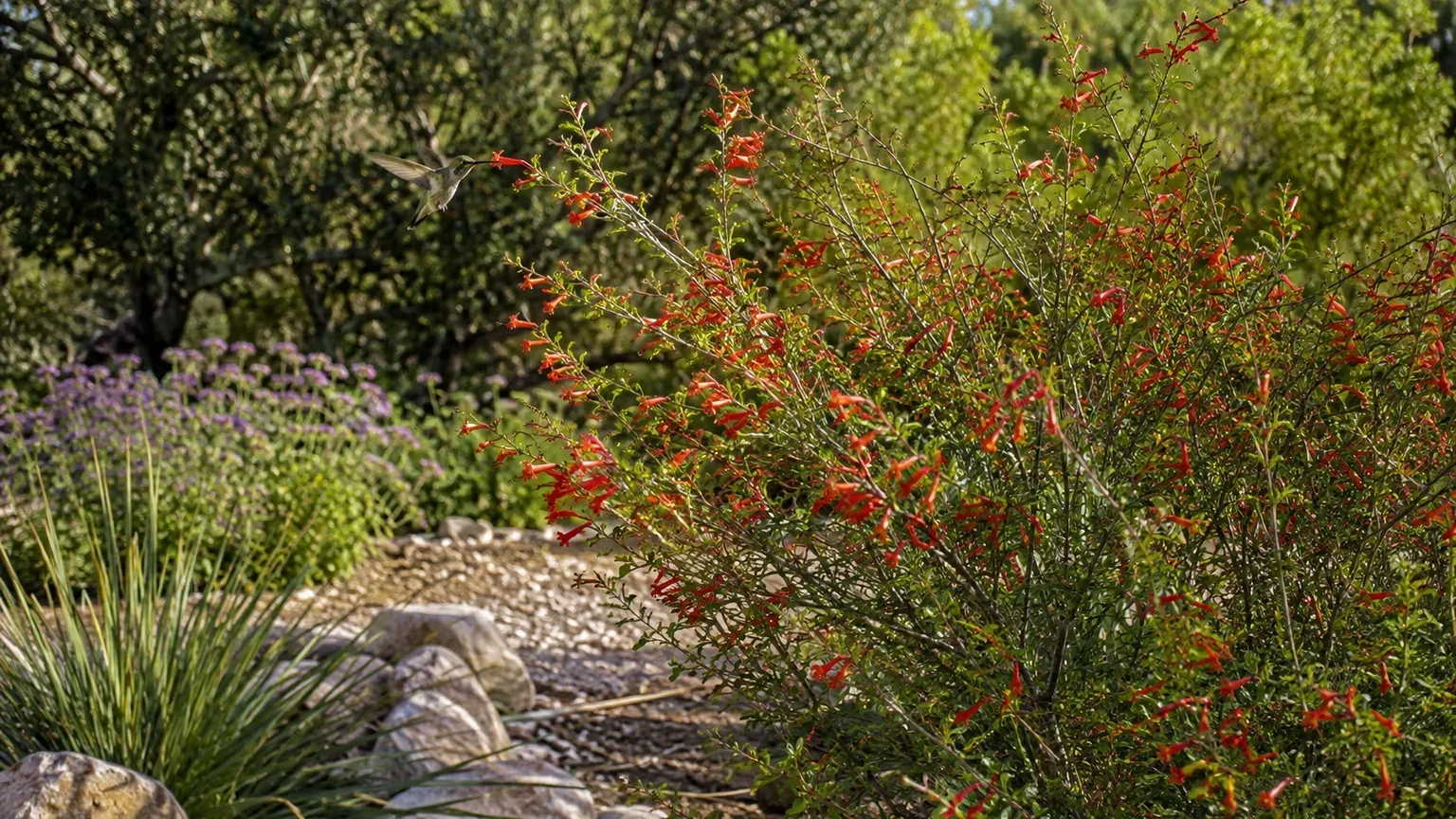
A garden can be full of flowers and still offer hummingbirds very little to eat. Some familiar blooms have an awkward shape for hovering birds, produce a modest nectar reward, or finish flowering before hummingbirds reach your area. That makes them lower-priority choices for a hummingbird garden, but it does not make them bad plants or flowers a hummingbird will never visit.
The useful question is not “Which flowers must I remove?” It is “When are hummingbirds here, and what flowers will provide accessible nectar during that window?” Keep blooms you enjoy, then add a few regionally suitable nectar plants that flower before, during, and after their bloom period.
Why “worst” means low priority, not useless
There is no dependable universal blacklist of flowers that hummingbirds never use. Flower nectar, petal shape, cultivar, weather, and the bird species in your region all vary, and a curious hummingbird may sample a flower that is not usually considered a strong nectar plant. A flower labeled “unattractive” may also offer pollen or nectar to insects, seeds later in the season, or shelter and perches around the bed.
Think of “worst” as least reliable when the goal is feeding hummingbirds. If your bed is mostly tulips, roses, peonies, and marigolds, the issue is not that those plants harm hummingbirds; it is that the bed may have little nectar available when local birds are present. Add dependable flowers first, and judge whether anything needs replacing only after you know how the existing plants function in your garden.
What hummingbirds look for in a nectar flower
Hummingbirds use long, slender bills and tube-like tongues to reach nectar, and nectar supplies fast energy for their high-energy flight. They also eat insects for protein, so a bird-friendly garden needs more than flowers alone. The National Park Service’s overview of hummingbirds describes both parts of that diet and the birds’ role in moving pollen as they feed.
Shape, nectar access, and color
Many flowers adapted to bird pollination are sturdy, brightly colored, and curved or tubular, with nectar positioned where a bird can reach it while hovering. That shape is a useful clue when you are choosing plants, not a pass-or-fail test: the RHS flower-shape guide explains that different pollinators use different flower forms, while Penn State Extension’s hummingbird guidance notes that hummingbirds take nectar from flowers in many colors.
Red, orange, and pink flowers can be conspicuous, but color by itself does not make a flower a good food source. A red double rose may offer less accessible nectar than a nearby tubular bloom, while a purple or white flower with an open nectar tube can still be visited. Do not choose only by a color label or assume fragrance will draw hummingbirds; the National Park Service recommends bright, tube-shaped native flowers and notes that scent is not their main way of finding blooms.
A useful comparison is penstemon: its flared, tubular flowers hold nectar in a form hummingbirds can reach, and many species are suited to different North American regions. Garden Design’s penstemon guide describes its range of flower colors, shapes, and native species, which is a better buying framework than picking a plant because its blooms happen to be red.
Bloom timing can make a useful flower irrelevant
A nectar-rich flower cannot feed a hummingbird that is hundreds of miles away or has already migrated. In the eastern United States, ruby-throated hummingbirds move north with spring bloom and leave for migration later in the year; western species and local climates follow different calendars. Penn State Extension describes ruby-throats following early blooms such as azaleas, rhododendrons, and columbine, while the National Park Service notes that migration timing corresponds with flowering at destination sites.
This is why crocus, daffodils, or tulips can be beautiful but unreliable as the main hummingbird draw in many gardens: their strongest bloom may be over before local birds arrive. In a mild region with year-round hummingbirds or unusually early arrivals, the overlap can differ, so use local arrival records and your own bloom dates rather than a calendar copied from another state.
Flowers that are usually low priority for hummingbirds
The table below describes relative usefulness, not a guarantee that a hummingbird will ignore each flower. Some species produce nectar, some cultivars have a different flower form from the typical one, and local bloom dates can change the result. Keep a plant that supports another part of your garden, but do not count it as your only nectar source unless you actually see birds feeding from it.
| Flower group | Why it may be a weak hummingbird choice | Practical decision |
|---|---|---|
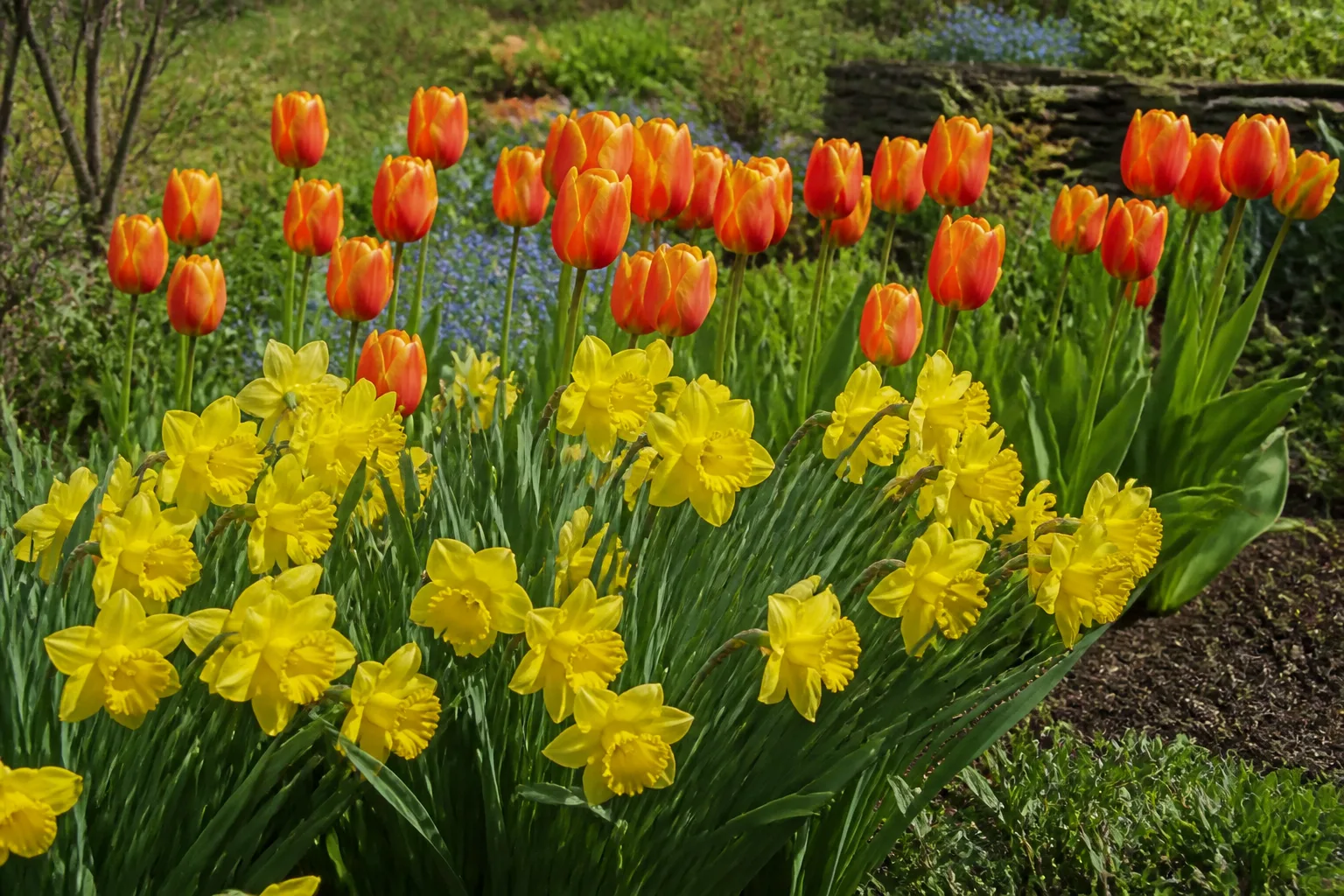
| Crocus, daffodil, tulip | Often flower before hummingbirds are active locally; cup or star forms are not a dependable season-long nectar patch | Keep for spring color and early pollinators; add later tubular blooms |
| Forget-me-not, dianthus | Small, shallow blooms offer less of a concentrated hovering feeding station than a large cluster of nectar-bearing tubes | Keep as edging or groundcover; treat hummingbird visits as a bonus |
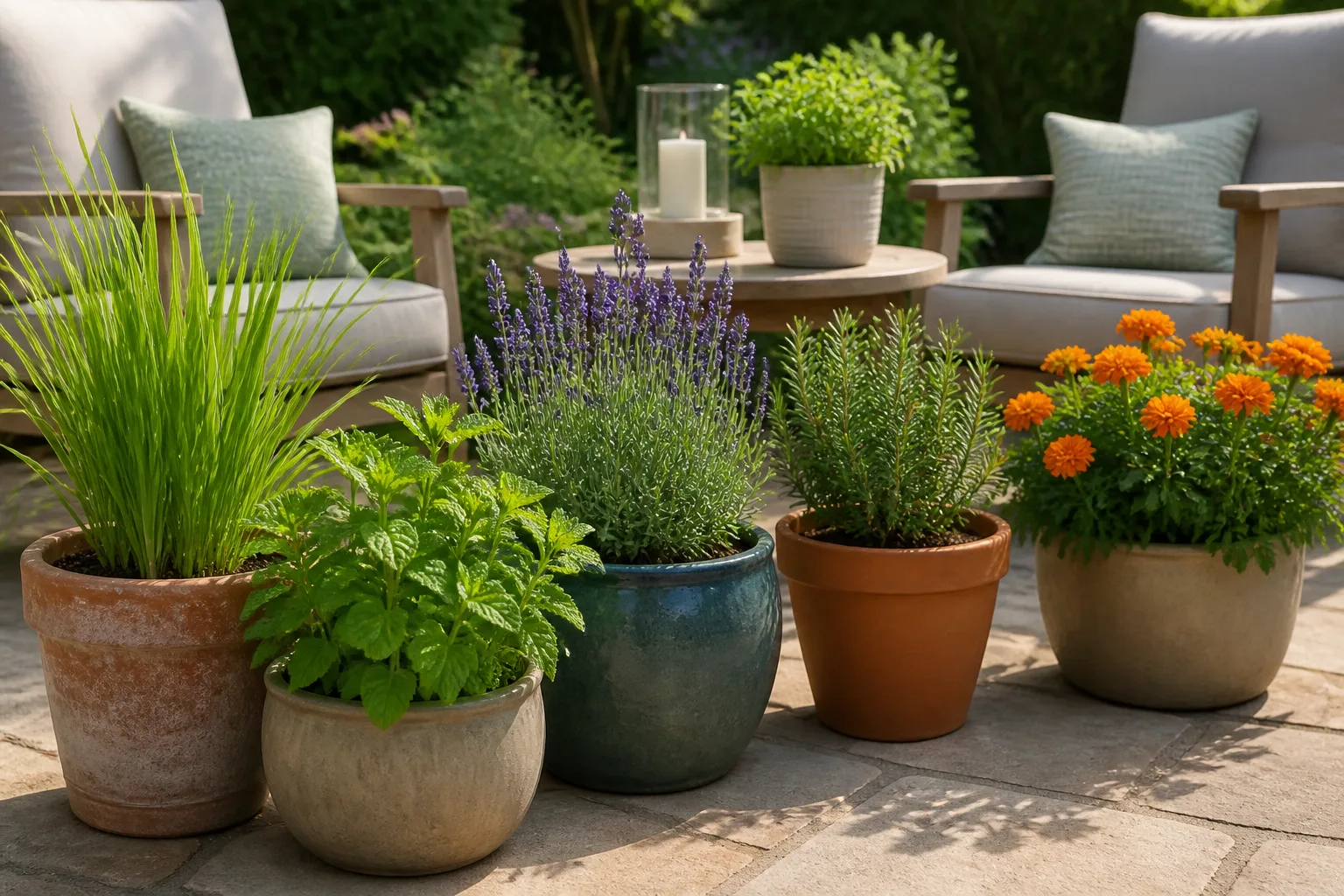
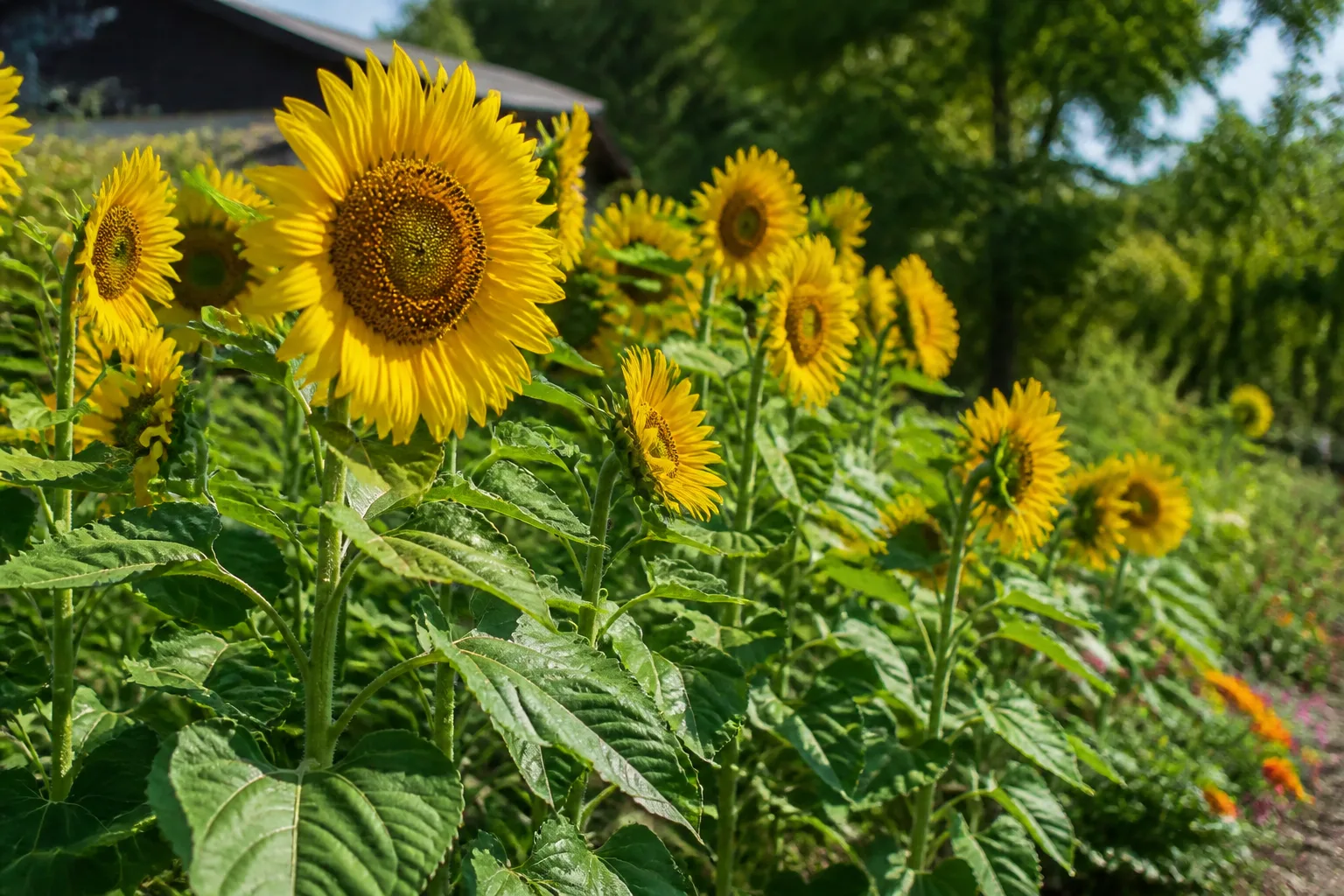
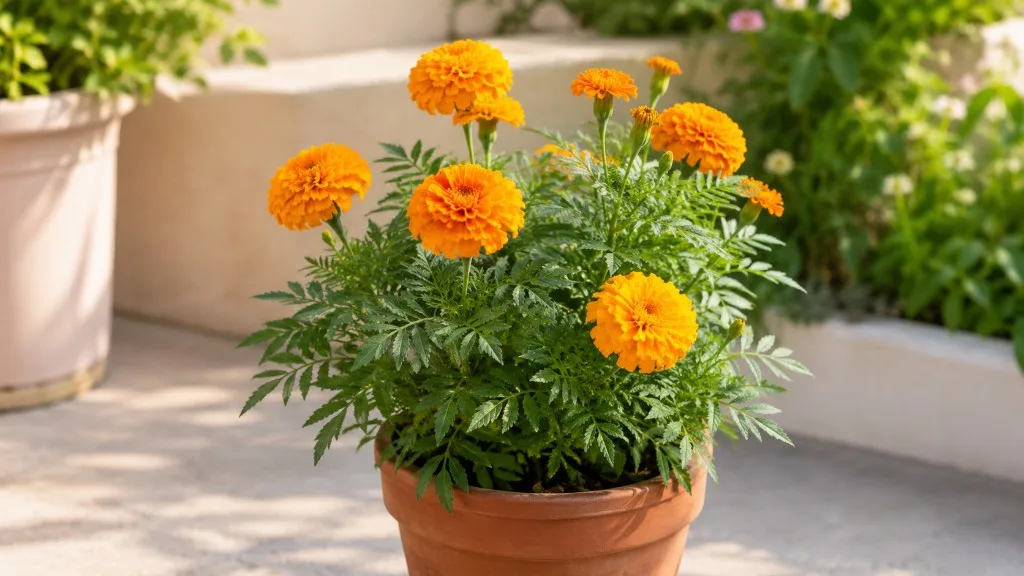
| Marigold, sunflower | Open composite heads are easy for many insects to work and are not usually a high-yield hummingbird planting | Keep for color, seed, and other wildlife; add bird-appropriate flowers nearby |
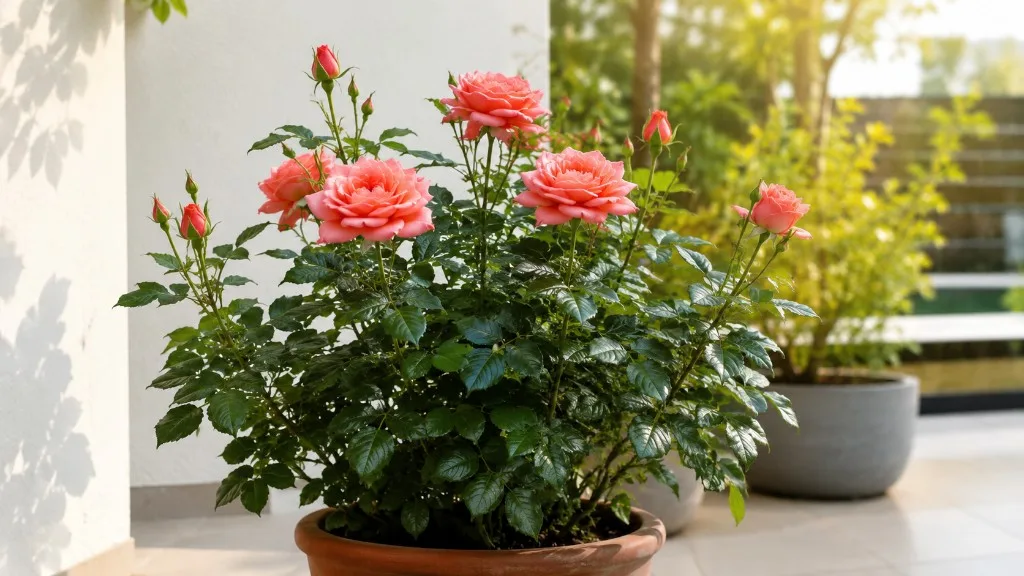
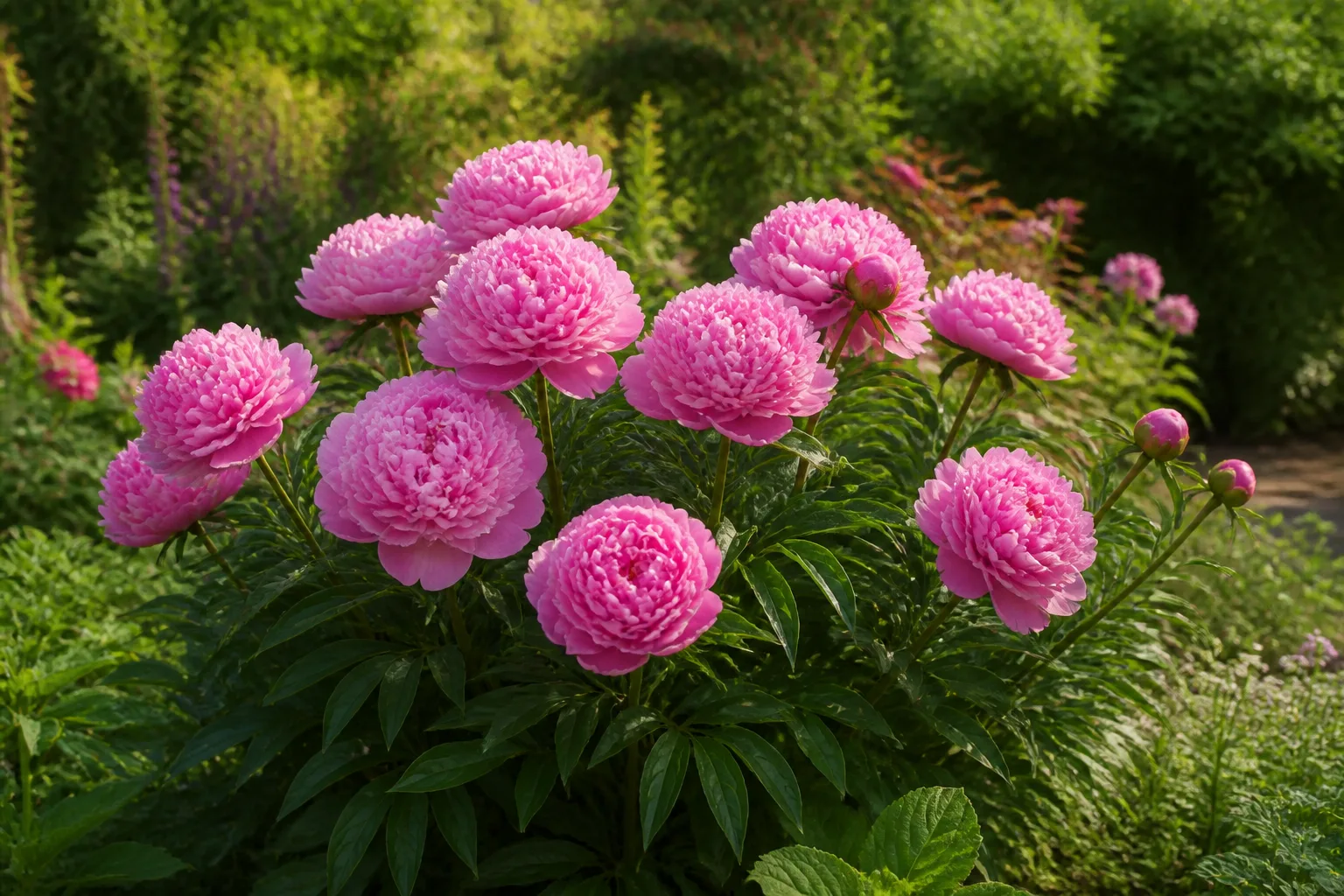
| Double roses, double peonies | Dense petals can make flower centers harder to assess and may reduce access in some cultivars; plants vary widely | Keep favorites; choose simple flowers nearby if nectar is the priority |
| Gardenia, lilac, lily of the valley | Fragrance, clusters, or bell shapes alone do not guarantee substantial nectar at a height or shape a bird will use | Keep for fragrance or shade; do not rely on them as the whole food supply |
| Iris, Oriental lily, sweet pea | Some forms may be visited, but a flower’s name or trumpet-like appearance does not tell you its nectar output or local bloom overlap | Watch for feeding; add proven local species to fill gaps |
Early bulbs: crocus, daffodil, and tulip
Crocuses, daffodils, and tulips are dependable spring ornamentals, but their timing is the main limitation for many hummingbird gardeners. A bed that peaks in March or April may provide little nectar by the time hummingbirds return to a northern yard, and the bulbs usually do not keep blooming through the birds’ summer stay. In the South or West, local hummingbird species and climate can create different overlaps, so treat timing as a local observation rather than a rule based on one migration map.
Keep bulbs if you like them. They can support early-season insects and make a garden attractive before the main hummingbird season; simply underplant or follow them with a regionally adapted flower that blooms after the bulb foliage begins to fade. If you are planning from scratch, set aside space for early native nectar plants and later summer bloomers instead of expecting a single bulb planting to cover the season.
Small, shallow blooms: forget-me-not, dianthus, and lily of the valley
Forget-me-nots and many dianthus cultivars produce small flowers rather than long, nectar-filled tubes held in conspicuous clusters. Hummingbirds may investigate them, but a few tiny blooms do not make an especially visible or predictable feeding station compared with a mass of bee balm, cardinal flower, or trumpet honeysuckle. Their value may be more apparent to small insects or in a border where a low mat of flowers fills an otherwise bare patch.
Lily of the valley presents a useful caution against judging by shape alone: its flowers are little bells, but the small scale of each bloom and its shade-growing habit do not make it a dependable stand-alone nectar source for hovering birds. Dianthus and forget-me-not also vary by species and cultivar, so avoid treating the common name as proof of either no nectar or guaranteed avoidance. Use them as supporting plants and watch whether birds actually work the flowers in your yard.
Broad, open flower heads: marigold and sunflower
Marigolds and sunflowers have composite heads made of many small florets rather than one long floral tube. Marigolds range from open to densely double forms, and sunflowers have broad disks; these flower structures can be worked by many insects.
Sunflowers later provide seeds for birds, and a gardener may see bees and other visitors more often than hummingbirds on either plant. That does not mean an occasional hummingbird cannot take nectar from a particular cultivar or nearby flower.
The practical distinction is between a flower that may be visited and a plant worth relying on for hummingbird food. A single sunflower is not a substitute for a long-blooming patch of nectar flowers, but a clump of sunflowers can add height, seed, and visual structure beside hummingbird plants. Marigolds can stay at the border edge while you place nectar-rich blooms in a sunny, visible cluster nearby.
Dense blooms: double roses and peonies
The broad label “rose” covers very different flowers. A simple, open rose exposes its center, while a highly double cultivar has many petal-like parts packed into the bloom; the latter may be a less predictable source for a bird than an open tubular flower. The same caution applies to peonies: they are showy garden plants, but a gardener should not assume a large flower head automatically holds accessible nectar for hummingbirds.
Keep the roses and peonies you enjoy, especially when they bring value to the rest of the yard. A native single-flowered swamp rose, for example, can produce fruit used by wildlife; Fine Gardening’s profile describes both its simple blossoms and wildlife value. If you are choosing a new rose specifically for hummingbirds, do not buy on bloom color alone—add a more reliable nectar plant and let the rose serve as a complementary shrub.
Lilac, gardenia, iris, lilies, and sweet peas
These plants are easy to misclassify because their names and shapes do not provide enough information on nectar reward. Lilac flower clusters are fragrant and attractive to people, but fragrance is not what brings hummingbirds to a bloom; lilacs also tend to have a shorter spring display than the season-long sequence a garden needs. Gardenias are highly fragrant, and their broad white flowers can be beautiful, but they are not a dependable replacement for regionally recommended nectar plants.
Iris, Oriental lilies, and sweet peas deserve an even more careful label. Some lilies are trumpet-shaped and could be visited, and hummingbirds do not follow a strict rule that excludes every open or pale flower; however, one flower’s shape does not reveal how much nectar it offers or whether it blooms when birds are present. Treat these as possible bonus flowers, not a guaranteed hummingbird planting, and judge by actual feeding behavior rather than removing them preemptively.
How to judge the flowers already in your yard
Before pulling out a mature shrub or reworking a bed, run a simple flower audit. It takes one bloom season and is more reliable than a universal list because it accounts for your local hummingbird species, weather, and the exact cultivars in your garden.
Watch the bird, not just the flower color
Spend a few short observation periods when flowers are open and hummingbirds are active. Look for a bird inserting its bill into a bloom and moving from one flower to another; a hover nearby may be territorial behavior or a quick inspection, not feeding. If you cannot watch continuously, a phone photo or short video can help you tell whether the bird is visiting the flower itself or a feeder just beyond it.
Record which plant it visits, the date, and whether the same plant is in bloom for several weeks or only briefly. One visit is evidence that a hummingbird can use that plant, not proof that it supplies enough nectar to carry the season. No visits are also not proof that the flower is useless: the bird may be absent, the patch may be small, or another nectar source may be easier to find.
Match bloom dates to local hummingbird season
Find the typical arrival and departure window for your local species through a nearby birding group, state wildlife agency, or extension source. Then compare it with your garden’s first and last flower dates, not just a seed-packet bloom month. Penn State Extension recommends a variety of flowering plants through the period hummingbirds are present, while Oklahoma State University Extension likewise advises choosing plants that span the season.
A one-week bloom flush is a short stop, even if the flowers are attractive. Make a rough calendar with three windows—early, middle, and late season—and mark which plants actually flower in each one; the empty window is where a new plant will do more good than replacing a healthy flower that already serves another purpose.
Keep the flowers and improve the nectar supply
A hummingbird garden works as a sequence of food, not as a single plant purchase. Keep ornamental blooms that make you happy, then use a few targeted additions to provide more accessible nectar during the weeks when your existing flowers have faded or have not yet opened.
Add native nectar plants for your region
Start with the native plant recommendations for your county or ecoregion. The National Park Service suggests native flowers with tube-shaped blooms, and Penn State Extension recommends native plants when planning a hummingbird planting; regional species also tend to fit local soils, weather, and the birds that actually occur there. That is a stronger filter than buying any red flower labeled “hummingbird plant.”
In the East, local lists may include cardinal flower, wild columbine, bee balm, or native trumpet honeysuckle. In the West, a regional penstemon or native salvia may fit better, but species differ by elevation, climate, and soil. Garden Design’s penstemon coverage is useful for comparing species and growing needs, while the right choice for your yard should still come from a local native-plant or extension list.
Use our guide to hummingbird-attracting plants for a longer plant list, then check each candidate against local invasive-plant guidance and your site conditions. A plant that is native somewhere in North America is not automatically native to your state, and a plant that thrives in a warm coastal yard may fail in a colder or drier one.
Plant groups that overlap in bloom
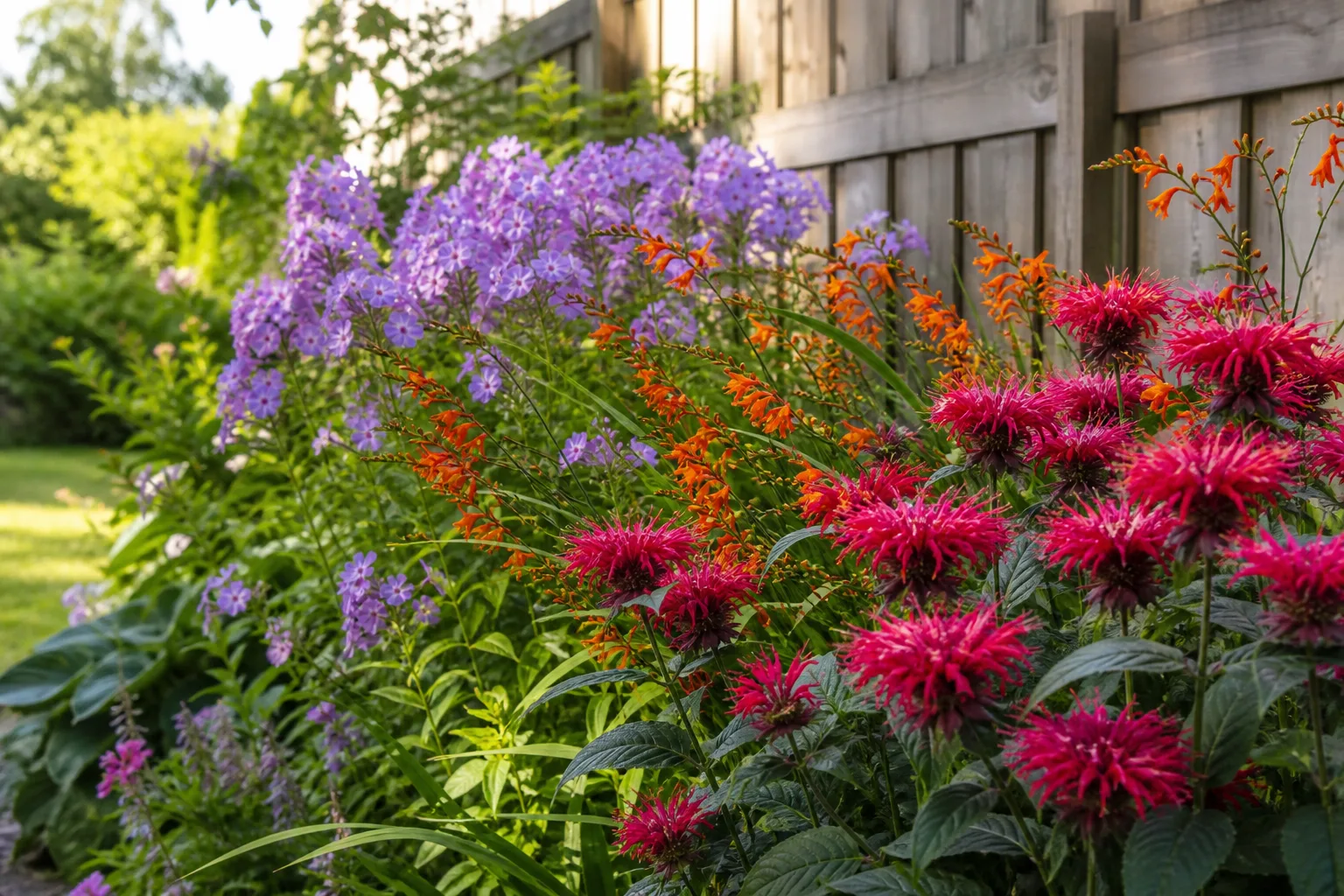
Plant in visible groups rather than scattering one stem of each species through the yard. Penn State Extension notes that hummingbirds are drawn to large clusters of flowers; a group also makes it easier for you to see which plants are blooming and which are being visited. Repeat a useful species in two or three spots when you have space, but leave open flight paths and safe viewing distances from windows.
Choose plants so one bloom begins before the previous one ends. A simple plan might pair an early native shrub or columbine with a midseason bee balm or penstemon, then a late-blooming native salvia or other local species; your region may call for different plants and dates. The objective is overlap, not a rigid “one plant for each month” schedule, because weather can shift flowering by weeks.
Keep the insect and shelter value
Do not turn a hummingbird project into a reason to remove every flower that is not a nectar tube. Insects and spiders are part of hummingbird food, and flowers that support bees and other pollinators help keep the garden productive; the RHS guidance on flower shapes recommends variety because different pollinators use different forms. A mixed bed can feed hummingbirds, butterflies, bees, and seed-eating birds at different times.
Leave suitable shrubs and small trees as perches and cover, and limit pesticide use where practical so insect prey remains available. Oklahoma State University Extension and Penn State Extension both describe habitat features beyond flowers, including nearby perches and the importance of insects; a bare bed of high-nectar flowers is not the whole habitat. Preserve flowers that provide seed, fruit, or structure unless they are invasive or create another clear problem in your yard.
When a feeder helps—and what it cannot replace
A clean hummingbird feeder can bridge a gap while flowers establish or between bloom periods, but it does not turn an unsuitable planting into a complete habitat. Flowers bring natural variation and attract insects; shrubs and trees provide perches and shelter. A feeder is best treated as a supplement near the garden, not a reason to remove native blooms or overlook the rest of the habitat.
Use a feeder only if you can keep it clean and refill it reliably, especially in hot weather. Penn State Extension and Oklahoma State University Extension provide region-specific feeder guidance, so follow a current extension or wildlife-agency source for sugar-water proportions, cleaning frequency, and safe placement. Do not add dye or flavoring, and do not let a feeder substitute for locally suitable flowers and pesticide-conscious gardening.
If you already have the familiar “low-attraction” flowers, your first move is usually additive: plant one or two native nectar sources that fill the season gap, then observe the result. Replacement makes sense when a plant is invasive, unhealthy, poorly suited to its site, or simply no longer earns the space—not just because a hummingbird guide put it on a list.
Conclusion
Crocuses, daffodils, tulips, marigolds, sunflowers, roses, peonies, and several other popular flowers can be low-priority hummingbird plants because of timing, flower form, nectar access, or inconsistent bloom overlap. None belongs on a universal “never plant” list, and a bird may visit flowers that are not usually considered strong nectar sources.
Keep flowers that serve your garden, check what blooms while local hummingbirds are present, and add native, accessible nectar plants in visible groups to bridge the gaps. That gives you a more dependable feeding sequence without sacrificing the other pollinators, seeds, fruit, fragrance, or color your existing plants provide.