25 Best Plants for Clay Soil Gardens
Find 25 plants for clay soil by sun and moisture, from prairie grasses and flowering perennials to damp-site choices, plus planting tips for heavy ground.
Clay can be a productive garden soil: its fine particles hold water and nutrients, but the same texture can compact, drain slowly, and become hard when dry. The best choices are plants that match your light and the bed’s actual moisture pattern. A plant that tolerates damp clay may still rot in standing water, while a drought-adapted prairie flower can fail in the lowest, wettest part of the yard.
This list groups 25 flowering perennials and grasses by sun exposure and flags the crucial drainage exceptions. Before buying, check the plant label for the exact cultivar, mature size, and hardiness range; then observe the bed after a soaking rain. That quick site check will tell you more than the word “clay” alone.
Clay Does Not Automatically Mean a Swamp
“Clay” describes the size and proportion of soil particles, not how long a particular planting bed stays saturated. Clay particles are very small and have a large surface area; they can hold water and nutrients, but a compacted or poorly structured clay soil has fewer connected air spaces for roots and water movement. NC State Extension explains that working clay while wet can damage its structure and that organic matter helps form aggregates that let water move through the soil. 1 2
Clay also varies from garden to garden. A sunny slope may drain adequately even if the soil ribbons smoothly between your fingers, while a low spot with construction compaction can stay waterlogged despite being only clay loam. These are different growing conditions, so do not select every plant in a “clay tolerant” list for the same bed.
Test Texture and Compaction Separately
Take a small handful of soil from the root zone, moisten it, and squeeze it. Soil that feels sticky and can be rolled into a long, smooth ribbon contains a substantial clay fraction; gritty soil that falls apart quickly has more sand. This simple ribbon test estimates texture. It does not tell you whether water is trapped above a compacted subsoil or whether your bed floods seasonally.
Also notice how the soil behaves underfoot. A surface that seals into a hard crust, puddles in wheel or foot tracks, or sheds rain instead of absorbing it may be compacted. Do not dig or till it when wet: pressure on saturated clay squeezes out pore space and makes the problem worse. If the bed has been disturbed by construction or heavy machinery, a soil test and a drainage assessment can be more useful than planting into the same condition immediately. 1
Watch What Happens After Rain
After a steady rain, note where puddles form, how quickly they disappear, and whether the soil below the surface remains saturated. A shallow hole dug in a representative spot can show whether water is draining through the root zone or stopping at a dense layer; compare a high and low part of the yard rather than relying on one sample. If water stands for long periods, treat the site as a wet-soil problem and choose plants for that condition—or improve the drainage before planting plants that demand air around their roots.
The Royal Horticultural Society distinguishes clay soil from waterlogged ground and notes that clay can be fertile while still needing careful management. Its plant guidance includes many different growth habits, but its advice should be read alongside the species’ water needs. 3 4 The plants below are therefore not a promise that one species will suit every heavy-soil bed.
25 Plants That Can Grow in Clay Soil
These choices are useful because they include native prairie plants, familiar garden perennials, and grasses with different moisture preferences. Full sun is generally six or more hours of direct light, but afternoon shade in a hot climate can reduce stress. “Moist” means the root zone does not dry quickly; it does not mean the roots sit in oxygen-poor water all winter.
Full-Sun Flowers, Prairie Plants, and Grasses
-
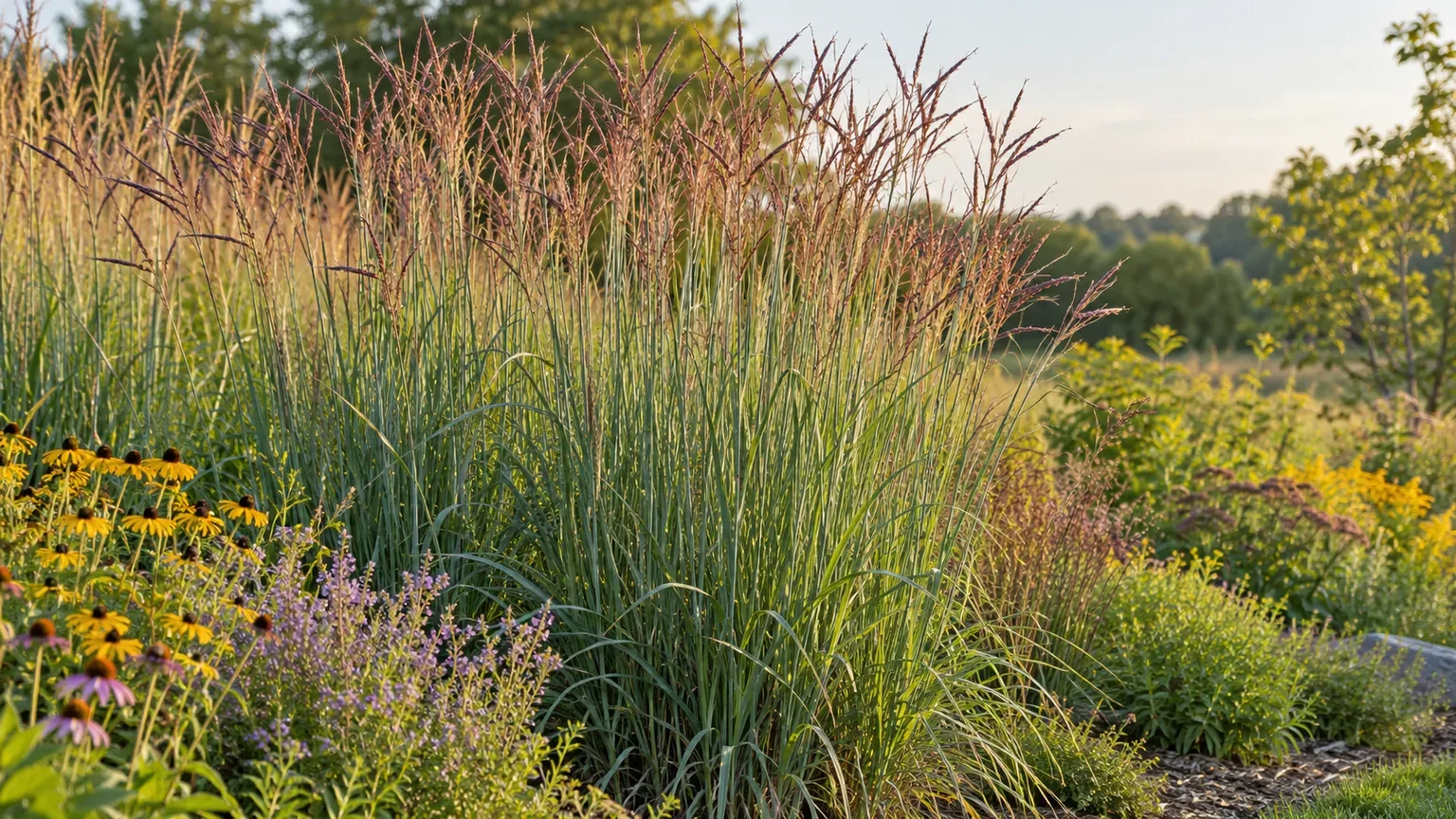
Big bluestem (Andropogon gerardii) is a tall, warm-season native grass for a sunny bed with average to moist clay. Its upright blue-green foliage and reddish flower stalks bring height and winter structure, but rich, moist soil can make it grow tall enough to lean. Give the clump room and place it behind shorter perennials.
-
Black-eyed Susan (Rudbeckia hirta) is a long-blooming, adaptable flower for average clay that drains between rains. It is often a short-lived perennial or biennial rather than a permanent clump, so allow a little self-seeding if you want it to return. Remove spent stems if you prefer fewer seedlings.
-
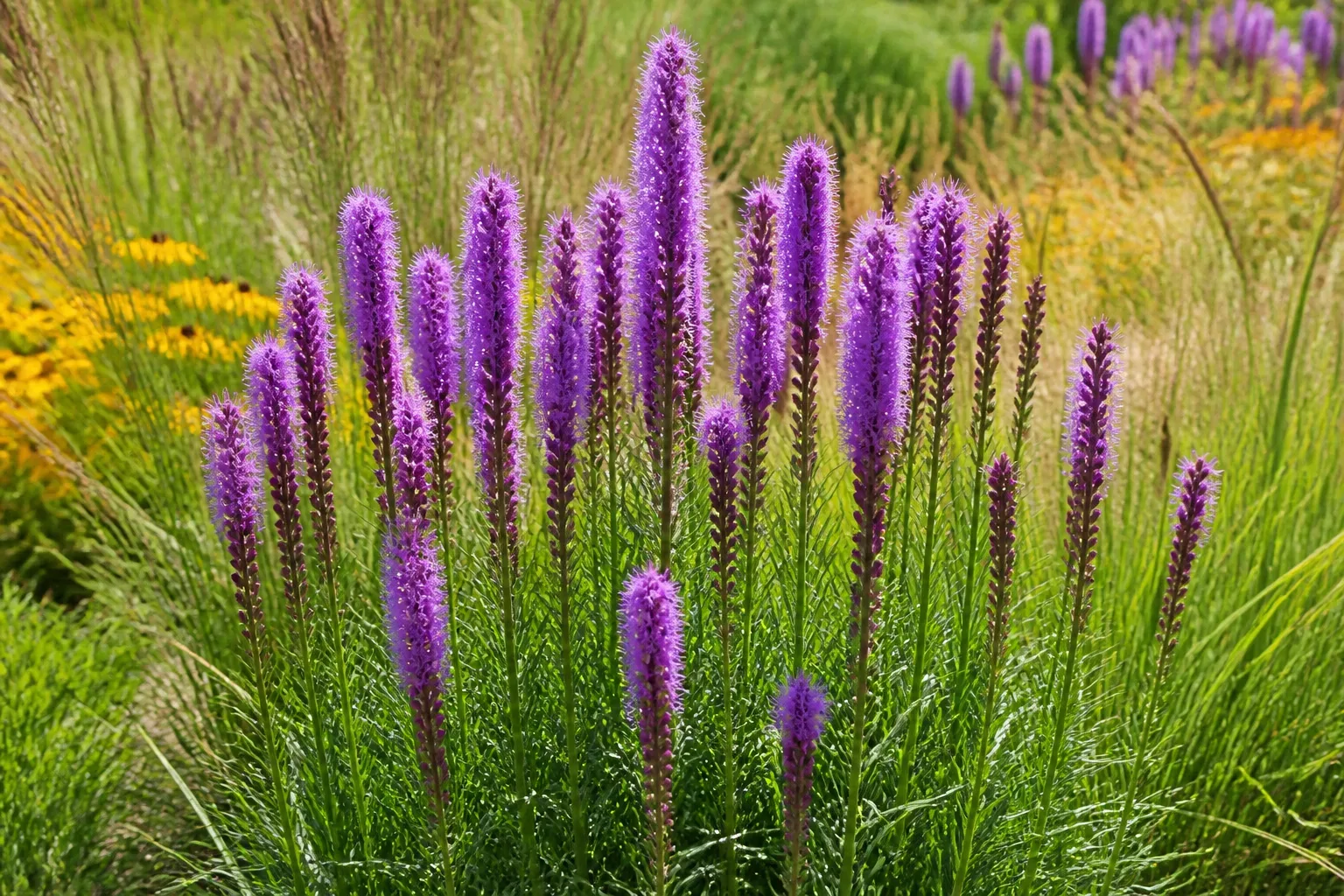
Dense blazing star (Liatris spicata) makes vertical purple or white flower spikes and is a strong choice for sunny, moderately moist clay. It tolerates clay, but its corms should not sit in stagnant winter water. Use it in a bed that holds summer moisture yet drains after a storm.
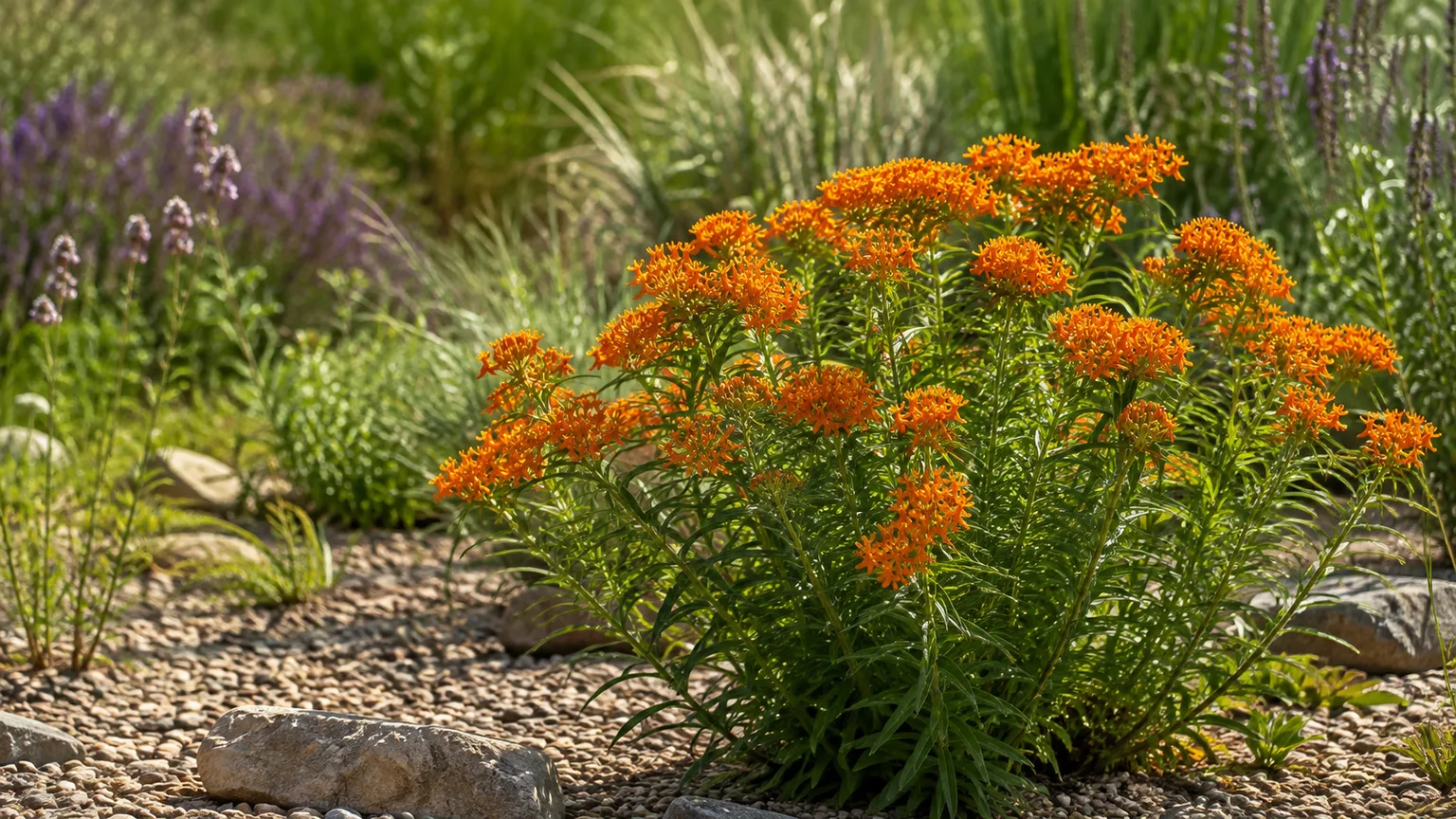
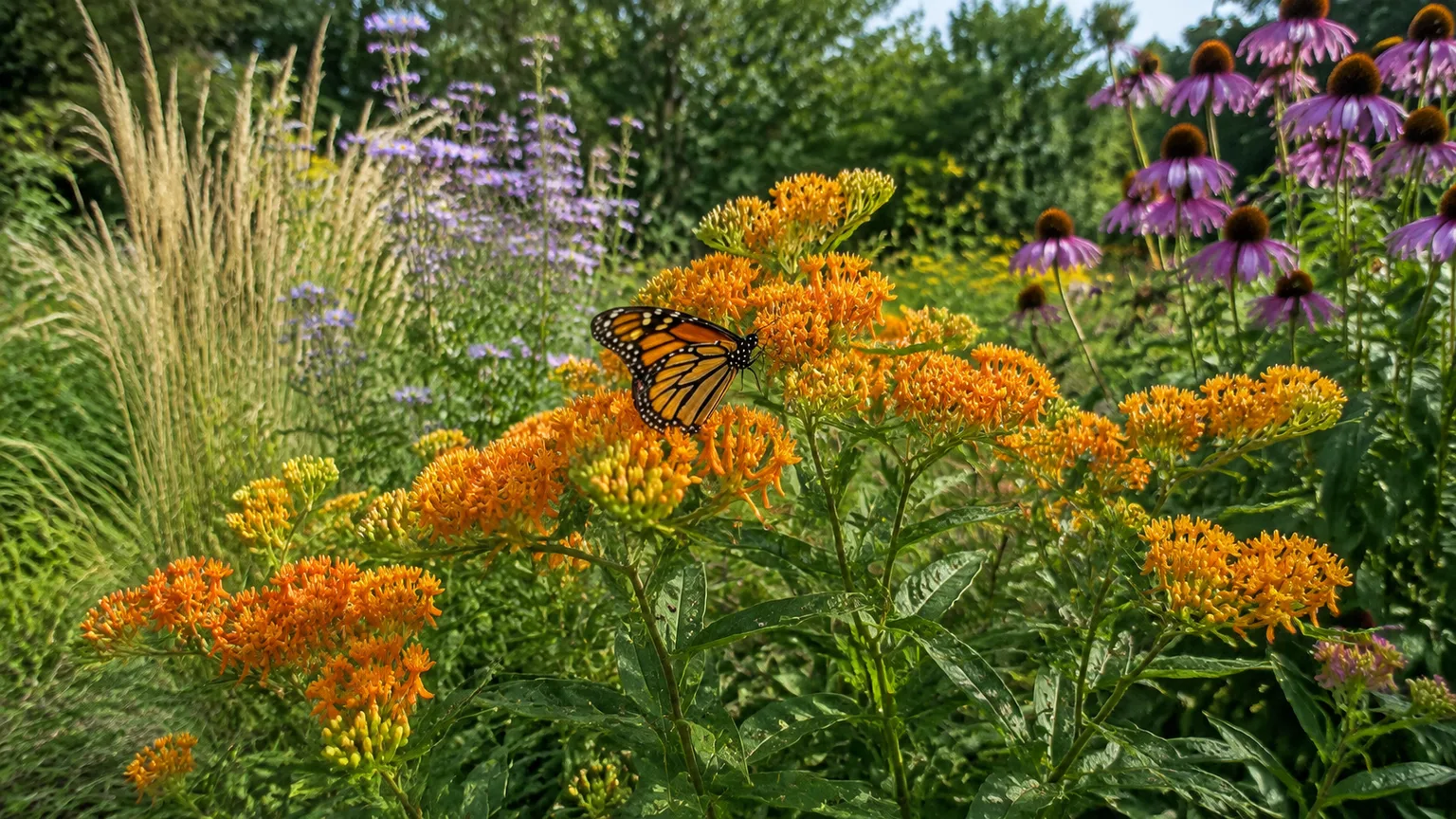
- Butterfly weed (Asclepias tuberosa) is a drought-tolerant native for a sunny, higher part of a clay garden, not a waterlogged basin. Its deep taproot helps an established plant cope with dry spells, but that same root makes transplanting difficult. Choose its site carefully and avoid repeatedly disturbing it.
-
Canadian wild rye (Elymus canadensis) is a cool-season grass that establishes quickly in a range of soils, including clay. Its arching seed heads soften a naturalistic border and can help cover bare ground while slower perennials mature. It may be shorter-lived than a permanent ornamental clump, so let it reseed selectively or remove seedlings where they are unwanted.
-
Compass plant (Silphium laciniatum) suits a sunny, spacious prairie-style bed with deep soil and room for a substantial plant. Its coarse foliage and tall yellow flowers create a strong vertical accent, while a deep root helps it persist through dry periods after establishment. It is slow to settle in and dislikes being moved, so do not use it as a temporary filler.
-
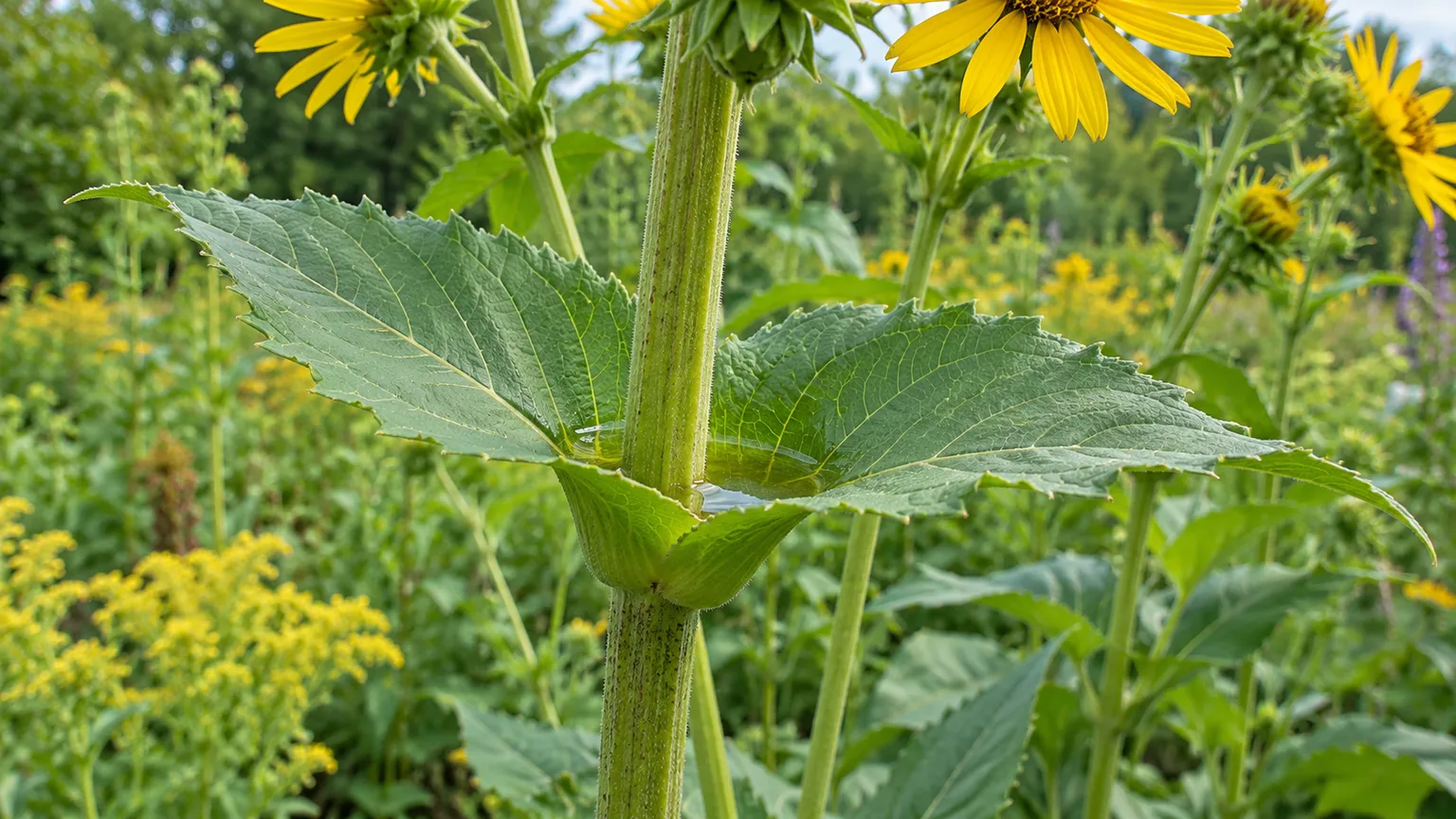
Cup plant (Silphium perfoliatum) is one of the better choices for a sunny area with consistently moist clay. Its paired leaves form little basins around the stem, and the tall yellow blooms attract insects and birds. It can spread into a large colony, however, so reserve it for a back border, naturalized area, or space where seedlings can be edited.
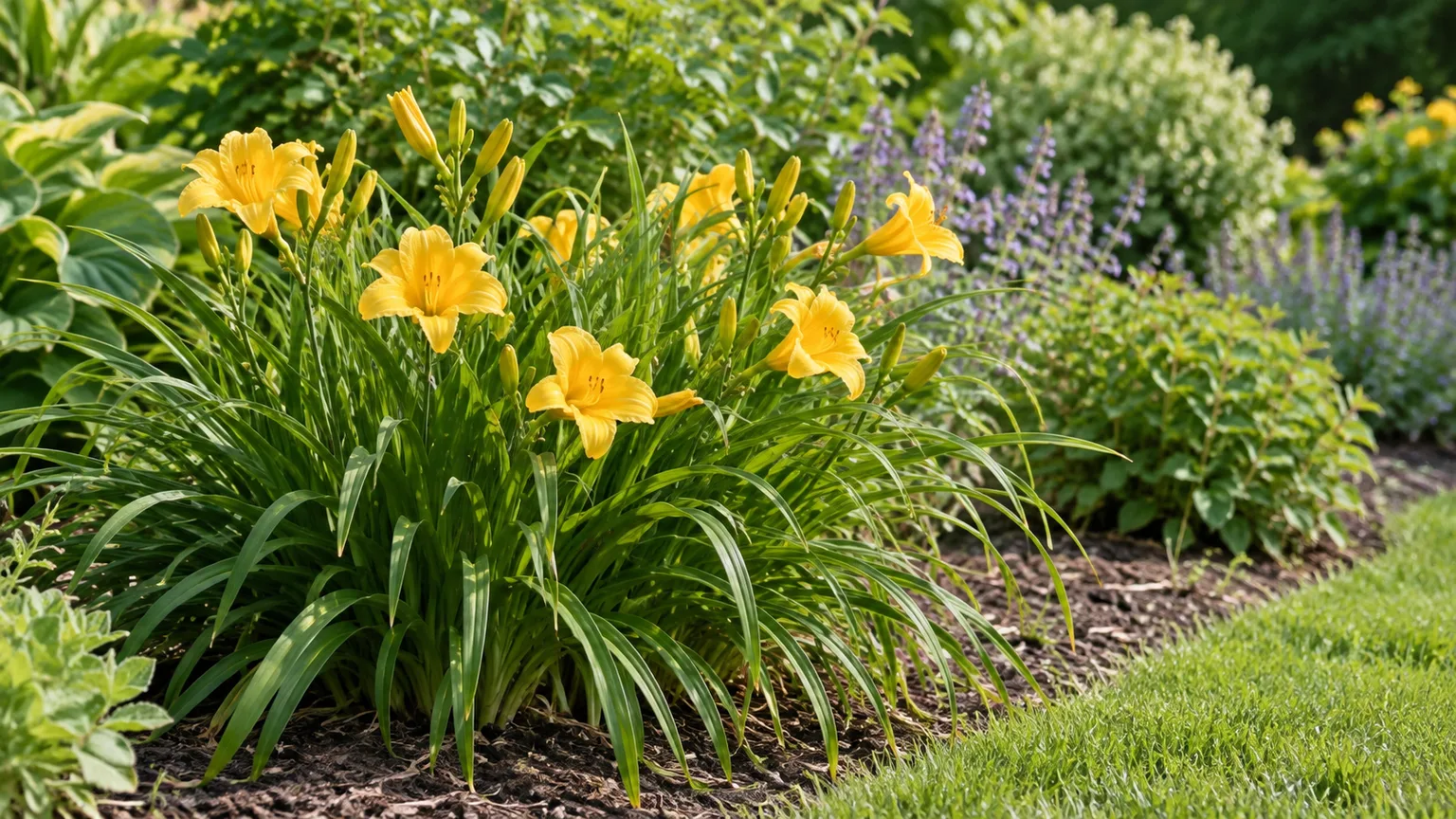
- Daylily (Hemerocallis hybrids) is forgiving of many garden soils and can grow in clay that remains evenly moist without staying saturated. Choose cultivars for your climate and the height you want; the flowers are short-lived individually, but a healthy clump usually carries many buds. Keep the crown near soil level rather than burying it deeply in heavy ground.
-
Drooping coneflower (Ratibida pinnata) is a prairie perennial with swept-back yellow petals, a tall central cone, and a strong fit for sunny, average clay. It can handle some dry weather after its roots are established, so it works better on a higher shoulder of the garden than in a puddled depression. Leave seed heads if you want wildlife interest into fall.
-
Canada goldenrod (Solidago canadensis) produces late-season yellow sprays that feed pollinators when many summer flowers are fading. It adapts to clay and spreads by underground stems, so plant it where a broad patch is welcome or select a more restrained goldenrod species or cultivar suited to your region. Goldenrod is insect-pollinated; it is commonly confused with ragweed, which is a different plant.
-
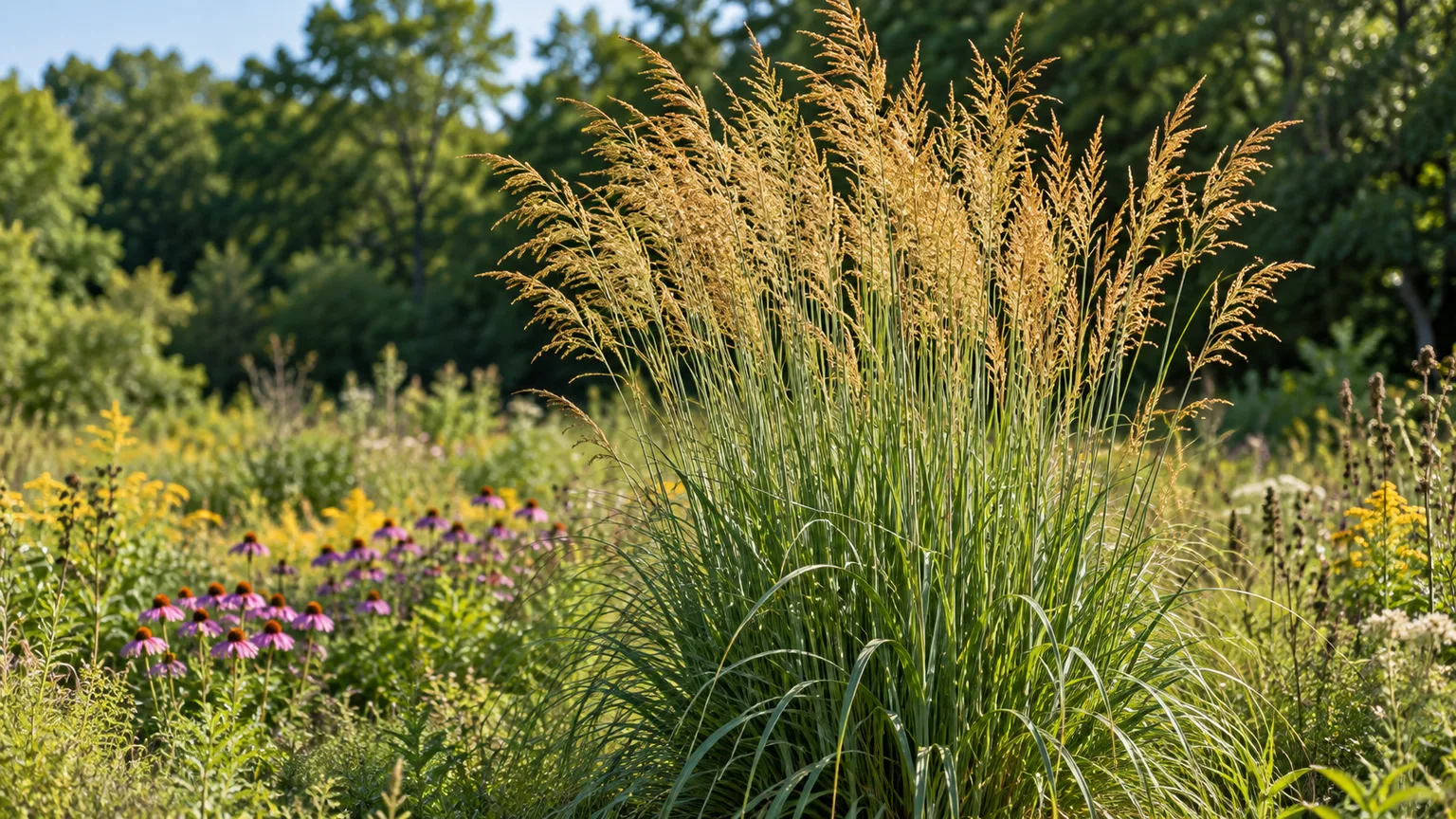
Indian grass (Sorghastrum nutans) is a tall, warm-season prairie grass that tolerates heavy clay and supports a naturalistic garden’s late-season texture. It is most reliable in full sun and can handle a range of moisture once established, but rich soil may produce a very large clump. Use it as a screen or back-of-border accent rather than crowding it among short flowers.
-
New York ironweed (Vernonia noveboracensis) is a good candidate for the sunny, consistently moist end of the clay spectrum. Its clusters of purple flowers rise high above sturdy foliage in late summer, making it useful at the back of a border or beside a rain garden. It grows vigorously in favorable conditions; give it room and cut back or divide only when the clump outgrows its place.
-
Prairie blazing star (Liatris pycnostachya) is a taller native liatris for open sun and clay that holds moisture during summer. The flowers open progressively down the spike, extending the display, and the plant can support pollinators. It is more tolerant of moist clay than many corm-forming perennials, but prolonged winter saturation remains a risk.
-
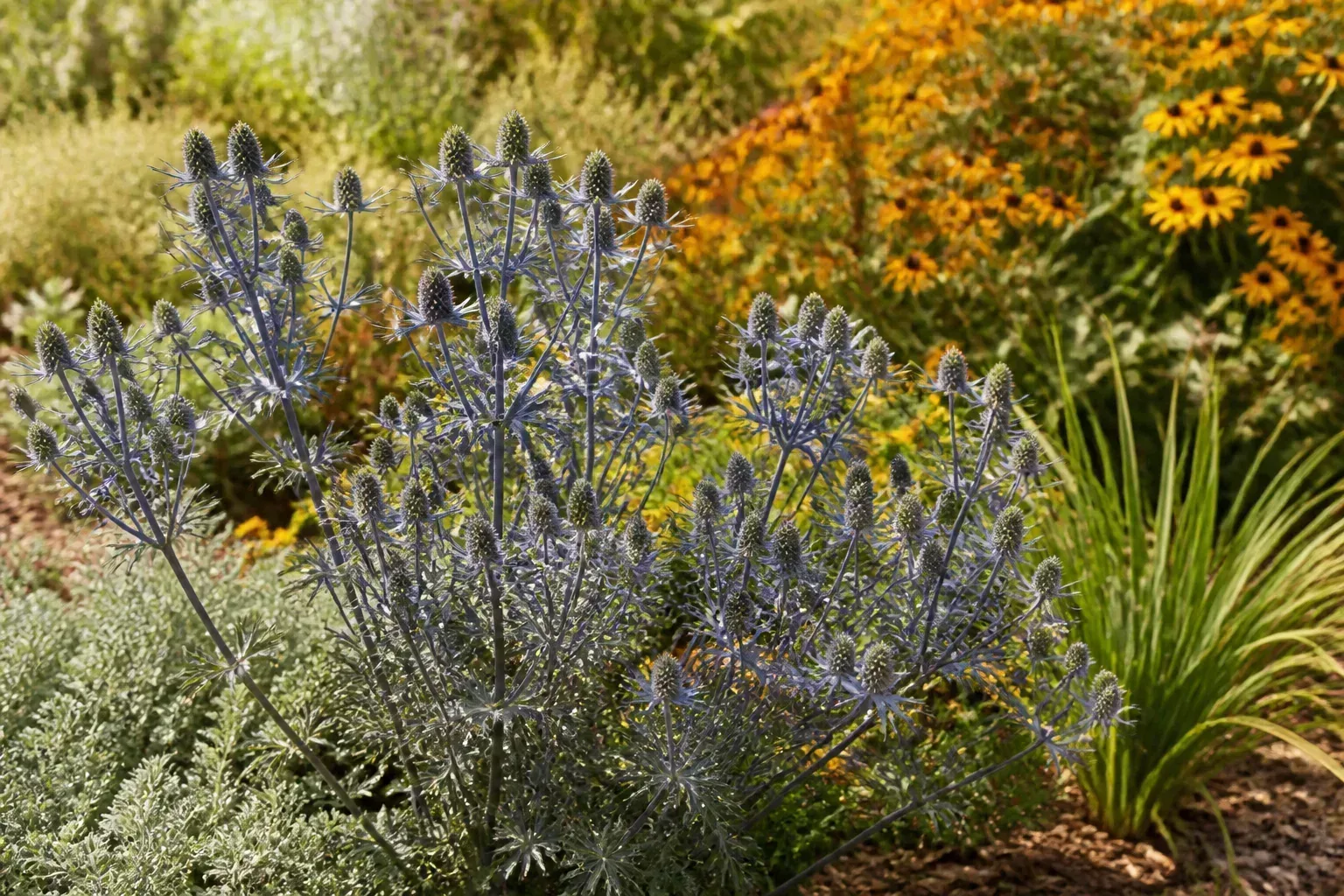
Rattlesnake master (Eryngium yuccifolium), sometimes called sea holly, has spiky foliage and rounded, pale green flower heads. It is a prairie plant that can grow in clay if the bed drains well; do not put it in a low, soggy pocket just because clay can hold moisture. The prickly leaves are part of its character, so site it away from narrow paths.
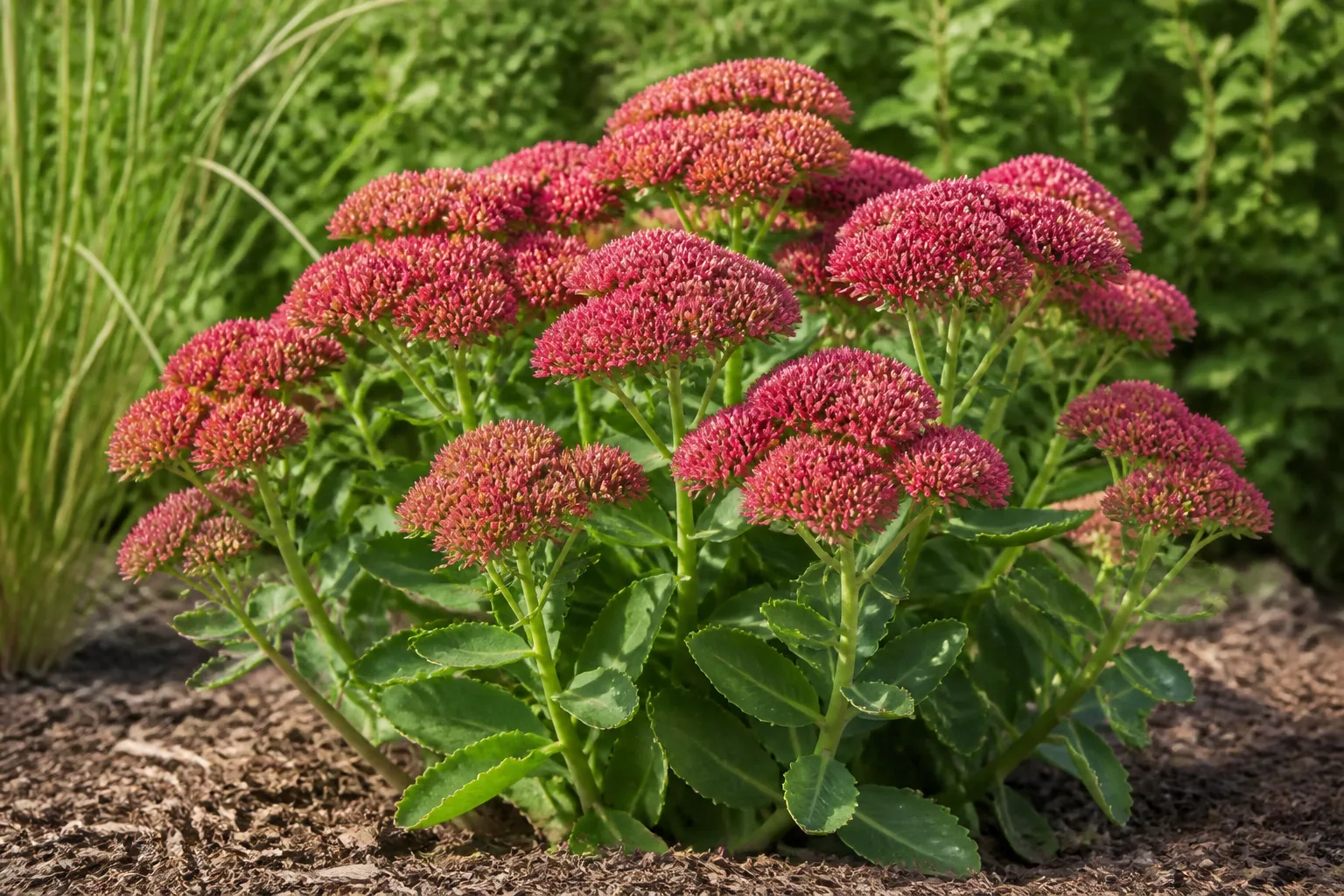
- Autumn Joy stonecrop (Hylotelephium ‘Herbstfreude’) handles average clay more successfully when the bed is not persistently wet. Its fleshy leaves and broad flower heads add late-summer color, but saturated winter soil can rot the crown. Plant it on a slightly raised shoulder, avoid overwatering once established, and divide an overcrowded clump when growth slows.
- Swamp sunflower (Helianthus angustifolius) is a better sunflower choice for a sunny, moist clay bed than a dry-site species. It produces a mass of yellow flowers late in the season and can reach beyond the scale of a small border. Rhizomes and seedlings can extend the patch, so give it room or use a physical boundary where a defined edge matters.
Plants for Sun to Part Shade
-
Arkansas blue star (Amsonia hubrichtii) tolerates average garden soil and fits a sunny or lightly shaded border where clay does not remain waterlogged. Its narrow leaves make a fine-textured mound, blue spring flowers add a short bloom period, and the foliage turns gold in fall. It looks best when it has room to mature rather than being clipped into a tight ball.
-
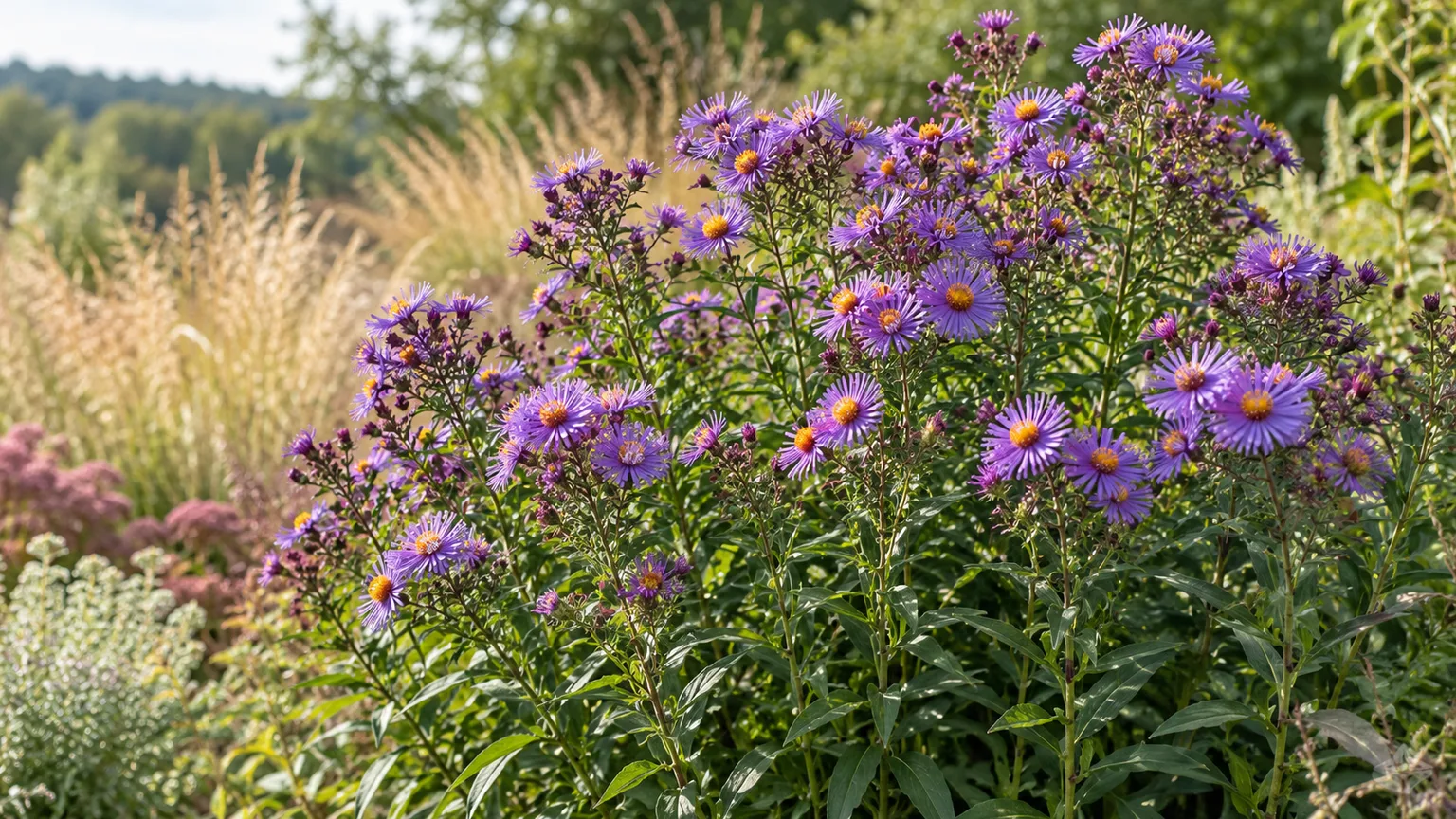
New England aster (Symphyotrichum novae-angliae) brings fall color to clay that stays moderately moist and receives sun or light shade. Its tall stems can need support in fertile soil, and crowded foliage is more prone to leaf disease. Space plants for airflow, and cut stems back if you want a shorter, denser clump.
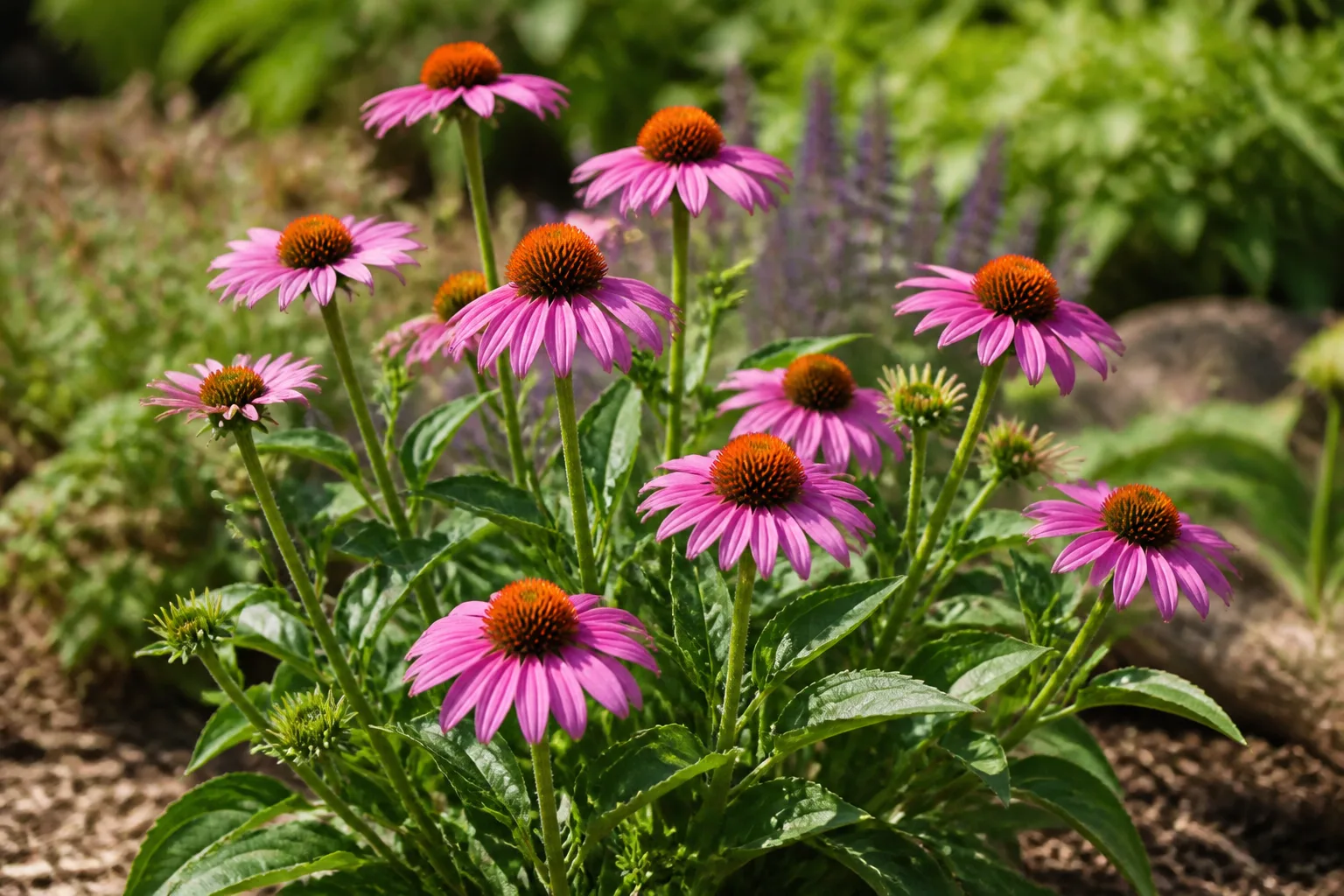
- Purple coneflower (Echinacea purpurea) is a resilient prairie flower for sun to part shade and clay with reasonable drainage. Established plants can tolerate summer dryness, while the seed heads feed birds if left standing. Many cultivars are available, but performance and hardiness differ; select a locally proven plant instead of assuming every color form behaves like the straight species. 5
-
Maiden grass (Miscanthus sinensis) offers tall, arching leaves and plume-like flower heads for a sunny or lightly shaded border. It grows in clay, but the species can spread by seed and is invasive or discouraged in some regions. Check local invasive-plant guidance before buying; where it is unsuitable, choose a native grass such as switchgrass or big bluestem instead.
-
Fountain grass (Pennisetum alopecuroides) forms rounded clumps with soft, bottle-brush flower heads and can grow in clay that is not chronically waterlogged. Winter hardiness and spread vary by species and cultivar, so check both the label and regional guidance before planting. Use it as a focal clump, not a filler that will be difficult to remove later.
-
Sweet flag (Acorus gramineus) is a low, grasslike foliage plant for a damp edge or part-shade bed where many flowering perennials struggle. It tolerates moist soil and spreads gradually by rhizomes; keep it contained if you want a clean border edge. It is useful for foliage texture, but it will not solve a site that floods deeply for long periods.
-
Switchgrass (Panicum virgatum) is among the most adaptable native grasses for clay, with cultivars suited to different heights and foliage colors. It can take a range of moisture conditions and brings airy seed heads, fall color, and winter structure. Check the mature dimensions before planting: a vigorous cultivar can overtake a narrow bed. RHS clay-plant recommendations include switchgrass cultivars, and gardening guidance also identifies it as a practical clay-tolerant grass. 3 5
-
Tickseed (Coreopsis species) gives a sunny to lightly shaded border bright flowers over a long season and can tolerate clay if water moves through the root zone. It is not a good choice for a low point that stays saturated in winter. Trim spent flowers to encourage a tidier display, while leaving some seed heads if birds are part of the planting goal.
-
Wild bergamot (Monarda fistulosa), often called wild bee balm, is a native pollinator plant for sun or part shade and average to dry clay. It spreads into a broad clump and may develop powdery mildew if crowded or shaded by taller plants. Give it airflow and divide it when the center becomes thin; use it where the spread is welcome rather than against a tight path.
The RHS and regional gardening references include many familiar clay-capable perennials and grasses, but regional climate, species, and cultivars change the result. For example, the RHS clay list includes Amsonia, Rudbeckia, Solidago, asters, and Panicum; practical clay-perennial guidance also highlights ironweed, coneflower, and sedum. Treat that overlap as a shortlist to compare with your own site, not as evidence that every plant likes every clay condition. 3 5
Match the Plant to the Moisture Pattern
A useful way to narrow the list is to ask how the bed behaves in the wettest and driest parts of the year. A garden may be sticky in spring and cracked in August; both conditions can occur in one clay soil. Select plants for the season that challenges the root system most, not only for the day you shop.
For Beds That Stay Damp
If the root zone stays moist long after rain but is not deeply flooded, start with cup plant, New York ironweed, swamp sunflower, sweet flag, switchgrass, or daylilies. These tolerate more moisture than plants such as butterfly weed, rattlesnake master, or Autumn Joy stonecrop. Even then, separate a bed that drains slowly from one where water stands around crowns for days: few garden perennials tolerate prolonged waterlogging. 6
For a site that floods repeatedly, first identify where the water comes from and whether it has an outlet. A rain garden is designed for brief, planned water capture and infiltration, not permanent submersion. If the spot stays saturated, select species specifically adapted to that depth and duration of water, raise the planting area, or correct the drainage rather than hoping a generic clay-tolerant perennial will adapt.
For Clay That Drains Between Rains
When puddles disappear and the root zone is merely slow to dry, many more plants become possible. Black-eyed Susan, blazing star, daylily, prairie grasses, asters, coneflower, and bee balm can use the soil’s moisture reserve, provided compaction is limited and roots are not buried in a basin. Drought-adapted plants such as butterfly weed and rattlesnake master belong on the highest, best-drained part of this bed.
If the ground bakes hard in summer, water newly planted perennials slowly and deeply during establishment rather than giving them a quick daily sprinkle. Once roots reach surrounding soil, reduce irrigation according to rainfall and plant response. Clay may store water longer than sandy soil, so check moisture several inches down before watering again.
Planting in Clay Without Making a Bathtub
Planting technique matters because a well-intended, oversized hole can become a water-holding pocket. On clay, the goal is to make a generous root zone that connects smoothly with the surrounding ground, not to create a little container of fluffy soil surrounded by dense walls.
Wait for Workable Soil
Plant when the soil is moist enough to crumble but not so wet that it smears into a glossy ribbon when handled. Avoid digging after heavy rain or stepping on the bed while it is saturated. In cold or especially wet climates, spring planting can be safer for marginally hardy perennials because new roots have time to establish before the first winter; where autumn is mild and the ground drains well, fall planting may also work. Local planting windows matter more than one calendar date.
Before planting, remove persistent weeds and loosen the surface across the whole bed, not just the planting hole. If the site is severely compacted, break up the compacted layer without turning over wet soil or burying subsoil at the surface. Make a broad planting area so roots can grow outward rather than hitting a hard wall immediately.
Set the Root Ball at the Right Height
Dig a hole only as deep as the root ball and roughly two to three times as wide. Break up glazed or slick sides with a fork, and loosen the base without excavating a deep sump. Set the top of the root ball level with the surrounding grade for most plants; for crowns especially vulnerable to winter wetness, a modestly raised position can help, but exposed roots should not be left to dry.
Backfill primarily with the native soil you removed. A pocket filled with potting mix or rich compost may hold water differently from the clay around it, leaving roots confined to the hole. Water thoroughly to settle the soil, then spread mulch in a thin, even layer while keeping it away from stems and crowns. For the first growing season, water when the root zone begins to dry, not according to a rigid daily schedule.
Improve Clay Gradually
Organic matter improves soil structure over time by helping fine particles form aggregates and creating more favorable pathways for air and water. NC State Extension recommends consistent organic matter and reduced compaction; it cautions that small amounts of sand can worsen clay structure and peat can increase an already high water-holding capacity. 1 Spread finished compost or another mature organic mulch across the surface, and let soil organisms work it in rather than repeatedly tilling the bed.
If planting a new bed, mix organic material across a broad area according to a soil test and local extension guidance, rather than adding a rich, isolated pocket to each hole. Retest soil pH before adding lime or other amendments: texture alone does not tell you whether the soil is acidic or alkaline. If drainage is the real problem, a raised bed, corrected grading, or a suitable drainage outlet may help more than changing the soil texture. RHS guidance likewise favors organic matter and practical bed design over trying to dilute a large volume of clay with sand or grit. 4
Common Clay-Soil Planting Mistakes
- Treating clay as a synonym for flooded: Check where water stays before planting; soil texture and drainage are related but not interchangeable.
- Putting a dry-site plant in the lowest spot: Butterfly weed, rattlesnake master, and stonecrop need a better-drained position even though they can tolerate clay.
- Planting into wet soil: Digging or walking on saturated ground squeezes pore spaces and creates compaction that can persist.
- Making a deep, amended hole: This can collect water and keep roots in a small pocket; connect the hole to the surrounding soil instead.
- Adding sand or peat as a quick fix: Small additions may worsen structure or water retention; use organic matter gradually and avoid traffic.
- Ignoring a plant’s eventual spread: Cup plant, goldenrod, grasses, and bee balm can outgrow a small bed. Check the species and cultivar, and review local invasive-plant advice for ornamental grasses.
- Watering by habit: Heavy soil can remain moist below a dry-looking surface. Check the root zone before watering again.
Conclusion
Clay soil can support a vivid, long-lived garden when plant choice follows both the light and the bed’s moisture pattern. Use cup plant, ironweed, swamp sunflower, sweet flag, or switchgrass for consistently moist areas; reserve butterfly weed, rattlesnake master, and Autumn Joy for a spot that drains between rains. A broad range of prairie flowers, grasses, daylilies, asters, and coneflowers can fill the middle ground.
Before planting, watch the site after rain, wait until the soil is workable, and place each root ball without creating a water-catching hole. Build structure slowly with organic matter and protect the bed from compaction. That approach lets clay’s moisture and nutrient reserves work for the garden while reducing the conditions that cause poor root growth.