Powdery Mildew on Houseplants: Signs and Treatment
Powdery mildew is one of the easier indoor plant diseases to recognize because it sits on the leaf surface like white dust or flour. It usually begins as small spots, then spreads into a broader coating that dulls leaves and slows growth. Susceptible houseplants include African violets, begonias, ivy, jade, kalanchoe, poinsettia, and rosemary. The main job is to confirm that the white coating is living mildew rather than hard-water residue, dust, or mealybug wax. Mildew spreads across leaf surfaces and often returns after wiping if conditions stay favorable. Residue or mineral spots do not behave that way.
Powdery Mildew on Houseplants
Still unsure?Match your symptoms to the most likely problems in under a minute.Run diagnosis →Understand and fix powdery mildew
Powdery mildew is one of the easier indoor plant diseases to recognize because it sits on the leaf surface like white dust or flour. It usually begins as small spots, then spreads into a broader coating that dulls leaves and slows growth. Susceptible houseplants include African violets, begonias, ivy, jade, kalanchoe, poinsettia, and rosemary. The main job is to confirm that the white coating is living mildew rather than hard-water residue, dust, or mealybug wax. Mildew spreads across leaf surfaces and often returns after wiping if conditions stay favorable. Residue or mineral spots do not behave that way.
Overview
Powdery mildew is one of the easier indoor plant diseases to recognize because it sits on the leaf surface like white dust or flour. It usually begins as small spots, then spreads into a broader coating that dulls leaves and slows growth. Susceptible houseplants include African violets, begonias, ivy, jade, kalanchoe, poinsettia, and rosemary.
The main job is to confirm that the white coating is living mildew rather than hard-water residue, dust, or mealybug wax. Mildew spreads across leaf surfaces and often returns after wiping if conditions stay favorable. Residue or mineral spots do not behave that way.
How to identify it
- White powdery patches form on leaf surfaces, stems, buds, or petioles.
- Small spots often enlarge and merge into a wider dusty coating.
- New growth may twist, stunt, or fail to open cleanly in heavier cases.
- The coating rubs off somewhat, but it often returns if conditions stay favorable.
- Nearby susceptible plants may begin showing similar white patches.
When to worry
Escalate fast when powdery growth spreads onto new leaves or buds, covers much of the plant, or returns soon after cleanup. That usually means conditions are still favoring infection.
Common causes
Cool, humid, stagnant air
Powdery mildew spreads more easily where air is still and moisture lingers around foliage, especially in crowded indoor plant groupings.
Susceptible host plants
Some indoor species are simply more prone than others. Repeated outbreaks on violet, begonia, ivy, jade, kalanchoe, or rosemary are common clues.
Crowding and poor light penetration
Dense foliage slows drying and weakens leaves in the interior of the plant, giving the fungus easier access to soft new tissue.
Carryover from infected tissue
Leaving infected leaves in place allows spores to keep moving around the same plant and onto nearby hosts.
Step-by-step fix
Isolate the plant first
Move the plant away from nearby susceptible houseplants so spores are not shaken or brushed across the collection during cleanup.
Remove the heaviest infection
Clip off badly coated leaves or stems with clean scissors and discard them in the trash. Do not leave infected debris on the soil surface.
Improve air movement and spacing
Open the canopy, separate crowded plants, and use gentle airflow so leaves do not stay in a stale humid pocket.
Water the soil, not the foliage
Avoid overhead watering and unnecessary misting while the plant recovers. Wet foliage and tight spacing make repeat outbreaks more likely.
Use a labeled houseplant fungicide when spread continues
If fresh growth keeps coating over, use a product labeled for houseplants and powdery mildew exactly as directed. Recheck the label before spraying fuzzy-leaved or sensitive plants.
Judge success by clean new growth
Existing scarred leaves rarely return to normal. The real improvement sign is that new leaves emerge without fresh powdery patches.
Prevention tips
- Keep susceptible plants spaced so air can move around the foliage.
- Water at the soil line and avoid frequent leaf wetting indoors.
- Remove infected leaves promptly instead of waiting for them to collapse.
- Quarantine new or returning plants before mixing them into the main collection.
Common mistakes
- Assuming any white residue must be mildew without checking for dust, minerals, or mealybugs.
- Wiping leaves once and ignoring the room conditions that allowed the outbreak.
- Spraying sensitive foliage without checking whether the label allows indoor ornamental use.
Start with the edge of the white mark. Household dust usually forms an even film; dried mineral deposits tend to preserve the outline of a droplet. Powdery mildew more often begins as separate circular or irregular colonies with fine, fuzzy margins. Over time those colonies expand, merge, or appear on young leaves, stems, buds, and flowers.
Do not reach for a spray on the strength of color alone. First confirm that the mark behaves like a living colony, separate the plant from likely hosts, and record the extent of the problem. Then match the response to severity: a few spots may need selective pruning and environmental correction, while continuing spread may justify a fungicide whose label permits the plant and indoor use site. Damaged tissue will not become perfect again; clean new growth and no expanding colonies are the useful measures of control.
Research Basis and Safety Scope
This guide synthesizes current guidance from university Extension programs and the University of California Integrated Pest Management program. Those sources agree on the core biology and control sequence, but a page cannot identify the exact powdery mildew species, judge a particular plant’s spray sensitivity, or replace the directions on a pesticide label. Where symptoms are atypical, the plant is valuable, or treatment fails despite correct use, send clear photographs or a sample to a local Extension diagnostic service or plant pathology laboratory.
Product names and legal uses change by jurisdiction. An active ingredient that controls powdery mildew on one ornamental or in a greenhouse may not be permitted on another plant or inside a home. Treat the label as the controlling instruction for the use site, dose, protective equipment, ventilation, application interval, and reentry—not as fine print to reconcile after spraying.
How to Identify Powdery Mildew on Houseplants
Powdery mildew is not one fungus that attacks every plant. The name describes diseases caused by many related fungi, and those pathogens are often restricted to particular host groups. University of Wisconsin–Madison Extension notes that the fungus infecting one kind of plant may differ from the one infecting another, even when both diseases look similar (host-specific powdery mildews).
The visible powder is made of fungal growth and masses of spores on the plant surface. The fungus remains largely superficial but sends feeding structures called haustoria into epidermal cells to obtain nutrients, a growth pattern described by UC Integrated Pest Management. This surface-growing habit explains why the disease looks sprinkled onto the leaf but is not permanently removed by one wipe.
Indoor cases are documented on African violets, begonias, ivy, jade plants, and Kalanchoe, among other susceptible ornamentals. Purdue’s Plant and Pest Diagnostic Laboratory describes infections on leaves, stems, buds, and flowers, with most indoor symptoms appearing on foliage and blooms (powdery mildew on houseplants). The exact appearance still varies with the host, disease stage, leaf texture, and lighting.
The Visual Signs, From First Spot to Severe Infection
The classic first sign is one or more discrete, roughly circular white patches. They may appear faint and cobwebby at the edges, then thicken into a chalky or talcum-like coating. As colonies enlarge, separate spots merge until much of the upper leaf looks dull white or gray.
Do not inspect only the obvious face of the leaf. Powdery growth can occur on upper and lower surfaces, young stems, petioles, buds, and flowers. Colorado State University Extension records distortion, yellowing, premature leaf fall, and buds that fail to open when disease becomes more severe (powdery mildew symptoms).
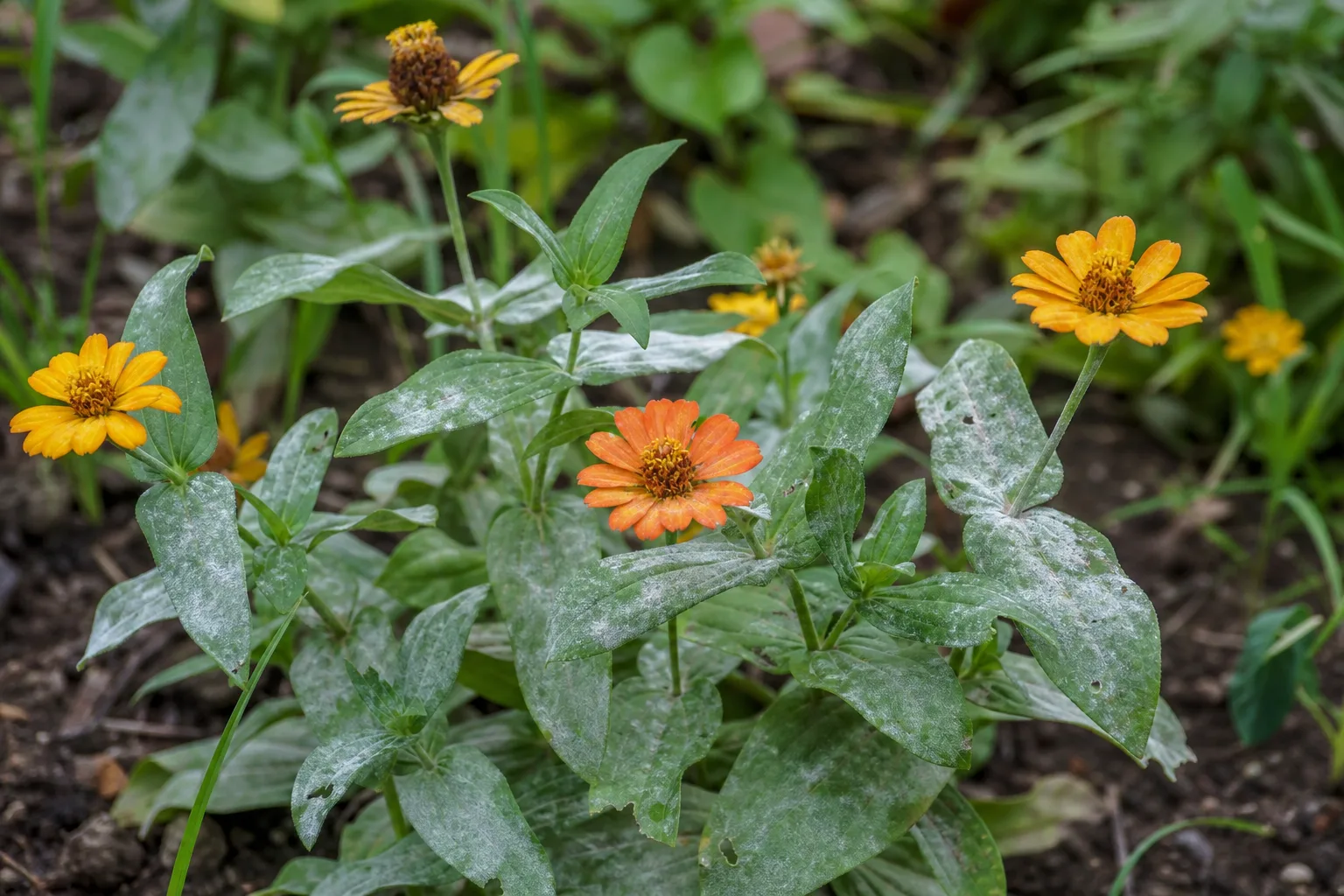
Zinnia shows the classic powdery surface colony clearly. Use it as a pattern reference, not a promise that every houseplant will develop the same color, density, or leaf response.
A dense coating reduces the useful green area of the leaf and draws resources from living cells. Susceptible young tissue may become curled, stunted, or misshapen, while heavily affected leaves can brown and die. A plant with a few superficial spots is in a different condition from one whose growing points and most mature leaves are coated.
Not every host produces a textbook white mat. Penn State Extension notes that Kalanchoe may develop dry, corky, scab-like areas with little obvious fungal growth (atypical Kalanchoe symptoms). If a valued plant repeatedly develops unexplained scabs or distortion, a local Extension diagnostic service or plant pathology laboratory can be more reliable than matching it to an online photograph.
A Simple Wipe-and-Inspect Check
First, move the plant into bright neutral light without carrying it past or through other foliage. Look at both sides of several leaves with a hand lens if you have one. A powdery mildew colony usually has an irregular biological pattern—fine threads, fuzzy margins, denser centers, or repeated circular patches—rather than the even film left by dust.
Next, touch the edge of one patch with a damp white cotton swab. Some of the powder may transfer, but an established colony often leaves a dull, discolored, or scarred area and later grows back. Dust or dried mineral residue tends to follow exposed surfaces, window-facing leaves, or old water-drop outlines and does not independently expand into fresh tissue.
Inspect again after several days, taking a close photograph from the same angle. A widening margin, new colonies, or similar marks on nearby young leaves supports an active disease diagnosis. One stationary mark that disappears after cleaning points more strongly to residue, but the wipe test alone is not definitive.
Use restraint while testing. Repeatedly rubbing fuzzy, waxy, thin, or succulent leaves can damage their protective surface and create scars that confuse the diagnosis. Test a small area, document what you see, and let changes over time provide additional evidence.
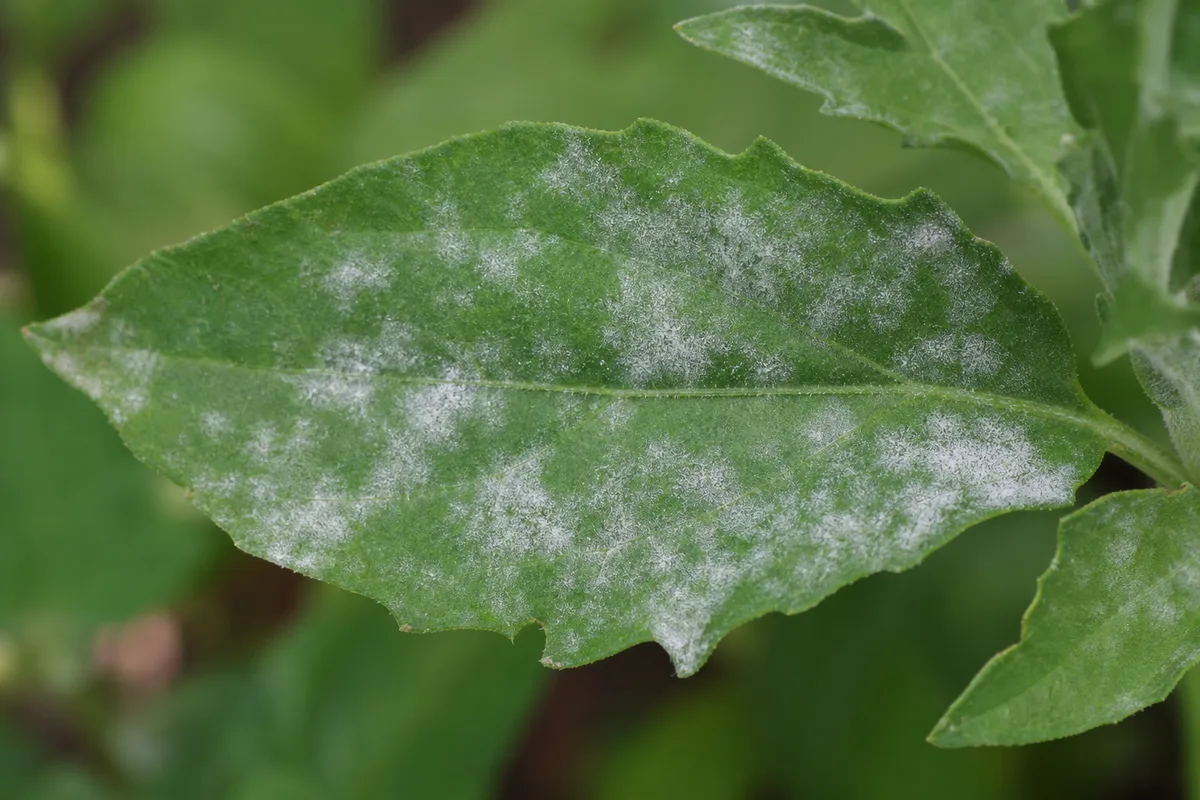
The macro image shows the granular, threadlike texture of an established colony on zinnia. Smooth, fuzzy, waxy, or succulent houseplant leaves can display the disease differently.
Problems Commonly Confused With Powdery Mildew
White deposits on a houseplant can be biological, mineral, or simply environmental debris. Mealybugs produce cottony wax in leaf axils and along veins, but close inspection reveals individual oval insects and separate tufts rather than a flat, spreading fungal colony. Spider mites may create fine silk, yet their characteristic injury is pale stippling and their tiny moving bodies can often be dislodged over white paper.
Hard-water spots have clearer droplet edges and often concentrate where mist or irrigation water dried. Potting-mix dust and renovation dust settle broadly and wipe away without leaving a living margin. Natural wax, variegation, and dense leaf hairs are part of the plant itself and repeat in a consistent pattern across healthy leaves.
| Evidence | Powdery mildew | Mealybugs or spider mites | Dust or mineral residue |
|---|---|---|---|
| Pattern | Expanding circular patches that may merge | Localized insects, cottony clusters, silk, or stippling | Even film or dried droplet outlines |
| Close view | Fine fungal threads and granular powder | Visible bodies, eggs, wax, or moving specks | Inert particles or crust |
| After wiping | May partly lift but returns or leaves affected tissue | Pests remain in protected crevices | Usually stays gone unless redeposited |
| New symptoms | Fresh powdery colonies, distortion, yellowing | New feeding damage or honeydew | No independent spread through tissue |
Diagnosis matters because the treatments are different. An insecticide will not control a fungal colony, and a fungicide will not remove mealybugs. When the evidence remains ambiguous, isolate and observe rather than layering several products onto a stressed plant.
Powdery Mildew vs Downy Mildew and Gray Mold
Despite the similar names, powdery mildew and downy mildew have different biology. Powdery mildew typically forms flour-like growth on the upper surface, though it can occur elsewhere. Downy mildew more often creates pale or yellow areas above and fluffy gray, bluish, or purple growth beneath the corresponding part of a leaf; Penn State explains that downy mildews are oomycetes, not true fungi (powdery and downy mildew differences).
Gray mold, commonly associated with Botrytis, is more likely to colonize senescent flowers, wounded tissue, or soft water-soaked areas and develop fuzzy gray-brown growth. Powdery mildew usually begins on otherwise intact living surfaces as dry-looking white patches. Both can be encouraged by a crowded, stagnant canopy, so visual location and tissue condition are as important as color.
Why Powdery Mildew Appears Indoors
Disease requires a susceptible host, a viable pathogen, and conditions that allow infection. Bringing a plant indoors does not remove any side of that triangle. A susceptible begonia near a stagnant cool window can provide a suitable host and environment, while spores may arrive on infected plants or material and then move on air currents.
Powdery mildew is sometimes described as an “overwatering disease,” but that shortcut is inaccurate. Saturated potting mix can weaken roots and raise local humidity, yet the powdery mildew fungi live and reproduce on above-ground surfaces. Watering frequency alone neither confirms the diagnosis nor identifies the correct treatment.
Unlike many leaf pathogens, most powdery mildews do not require a persistent film of water on a leaf to germinate. Colorado State reports that disease is common where air circulation is poor and conditions are shaded and humid, while wet leaf surfaces can inhibit infection for many powdery mildew fungi. The useful conclusion is not to mist an infected houseplant: it is to manage the entire leaf environment rather than equating “fungus” with constantly wet foliage.
How Spores Spread Through a Plant Collection
The dusty white colonies produce spores that can be moved by air currents. Penn State describes spores germinating on the leaf surface and, under favorable greenhouse conditions, producing another generation of spores in as little as 48 hours. Indoor timing varies, but this potential speed makes early containment worthwhile.
Handling can add another pathway. Brushing an infected leaf, trimming it, and then moving the plant through a tightly packed shelf can disturb spores. Shared tools, hands, trays, and fans may also redistribute contaminated debris, even though air movement is useful once plants are spaced and the source plant is contained.
Host specificity adds useful nuance. The mildew on one plant species may be unable to infect a botanically unrelated neighbor, but you cannot safely identify the pathogen species from a white patch alone. Closely related plants may share susceptibility, and the same room conditions can allow different powdery mildew fungi to appear on different hosts.
Treat the immediate collection as exposed, not automatically infected. Inspect plants that touched the affected one, shared its shelf, or arrived in the same recent purchase. Spraying every plant without evidence may cause needless leaf injury and household pesticide exposure.
Conditions That Turn Exposure Into Disease
Powdery mildew often prospers where nights are humid and days are drier. High relative humidity supports spore formation, while lower daytime humidity favors dispersal. Colorado State reports that warm temperatures around 70–80°F (21–27°C), crowded foliage, shade, and weak circulation often create a favorable combination, while susceptibility still varies by host and pathogen (conditions favoring powdery mildew).
Purdue specifically identifies poor air circulation, low light, and temperatures near 70°F as favorable for indoor disease. A plant pressed against cold glass, surrounded by other foliage, or left damp and stagnant after routine misting can develop a humid boundary layer even when the room’s average humidity looks reasonable. The microclimate around the leaf matters more than a single reading across the room.
Young, succulent growth is often more vulnerable than mature tissue. Excess fertilizer, especially nitrogen beyond what the plant can use, can create soft growth without solving the environmental problem. Feed for healthy growth according to the species and product instructions; do not try to “push” an infected plant into recovery with extra fertilizer.
What to Do as Soon as You Confirm It
Act while the infection occupies a few leaves rather than waiting for a solid white canopy. Move the plant away from susceptible neighbors, photograph the extent of disease, and inspect its stems, growing points, buds, and leaf undersides. This baseline lets you distinguish old marks from continuing spread.
Prepare one treatment area that is easy to clean and does not double as a food-preparation surface. Gather a bag for prunings, clean shears, disposable or washable wipes, and the label for any product under consideration. Handle healthy plants first and the diseased plant last.
Do not apply several remedies at once. Combining oils, soaps, bicarbonates, sulfur, alcohol, or household detergents can increase leaf injury and makes it impossible to know what helped. Start with containment, selective sanitation, and environmental correction; escalate only when live disease continues.
Choose an Action Based on Severity
Severity is not just the percentage of leaves with white marks. Also consider whether the youngest growth is affected, whether colonies are expanding, how much healthy foliage would remain after pruning, and how much risk the plant creates for the rest of the collection.
| Evidence now | Working severity | Proportional next step |
|---|---|---|
| One or two small colonies; growing point and most foliage clean | Mild | Isolate, document, remove the worst tissue if the plant can spare it, correct the leaf environment, and inspect repeatedly |
| Several leaves affected; new spots appear after sanitation; useful foliage remains | Moderate | Continue containment and cultural correction; consider a label-permitted fungicide after checking plant sensitivity and indoor use |
| Most leaves, flowers, or growing points affected; new growth emerges diseased; treatment access is unsafe or impractical | Severe | Seek a diagnostic opinion if the plant is valuable; otherwise bag and discard it to protect the collection |
This table is a decision aid, not a diagnosis. A single colony on the growing point of a slow or rare plant can matter more than several removable spots on a vigorous vine. Conversely, staining left by an old colony does not make a plant “severe” when no active margin or new infection is present.
Isolate the Plant Without Spreading Spores
A separate room is the most practical form of isolation, provided that its light and temperature still suit the plant. If that is impossible, create the greatest workable distance, prevent leaf contact, and place the plant where it will not be brushed whenever someone passes. Do not aim a strong fan from the diseased plant toward the rest of the collection.
Move the plant once, slowly. Carrying it to several sinks, windows, and inspection stations can distribute spores and debris. If you must transport it, loosely contain the canopy in a clean bag for the journey without leaving the plant sealed afterward.
Check nearby plants before disturbing the infected canopy. Record any suspicious marks and inspect them again over the next several weeks. Isolation is a containment tool, not proof that a neighbor needs fungicide.
Wash your hands after handling the plant and clean shears before using them elsewhere. Wipe the shelf, saucer exterior, and nearby hard surfaces to remove fallen plant material and dust. Avoid soaking electrical lights, fans, porous furniture, or wall finishes during cleanup.
Prune Selectively, Then Clean the Area
Remove leaves or flowers that are heavily coated, dead, or impossible to treat. Cut into healthy tissue with clean shears, place each piece directly into a bag, and close it before crossing the room. Purdue recommends isolating the plant and removing infected parts at the first sign of indoor powdery mildew.
Do not automatically strip every marked leaf. A plant needs functioning foliage to recover, and aggressive defoliation can be more damaging than a small, contained colony. On a lightly infected plant, removing the worst two or three leaves while preserving clean growth is often more sensible than leaving a bare stem.
Discard diseased material with household waste according to local rules rather than placing it in a cool home compost pile. Colorado State warns that ordinary compost piles may not reach temperatures sufficient to kill surviving fungal material (infected-debris disposal). Clean tools after the job so contaminated fragments are not carried to the next plant.
Wiping can reduce visible growth on smooth, sturdy leaves, but it is not a complete cure. Use a soft damp cloth or swab and a fresh section for each leaf, working gently enough to avoid abrasions. Skip this step on fuzzy African violet leaves, tender flowers, waxy bloom, and foliage that marks easily.
A Practical Treatment Plan
The sequence is contain, reduce, correct, protect, and verify. Isolation and pruning lower the amount of active disease. Better spacing, appropriate light, and steadier air movement make the environment less favorable, while a labeled fungicide may protect remaining tissue when cultural steps are not enough.
No treatment can reconstruct cells that have yellowed, browned, or become distorted. Judge progress at the boundary between old and new tissue. A successful plan stops colonies from expanding and allows clean leaves or shoots to develop; it does not make yesterday’s damaged leaf look untouched.
Correct the Growing Conditions First
Give each pot enough space that leaves do not overlap neighboring canopies. Improve gentle air exchange around, not directly blasting through, the infected plant. A small circulation fan can help in a plant room, but point it so air mixes broadly and does not carry spores straight from the quarantine plant to clean foliage.
Provide the correct light for the species and rotate only if doing so does not bring infected foliage into contact with other plants. Prune dense growth selectively when the plant tolerates it. Avoid a crowded decorative cachepot arrangement during recovery, because tight spacing maintains humid, stagnant pockets.
Water the root zone according to the plant’s needs, empty standing drainage water, and stop routine misting. That advice does not mean every wet leaf causes powdery mildew; rather, misting is an unreliable humidity tool, can keep the canopy crowded with moisture, and may encourage other leaf diseases. Keep the potting mix appropriately moist, not chronically saturated or deliberately drought-stressed.
Environmental correction reduces future infection pressure but rarely erases a well-established colony by itself. Purdue notes that cultural control is often effective and preferable in the home, especially when action begins early. Continue inspecting while conditions improve so “better airflow” does not become a reason to overlook fresh patches.
When a Labeled Fungicide Is Worth Using
Consider a fungicide when new colonies continue after sanitation and environmental correction, when pruning would remove too much useful foliage, or when a valuable susceptible plant has a recurring disease history. The product must explicitly permit use on the plant or ornamental category and in the intended indoor location. “Controls powdery mildew” on the front label is not enough if the use site or plant is excluded.
Extension sources list active ingredients such as sulfur, neem oil, horticultural oils, and potassium bicarbonate among powdery mildew options, but availability and approved uses vary by jurisdiction and product. The University of Florida advises choosing a fungicide specifically labeled for the disease and following every instruction (label-directed fungicide use). The label determines rate, coverage, repeat interval, protective equipment, ventilation, reentry, and plant restrictions.
Many fungicides work best protectively or early in disease development. They may suppress new infection without cleaning an already white leaf. Complete label-permitted coverage matters because untreated leaf undersides, crowns, and new growth can remain vulnerable.
Spot-test the prepared product on a small, inconspicuous part of the plant and wait for the label-directed observation period before broad use. Oils and sulfur can injure sensitive foliage; UC IPM warns that repeated oil applications may burn leaves or flowers and that oil applied within two weeks of sulfur can injure plants (oil and sulfur precautions). Never combine products or shorten intervals unless the label explicitly permits it.
Avoid improvised baking-soda, dish-detergent, mouthwash, milk, alcohol, peroxide, or essential-oil recipes. Even when an ingredient has been studied in a specific formulation, a kitchen mixture lacks a tested dose and plant-safety label for your situation. A scorched houseplant may lose more healthy area from the treatment than it would have lost from a small mildew patch.
Repeat, Monitor, and Know When Treatment Worked
There is no universal spray interval for every plant and product. Follow the current label’s interval, maximum applications, and any instruction about alternating modes of action. More frequent treatment is not automatically more effective, especially on waxy, fuzzy, variegated, or tender foliage.
Before each permitted repeat, inspect the same leaves and several pieces of new growth. Photograph the plant in consistent light and note the date, product, disease area, and any browning that could be phytotoxicity. If colonies continue to expand despite correct use, stop guessing and seek diagnosis or product guidance from an Extension service.
Success means no new powdery patches, no expanding margins, and clean new growth over repeated checks. Old white residue, scars, yellowing, or distortion may persist after the fungus is suppressed. Remove an old leaf later when the plant has replaced its function, not merely because it looks imperfect.
Continue quarantine beyond the first clean inspection. A hidden colony or newly developed growth can reveal whether control was durable. Return the plant to the collection only after repeated checks show no active spread and the conditions in its permanent position have been corrected.
Recovery, Prevention, and When to Let a Plant Go
A lightly affected plant can recover when it retains a sound root system, viable growing points, and enough green leaf area. Maintain normal species-appropriate care rather than forcing growth with extra fertilizer. New leaves are the recovery record; existing mildew damage may remain until those leaves are naturally replaced.
Prevention begins with space, inspection, and appropriate placement. Examine both leaf surfaces before buying a plant, quarantine new arrivals, and avoid placing susceptible plants in dim, tightly packed corners. Clean dead leaves and spent flowers before they become sheltered debris around the canopy.
If a species or cultivar repeatedly develops disease in the same room, prevention may require changing either the plant or the location. Resistant or tolerant cultivars can reduce severity but do not guarantee immunity. A high-maintenance susceptible plant may simply be a poor match for a cool, dim, crowded windowsill.
Discarding is reasonable when most leaves and growing points are affected, the plant repeatedly produces diseased new growth, safe treatment access is poor, or the plant threatens a valuable collection. Purdue notes that severely infected houseplants may need to be discarded; healthy tissue may sometimes be used for propagation, but only if it is genuinely symptom-free and can be isolated.
Bag a discarded plant where it stands and close the bag before moving it. Clean the shelf, pot exterior, tools, and fallen debris, then keep inspecting exposed plants. Do not donate a symptomatic plant or assume placing it outdoors transfers the problem harmlessly.
Conclusion
Managing powdery mildew on houseplants begins with an accurate diagnosis. Look for expanding white or gray colonies, inspect both leaf surfaces and young growth, and separate fungal growth from dust, mineral spots, insects, downy mildew, and gray mold. When the pattern is atypical or keeps returning, professional diagnosis is more useful than stacking remedies.
Once confirmed, isolate the plant, remove heavily infected tissue, clean the work area, and correct crowded, dim, stagnant conditions. Use a fungicide only when the label covers the disease, plant, and indoor setting, then spot-test and follow every direction. Cultural changes lower disease pressure; label-directed treatment may protect remaining tissue; neither can reverse old scars.
Watch the plant’s new growth rather than demanding that damaged leaves become perfect. Continue when the plant has healthy tissue and disease is contained; discard it when recovery is unlikely or the collection risk is too high. The best outcome is not the most aggressive spray—it is a healthy plant, a safer room, and no expanding mildew.
Plants commonly affected
These houseplants often struggle with powdery mildew. Open a care guide or plant-specific troubleshooting page for tailored fixes.
 Medium
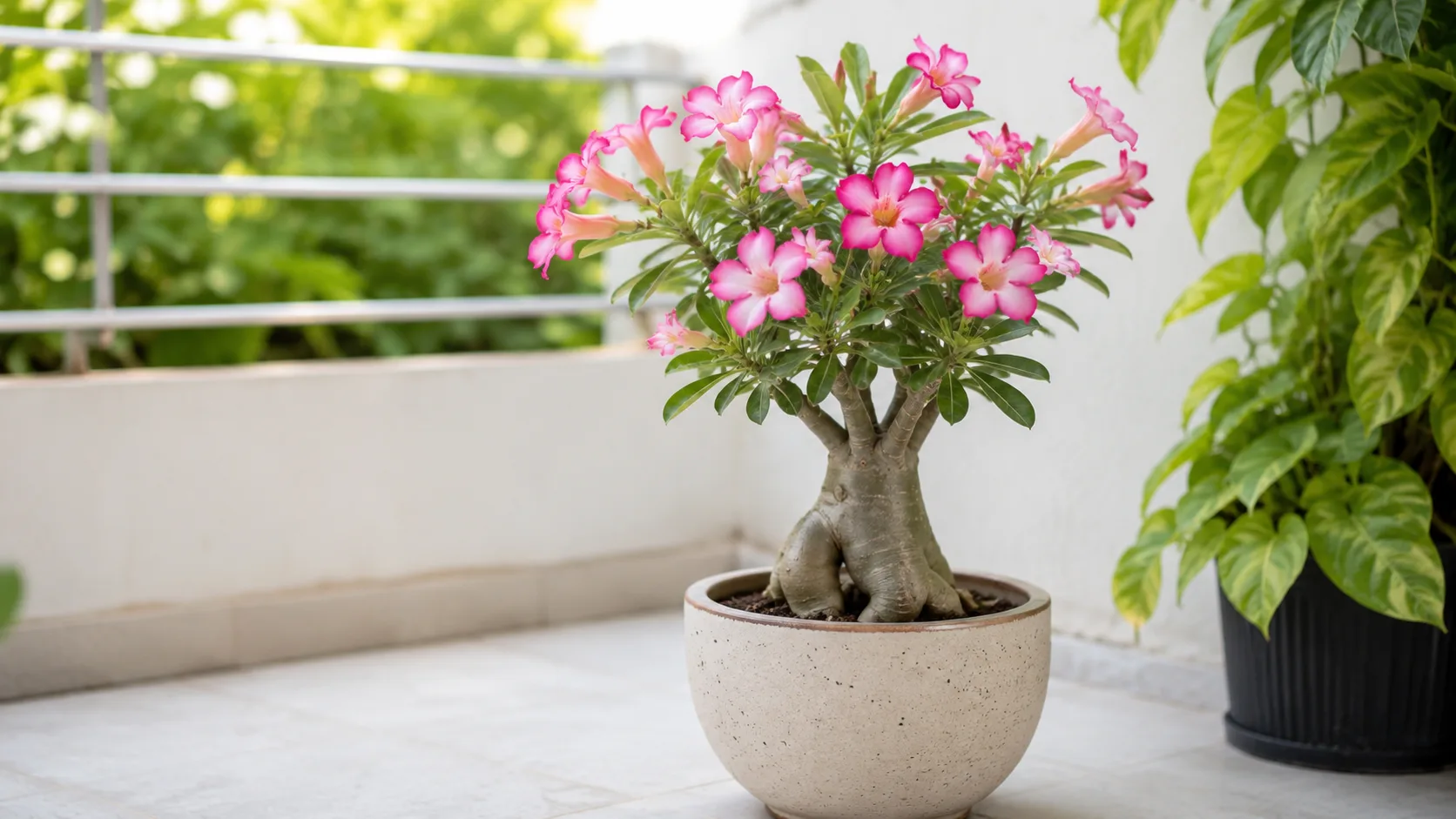
Adenium
Likely causeHumid stagnant conditions allow Oidiopsis/Leveillula mildew on crowded leaves and stems.
Quick fixIncrease airflow, keep foliage dry, remove affected leaves, and apply sulfur or neem if needed.
 Medium
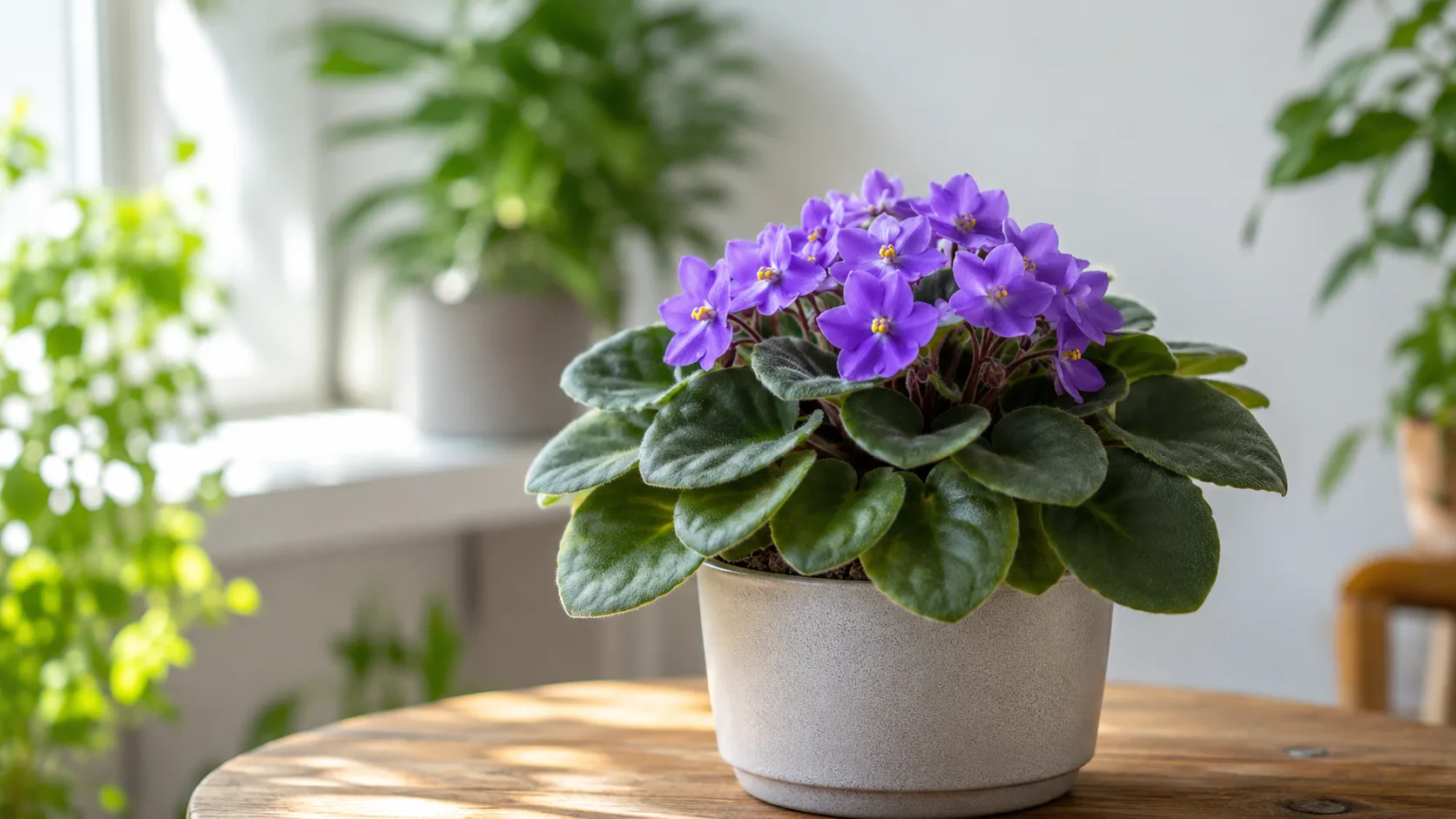
African Violet
Likely causePowdery Mildew on African Violet: African violets are some of the most popular houseplants due to their striking and unique appearance. These flowers require specific care to stay healthy and bloom, and if they aren't taken care
Quick fixInspect African Violet, confirm powdery mildew matches your symptoms, then adjust care or treat per authoritative guides.
 Medium
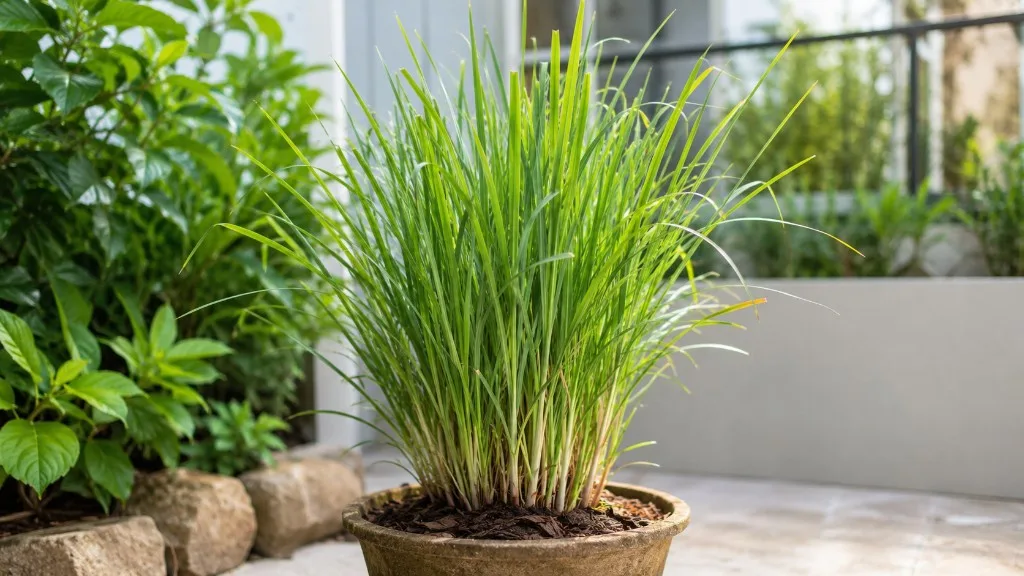
Lemongrass
Likely causePowdery Mildew (Erysiphe spp.): Powdery mildew presents as a white powdery substance on the surfaces of lemongrass leaves . Proper air circulation, regular pruning, and applying fungicides are effective measures for preventing and treating
Quick fixConfirm diagnosis on your Lemongrass, then address the most likely care or pest factor described in current extension guidance.
 Medium
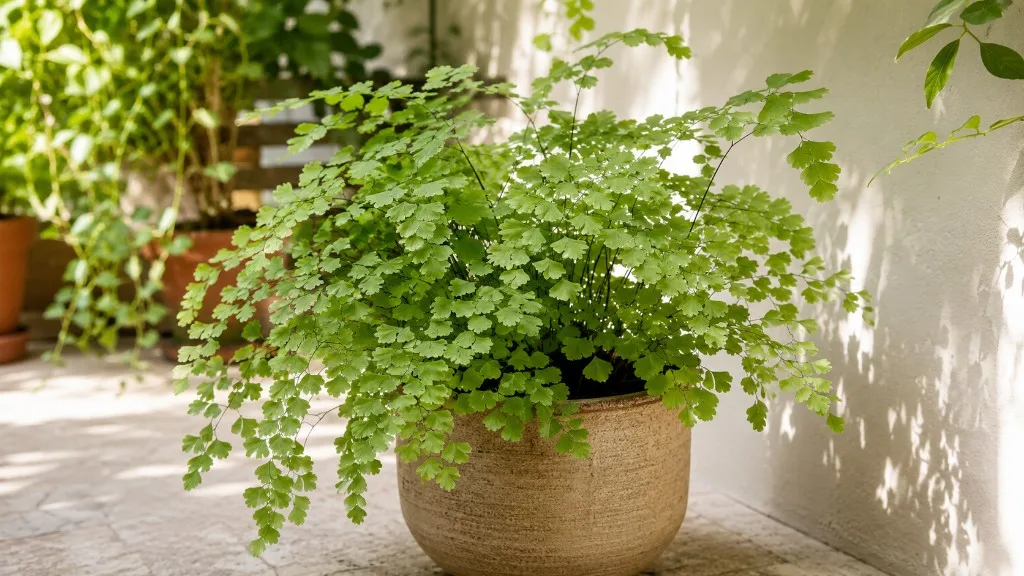
Maidenhair Fern
Likely causeAug 5, 2024 · Powdery mildew is a fungal disease characterized by white or gray powdery spots on leaves and stems. It develops in warm, dry conditions with poor air circulation, making it more prevalent during late summer or in poorly venti
Quick fixConfirm diagnosis on your Maidenhair Fern, then address the most likely care or pest factor described in current extension guidance.
 Medium
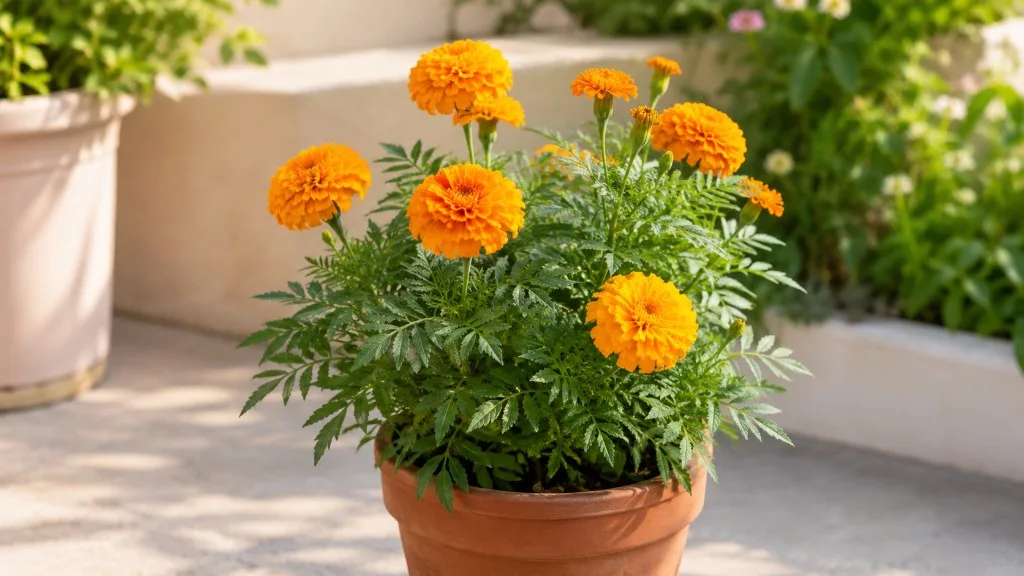
Marigold
Likely causemildew of oak tree (Quercus serrata). Out of these plants, rhizome extract of Zingiber officinale (at 15% concentration) was found to Fig 3: Powdery mildew
Quick fixConfirm diagnosis on your Marigold, then address the most likely care or pest factor described in current extension guidance.
 Medium
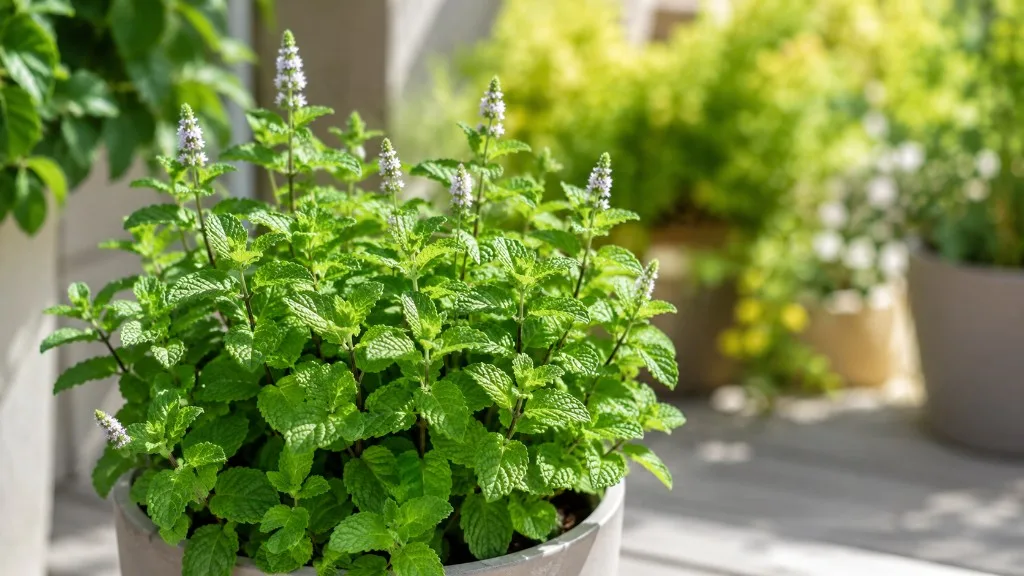
Mint
Likely causeGolovinomyces biocellatus causes gray-white powder on mint leaves, especially Scotch spearmint in humid crowded pots.
Quick fixThin crowded stems for airflow; avoid wetting foliage; remove affected leaves and apply potassium bicarbonate if needed.
 Medium
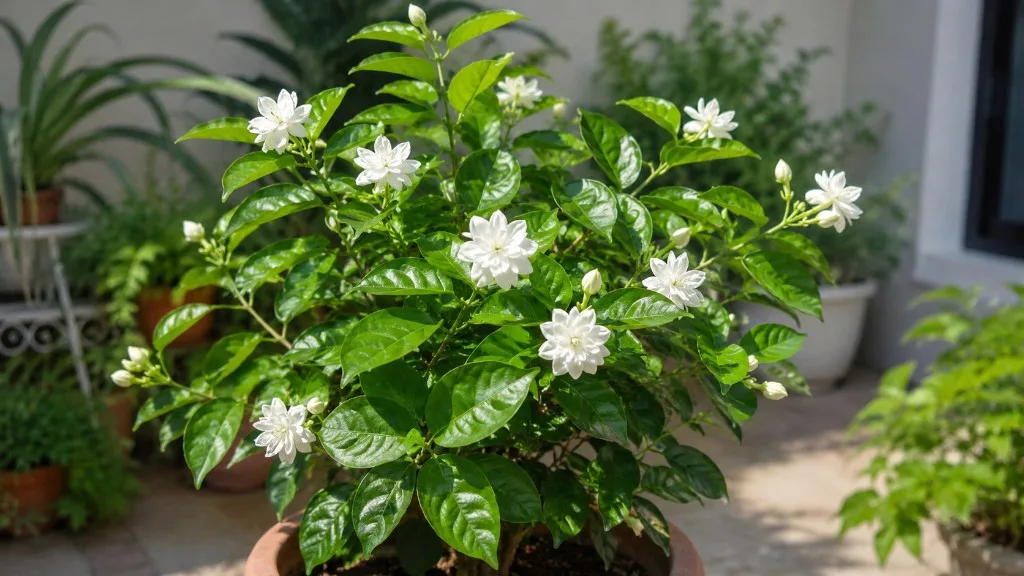
Mogra
Likely causeCommon Diseases and Precautions Powdery Mildew Symptoms: White, powdery fungal patches on leaves. Precaution: Ensure proper air circulation, avoid overhead watering, and use a fungicide when needed.
Quick fixConfirm diagnosis on your Mogra, then address the most likely care or pest factor described in current extension guidance.
 Medium
Petunia
Likely causePodosphaera species cause chlorotic lower leaves and white fungal growth on petunia foliage.
Quick fixRemove affected lower leaves, improve spacing and airflow, and avoid wetting foliage when watering.
 Medium
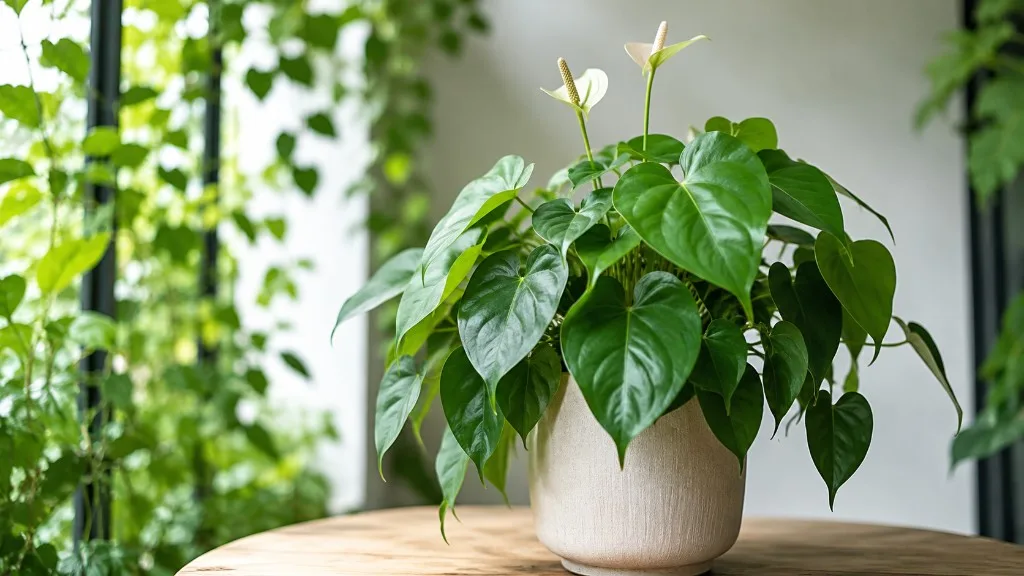
Heartleaf Philodendron
Likely causeMay 2, 2024 · To treat powdery mildew on your Heartleaf Philodendron, start by isolating the infected plant to prevent the spread of spores. Wipe down the affected leaves with a damp cloth to remove the powdery residue and improve air circu
Quick fixConfirm diagnosis on your Heartleaf Philodendron, then address the most likely care or pest factor described in current extension guidance.
 Medium
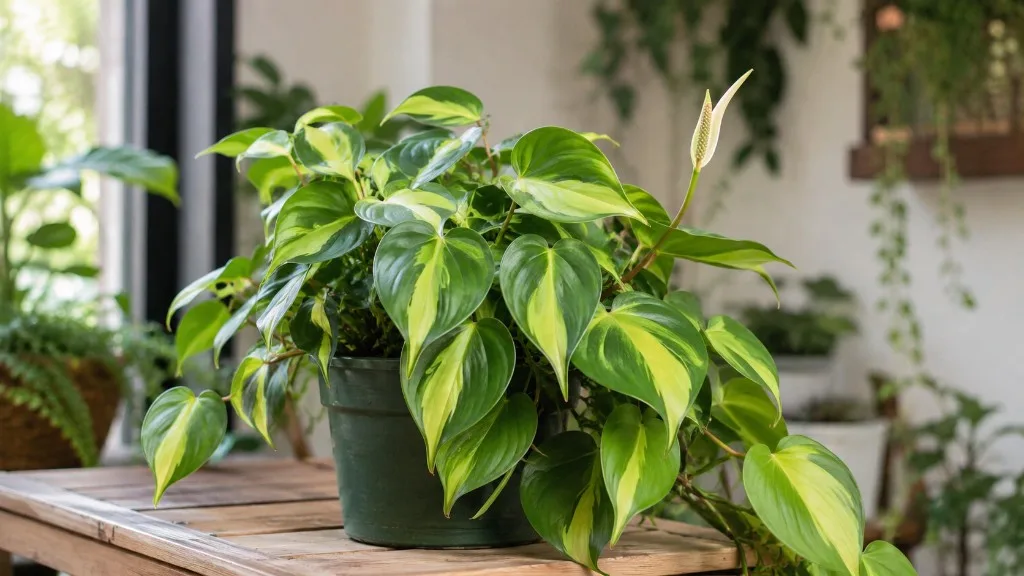
Philodendron Brasil
Likely causeAug 25, 2024 · Powdery mildew thrives in warm, humid conditions, so it’s essential to keep an eye out. If your Philodendron Brasil is showing signs of powdery mildew , here’s how to deal with it: Remove affected leaves: Trim away those with
Quick fixConfirm diagnosis on your Philodendron Brasil, then address the most likely care or pest factor described in current extension guidance.
 Medium
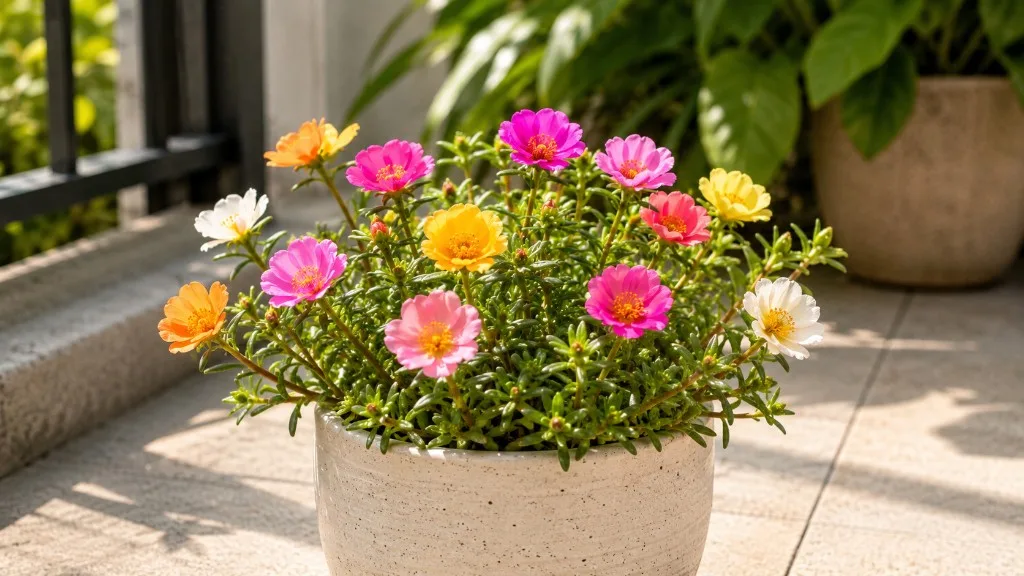
Portulaca
Likely causeJul 23, 2023 · Fungal infections on Portulaca grandiflora can manifest in various ways, including powdery mildew, leaf spot, and root rot. In this article, we will explore effective methods to get rid of fungus on your Portulaca grandiflora
Quick fixConfirm diagnosis on your Portulaca, then address the most likely care or pest factor described in current extension guidance.
 Medium
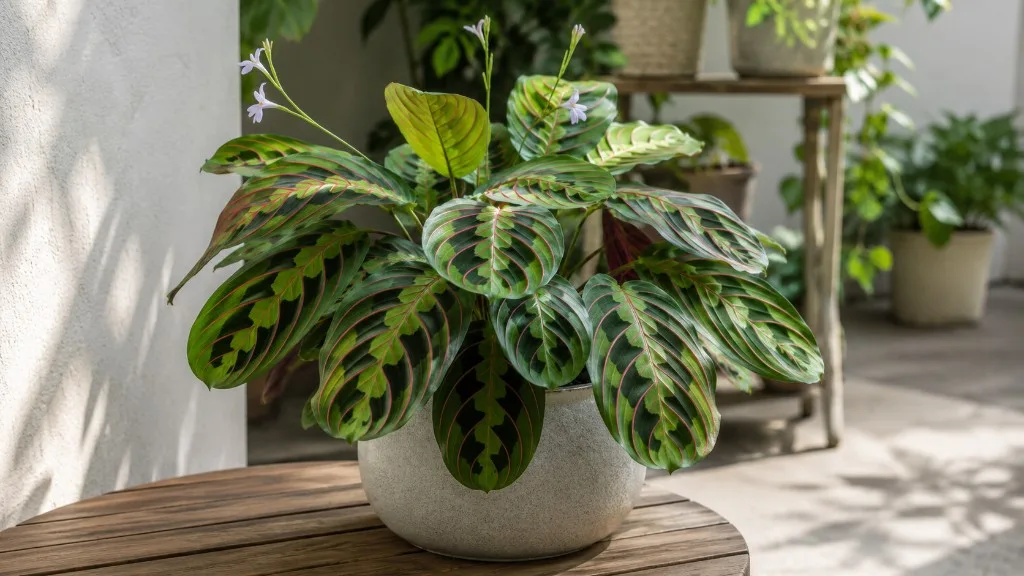
Prayer Plant
Likely causeAug 13, 2025 · Early detection of fungal infections is important for the health of your prayer plant . One common fungal problem is powdery mildew , which appears as a white or gray powdery coating on the leaves and stems, making the plant
Quick fixConfirm diagnosis on your Prayer Plant, then address the most likely care or pest factor described in current extension guidance.