Powdery Mildew on Prayer Plant: Diagnosis and Care
Quick answer
Powdery mildew is possible on a Prayer Plant, but it is not a routine Maranta problem. Look for spreading, dusty white or gray patches on leaf surfaces or stems. First rule out the plant's normal pattern, mineral deposits, and mealybugs; then isolate a confirmed case, remove badly affected leaves, and improve airflow without moving the plant into harsh sun or drying its soil.
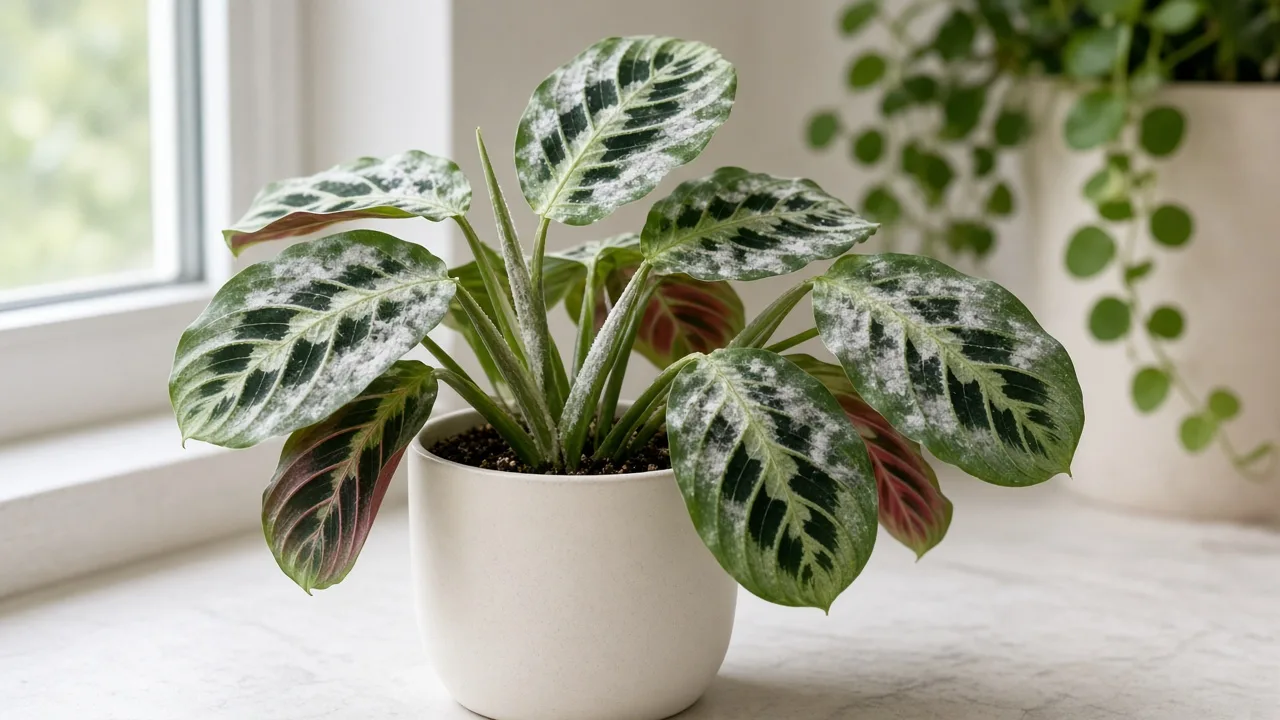
Powdery Mildew on Prayer Plant: How to Confirm and Treat It
This guide covers powdery mildew on Prayer Plant. See also the general Powdery Mildew guide, watering, and light pages for this plant.
Powdery Mildew on Prayer Plant: How to Confirm and Treat It
Quick answer
Powdery mildew is possible on Prayer Plant, but do not diagnose it from a white mark alone. North Carolina State Extension describes Maranta as having no serious pest or disease problems, so treat powdery mildew as a possibility to confirm rather than the default explanation for a patterned leaf (NC State’s Prayer Plant profile). Look for white or gray powdery patches that spread across living leaf tissue or stems. Check first for normal Maranta markings, crystalline mineral residue, and mealybugs.
If the patches look like a fungal coating, move the plant away from other plants while you inspect it. Remove badly affected leaves, improve spacing and gentle airflow, and keep the Prayer Plant’s usual moisture and bright indirect light. Do not dry the soil or expose the foliage to direct sun as a mildew treatment.
What powdery mildew looks like on Prayer Plant
Powdery mildew fungi form a thin growth on living plant surfaces. The visible white powder consists partly of spores, and colonies can appear on the upper or lower sides of leaves and on stems (UC IPM’s powdery mildew overview). On a Prayer Plant, suspect it when pale patches are dusty or powder-like, expand beyond a single splash mark, or begin to distort new tissue. The presence of a white area alone is not enough to confirm the disease.
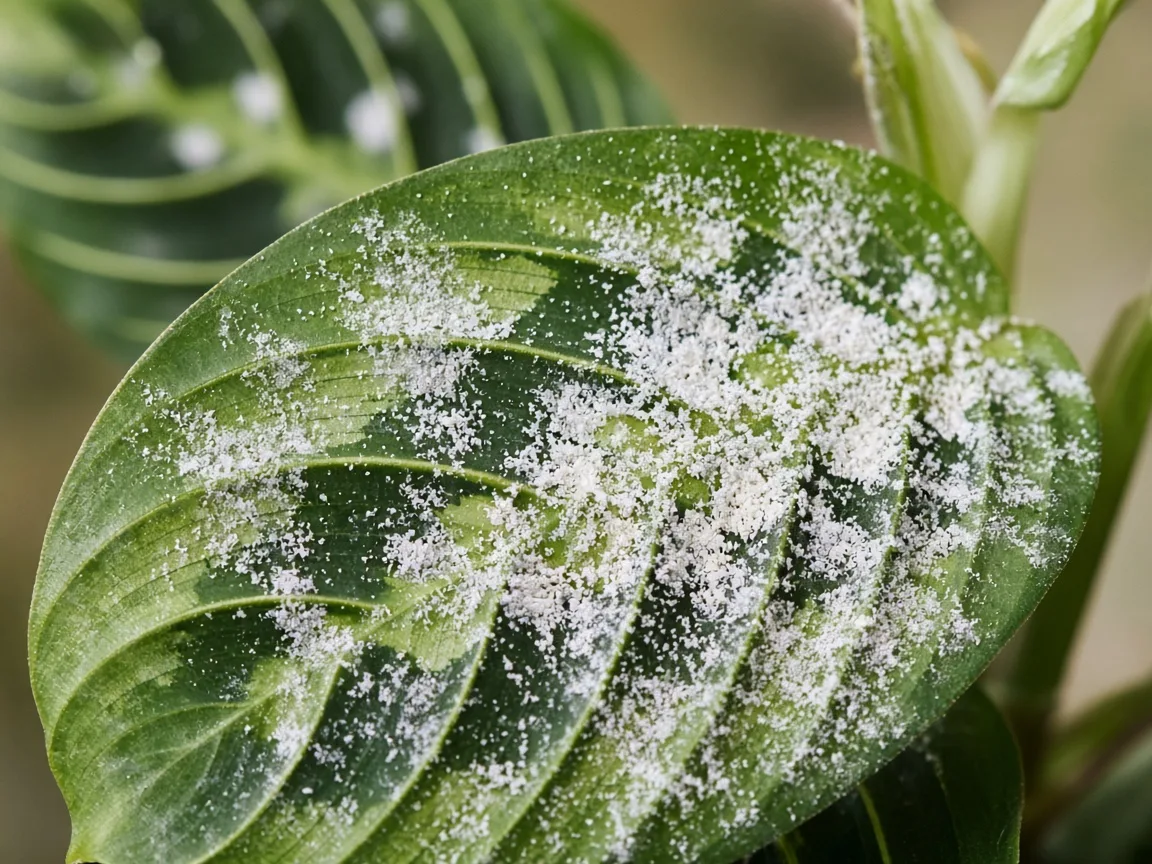
Example of powdery growth on a leaf surface. Compare its spread and texture with the other leaves; an image cannot confirm the cause on your plant.
Maranta already has distinctive dark paired marks, pale center patterns, and colored veins. These markings are part of the leaf, follow the same pattern from leaf to leaf, and do not sit on top like a coating. NC State’s profile shows the plant’s normal leaf pattern and its nighttime movement, which can help prevent a natural marking or folded leaf from being mistaken for damage (Maranta identification notes).
Powdery mildew is not among NC State’s listed routine problems for Maranta. If one leaf has a few white specks while the rest of the plant looks normal, pause before spraying. Check the whole plant, including the leaf undersides, the folds around leaf stalks, and any stems close to the soil.
Rule out three common lookalikes
Mineral or fertilizer residue
Hard water and soluble fertilizer can leave white crystallized coatings on leaves. Similar deposits may form a crust on the pot or growing medium, especially where water dries (University of Maryland Extension’s indoor salt-deposit guide). Residue is more plausible if the marks follow old water droplets, appear on the pot or soil as well, or began after misting or spraying fertilizer.
A gentle wipe with a damp, clean cloth can show whether material is sitting on the leaf surface, but it is not a definitive test. Use the patch pattern, whether it returns, and the presence of any mineral crust as additional clues. Do not scrub the leaf surface.
Mealybugs
Mealybugs are small insects that may be hidden in leaf folds, along veins, or where leaf stalks meet. They produce white cottony or waxy material and may leave sticky honeydew. That clustered, waxy pattern is different from a thin powdery coating across the leaf surface. University of Maryland Extension describes white powdery mildew as a surface growth and mealybugs as cottony insects in plant crevices (its indoor-plant diagnosis chart); UC IPM recommends checking the leaf bases and other tight spaces for mealybugs (houseplant pest identification).
Use a bright light and a hand lens to inspect the folds and undersides. Look for separate oval bodies, cotton-like egg material, sticky patches, or ants as clues to a pest. If you find insects, compare the pattern with the Prayer Plant mealybugs guide instead of using a fungicide.
Gray mold or another leaf problem
Gray mold often develops on old, faded leaves or flowers and appears fuzzy rather than like a dry white dust. Other leaf spots may be brown, black, or water-soaked and can have a halo. University of Maryland Extension separates the white powdery coating of powdery mildew from the fuzzy gray growth of gray mold in its indoor plant diagnosis chart.
If the marks are dark, wet-looking, or limited to dead tissue, use the Prayer Plant blight guide or mold on soil guide as appropriate. If the plant is wilting while its potting mix stays wet, investigate the roots and compare with root rot on Prayer Plant.
How to check before you treat
Follow these checks in order so a residue or pest does not lead to an unnecessary fungicide:
- Compare more than one leaf. Note whether the white material is a coating that is spreading, a repeated natural leaf marking, or a deposit around old droplets.
- Inspect both surfaces and the leaf joints. Powdery mildew can occur on either leaf surface. Mealybugs are often tucked near veins or inside leaf bases, so look for insects and cottony wax as well.
- Check for a second clue. Sticky honeydew, ants, or separate oval insects point more toward a pest. A crystalline ring on the pot or pale crust on the mix supports a mineral or fertilizer deposit.
- Look at the new growth. A new leaf emerging cleanly while old white marks remain unchanged suggests a different pattern from patches that keep spreading over living tissue. Take a clear photo every few days if you are unsure.
- Keep the plant separate while uncertain. UC IPM advises isolating houseplants with suspected disease or pests and identifying the cause before choosing a control (houseplant monitoring and isolation guidance).
Do not rely only on wiping a patch or on how it looks in a photo. If the coating is persistent or spreading and you cannot distinguish mildew from a pest, send clear images of both leaf surfaces to your local extension service or a plant diagnostic clinic.
First response for suspected powdery mildew
If powdery patches are spreading and no insects or crystalline deposits explain them, isolate the Prayer Plant from nearby foliage plants. Handle it after healthy plants, wash your hands, and avoid moving the pot between rooms with other plants. Early removal of a small affected area can help keep houseplant problems contained (UC IPM’s prevention guidance).
Use clean scissors to remove only leaves that are heavily coated or badly damaged. Bag the cut material rather than leaving it beside the plant. University of Maryland Extension recommends picking off infected leaves and improving air circulation for indoor powdery mildew (diagnosis and control notes). Avoid stripping most of the canopy; Prayer Plant needs healthy leaves to support new growth.
Give the plant a little more space from neighboring pots and leaves, and use gentle room airflow if the location is stagnant. Powdery mildew does not need a film of water on the leaf to grow, so repeated misting is not a reliable treatment. UC IPM notes that powdery mildew differs from downy mildew, which is associated with free moisture on the leaf surface (disease comparison). If you wash dust or pests from foliage, choose a time when the leaves can dry promptly; UC IPM warns that prolonged wetness can favor other houseplant diseases (leaf-washing advice).
Do not move Maranta into strong direct sunlight to dry the leaves. NC State recommends bright indirect light and notes that direct sun can bleach Prayer Plant foliage (plant care profile). Keep its normal watering routine too. Do not leave the soil dry as a response to white marks: powdery mildew is a leaf-surface disease, and dry soil does not diagnose or remove it.
When a treatment product may be appropriate
If confirmed powdery mildew continues to spread after you isolate the plant and remove the most affected leaves, check whether a product is specifically labeled for indoor ornamental plants and powdery mildew. Follow that product’s directions exactly, including where it can be applied and any temperature or re-entry instructions. A label for garden roses or outdoor vegetables does not automatically mean it is safe for a Maranta in a home.
Oils, sulfur, and bicarbonate products can injure some plants or be unsafe when applied under the wrong conditions. UC IPM cautions against applying horticultural oil to water-stressed plants or near a sulfur application and notes that sulfur can damage some ornamentals (fungicide precautions). Because the available sources do not establish a Maranta-safe product for this exact problem, avoid homemade detergent, baking soda, or oil recipes. If the label does not clearly cover the plant and setting, ask an extension specialist before treating.
Keep Prayer Plant care steady during recovery
Prayer Plant likes bright, indirect light, high humidity, and evenly moist soil during active growth; watering should ease when growth slows in winter (NC State’s Maranta care notes). Keep those needs in view while improving airflow. Lowering the room humidity sharply or letting the mix dry out can create a new stress problem without addressing a confirmed fungal coating.
Avoid heavy nitrogen feeding while diagnosing the leaves. UC IPM notes that excessive nitrogen can produce lush foliage and shade, conditions that can favor powdery mildew in susceptible ornamentals (powdery mildew prevention). Keep fertilizer at the normal label rate and do not try to force fresh growth as a treatment.
Check the isolated plant weekly. Look for the appearance of new powdery patches and whether newly emerging leaves stay clean. Old damaged tissue may remain marked, so judge progress by whether the coating stops spreading and the next leaves look normal. If fresh patches continue, the plant declines, or you are unsure of the diagnosis, consult an extension office or plant clinic rather than escalating to repeated sprays.
Compare related Prayer Plant problems
Use the brown tips guide when the main issue is crisp edges, and the low humidity guide when leaves curl or develop dry margins without a spreading coating. If you see insects or cottony material in the folds, check mealybugs. For wet, dark spots use the blight guide, and for soggy soil or soft roots use root rot.
For a general explanation of the disease, see the powdery mildew symptom guide. The Prayer Plant problems hub links to other plant-specific diagnoses.
Related tool
Use the Plant Problem Diagnosis Tool to compare the white coating with moisture, root, and pest signs before changing more than one part of the plant’s care.
Frequently asked questions
Can a Prayer Plant get powdery mildew?
Yes, powdery mildew is possible on a Prayer Plant, but NC State Extension lists no serious disease problems for Maranta. Confirm the coating is spreading fungal growth before treating.
Does powdery mildew mean I am overwatering my Prayer Plant?
Not by itself. Powdery mildew grows on living leaf surfaces and does not need a film of water to spread. Check soil moisture separately, and water according to the Prayer Plant’s normal needs.
Can I wipe powdery mildew off Prayer Plant leaves?
You can gently wipe one small area to inspect it, but that does not confirm the cause. Mineral deposits can also wipe away, while mealybugs may be hidden in the leaf folds.
Should I mist a Prayer Plant with powdery mildew?
Do not use misting as a mildew treatment. Keep the plant’s normal humidity needs, improve airflow, and avoid leaving foliage wet for long periods.
Will the white patches disappear after I fix the problem?
Not necessarily. Judge recovery by whether new powder stops appearing and new leaves emerge cleanly. Remove only badly affected leaves; old damaged areas may remain visible.