Prayer Plant Cold Damage: Signs, Recovery & Prevention
Quick answer
Cold injury is likely when a prayer plant develops darkened leaves or sudden drooping after a cold night, draft, or move. Place it in a steady room above 60°F, keep it away from cold glass and vents, and check the mix before watering.
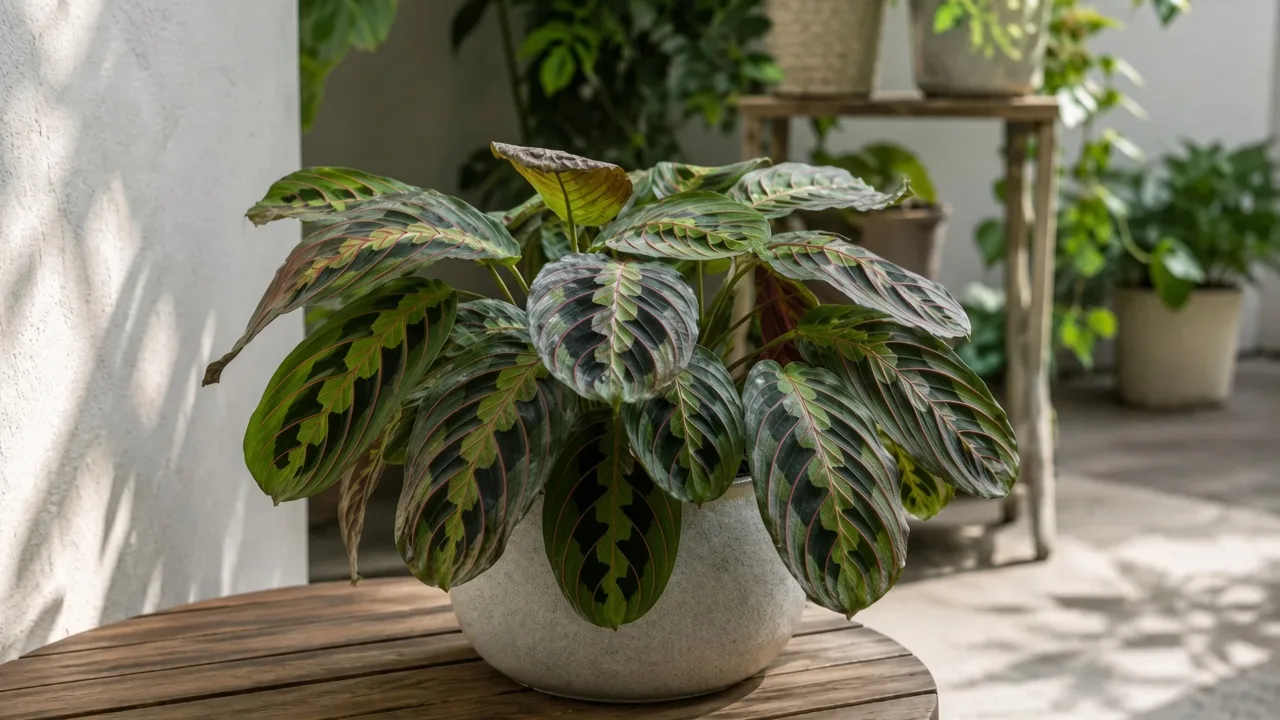
Cold Damage on Prayer Plant: Causes, Checks & Fixes
This guide covers cold damage on Prayer Plant. See also the general Cold Damage guide, watering, and light pages for this plant.
Cold Damage on Prayer Plant: Causes, Checks & Fixes
Quick answer
If a prayer plant develops darkened leaves, limp petioles, or a sudden whole-plant droop after a cold night or draft, cold injury is one possible cause. Move the pot to a steady indoor spot above 60°F (about 16°C), away from chilly glass, exterior doors, and heating or air-conditioning blasts. Check the potting mix before watering, because cold conditions can slow water use. A damaged leaf will not become healthy again, so watch for the injury to stop spreading and for the next leaves to emerge normally.
Cold symptoms can resemble overwatering, disease, or ordinary leaf aging. Use the recent temperature history and the condition of the roots and soil together; one dark patch alone does not confirm a diagnosis.
Why prayer plants are vulnerable to cold
Prayer plant usually refers to Maranta leuconeura, a tropical foliage plant grown indoors in temperate climates. North Carolina Extension describes it as intolerant of low temperatures and cold drafts. The Missouri Botanical Garden says its temperature should not dip below 60°F and that it is intolerant of frost. Those are practical reasons to protect it from a cold windowsill or sudden outdoor exposure, not proof that every brief reading below 60°F causes injury.
Cold stress can come from more than the room thermostat. A leaf beside a drafty window may be colder than the center of the room, and a pot on a stone floor can cool at the root zone. An open door, an unheated porch, or a direct stream of cold air from a vent can create a short exposure even when the rest of the home feels comfortable. RHS advice recommends checking the plant’s own temperature requirements before diagnosing cold damage, because tolerances vary among species.
What cold damage looks like on Prayer Plant
The timing is a useful clue. Damage that appears after a cold night, a move in an uncovered vehicle, or several hours beside a drafty pane is more consistent with cold stress than with a gradual watering problem. Symptoms may include dark or blackened leaf areas, limp or drooping leaves, and in severe cases a plant that collapses. The RHS lists blackened leaves and leaf droop among the signs of cold damage.
Look at where the injury appears. Leaves nearest a cold window or door may show damage first. If the entire plant droops but the root ball is still firm and the soil is not saturated, check for a recent temperature drop before adding water. If the crown or petiole bases are soft, the potting mix smells sour, or roots are brown and mushy, root rot may be present as well.
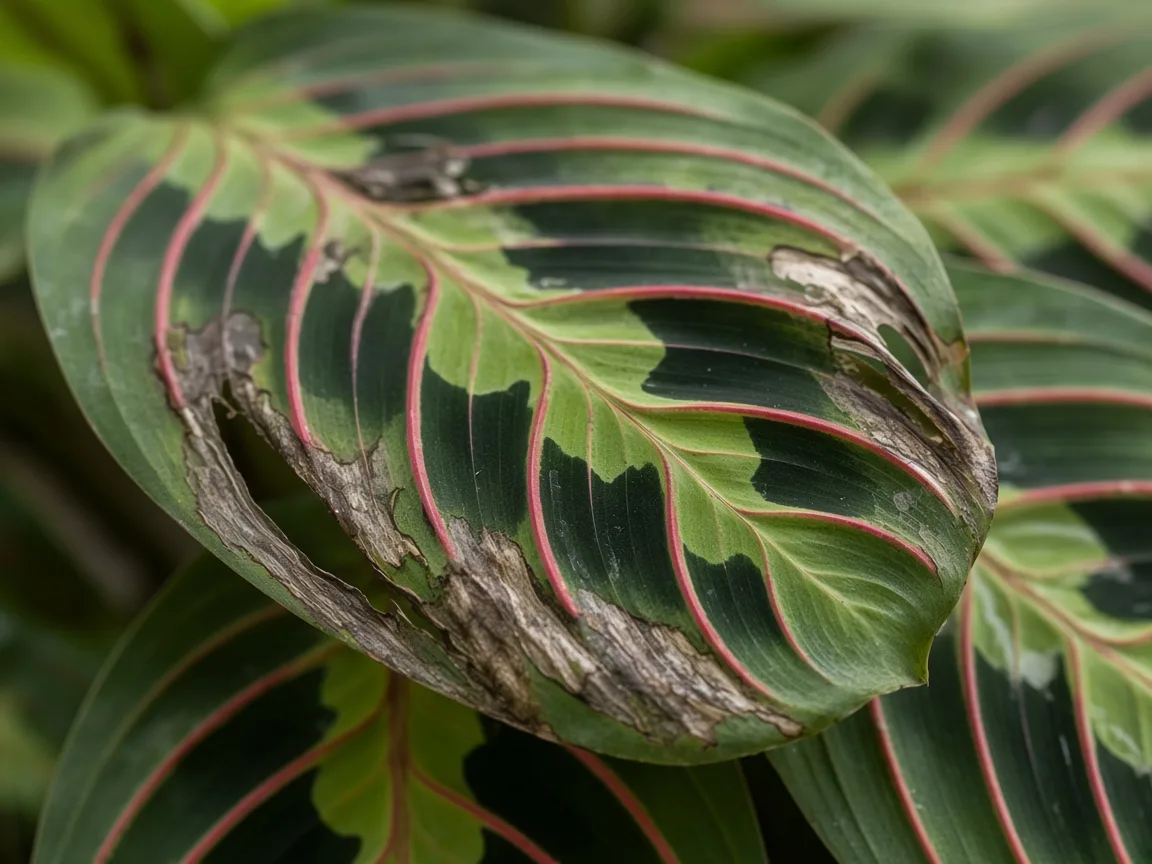
Darkened leaf tissue is a warning sign to check recent temperature exposure; the mark by itself cannot identify the cause.
How to check whether cold is the cause
- Reconstruct the exposure. Note whether the plant sat beside a window overnight, touched cold glass, was near an exterior door, or traveled outdoors without insulation. Record the approximate room temperature and how long the exposure lasted if you know it.
- Check the plant’s position. Feel the air at leaf height near the pot rather than relying on a thermostat across the room. Move it temporarily to a stable indoor location and look for a draft from the window, door, or vent.
- Inspect the soil before watering. Press a finger into the mix and lift the pot. If the mix is still damp and the pot heavy, wait; adding water to a cool, wet root zone can create a second problem. If the mix is dry below the surface, water it thoroughly with room-temperature water and allow excess to drain.
- Inspect the crown and roots only if needed. If petiole bases are soft, the plant rocks in the pot, or the mix stays wet and smells unpleasant, check for root or crown rot. Do not unpot a plant just because one leaf has a dark spot.
- Compare other likely causes. Cold injury is more convincing when the timing and placement fit. RHS guidance links sudden temperature drops and drafts with houseplant leaf injury; fungal leaf spots, sun scorch, waterlogging, and old-leaf decline need different evidence and treatment.
First response: stabilize the plant
Move the pot away from the cold source to a place with steady room temperatures. A position above 60°F is a sensible minimum based on the Missouri Botanical Garden’s Maranta guidance; a normal, stable indoor range is usually more useful than trying to heat the plant quickly. The Spruce describes ordinary household temperatures around 60–80°F as suitable for Prayer Plant. Keep bright indirect light, but avoid placing it in direct sun or directly beside a radiator to compensate for the cold.
Do not wrap the foliage in plastic or place the plant against a heater. Rapid heating and trapped moisture can stress damaged tissue further. Keep curtains from trapping cold air between the pane and the plant; if the windowsill becomes chilly overnight, move the pot farther into the room before evening. RHS advice on houseplant leaf damage also recommends moving plants when temperatures drop and avoiding draughty positions.
For the next several days, keep the routine simple. Check soil moisture before each watering, empty the saucer, and do not fertilize. Hold off on repotting unless the mix is waterlogged, the pot has no drainage, or inspection confirms rot. Several simultaneous changes make it harder to tell whether the plant is stabilizing.
What to do with damaged leaves
Cold-injured tissue cannot be restored by misting, fertilizer, or extra water. Leave a leaf that is partly green and still firm; it may continue to support the plant. Once a leaf is fully black, dry, or mushy, cut the petiole near the base with clean scissors. If several leaves are affected, remove only those that are clearly dead rather than stripping the plant all at once.
Check the remaining leaves and growing points every few days. If the dark areas continue to enlarge after the plant is warm, or soft tissue spreads into the crown, revisit the diagnosis and inspect the root zone. Isolate the plant from other plants if the marks look like spreading spots rather than a one-time injury; not every leaf lesion is caused by cold.
Recovery and when to worry
The damaged areas stay damaged, but the plant can still recover when the rhizome and growing points remain firm. There is no reliable number of days for a Maranta to recover: room temperature, light, root condition, and the season affect how quickly it grows. Judge progress by whether new damage stops appearing and fresh leaves develop without blackening. Older injured leaves may remain curled or drop later.
Seek a more careful root check if the crown softens, multiple petioles collapse, or the pot remains wet and heavy for an extended period. If the plant was exposed to freezing temperatures, expect more severe injury and remove only tissue that is clearly dead. A single curled leaf after a cold night is less concerning when the rest of the plant remains firm and the root zone is healthy.
Prevent cold damage next time
- Keep Prayer Plant in a stable indoor position above 60°F; avoid frost and repeated cold drafts.
- Move it away from the glass on cold nights and away from exterior doors, unheated porches, and vents.
- Check the temperature at leaf height if the plant sits near a window or draft. A room thermometer can reveal a colder pocket that the central thermostat misses.
- When carrying the plant outside or between buildings, cover it and minimize the time it spends in cold air.
- Use room-temperature water and adjust watering to the mix rather than compensating for cold leaves with extra water.
- Review the Prayer Plant care guide and the watering guide when the indoor season changes.
Related Prayer Plant problems
- Curling leaves can follow temperature stress, dry air, or underwatering; compare the soil and exposure history.
- Wilting helps distinguish a dry root ball from roots damaged by persistently wet mix.
- Low humidity covers crispy edges and dry-air symptoms that can look different from cold injury.
- Root rot is the better guide if roots or the crown are soft and decaying.
- The Prayer Plant problems hub lists the other plant-specific symptom guides.
Related tool
Use the Plant Problem Diagnosis Tool to compare the recent cold exposure with moisture, light, and root-zone clues before changing several conditions.