Deformed New Growth on Prayer Plant: Causes, Checks & Fixes
Quick answer
Prayer Plant leaves emerge rolled, so one partly closed leaf may simply be opening. If a leaf stays twisted after it expands, or several new leaves emerge misshapen, inspect the growing tip for pests, then check soil moisture and recent changes in light, temperature, and humidity before treating.
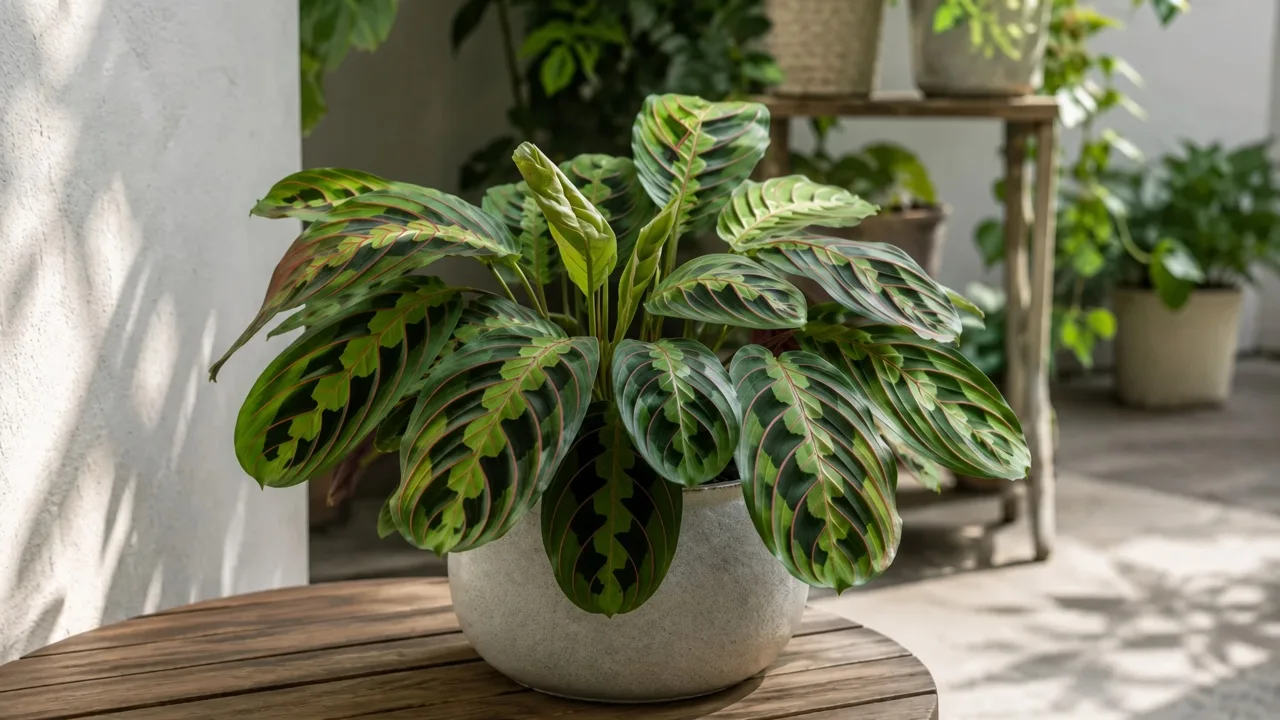
Deformed New Growth on Prayer Plant: Causes, Checks & Fixes
This guide covers deformed new growth on Prayer Plant. See also the general Deformed New Growth guide, watering, and light pages for this plant.
Deformed New Growth on Prayer Plant: Causes, Checks & Fixes
Quick answer
Prayer Plant (Maranta leuconeura) produces new leaves as folded, rolled shoots. A leaf that is still partly closed, especially one that has not yet spread into its familiar oval blade, is not enough to diagnose a problem. North Carolina State Extension’s Maranta profile describes rolled new leaves and their normal nightly movement, recommends evenly moist soil during active growth, and advises bright, indirect light away from cold drafts.
Treat it as persistent deformation when a leaf remains puckered, sharply bent, or twisted after opening, when it has scars or silvery marks, or when several new leaves in a row look abnormal. Start with the growing tip: pests can feed inside folded leaves where they are easy to miss. Then check the soil and review recent changes in temperature, light, humidity, or feeding. A distorted leaf is a symptom, not a diagnosis, so do not spray, fertilize, and repot all at once.
Normal unfurling or persistent distortion?
The most useful comparison is between the newest leaf and the same plant’s older, fully opened leaves. A fresh Maranta leaf often stands as a narrow tube, then gradually separates into a blade. Its red midrib and patterned surface may look uneven while folded. Prayer Plants also lift and fold their mature leaves after dark; that regular movement is normal and does not mean the leaf is damaged.
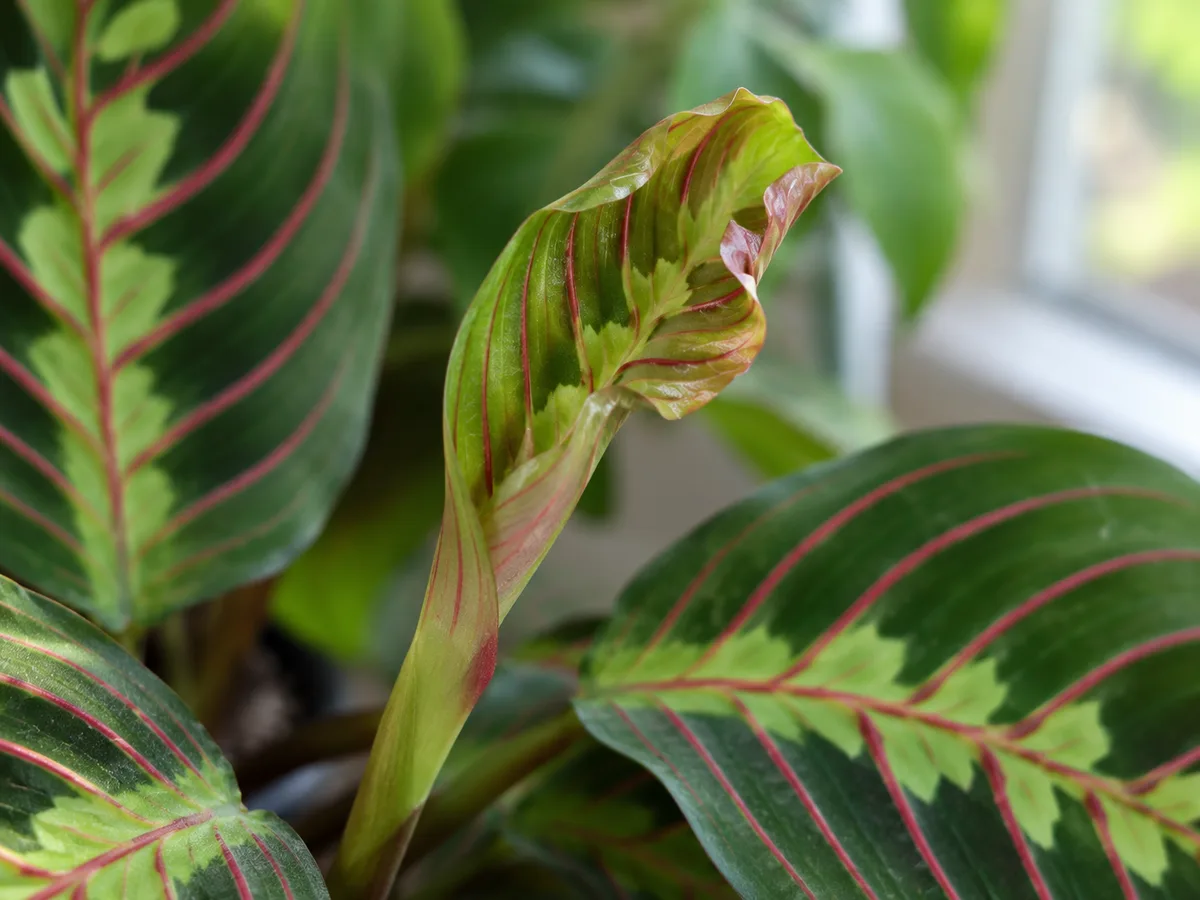
The close-up shows a young Maranta leaf partway through opening, its upper edge still curled and asymmetrical among fully spread leaves.
Do not pull a folded leaf open to see whether it is stuck. The blade can tear while it is still tender. Instead, take a clear photo and compare it again after it has had time to expand. If it opens into a smooth blade and the next leaves look similar to the older foliage, no corrective treatment is needed.
A true distortion remains visible after the blade opens. The edge may be crumpled or folded under, the leaf may stay narrow or twisted, or the surface may show pale, silvered, or brown scars. One isolated bent leaf can follow rubbing against a shelf, a pet brushing the plant, or a leaf being caught while the pot was moved. Repeated distortion on successive leaves points to an ongoing cause worth investigating.
Inspect new growth for pests first
Tender leaves are attractive feeding sites, and a pest can be hidden inside the rolled edge or at the shoot tip. Open the newest leaf only as far as it moves freely, then inspect both surfaces, the leaf base, and nearby petioles with a bright light or magnifier. Look for silvery streaks, rough scars, black specks, sticky residue, fine stippling, or visible insects. Tap the foliage over white paper and watch for tiny moving specks; repeat the check on another day if the first inspection is inconclusive.
Thrips can scar plant tissue and contort growing points as they feed, so a twisted leaf with silvered patches deserves a closer look rather than an automatic humidity adjustment. UC IPM’s thrips guide describes feeding injury and monitoring. Aphids tend to cluster on soft tips and can leave sticky honeydew; spider mites are more consistent with fine pale stippling and delicate webbing. Missouri Botanical Garden’s indoor-plant symptom guide compares these pest patterns.
If you find a pest, move the plant away from nearby houseplants and inspect those plants too. Rinse the Prayer Plant gently, including the undersides and protected leaf folds, and remove only leaves that are badly damaged. Recheck the newest growth before using a product. If a treatment is necessary, choose one labeled for indoor plants and the pest you identified, and follow its label; delicate foliage can react to unnecessary sprays. If no pest or feeding evidence appears, leave pesticide out of the diagnosis and continue with the care checks below.
Check soil moisture and roots
Maranta does best when the mix stays evenly moist during active growth without remaining waterlogged. UK Houseplants lists distorted new growth among Maranta underwatering signs, so check the actual root zone instead of relying on a calendar or the appearance of one leaf.
Push a finger into the top layer of mix and lift the pot to judge its weight. If the surface has dried and the pot is light, water slowly until the mix is evenly damp and excess drains from the bottom; empty the saucer. If the mix is still wet or the pot feels heavy, wait and check drainage before adding more water. Epic Gardening’s Prayer Plant troubleshooting also starts with moisture and watering history.
A dry plant may have a light pot, mix pulling away from the sides, or several leaves that feel limp or curled. A waterlogged root zone is more concerning when it stays wet for many days, smells sour, or comes with yellowing leaves and a soft stem base. A misshapen leaf alone does not confirm root rot. Unpot only when persistent wetness or broader decline makes a root inspection worthwhile; healthy roots do not need to be disturbed to fix a single awkward leaf.
Review light, air, and recent changes
After checking for pests and root-zone problems, consider what changed before the leaf began to look different. Prayer Plant prefers bright, indirect light and is sensitive to direct sun, low humidity, and cold drafts. These conditions can damage or stress foliage, though they do not all produce the same symptom. Bleached patches on the window-facing side point toward harsh sun; crisp margins and curling in a very dry room suggest a different issue than silvery feeding scars.
Think back to the previous few weeks: Did the plant move close to a heating or air-conditioning vent? Did it sit against cold glass, receive a sudden burst of direct sun, dry out completely, or stay wet after watering? Was it recently repotted or fed more often than usual? A simple care note with the date, soil feel, and location can reveal a pattern that is hard to see from memory.
Keep conditions steady while the next leaf develops. Place the pot in bright filtered light, away from direct sun and strong airflow. If indoor air is very dry, a room humidifier can help stabilize the space; misting the leaves is not a substitute for correcting dry soil or an exposed root zone. UK Houseplants notes that low humidity can accompany curling and brown tissue on Maranta, while NCSU flags low humidity and cold drafts as poor conditions for this plant.
Choose the first fix from the evidence
Use the finding that best matches the symptom rather than combining treatments:
- Visible pests or fresh feeding scars: Isolate the pot, rinse the foliage, and recheck the growing point and neighboring plants. Treat only after confirming the pest, following the product label if one is needed.
- Dry mix and a light pot: Water thoroughly, let the pot drain, and then check moisture before the next watering. Avoid leaving the plant bone-dry for repeated cycles.
- Wet mix or a pot that drains poorly: Pause watering and clear the drainage holes. If the mix remains saturated or roots and stems are deteriorating, investigate the root zone and consider fresh, airy mix in a pot with drainage.
- No pests and reasonable soil moisture: Correct one environmental stressor at a time, such as direct afternoon sun, a cold sill, or a strong vent. Keep the plant in a stable, bright-indirect location.
- A recent fertilizer change: Pause feeding while the plant is stressed. Maranta foliage can burn with excess fertilizer, so do not add more nutrients to force a damaged leaf to straighten.
If only one leaf is marked and the rest of the plant is firm, make the smallest correction indicated by your checks and observe. Avoid cutting off every misshapen leaf: a partly damaged leaf can still support the plant. Remove a leaf only when most of its blade is dead or diseased, or when you need to discard pest-infested material.
Recovery and prevention
A leaf that opened with a crease, tear, or feeding scar usually keeps that mark. The old blade does not need to return to perfect shape for the plant to recover. After correcting the cause, assess the next one or two leaves: healthy progress means they open more evenly, the symptom stops spreading, and the rest of the plant remains firm. If new leaves remain distorted, repeat the pest inspection and moisture check instead of increasing fertilizer or watering by guesswork.
When you water, glance at the rolled shoot and leaf undersides. Keep the plant away from sudden blasts of hot or cold air, avoid harsh direct sun, and use a pot that drains freely. Change one care factor at a time so the plant’s response stays interpretable. For ongoing care, use the Prayer Plant overview, watering guide, and light guide. Compare similar symptoms in the low-humidity guide, underwatering guide, spider-mites guide, and distorted-leaves guide.
Related Prayer Plant guides
- Prayer Plant overview — check the plant’s normal growth and daily leaf movement.
- Prayer Plant problems hub — compare other symptoms on this plant.
- Prayer Plant watering — adjust moisture based on the mix, not a fixed schedule.
- Prayer Plant low humidity — compare dry-air symptoms with feeding damage.
- Prayer Plant spider mites — use when stippling or webbing is present.
- Prayer Plant aphids — use when soft insects or sticky residue appear on new growth.
- Prayer Plant distorted leaves — compare persistent leaf-shape changes and other pests.
Related tool
Use the Plant Problem Diagnosis Tool to organize pest, soil, and placement clues before making several care changes.