Prayer Plant Distorted Leaves: Find the Cause and Fix It
Quick answer
Inspect the newest misshapen leaf and tap the foliage over white paper before treating. Thrips and aphids can distort tender growth, but dry roots, cold drafts, and normal nightly leaf movement can look different.
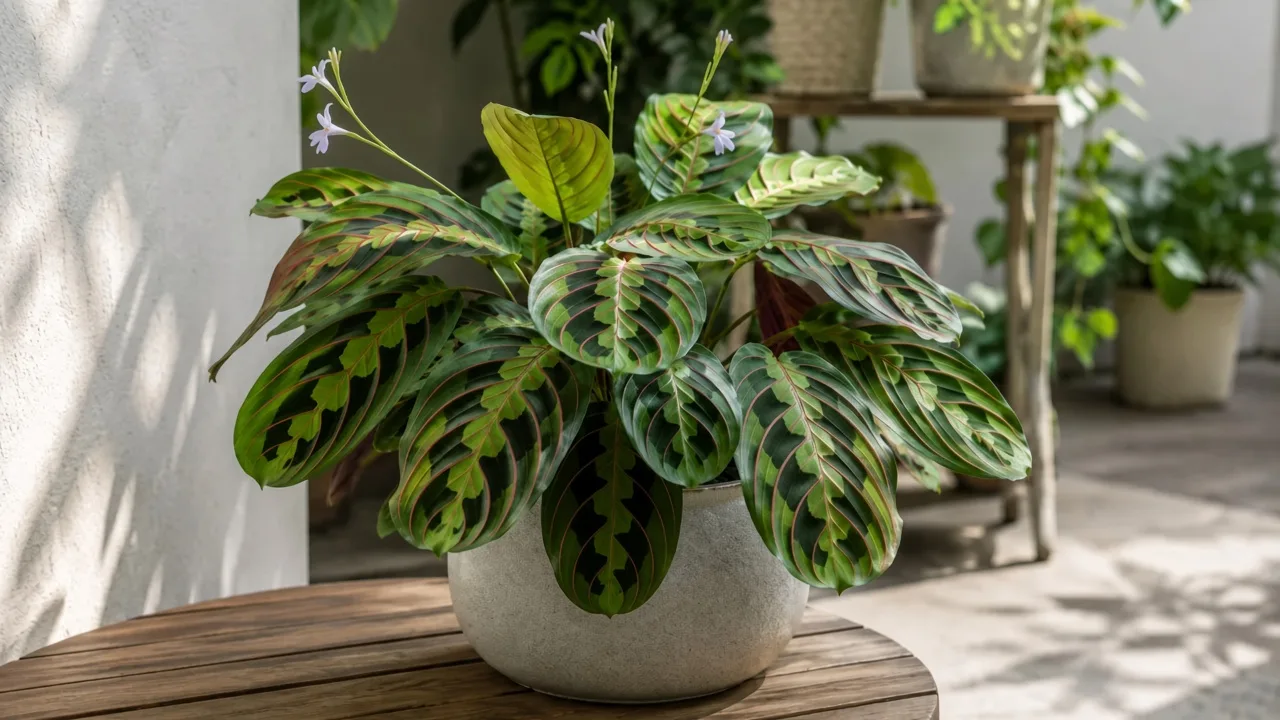
Distorted Leaves on Prayer Plant: Causes, Checks & Fixes
This guide covers distorted leaves on Prayer Plant. See also the general Distorted Leaves guide, watering, and light pages for this plant.
Distorted Leaves on Prayer Plant: Causes, Checks & Fixes
Quick answer
Start by inspecting the newest distorted leaf and tapping the foliage over white paper. Look for silvery scars, black specks, webbing, or small insects before you spray or change watering. If no pest signs appear, check the root-zone moisture and recent changes in temperature or light. For the broader causes of misshapen foliage, see the distorted-leaves guide; the Prayer Plant overview describes this Maranta’s normal leaf shape and daily movement.
What distorted leaves look like on Prayer Plant
Prayer Plant leaves are oval, patterned, and held on flexible petioles. New leaves emerge rolled like a narrow tube, then loosen as they expand. The leaves also lift and fold at night; that repeatable movement is normal, not damage. North Carolina Extension describes both the rolled new leaves and the plant’s nightly folding behavior.
A true distortion persists after the leaf has opened: the blade may be puckered, uneven, sharply cupped, scarred, or smaller than the surrounding leaves. Pay special attention to the newest growth. A single leaf caught while unfurling can be bent or torn by contact, while repeated deformed leaves point to a continuing stress or pest feeding at the growing tip.
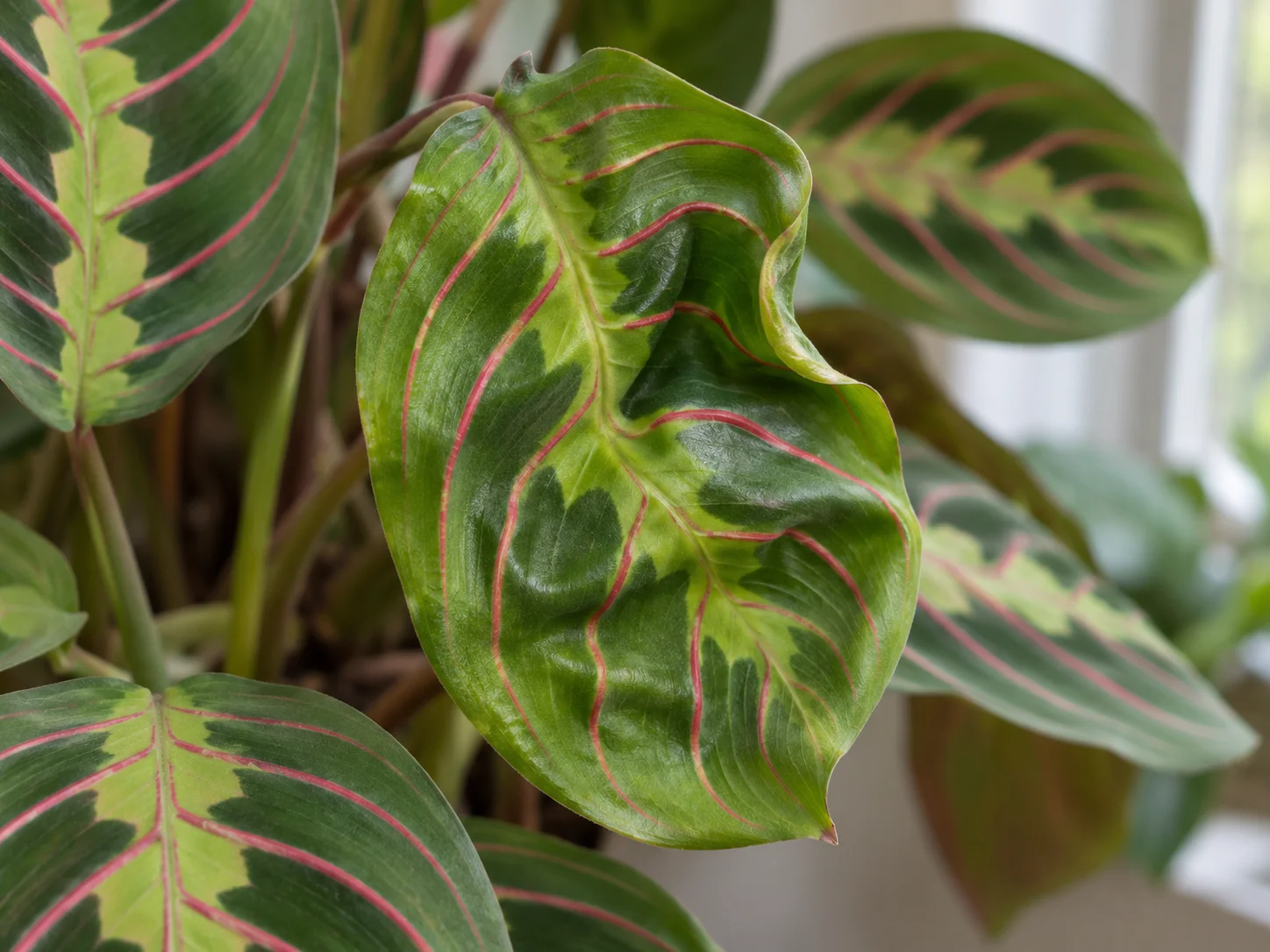
A puckered, asymmetrical leaf surface differs from the prayer plant’s normal, reversible nightly fold.
Check the growing tip for thrips first
Thrips often hide in folded leaves and protected shoot tips, so the damage may be easier to see than the insects. Look for silvery or bronze streaks, rough scars, black varnish-like specks, and a leaf tip that opens twisted. UC IPM describes thrips feeding as a cause of scarred or distorted plant tissue and recommends checking before taking control action; tap a suspect leaf over white paper and watch for tiny moving dashes. UC IPM’s thrips guide explains these signs and the paper test.
If you find active thrips, move the plant away from other houseplants and rinse the leaf surfaces, especially the undersides and the rolled growth. Keep checking new leaves and nearby plants. Do not assume every thrips-like insect is a pest: the UC guide notes that some thrips are predators, so use the visible damage and repeated checks before treating.
Compare aphids, spider mites, and care stress
Aphids gather on tender tips and leaf undersides. Their feeding can leave new growth twisted and smaller; sticky honeydew is another clue. Spider mites are more likely when leaves show many tiny pale stipples or a dusty bronze cast, with fine webbing around the leaf or growing point. The Missouri Botanical Garden lists contorted growing points with thrips, twisted smaller growth with aphids, and stippling or webbing with spider mites among common indoor-plant pest signs. Its indoor-plant problem guide helps compare those patterns.
Spider mites are hard to see without close inspection. Turn a leaf over and check along the midrib; webbing alone is not proof because ordinary spider silk can be caught in foliage. Colorado State University Extension describes the pale stippling and webbing associated with spider-mite feeding and notes that dry conditions favor their activity. Use those signs as a prompt to inspect, not as a diagnosis by themselves.
If you see no pest evidence, check the mix and room conditions. A very dry root ball, a recent cold draft, abrupt direct sun, or chronically soggy soil can stress new leaves. Maranta prefers evenly moist soil during active growth and bright indirect light; it is sensitive to direct sun and cold drafts. An under-watered Maranta may also show curled leaves or distorted new growth, so compare the soil condition with the leaf pattern before watering. UK Houseplants lists those symptoms for Maranta, and Epic Gardening likewise recommends checking the soil when Prayer Plant leaves curl.
A simple inspection sequence
- Choose the newest affected leaf. Check both sides, the petiole, and the rolled leaf or growing tip. Use a phone camera’s close-up setting if the insects are difficult to see.
- Tap it over white paper. Moving, narrow-bodied specks plus silvery scars support a thrips suspicion. Rinse a suspect leaf and repeat the check rather than relying on one speck.
- Look for a different pest pattern. Clusters of soft-bodied insects and sticky residue fit aphids better; stippling with fine webbing fits spider mites better.
- Check the soil before watering. Feel below the surface and lift the pot. Dry mix and a light pot support a dry-root-zone problem; wet, heavy mix calls for checking drainage rather than adding water.
- Review recent changes. Note a moved window position, cold night, vent, feeding, or repotting. Change one confirmed stressor at a time so you can see whether the next leaf improves.
First fix based on what you find
If live pests are present, isolate the Prayer Plant and rinse the affected foliage first. Remove only leaves that are badly torn or mostly dead; a scarred leaf can still photosynthesize. Recheck new growth every few days. If the pest remains after washing, use only a product labeled for indoor plants and follow its label, testing a small area first because Maranta foliage can be sensitive.
If the root ball is dry, water thoroughly until excess drains, then empty the saucer. Return to checking the soil rather than following a fixed calendar; see the Prayer Plant watering guide for its moisture routine. If the mix is wet, do not water again. Check that the pot drains and compare with the overwatering guide for Prayer Plant; inspect roots only if the mix stays wet, smells sour, or the plant continues to decline.
For dry-air or placement stress without pests, move the plant away from a heating or cooling vent and restore bright indirect light. The Prayer Plant light guide can help you choose a stable location. Avoid fertilizing a stressed plant until healthy growth resumes.
What not to do
- Do not spray pesticide on the basis of a curled leaf alone. Thrips, mites, aphids, water stress, and normal movement need different responses.
- Do not keep watering a wet pot. Soggy roots can also produce weak or abnormal foliage.
- Do not pull a rolled new leaf open. It can tear before the blade has expanded.
- Do not expect an already scarred leaf to flatten or regain its original pattern. Judge the fix by the next leaves.
Recovery and prevention
A leaf that unfurled with a crease, scrape, or feeding scar usually stays marked. Once the cause is corrected, watch the next one or two leaves: they should open with the plant’s usual oval outline and pattern. If new leaves remain distorted, repeat the pest check and review the root zone rather than stacking more treatments.
Inspect the rolled tip and leaf undersides when you water, especially after bringing a new plant home or moving it close to another plant. Keep the mix evenly moist without standing water, maintain stable warmth, and avoid harsh direct sun. The low-humidity guide for Prayer Plant covers dry-air symptoms; use the aphids guide or spider-mites guide when you find those specific pests.
Related Prayer Plant guides
- Prayer Plant overview — normal leaf shape, growth habit, and complete care context.
- Prayer Plant watering — check moisture before changing the watering routine.
- Prayer Plant light — review placement if leaves are bleached or growth leans toward a window.
- Prayer Plant low humidity — compare dry-air symptoms with pest damage.
- Prayer Plant aphids — use when you find clustered insects or sticky residue.
- Prayer Plant spider mites — use when stippling and webbing are present.
- Prayer Plant problems hub — compare other symptoms affecting this plant.
Related tool
Use the Plant Problem Diagnosis Tool to organize the pest, leaf, and soil clues before changing several conditions at once.