How to Control Powdery Mildew With a Homemade Spray
Get a careful powdery mildew control plan, including an experimental baking soda and horticultural oil mix, safer application steps, and limits.
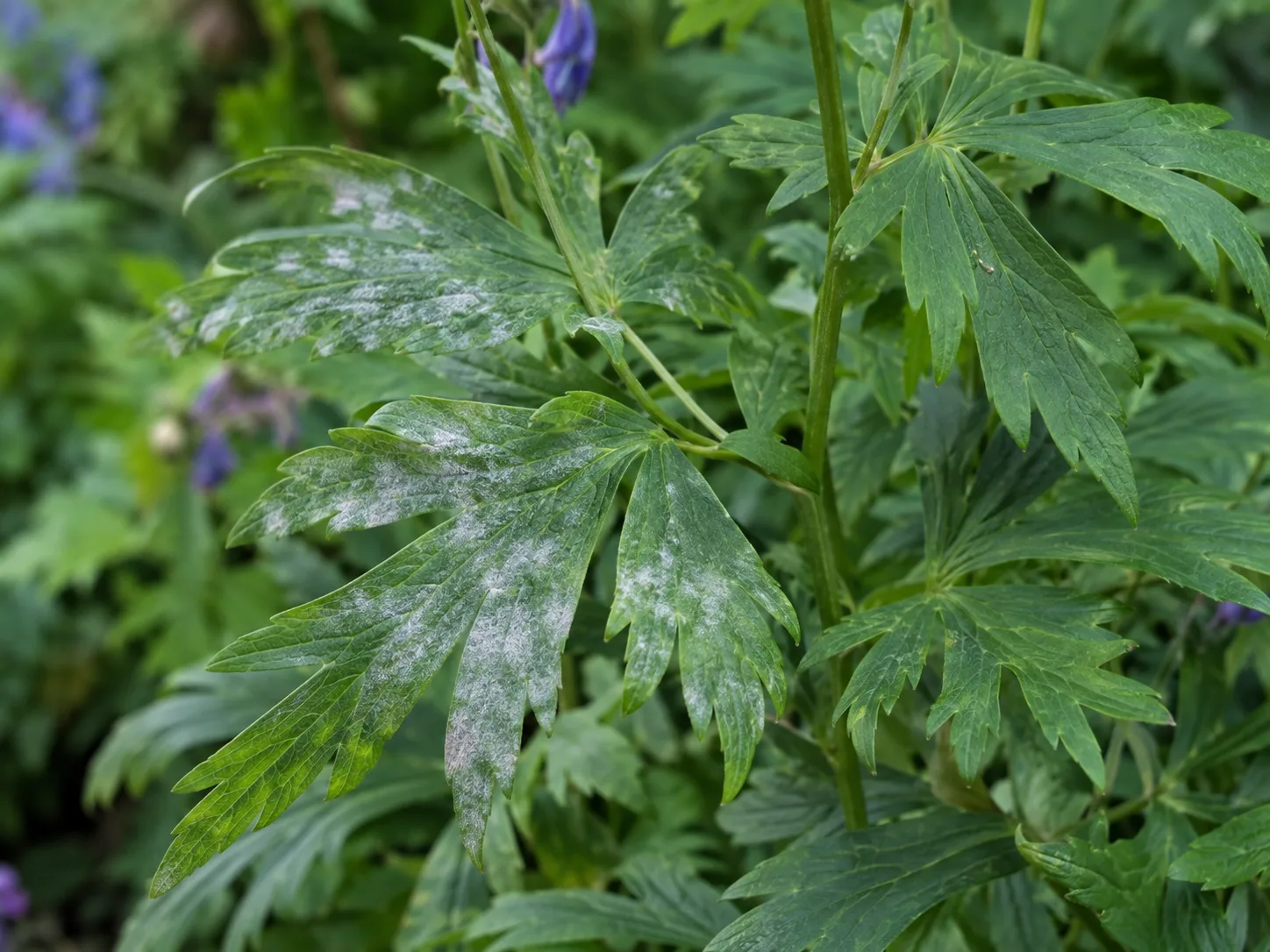
A white, flour-like film on leaves can make a garden look as if it needs an immediate chemical rescue. It usually does not. Powdery mildew is common, and a homemade spray may help slow an early outbreak, but a kitchen mixture is not a reliable cure for every plant or every powdery mildew fungus.
The most defensible homemade option described by an extension service is an experimental baking soda and horticultural oil mix. That is different from the familiar baking soda-and-dish-soap recipe, and it still carries a clear warning: test cautiously, check the oil label, and do not assume it is safe for every leaf. Start by confirming the diagnosis and improving the conditions that let the disease spread.
The short answer: a homemade spray is a support, not a cure
A homemade powdery mildew spray may help reduce new infections when disease is caught early, but it will not repair leaves that are already scarred, yellow, or curled. It also cannot compensate for a crowded, shaded canopy that stays humid at night. Think of spraying as one part of control, after diagnosis and basic plant-care adjustments.
Colorado State University Extension describes a mixture of baking soda and lightweight horticultural oil as an experimental treatment based on Cornell research. The extension gives a formula of 1 tablespoon baking soda and 2.5 tablespoons lightweight horticultural oil in 1 gallon of water, then explicitly says the mixture is experimental and to use it at your own risk. That caveat matters: the source is not presenting a universally proven recipe for all species, climates, or edible crops. Colorado State University Extension’s powdery mildew guidance
For a plant you value, a crop you plan to eat, or a species that reacts easily to sprays, a product formulated and labeled for powdery mildew on that plant is usually easier to use responsibly than an improvised tank mix. If you still choose to try the experimental home mixture, verify that the horticultural oil label permits the target plant and intended use, test a small area first, and stop if you see injury.
Confirm that the white coating is powdery mildew
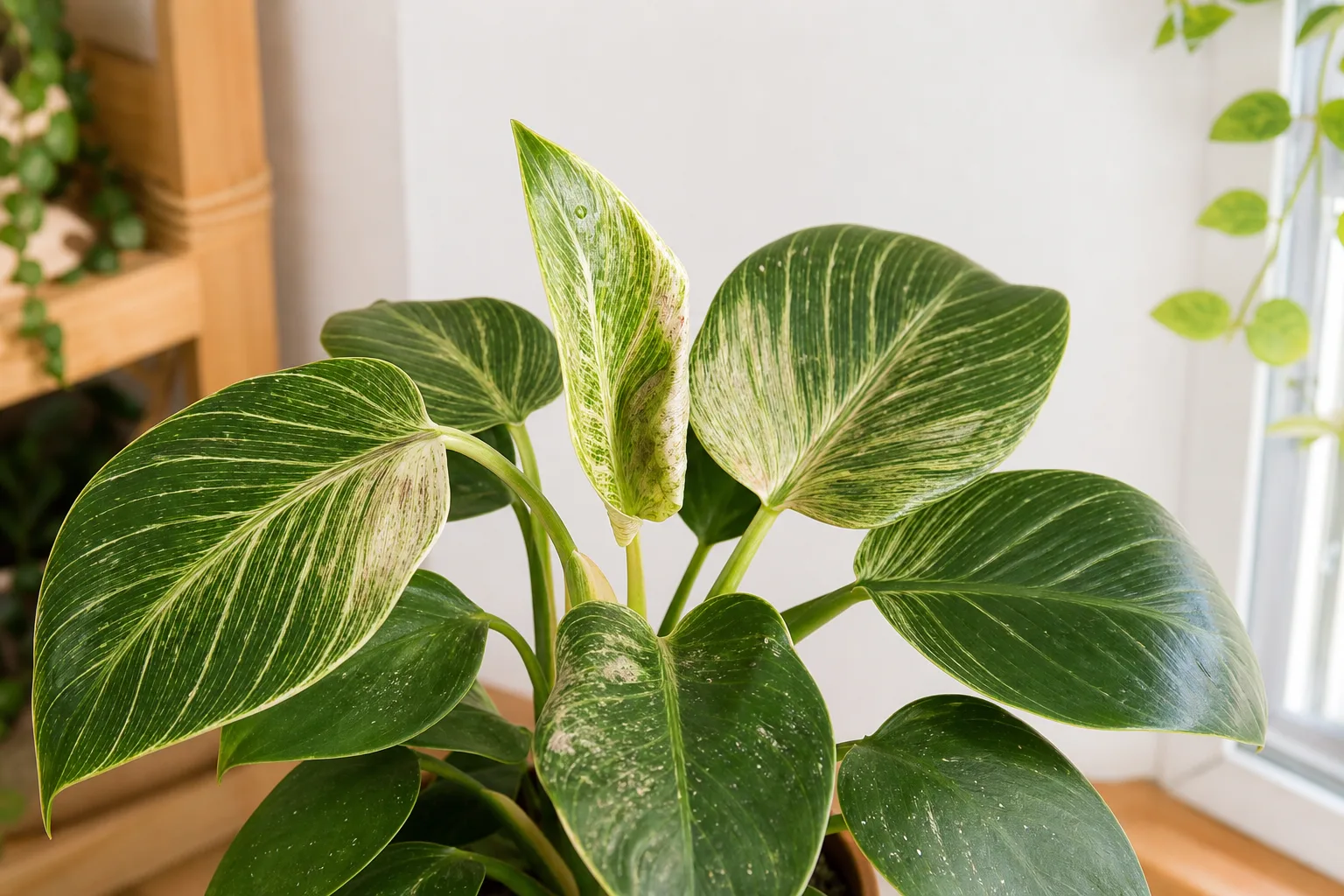
Powdery mildew typically appears as irregular white-to-gray patches that look like talc on the surface of leaves. The growth can spread across the upper or lower leaf surface and may appear on stems, buds, flowers, or young fruit. Affected leaves can become yellow, distorted, or dry when infection is extensive, but the first visible sign is often a patch of surface growth.
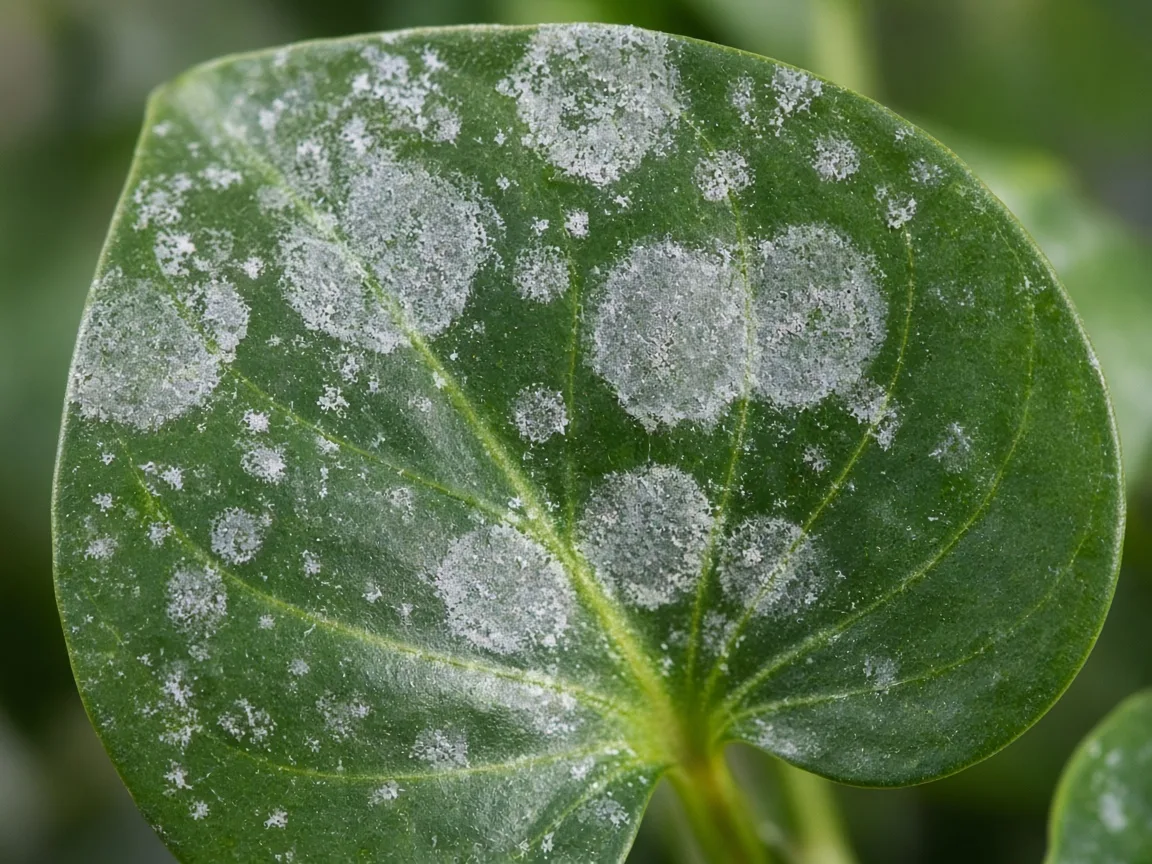
Check both sides of several leaves, especially older foliage and dense interior growth. Powdery mildew is caused by related fungi that tend to specialize on particular hosts, so a case on lilac does not automatically mean nearby squash will get the same disease. Spores can move through the air, but the receiving plant still has to be a compatible host and conditions must favor infection. Utah State University Extension’s vegetable powdery mildew guide
Powdery mildew versus downy mildew and pests
A powdery coating is a clue, not a laboratory diagnosis. Downy mildew often starts as yellow or pale angular areas on the upper surface, with grayish or purplish growth underneath when humidity is high. The exact look varies by crop, so use the host plant and the pattern of symptoms together instead of spraying every white mark.
Mealybugs and some aphids can look like white fuzz or cottony clumps, especially in leaf joints and along stems. Wipe one patch gently with a damp cotton swab: insects or wax may lift in blobs, while powdery mildew often leaves a flat, irregular stain or residual film. Water spots, dried mineral residue, and spray deposits also tend to follow droplets or appear uniformly rather than expanding as separate colonies.
If a plant has only one or two suspicious spots, photograph them and check again in a day or two before treating the whole plant. On a valuable tree, vegetable crop, or widespread outbreak, contact a local cooperative extension office with clear photos and the plant name. A wrong diagnosis wastes time and may expose sensitive foliage to a treatment it does not need.
Why the mildew develops even when leaves stay dry
Powdery mildew behaves differently from many familiar plant diseases. It can infect without a film of water on the leaf; warm days, humid nights, crowded growth, and poor air movement can create favorable conditions even when foliage looks dry by midday. Colorado State Extension notes that many powdery mildews are most severe in warm weather and that high humidity at night followed by lower daytime humidity supports their life cycle.
This is why “water less” is not a complete mildew treatment. Overwatering can stress roots, but the key garden-level changes are to avoid persistently humid, stagnant foliage and to water soil in the morning when practical. Powdery mildew spores can move by wind, and some species survive between seasons on living hosts or plant debris, so one spray does not reset the garden.
The disease also spreads in waves. A small colony can produce new spores, and fresh susceptible growth may become infected while old spotted leaves remain marked. That is why a useful treatment plan aims to protect healthy tissue and reduce future spread, not to make every existing leaf look new again. Utah State University Extension
What baking soda and soap can—and cannot—do
Baking soda is sodium bicarbonate. It is not a standardized fungicide product, and homemade concentrations vary from one recipe to another. Garden publications describe mixtures with dishwashing liquid, but the presence of a recipe online does not establish that the mixture is safe on every plant, effective against every powdery mildew species, or suitable for repeated weekly use.
A common garden recipe, for example, combines about 1 tablespoon of baking soda and 1 teaspoon of dish soap in a gallon of water. Gardening Know How also warns readers to test one leaf, avoid hot sunny conditions, and limit repeat use because baking soda can burn foliage and contribute to salts in soil. Those cautions are more important than treating the recipe as a guaranteed cure. Gardening Know How’s baking soda discussion
Another commonly circulated formula pairs baking soda with a small amount of non-detergent dishwashing soap instead of horticultural oil. That should not be confused with the experimental oil mixture described by Colorado State Extension. Soap is often added to help a liquid spread or cling, but ordinary household dish liquids are designed for dishes, not plant leaves; surfactants, fragrances, degreasers, and other additives vary by brand and may damage waxy or tender foliage.
Even if a spray slows new spots, established colonies and injured leaves can remain visible. Do not increase the dose because the old marks persist, and do not repeat an untested treatment automatically every week. A higher concentration can injure leaves without improving control.
The difference between baking soda and potassium bicarbonate
Potassium bicarbonate is a different chemical from baking soda, with potassium instead of sodium. Commercial potassium bicarbonate fungicides are formulated for plant use and have product labels that specify rates, crops, timing, protective equipment, and restrictions. That makes them a more predictable option than guessing at a kitchen recipe, though they can still injure plants if misused.
Utah State Extension lists potassium bicarbonate among products used to manage vegetable powdery mildew and warns that fungicides can cause phytotoxicity under certain conditions or when combined improperly. It specifically flags horticultural oils in temperatures above 85°F, sulfur above 80°F, and oil-sulfur combinations applied together or within two weeks. These are examples, not a substitute for checking the current product label for your location and plant.
Do not substitute potassium bicarbonate products by volume for baking soda or assume a household ingredient is an equivalent fungicide. If you buy a product, use the rate and interval on its own label. Utah State University Extension
A documented homemade option: baking soda plus horticultural oil
If your goal is specifically to try a homemade spray, the best-documented formula located for this guide is the experimental mixture Colorado State Extension attributes to Cornell research: 1 tablespoon baking soda plus 2.5 tablespoons lightweight horticultural oil in 1 gallon of water. The extension’s wording is unusually direct that the recipe is still experimental and should be used at the gardener’s own risk. It is a cautious trial, not a guarantee and not a product label.
The extension page names a particular lightweight oil in the recipe, but formulations and labels change. Do not assume any bottle labeled “oil,” neem oil, dormant oil, or insecticidal soap can replace it. Read the exact oil product label to see whether the plant, disease, dilution, and application method are permitted; if the label says not to mix with other materials, do not add baking soda. When the label does not clearly allow the use, skip the homemade mix and choose a labeled product or ask your extension office.
Wisconsin Extension’s summary of a powdery mildew home-remedies webinar similarly distinguishes the baking soda-and-oil approach as one DIY treatment with some promise while debunking several other popular household remedies. This does not prove that a single home formula will work for every garden. It does support being more selective than combining pantry ingredients at random. UW–Madison Extension’s discussion of powdery mildew home remedies
Why I would skip dish soap in a plant spray
Dish soap and insecticidal soap are not interchangeable. Insecticidal soaps are formulated and labeled for particular plant uses; dishwashing liquids vary and may contain ingredients that strip leaf waxes or cause spotting, marginal burn, or whole-leaf injury. A small amount can still be too much for a sensitive plant, especially when leaves are tender, drought-stressed, or exposed to heat. Gardening Know How explains the difference between dish detergents and insecticidal soaps
The goal of a home mildew treatment is not to make the mixture stick at any cost. If you use the experimental baking soda-and-oil treatment, follow the oil label and do not add detergent unless the label or a reliable crop-specific recommendation explicitly allows that combination. For a store-bought fungicide, do not add soap, oil, fertilizer, or another pesticide unless the product label permits tank mixing.
If you already sprayed dish soap and see curling, translucent patches, or brown edges, rinse the foliage gently with clean water if the product label does not say otherwise, move a houseplant out of direct sun, and stop applying the mixture. Do not try to “neutralize” it with vinegar or another household chemical. Give the plant time to show whether new growth remains healthy.
Control the outbreak before you spray
Before choosing any spray, inspect the plant, remove material that is too damaged to keep, and make it harder for new colonies to establish. These steps are useful whether you ultimately use a homemade mixture, a labeled fungicide, or no spray at all.
For houseplants, move the affected pot away from nearby susceptible plants while you confirm the diagnosis and remove debris. For outdoor beds, focus on the plant itself: powdery mildew fungi are generally host-specific, so spacing and cultivar choice matter more than spraying every neighboring species as a precaution.
Remove severe leaves without stripping the plant
Prune the leaves or stems that are badly covered, yellowing, or collapsing, rather than removing every leaf with a faint spot. Keep enough healthy foliage for the plant to photosynthesize, especially on squash, cucumber, roses, and young perennials. Utah State Extension notes that heavy loss of vegetable foliage can reduce yield and leave fruit more exposed to sunscald.
Use clean, sharp shears and disinfect them between plants when you are moving through a disease outbreak. Bag heavily infected trimmings for household or municipal disposal where accepted; avoid putting diseased plant debris into a cool home compost pile. Extension guidance cautions that backyard compost may not reach temperatures high enough to destroy pathogens that persist in plant material.
Pruning is not a cure for leaves that are already marked, but it can reduce the amount of infected tissue and open a dense plant. If the plant is near the end of its season and most of its canopy is affected, removing the annual may be more practical than repeatedly treating it. For a shrub or perennial that will return, focus on a measured cleanup and improved conditions rather than a severe cutback.
Fix crowding, shade, and evening humidity
Increase air movement by spacing plants according to their mature size, thinning crowded stems, and removing weeds that trap still, humid air. If a houseplant is packed against other pots, give it breathing room and avoid enclosing it in a stagnant, humid corner. Do not prune so heavily that you expose shade-adapted foliage to harsh sun overnight.
When watering outdoors, aim water at the soil in the morning rather than wetting leaves late in the day. Overhead irrigation does not reliably stop powdery mildew, and prolonged wet foliage can encourage other leaf diseases. Indoors, avoid routine misting as a mildew treatment; it rarely changes room humidity in a lasting way and can leave leaves wet without solving crowding or stagnant air.
The next season is when variety selection can make a real difference. Look for cultivars described as resistant or tolerant to powdery mildew for the exact plant and disease group. Resistance reduces risk but is not immunity; Utah State notes that pathogen races can vary, and a resistant label may not protect against every race.
How to test and apply a spray with less risk
Never coat an entire prized plant the first time you use an unfamiliar mixture or product. Choose a small section with several leaves, apply the same dilution and coverage you plan to use, then wait at least 24 to 48 hours. Check both treated and untreated leaves for spots, bronzing, curling, translucent patches, or crisp edges; if you see injury, do not treat the rest of the plant.
Spray only in the conditions allowed by the label and avoid hot direct sun, heat-stressed foliage, or plants that are already wilting from drought. Horticultural oils can injure leaves in high temperatures, and Utah State Extension gives 85°F as a point above which oils may be phytotoxic. That threshold is a warning example from extension guidance, not permission to spray at lower temperatures if your oil label sets a stricter limit.
Aim for even coverage of affected foliage without soaking the potting mix or creating runoff. A contact treatment has to reach the surface it is intended to protect, but spraying until leaves drip wastes material and increases the chance of soil salt buildup or contact with nearby flowers. Follow label directions for protective clothing, application frequency, re-entry time, storage, and disposal.
Do not expect old white patches to vanish after a treatment. Track the plant’s new growth and the number of new colonies instead. If new spots continue to appear after a careful test and a reasonable label-directed interval, reassess the diagnosis and growing conditions rather than raising the concentration.
Protect pollinators, people, and edible crops
Outdoor sprays can reach more than the leaf you intend to treat. Avoid spraying open flowers or plants where bees are foraging, and follow every pollinator warning and timing restriction on the exact product label. Purdue Extension advises reading label directions and keeping pesticides away from areas where pollinators visit; the risk depends on the product and exposure, so do not assume a garden spray is harmless because it is called organic. Keep children and pets away during application and until the label says treated areas are safe to re-enter. Purdue Extension’s pollinator guidance
For herbs, vegetables, and fruit, check that the product is labeled for that crop and observe any preharvest interval before picking. Do not spray a homemade mix on food crops just because each ingredient is sold for household use. Wash harvested produce according to normal food-safety practice, and never apply a pesticide in a way that conflicts with its label.
In the United States, federal law makes it an unlawful act to use a registered pesticide in a manner inconsistent with its labeling. Follow the listed crop or site, rate, timing, protective measures, and other directions; do not combine a pesticide with another material when its label prohibits that mixture. If the label does not clearly cover the use you have in mind, do not improvise. 7 U.S.C. § 136j
When to choose a labeled fungicide
A labeled fungicide can make sense when the diagnosis is solid, the plant is valuable or productive, the disease is spreading, and cultural steps alone are not keeping new growth clean. Look for a product whose active ingredient and label specifically cover powdery mildew on the plant or crop you are treating. “Organic” does not mean harmless, and “natural” does not mean every crop or pollinator is protected.
Potassium bicarbonate, sulfur, and some horticultural oils are among the options extension sources discuss, but each has a different risk profile and application window. Colorado State and Utah State both emphasize following the label for the target plant, rate, interval, harvest timing, and precautions. Some products may be unavailable or not registered for a crop in your state, so do not rely on an old list or on a product name alone.
Use the smallest effective treatment area and pair the product with airflow, pruning, and resistant cultivars where available. Rotate modes of action only when the label and local extension advice call for it, since repeated use of the same fungicide can contribute to resistance in some pathogen populations. If the infestation is severe on a tree, greenhouse crop, or commercial planting, ask a local extension educator or licensed professional for a crop-specific plan.
What to do if mildew keeps returning
Repeated mildew does not automatically mean you need a stronger spray. First check whether the white material is truly powdery mildew, whether new spots are appearing on new leaves, and whether the plant is still crowded or shaded. A treatment can slow spread without removing the conditions that made infection likely.
Look at the timing too. If the disease appears every late summer on the same susceptible phlox, lilac, rose, or squash, cultivar resistance and spacing may have more lasting value than calendar spraying. If the problem is indoors, separate the plant, improve airflow, inspect neighboring plants, and avoid repeatedly wetting leaves without a clear treatment plan.
If a spray causes injury, stop using it and note the plant species, product ingredients, dilution, temperature, and time of application. These details help an extension office or nursery professional distinguish phytotoxicity from disease progression. Do not pile on a second homemade recipe before you understand what happened.
Conclusion
A homemade powdery mildew spray can be a cautious experiment, not a dependable cure. The clearest extension-documented option is baking soda with lightweight horticultural oil, but Colorado State Extension labels its formula experimental and warns gardeners to use it at their own risk. Ordinary dish soap recipes have more uncertainty, and sensitive foliage can be damaged by both the ingredient choice and the conditions during application.
Confirm the disease first, remove only the worst affected tissue, open the canopy, and water the soil in the morning. If you test a spray, check the product label, patch-test a small section, protect pollinators and edible crops, and measure success by clean new growth rather than by whether old leaves look perfect. For recurring or valuable-crop problems, a locally labeled fungicide and advice from your cooperative extension office are safer next steps than escalating a pantry recipe.