Neem Care Guide: Light, Water & Growing Tips
Azadirachta indica
Neem needs full sun, sandy well-draining soil, and drought-smart watering in containers. Hardy in Indian tropics; protect below 5°C and prune to manage size.
Neem Care Guide: Light, Water & Growing Tips
Start with wateringThe most common care mistake for NeemWatering guide →Neem care essentials
Light
Water
Water deeply when the top 3–5 cm of soil is dry. In peak summer that may mean every 4–7 days; in cooler months every 10–14 days. Container neem tolerates dry spells but cannot sit in waterlogged mix.
Soil
Sandy, lean, well-draining mix with 20–30 % compost. Prefers deep permeable sandy soils outdoors; containers need sharp drainage. Preferred pH 6.2–7.0 (tolerates about 5.0–8.0).
Humidity
Moderate; naturally suited to Indian tropical and subtropical climates
Temperature
about 10°C to 37°C (50–99°F); protect from frost
Fertilizer
About Neem
Neem is native to Dry tropical forests of the Indian subcontinent (India, Myanmar, Sri Lanka, Bangladesh, Pakistan), typically reaches 1.5–3 m in containers with pruning; 15–25 m (50–75 ft) in open ground indoors, with moderate to fast once established in warm sun growth. Neem has a tree like growth habit and part of the Meliaceae family. It is also known as Neem Tree, Indian Lilac, Margosa, Nim, Nimba, and Veppam.
| Detail | Information |
|---|---|
| Also known as | Neem Tree, Indian Lilac, Margosa, Nim, Nimba, Veppam |
| Native region | Dry tropical forests of the Indian subcontinent (India, Myanmar, Sri Lanka, Bangladesh, Pakistan) |
| Mature size | 1.5–3 m in containers with pruning; 15–25 m (50–75 ft) in open ground |
| Growth rate | Moderate to fast once established in warm sun |
| Growth habit | Tree Like |
| Scientific name | Azadirachta indica |
| Family | Meliaceae |
Neem Care Guide: Light, Water & Growing Tips
Neem care starts with one honest framing: Azadirachta indica is a heat-loving, drought-smart mahogany-family tree, not a thirsty kitchen herb for a dim living room. Get placement right—full sun, free drainage, and watering only after the upper mix dries—and the rest of the routine becomes predictable. Treat it like a tropical houseplant that wants constant moisture, and you will see yellowing, leaf drop, and soft roots long before you ever need fertilizer.
This overview covers identity, mature size, light, water, soil, temperature, feeding, pruning for size, propagation basics, common mistakes, and pet look-alike warnings. Use it as the hub, then open the sibling guides when you need depth on one topic.
What Is Neem?
Neem is a medium to large tropical tree grown for shade, medicinal and cultural uses, and—on balconies and terraces—as a pruned patio tree. Missouri Botanical Garden places its native range in India, Nepal, Pakistan, Bangladesh, and Sri Lanka, with long cultivation across India, Malaysia, and Pakistan. Oregon State University describes it as a semi-evergreen subtropical tree that prefers deep, permeable sandy soils in sub-arid and sub-humid climates.
If you are deciding whether the Neem plant hub fits your home, match the plant to a sunny terrace, roof, or south-facing balcony first. It is a poor fit for low-light rooms, frost-exposed spots, and waterlogged pots.
Botanical Identity and Common Names
The accepted botanical name is Azadirachta indica in the family Meliaceae. Common names include neem tree, Indian lilac, margosa, nim, nimba, and regional names such as veppam. Those labels usually mean the same species for care purposes, but buyers should still confirm the botanical tag.
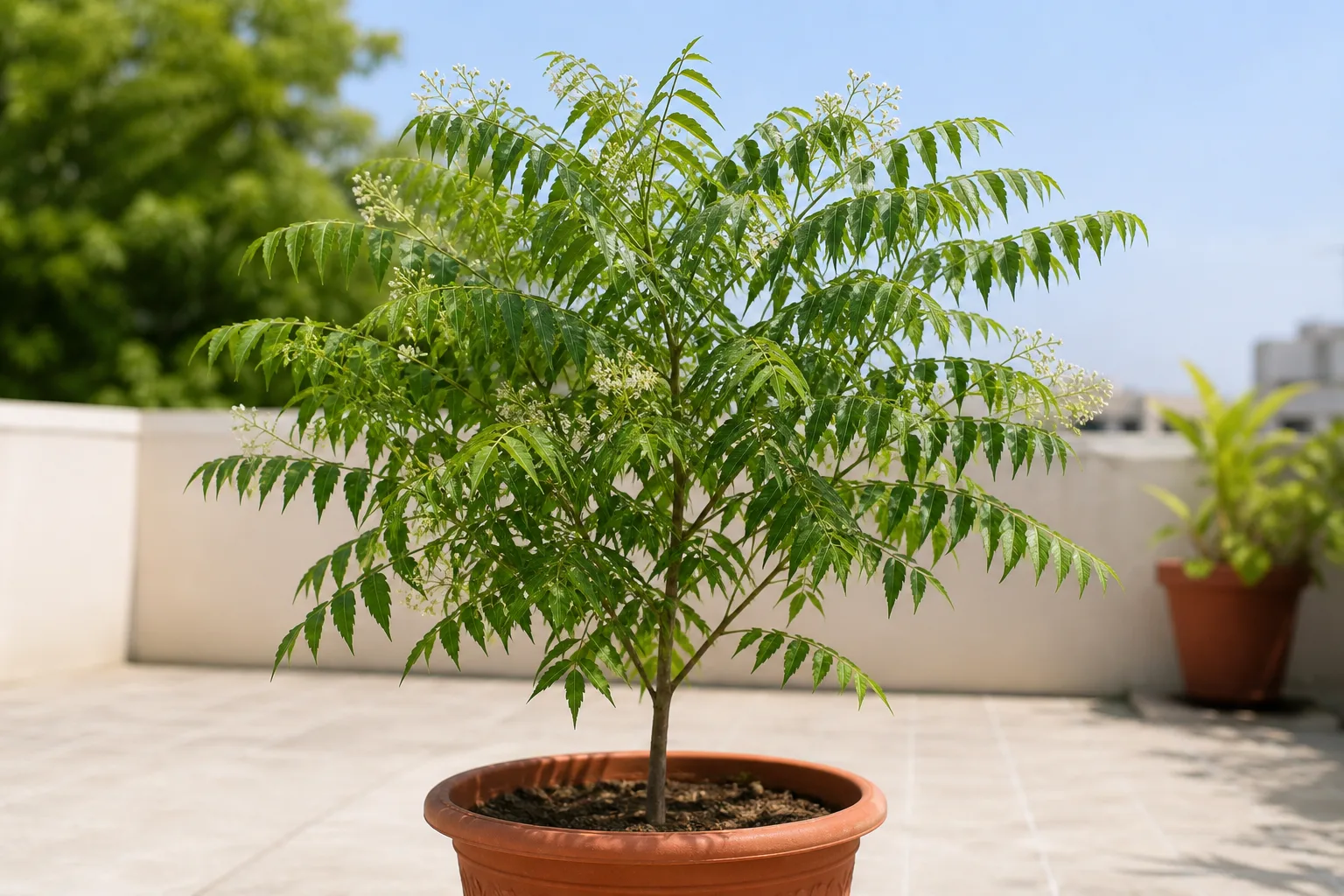
Compound pinnate leaves with serrated leaflets, fragrant white flowers in drooping panicles, and olive-like drupes are the field marks Missouri Botanical Garden emphasizes. Trees are polygamous—both bisexual and male flowers can occur on the same plant—and each fruit usually holds one elongated seed. Temporary leaf drop during protracted drought is normal for this evergreen; it is not automatically a watering emergency.
Do not confuse neem with curry leaf (Murraya koenigii), sometimes sold as “sweet neem.” Curry leaf is a different species with a different care profile. Also watch for Chinaberry (Melia azedarach), a related Meliaceae look-alike with bead-like yellow fruit that is toxic to pets.
Mature Size in the Ground vs in Containers
In open ground, neem commonly reaches 50–75 feet (15–23 m), occasionally taller, with a dense round to oval crown according to Missouri Botanical Garden. Oregon State lists about 50 ft (15 m) for landscape specimens. That is a real shade tree, not a windowsill plant.
In containers with regular pruning, expect roughly 1.5–3 m of manageable canopy—enough for a patio presence without becoming an unmanageable trunk. Young trees fill pots quickly; plan on Neem repotting every two to three years when roots circle drainage holes or the mix dries within a day of watering. Prune for structure if you want a patio tree rather than a full avenue specimen.
Best Growing Conditions for Neem
Four variables decide almost every outcome: light, temperature, soil drainage, and watering rhythm. Align those four and feeding, pruning, and propagation become routine. Misalign any one—especially light or wet feet—and the plant stalls, yellows, or drops leaves no matter how much compost tea you pour on.
Light and Placement
Neem needs full sun for best performance—aim for 6+ hours of direct light daily on a terrace, roof, or bright south-facing balcony. Missouri Botanical Garden lists culture as full sun to part shade; Oregon State echoes sun or partial shade. Seedlings can push through brief moderate shade, but mature canopy quality and drying predictability both suffer in weak light.
Indoors, only a very bright sunroom or greenhouse-level exposure works long term. A dim living-room corner will stretch growth, slow drying of the mix, and invite overwatering mistakes. For window choice, seasonal intensity, and warning signs of too little or too much sun, use the dedicated Neem light guide.
Temperature and Cold Limits
Neem is a tropical-to-subtropical species. Missouri Botanical Garden states it is intolerant of temperatures below 40°F (about 4°C) and best in USDA Zones 10–12. Oregon State lists hardiness as USDA Zone 10 (subtropical). Comfortable day-to-day growth for Indian home growers sits roughly in the 10–37°C (50–99°F) band once the plant is established in sun.
Protect container plants before North India cold snaps. Move pots under cover or indoors to the brightest available spot when overnight lows approach the frost line. Brief cool weather is less dangerous than wet soil plus cold—roots that stay cold and waterlogged decline fast.
Soil, Drainage, and pH
The National Research Council’s neem volume notes that neem grows best on deep, well-drained sandy soils and often fails on poorly drained silty clays or sites with high or fluctuating water tables. Missouri Botanical Garden recommends deep, sandy, dry-to-medium, well-drained soils and calls out excellent drought tolerance in the landscape—while noting container plants generally have less drought reserve than field trees.
For pots, use a sandy, lean, free-draining mix with about 20–30% compost. A practical blend is 50% sandy loam or garden soil, 25% coarse sand or perlite, and 25% compost. Preferred pH is about 6.2–7.0, with broader tolerance near 5.0–8.0. Sharp drainage is non-negotiable—Plants For A Future notes neem dies quickly in waterlogged soils—so if the pot stays heavy for days or smells sour, fix the mix before changing fertilizer. Full recipes and drainage troubleshooting live in the Neem soil guide.
How to Water Neem Without Drowning It
Water deeply when the top 3–5 cm of soil is dry, then let excess drain. In peak Indian summer that may mean every 4–7 days; in cooler months often every 10–14 days. Lift the pot—when it feels lighter, you are closer to a real need than when the surface merely looks pale.
Established neem tolerates dry spells well; the dangerous pattern is chronic wet feet, especially in cool weather or low light. Missouri Botanical Garden rates water need as dry to medium and warns that container plants are less drought-buffered than landscape trees. Young seedlings need steadier moisture than established specimens while roots build depth—the NCBI neem book notes early growth emphasizes roots before rapid top growth.
Overwatering signs include yellowing lower leaves, leaf drop in cool or dim conditions, and sour-smelling soil with soft roots. Underwatering shows as temporary leaf drop in prolonged drought, crispy edges, and stalled flush growth. When unsure, wait one more day and check depth rather than adding a “little sip.” Step-by-step checks and seasonal cadence are in the Neem watering guide.
Feeding, Pruning, and Keeping Container Size Manageable
Neem tolerates lean soils. Feed lightly with a balanced fertilizer or compost tea monthly during active growth (roughly March–October in much of India), and pause if the plant is stressed, newly repotted, or not flushing. Overfeeding in small pots produces soft, weak growth that asks for more water than the roots can safely handle. Details on dilution and timing belong in the Neem fertilizer guide.
Pruning is how container growers keep a patio-scale tree. Tip-prune for branching, remove crossing wood, and cut back hard in late winter or early spring if the canopy outgrows the balcony. Pair pruning with the Neem pruning guide rather than stripping foliage mid-stress. Do not change pot size, placement, and watering all at once after a big cut—stabilize one variable at a time.
Propagation Snapshot: Seeds and Cuttings
Fresh seed is the classic path. The NCBI neem book advises taking seed from thoroughly ripe fruit and sowing quickly—viability drops when seed sits. Semi-hardwood cuttings in warm weather can work for growers who already have a healthy parent, rooted in sandy mix under bright light. Aftercare for new plants—moisture without sogginess, strong light, and delayed fertilizer—matters more than the exact cutting length. Full methods and failure modes are covered in the Neem propagation guide.
Outdoors in frost-free climates, Missouri Botanical Garden notes trees can spread invasively by self-seeding. Container growers rarely face that issue, but ground plantings in tropical regions should plan for volunteer seedlings.
Common Mistakes That Stress Neem
The most expensive mistakes are placement and moisture, not missing a fertilizer week.
Keeping neem in weak indoor light slows drying and produces pale, sparse canopy. Move to the sunniest outdoor or sunroom spot available before diagnosing “nutrient deficiency.”
Watering on a tropical-herb calendar while the mix is still wet—especially in winter—invites root decline. Finger-check depth; do not obey a reminder app.
Using dense, peat-heavy mix without grit holds water against a species built for sandy drainage. Rebuild the mix when pots stay heavy for days.
Exposing containers to frost or sustained temperatures near or below about 4–5°C. Cover or move pots before cold snaps in North India winters.
Confusing leaf drop from drought or cool nights with a need for more water when the pot is already wet. Confirm soil moisture first.
Assuming no pests forever. Established landscape trees often have no serious insect or disease problems per Missouri Botanical Garden, but container plants can still host scale on stems—inspect undersides and sticky residue during weekly checks.
Pet Safety and the Chinaberry Look-Alike
ASPCA’s toxic and non-toxic plant listings do not flag Azadirachta indica the way they flag some common ornamentals, but any plant material can still upset pets if chewed. Keep fallen leaves and seeds off floors pets explore, and treat concentrated neem oil and seed products with extra caution around cats and dogs—those are different exposures from a living patio tree.
The critical look-alike is Chinaberry (Melia azedarach). ASPCA lists Chinaberry as toxic to dogs, cats, and horses, with ripe fruit especially hazardous, though bark, leaves, and flowers can also be involved. Clinical signs can include vomiting, diarrhea, salivation, depression, weakness, and seizures. If a nursery plant looks “neem-like” but carries clusters of yellow bead-like berries, verify identity before assuming it is Azadirachta indica. This is plant-identification guidance, not veterinary advice—contact a veterinarian or poison-control resource if ingestion is suspected.
When to Use This Page vs Other Neem Guides
Use this overview to confirm you bought the right plant, choose a sunny placement, set a drought-smart watering rhythm, and decide whether a container or ground planting fits your space.
Open sibling guides when you need depth:
- Neem light — window/terrace choice, low-light limits, sun-stress signs
- Neem watering — dryness checks, seasonal cadence, over- and underwatering
- Neem soil — mix recipes, drainage failures, pH notes
- Neem fertilizer — when to feed, dilution, lean-soil feeding
- Neem repotting — timing, pot size, post-repot care
- Neem propagation — seed freshness, cuttings, aftercare
- Neem pruning — size control and structural cuts
Related Neem Guides
Build out the full cluster as you grow:
- Hub: Neem
- Care: light, watering, soil, fertilizer, repotting, propagation, pruning
Start with light and watering if the plant is new; add soil and repotting when the pot stays wet or roots circle the drainage holes.
Conclusion
Neem rewards growers who respect its dry-forest origins: bright sun, sandy drainage, and water only after the upper soil dries. Keep containers above frost risk, prune for patio scale, sow fresh seed when you propagate, and never confuse true neem with toxic Chinaberry. Master those basics on this page, then use the sibling guides when one variable—light, water, soil, feed, pot size, or pruning—needs a deeper fix.
How to care for Neem?
When should you water Neem?
Water deeply when the top 3–5 cm of soil is dry. In peak summer that may mean every 4–7 days; in cooler months every 10–14 days. Container neem tolerates dry spells but cannot sit in waterlogged mix.
- Water when top 3–5 cm is dry - Water deeply when the top 3–5 cm of soil is dry.
- lift the pot to confirm it feels lighter before soaking - Water deeply when the top 3–5 cm of soil is dry.
- Drain excess water - Water deeply when the top 3–5 cm of soil is dry.
What soil works best for Neem?
Sandy, lean, well-draining mix with 20–30 % compost. Prefers deep permeable sandy soils outdoors; containers need sharp drainage. Preferred pH 6.2–7.0 (tolerates about 5.0–8.0).
- 50% sandy loam or garden soil - Prefers deep permeable sandy soils outdoors; containers need sharp drainage.
- 25% coarse sand or perlite - Prefers deep permeable sandy soils outdoors; containers need sharp drainage.
- 25% compost - Sandy, lean, well-draining mix with 20–30 % compost.
Grower notes for Neem
What matters most with Neem
Neem is a heat-loving, drought-smart mahogany-family tree—not a thirsty herb. In containers the goal is bright sun, free drainage, and watering only after the upper soil dries. Pair full sun (6+ hours daily) with sandy, lean, well-draining mix, and avoid changing water, pot size, and placement all at once. Prune regularly if you need a manageable patio size rather than a full shade tree.
Best placement in a real home
Neem belongs on the sunniest terrace, roof, or south-facing balcony where it gets direct light most of the day—not in a dim living room corner. Mature trees are light-demanding; seedlings tolerate moderate shade only briefly. Water deeply when the top 3–5 cm of soil is dry. If the pot stays wet longer than expected, move the plant into better light or reassess the mix before watering again. Humidity target: Moderate; naturally suited to Indian tropical and subtropical climates. Temperature comfort zone: about 10°C to 37°C (50–99°F); protect from frost.
Before you buy this plant
Choose Neem with firm compound leaves, clean leaf undersides, and soil that does not smell sour. Be cautious if you see chronic yellowing in good light, collapsed stems, or a pot that stays wet in poor light. Confirm the plant is Azadirachta indica—not Chinaberry (Melia azedarach), a related look-alike with bead-like yellow fruit that is toxic to pets.
First month after bringing it home
Do not repot Neem on day one unless the mix is failing or pests are obvious. Quarantine it, learn how fast the pot dries, and keep care boring while it adjusts. Watch especially for overwatering in cool weather and cold damage below about 4–5°C. If leaves drop early, inspect light, watering, and roots before assuming the plant is permanently weak.
Pet-aware note for Neem
Neem is not listed as toxic to cats or dogs by ASPCA, but any plant material can cause stomach upset if chewed. Concentrated neem oil and seed products need extra caution around pets, especially cats. Keep fallen leaves and seeds off floors pets explore, and do not confuse neem with toxic Chinaberry.
How to tell Neem is settling in
Also sold as Indian Lilac, Margosa, Nim, and Nimba, this plant should be judged by stable new leaf flush rather than label names alone. If you plan to multiply it later, common methods include fresh Seeds (viability drops fast) and semi-hardwood stem cuttings in warm weather. Repot only when you see roots circling drainage holes and soil drying within a day of watering.
Is neem safe for pets?
Azadirachta indica is not listed as toxic by ASPCA, but chewing leaves or seeds can still upset pets. Keep neem oil products and fallen plant parts out of reach—especially from cats.
ASPCA does not list neem tree (Azadirachta indica) on its toxic plant database. Consumption of any plant material may still cause vomiting or gastrointestinal upset in dogs and cats. Concentrated neem oil and seed products warrant extra caution around pets. Do not confuse neem with Chinaberry (Melia azedarach), which is toxic.
Watering Neem
For Neem, water when top 3–5 cm is dry; lift the pot to confirm it feels lighter before soaking and water every 4–7 days in summer; every 10–14 days in cooler months. Reduce in winter when growth slows; increase in hot dry spells when the mix dries quickly. Young seedlings need steadier moisture than established trees.
| Detail | Information |
|---|---|
| How often | Every 4–7 days in summer; every 10–14 days in cooler months |
| How to check | Water when top 3–5 cm is dry; lift the pot to confirm it feels lighter before soaking |
| Seasonal changes | Reduce in winter when growth slows; increase in hot dry spells when the mix dries quickly. Young seedlings need steadier moisture than established trees. |
Signs of overwatering
- yellowing lower leaves
- leaf drop in cool or low-light weather
- sour-smelling soil and soft roots
Signs of underwatering
- temporary leaf drop during prolonged drought
- crispy leaf edges
- stalled new flush growth
Soil & potting for Neem
Use a mix of 50% sandy loam or garden soil, 25% coarse sand or perlite, 25% compost for Neem. Sharp drainage essential; intolerant of waterlogging or chronic wet feet. Target soil pH around 6.2–7.0. Repot every 2–3 years; young trees fill pots quickly, ideally in late winter or early spring (February–March in India).
| Detail | Information |
|---|---|
| Recommended mix | 50% sandy loam or garden soil, 25% coarse sand or perlite, 25% compost |
| Drainage | Sharp drainage essential; intolerant of waterlogging or chronic wet feet |
| Soil pH | 6.2–7.0 |
| Repotting frequency | Every 2–3 years; young trees fill pots quickly |
| Best season to repot | Late winter or early spring (February–March in India) |
Signs it needs repotting
- roots circling drainage holes
- top-heavy canopy in a small pot
- soil drying within a day of watering
Humidity & temperature for Neem
Neem prefers moderate; naturally suited to Indian tropical and subtropical climates, though normal home humidity is usually fine. Keep temperatures around about 10°C to 37°C (50–99°F); protect from frost.
| Detail | Information |
|---|---|
| Humidity | Moderate; naturally suited to Indian tropical and subtropical climates - normal home humidity is fine. |
| Ideal temperature | about 10°C to 37°C (50–99°F); protect from frost |
Fertilizer & pruning for Neem
Common problems on Neem
Yellow Leaves
MediumLikely cause: Common on this plant type; confirm with recent watering, light, and root checks.
Quick fix: Inspect the plant and correct the most likely care stressor before stacking treatments.
Full fix guide →Brown Tips
MediumLikely cause: Common on this plant type; confirm with recent watering, light, and root checks.
Quick fix: Inspect the plant and correct the most likely care stressor before stacking treatments.
Full fix guide →Root Rot
MediumLikely cause: Common on this plant type; confirm with recent watering, light, and root checks.
Quick fix: Inspect the plant and correct the most likely care stressor before stacking treatments.
Full fix guide →Overwatering
MediumLikely cause: Common on this plant type; confirm with recent watering, light, and root checks.
Quick fix: Inspect the plant and correct the most likely care stressor before stacking treatments.
Full fix guide →Underwatering
MediumLikely cause: Common on this plant type; confirm with recent watering, light, and root checks.
Quick fix: Inspect the plant and correct the most likely care stressor before stacking treatments.
Full fix guide →Spider Mites
MediumLikely cause: Common on this plant type; confirm with recent watering, light, and root checks.
Quick fix: Inspect the plant and correct the most likely care stressor before stacking treatments.
Full fix guide →Mealybugs
MediumLikely cause: Common on this plant type; confirm with recent watering, light, and root checks.
Quick fix: Inspect the plant and correct the most likely care stressor before stacking treatments.
Full fix guide →Aphids
MediumLikely cause: Common on this plant type; confirm with recent watering, light, and root checks.
Quick fix: Inspect the plant and correct the most likely care stressor before stacking treatments.
Full fix guide →Leggy Growth
MediumLikely cause: Common on this plant type; confirm with recent watering, light, and root checks.
Quick fix: Inspect the plant and correct the most likely care stressor before stacking treatments.
Full fix guide →Slow Growth
MediumLikely cause: Common on this plant type; confirm with recent watering, light, and root checks.
Quick fix: Inspect the plant and correct the most likely care stressor before stacking treatments.
Full fix guide →Wilting
MediumLikely cause: Common on this plant type; confirm with recent watering, light, and root checks.
Quick fix: Inspect the plant and correct the most likely care stressor before stacking treatments.
Full fix guide →Drooping Leaves
MediumLikely cause: Common on this plant type; confirm with recent watering, light, and root checks.
Quick fix: Inspect the plant and correct the most likely care stressor before stacking treatments.
Full fix guide →Low Humidity
MediumLikely cause: Common on this plant type; confirm with recent watering, light, and root checks.
Quick fix: Inspect the plant and correct the most likely care stressor before stacking treatments.
Full fix guide →Not Enough Light
MediumLikely cause: Common on this plant type; confirm with recent watering, light, and root checks.
Quick fix: Inspect the plant and correct the most likely care stressor before stacking treatments.
Full fix guide →Fungus Gnats
MediumLikely cause: Common on this plant type; confirm with recent watering, light, and root checks.
Quick fix: Inspect the plant and correct the most likely care stressor before stacking treatments.
Full fix guide →Mold on Soil
MediumLikely cause: Common on this plant type; confirm with recent watering, light, and root checks.
Quick fix: Inspect the plant and correct the most likely care stressor before stacking treatments.
Full fix guide →