How to Get Rid of Mealybugs: 8 Easy Methods
Learn how to get rid of mealybugs with eight practical methods, from isolation and alcohol swabs to soap, oils, natural enemies, and label-safe pesticides.
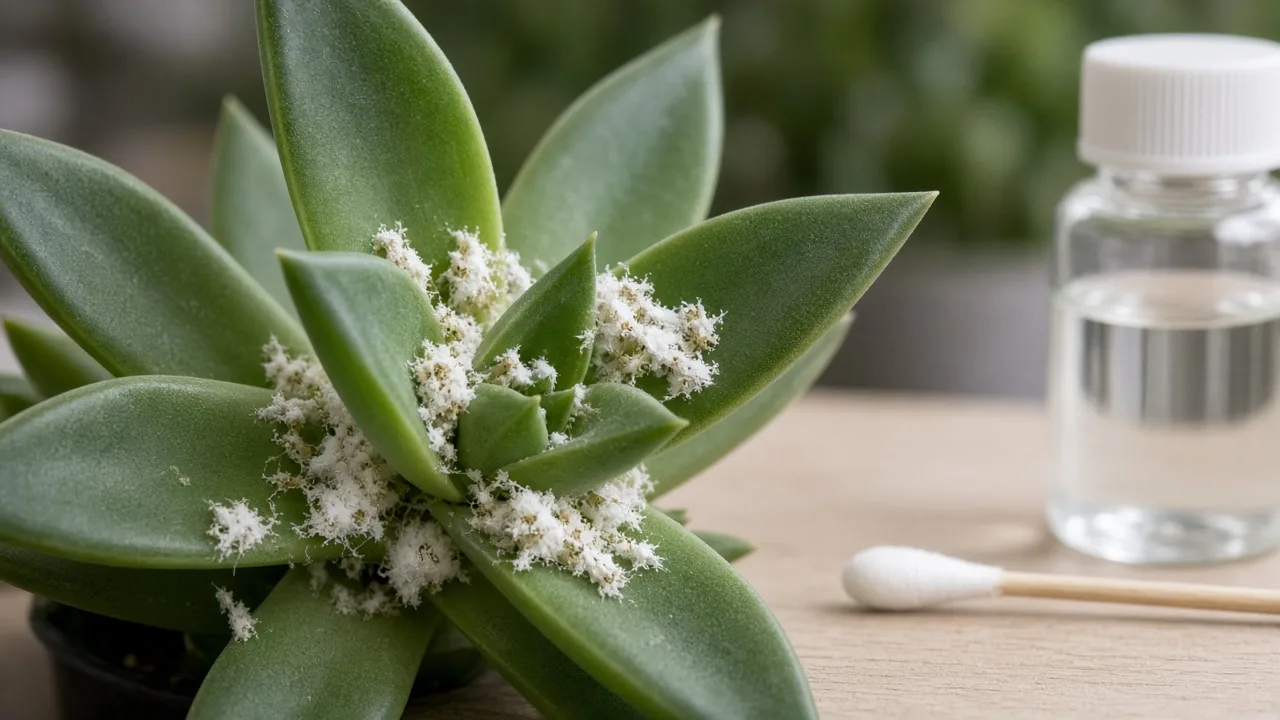
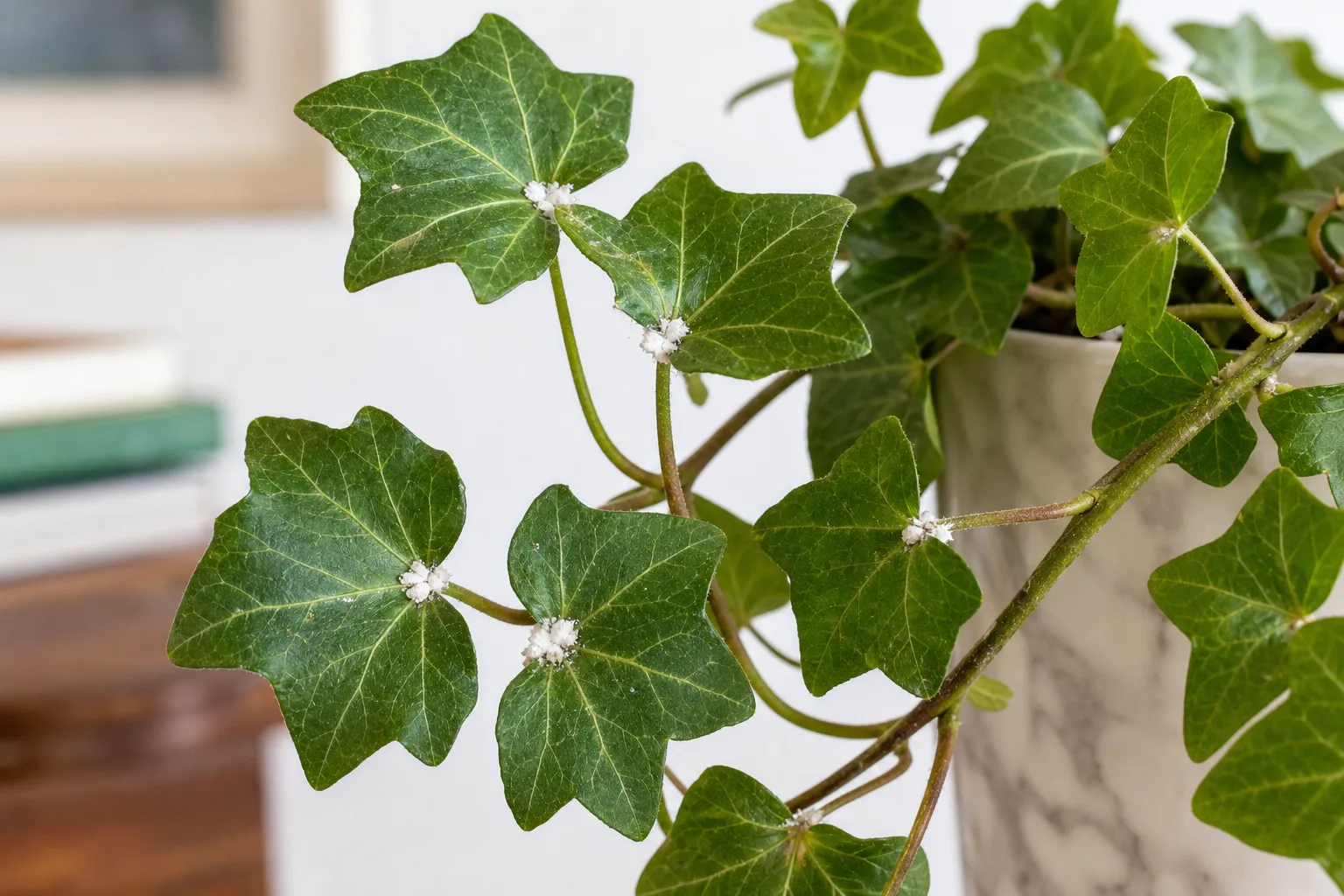
If you see small white tufts on a plant, do not reach for the strongest spray first. The most reliable way to get rid of mealybugs is a sequence: isolate the plant, remove as many pests as possible, choose a treatment that fits the plant and infestation, then repeat inspections until you stop finding live insects.
Mealybugs are hard to finish off because they hide in leaf axils, stem joints, tight folds, crowns, and sometimes the roots. Their waxy covering also reduces the reach of contact treatments. The good news is that a light infestation is often manageable without harsh pesticides, especially when you start before the colony has spread.
The first move: isolate the plant and stop the spread
Move the affected plant away from other plants before you clean or spray it. Put it somewhere with enough light and airflow to keep the plant healthy, but not where leaves touch neighboring plants. Mealybugs do not fly as adults in the way whiteflies do, but crawlers and slow-moving females can travel across touching foliage, pots, stakes, and plant stands.
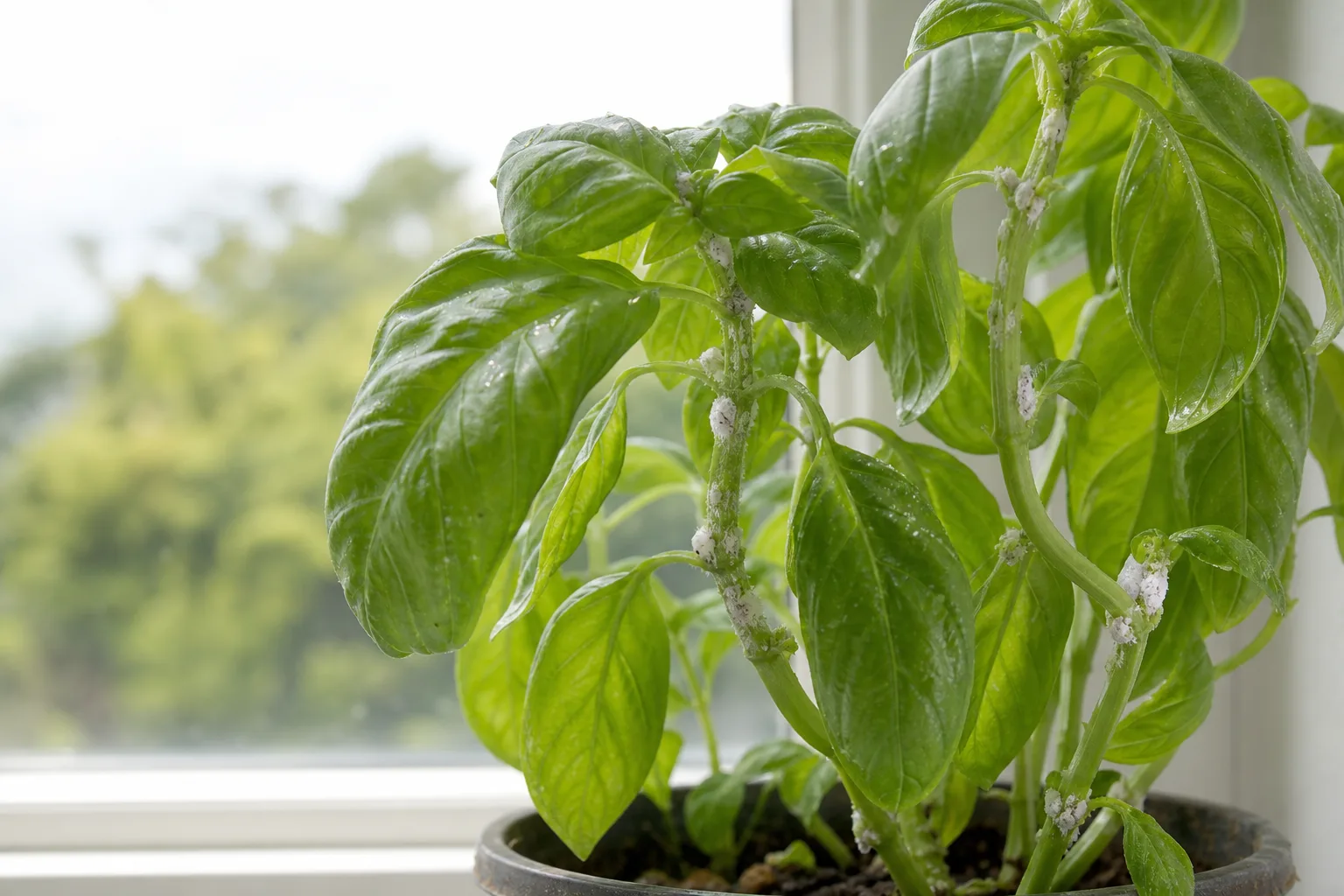
Inspect every plant that shared the same shelf, windowsill, greenhouse bench, or outdoor cluster. Look at leaf undersides, stem joints, new growth, the pot rim, the drainage holes, and the underside of the saucer. Clean the empty spot with ordinary soapy water, and wash tools or gloves before using them on a healthy plant.
For a new plant that has not yet joined your collection, keep it separate for two to three weeks while you inspect it regularly. That quarantine is much easier than treating a room full of overlapping foliage later. The Missouri Botanical Garden recommends quarantine and repeated inspection as part of an integrated approach (Missouri Botanical Garden).
How to identify mealybugs correctly
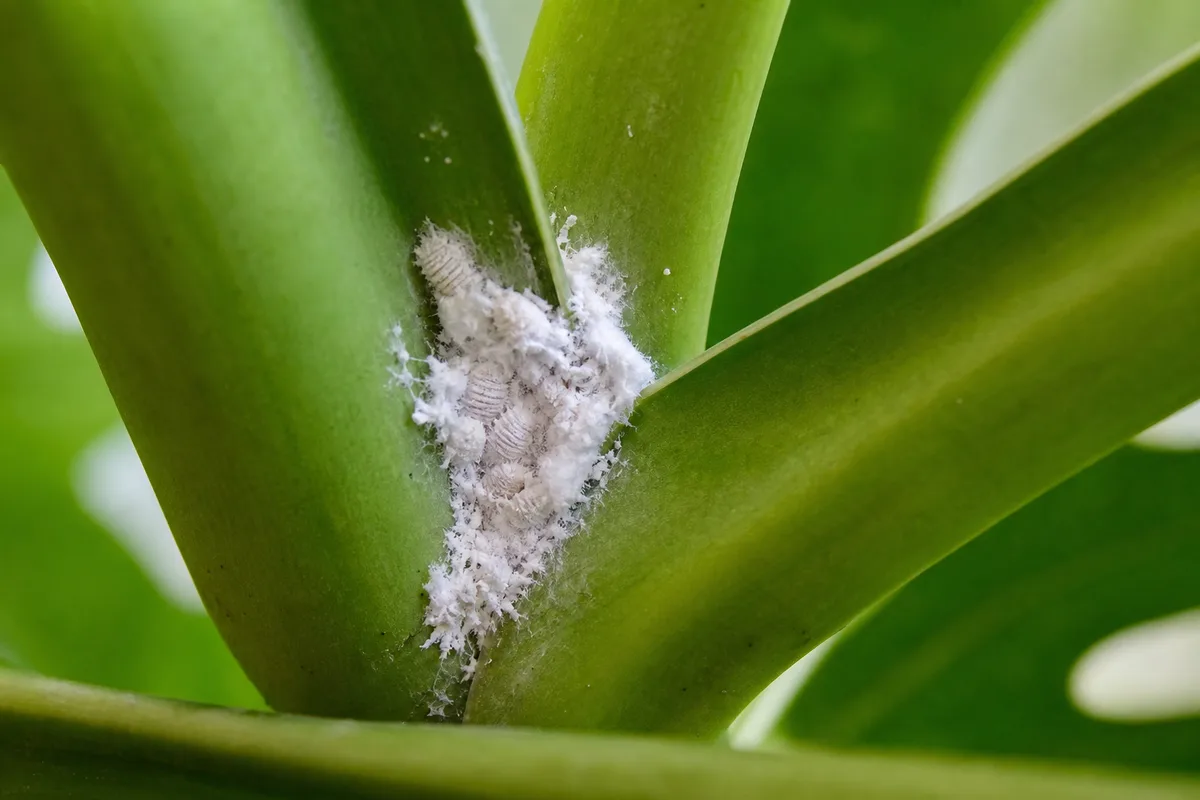
Adult female mealybugs are small, oval, soft-bodied insects covered in white wax. What most people notice first is not the insect itself but a cottony egg sac or a cluster that looks like a dab of flour caught in a leaf joint. The insects may have short waxy filaments around the body; longtailed mealybugs have conspicuous tail filaments.
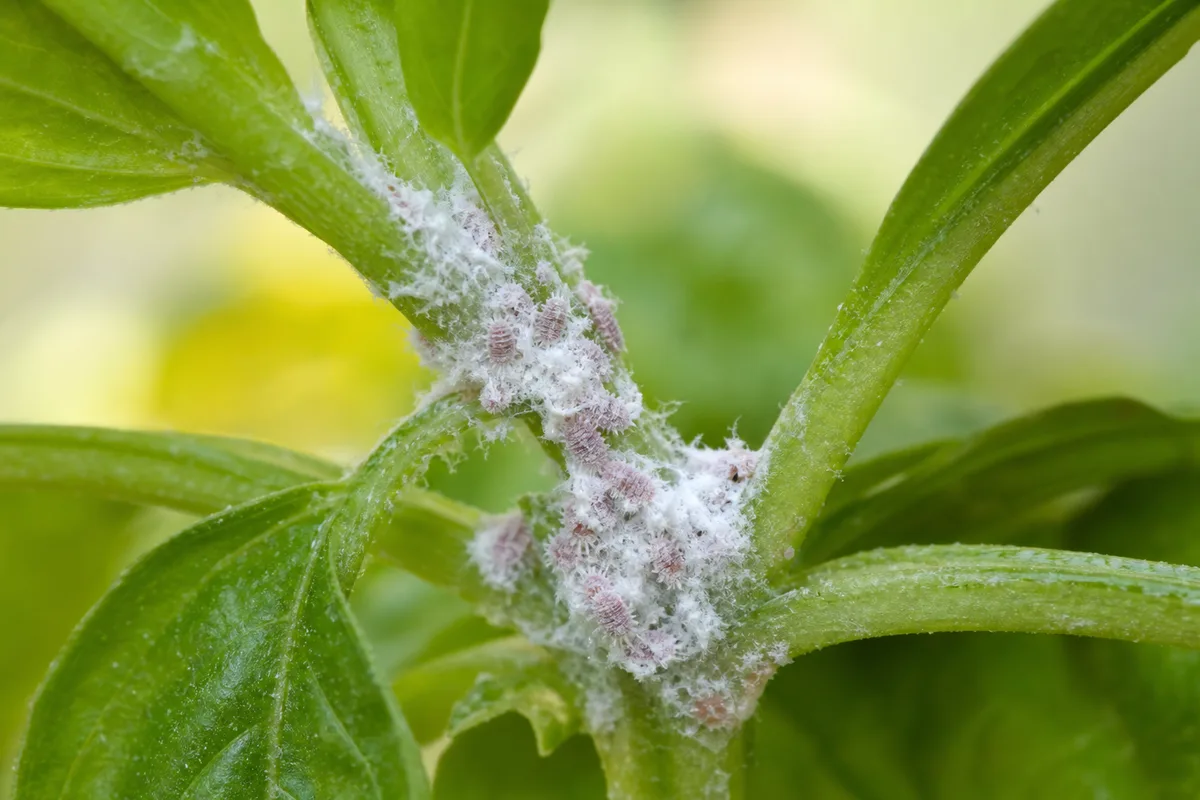
Newly hatched crawlers are yellowish, pink, or orange and move more actively before they settle and develop more wax. A few tiny white specks are easy to miss, so use a flashlight and inspect the places where plant parts overlap. The common citrus mealybug, Planococcus citri, is one of the mealybugs frequently found on indoor ornamentals, but the exact species is rarely necessary for home treatment (UC IPM; NC State Extension).
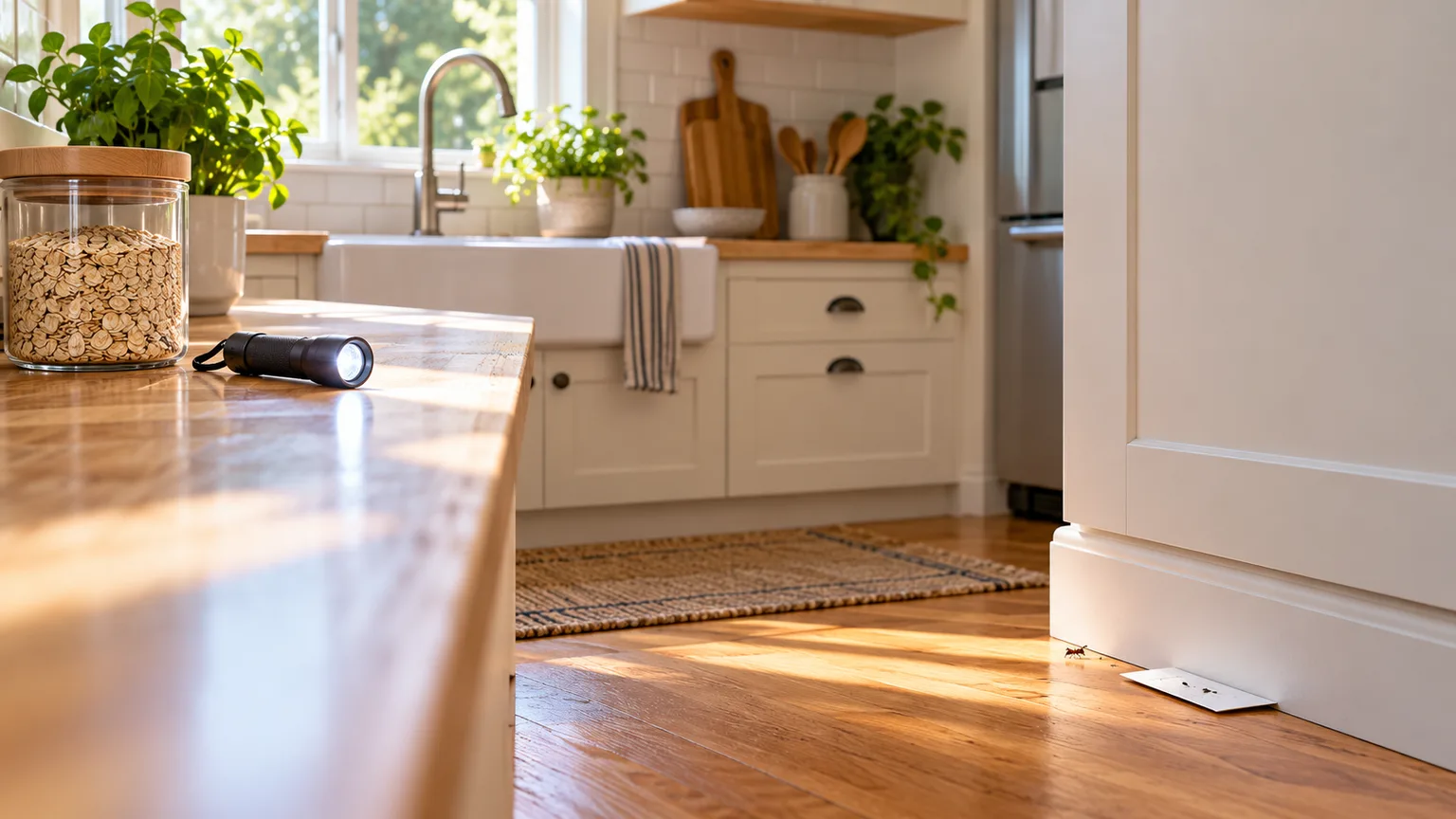
Diagnostic close-up: mealybugs often collect at leaf joints and stem crotches, where a quick spray can miss them.
Where to look for hidden colonies and root mealybugs
Start above the soil line: check growing tips, leaf axils, flower buds, branch crotches, the underside of leaves, and the place where a leaf stalk meets the stem. On succulents, inspect areoles and the narrow spaces between thick leaves. On orchids, check the crown and flower spikes. On vines, inspect nodes and the undersides of overlapping leaves.
If a plant is yellowing, wilting, stunted, or declining even though the stems look clean, check for root mealybugs. White cottony material around drainage holes or on the root ball is a clue, but root infestations may not be confirmed until the plant is lifted from its pot. Aboveground alcohol swabs and leaf sprays will not reach a colony feeding on roots. Root-feeding mealybugs are especially difficult to control, so a severely affected plant may not be worth saving (UC IPM; Wisconsin Horticulture).
Mealybugs can be confused with woolly aphids, cottony cushion scale, soft scale, and whiteflies. If the insects move away when disturbed, examine them closely rather than assuming every white patch is a mealybug. Scale usually forms a more fixed shell-like cover on the plant, while mealybugs remain soft-bodied and visibly segmented beneath their wax (UC IPM).
What mealybugs do to plants
Mealybugs pierce plant tissue and suck sap. Small populations may leave a plant looking normal, but larger colonies weaken new growth and can cause yellowing, wilting, stunting, leaf drop, distorted leaves, or buds that fail to open. Some species inject saliva that makes sensitive plants decline faster than the number of visible insects would suggest (UC IPM; NC State Extension).
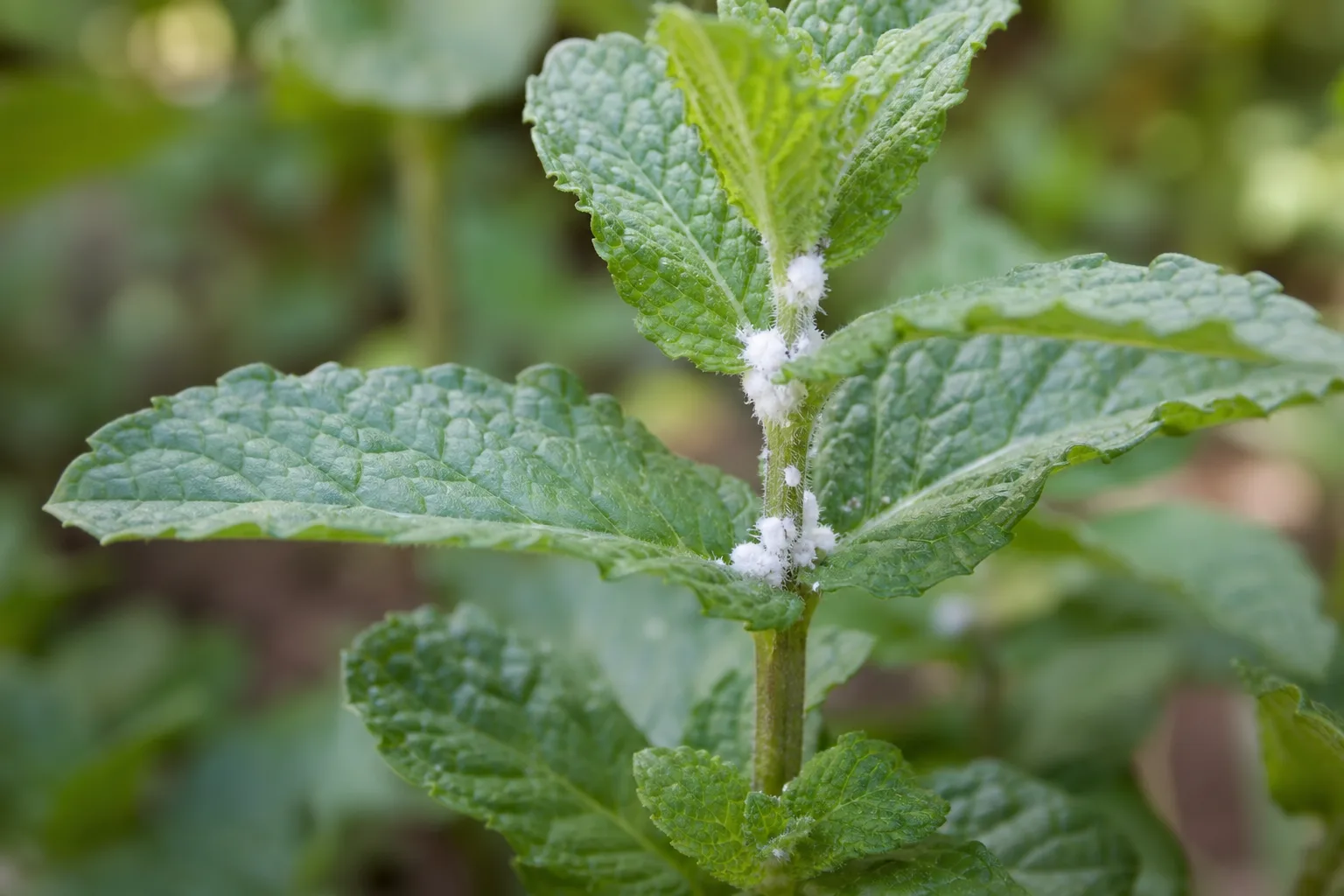
The sticky liquid on the leaves is honeydew, not plant sap leaking from a wound. Honeydew encourages black sooty mold and attracts ants. Sooty mold usually grows on the surface of the sugary residue rather than invading healthy leaf tissue, but a heavy coating can reduce light reaching the leaf and makes it harder to see new pests (UC IPM; UF/IFAS).
Do not judge treatment by whether old yellow leaves or black residue disappear immediately. Those symptoms are a record of earlier stress. The better signs are fewer live insects, no fresh cottony clusters, no new honeydew, and healthy new growth over time.
Why mealybugs keep coming back
A colony can contain eggs or young crawlers in places you did not treat, while older insects are protected by wax. Many species produce hundreds of eggs, and warm indoor conditions allow multiple life stages to overlap through the year. That is why one wipe-down may look successful for a week and then seem to “fail” when crawlers emerge (UC IPM; NC State Extension).
Plants can also be reinfested from a nearby source. Check plants that were touching, cut flowers or outdoor plants brought inside, pot rims, trays, stakes, and tools. Ants may move mealybugs between plants and protect them from natural enemies because they feed on honeydew (Missouri Botanical Garden).
Overfertilizing with nitrogen is not the sole cause of mealybugs, and a healthy plant can still be attacked. However, excess nitrogen combined with frequent irrigation can produce tender new growth that is attractive to sap-feeding pests. Correcting the feeding routine helps reduce favorable conditions, but it will not remove an established colony by itself (UC IPM; NC State Extension).
Choose a treatment by infestation size
Use the least disruptive plan that can realistically reach the pests. This quick guide keeps the decision practical:
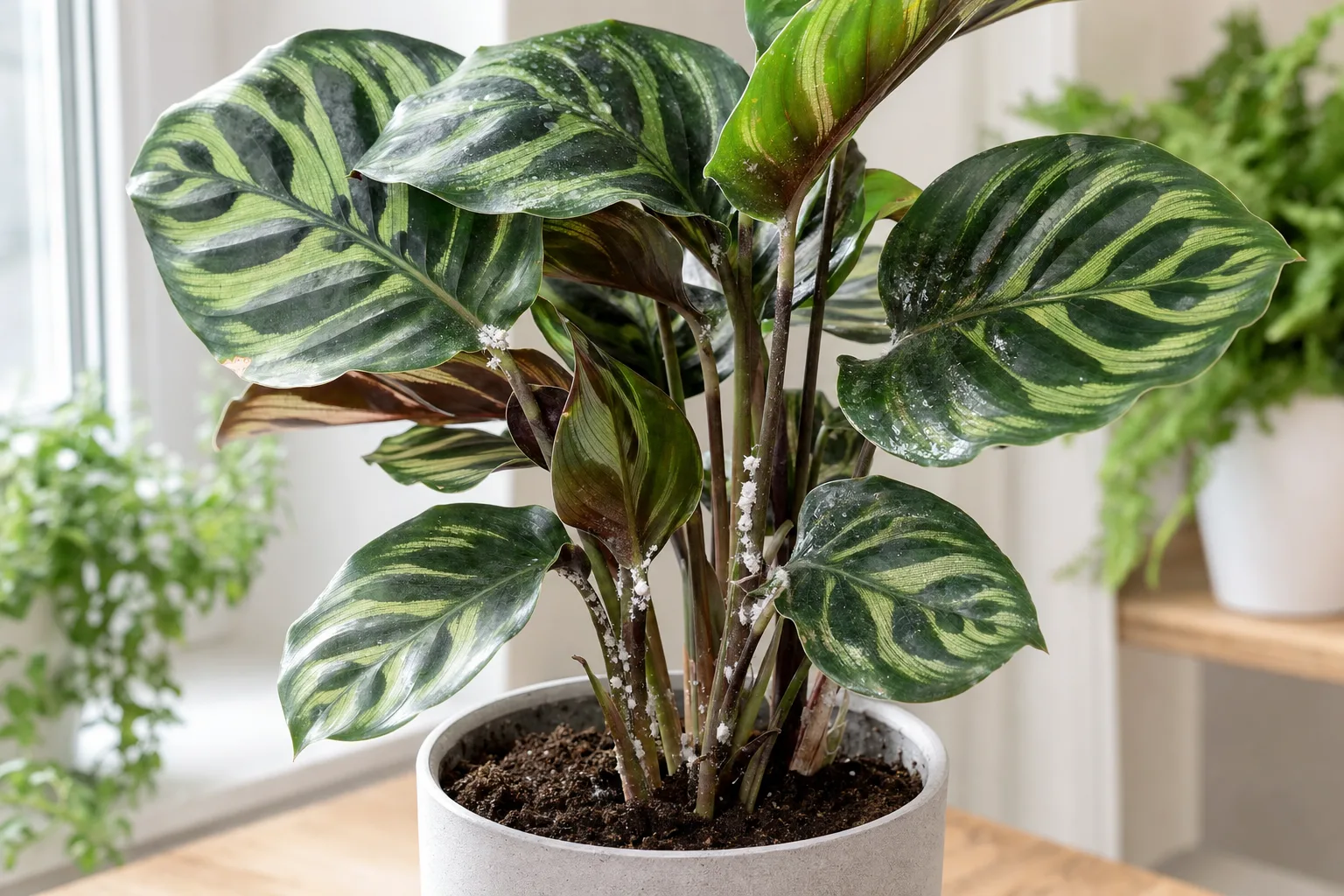
- Light infestation: a few clusters on one plant, no major decline. Isolate, wash, and remove every visible insect with an alcohol-dipped cotton swab.
- Moderate infestation: several nodes or leaves affected, honeydew present, or nearby plants exposed. Combine physical removal with insecticidal soap, horticultural oil, or a properly labeled neem product, then repeat according to the label and inspection results.
- Severe infestation: widespread colonies, root mealybugs, major decline, or repeated rebound after several treatment cycles. Prune what can be removed safely, ask a local extension service about the plant and product options, or discard the plant before it becomes a reservoir for the rest of the collection.
The aim is not to use all eight methods at once. Combining too many products can stress the plant, create residue, and make it impossible to tell what caused leaf injury. Start with one clear plan, record the date, and change tactics only when the evidence says the current method is not enough.
Method 1: Isolate, inspect, and clean the plant zone
Isolation is a treatment method because it prevents a manageable problem from becoming a collection-wide problem. While the plant is separated, inspect it from top to bottom and wipe the pot rim and saucer. Remove dead leaves, spent flowers, and loose plant debris where pests or egg sacs may be hidden.
Use a fresh cotton swab or cloth for each area that you clean, and wash your hands before touching another plant. If a plant has a trellis, moss pole, decorative cover pot, or plant support that touches the foliage, inspect that item too. The goal is to remove hiding places and stop accidental transport before applying a product.
Method 2: Wash exposed mealybugs away
A firm stream of room-temperature water can dislodge exposed mealybugs from sturdy leaves and stems. Take a small plant to a sink, shower, or outdoor hose, protect the soil if necessary, and rinse the undersides of leaves, the stem joints, and the growing tips. Turn the pot as you work rather than spraying only the most visible side.
Water is especially useful as a first reduction step outdoors and on plants with open structure. It will not reliably remove insects wedged into tight folds, protected egg sacs, or roots. Repeat every few days when live insects reappear, and let foliage dry reasonably quickly so the plant is not left cold and wet.
Avoid a forceful spray on fragile leaves, flowers, seedlings, or loose-rooted plants. A plant that is already wilted, recently repotted, or physically damaged may need gentle hand removal instead.
Method 3: Dab small colonies with isopropyl alcohol
For a few visible clusters, touch each mealybug with a cotton swab lightly moistened with 70% or weaker isopropyl alcohol. Direct contact can kill or remove exposed insects, which makes this one of the fastest options for a small outbreak. Wipe away the cottony material as well; leaving an egg sac in the node defeats the point of treating only the adult insects (UC IPM; UNH Extension).
Patch-test first on an inconspicuous leaf or stem, then wait a day or two for delayed injury. Some plants tolerate a careful dab while others show translucent spots, browning, or tissue collapse. Do not soak an entire delicate leaf, spray alcohol around an open flame or heat source, or use it as a casual room-wide mist.
Alcohol is a spot treatment, not a substitute for inspecting the whole plant. Work through every node, then recheck the plant every few days. If you are still finding new clusters, switch to a plant-labeled contact treatment rather than repeatedly wetting sensitive foliage with alcohol.
Method 4: Apply insecticidal soap
Insecticidal soap works by direct contact, so coverage matters more than a strong smell or a thick coating. Use a product labeled for the plant and mealybugs, and wet the places where the insects hide: leaf undersides, stem joints, growing tips, crowns, and protected folds. More concentrate is not better; it can increase leaf injury without reaching a hidden colony.
Do not assume ordinary dishwashing liquid is equivalent to insecticidal soap. Household detergents vary in fragrance, solvents, degreasers, and additives that can strip leaf wax or burn foliage. If a label does not list the plant, site, and pest, choose a labeled product or use physical removal instead of improvising a kitchen recipe.
Test the mixed spray on a small area and observe the plant before treating the entire specimen. Avoid spraying a heat-stressed or drought-stressed plant, and follow the label for dilution, protective equipment, drying time, edible-crop use, and repeat intervals. Soap has little residual effect, so repeat applications are commonly needed when crawlers appear (UC IPM; Wisconsin Horticulture).
Method 5: Use horticultural oil or neem oil carefully
Horticultural oil and neem products can suppress mealybugs when the spray reaches them directly, with younger, less-waxy nymphs often easier to contact than adults. They are not interchangeable products: formulations, active ingredients, permitted uses, and reapplication intervals vary. Read the label on the exact bottle rather than copying a universal internet dilution.
Neem oil products may contain different portions of neem oil, including formulations with or without azadirachtin. The National Pesticide Information Center explains that neem products can affect feeding and insect development, but it also emphasizes label directions and exposure reduction (National Pesticide Information Center). That makes neem a monitored tool, not a guarantee that every egg or hidden adult will be eliminated.
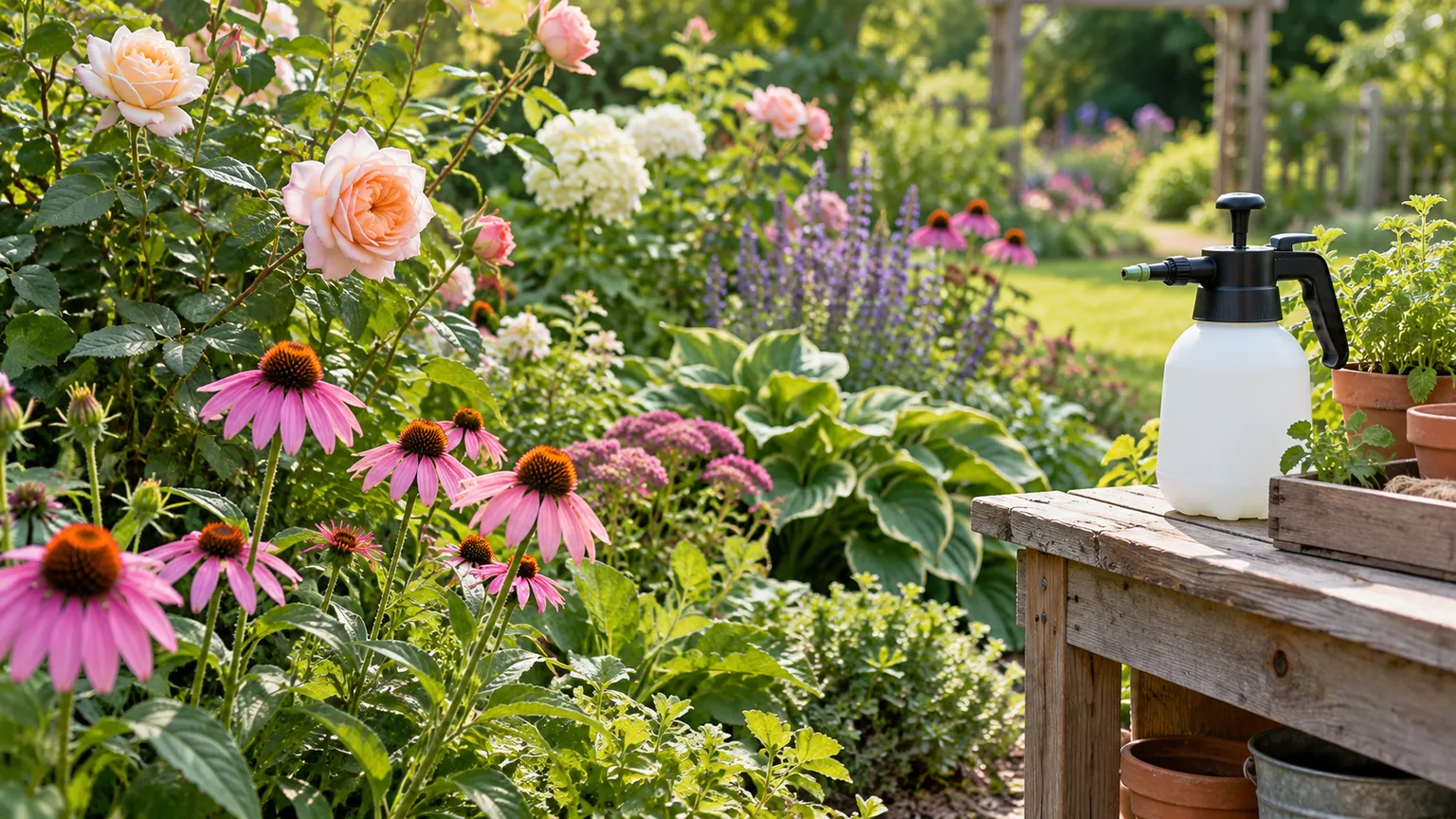
Oil-treatment scene: spray for thorough coverage of the plant’s hiding places, not for a heavy film or runoff.
Before treating, confirm the plant is not drought-stressed, recently moved, or exposed to intense heat. Patch-test, avoid open flowers and active pollinators when the label calls for it, and spray during the conditions specified by the product. Oils can injure some plants, especially tender, hairy, waxy, or newly emerging foliage.
Never treat edible plants with an ornamental-only product, and never mix neem or horticultural oil with another pesticide unless the label specifically allows it. Keep people and pets away from wet foliage as directed, wear the listed protective equipment, and store the product in its original container.
Method 6: Prune heavily infested parts or discard the plant
If one branch, flower spike, or crowded growing tip is covered, pruning can remove a large portion of the colony more safely than trying to saturate every crevice. Seal the cut material in a bag and remove it from the growing area immediately. Mealybugs can survive on moist detached plant parts, so do not leave infested prunings in a compost bucket beside the plant (Wisconsin Horticulture).
Consider discarding a plant when it is declining, the infestation is widespread, the roots are affected, or several treatment cycles have produced repeated rebounds. This is not a failure of care; it is a containment decision. A replaceable plant can be sacrificed to protect a collection of valuable, pest-free plants, especially when treatment would require repeated pesticide exposure indoors.
If you decide to save a plant with suspected root mealybugs, confirm the problem before disturbing the root ball. Repotting a stressed plant is not automatically a cure, and moving contaminated soil or pots can spread the pest. Local extension advice is worthwhile when a rare plant or expensive collection is involved.
Method 7: Use natural enemies and manage ants outdoors
Outdoor plants have an advantage that indoor plants usually lack: predators and parasitoids can find colonies that a hand or spray misses. Lady beetles, lacewings, spiders, predatory insects, parasitoid wasps, and the mealybug destroyer, Cryptolaemus montrouzieri, are among the natural enemies associated with mealybugs (UC IPM; Missouri Botanical Garden; UF/IFAS; Gardening Know How).
Protect these allies by avoiding unnecessary broad-spectrum insecticides. The mealybug destroyer is most useful where there is enough mealybug prey, especially egg masses, to support it; releasing predators into a clean or nearly clean area is unlikely to solve the problem. Indoor releases also require suitable temperature, humidity, food, and containment, so they are not a simple substitute for washing and inspection.
Control ants around an outdoor infestation because ants may move mealybugs and interfere with natural enemies. Remove bridges such as touching branches, reduce honeydew-coated foliage by controlling the mealybugs, and use an ant-control approach that is legal and safe for the site. Do not spray a flowering plant broadly just to eliminate every insect you see.
Method 8: Use a labeled pesticide as a last resort
When a valuable plant has a severe, persistent infestation, a product labeled for mealybugs may be appropriate. Choose by active ingredient, target plant, growing site, and application method, not by a claim that a product is “strong.” A pesticide labeled for outdoor ornamentals may not be approved for indoor use, edible crops, or a particular plant family.
Systemic products are taken up by the plant and can reach feeding insects that contact sprays miss, but they are not automatically safer or more reliable. Some systemic insecticides have limitations around flowering plants and pollinators, and some products are restricted to licensed applicators or have changed availability. UC IPM notes that no available insecticide should be expected to provide complete control of every individual (UC IPM).
Read the entire label before buying or applying anything. Follow the stated dilution, protective clothing, ventilation, reentry interval, disposal rules, and repeat schedule. Never combine pesticides casually, never use a garden insecticide as a household cleaner, and never apply a product to a food plant unless the label specifically permits that crop and use.
How to monitor, repeat, and know whether treatment is working
Write down the treatment date and where you found live insects. Check the plant every few days at first, then at least weekly while the infestation is active. Use a flashlight and a magnifier if needed; inspect the same hidden places each time so a clean-looking top leaf does not create false confidence.
Repeat a contact treatment according to its label, not according to impatience. The next application is meant to catch crawlers or adults that were protected during the first round. For alcohol spot treatments, remove newly visible insects as soon as you find them. For soap, oil, or neem, reapply only at the label interval and only when the plant can safely tolerate the treatment.
Treatment is working when live-pest counts fall, new cottony masses stop appearing, honeydew decreases, and new growth is clean. Old damage may stay. If the number of live pests is not falling after several correctly timed treatments, check for missed plants, ants, root mealybugs, poor spray coverage, plant stress, or a misidentified pest before escalating.
Monitoring matters because mealybug life stages overlap; a repeat check catches crawlers that were not visible during the first treatment.
Prevent mealybugs from returning
Prevention is mostly disciplined inspection rather than a permanent pesticide coating. Before buying or accepting a plant, look under leaves, around nodes, in new growth, along the soil line, and around drainage holes. Keep new plants separate for two to three weeks, especially if they came from a crowded greenhouse, plant swap, or outdoor display.
Inspect every time you water, but do not turn watering into a reason to overwater. Clean dusty leaves when the plant tolerates it, remove dead foliage, and keep crowded plants from pressing together. Check pots, saucers, stakes, and tools when a recurring infestation seems to appear from nowhere.
Use fertilizer according to the plant’s actual growth and label directions. Avoid repeated heavy nitrogen feeding that produces soft, lush growth, and do not try to “starve” the plant by withholding all water or nutrients. A stressed plant is harder to inspect, wash, and recover.
Outdoors, encourage a diverse garden and preserve natural enemies. On indoor plants, put plant health, airflow, clean tools, and regular inspection ahead of routine neem or pesticide spraying. Preventive pesticide use can injure the plant, reduce beneficial insects, and hide the real source of a recurring problem.
Conclusion: consistent follow-up beats a single spray
To get rid of mealybugs, start with containment: isolate the plant and inspect everything that touched it. Wash or remove visible colonies, use a careful alcohol dab for a small outbreak, and move to labeled soap, horticultural oil, or neem when the infestation needs broader coverage. Prune or discard plants that have become a severe source of spread, preserve natural enemies outdoors, and reserve stronger pesticides for situations where the label and the plant justify them.
The final step is the one most often skipped. Keep checking the hidden joints, pot edges, and new growth after the plant looks clean. Mealybugs are manageable when you treat the plant as a living system with a pest life cycle—not as a surface that needs one perfect spray.