Signs of Rats in Your Home: How to Respond Safely
Spot signs of rats in your home, separate fresh activity from old evidence, clean droppings safely, set traps, and block entry points to prevent a return.
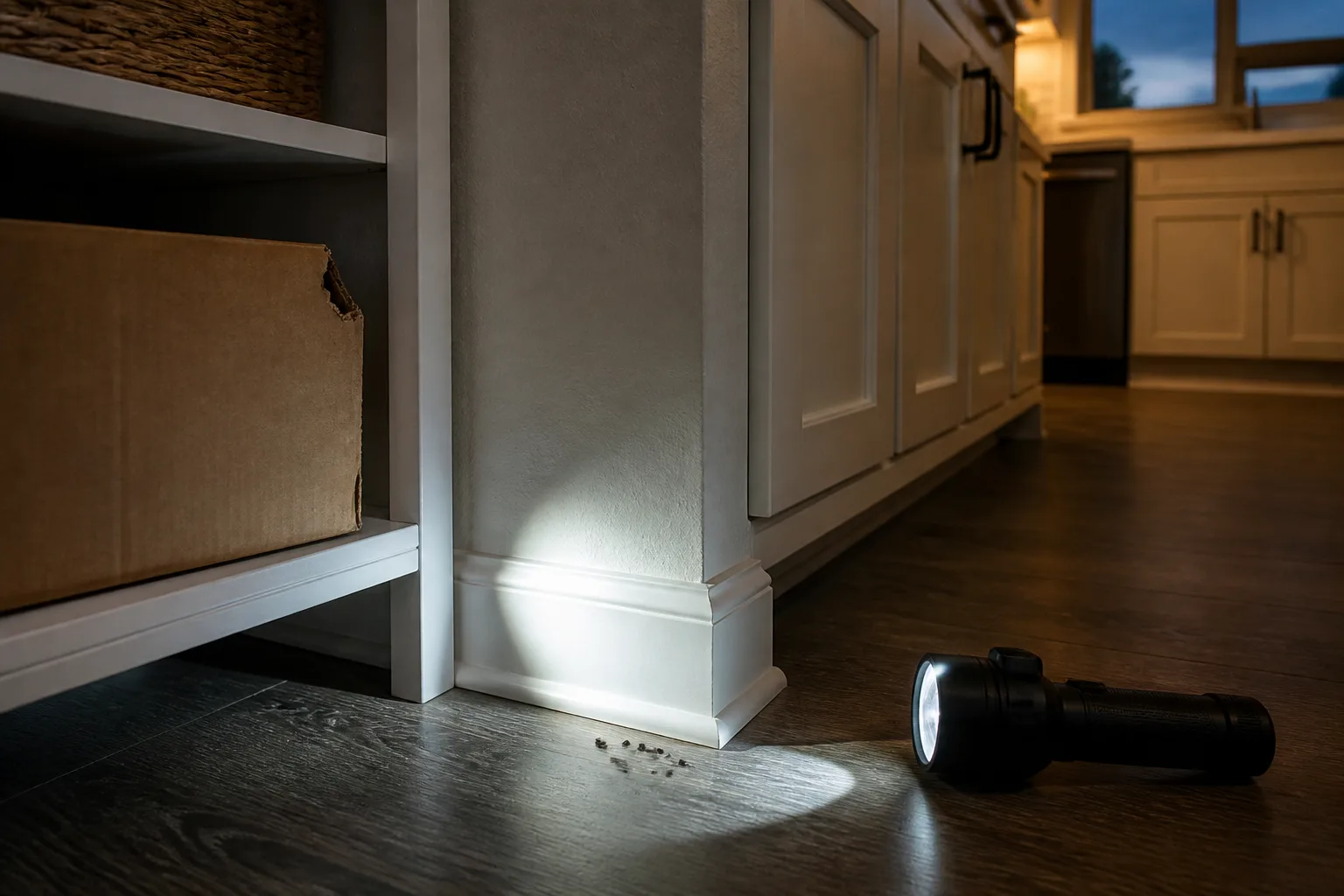
Rat evidence usually turns up before a rat does: a few dark droppings behind a pantry bin, a chewed corner on a food bag, or movement above the ceiling after the house goes quiet. The useful question is not only “Is that a rat?” but “Is the evidence current, where is it coming from, and what should I do without spreading contamination or creating a new hazard?”
A sound, smell, or dropping by itself cannot tell you how many rodents are present. A stronger case comes from several clues in the same area, especially fresh waste, new chewing, or evidence that returns after you clean safely. Work in order: protect people and pets, confirm activity, remove food and shelter, trap along travel routes, and seal the openings rats use.
What to do first when you find evidence
If you see a rat, fresh droppings, or chewed packaging, keep children and pets out of the area. Do not touch an animal, droppings, nesting material, or a trap with bare hands, and do not sweep or vacuum waste. Rats can contaminate food and surfaces, and the risk is not something you can judge by looking at an animal; the CDC explains that rodents can spread disease directly or through contaminated material.
Next, note the exact location and type of evidence before moving anything. Photograph the area from a safe distance, check nearby food storage and likely routes, and look for matching clues such as gnawing, rub marks, or shredded material. This simple record helps you distinguish a one-time sign from a repeat route and gives a pest professional better information if you call one.
If a rat is in a living space, close interior doors to limit access and place a properly sized snap trap along a wall route only if you can keep it inaccessible to children and pets. Do not chase the animal or corner it by hand. If you see a rat in a food-preparation area, discard food or packaging with visible contamination and clean hard surfaces using the safe wet-cleaning procedure below.
Seven signs that rats may be inside
Rats are often active when people are not, so look for traces rather than waiting to see one. The strongest evidence is a cluster: droppings near damaged food, a recurring noise above a ceiling, or a nesting area beside an entry opening. Each clue has look-alikes, so use the location and whether it is new to guide your next check.
Droppings and urine spots
Rat droppings are dark, firm-looking pellets that tend to be larger than mouse droppings, though size varies with the animal and can be difficult to judge when material is old or crushed. You may find them behind appliances, in drawers, near pet food, beside stored grains, or along a wall. The CDC notes that rodent droppings can be pointed at one end and may contain hair, but appearance alone cannot tell you whether they carry disease or how recently they were left.
Urine may show as small spots or dried residue, sometimes with a stale, musky odor in an enclosed space. A persistent odor is a reason to inspect further, not proof of a rat infestation: plumbing leaks, spoiled food, and other animals can smell similar. Never sniff closely or disturb dry material to identify it.
Gnaw marks and damaged food or wiring
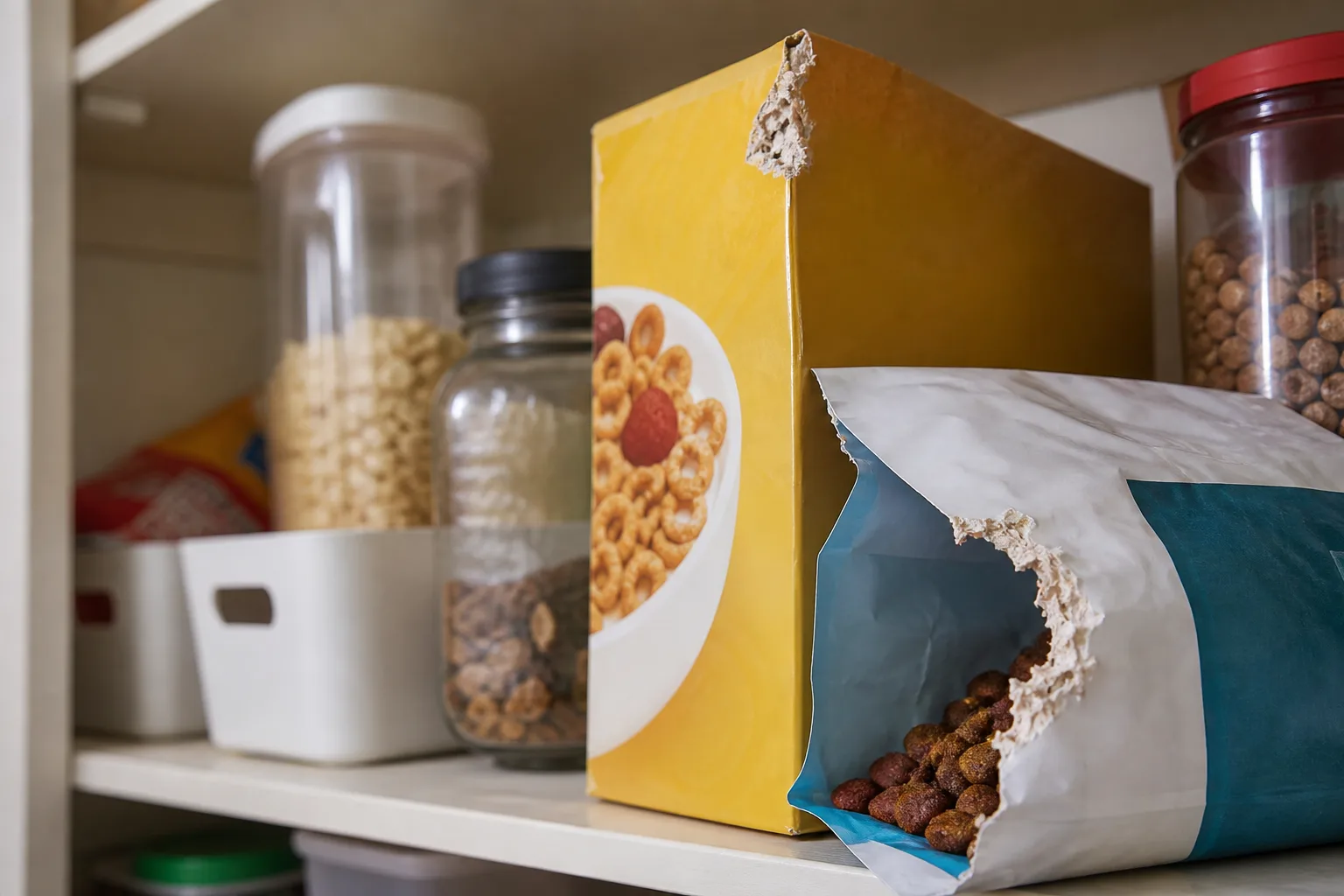
Rats gnaw packaging, wood, plastic, and other materials to reach food or move through a barrier. Look for rough-edged holes in cereal boxes, pet-food bags, or cardboard, along with scattered crumbs and food that has been carried away. A damaged package in a cabinet is more meaningful when you also find droppings or repeated damage along a nearby wall.
Chewed electrical wiring is a more urgent clue because damaged insulation can expose conductors and create a shock or fire hazard. Do not touch a damaged wire or pull apart a wall to investigate; switch off power only if you can do so safely, keep people away, and contact an electrician or pest professional as appropriate. The UC Statewide IPM Program’s rat guidance describes gnawing damage to wiring, structures, and stored materials as part of a rat problem, not merely a nuisance.
Scratching, scurrying, and sightings
Scratching or quick movement in a ceiling, wall cavity, attic, or crawl space can indicate rodents using a route or nest nearby. Pipes, heating systems, expanding building materials, and squirrels can also make noises, so one unexplained sound is not enough to identify a rat. Note the time, location, and whether the sound repeats in the same place; repeated nighttime movement paired with droppings or gnawing is stronger evidence.
Seeing a rat confirms that at least one is present, but it does not tell you the size of the population. Rats are usually more active at night, yet a daytime sighting is not a reliable infestation counter. The animal may have been disturbed, displaced, or searching for food. Focus on the evidence around its route and take action rather than trying to infer severity from the hour.
Nests, odors, and smudge trails
Rats may use shredded paper, fabric, leaves, insulation, or other fibrous material to build nests in quiet spaces. Check only from a safe distance in accessible storage areas; do not reach into a dark void, lift contaminated insulation, or shake out a nest. Nests may be hidden behind appliances, in cluttered garages, wall cavities, attic spaces, or basements.
A dark, greasy-looking streak along a beam, pipe, or baseboard can form where rodents repeatedly travel against a surface. This so-called rub mark is most useful when it leads toward other evidence, such as droppings or a gap. Dust, household grime, and old marks can look similar, so treat a streak as a route clue rather than confirmation by itself.
Burrows and activity outside
A burrow near a foundation, woodpile, compost area, or garbage can may point to a Norway rat, but other animals also dig holes. Rat activity outdoors can include gnawed fruit, disturbed pet food, droppings near feed, or rats moving along fences and overhead wires at dusk. A likely exterior route matters because it can reveal how rodents reach the building, even when the nest is not indoors.
Do not blindly fill a hole before you know what is using it or whether it connects to a structure. A burrow can have more than one opening, and plugging one entrance may leave animals inside or push them toward another part of the building. Photograph the location, reduce food and clutter nearby, and ask a pest professional for help if a burrow touches the foundation or you cannot identify the animal.
How to tell if rat activity is current
A single dropping or old gnaw mark tells you that a rodent was present at some point, not that it is still there today. To check for continuing activity, use the CDC’s safe cleanup method on a small, accessible patch, then monitor the same spot. If new droppings, urine marks, or gnawing appear after cleanup, that is much stronger evidence of ongoing activity than color or texture alone; the CDC rodent-control overview specifically recommends checking for waste and damage and notes that new waste after cleaning indicates activity.
A simple monitoring log can prevent guesswork. Record the room, date, sign, nearby food or water, and any trap activity. If evidence repeats in one cabinet or along one baseboard, focus your inspection and trapping there instead of spreading traps randomly across rooms. If it moves upward into the attic or appears at several points, widen the inspection to the outside roofline and connected storage or crawl spaces.
Do not use droppings as a harmless test strip: never handle, sweep, or vacuum them dry. If the area is large, dusty, inaccessible, or heavily contaminated, skip the do-it-yourself activity check and use a qualified pest or cleanup professional. More on the safe approach appears below.
Roof rat or Norway rat: what the clues suggest
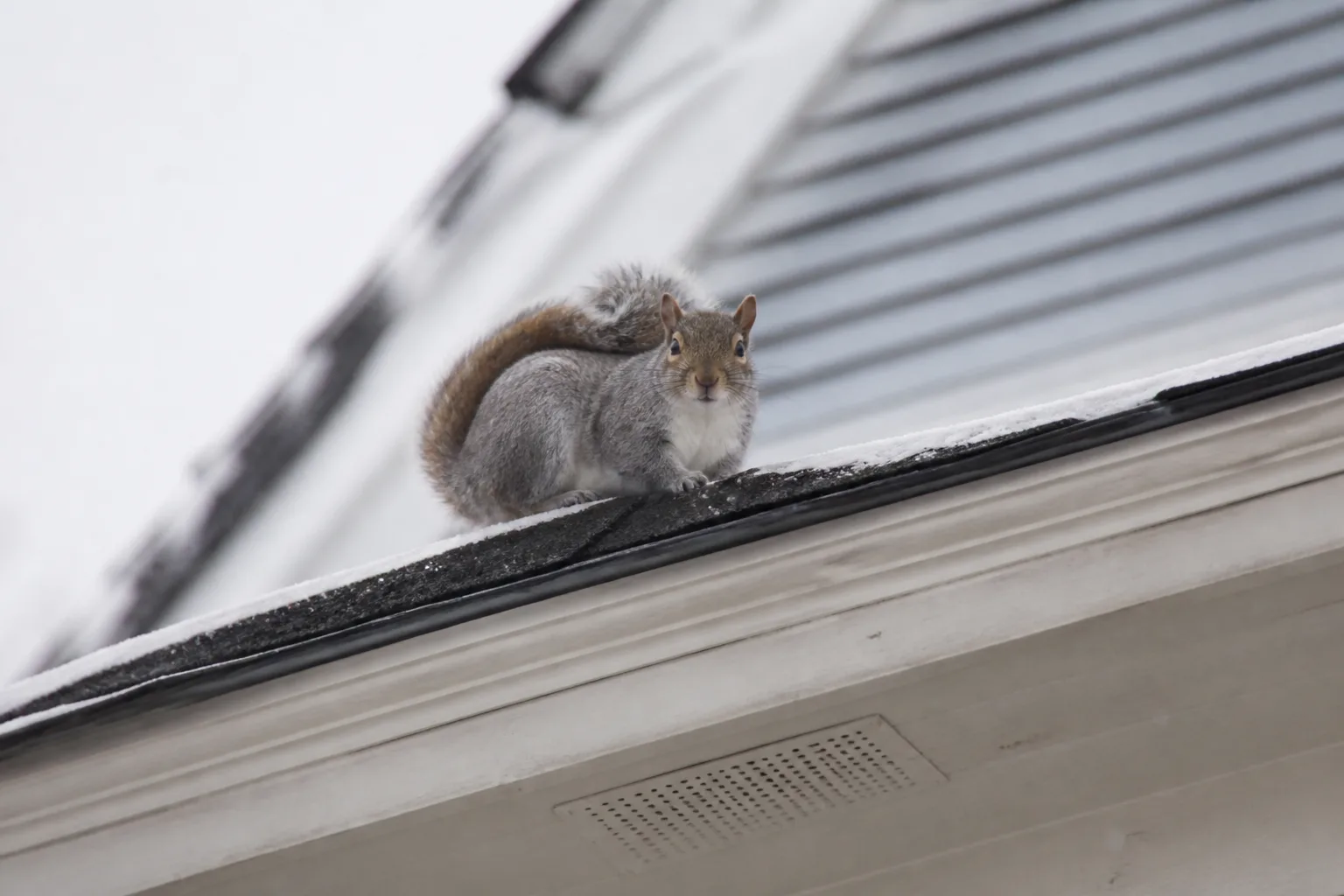
Two common commensal species are the Norway rat and the roof rat, but local species vary and you may not be able to identify one from a sound or dropping. Their habits can still help you decide where to look. Norway rats are generally stockier and often burrow or stay near ground-level spaces; roof rats are sleeker climbers that commonly use trees, rooflines, attics, ceiling voids, and upper portions of buildings.
| Clue | Norway rat | Roof rat |
|---|---|---|
| Build and tail | Stockier; tail usually shorter than head and body combined | Slimmer; tail usually longer than head and body combined |
| Common route | Ground-level walls, foundations, basements, lower floors, and burrows | Trees, fences, utility lines, roof edges, upper walls, and attics |
| Useful inspection focus | Foundation gaps, crawl space, basement, stored food, burrows | Eaves, soffits, roof vents, overhanging branches, attic and ceiling voids |
These are tendencies, not a diagnosis. Both species may use unusual spaces, and juvenile rats can be mistaken for large mice. UC IPM notes that the roof rat is a strong climber and the Norway rat commonly burrows, but also describes overlap in where either species may nest. If you cannot identify the animal safely, you can still control the problem with the same core measures: remove access to food and shelter, trap where activity is evident, and close openings with suitable materials.
Where rats enter a house
Rats enter through gaps around utility lines, pipes, vents, doors, windows, foundations, roof edges, and damaged screens. They can climb, squeeze, and gnaw, so inspect above ground as well as around the foundation. The CDC’s sealing guide recommends looking inside and outside, including around pipes, dryer vents, doors, attic vents, soffits, and crawl spaces; it uses a pencil-width opening as an example of a gap small rodents can exploit.
Start in rooms where you found evidence and trace nearby wall penetrations. Under-sink plumbing, the space behind a stove or refrigerator, the floor-wall joint, and cable or gas-line openings are common places to check. Outside, use a flashlight to inspect the foundation, garage door edges, roofline, eaves, and vent screens. A hole may be hidden by a stored box or climbing vegetation, so clear the view before deciding how to repair it.
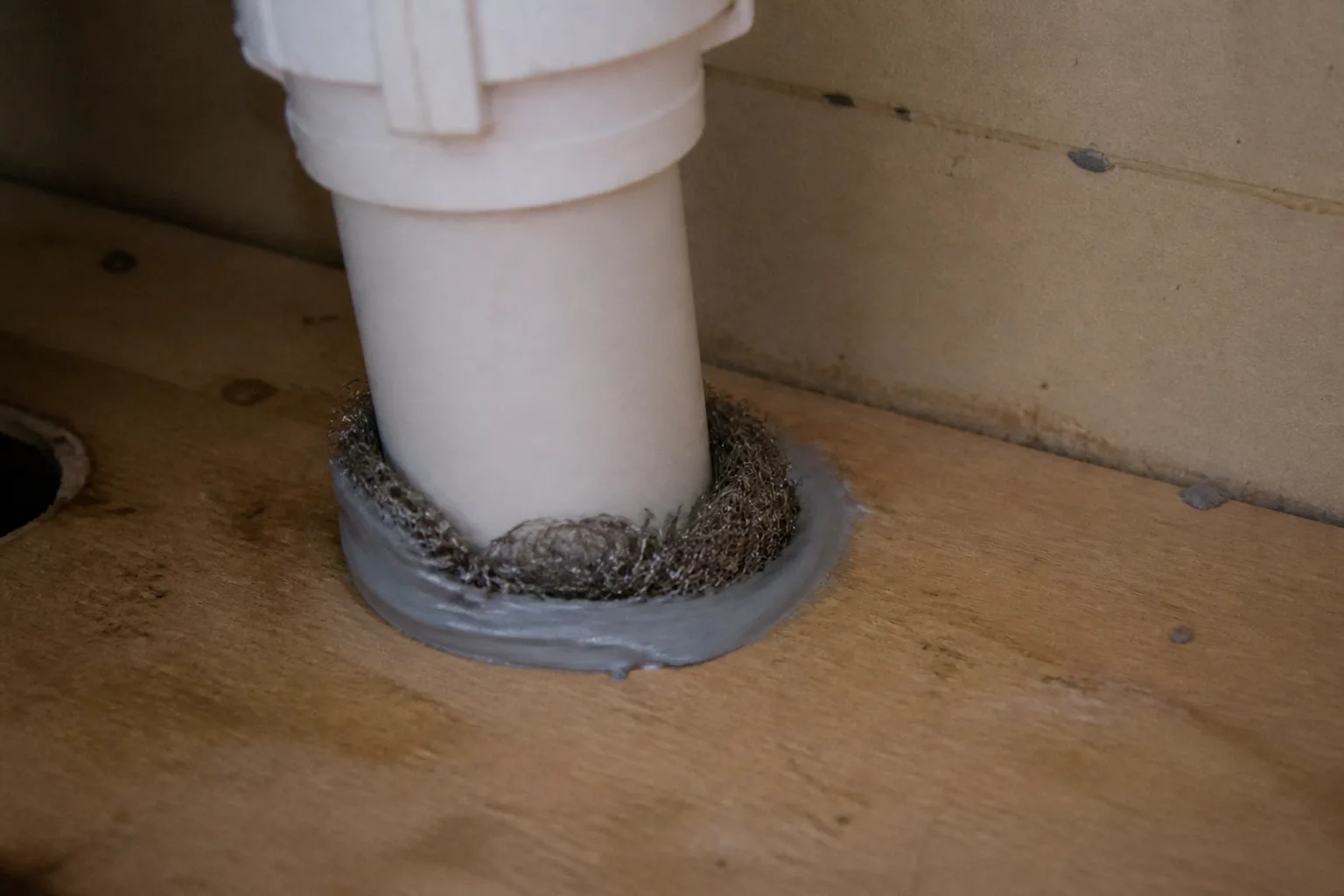
Choose a repair that resists chewing. For small gaps, steel wool secured with caulk may help; larger openings need a durable barrier such as metal mesh, hardware cloth, sheet metal, or cement fitted to the surface. Foam or caulk by itself is not a rodent-proof repair: rats may gnaw through soft material. Do not seal a hole around a live animal or block a flue, drain, vent, or other system that must remain open; use a pest professional or qualified contractor if the opening’s purpose is unclear.
How to clean droppings and nesting material safely
For a small amount of accessible waste, use the CDC’s wet-cleaning sequence. Open doors and windows and leave the room for 30 minutes before cleanup when the space has been closed up. Put on rubber or plastic gloves, wet droppings and urine thoroughly with an EPA-registered disinfectant or a fresh bleach solution (the CDC specifies 1.5 cups of household bleach per gallon of water), let it sit for five minutes or for the label’s stated contact time, and then lift the material with paper towels.
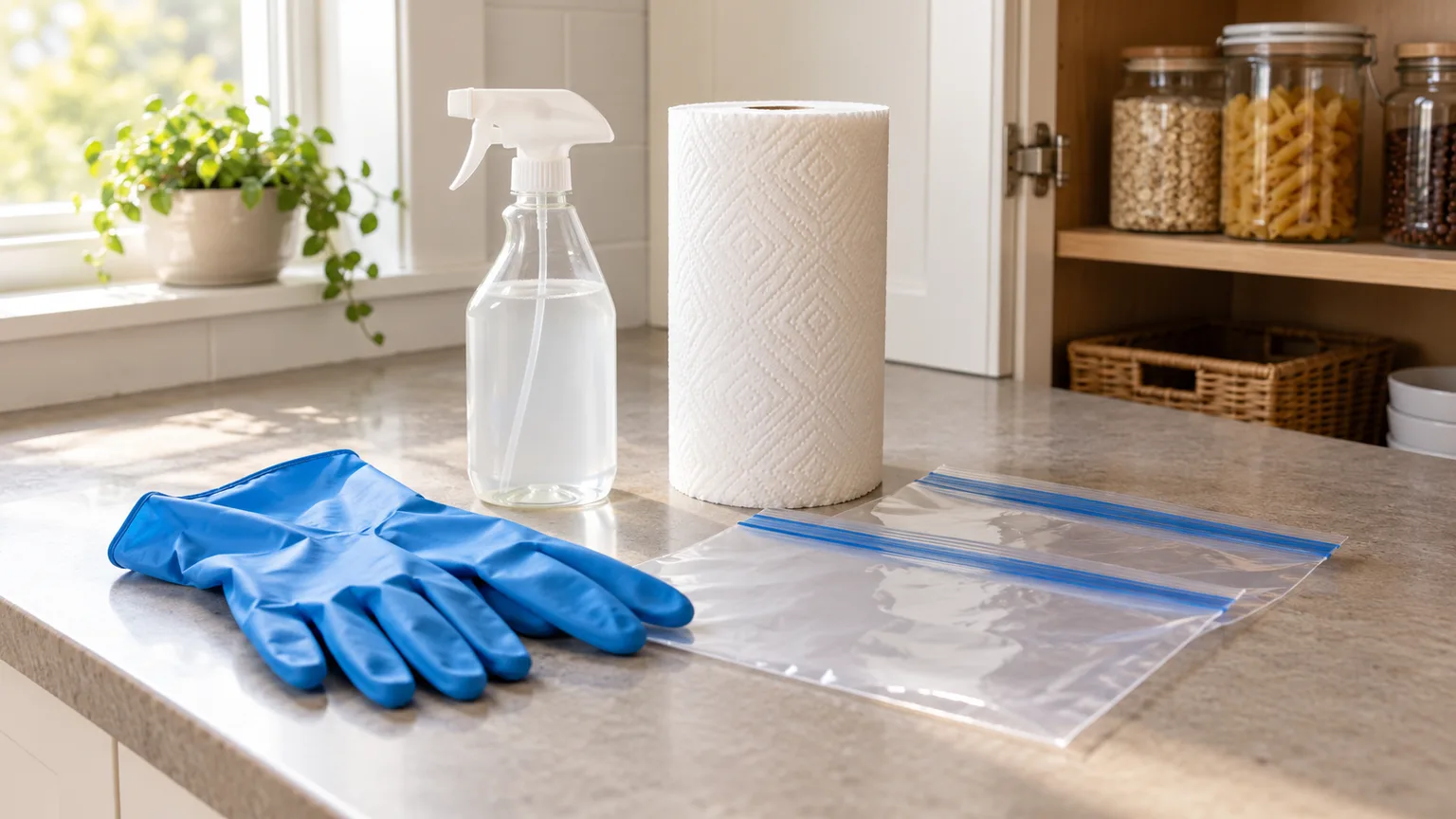
Place used towels in a covered garbage can, then disinfect the hard surface. Wash gloved hands before removing the gloves and wash your hands again afterward. Follow the product label and never mix bleach with ammonia, acids, or other cleaners. The CDC’s rodent cleanup instructions are the authority for the exact steps; if the label gives a longer contact time, follow it.
Do not dry-sweep or vacuum droppings, urine, or nest material. Those actions can put contaminated particles into the air. Do not use a pressure washer, compressed air, or a household vacuum on a contaminated area. If a dead rat or nest is present, wet it with disinfectant first, use gloves, bag the material, seal that bag inside a second bag, and dispose of it according to local guidance.
A few droppings on a hard floor are different from widespread contamination in a vacant home, attic, crawl space, duct system, or insulation. Heavy infestation calls for protective equipment and work practices beyond ordinary household cleanup; a respirator is not a substitute for knowing how to use and fit it. Leave large or inaccessible messes to trained professionals, and contact a health department if you need local disease or disposal advice. If rats reached HVAC ducts, avoid running the system and seek qualified help rather than pulling contaminated material out yourself.
How to remove rats with traps and prevention
Control is more dependable when you combine food removal, exclusion, and trapping. Trapping alone may catch a rat but leave its entry hole, food supply, and travel route untouched. Start by putting pantry goods, birdseed, and pet food in hard-sided containers with tight lids; clean crumbs, grease, and spills; secure garbage; and remove water or food bowls overnight where practical. These changes make the home less attractive and make trap bait more competitive.
Place snap traps where rats travel
The CDC recommends traditional snap traps around the home, with poison or bait stations reserved for infestations that persist after trapping; it advises against glue and live traps. Choose a trap sized for a rat, read its directions, and place a small amount of bait on the trigger. A trap belongs beside evidence—along a wall, behind an appliance, or near a route—not in the open middle of a room.
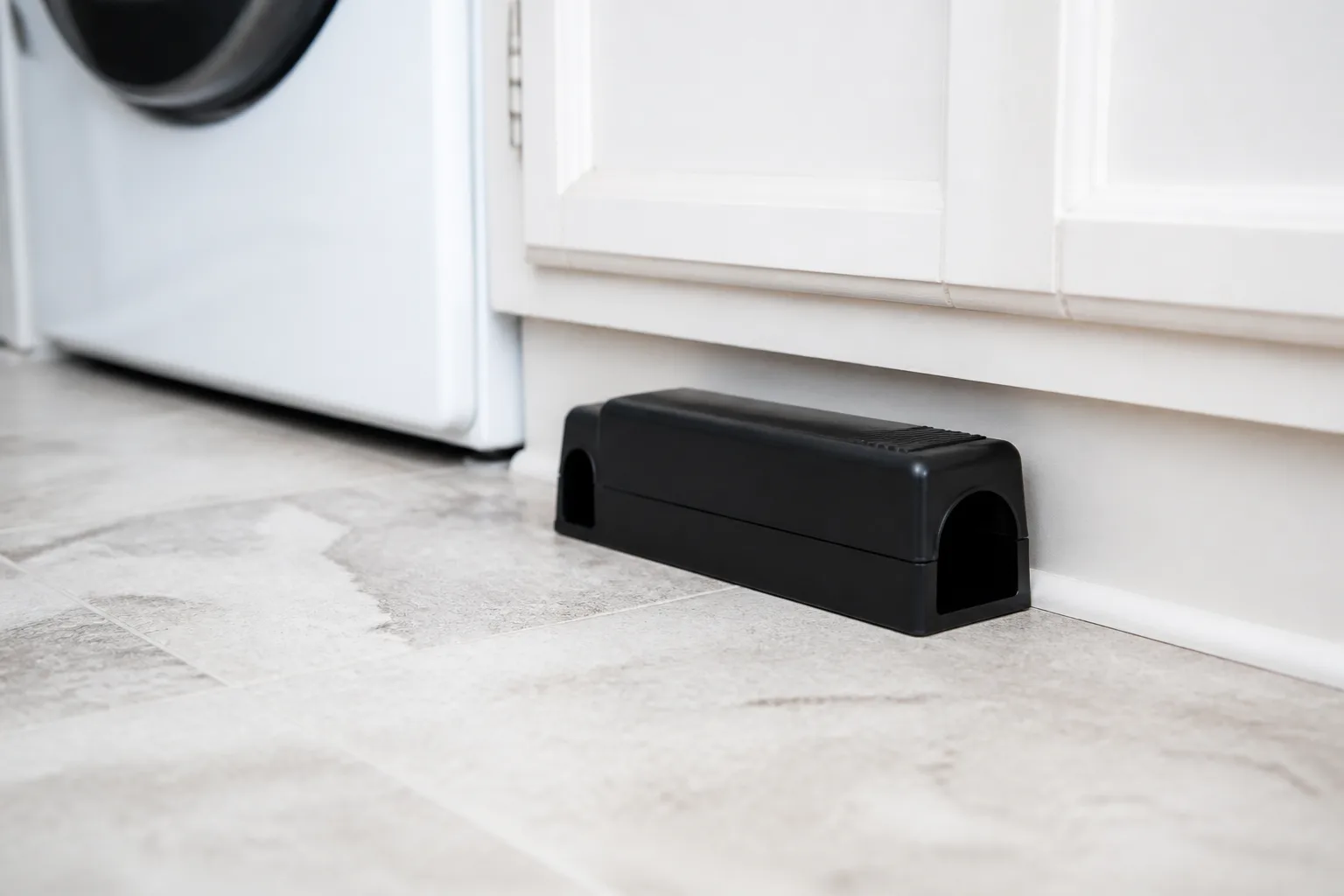
Set the baited end toward the wall so the trap forms a T with the baseboard, and keep it out of reach of children and pets. Inspect the route first: a Norway rat is more likely to travel along a lower wall or behind stored items, while a roof rat may be using a ledge, beam, or elevated route. UC IPM emphasizes that trap location matters and that roof rats may require elevated placements. If an elevated trap cannot be secured and protected from pets, birds, or other wildlife, do not improvise a dangerous setup.
Rats may avoid a new object for several days. The CDC suggests pre-baiting: leave bait on an unset trap until you see it being taken, then set it according to the instructions. Check traps daily and use gloves when handling a catch or trap. Do not put your fingers near the mechanism; follow the manufacturer’s reset and disposal instructions and CDC cleanup guidance.
If the bait disappears without a catch, the trap may be wrong-sized, poorly placed, or not sensitive enough—or another animal may be taking the bait. Move it to a confirmed travel route, secure the bait to the trigger if the trap design permits, or pre-bait before setting. If the trap catches nothing but fresh signs continue, do not assume the problem is solved; reassess routes and entry points or get professional help. Keep trapping until there are no captures for a week and no new signs, the CDC’s practical stopping point for household trapping.
When to use a professional instead
Call a licensed pest professional if you hear activity inside a wall or ceiling, find repeated signs in multiple rooms, cannot reach the nest or entry point, see chewed wiring, or continue to find fresh evidence after a careful trapping and exclusion effort. A pro can inspect connected roof and foundation routes, choose a treatment based on the species and building, and explain what must be repaired. For a rental, shared building, food business, or multifamily property, alert the property manager or responsible authority as well; treating one apartment may not close an entry route through shared walls or utility spaces.
Ask what the inspection covers, whether exclusion and cleanup are part of the plan, which products would be used, how children and pets will be protected, and how follow-up will confirm the issue is resolved. A quote that includes only bait placement may leave the food source and access route untouched. The CDC points readers to professional help when rodents occupy areas that cannot be safely cleaned or when trapping does not resolve the problem.
Rodenticide is not a casual shortcut indoors. Bait can endanger children, pets, and wildlife, and a poisoned rat may die in an inaccessible cavity. If a pesticide is considered, use only a product registered for the intended site and follow every label direction; never transfer bait to an unlabelled container or place it where a child or animal can reach it. If there is an immediate exposure, contact the relevant poison-control service or veterinarian, and bring the product label information.
Keep rats from returning
Once signs stop, keep the measures that removed the attractants in place. Store bulk pet food and birdseed in sealed metal or thick plastic containers, clean food residue from bins, keep lids closed, and avoid leaving bowls outside overnight. Pick up fallen fruit and nuts, reduce brush and clutter against the house, and keep firewood or stored materials elevated and away from foundation walls when feasible. These changes do not make a property rat-proof, but they reduce easy food and hiding places.
Inspect repairs after storms, landscaping work, and home renovations. Check that door sweeps contact the threshold, vent screens remain intact, and sealant around pipes has not cracked or pulled away. Roof rats can use branches, vines, fences, or utility lines to reach roof openings, while burrowing rats may exploit gaps at a foundation or beneath a shed. Trim routes where practical, but do not cut utility lines or climb onto a roof; call the utility company or a qualified contractor for hazardous access.
Use a short monitoring routine rather than relying on scent repellents or ultrasonic devices. Check the original evidence area and nearby stored food once a week for several weeks, and look for new droppings, chewing, or disturbed material. Strong smells may mask an odor temporarily, but they do not seal an opening or remove a nest. If evidence reappears, return to the inspection sequence and find the route instead of adding more fragrance or pesticide.
Conclusion
The clearest signs of rats in your home are new droppings, gnawing, nesting material, repeated sounds, and activity that appears along a consistent route. One clue may be old or misidentified, so confirm the pattern safely: clean a small accessible area using the CDC method and watch for new evidence rather than touching or disturbing it dry.
Then address the cause as well as the animal. Remove food and clutter, use correctly sized snap traps where rats travel, and seal gaps with durable materials after checking that no animal is trapped inside. Call a qualified professional for heavy contamination, inaccessible nests, duct or insulation involvement, damaged wiring, persistent activity, or any situation that makes safe DIY work uncertain. That sequence gives you a practical way to respond now and to reduce the chance of rats returning.