How to Get a Christmas Cactus to Bloom in 3 Steps
Learn how to get a Christmas cactus to bloom with a fall schedule for uninterrupted darkness, cool nights, careful watering, and steady care once buds appear.
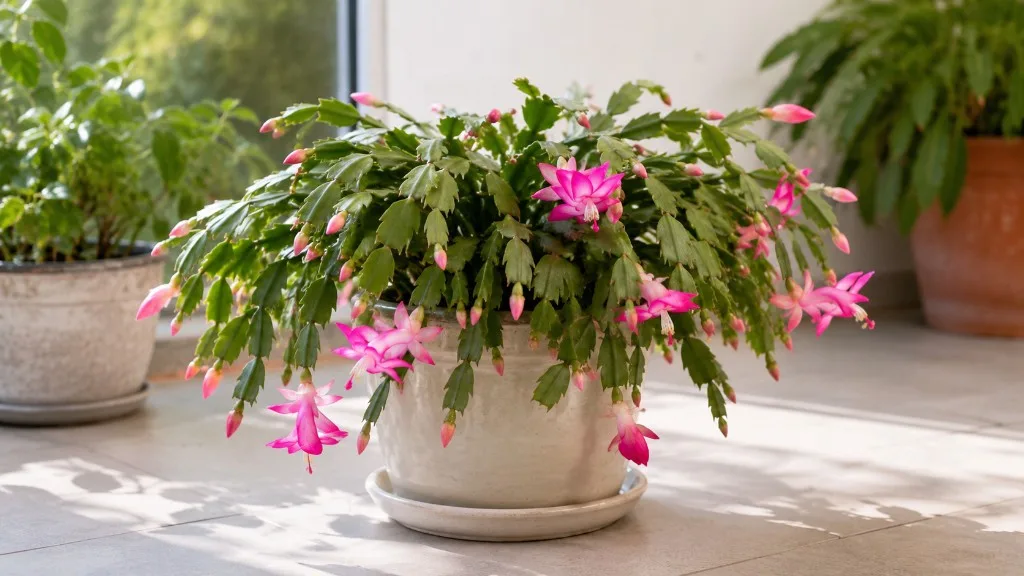
To get a Christmas cactus to flower, give it six to eight weeks of long, uninterrupted nights, keep fall nights cool, and avoid letting the pot swing between drought and soggy soil. Start about eight to ten weeks before the blooms you want; in much of the Northern Hemisphere, that usually means beginning in October for a December display. Some extension schedules start in mid-September to allow extra time for bud set and swelling. Then keep the plant in bright daytime light, protect it from night lights and temperature shocks, and maintain even moisture once buds show.
The reliable routine is less about “tricking” the plant than giving it the seasonal signals it uses to form flower buds. Three details matter most: how long darkness lasts, how warm the room stays at night, and whether the plant is healthy and steady enough to carry the buds through opening. If your cactus is already growing well but never flowers, begin with the light schedule—not a stronger fertilizer or a colder, darker room.
Why Christmas Cactus Blooms on a Seasonal Cue
A Christmas cactus is not a desert cactus. The true Christmas cactus, Schlumbergera × buckleyi, is an epiphytic cactus from Brazil; it grows naturally on trees or rocky surfaces rather than in baking desert soil. Its green, flattened stem segments—often called leaves—are phylloclades, and flowers form at their tips. That growth habit explains why the plant needs bright filtered light and regular moisture during active growth, not full sun and prolonged drought.
Flowering follows a seasonal cue called photoperiod: the length of uninterrupted light and dark in a 24-hour cycle. As nights lengthen in fall, the plant can shift from making stems to setting flower buds. Cool nights reinforce that shift. NC State Extension recommends bright days, night temperatures of 55 to 65°F, and at least 13 hours of uninterrupted darkness beginning around mid-September for S. × buckleyi. UGA Cooperative Extension recommends 14 or more continuous hours of darkness for at least six weeks and notes that as little as two hours of interrupted light can inhibit bud set. A 14-hour dark window is a useful household target that gives the plant a margin for small light leaks.
The name on the nursery tag is not always precise. Many plants sold as Christmas cacti are Thanksgiving cacti, S. truncata, or hybrids, which may flower earlier and have more pointed projections on stem edges. NC State describes the true Christmas cactus as a hybrid with rounded stem margins and a later winter flowering window, while Thanksgiving cactus typically opens closer to late November. If a healthy plant blooms before December, it may be following its natural calendar rather than failing to respond to your care.
Step 1: Start the Flowering Routine 8 Weeks Ahead
Pick the date you would like the first flowers, then count backward eight to ten weeks. That is when to begin the long-night routine. The dark treatment usually lasts six to eight weeks; visible buds may take several weeks to form, and they need additional time to swell and open. Cornell’s Master Gardener guide suggests starting eight to ten weeks before Christmas when you want a holiday display, while UGA reports that buds can become visible after about four weeks of consistent conditions. These are planning ranges, not a guarantee that every cultivar will flower on a chosen date.
If you live in the Northern Hemisphere and want blooms around late December, start in mid-October at the latest for a later display, or mid-September for the more dependable full window. If you want flowers in late November, begin earlier. In the Southern Hemisphere, do not copy the September calendar; count backward from your local late-spring or early-summer target and use your own season’s shortening days. A grower who starts in October may still get flowers, but the likely result is a later bloom rather than a plant that “missed” the year.
Here is a practical Northern Hemisphere planning example. These are start windows, not bloom promises; a plant’s cultivar, maturity, and room temperature can shift its schedule by days or weeks.
| Approximate first-flower target | Start the dark routine |
|---|---|
| Around November 25 | September 16–30 |
| Around December 15 | October 6–20 |
| Around December 25 | October 16–30 |
| Around January 15 | November 6–20 |
The full lead time is longer than the dark treatment alone because the plant first responds by initiating tiny buds, then spends additional time enlarging them. If you can see buds at the stem tips, the plant has already made the important transition; keep conditions steady instead of restarting the clock. If the calendar date has passed and no buds are visible, you can still continue the routine, but plan for a later flowering window.
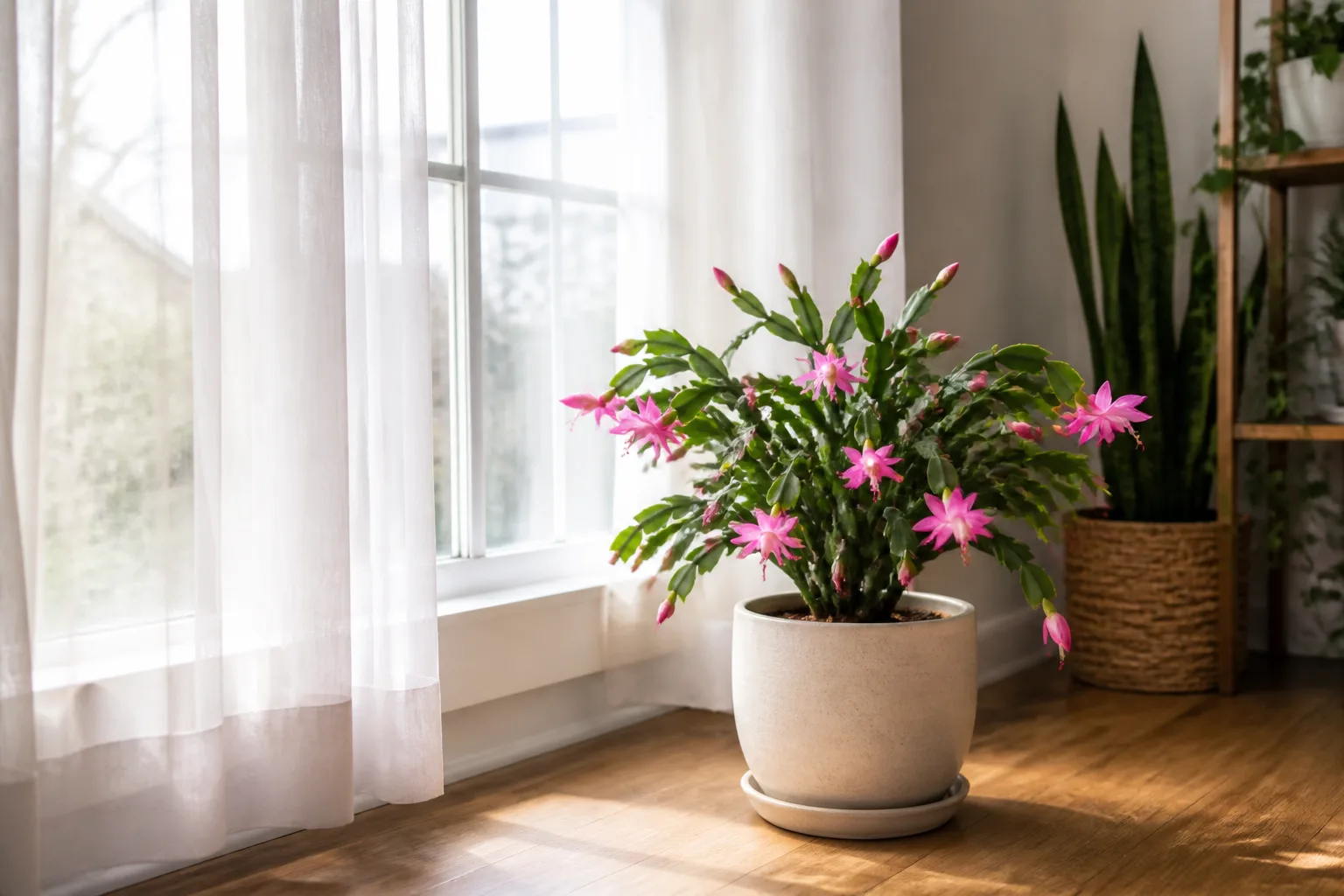
Build the calendar backward from your target bloom
Write one fixed evening and morning time for the plant, such as 6:30 p.m. to 8:30 a.m. That is a 14-hour dark window. Keep it the same each night for six to eight weeks, including weekends. A repeatable schedule is easier to follow than trying to estimate night length or moving the plant whenever you remember.
If natural autumn days already provide enough darkness, you may not need to cover the plant. But indoor lights often erase the natural signal: a cactus by the living-room window can receive bright light from a lamp after sunset even when it gets no direct sun. Decide whether the room stays dark, then either use a reliably dark spare room or cover the plant at night. Continue to give it its normal bright daytime exposure; leaving it in a closet all day deprives it of light needed to maintain healthy stems.
Step 2: Give It Long Nights and Cool Temperatures
During the induction period, pair 14 hours of continuous darkness with a cool but ordinary room, ideally around 55 to 65°F at night. You do not need to chill the plant, put it outdoors in cold weather, or expose it to a sudden temperature plunge. Avoid temperatures below about 50°F, which Cornell’s guidance flags as too cold, and keep the pot away from cold window glass, exterior doors, fireplaces, radiators, and heating vents. A stable cool bedroom or enclosed porch can work if it stays above the plant’s safe range.
Sources differ slightly on the exact numbers because cultivar, room warmth, and growing conditions affect the response. NC State Extension and the Missouri Botanical Garden both describe 55 to 65°F nights with 13 or more continuous dark hours; Gardening Know How describes 60 to 68°F as a workable range and recommends at least 13 hours of darkness. In a home that stays warm, do not push temperatures to an unsafe low to compensate. Keep the night as dark as practical, choose the coolest stable room available, and give the plant the full six-to-eight-week window.
Make the dark period truly uninterrupted
Darkness means no visible room light reaching the stems for the entire night—not merely switching off the overhead fixture. Look for a lamp across the room, kitchen light through an open doorway, motion-sensor lighting, a television, or streetlight shining through thin curtains. Stand where the cactus sits after dark. If you can clearly see the plant or read its pot label, light is reaching it; move it or block the light source.
The simplest setup is a room with a window and no evening lights. If that is not available, use a cardboard box or opaque cover for the night period, but leave enough space for air circulation and uncover the plant every morning. Do not use a cover that traps heat near a radiator or under a grow light. A closet can serve as a nighttime dark space if it is not hot or sealed around the pot, but it should not become the plant’s all-day home.
A plant that gets ten hours of darkness, then a bright lamp for two hours, has not received twelve uninterrupted hours. That break can matter even if the room seems dim. The practical rule is to keep one continuous dark block, rather than splitting the hours into a nap before and after evening lighting.
If family schedules make a dark living room difficult, make the plant’s routine independent of the room: put it in a naturally dark spare room before lights come on, or cover it at the same time every evening and uncover it each morning. A timer can remind you to switch a room lamp off, but it cannot compensate for light that still spills in from a hallway. Once you choose a setup, leave it alone for the whole treatment window. Consistency from night to night is more useful than an elaborate system that is followed irregularly.
Keep daytime light bright and indirect
The cactus still needs enough daytime light to support its stems. Place it near a bright window where sunlight is filtered, or a few feet back from intense afternoon sun. A north or east window can work well; a south or west window may need a sheer curtain during bright, warm months. If the plant is outdoors in a frost-free climate, keep it in open shade rather than full afternoon sun and bring it inside before temperatures approach freezing.
Once the dark routine starts, avoid moving the plant between a sunny window, a heated room, and an outdoor porch every few days. The point is to make day and night predictable. If you need to change the location, do it before the schedule begins and allow the plant to settle for several days. For year-round window and light guidance, see our Christmas cactus light guide.
Step 3: Adjust Water Carefully and Keep Conditions Steady
Shorter days and cooler air slow evaporation, so the plant may need water less often in fall than it did in summer. That does not mean withholding water until the cactus shrivels. Treat the soil, pot, and room as one system: a small plastic nursery pot in a warm room dries faster than a large ceramic container in a cool bedroom. Check the mix before watering instead of using a weekly calendar.
During bud initiation, let the top inch or so of mix begin to dry, then water thoroughly until a little drains from the bottom. Empty the saucer so the roots are not left standing in runoff. The goal is slightly reduced but consistent moisture, not repeated drought stress. NC State advises reducing watering as fall buds develop, and UGA emphasizes that soil should remain evenly moist after bud set so the buds do not fall. Both warnings fit the same rule: avoid extremes and adjust to the plant’s actual drying rate.
Reduce watering modestly, not to drought
A Christmas cactus can tolerate a brief dry-down better than waterlogged soil, but the complete root ball should not sit dry for long during bud formation. If stem segments look plump and the pot is still heavy, wait. If the upper layer is dry and the pot feels noticeably lighter, water thoroughly. If the mix remains wet for days, do not add more water; check that the pot drains freely and that the medium is airy enough for roots.
Once you see buds, keep moisture more even. A sudden dry spell can cause buds to shrivel or drop, while a saturated mix can damage roots and prevent the plant from supporting them. Water the soil rather than spraying the flowers, and do not leave the pot in a decorative cachepot full of water. In a warm, dry home, check more often; in a cool, humid room, the same pot may need water much less often.
Stop feeding and avoid late repotting
Fertilizer does not switch on flowering; the night-length and temperature cues do. Feed during active growth in spring and summer according to a dilute houseplant-fertilizer label, then reduce or stop feeding by late summer as bud initiation approaches. UGA Cooperative Extension recommends stopping in late summer to support fall bud production. Avoid adding a high-phosphorus “bloom booster” in October; it cannot replace the seasonal cue and may add salts to a plant that is slowing down.
Do not repot or prune heavily once the fall routine begins. A Christmas cactus flowers at stem tips, and sudden root disturbance or removal of growing tips can delay the display you are trying to encourage. If the plant is healthy and the pot drains well, wait until after flowering or spring growth to repot. A somewhat snug pot is usually fine; a rootbound plant with collapsing mix is a spring problem to solve, not an October bloom treatment.
What to Do Once You See Buds
Small pointed buds at the end of stem segments mean the induction routine worked. You can stop putting the plant into forced darkness once buds are clearly established; the photoperiod’s main job is to initiate them. UGA notes that day length no longer controls flowering after bud set. Keep bright daytime light, ordinary nights, and the same position rather than continuing a complicated covering routine unnecessarily.
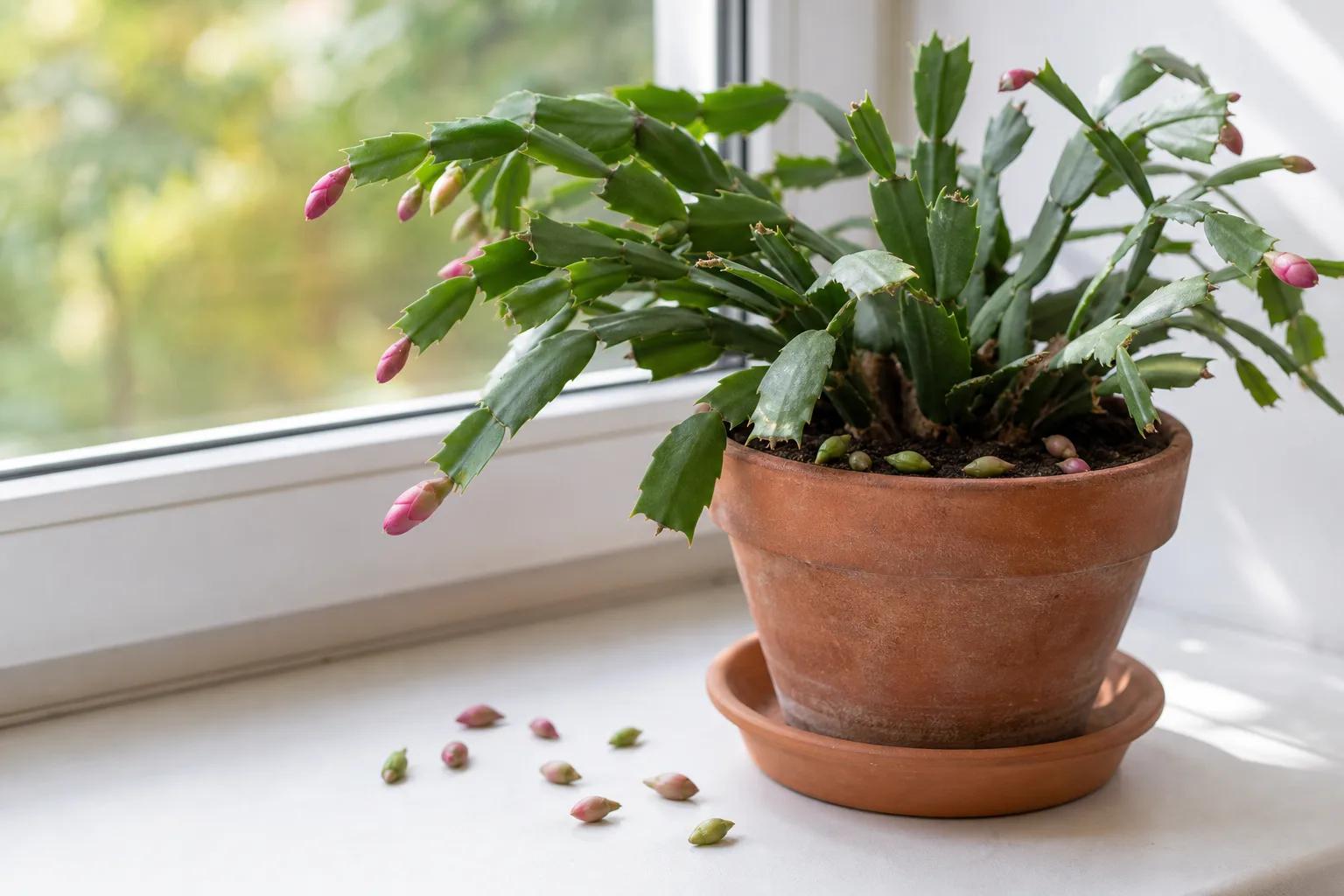
Protect the buds from sudden changes
A budded plant is sensitive to abrupt changes in temperature, moisture, and light. Pick its display spot before buds swell if possible. Keep it away from a drafty entry, heater, fireplace, cold pane, or a sunny window that becomes hot at midday. If you must move it, choose a similar light level and temperature, move it once, and let it settle. Repeatedly carrying the pot from a dark closet to a bright window and back can stress a plant that is already shifting toward bloom.
The dark treatment is a bud-setting tool, not a requirement to keep the plant hidden until every flower opens. When buds are established, normal room light is fine. If the final display location is warmer or much brighter than the growing spot, make the move before the buds are large and swollen when you can; the more abrupt the change, the greater the chance that a sensitive plant reacts by dropping some buds. A few dropped buds do not mean the whole display is lost, so keep the remaining ones stable rather than changing several conditions at once.
Continue checking the soil every few days, but water only when it needs it. In bloom, the plant should not be allowed to dry completely, yet soggy roots remain a problem. NC State lists sudden temperature changes, drafts, low humidity, and improper watering among causes of bud drop. Cornell’s practical guide similarly warns that both hot and cold drafts can make buds fall. Keep the pot stable and let the flowers open on their own; avoid pruning or feeding until the bloom is finished.
If It Still Will Not Bloom, Check These Causes in Order
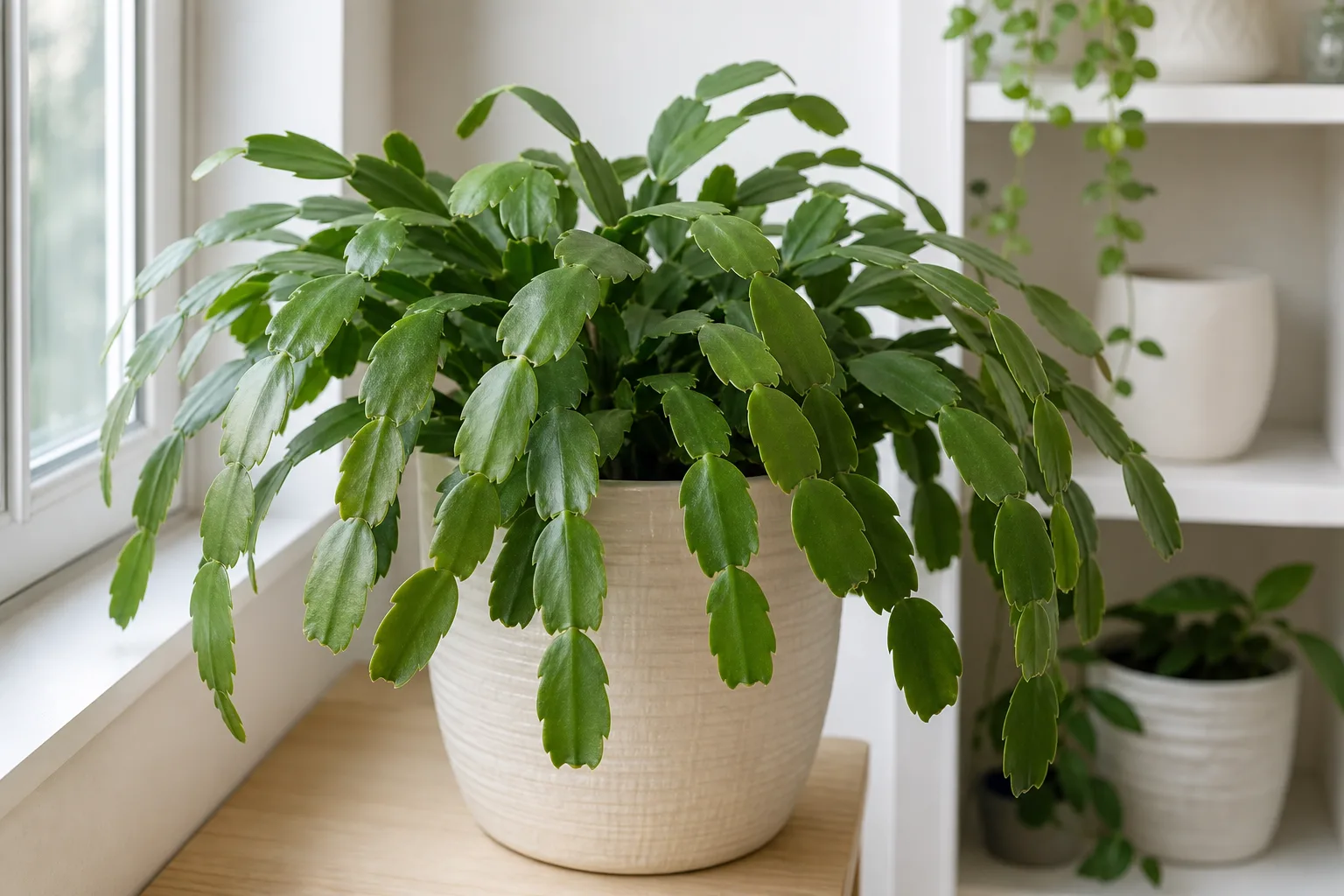
A cactus can grow healthy green segments and still fail to flower. Work through the likely causes in order, changing one factor at a time. Avoid reacting to a missing bud by simultaneously repotting, fertilizing, moving the plant, and cutting back water; if it improves or worsens, you will not know which change mattered.
Audit night light and start date
First ask whether the plant got at least 13 to 14 uninterrupted dark hours every night for six to eight weeks. Check window glow and other rooms, not just the lamp beside the pot. If you started the treatment only a week before the holiday, the timing is probably too short; continue the routine and accept that the bloom may arrive later. Bud initiation takes weeks, and flowers cannot be ordered on a deadline.
Next consider whether the plant is the kind you think it is. A Thanksgiving cactus may flower earlier than a true Christmas cactus, while Easter cactus generally flowers in spring. The stem-edge shape helps distinguish plants, but store labels and hybrids can be confusing. Use the plant’s past bloom date as a better guide than its tag, and start the routine eight to ten weeks before that date next year.
Check temperature, moisture, and plant health
If the dark period was adequate, measure temperature at the plant rather than across the room. A radiator, sunny sill, or cold draft can create a very different microclimate from the thermostat reading. Aim for cool, stable nights around 55 to 65°F during bud initiation. A warm room is not automatically fatal, but repeated heat and cold swings make the plant less predictable.
Then inspect the segments and soil. Firm green stems and an airy mix suggest the plant is healthy enough to keep trying; wrinkled segments with dry mix point to dehydration, while limp or yellow segments in wet mix can indicate root stress. Correct the underlying problem before attempting another bloom cycle. A plant recovering from root rot, severe drought, or recent repotting may need a full growing season to rebuild healthy stem tips. For a broader after-bloom routine, see Christmas cactus care after flowering.
Also look at the plant’s shape. Flowers open from stem tips, so a small cutting with only a few young segments may have too few mature tips to make a dramatic display. Let it grow through spring and summer in bright filtered light before expecting a large flush. If an older plant is sparse, pinching a few healthy tips in late spring can encourage branching, but do not prune once fall bud formation begins; each growing tip you remove is a potential flower site lost for that season.
What to Do After the Flowers Fade
When the last flowers fade, remove spent blooms gently and let the plant rest for a few weeks. Reduce watering while growth is slow, but do not let the entire root ball turn bone-dry. Resume normal spring and summer care when new stem segments begin to form: bright indirect light, thorough watering after the mix starts to dry, and modest feeding during active growth. This recovery phase builds the branching tips that can carry next season’s flowers.
If the plant is long or sparse, pinch one or two stem segments from selected tips in late spring or early summer, before the next fall bud routine. More branching can create more flowering tips, but heavy pruning late in summer removes potential bloom sites. Repot only when the mix has broken down, the pot no longer drains well, or roots are crowded; spring is the gentler time. The post-bloom period is also a good time to note when the plant flowered and how cool and dark its room stayed, so next year’s start date can be based on what the plant actually did.
Think of the year as a repeating sequence rather than one holiday trick: recover after flowering, build healthy stems during spring and summer, set buds with cool long nights in fall, then keep those buds steady through winter. The after-flowering care guide covers the first phase in more detail. A brief note on your calendar—start date, when buds first appeared, and whether they dropped—will make next season’s adjustments much more precise than adding more fertilizer or buying another “bloom” product.
Conclusion
Getting a Christmas cactus to bloom comes down to a repeatable fall routine: start about eight weeks ahead, provide around 14 hours of uninterrupted darkness and cool nights for six to eight weeks, then maintain steady moisture and protect buds from drafts and abrupt changes. Do not keep the plant in darkness all day or dry it out to force dormancy. Healthy daytime growth, a stable location, and a realistic timeline matter as much as the dark period.
If your cactus misses the holiday window, keep caring for it steadily rather than escalating to cold or drought. Its next bloom may be later, and its past flowering date can guide next year’s schedule. The goal is not a perfect date on demand; it is a healthy plant that receives the seasonal cues it needs to flower again.



