Christmas Cactus After-Holiday Care for Bigger Blooms
Learn what Christmas cactus needs after the holidays: post-bloom rest, watering cuts, when to prune and repot, and the spring routine that fuels next season's flowers.
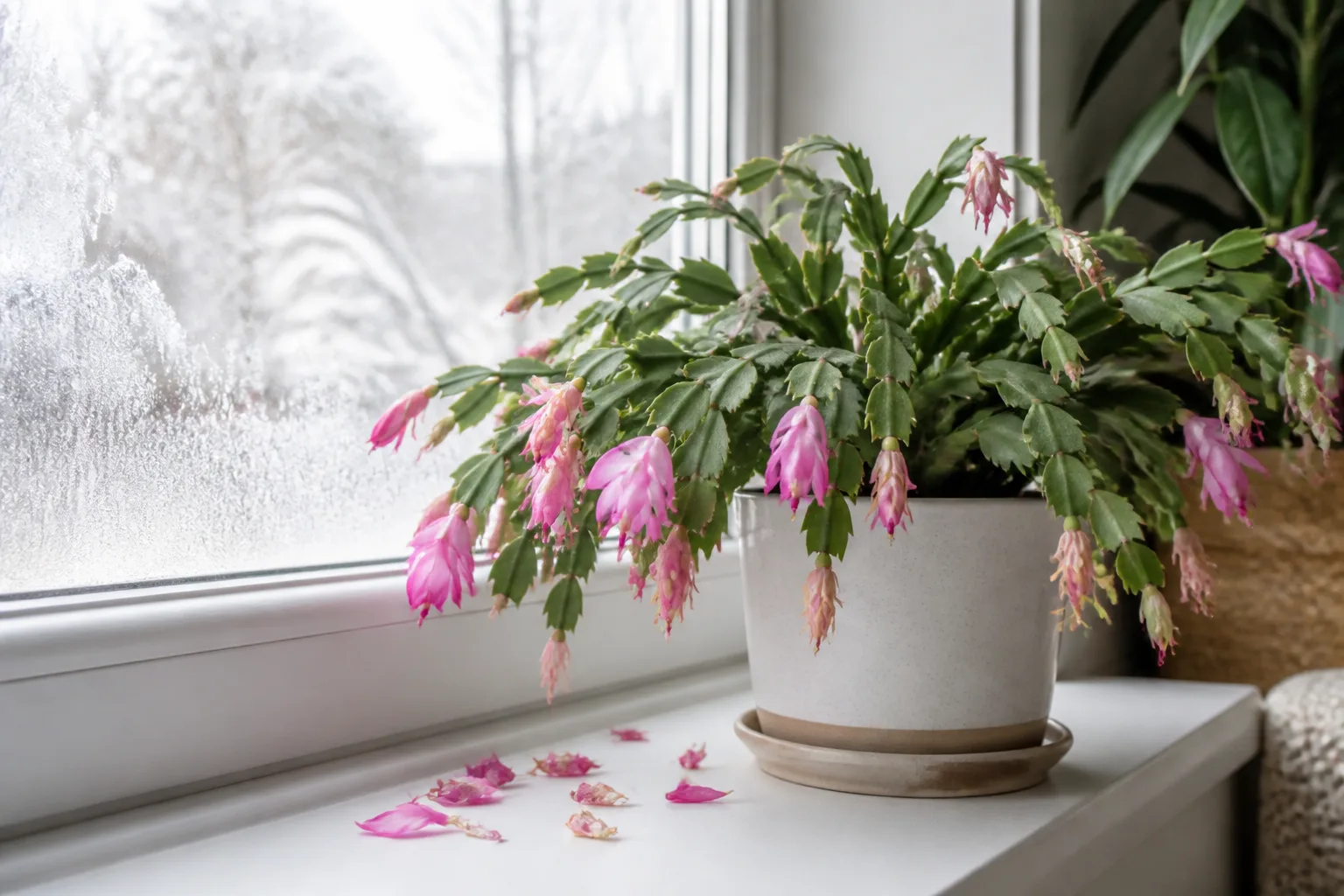
The holiday display is over. Petals litter the windowsill, the living room feels ordinary again, and your Christmas cactus (Schlumbergera × buckleyi) looks tired in the way only a plant that just spent a month in full flower can. This is the moment that separates a one-season wonder from a plant that puts on a bigger show next December. January is not about pushing growth. It is about recovery, rhythm, and restraint—the quiet work that reloads energy for next year’s buds.
Unlike desert cacti, Christmas cactus is an epiphytic forest plant from Brazil’s coastal mountains. It grows on trees in filtered light and humid air, not on dry sand. That biology explains why post-holiday care looks more like a resting orchid than a neglected succulent. Get January right and you set up fuller branching, stronger segments, and more flower tips by fall. Rush it with fertilizer, heavy watering, or an untimely repot and you trade next year’s blooms for yellow segments and dropped buds.
Why January Care Matters More Than You Think
Flowering is expensive. A mature Christmas cactus can carry dozens of tubular blooms for weeks, each one pulling stored carbohydrates from flattened stem segments called phylloclades. When the last flower fades, the plant is not lazy—it is consolidating. Roots slow uptake, new segment growth pauses, and the whole system shifts into a post-bloom rest that mimics the cooler, drier stretch it would experience after flowering in the wild.
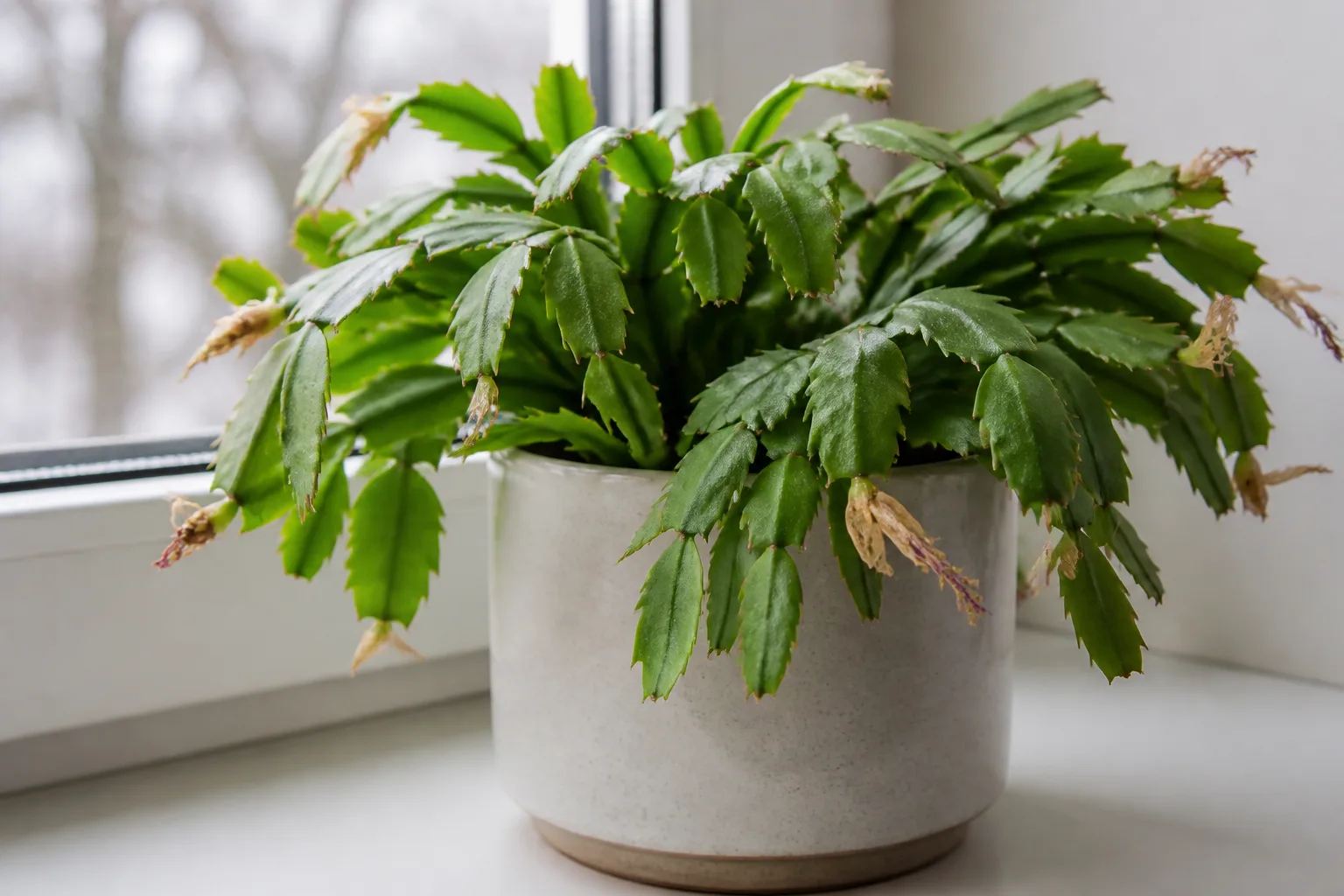
The Royal Horticultural Society describes two rest periods per year for reliable flowering: one in autumn before bud set, and one after flowering from late January to late March. NC State Extension likewise recommends reducing watering after flowering is completed and resuming active care when growth returns. January sits squarely in that second valley. Treat it like a growth sprint and you fight the plant’s calendar.
What Happens Inside the Plant After the Last Flower Fades
Think of each phylloclade as a water-and-sugar battery. Bloom drains those batteries. During rest, the plant repairs fine roots, hardens segment tissue, and prepares dormant bud initials along stem tips—buds you will not see until autumn’s short-day trigger. Fertilizer applied now cannot invent flowers that were not initiated months ago, and excess nitrogen in dim winter light produces soft, pale growth that drops in spring rather than becoming strong branches.
If your label said “Christmas cactus” but the plant bloomed in late November with sharply pointed segment teeth, you may have Thanksgiving cactus (Schlumbergera truncata). Care timing is nearly identical; bloom windows differ by a few weeks. Our Christmas cactus overview covers identification and year-round basics if you are unsure which holiday cactus you own.
Your January Reset Checklist
Use this as your first-week routine once the main flush of flowers is finished—or when only a few stragglers remain.
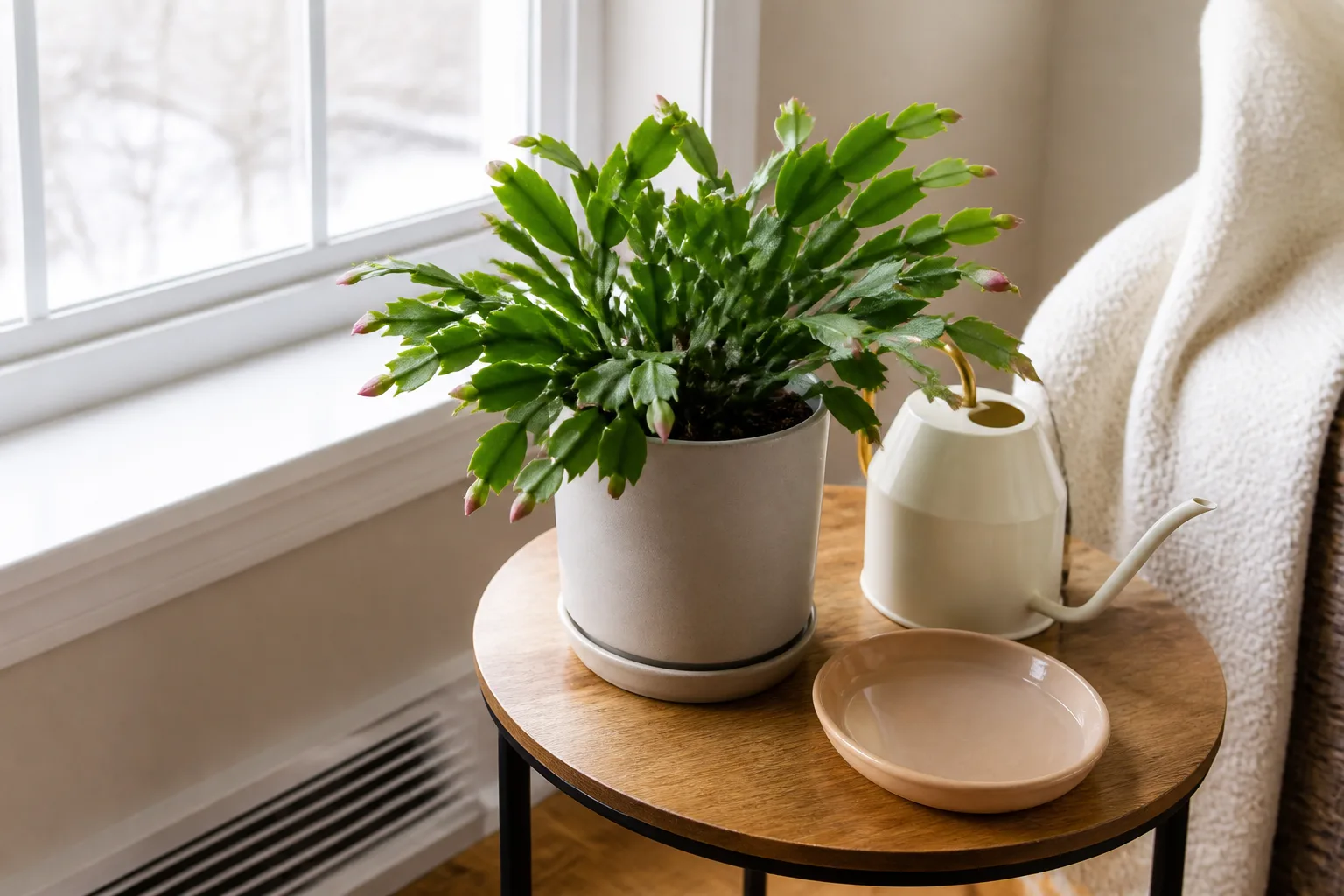
Do now:
- Remove spent flowers by letting them fall or gently pinching them off.
- Move the plant to bright, indirect light away from heating vents and cold drafts.
- Reduce watering; check soil before every drink.
- Skip all fertilizer, including bloom booster.
- Note segment condition: firm and plump is good; soft, yellow, or translucent needs investigation.
Wait until late winter or early spring:
- Structural pruning for shape and branching.
- Repotting, unless roots are clearly failing.
- Resuming monthly feeding.
- Any darkness routine for next year’s buds—that starts in mid-September, not January.
This split matters. January tasks are subtractive (less water, no feed, gentle cleanup). Spring tasks are additive (prune, repot, fertilize, increase water). Blurring the two is how healthy plants get repotted into wet cold soil and stall for months.
What to Do This Week vs What to Wait On
If flowers are still opening on one branch while others are bare, keep even moisture on that plant until the last buds finish—drought during active bloom causes bud abscission (bud drop), which Clemson HGIC flags as a common flowering failure on holiday cacti. Once blooms are done, shift to rest watering within a week. If you already fed in January, stop immediately and see our guide on whether to fertilize holiday cacti in January for recovery steps.
Give Your Christmas Cactus a Real Post-Bloom Rest
Rest does not mean neglect. It means matching inputs to metabolism. In January your plant is running on a slower clock: shorter days, weaker sun through most windows, and cooler room corners where holiday cacti often live after the decorations come down.
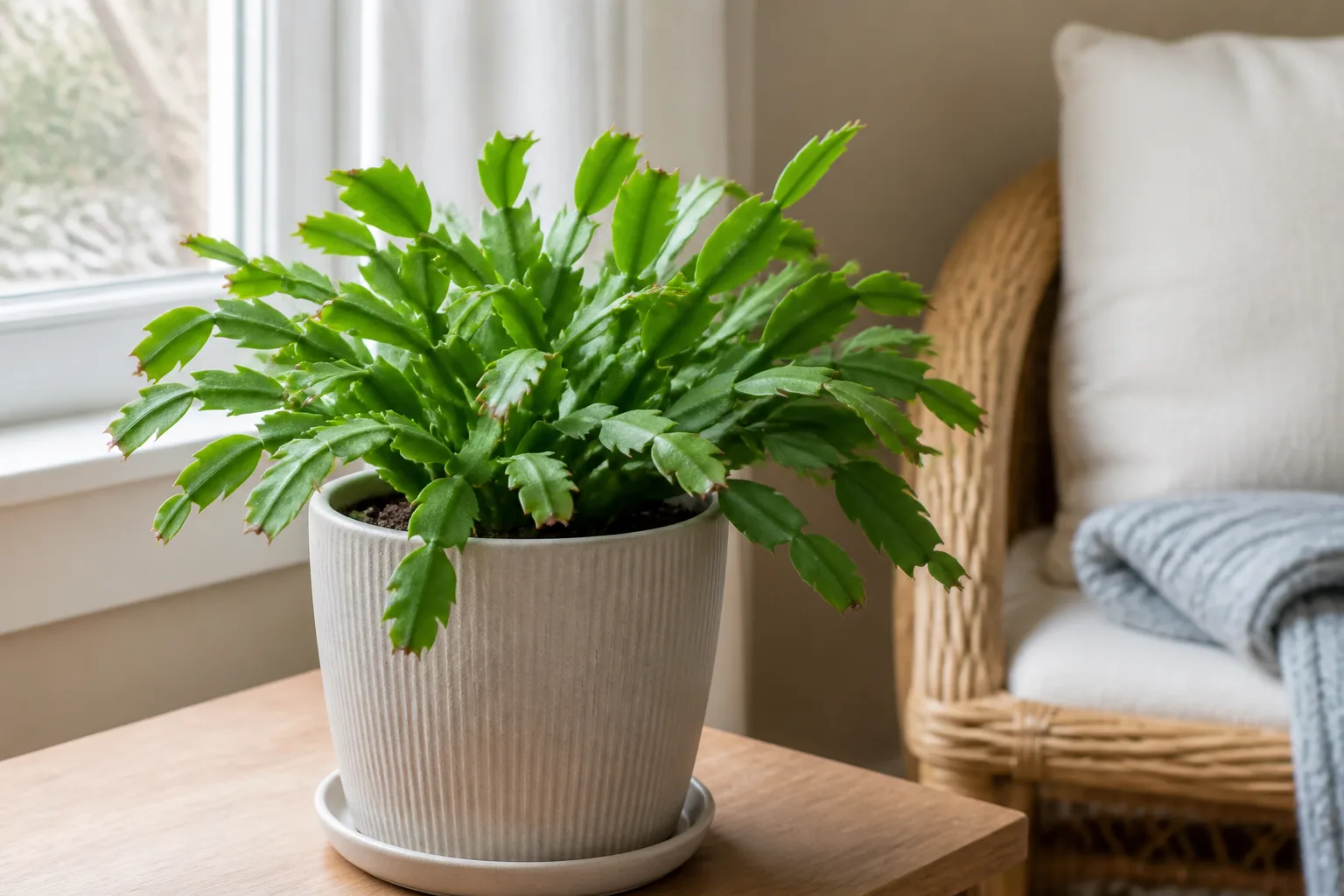
Aim for four to six weeks of clearly reduced care from the end of the main bloom, extending through late January into March as the RHS rest window suggests. During this stretch the plant rebuilds root health and segment firmness without being asked to push new tissue in low light.
How Long the Rest Period Should Last
There is no single calendar date that works in every home. Start the rest clock when the majority of flowers have faded, not when you packed away ornaments. In a bright, warm apartment that might be mid-January. In a cool room where bloom ran late into December, rest might begin right after New Year’s. The signal to end rest is more reliable than the signal to start it: fresh green or pinkish segment tips forming at stem ends, usually in late February or March as days lengthen.
Until you see that new growth, keep water reduced and fertilizer off. When tips swell and color up, gradually return to spring-summer rhythm over two to three weeks—not overnight.
Temperature and Humidity During Recovery
60–70°F (15–21°C) daytime temperatures with bright indirect light suit post-bloom recovery in most homes. Cooler nights help; the 55–65°F range that supports flowering is also comfortable during rest, though do not chase cold at the expense of drafty windows that shock leaves.
Humidity matters more than misting slogans suggest. These forest epiphytes appreciate 45–60% relative humidity. Grouping plants, using a pebble tray with water below stone tops, or running a humidifier beats daily spritzing, which only wets surfaces briefly. If segments wrinkle while soil is dry, humidity may be too low; if segments are limp with wet soil, the problem is not humidity.
Watering After the Holidays: Less, Not None
“Reduce watering” is where most owners fail in January—usually on the too much side. Cool rooms and short days slow evaporation. A pot that needed water every seven days in July may need fourteen to twenty-one days in January. The goal is to let the top 1 to 2 inches of mix dry between drinks while never letting the entire root ball turn to dust for weeks.
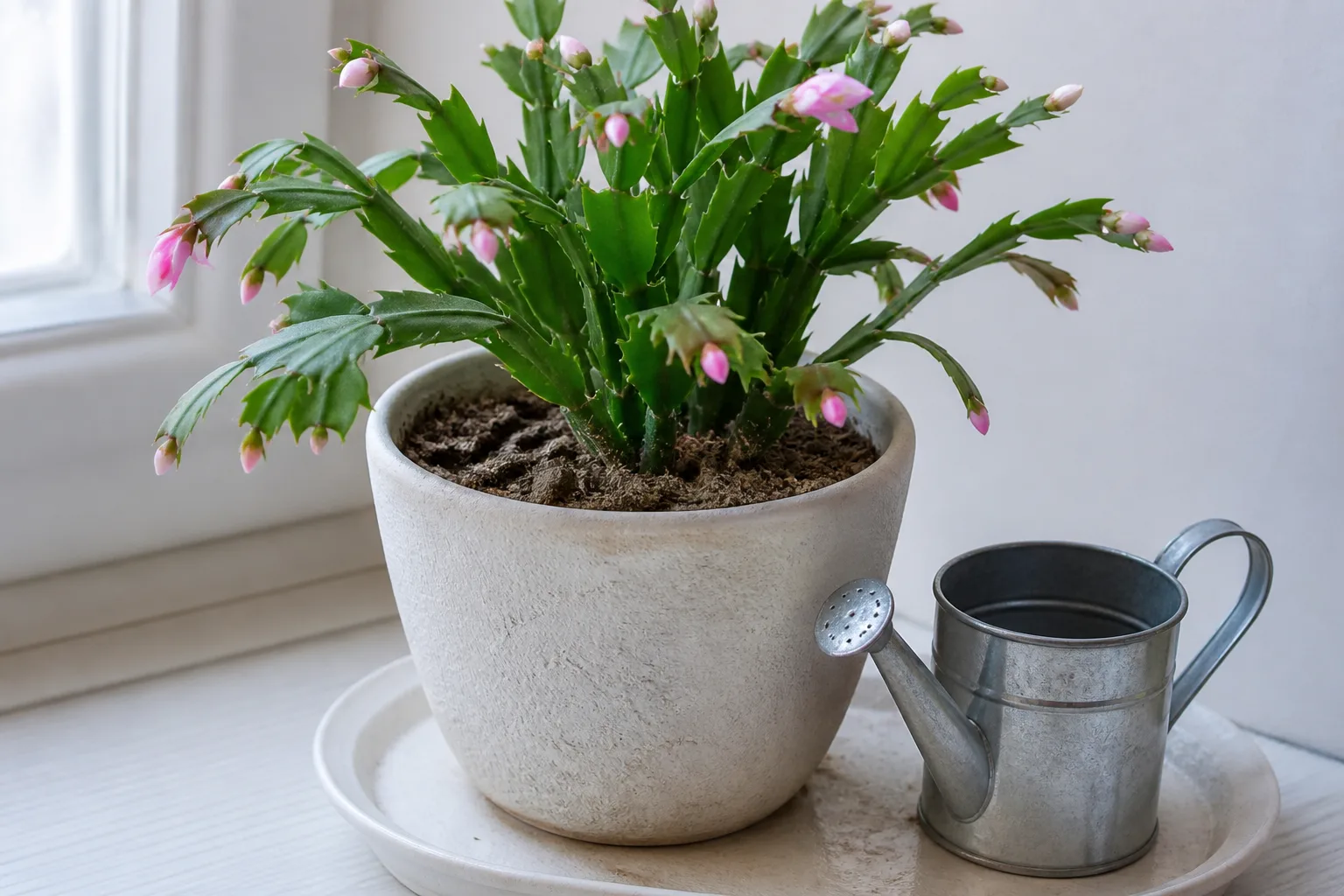
The RHS Christmas cactus guide is explicit: during post-flowering rest from late January to late March, let the top few centimeters dry between waterings, but do not let compost dry out entirely. That is the nuance—drier, not desert.
The Finger Test and Pot-Weight Check
Before every watering, push your finger 1–2 inches into the mix near the pot wall. Dry at that depth means water; cool and clinging means wait. Second check: lift the pot. A noticeably light container compared to right after a soak confirms moisture has depleted. When you do water, soak thoroughly until a little drains from the bottom, then empty the saucer. Roots sitting in cold runoff are a fast path to rot in January.
Our full seasonal breakdown lives in the Christmas cactus watering guide, including how pre-bloom autumn dryness differs from post-bloom rest.
Signs You Are Overwatering in January
Watch for yellow or translucent segments, a sour smell from the mix, limp foliage despite wet soil, and fungus gnats hovering near the surface. These symptoms overlap with underwatering, so always check moisture first. If soil is wet and the plant wilts, pause watering, confirm drainage holes are open, and inspect roots if yellowing spreads. Overwatering on Christmas cactus covers recovery without repeating a soak cycle on a drowning plant.
Hold the Fertilizer Until Spring Growth Returns
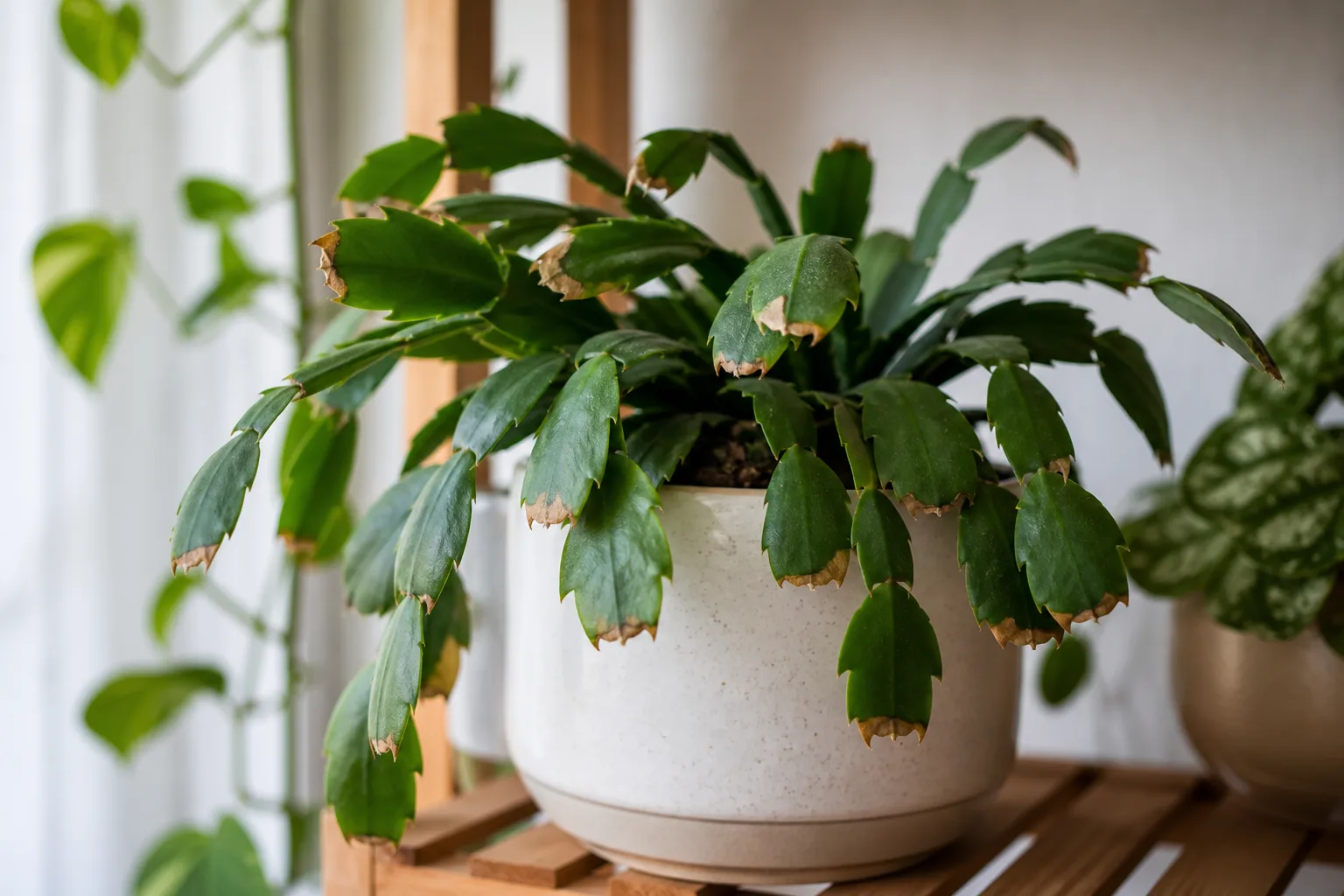
Do not fertilize in January, even if a few flowers linger or segments look glossy. Bloom chemistry was set in motion last autumn by cool nights and long darkness. Extra phosphorus or balanced feed now raises soluble salts around resting roots, risks brown segment edges, and can abort late buds. NC State Extension recommends monthly fertilizing during the growing season—not during post-bloom rest.
Resume feeding only when you see active new segment tips, typically late winter into spring. Use a half-strength balanced liquid houseplant fertilizer every two to four weeks through summer, then stop by late August so the plant can shift into autumn bud initiation. Clemson HGIC advises stopping fertilization in late summer to support greater flower bud production in fall. If you want the full holiday-cactus feeding debate, read should you fertilize holiday cacti in January—the short answer for Christmas cactus is still no.
Light After Blooming: Bright Days, No Darkness Routine Yet
Here is the mistake that sends readers down rabbit holes: you do not need 12–14 hours of darkness in January. The short-night / long-dark treatment is for bud initiation in autumn, roughly starting mid-September, when NC State Extension recommends cool nights of 55–65°F and at least 13 hours of uninterrupted darkness nightly. After the holidays, darkness routines are finished until next fall.
What January does need is steady bright indirect light for six to eight hours daily—an east-facing window is ideal, or a north window supplemented with a grow light if stems stretch pale and thin. Avoid blasting a rested plant with new direct south sun; forest cacti scorch easily. Our Christmas cactus light guide explains how to read segment color for light stress versus health.
Keep the plant away from artificial light at night only if you are trying to force a very late second flush in February; for standard care, normal evening room lighting is fine once main bloom is over.
Clean Up Spent Flowers and Plan Light Pruning
Spent flowers often dry and drop on their own. You can also pinch off wilted blooms to keep the plant tidy and direct energy away from seed formation. That is cleanup, not pruning.
Structural pruning is different. Removing one or two end segments from leggy stems in spring encourages branching—and because flowers form only at stem tips, more branches mean more blooms. The RHS recommends removing tip segments in spring after flowering when stems look straggly. January is for planning, not heavy cutting.
When to Prune for Fuller Shape and More Bloom Sites
Schedule shape pruning after the rest period, as new growth begins—often late February through April. Use clean scissors or snap segments at a joint. Target long single stems that make the plant lopsided, plus any shriveled or damaged sections. Removing up to one-third of a stem’s length from a few branches is reasonable; gutting the whole plant in January is not.
Pruning improves air circulation and redirects energy from bare woody cores to fresh tips. If your plant is compact and balanced, skip pruning this year. Bigger blooms come from more healthy tips, not from shorter plants.
Save Cuttings for Propagation
Every pruned segment can become a new plant. Take two- to four-segment cuttings, let the base dry a few hours, then root in airy mix or water. Iowa State University Extension notes holiday cactus cuttings often root in six to eight weeks in moist perlite or sand. Our propagate Christmas cactus guide walks through soil versus water methods if you want a fuller pot or gifts for fellow plant people.
Repotting: Refresh Soil Without Disrupting the Rest
Christmas cactus blooms best when slightly pot-bound—tight roots signal the plant to flower. That does not mean never repot. Old peat-based mix collapses, salts accumulate, and drainage slows, all of which shrink bloom potential even on a mature plant.
January is usually the wrong month to repot unless you have an emergency: roots rotting in sour soil, severe salt crust, or a pot with no drainage. Routine repotting belongs at the start of the growing season, when the RHS suggests end of March as plants resume active growth. Every one to three years is typical for a healthy specimen; every three to four years may suffice if growth and bloom are strong.
Signs Your Plant Actually Needs a Bigger Pot
Repot when you see roots circling drainage holes, water running straight through without absorbing, bloom count dropping year over year despite good light, or segments staying limp shortly after watering because roots no longer fill the mix. Stunted new growth in spring is another tell. If bloom was spectacular and soil dries on a normal schedule, wait until March.
Best Timing and Mix for Christmas Cactus
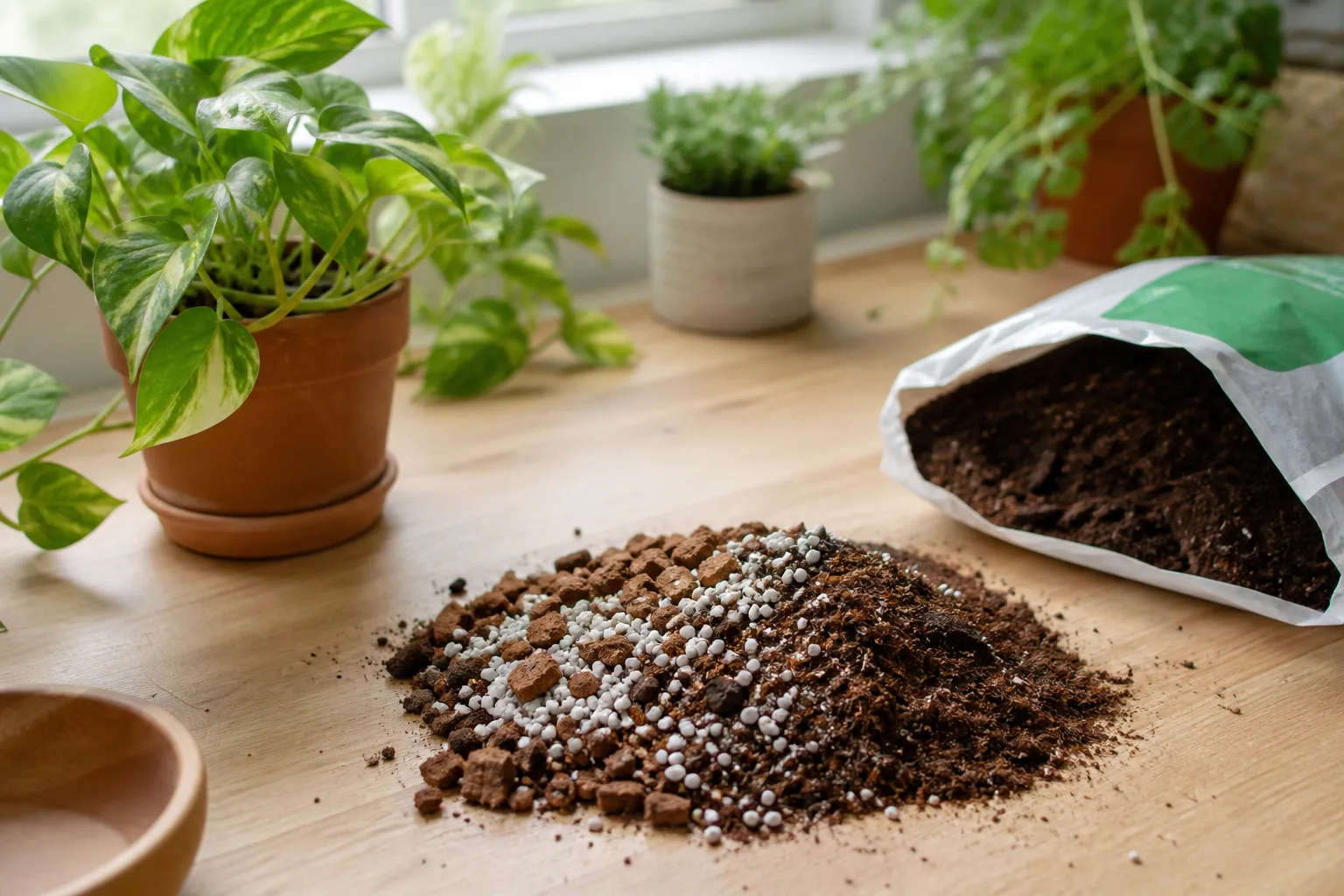
Choose a pot only one size larger—these plants flower better with cozy roots. Use well-draining, airy mix: peat or coco coir with perlite and orchid bark mirrors the epiphytic conditions NC State describes. Terracotta dries faster than plastic; adjust watering after any repot. Water once lightly after repotting, then let the plant settle in bright indirect light without fertilizer for four to six weeks until new growth confirms roots are working.
Build Toward Bigger Blooms: Month-by-Month Calendar
Post-holiday care is one chapter in a year-long book. Bigger blooms next winter depend on hitting every seasonal shift, not just a good January.
| Phase | Timing | Water | Feed | Light / temp |
|---|---|---|---|---|
| Post-bloom rest | Late Jan–Mar | Top 1–2 in dry between drinks | None | Bright indirect; 60–70°F |
| Active growth | Apr–Aug | Regular; top 1 in dry | Half-strength monthly | Bright indirect; warm |
| Pre-bloom rest | Mid-Sep–bud set | Reduced; deeper dry-down | Stop by late Aug | Cool nights 55–65°F; 13+ hr darkness |
| Bud & bloom | Nov–Jan | Even moisture; don’t dry out | None | Stable temps; no drafts |
Late Winter Through Summer Growth Phase
When new tips appear, increase water to the active-growth rhythm—often weekly in warm bright conditions. Fertilize monthly with balanced feed at half strength. This is when the plant builds the segments that will carry next winter’s buds. A summer vacation outdoors in filtered shade can boost vigor; bring plants inside before nights hit 45°F. More water, more light, more roots—until September flips the script.
September Bud-Initiation Routine
Bigger blooms start in autumn, not December. From mid-September, reduce watering, stop feeding, provide cool nights around 55–65°F, and ensure 13–14 hours of uninterrupted darkness nightly for six to eight weeks. Artificial light after dusk is the number-one reason bud set fails in homes that otherwise care well. Once buds are visible, move back to normal room temperatures, resume careful watering to keep mix evenly moist, and protect from drafts. Bud drop at this stage usually means temperature swings or drought, not lack of January fertilizer.
Troubleshooting Common Post-Holiday Problems
Even with good intentions, January surfaces stress that was hidden under holiday blooms.
Limp segments with dry, light soil mean underwatering—soak thoroughly once, then reset to rest-interval checks. Limp segments with wet soil mean overwatering or root trouble; do not add more water. Yellow segments in a bright window may be sun stress; yellow segments in a dim wet pot are often rot or salts.
Limp Segments, Dropped Buds, and Second Flushes
A second, smaller bloom in late winter sometimes appears if the plant got cool nights and natural shortening days after the main show. Enjoy it, but keep fertilizer off and avoid repotting mid-flush. If buds drop in January while still swelling, look for heat blasts from radiators, cold window glass at night, or soil swinging from soggy to bone dry.
Plants can live decades—even generations—with this cycle. The payoff for disciplined January rest is not just survival; it is a wider, heavier cascade of stems with more tips to flower. That is what “bigger blooms” actually means: more flowering sites on a stronger frame, not magically larger individual petals.
Conclusion
After the holidays, your Christmas cactus is asking for one thing: let it rest without starvation or drowning. Pinch off spent flowers, cut back water, skip fertilizer, and keep bright stable light without autumn’s darkness routine. Save pruning and repotting for spring growth, follow the September bud-initiation playbook in fall, and you give the plant the best shot at a fuller display next winter. January looks quiet. For a holiday cactus, quiet is productive—and that is how bigger blooms are built.