18 Best Coastal Plants for Gardens Near the Ocean
Find coastal plants for ocean spray, sandy soil, wind, and different climates, with practical notes on native choices and where each plant fits.
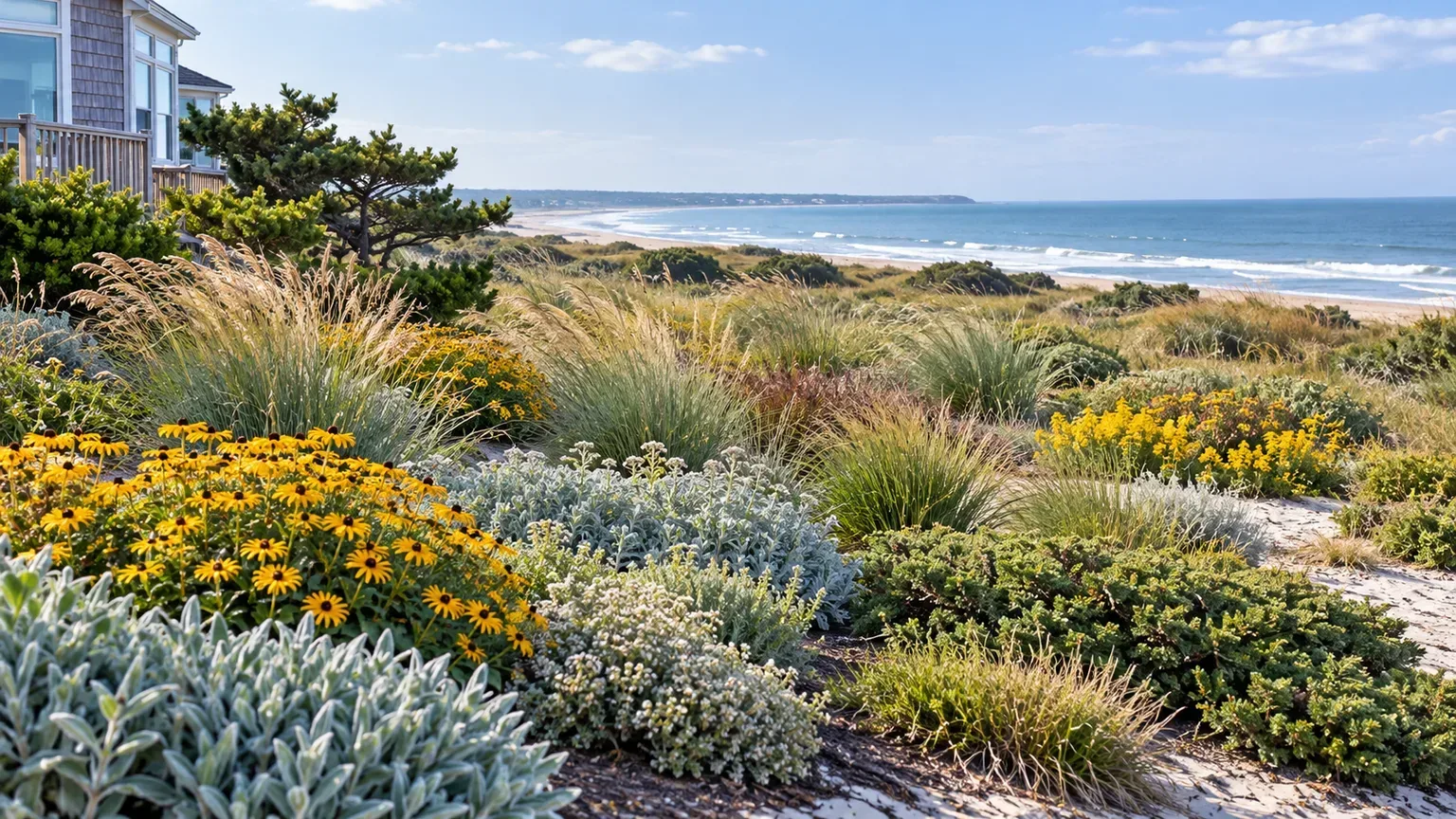
A garden beside the ocean is not one uniform environment. A yard may face salt spray, gusting wind, dry sand, reflected heat, occasional saltwater overwash, or only the mild maritime air of a sheltered street inland. The best plant list depends on which of those pressures actually reaches your beds and whether a plant can handle your local winters and summers.
Start by checking two separate things: what touches the foliage and what happens in the root zone. Salt spray can scorch leaves and buds; salt that accumulates in soil makes it harder for roots to take up water. Virginia Tech Cooperative Extension explains that salt injury can also resemble drought, root damage, or disease, so a plant’s tolerance to one kind of exposure is not a promise that it can tolerate every coastal condition. A salt-tolerant shrub may still fail in waterlogged clay, while a dune grass may be a poor fit for a compact ornamental border.
The selections below cover Atlantic, Gulf, Pacific, and warm subtropical settings, but they are not interchangeable. Use the regional note as a first filter, then match sunlight, drainage, mature size, and local native status. UF/IFAS coastal landscape guidance notes that Florida gardens within roughly an eighth of a mile of saltwater should include at least somewhat salt-tolerant plants; treat that as a Florida planning cue, not a universal distance rule for every coastline. Wind direction, buildings, dunes, elevation, and storm exposure can change the conditions dramatically.
Before ordering, make a quick exposure map. Mark the ocean-facing edge, where sand drifts, low areas that hold water, and pockets sheltered by a house or fence. Visit after windy weather and look at several existing plants: matching scorch on windward foliage can point to a shared exposure, while one declining plant may have a root, irrigation, or disease problem. Virginia Tech recommends using soil and water analyses alongside weather information when diagnosing salt injury, rather than assuming every brown edge is salt damage. If brackish tides or stormwater reach the site, make inundation frequency a separate filter; salt tolerance alone does not make a plant flood-tolerant. Keep healthy native dune and marsh vegetation in place instead of clearing it for ornamentals.
| Plant | Best fit | Main role | Watch for |
|---|---|---|---|
| American beachgrass | North Atlantic dunes | Dune grass and sand stabilization | Use local stock and follow dune rules |
| Sea oats | Southeastern dunes | Tall dune grass | Do not collect wild plants |
| Saltmeadow cordgrass | Brackish marsh edges | Wet-site grass | Needs moist conditions |
| Beach sunflower | Florida and warm Gulf sites | Flowering groundcover | Needs sun and room to spread |
| Blanketflower | Sunny coastal beds | Long-season color | Short-lived; may self-sow |
| Seaside goldenrod | Atlantic and Gulf coasts | Fall color and pollinator food | Can spread by runners |
| Pink muhly grass | Southeastern gardens | Late-season texture | Needs sun and drainage |
| Florida sea lavender | Warm southern Florida coast | Silver-leaved shrub and groundcover | Endangered in Florida; never collect |
| Adam’s needle yucca | Dry, sunny southeastern beds | Architectural evergreen | Sharp leaf tips near paths |
| Eastern prickly pear | Dry, open Atlantic sites | Low flowering succulent | Spines make placement important |
| Shore juniper | Exposed sunny beds | Low evergreen groundcover | Non-native in much of the U.S. |
| Northern bayberry | Northeast and Mid-Atlantic | Native screen or thicket | Spreads by suckers |
| Pacific wax myrtle | West Coast | Evergreen screen | Size and climate vary by site |
| Southern wax myrtle | Southeast and Gulf | Fast native wind filter | Can become a large shrub or small tree |
| Yaupon holly | Southeast and Gulf | Evergreen structure | Female plants bear berries; plant for space |
| Eastern redcedar | East and central U.S. | Windbreak or specimen tree | Mature size and pollen sensitivity |
| Live oak | Gulf and warm Atlantic South | Large shade tree | Needs substantial room |
| Sea grape | Tropical and subtropical coasts | Edible-fruiting shrub or small tree | Frost-sensitive and very large-leaved |
1. American Beachgrass
American beachgrass (Ammophila breviligulata) is a grass for the dune system, not a decorative clump to tuck into a mixed border. Epic Gardening’s coastal plant guide includes American beachgrass among coast-adapted species; its underground rhizomes help hold shifting sand in the exposed, sandy conditions of Atlantic dunes. That makes it useful where the goal is stabilizing a naturally sandy coastal area, but less appropriate in a small bed where its spreading habit will be hard to contain.
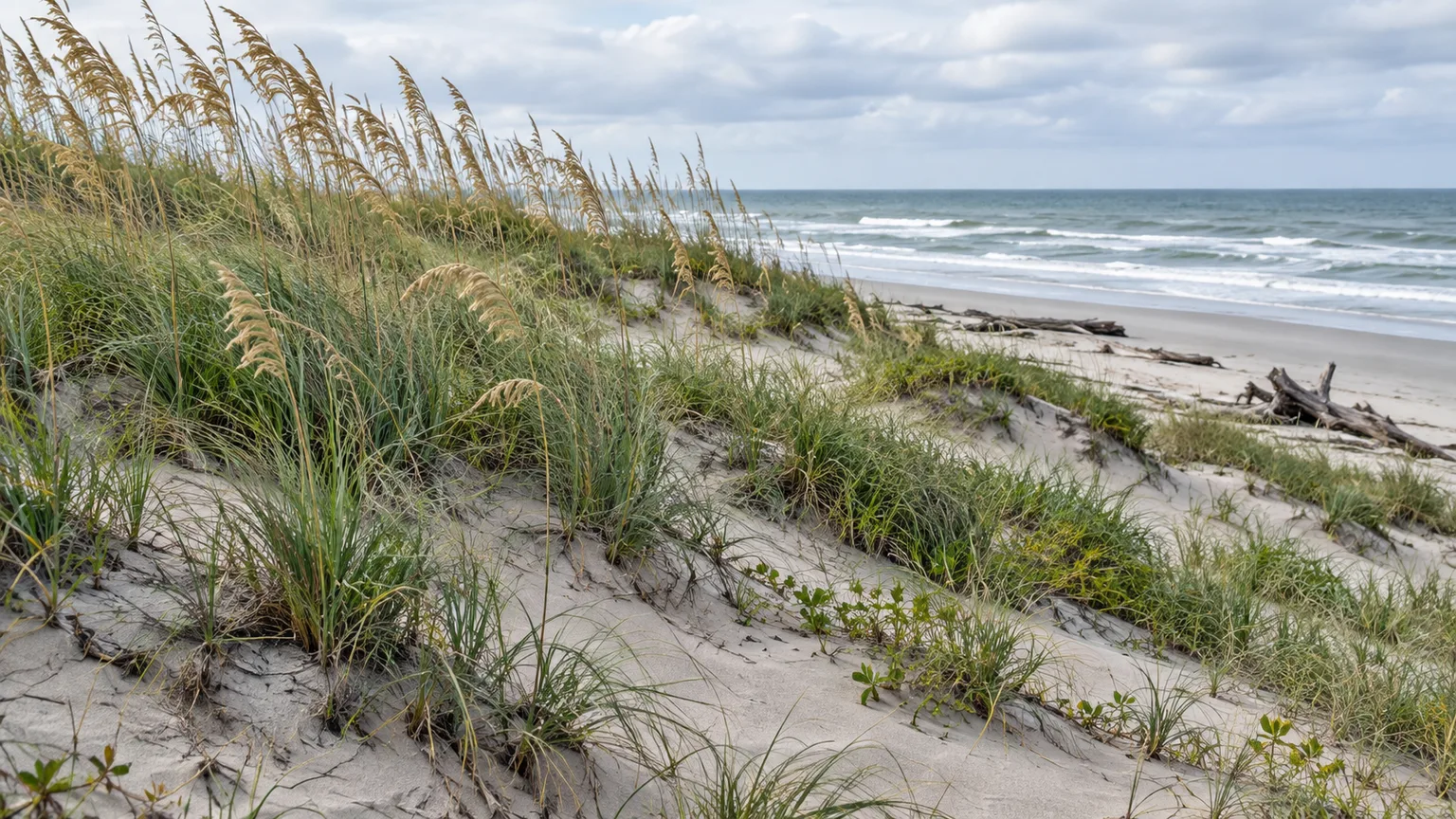
Before planting, check with the local coastal authority or native-plant nursery about approved species and sourcing. Dunes are dynamic habitats, and disturbing established vegetation or planting the wrong grass can undermine restoration work or conflict with local rules. For a residential garden set behind the dune line, use beachgrass only if your extension service or coastal restoration program recommends it for that exact site.
2. Sea Oats
Sea oats (Uniola paniculata) bring upright green blades and oatlike seed heads that move in the wind. UF/IFAS describes sea oats as highly drought tolerant, suited to full sun and sandy soil, and naturally important on southeastern dunes; it can reach roughly 5 to 8 feet tall. A mass planting belongs in an appropriate coastal restoration or dune setting, not necessarily in a front-yard border.
The conservation caveat matters: The UF/IFAS sea oats guide reports that sea oats are endangered and that collecting plants from the wild requires special permits. Buy nursery-propagated plants and check local planting guidance before using them near dunes. Their height and spreading roots also mean you should plan for a wide, naturalistic patch rather than expect a tidy, compact ornamental grass.
3. Saltmeadow Cordgrass
UF/IFAS lists saltmeadow cordgrass among its native coastal grasses. Saltmeadow cordgrass (Sporobolus pumilus, often listed under the older name Spartina patens) is a strong candidate for a moist brackish edge, where periodic salt influence and wet soil rule out many garden plants. It forms dense, fine-textured stands and is part of coastal marsh communities. It does not belong in a dry, raised flower bed simply because it tolerates salt.
Use it only when the site’s moisture pattern matches the plant: marsh edges, wet swales, or restoration areas identified for this species. A salt marsh is not a generic rain garden, and tidal flooding, brackish water, and storm surge need local ecological advice. If you want a coastal look on ordinary well-drained soil, choose a dry-site grass such as pink muhly instead.
4. Beach Sunflower
Beach sunflower (Helianthus debilis) is a low, spreading native groundcover for hot, sunny parts of Florida and the warm Gulf Coast. UF/IFAS includes beach sunflower among the wind- and salt-tolerant flowering choices for coastal landscapes. Its bright daisy-like flowers bring color close to the ground, where a tall plant would catch more wind and block views.
Give it full sun, sandy soil that drains freely, and enough room to trail or knit together. It is a practical choice for a broad sunny bank or informal planting, not a formal edging plant that must stay in a narrow line. Establish it with fresh water and keep foot traffic off new growth; once rooted, avoid keeping the soil constantly wet.
5. Blanketflower
Blanketflower (Gaillardia pulchella) is a bright, sun-loving option for coastal beds where many showier perennials struggle with heat and drying wind. UF/IFAS lists gaillardia among its salt-tolerant landscape choices, and Savvy Gardening also identifies blanketflower as a useful option in salt-affected gardens. The warm red, orange, and yellow flowers fit a naturalistic planting with grasses and other drought-aware perennials.
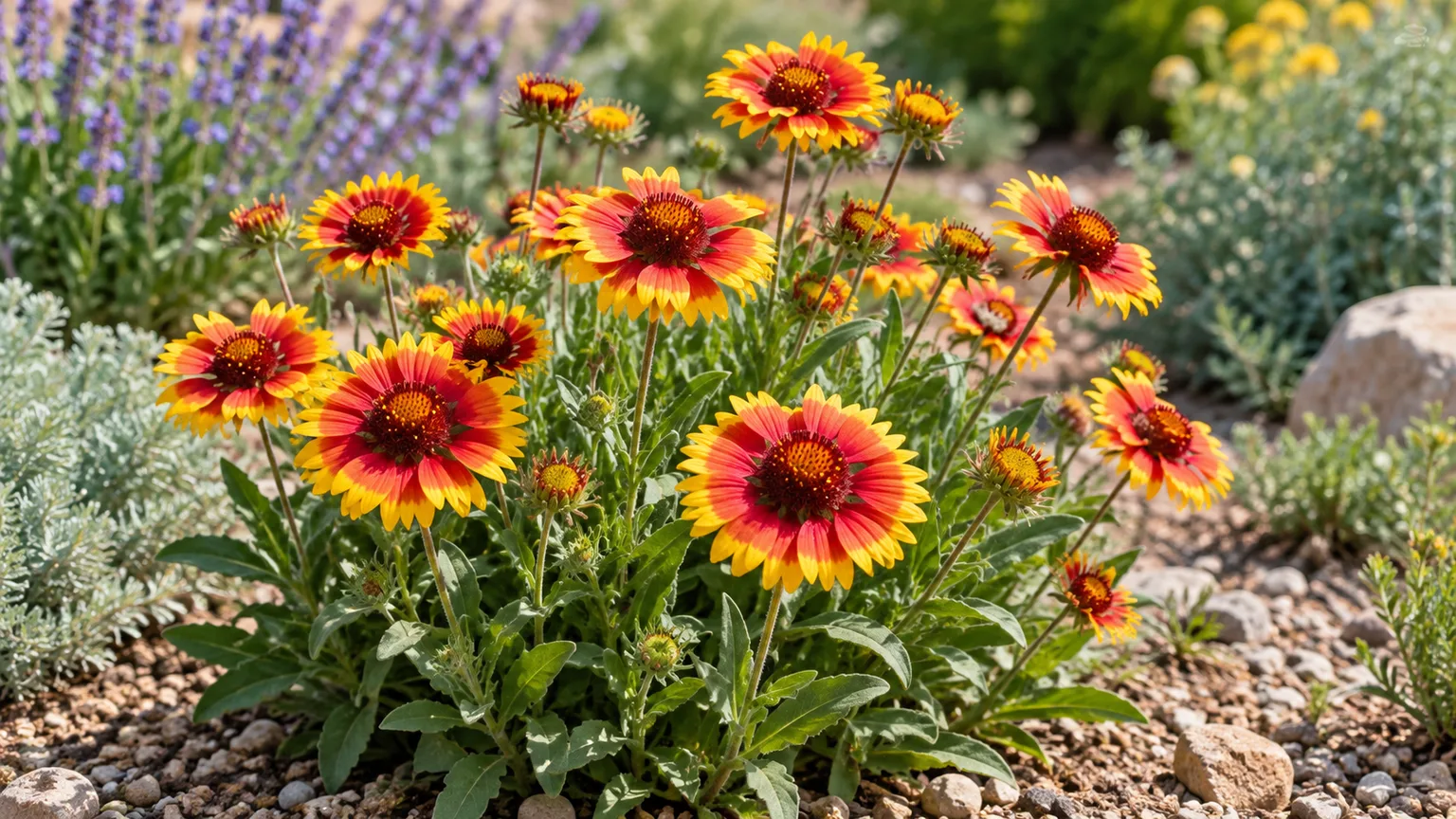
Plant it in full sun and sharply drained soil, then let it settle before deciding it has failed: blanketflower can be short-lived, and some plants are slower to establish than annuals. Deadheading can extend the show, while leaving some seed heads may encourage self-sowing. Choose regionally appropriate species or cultivars, because “blanketflower” at a garden center may refer to a hybrid with different hardiness and growth habits.
6. Seaside Goldenrod
Seaside goldenrod (Solidago sempervirens) is one of the clearest fits for a true ocean-facing list. UF/IFAS describes seaside goldenrod as highly tolerant of saline soil and salt spray, native along coastal areas from Maine to Mexico, and valuable to pollinators during its late-season bloom. Its yellow flower clusters can add color when many spring and summer flowers have faded.
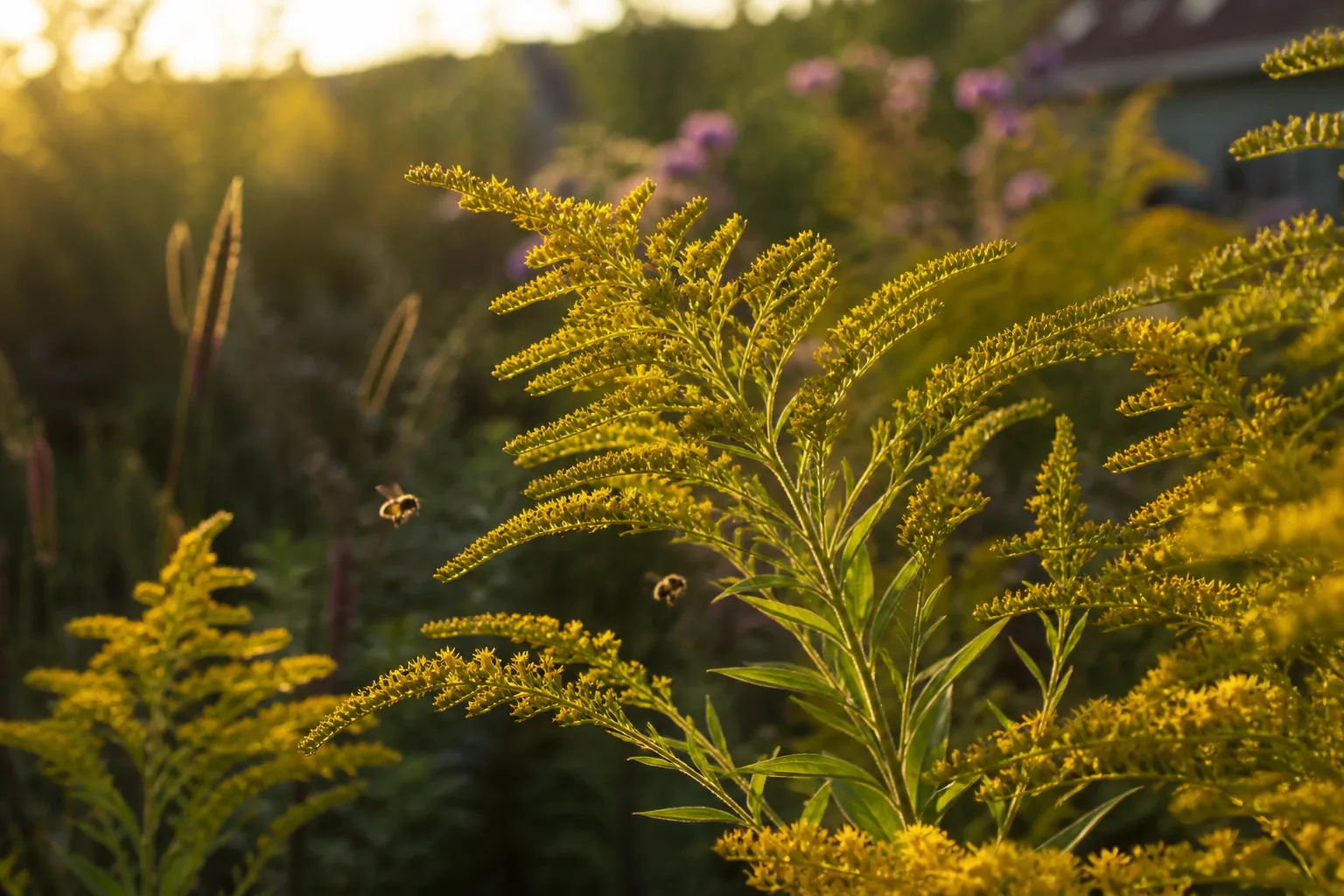
It grows as a clump but can spread through underground stems, so give it space in a naturalistic bed or use it where a colony is welcome. This is a better choice for a sunny, open coastal planting than a shaded foundation strip. Do not confuse goldenrod’s pollen with ragweed’s: goldenrod is insect-pollinated and attracts bees and butterflies; it is not the common source of airborne fall allergy pollen.
7. Pink Muhly Grass
Pink muhly grass (Muhlenbergia capillaris) earns a place for movement and late-season color. Its narrow leaves make a low mound, then airy pink plumes rise above it in fall. UF/IFAS includes muhly among its native grasses that tolerate at least moderate salt, so it is a sensible option for many southeastern gardens, especially behind the most exposed dune-front zone.
Give it sun and drainage; it is not a marsh grass. The first season still calls for watering while roots establish, but a permanently wet planting hole is a poor trade for a plant chosen to cope with coastal dryness. Use several plants in a loose drift rather than a rigid line, and leave winter seed heads until late winter if you want structure and habitat before cutting back.
8. Florida Sea Lavender
The name “sea lavender” can refer to different plants. This profile means Florida sea lavender (Heliotropium gnaphalodes), not the unrelated European Limonium often sold under that common name. UF/IFAS describes Florida sea lavender as high-salt- and wind-tolerant, silvery-leaved shrub native to coastal southeastern Florida, with a naturally spreading habit that can help stabilize sand.
This is a specialist choice for warm, well-drained coastal sites, not a coastwide perennial. UF/IFAS identifies it as endangered in Florida and says plants, seeds, or cuttings must not be collected from natural areas. Purchase only lawful nursery-grown stock, confirm that it is appropriate where you live, and resist overwatering or enriching the soil heavily; poor drainage and excess moisture are recurring causes of trouble.
9. Adam’s Needle Yucca
Adam’s needle (Yucca filamentosa) gives a dry coastal bed strong evergreen structure: a low rosette of stiff, sword-shaped leaves, often followed by a tall stalk of pale bell-shaped flowers. UF/IFAS lists yuccas, including Adam’s needle, among its salt-tolerant choices, while Virginia Tech Cooperative Extension includes yucca among plants suited to salt-prone landscapes. It is best for open, sunny sites where the soil drains quickly.
Place it away from narrow paths, play areas, and spots where people brush past the leaf tips. Its drought tolerance does not mean it should be planted into compacted, waterlogged soil, and a newly planted yucca still benefits from careful establishment. Use a few as accents among lower grasses rather than planting a continuous row that turns routine access into a prickly obstacle course.
10. Eastern Prickly Pear
Eastern prickly pear (Opuntia humifusa) is a cold-hardy cactus that can handle sunny, sandy coastal conditions. UF/IFAS recommends prickly pear for coastal landscapes, and Virginia Tech Cooperative Extension includes prickly pear among plants tolerant of saline conditions. Its flat pads, yellow flowers, and later fruit bring a different shape to a seaside garden without demanding rich soil.
The spines are the deciding factor. Plant it where people will not reach into it while gardening, mowing, walking, or playing; gravel edges, dry banks, and protected sunny corners work better than a narrow path border. Use locally appropriate stock and give it fast drainage. It will not solve the problem of saltwater flooding or survive a site that stays saturated through the growing season.
11. Shore Juniper
Shore juniper (Juniperus conferta) is a low, spreading evergreen that can cover a sunny slope or stabilize a dry bank where turf would need frequent water. Virginia Tech lists shore juniper among shrubs tolerant of saline conditions, and its horizontal habit offers wind protection close to the soil. In a layered bed, it can knit together the lower edge beneath taller shrubs.
It is native to coastal parts of Japan and Sakhalin, not to most North American coasts, so check local invasive-plant guidance and consider a native creeping juniper if one suits your region. Do not plant it in shade or in a soggy pocket. Its main strength is covering a well-drained sunny site after establishment, not tolerating every kind of coastal stress at once.
12. Northern Bayberry
Northern bayberry (Morella pensylvanica, also sold as Myrica pensylvanica) is a useful shrub for colder Atlantic coasts. Virginia Tech lists bayberry among salt-tolerant shrubs, while Epic Gardening notes it as a regional alternative to Pacific wax myrtle. The aromatic foliage and gray waxy berries add seasonal interest, and the shrub can form a dense screen where the site gives it room.
Bayberry spreads by suckers, which is helpful on a large bank but frustrating beside a small patio or narrow fence. It is usually dioecious, so fruit requires female plants and a nearby male pollinator; ask the nursery what it is selling if berries matter to you. Choose it for a sunny to lightly shaded, well-drained site, and use root barriers or a different shrub if you need a tightly controlled hedge.
13. Pacific Wax Myrtle
Pacific wax myrtle (Morella californica) is an evergreen West Coast shrub that can be trained as a screen or allowed to grow as a small tree. Epic Gardening describes it as a coastal hedge option from California into the Pacific Northwest, while Gardenia’s regional coastal-plant guide emphasizes that the right coastal palette changes by region. The leathery foliage and dense branching make it a more relevant West Coast candidate than many southeastern plants on broad national lists.
Match the plant to local rainfall, soil, and winter exposure; “Pacific Coast” covers foggy northern sites and hotter, drier southern ones. A hedge may need occasional shaping, but avoid shearing it into a dense wall if the goal is a wind filter. Local native plant references can help distinguish it from look-alike wax myrtles and identify the best source for your part of the coast.
14. Southern Wax Myrtle
Southern wax myrtle (Morella cerifera) is a fast-growing evergreen shrub or small tree for southeastern and Gulf Coast landscapes. UF/IFAS includes wax myrtle among its coastal choices, and Virginia Tech Cooperative Extension lists it as salt tolerant. It can provide year-round screening and help create a more sheltered pocket where less wind-hardy plants can grow.
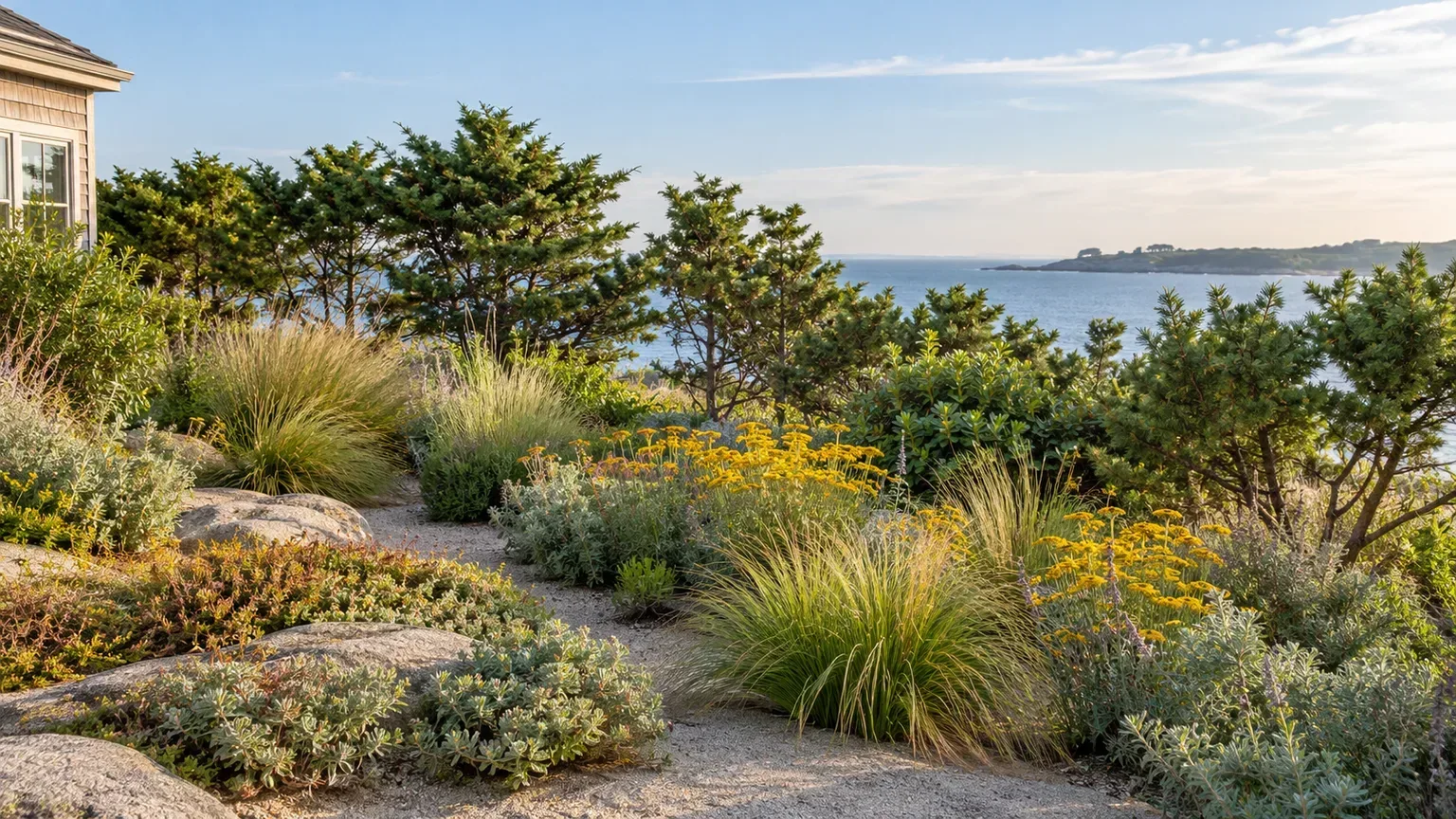
Its speed is useful when a new yard feels exposed, but it comes with size and maintenance trade-offs. Give it enough horizontal and vertical space, and plan for selective pruning rather than trying to keep a naturally large plant in a tiny box. A mixed, permeable screen of several plants is usually more useful than a solid clipped wall, which can redirect wind and create turbulence on the leeward side, as Gardenia’s coastal windbreak guidance explains.
15. Yaupon Holly
Yaupon holly (Ilex vomitoria) is a southeastern evergreen that works as a large shrub, hedge, or small multi-stem tree, depending on the cultivar and pruning. UF/IFAS and Virginia Tech Cooperative Extension both include it among salt-tolerant options. It is a strong choice for structure behind a more exposed foreground planting, where it can shelter a path or garden room while retaining foliage through winter.
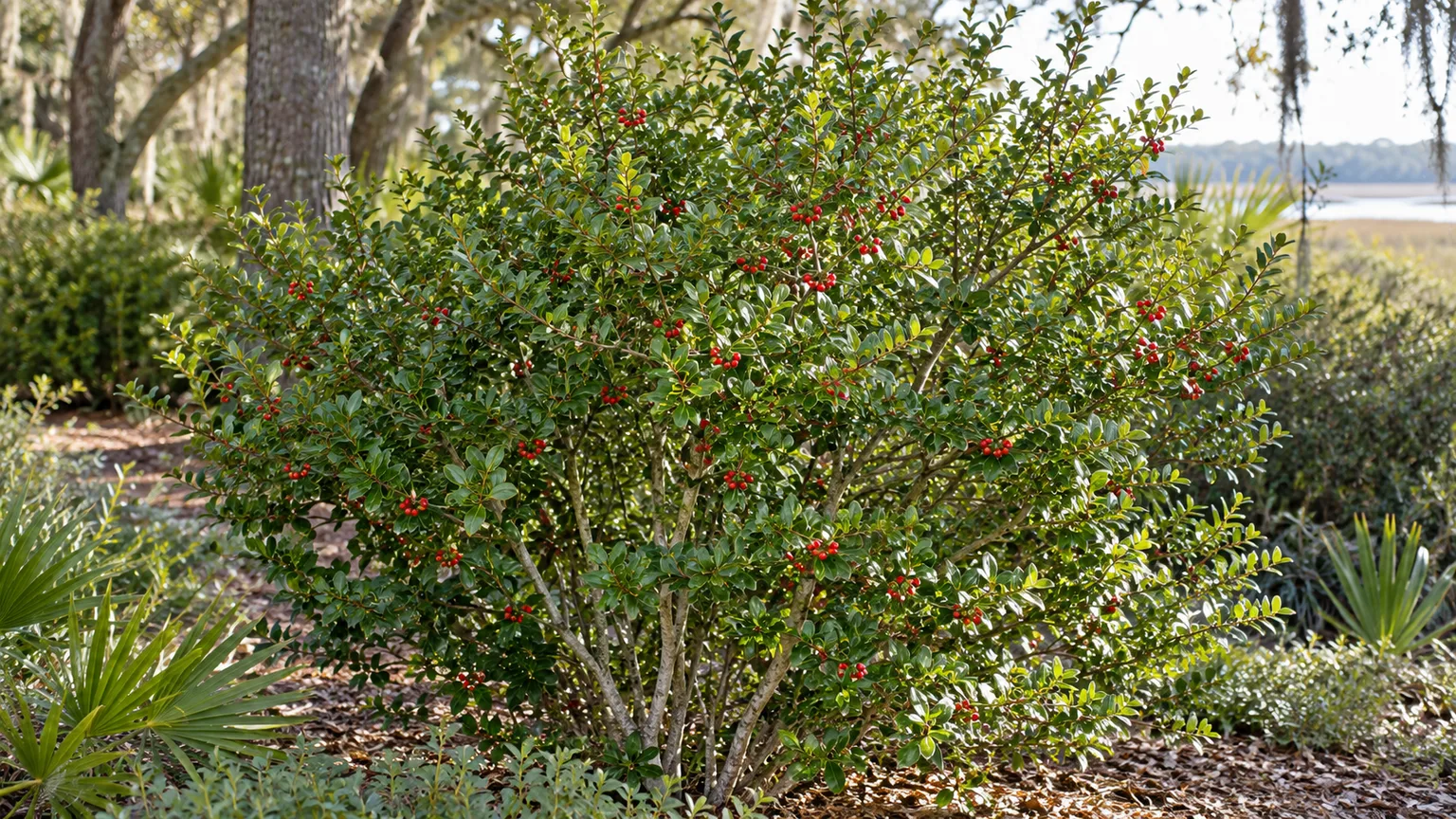
Check the cultivar’s mature dimensions and whether you want berries. Female plants produce red fruit when a male pollinator is nearby; the berries are ornamental and are not for casual eating. Yaupon tolerates pruning, but it should not be forced into a site too small for its natural scale. For wildlife value, select a locally appropriate form and leave some dense branches rather than constantly shearing the whole plant.
16. Eastern Redcedar
Eastern redcedar (Juniperus virginiana) is a durable evergreen tree native to much of eastern and central North America. Virginia Tech Cooperative Extension includes it among salt-tolerant trees, making it a candidate for exposed property edges or a mixed windbreak. Its evergreen cover can intercept wind and salt before they reach more sensitive planting behind it.
This is not a miniature hedge plant: choose a cultivar and spacing based on its expected mature height and spread, then keep it clear of buildings, overhead lines, and narrow access routes. A diverse screen also reduces the risk of losing all of your shelter to one pest or storm.
17. Live Oak
Live oak (Quercus virginiana) is an impressive evergreen shade tree for warm Gulf and Atlantic South landscapes. UF/IFAS describes it as a coastal tree choice, and Virginia Tech Cooperative Extension lists it among trees tolerant of saline conditions. Its broad canopy and long-lived structure make it valuable where there is room to let the tree become a major part of the landscape.
Plan for the mature spread before buying. Live oak’s broad limbs can extend far beyond the trunk, and crowded planting often leads to avoidable pruning or conflicts with roofs, paving, and utilities. It is a better fit for a spacious property than a narrow seaside lot. Young trees still need freshwater irrigation while roots establish, and local storm exposure and soil drainage should guide staking and placement.
18. Sea Grape
Sea grape (Coccoloba uvifera) brings oversized round leaves, a sculptural branching habit, and clusters of edible fruit to tropical and subtropical coastal gardens. UF/IFAS identifies it as a salt-tolerant edible landscape plant for Florida; it is not a reliable choice for cold winters. In a warm site, it can serve as a substantial shrub or small tree and provide a more regionally appropriate option than temperate species from northern coastal lists.
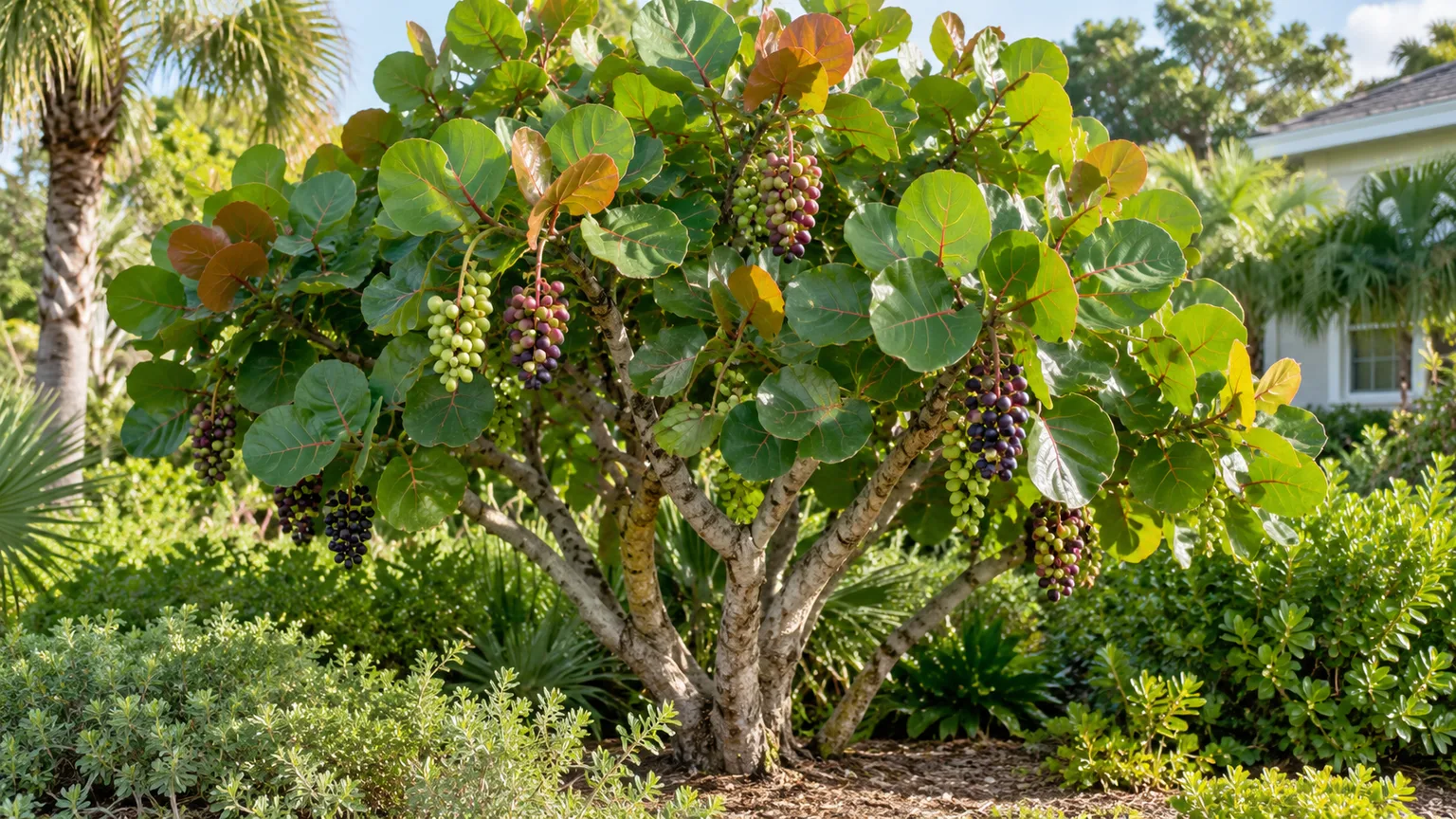
Give it space, sun, and freely draining soil, and be prepared for large leaves and fruit litter near paths or patios. Female plants produce the familiar grape-like clusters when pollinated; if you want fruit, ask the nursery about the plant’s sex and pollination needs. Do not plant it directly on a protected dune or where its mature canopy will conflict with a view corridor or building setback.
Conclusion
Choose the plant for the exact job and microclimate: dune grasses for approved dune stabilization, cordgrass for wet brackish margins, low flowers and grasses for sunny sandy beds, and shrubs or trees as a wind-filtering layer behind them. Then check the plant’s hardiness and native status for your region, because the same salt-resistant label cannot compensate for an unsuitable climate or soil.
After planting, use fresh water to help roots establish, mulch to limit moisture loss without burying crowns, and observe where salt and wind damage appear after storms. If many unrelated plants in one area develop similar leaf-edge burn, review exposure and drainage before treating for a pest or disease. A coast-ready garden is a set of locally fitting layers, not a collection of plants expected to thrive in every condition called “coastal.”



