What Smells Do Mosquitoes Hate? 10 Scents to Try
What smells do mosquitoes hate? Compare citronella, catnip, lavender, coffee, peppermint, and more, plus safe ways to use scent and reduce breeding sites.

The most useful mosquito-repelling scent is the one you can place close to where people sit, refresh when the air moves, and use without confusing a pleasant fragrance for reliable bite protection. Citronella, catnip, eucalyptus-derived repellents, lavender, rosemary, lemon balm, coffee, garlic, peppermint, and marigolds are all worth discussing—but they do not have the same evidence or the same job.
If mosquitoes are a health concern where you live, treat scented plants and candles as a comfort measure, not your only defense. The Centers for Disease Control and Prevention’s mosquito-bite guidance recommends EPA-registered insect repellents, protective clothing, screens, and control of water-holding containers. That distinction lets you enjoy an aromatic patio experiment without leaving your skin unprotected.
The quick answer: scents can help, but they are not a shield
Mosquitoes use odor, heat, carbon dioxide, and other cues to locate a host. A strong plant volatile can interfere with that search at close range, especially when a leaf has been bruised or a formulated product is releasing oil into the air. But one untouched pot of lavender or a few marigolds along the edge of a yard does not create an invisible, dependable barrier.

The most realistic ranking is this: a labeled repellent containing a proven active ingredient is the dependable personal-protection option; a citronella candle or similar product may help in a small, calm seating area; crushed aromatic leaves are a brief scent boost; living plants are primarily garden plants with possible local benefits. Wind, temperature, plant size, oil chemistry, mosquito species, and the distance between the scent and your chair all change the result.
Why fragrance works only under the right conditions
Popular “mosquito-repellent plant” lists often blur three different things: the fragrance of a living plant, a concentrated essential oil, and a registered insect-repellent formula. Those are not interchangeable. An essential oil may show repellent activity in a laboratory assay, while a whole plant releases too little of the same compounds to protect a person several feet away.
NC State Extension makes the practical limitation clear: claims that plants placed around a porch or deck will keep mosquitoes away are not supported by scientifically based test results, and wind can carry repellent chemicals away. The same guidance points to source reduction and properly used repellents as more dependable parts of mosquito control.
Plant, crushed leaf, oil, or registered repellent?
Use this decision rule before you spend money or put anything on your skin:
| What you have | What it can reasonably do | What it cannot promise |
|---|---|---|
| Living aromatic plant | Add fragrance and possibly create a small local odor plume | Protect everyone in a yard or replace bite protection |
| Bruised or crushed leaves | Release more volatile compounds for a short period near the seating area | Provide a measured protection time or safe topical dose |
| Essential oil | Supply a concentrated scent that may repel in a tested formula or assay | Be automatically safe, effective, or suitable for skin |
| EPA-registered repellent | Provide labeled protection for the pest, body area, and duration listed | Work beyond its label or eliminate mosquitoes from the yard |
The Penn State Extension guide to using insect and tick repellents safely notes that many plant-derived oils have shown insect-repellent activity, but most provide short-lasting protection—generally less than two hours—and do not have the broad efficacy of recommended repellents. For a meal on a still evening, a pot and a candle may be pleasant additions. For children, pregnancy, disease-risk travel, heavy mosquito pressure, or a long event, choose protection with a label.
10 scents to try around an outdoor space
These are not ten equal guarantees. Think of them as a practical menu: choose plants that fit your climate and garden, use close-range fragrance where it makes sense, and give the most weight to tested products when the cost of a bite is high.

1. Citronella
Citronella is the familiar lemony, grassy scent in outdoor candles and some repellent products. A citronella candle can help around a table when the air is relatively still; NC State Extension specifically notes that moving air disperses the chemical too quickly. Place the candle according to its label and keep it away from dry foliage, table linens, children, and anything flammable.

The plant-name confusion matters. University of Wisconsin Extension’s lemongrass profile explains that related citronella grass (Cymbopogon nardus) is the source of commercial citronella oil, while culinary lemongrass commonly refers to Cymbopogon citratus. They smell related, but a pot of edible lemongrass is not the same as a citronella candle or a skin-repellent formulation. Both grasses prefer warmth and sun; in frost-prone climates, grow them as seasonal container plants.
Best use: a labeled candle or outdoor product for a small, calm seating area, with a citronella-type grass added for fragrance and garden interest. Confidence: moderate for formulated products, low for an uncut plant standing several feet away.
2. Rosemary
Rosemary has a dry, resinous, woodsy scent that is easy to bring right up to the table in a pot. Keep it in full sun and sharply drained soil, and choose a container if winter wet or freezing temperatures make it unreliable in the ground. A healthy, leafy plant also gives you a useful culinary harvest instead of becoming a single-purpose pest gadget.
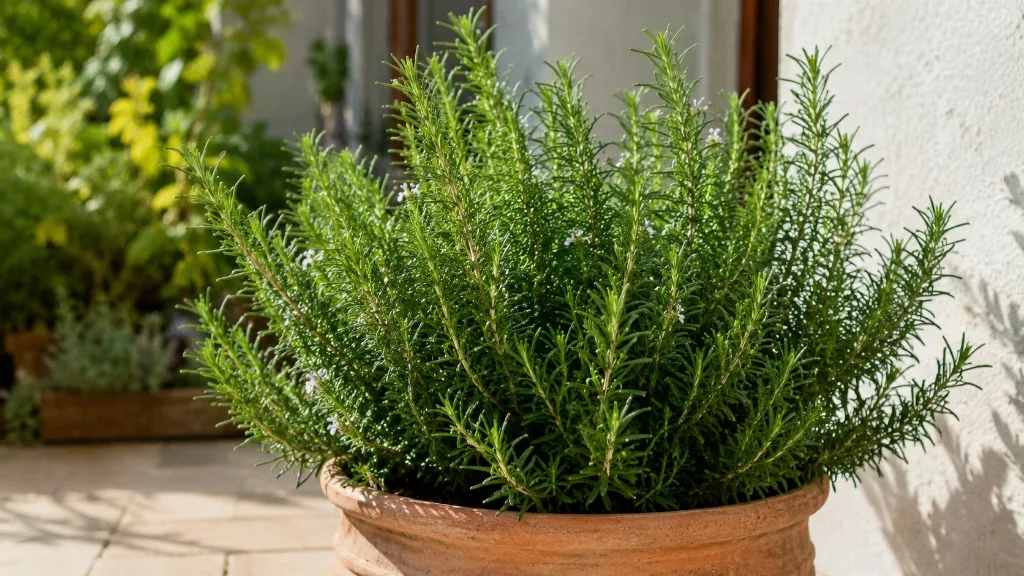
The useful trick is proximity. Before guests arrive, lightly brush or bruise a few leaves and set the pot beside the seating area; that releases more aroma than an untouched plant across the yard. Do not interpret the scent burst as a measured skin repellent. UGA Extension includes rosemary among aromatic plants that may discourage pests, while Penn State lists rosemary oil among plant-derived oils with insect-repellent activity but cautions that most such oils are short-lived.
Best use: a sunny patio pot, lightly brushed just before people sit down. Confidence: low for whole-yard control; reasonable as a close-range fragrance experiment.
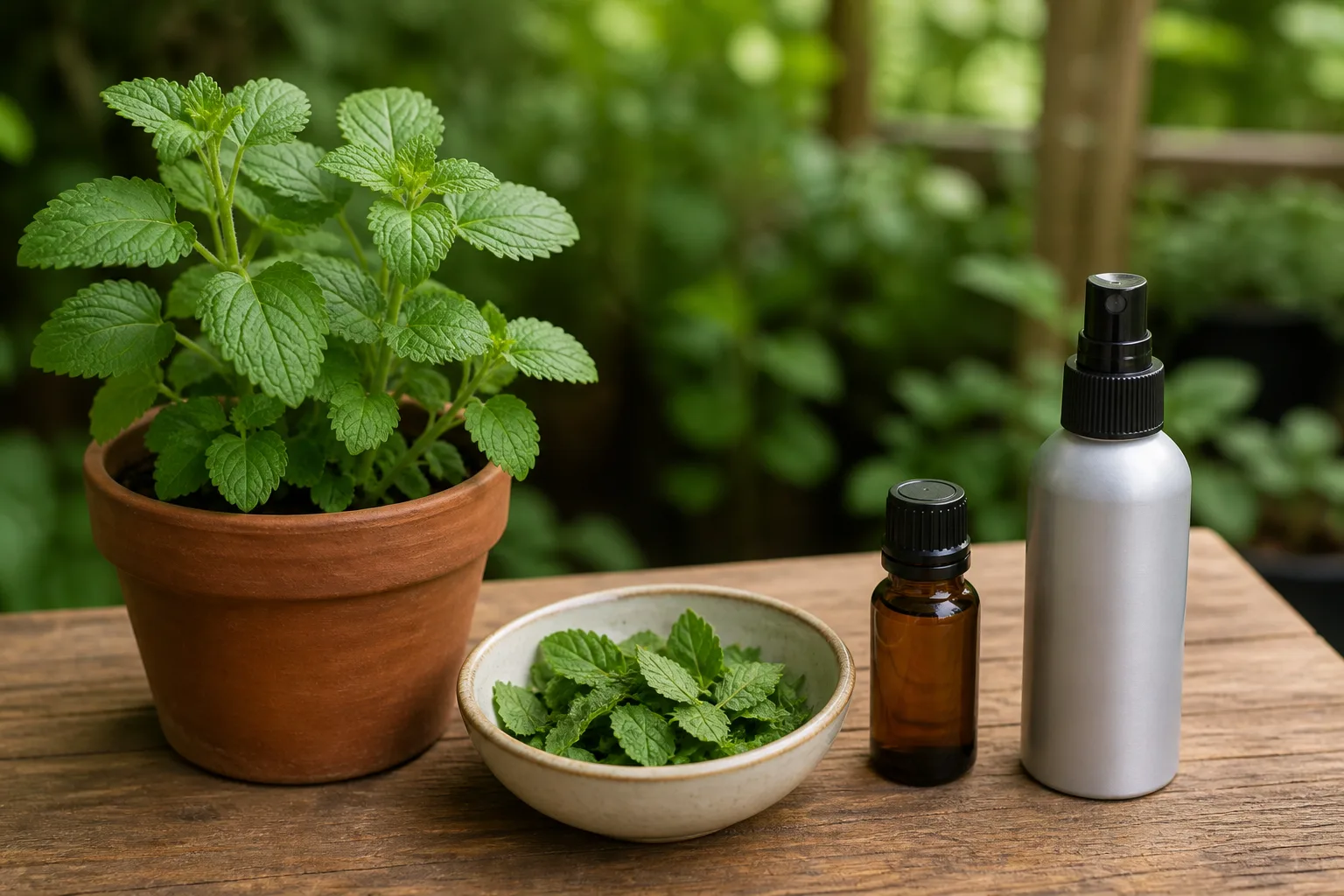
3. Lemon balm
Lemon balm (Melissa officinalis) is a vigorous mint relative with bright, lemon-scented leaves. It is one of the easiest plants to use close to a gathering because it grows quickly and tolerates regular trimming. It is also one of the easiest to regret planting directly in a small bed: runners and self-seeding can turn a few starts into a permanent editing project.
Grow lemon balm in a pot near the door or patio, where you can enjoy the scent without letting it run through the garden. A few bruised leaves can make the fragrance more noticeable for a short time, but there is no established “number of plants per guest” that guarantees mosquito control. Choose it when you want tea, pollinator-friendly flowers, and a lemony garden note first; consider any mosquito benefit a bonus.
Best use: a contained pot within arm’s reach of outdoor seating. Confidence: low as a standalone repellent; useful for a low-cost, low-commitment scent trial.
4. Coffee
Coffee is the outlier on this list because the strongest relevant evidence is not about the smell keeping adult mosquitoes away from a person. In a study published in Parasites & Vectors, concentrated coffee extracts made oviposition cups less attractive to gravid Aedes albopictus females and reduced larval eclosion under laboratory conditions. That is interesting mosquito biology, but it is not proof that a bowl of used grounds will protect your patio from bites.
Used grounds can be composted or added to a garden in sensible amounts, but spreading them around a chair is a poor substitute for draining water and using a labeled repellent. Do not leave coffee-filled containers where rain can collect around them, and do not burn grounds indoors or in a crowded seating area. If you try coffee at all, treat it as a short-lived, low-confidence experiment rather than one of the stronger scent options.
Best use: composting and curiosity, not personal protection. Confidence: low for deterring adult bites; limited laboratory evidence for effects on mosquito egg-laying and early development.
5. Lavender
Lavender is worth growing because it handles sun, lean soil, and dry conditions better than many patio herbs once established. Its flowers and foliage release a familiar floral scent that people enjoy, and a pot of lavender can sit beside a sunny walkway or table without needing constant watering.
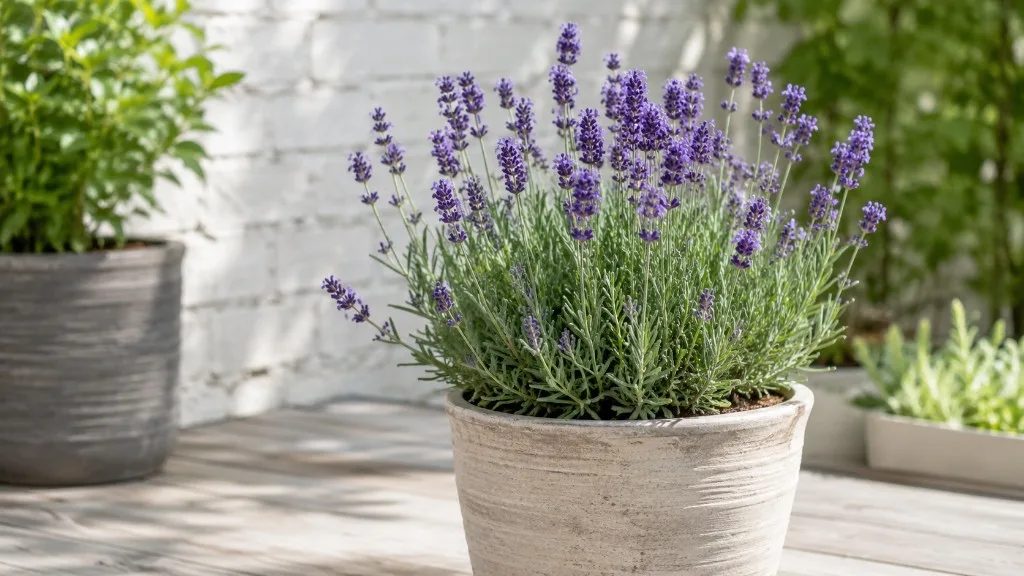
The evidence is more nuanced than “lavender equals mosquito shield.” Essential oils have been investigated in laboratory and field work, but the result depends on the formulation, concentration, mosquito species, and duration. A flowering lavender plant releases far less oil than a concentrated product, and its scent may be carried away before it reaches a person. Grow it for fragrance and habitat, then use a tested repellent when you need dependable skin coverage.
Best use: a sunny, well-drained pot or border near—but not inside—the seating area. Confidence: low for a living plant as protection; higher only when a labeled product has a tested formulation.
6. Catnip
Catnip (Nepeta cataria) has the clearest mosquito-specific laboratory result among the scents here, but the headline needs its conditions attached. In a 2024 Scientific Reports study of catnip essential oil, the oil contained more than 95% nepetalactone, and concentrations as low as 2% repelled more than 70% of Aedes aegypti mosquitoes for periods ranging from one to four hours in a Y-tube olfactometer test.
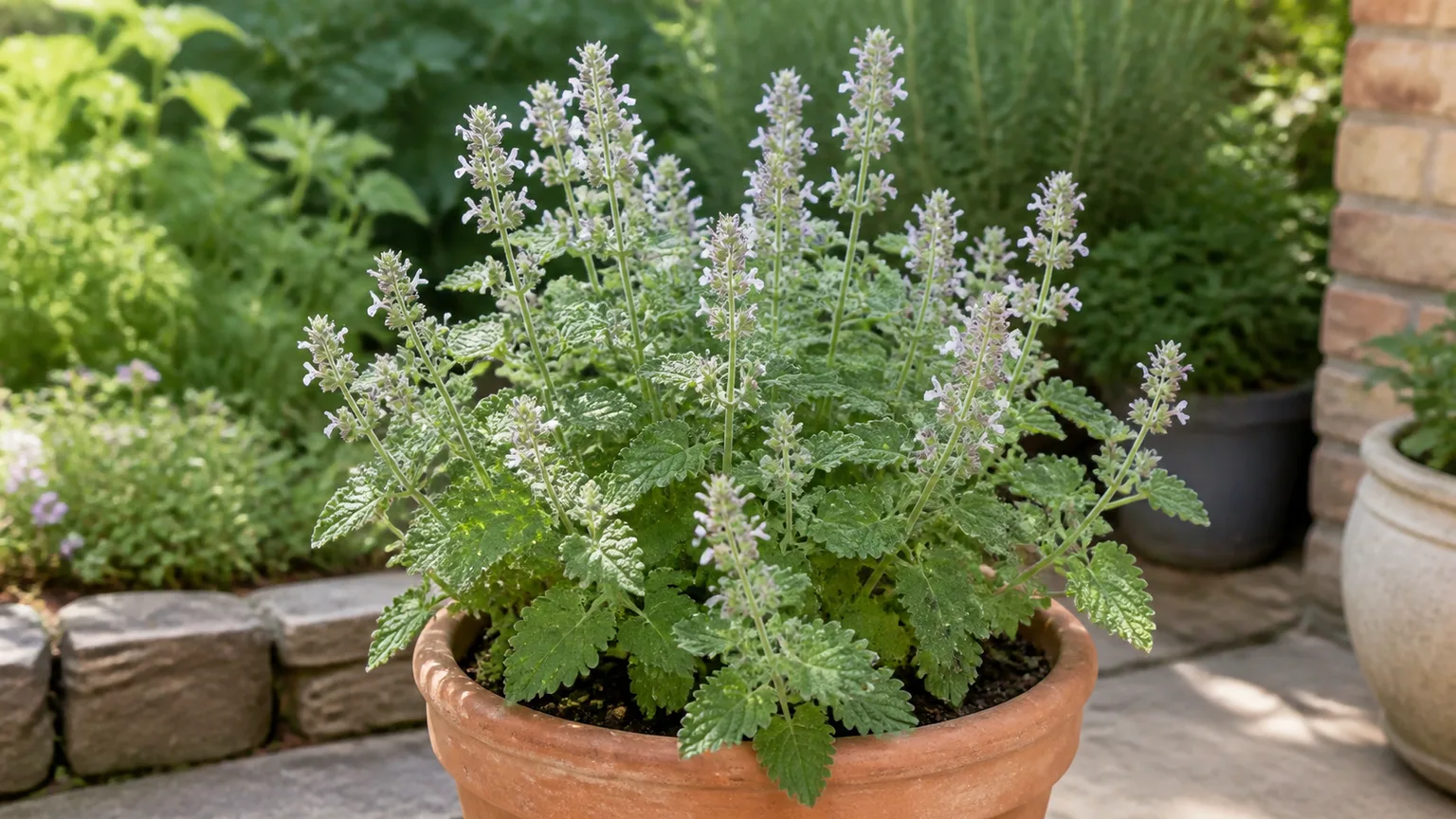
That does not mean a catnip plant will protect a patio for four hours. The test used a defined oil concentration and a controlled airflow setup; a living plant releases a variable amount of volatile compounds. Catnip can also spread, and the ASPCA catnip profile lists it as toxic to cats, with vomiting and diarrhea among the possible signs. Keep the plant and any oil inaccessible to cats, and do not turn a research concentration into a homemade skin recipe.
Best use: a contained plant for fragrance, with the study treated as evidence that nepetalactone is promising—not as a guarantee from the plant itself. Confidence: strongest research signal on this list for a defined oil, but low for an unformulated garden pot.
7. Garlic
Garlic releases a sharp sulfur-rich odor when a clove is cut, crushed, or bruised. That makes it easy to test as a temporary table-side scent: cut a fresh clove and place it in a small dish well away from food, fabrics, and children. The smell will fade, and it is not a pleasant choice for every gathering.
Growing garlic is a better garden decision than planting it solely for mosquito control. You get an edible crop, attractive scapes or flowers depending on the type, and a strong aroma in the bed, but there is no reliable evidence that a row of intact bulbs will make a patio bite-free. Avoid rubbing raw garlic or garlic oil on skin; irritation and sun sensitivity are not worth an unmeasured experiment. Use the scent only as a brief, non-topical trial and move to proven protection if mosquitoes keep landing.
Best use: a short-lived, cut-clove experiment away from people, pets, and food. Confidence: low for patio protection; better justified as a culinary crop than as a repellent.
8. Eucalyptus
“Eucalyptus” needs a label check, because oil of lemon eucalyptus (OLE) and ordinary eucalyptus essential oil are not interchangeable terms. CDC lists OLE and para-menthane-diol (PMD) among active ingredients in EPA-registered insect repellents, but it also says the effectiveness of non-EPA-registered natural repellents is not known. Use a product that names its active ingredient, EPA registration number, directions, and age limits.
A eucalyptus plant or an unlabeled bottle of eucalyptus oil is not automatically an OLE/PMD repellent. Do not dilute an essential oil by guesswork and apply it to skin, especially on a child. The CDC prevention guidance specifically says not to use OLE or PMD products on children under 3, and it recommends following the product label for everyone. Grow a eucalyptus for its foliage and fragrance if it suits your climate; rely on the labeled product for bite protection.
Best use: an EPA-registered product containing OLE or PMD, used exactly as labeled. Confidence: high for the labeled active ingredient, not transferable to every eucalyptus plant or oil.
9. Peppermint
Peppermint has an intense menthol scent and is convenient in a pot, but it is also a fast spreader. A container keeps the roots from taking over a bed and lets you position the plant beside a doorway or patio. Bruising a few leaves just before guests arrive produces a stronger nearby aroma than simply leaving the plant untouched.
The oil is a different matter. NCCIH’s peppermint-oil safety information describes essential oil as highly concentrated and notes that topical use can cause rashes or irritation; menthol should not be applied to the face of infants or small children. Pet Poison Helpline also warns that concentrated essential oils can cause serious problems in animals, with cats and birds at particular risk. Enjoy the plant or use a commercial product with a complete label, but do not improvise a skin spray from kitchen mint or undiluted oil.
Best use: a contained pot with bruised leaves for a brief scent boost. Confidence: low for a living plant; treat the concentrated oil as a safety issue first.
10. Marigolds
Marigolds are easy, colorful annuals for sunny beds and containers, which is why they appear so often in companion-planting advice. Their foliage has a distinctive scent, and the plants can provide flowers for much of the warm season when spent blooms are removed. They are a good choice if you want color near a vegetable garden or patio regardless of what mosquitoes do.
The repellent claim is the part to scale back. NC State Extension says porch and deck plant claims are not supported by scientifically based test results, and a marigold’s presence does not replace standing-water control or personal repellent. Plant them because they fit the site, then see whether a close grouping and lightly brushed foliage makes your immediate seating area more comfortable. If it does not, you have still gained flowers rather than wasting the entire season on a pest promise.
Best use: sunny borders or pots as an ornamental companion, not as a mosquito barrier. Confidence: low for direct mosquito protection.
How to use scents around a patio
Distance matters more than the number of plant labels in your garden. A practical arrangement is a few compatible, healthy containers around the edge of the seating area—close enough that people can smell them, but not so close that leaves brush food or skin. Choose plants with similar needs: rosemary and lavender prefer sharper drainage and sun, while lemon balm and peppermint appreciate more moisture.

Release fragrance immediately before people sit down by gently brushing or bruising a few leaves. Repeat only when the scent has clearly faded, and stop if anyone develops headache, eye irritation, rash, coughing, or breathing discomfort. On a windy patio, do not keep adding more oil or more crushed leaves; the atmosphere is simply dispersing the odor, and the answer is airflow management or a labeled repellent.
A practical 15-minute setup
- Check the seating zone. Look under tables, behind pots, and around saucers for water that could support larvae. Empty it before adding fragrance.
- Place two or three pots close to the chairs. Use what fits the light and moisture conditions rather than buying a plant that will fail in a week.
- Bruise a few leaves. Rosemary, lemon balm, peppermint, and aromatic grasses release more scent after gentle handling. Do not rub the leaves on skin.
- Add one labeled outdoor product if you want a stronger local scent. Keep a citronella candle on a stable, nonflammable surface and follow its label; wind can still make it ineffective.
- Use moving air intelligently. Penn State notes that mosquitoes are repelled by high winds and that an electric fan may provide relief at outdoor events. Point the fan across the seating area for comfort rather than trying to blow a plant’s oil onto people.
- Protect exposed skin separately. When bites would matter, use an EPA-registered repellent for the body area and duration you need, and follow its age and application directions.
Reduce mosquitoes at the source
Fragrance deals with the mosquito that is already nearby. Source reduction deals with the next generation. Mosquitoes need water to complete their life cycle, and a surprising number of backyard objects can hold enough: plant saucers, buckets, toys, clogged gutters, tarps, wheelbarrows, birdbaths, and rain barrels.

Use the CDC’s weekly routine: empty and scrub, turn over, cover, or throw out anything that holds water. NC State Extension recommends the same “tip and toss” logic and adds that birdbath water should be flushed frequently. For water that cannot be drained, a product containing Bacillus thuringiensis israelensis (Bti) can control larvae when the product label allows that use. Bti is for the water habitat, not for spraying people or plants, and it does not remove adult mosquitoes that fly in from elsewhere.
This step also explains why a neighbor’s scented garden may seem to work one evening and fail the next. Asian tiger mosquitoes often fly shorter distances than some other species, while other mosquitoes can travel much farther. Your patio can receive new adults from untreated breeding sites, so no arrangement of ten scented plants can create property-wide control by itself.
What not to rely on for protection
Do not treat “natural” as a synonym for tested, gentle, or effective. A household product can smell strong and still have no validated protection time. Dryer sheets, vinegar, scented soaps, smoke, and homemade essential-oil mixtures may be popular experiments, but they do not carry the same evidence, label directions, or age guidance as a registered repellent.

Do not put undiluted essential oil, crushed garlic, or random plant juice on your skin. Concentration, plant chemistry, sun exposure, allergies, and route of exposure all matter. Keep concentrated oils away from children, cats, birds, and food-preparation surfaces; Pet Poison Helpline’s essential-oil guidance explains that toxicity varies by oil, dose, concentration, and route, with oral exposure especially concerning.
Finally, do not leave a candle, oil diffuser, or smoldering plant material unattended outdoors. If mosquitoes are still biting after you place plants and remove water, that is not a sign to intensify the scent. It is the signal to switch to screens, clothing, a fan, and an EPA-registered repellent suited to the people and conditions involved.
Conclusion
The smells mosquitoes dislike most in a garden are not a magic perimeter. Citronella, rosemary, lemon balm, lavender, catnip, garlic, eucalyptus-derived products, peppermint, coffee, and marigolds can each offer a different kind of experiment, but the strength of the evidence ranges from a defined catnip-oil laboratory result to a pleasant plant with little proof of patio-scale protection.
Start with the lowest-risk option that fits your space: put fragrant plants close to the chairs, bruise a few leaves just before gathering, keep mint-family plants contained, and use citronella products only as labeled. Then do the work that matters most—remove standing water and use tested personal protection when bites could make you sick. The best mosquito plan is layered: scent for atmosphere, source reduction for the yard, and reliable repellency for skin.