6 Smells Flies Hate That Keep Them From Swarming Your Home
Learn the six scents flies are most likely to avoid, how to place them, and why screens, sanitation, and airflow still matter for a fly-free home.
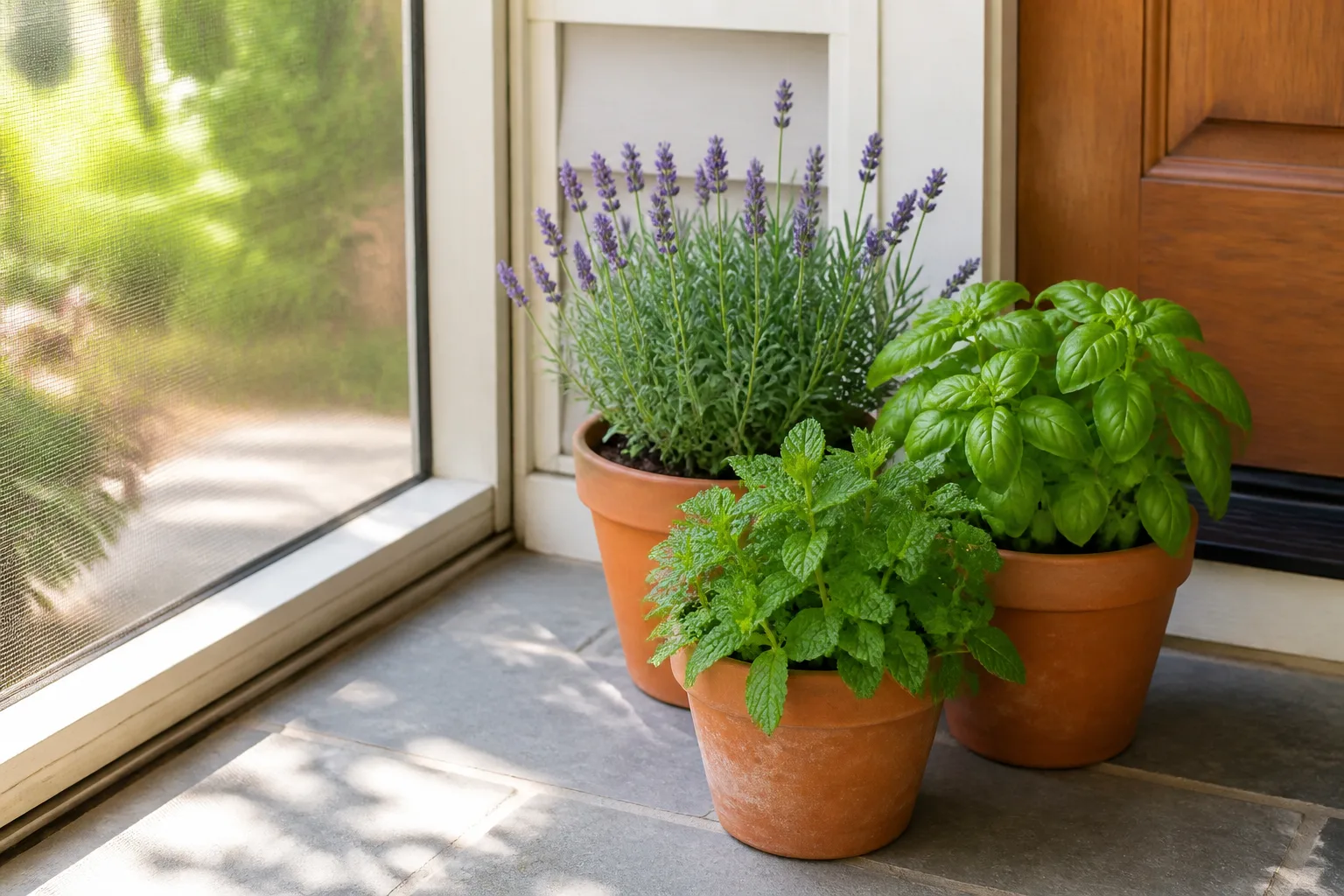
When flies gather around a door, kitchen window, or patio meal, it is natural to ask what smell do flies dislike. The most useful scents to try are lavender, eucalyptus, peppermint, cinnamon, basil, and catnip. They can make a small area less appealing for a while, particularly when the fragrant material is close to the entry point or seating area.
The important word is help. “Flies hate these smells” is convenient shorthand, not a guarantee that any herb or oil will stop a swarm. Species, wind, concentration, temperature, and competing odors all change the result. A fragrant plant cannot outcompete an open garbage bin, pet waste, fermenting fruit, or a damaged screen. Use scent as a perimeter layer while you remove what attracts flies and block how they get inside.
The Short Answer: Use Scents as a Perimeter Helper
Start with the scent that fits your home and your tolerance for maintenance. Lavender and basil are easy plant choices for a bright windowsill or patio. Peppermint is intensely aromatic and useful in a container. Cinnamon works best as a dried spice or mild sachet rather than a plant. Eucalyptus is better treated as a dried or commercially formulated fragrance, and catnip is an interesting container plant with a more complicated evidence story.
Put the chosen scent beside the problem area—not across the yard. A pot by the door, a small dish of dried leaves near a screened window, or a labeled product used exactly as directed can alter the immediate space. Replace or refresh it when the fragrance fades, and stop if the smell bothers people or pets.
For a fast first attempt, clean the entry zone, close the door, repair the screen, and place one or two fragrant plants near the threshold. If flies are still landing on food, add a fan or a species-appropriate trap rather than doubling the oil. UC IPM’s fly-management guidance puts sanitation and exclusion ahead of relying on a scent alone.
Identify the Fly Before Choosing a Scent
The word “fly” covers several pests with different food sources and breeding sites. A scent experiment may be harmless but irrelevant if the insects are emerging from a drain, coming from a compost bin, or clustering at a sunny window as a seasonal nuisance.
House flies are the main concern when large gray flies repeatedly enter from outdoors, land on walls, and gather around garbage, animal waste, or food. Fruit flies are much smaller and often hover around ripe produce, wine, recycling, or a sticky drain. Drain flies look fuzzy and moth-like. Identification tells you whether a smell, a trap, cleaning, or exclusion deserves priority.
House Flies Versus Fruit Flies
Adult house flies are usually about one-quarter inch long, gray, and marked by four dark stripes on the thorax. Their larvae develop in moist, decaying organic material such as manure, garbage, or other waste. Utah State University Extension’s house-fly profile also emphasizes that adults can move between contaminated material and food-preparation areas, which is why cleanliness matters beyond comfort.
Fruit flies are smaller, often tan or brown, and may have noticeable red eyes. They reproduce in fermenting or overripe fruit and other wet, sugary residues. A vinegar bait can be useful for fruit flies because it smells like fermentation; that does not mean vinegar repels every fly. UC IPM’s fruit-fly guide recommends sanitation and explains that traps reduce numbers without replacing removal of the breeding material.
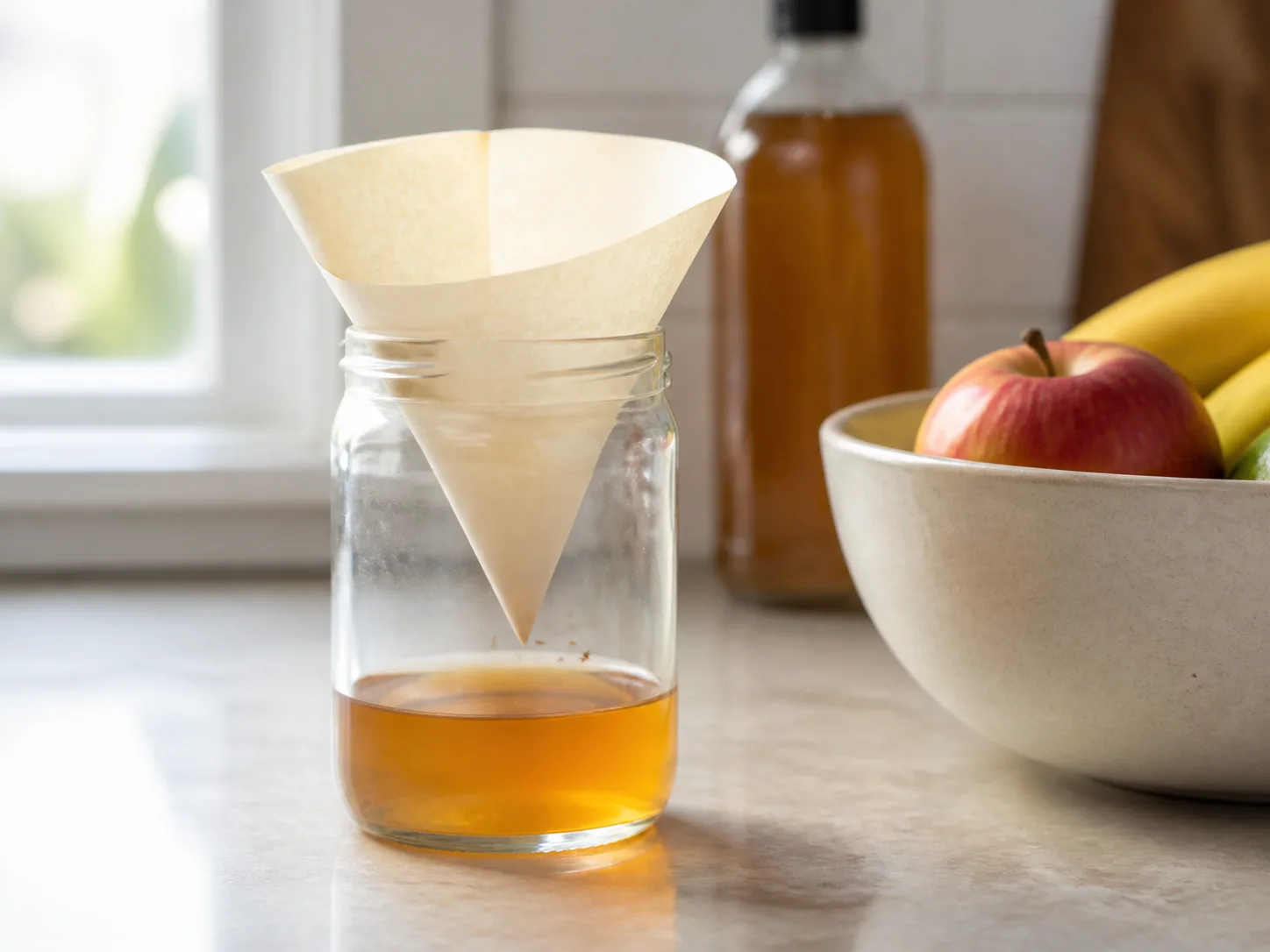
If the flies are fuzzy around a sink, scrub the drain rather than scattering lavender. If they are large and gray around the trash, audit the bin and the outdoor waste area before choosing a scent. The more accurately you identify the insect, the less likely you are to mistake a pleasant smell for control.
What Flies Are Usually Following
House flies are usually following access to food, moisture, shelter, or a place to lay eggs. An uncovered plate, full pet-food bowl, leaking garbage bag, dirty recycling container, open compost tumbler, or animal droppings can be a stronger signal than any herb on the windowsill. In warm weather, a nearby breeding site can keep supplying adults even after you swat the visible flies.
Fruit flies follow fermentation and wet organic residue. Drain flies follow the gelatinous film inside plumbing. Outdoor flies may be drawn to grills, pet waste, fallen fruit, compost, and lidded bins that still have residue on the rim. Scent works best after these attractors are reduced, because the goal is to make the doorway less inviting—not to camouflage an active nursery.
1. Lavender
Lavender is a good first choice when you want fragrance and an attractive plant even if its fly-repelling effect is modest. Its aromatic foliage and flower spikes are most useful close to a sunny entry, porch, or seating area. A healthy pot also gives you a visible, low-mess way to test whether a local change in scent affects fly activity.
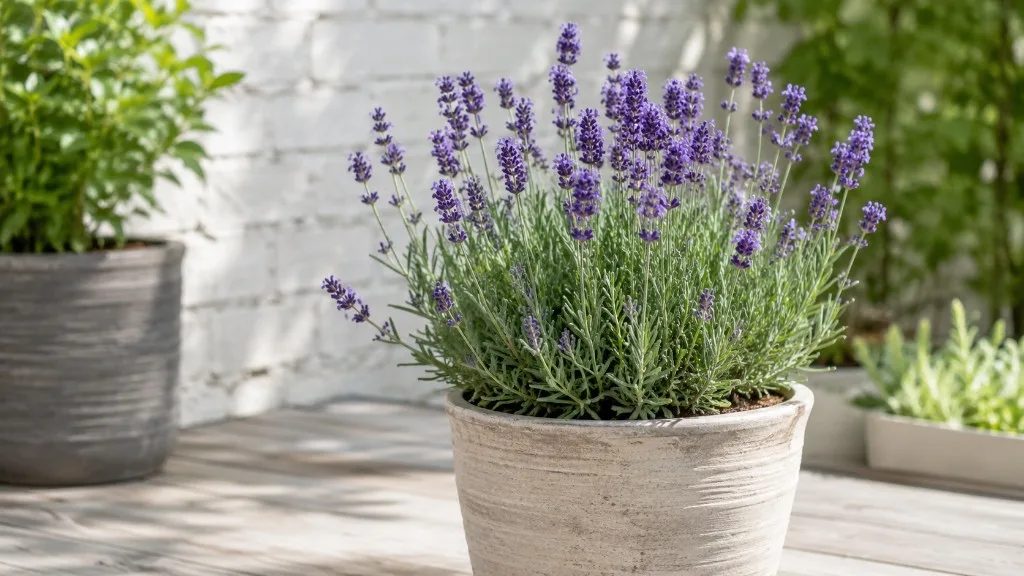
Grow lavender in strong light and fast-draining soil. Let the surface dry between thorough waterings, and do not leave the pot standing in water. A stressed, overwatered plant produces little usable fragrance and becomes a maintenance problem rather than a helpful boundary.
Keep the claim narrow: lavender may make the immediate area less attractive to some insects, but a pot will not repel flies from an entire room. Place it beside a door or window that is actually used, refresh the plant by lightly brushing foliage only when appropriate, and combine it with a tight screen. Gardening Know How lists lavender among commonly suggested fly-repelling plants while also stressing that sanitation and exclusion still matter. (See the gardening guidance on mistakes that attract flies)
2. Eucalyptus
Eucalyptus has a sharp, camphor-like aroma that many people notice immediately. For a home experiment, use a small amount of dried foliage or a properly labeled commercial product near an entry point, rather than treating the house with a cloud of concentrated oil. The scent should remain a local cue, not a substitute for ventilation and a sealed food area.
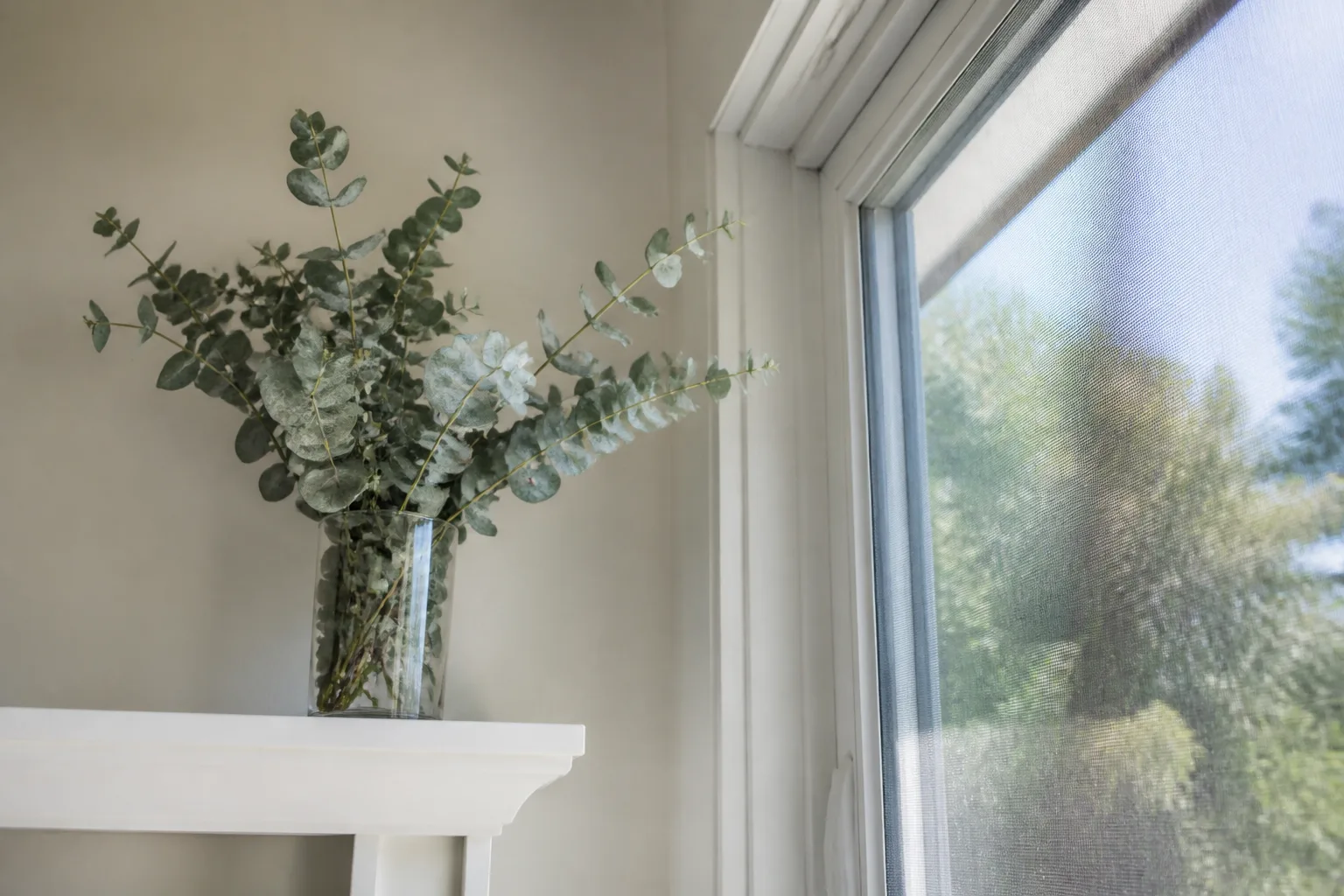
This is also the option where “natural” deserves the most caution. Eucalyptus oil is highly concentrated and should not be swallowed, rubbed on skin without product-specific directions, or placed where a child or pet can knock it over. Do not put leaves or oil directly on food, dishes, pet bowls, or a surface used to prepare food. Open a window if the fragrance becomes overwhelming.
Use eucalyptus only where you can monitor it, such as a high shelf near a screened window that pets cannot access. If the home includes birds, skip diffusers and strong airborne fragrance; birds are especially sensitive to respiratory irritants. A window screen, closed door, or fan is a more predictable protection layer than increasing the oil.
3. Peppermint
Peppermint is popular because the leaves smell strong when rubbed and the plant can be harvested repeatedly. A living plant is the gentlest way to try it: set a healthy container near a back door, kitchen window, or porch edge, then watch whether flies change their landing pattern in that small zone. A pot does not need to fill the room with perfume to be useful as a close-range experiment.
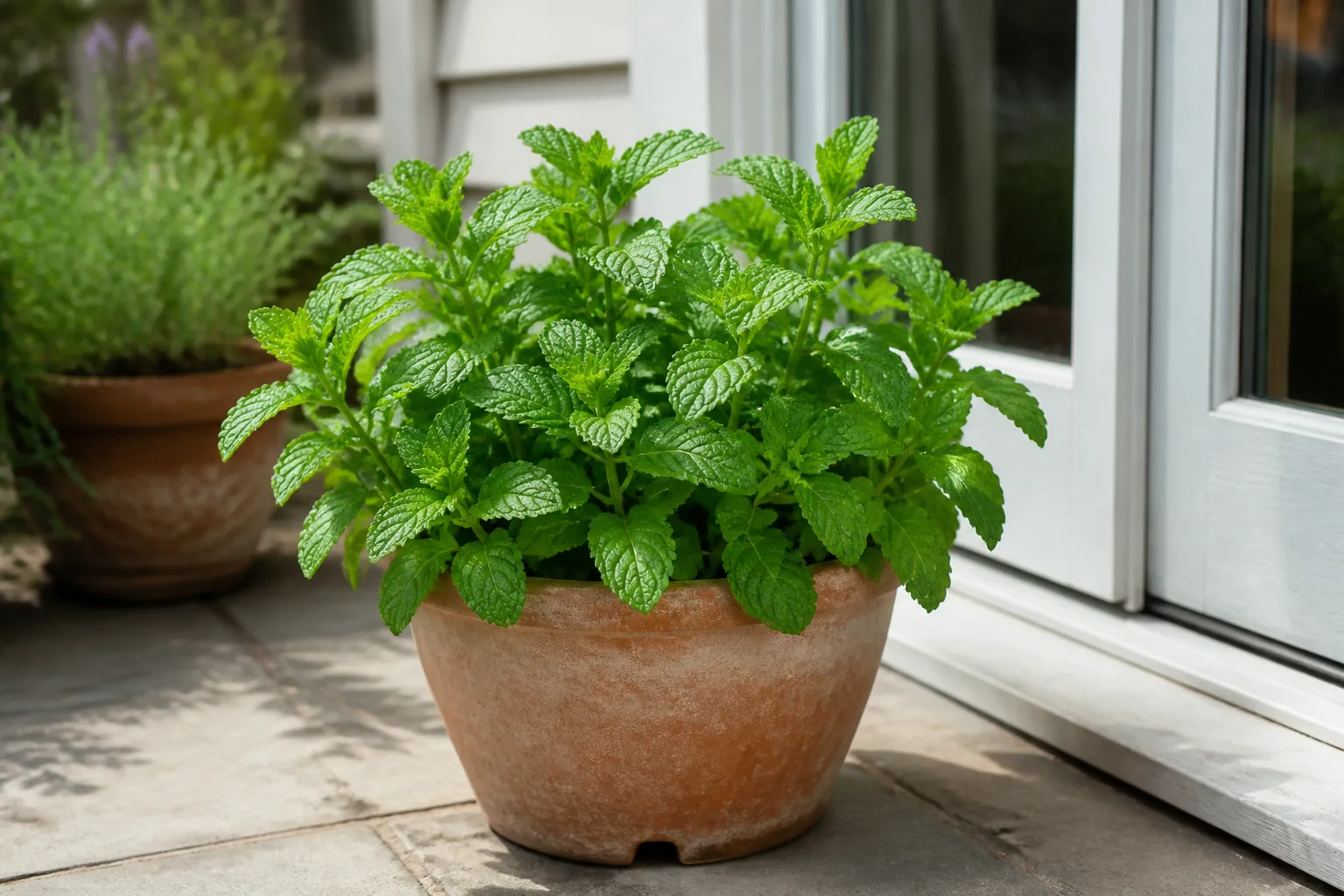
Peppermint and other mints spread aggressively, so use a dedicated container with a drainage hole. Empty the saucer after watering, especially outdoors, and keep the plant where it receives enough light to stay vigorous. Epic Gardening’s peppermint growing guidance is useful for the practical side of the choice: mint likes sun and room to grow, but containment prevents it from taking over nearby beds.
Do not assume a stronger mint smell means better fly control. Pure peppermint oil is a concentrate that can irritate skin and eyes, and its safety depends on the person, animal, dose, route, and product. NCCIH’s peppermint-oil safety information is a better reference than a social-media recipe. If you use a commercial spray, follow its label and keep it away from food and animal access.
4. Cinnamon
Cinnamon is convenient when you want a dried scent instead of another plant to water. Use a small open dish, a breathable sachet, or a few whole sticks near a doorway or window where flies enter. Keep the material dry; damp spice becomes a residue that can collect dust and create a new cleaning job.
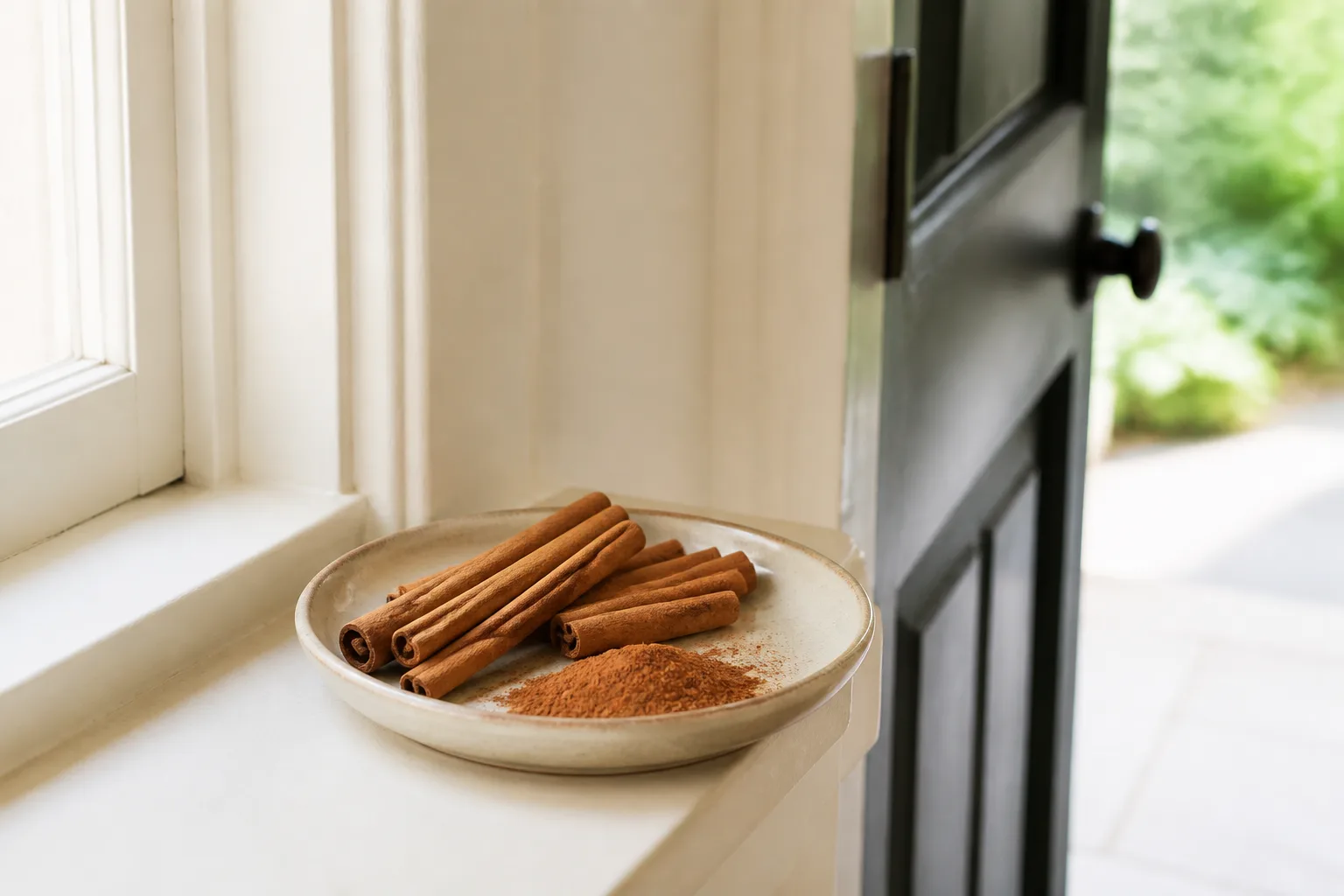
The useful effect is local and temporary. Ground cinnamon may release more aroma than whole sticks at first, but it also scatters easily and should not be left where it can blow onto food, pet dishes, or sensitive surfaces. A sealed sachet gives you better control in a kitchen or rental home.
Cinnamon is sometimes presented as a complete insect barrier, but there is no reason to expect a bowl in one room to stop flies entering through another. Replace it when you can no longer smell it at close range, and treat a rising fly count as a signal to inspect food scraps, bins, and screens. If the spice irritates anyone in the household, remove it; comfort and safe cleanup come first.
5. Basil
Basil is the most practical choice for a gardener who wants an edible plant near the kitchen. Its leaves are aromatic, it grows well in warm bright conditions, and a container beside a door or outdoor dining spot can add fragrance without relying on a concentrated oil. Harvesting also encourages fresh growth, so the plant earns its space even when the fly effect is difficult to measure.
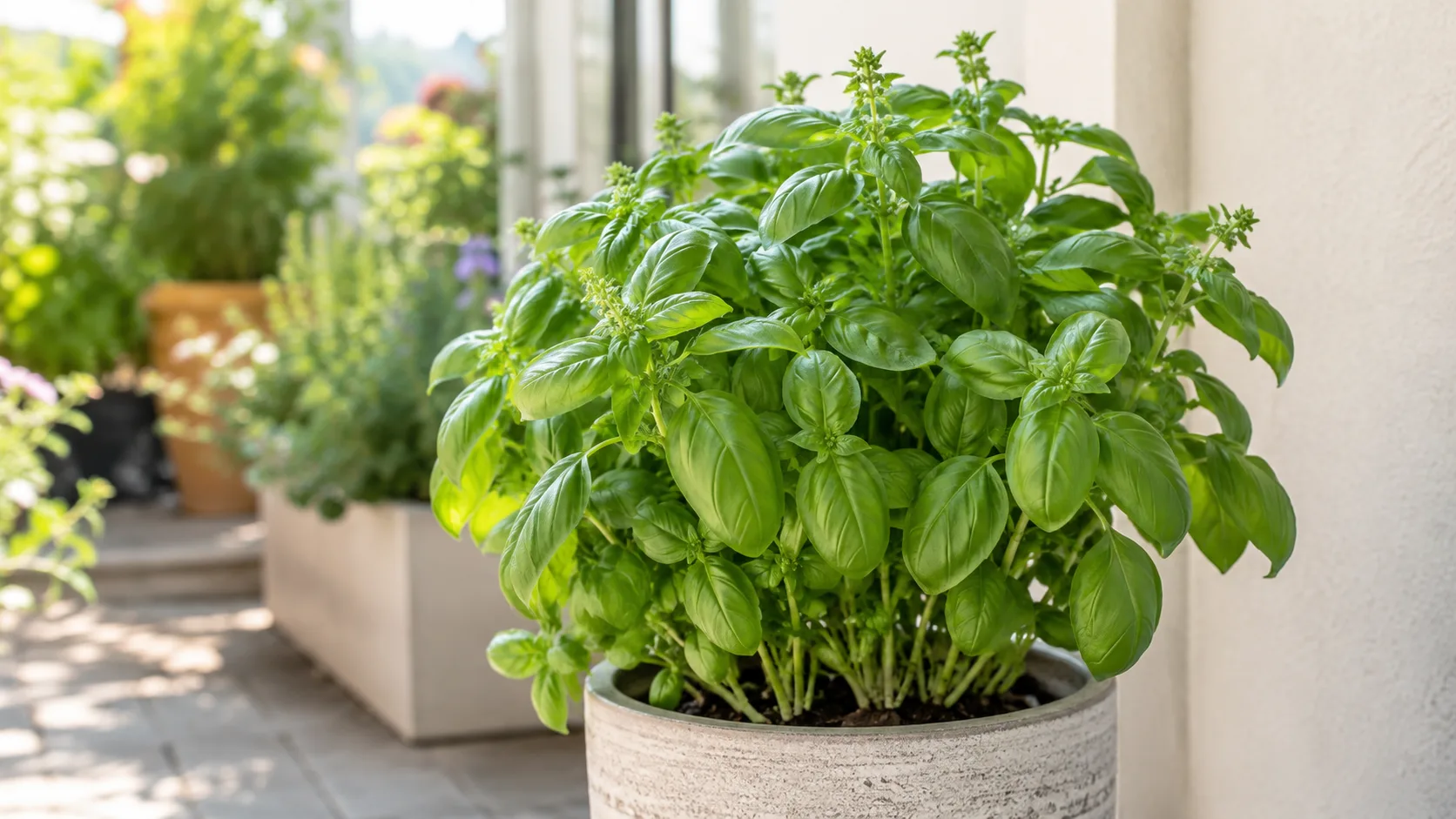
Give basil bright light, warm temperatures, regular water, and a pot that drains freely. Pinch flower buds if you want more leaves, and remove diseased or badly damaged foliage. Several healthy plants in one broad container will make a more noticeable garden feature than a single weak seedling hidden behind the grill.
Basil’s aroma may help make a very small area less appealing, but it will not overpower an open compost bin or an uncovered meal. Gardening Know How includes basil among the fragrant plants often suggested around fly-prone areas; the realistic takeaway is to place it near the space you use while handling the attractors that bring flies there. Keep it close to the door or table, not as a distant border.
6. Catnip
Catnip has the most interesting insect-repellent evidence of these six scents, but it is also the easiest to oversell. The plant contains nepetalactone, and a 2024 Scientific Reports study found that a 2% catnip essential-oil preparation repelled more than 70% of tested Aedes aegypti mosquitoes for one to four hours under laboratory conditions. (Read the catnip-oil study in Scientific Reports)
That result concerns a measured oil preparation, a mosquito species, and a laboratory test. It does not show that a potted catnip plant will repel household house flies or protect a whole patio. In fact, a flowering catnip plant can attract pollinators and neighborhood cats, so the surrounding scene may become busier even if the foliage smells strong.
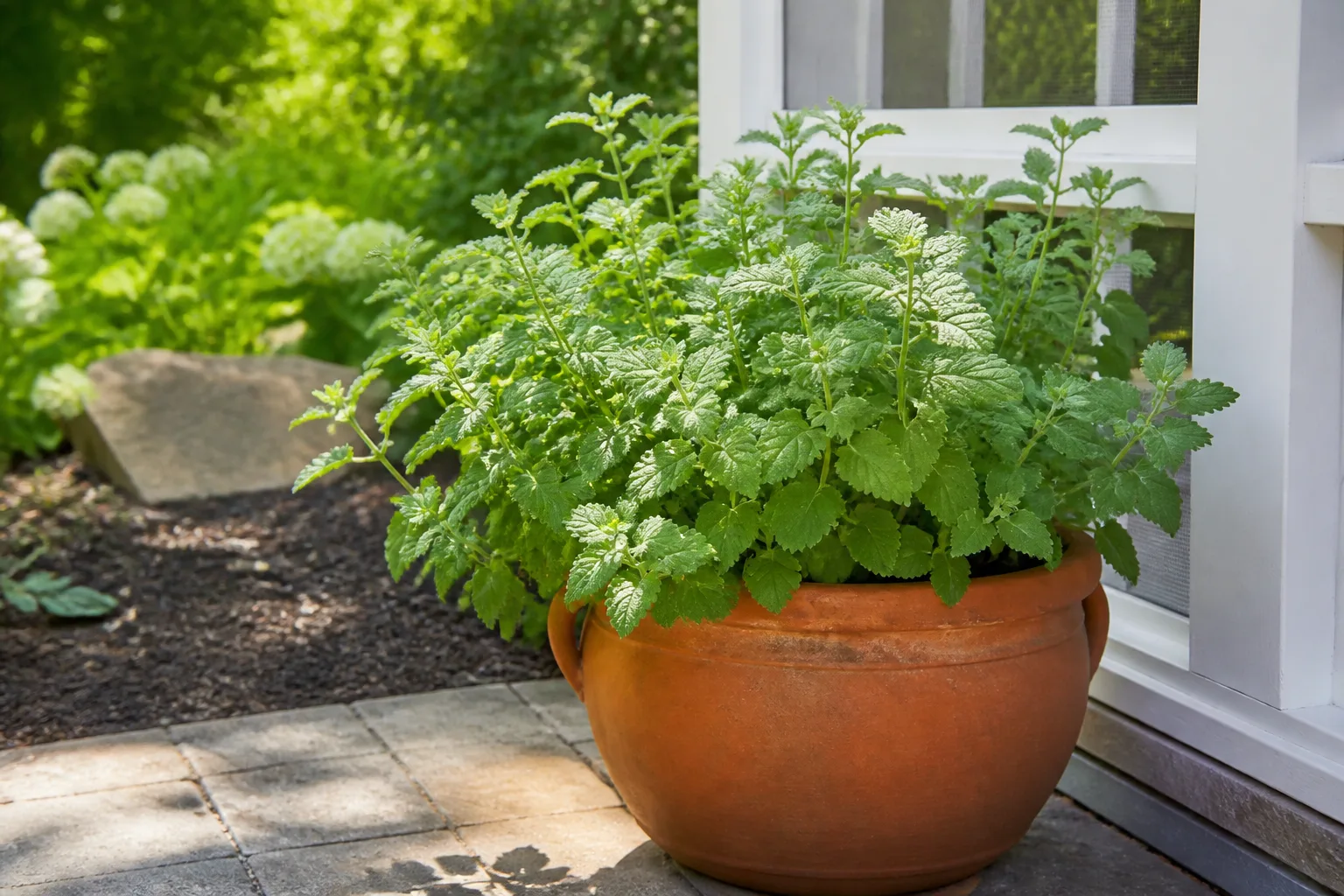
If you want to try catnip, grow it in full sun to part shade with good drainage and use a container if cats, reseeding, or garden spread are concerns. NC State Extension’s catnip profile notes both its aromatic nature and its ability to attract cats and other insects. Put the pot beside a screened porch or away from the main seating area, and judge it as a useful herb first and a possible close-range deterrent second.
How to Place Scents Where They Can Help
Placement matters more than collecting every scent on the list. Choose one scent, put it close to the fly route, and observe for several days under similar conditions. If flies ignore it while food or waste remains available, the problem is not that you need a seventh smell; the source is winning.
Avoid placing fragrant materials right beside food. You want to make an entry point or resting area less inviting, not pull insects toward a cutting board, dining plate, or pet bowl while you test a remedy.
Use Plants at Doors and Windows
The best plant locations are beside the door people use, outside a screened window that stays open, or at the edge of a porch where the foliage is close to the seating area. Plants across the yard may look lovely but release too little scent at the threshold to compete with indoor food odors. Use a container so you can move the plant, protect it from weather, and compare one location with another.
Keep the plant out of the swing of a door and away from the narrow part of a walkway. Crowded foliage can hide torn screens, hold moisture against a wall, or brush against people carrying food. Trim dead material, empty saucers, and keep the space around the pot clean. A scent plant should never create the moisture or organic debris that attracts another pest.
Use Dried Herbs and Mild Room Scents
Dried leaves, whole spices, and small sachets are easier to control indoors than wet plant material. Place them in a breathable container near the entry or window, not in the center of the kitchen. Refresh them when their aroma fades, and discard anything damp, moldy, or dusty.
Keep scent products away from heaters, open flames, and children’s reach. Do not place oils or loose spices where they can spill into a pet’s water or food. If anyone develops coughing, headache, eye irritation, or skin irritation, remove the product and ventilate the area rather than adding a different fragrance.
Treat Essential Oils as Concentrates
Essential oil is not the same thing as a leaf, a plant, or a cup of herbal tea. It is a concentrated mixture of volatile compounds, and “more” is not a safe shortcut to “more effective.” Use only a product whose label explains the intended application, keep it in its original container, and do not improvise a spray for skin, pets, food, or a whole room.
Never apply fly-repellent oil to an animal. Dogs and cats can be exposed when concentrated oil lands on their coat, paws, or bedding, and birds can be particularly vulnerable to airborne fragrance. ASPCA’s essential-oil guidance recommends keeping concentrated oils away from pets and using extra care with diffusers. Poison Control’s essential-oil guidance also explains why ingestion and misuse can cause poisoning.
For a kitchen, a living plant or dry sachet is usually easier to supervise than a diffuser. If a commercial product is labeled for indoor use, follow the label’s ventilation and placement instructions exactly. If it is not labeled for a surface or use, do not assume a “natural” ingredient makes it suitable.
Why Scents Stop Working
The volatile molecules that make a scent noticeable also disperse, especially in a warm, breezy, or well-ventilated space. A plant that smells strong when a leaf is crushed may contribute very little fragrance several feet away. Rain, sunlight, fan airflow, and an open door shorten the useful window even more.
Flies also have a reason to tolerate a smell. If they are following a strong food or breeding signal, a mild plant scent is competing against a much better reward. New adults can emerge from a hidden source every day, making it look as if a scent suddenly “stopped working” when the real pressure simply increased.
This is why a scent test should have a boundary and a time limit. Try one option beside one entry point, keep the area clean, and reassess after several days. If fly numbers do not change, move to screens, airflow, sanitation, or identification rather than escalating to undiluted oil.
Remove the Odors That Attract Flies
Source removal is the part of fly control that keeps working after a fragrance fades. Tie off kitchen garbage, wash the inside and underside of the bin lid, rinse sticky recycling, and check for leaks under the liner. Clean food spills behind appliances and under the edge of a countertop, where a small amount of residue can remain attractive for longer than it looks.
Cover leftovers and refrigerate cut fruit. Do not leave pet food out overnight if flies are active, and pick up pet waste promptly outdoors. Keep compost covered and balanced rather than allowing wet scraps to sit exposed. Fallen fruit, rotting vegetables, and wet grass clippings can support flies outside, where adults may repeatedly enter through a nearby door.
For tiny flies around a sink, scrub the drain and its overflow opening instead of relying on a vinegar bowl. A vinegar trap is aimed at fruit or vinegar flies because fermentation attracts them; it is not a universal repellent for house flies. If you use a trap, place it away from open food so it intercepts flies without making the prep area the most attractive point in the room.
The same principle applies to outdoor bins and animal areas. Bob Vila’s practical outdoor fly-control guidance emphasizes cleaning garbage, compost, pet waste, food scraps, and rotting vegetation, along with covering food and using fans. (See the outdoor fly-control guidance) A scented pot is easier to appreciate after those stronger signals are gone.
Build a Fly-Control Routine That Works
Use a short sequence instead of trying six remedies at once:
- Identify the insect. Note size, color, resting place, and the food or moisture nearby. Large gray flies need a different source hunt from tiny flies around fruit.
- Remove the strongest attractor. Seal garbage, clean a spill, refrigerate produce, wash a bin, pick up pet waste, or scrub drain residue.
- Block entry. Close doors, repair screens, add a door sweep, and check gaps around window frames. A fragrant plant cannot compensate for a door that stays open beside the trash.
- Add one scent near the route. Start with a living lavender, basil, or peppermint plant, or use a supervised dried scent. Keep it out of food zones and watch whether activity changes.
- Add airflow or a targeted trap. A fan across a porch or doorway makes landing harder. A trap belongs where it can intercept the identified fly without competing with food preparation.
- Recheck the source. If flies return after cleaning, inspect the garage bin, compost, pet area, drains, and outdoor waste. A hidden source is more likely than a mysterious failure of lavender.
Record what changed and where the flies moved. If activity drops at the scented doorway but rises at a window, the scent may be helping as a local boundary while the window remains the true entry. This small observation is more useful than combining peppermint, cinnamon, eucalyptus, and vinegar in one untestable mixture.
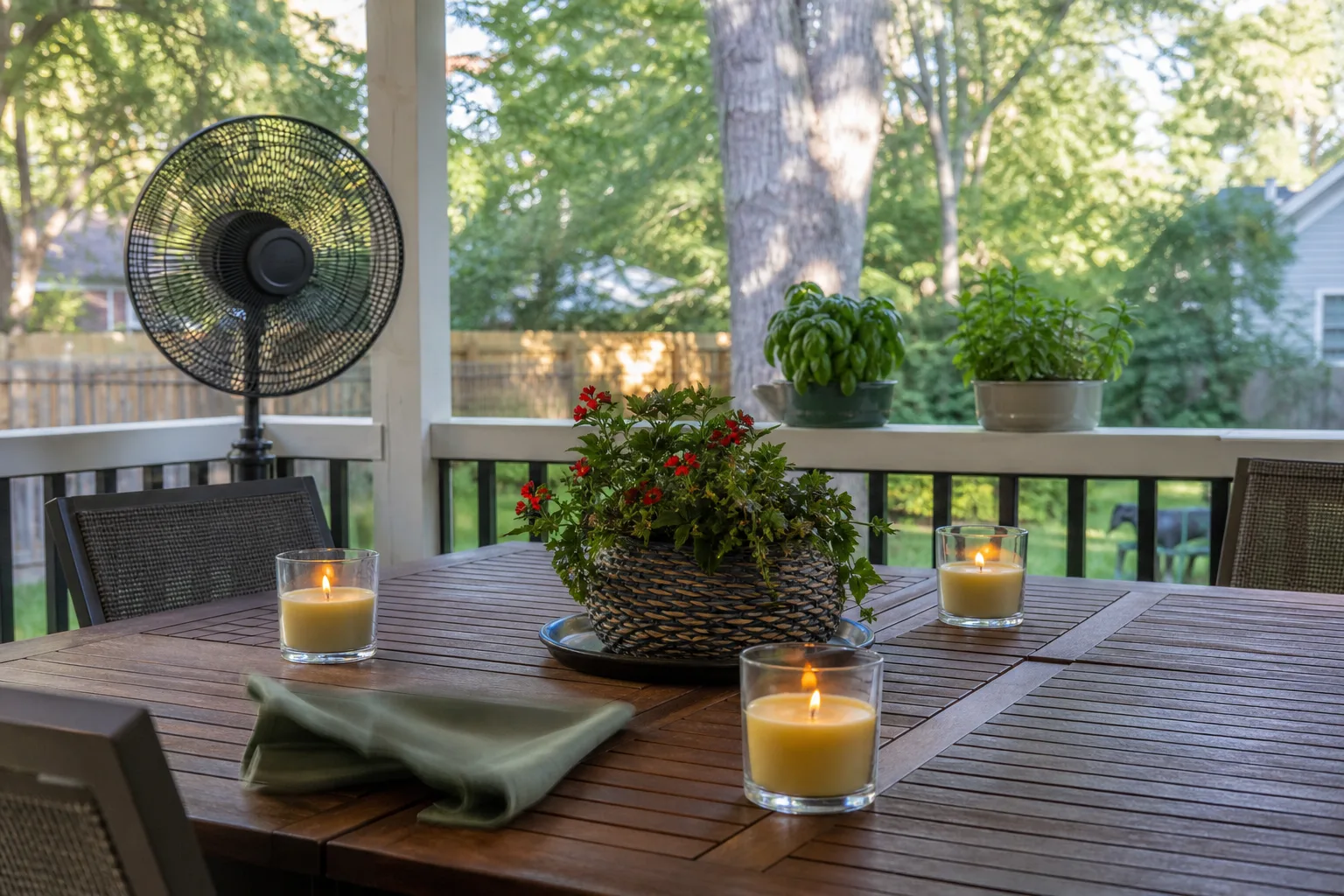
For outdoor meals, keep food covered, place waste containers away from seating, and run a fan across the table or doorway. Moving air is not a smell, but it is often a more dependable short-term comfort measure than adding more fragrance. Clean the grill and table after meals so the fan and plants are not asked to compete with grease or food residue.
When Traps, Screens, or a Professional Are Better
Choose a screen, door sweep, or closed door when flies are entering in a predictable line. Exclusion prevents the next adult from getting inside, while a scent only changes the odor at the edge. Repair small tears and make sure the screen fits tightly at corners; a plant placed beside a large gap is decorative, not protective.
Choose a trap when adults are already indoors and the source is being cleaned. A fruit-fly trap can be appropriate for tiny flies around fermentation, while a house-fly trap or fly swatter may be more useful for large adults. Do not place attractant traps beside food prep, children’s snacks, or pet dishes. Dispose of captured flies and stale bait promptly.
Choose a professional inspection when heavy numbers continue after thorough cleanup, sealed waste, repaired screens, and several days of monitoring. Persistent flies can point to a hidden animal, a wall void, a sewer or drain problem, a neighboring waste source, or a breeding site you cannot safely reach. Get help sooner around food-service areas or when the infestation is creating a sanitation concern.
Essential oils should not be the escalation step. Increasing concentration can increase irritation and poisoning risk without solving the source. When a plant, sachet, fan, or labeled product does not reduce activity, return to species identification, source removal, exclusion, and professional advice.
Conclusion
Lavender, eucalyptus, peppermint, cinnamon, basil, and catnip are the six scents most worth testing when you want a gentler way to make a doorway, window, or patio less appealing to flies. Use them close to the space you want to protect, keep plants healthy, refresh dry scents, and treat essential oils as concentrated products that require careful handling.
The lasting solution is layered: remove garbage and food residue, clean drains and pet areas, cover compost, repair screens, close doors, and use fans or species-appropriate traps when needed. A scent can help with the last few feet around an entry point, but sanitation and exclusion are what keep a temporary swarm from becoming a repeating one.