How to Grow and Care for Wax Begonias Indoors Year-Round
Grow wax begonias indoors with the right light, watering, soil, feeding, pruning, and winter care. Fix sparse blooms and root problems with clear steps.
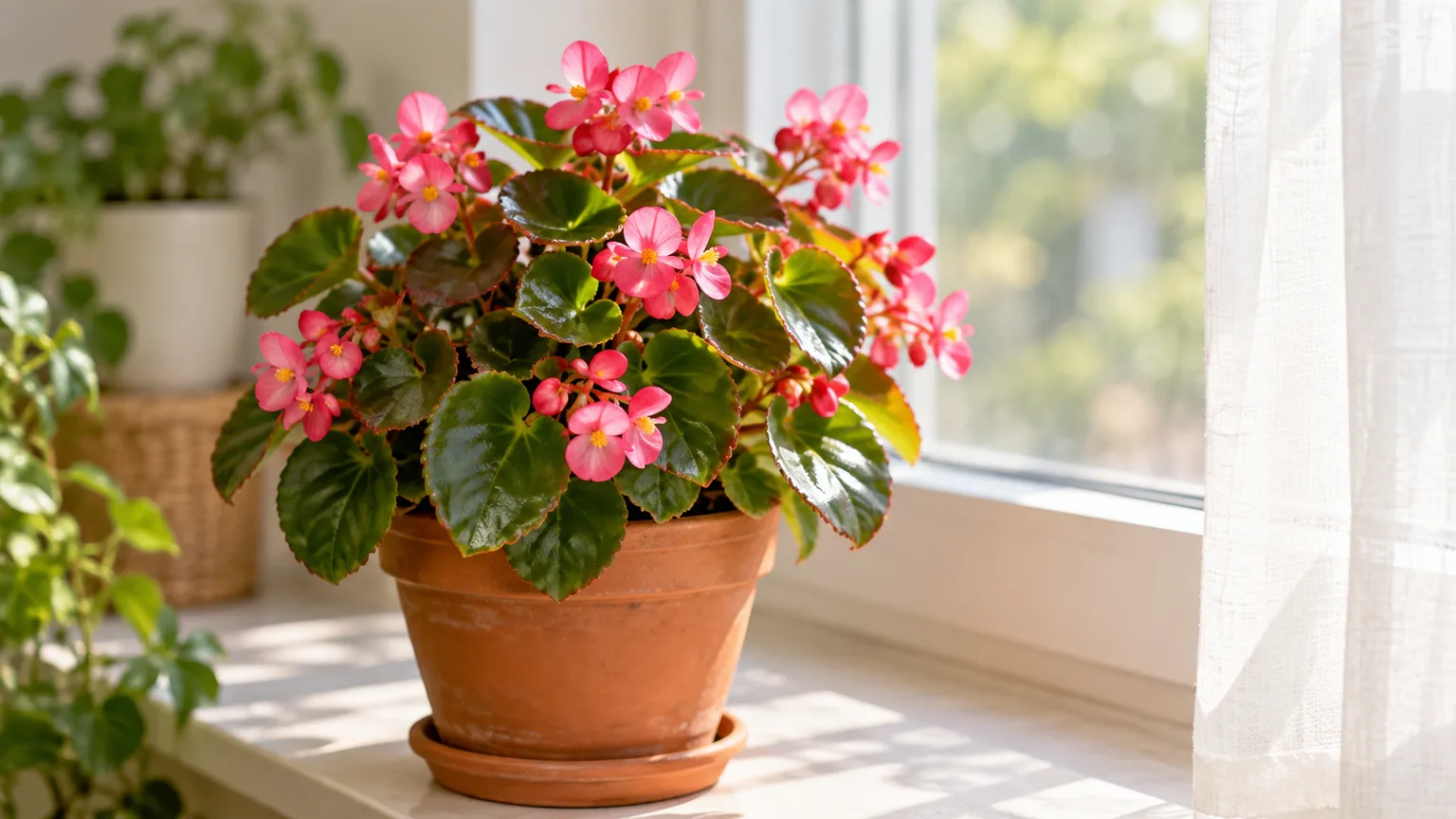
Wax begonias can live indoors for years, but the plant sold as seasonal bedding color needs a brighter, steadier home than many “low-light houseplants.” Give it a bright window, a potting mix that holds some moisture but drains freely, and enough time for the surface to begin drying between waterings. Those three choices prevent most of the problems that follow a new plant home.
The botanical group is Begonia × semperflorens-cultorum, also sold as bedding or wax begonia. It is fibrous-rooted and different from rex begonias grown mainly for patterned foliage, so advice meant for rex or tuberous begonias can mislead. Here is a practical indoor routine, plus ways to tell when your plant needs a change rather than more water or fertilizer.
Confirm you have a wax begonia before using this routine
Wax begonias are compact, branching plants with rounded, fleshy leaves that often feel glossy or wax-coated. Their small flowers may be red, pink, or white, and the foliage is usually green or bronze; the RHS plant profile describes the Semperflorens-Cultorum Group as fibrous-rooted, tender perennials commonly grown as annual bedding plants. Indoors, the same plant can be kept as a tender perennial if you protect it from cold and keep it growing.
“Begonia” covers many growth forms, which is why the label matters. Rex begonias have dramatic patterned leaves and rhizomes, cane begonias have upright jointed stems, and tuberous begonias grow from swollen storage organs; none should automatically be given the same watering or overwintering routine as a wax begonia. If the nursery tag is missing, use the plant’s rounded leaves, compact bedding habit, and flower clusters as clues, and avoid following advice that is explicitly about rex leaf propagation or tuber storage.
Give it bright, filtered light for steady growth and flowers
Choose the brightest spot where the leaves do not sit against hot glass or receive intense midday sun for hours. An east-facing window is often an easy starting point; a west or south window can work with a sheer curtain, a little distance from the pane, or careful observation during the first week. A north window may keep foliage alive in a bright room, but it can be too dim for compact growth and regular flowering.
Wax begonias are more sun-tolerant than many ornamental-leaf begonias, especially bronze-leaved cultivars, but indoor glass concentrates heat and sunlight. Garden Design’s wax begonia guide also notes that bronze foliage tends to handle direct sun better than green foliage outdoors; use that as a cultivar clue, not a reason to expose an indoor plant abruptly. Watch the newest growth: stems that stretch toward the window, widely spaced leaves, and few buds usually point to inadequate light; pale, dry patches on the window-facing side suggest too much direct sun or a sudden exposure change. Move the pot in small increments and give it several days to respond rather than repeatedly shifting it around the room.
If the room has no bright window, a white full-spectrum grow light can supplement daylight. Set the lamp according to its manufacturer’s distance guidance, keep it on a consistent daytime timer, and begin with a moderate daily period rather than leaving it on around the clock. Rotate the plant occasionally so all sides grow evenly, but do not expect extra fertilizer to compensate for insufficient light.
Water by checking the mix, not by following a calendar
Press a finger about an inch into the potting mix. If that layer feels dry and the pot is noticeably lighter, water thoroughly; if it is still cool and damp, wait and check again later. The RHS houseplant advice advises keeping fibrous begonias moist but well-drained, while Gardening Know How’s annual begonia guide likewise stresses consistent moisture without implying that every home needs the same number of waterings.
When watering, wet the whole root ball until water runs from the drainage holes, then empty the saucer or cachepot. Do not give small sips every day: that can leave the center dry while keeping the lower mix chronically wet. Do not leave the pot standing in runoff, and do not let the root ball become bone-dry for an extended period; waxy leaves tolerate a brief delay better than fine roots tolerate a soggy, airless mix.
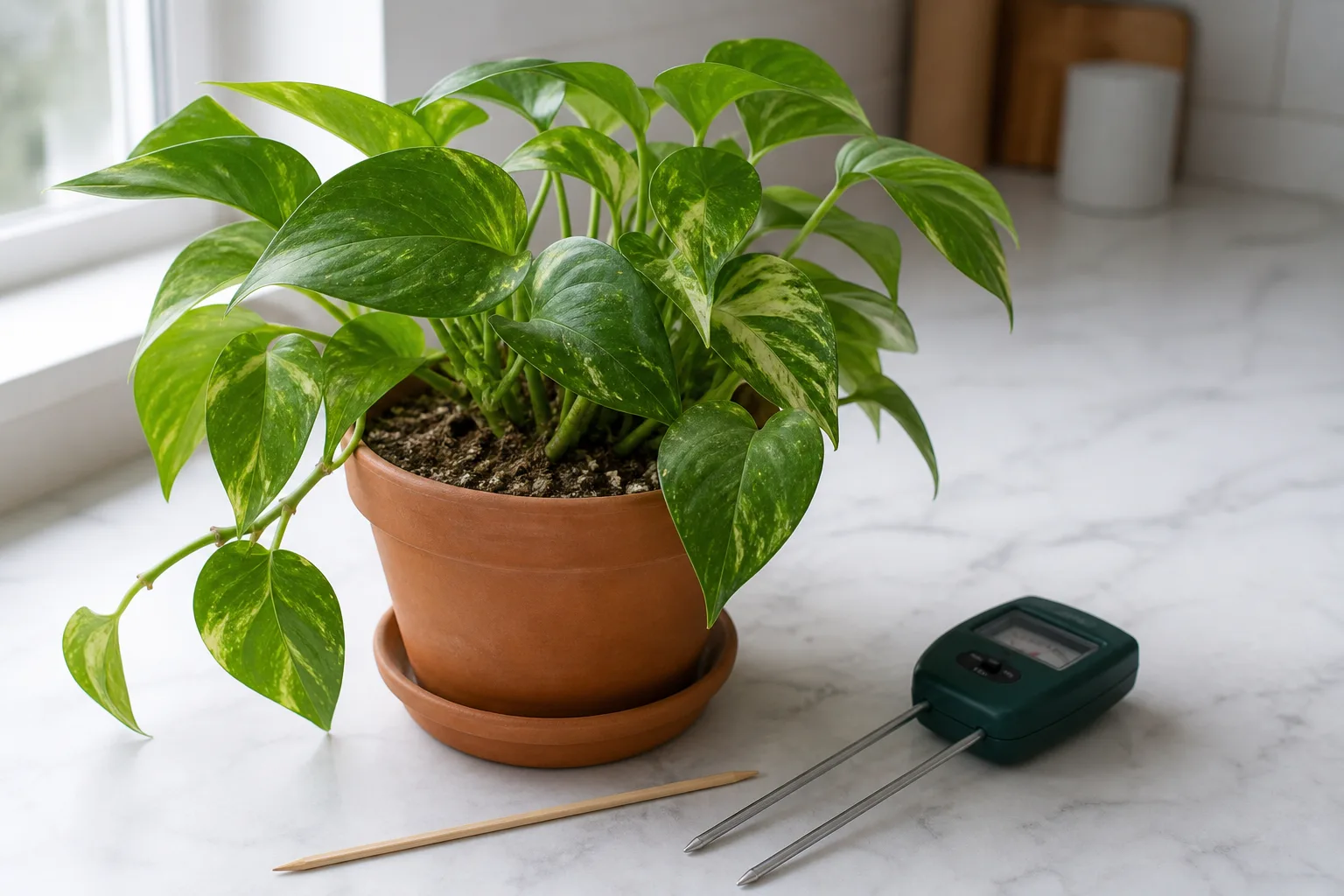
The interval changes with light, temperature, pot size, and season. A small clay pot in a sunny room may dry quickly in summer, while a larger plastic pot in a cool winter room stays wet longer; check the soil instead of copying a weekly schedule from another household. If the surface has dried but the deeper mix remains wet, improve light and airflow and inspect drainage before watering again.
Use a loose potting mix and a pot that drains
Start with a quality indoor potting mix that stays open after watering rather than garden soil, which can compact in a container. If the mix feels dense or stays wet for many days, blend in perlite or fine bark to increase air spaces; the goal is a root zone that holds a little moisture while excess water can escape. Peat-free multipurpose mixes are suitable when they drain well and do not dry into a hard, shrunken block.
Choose a pot with open drainage holes and only a modest amount of extra room around the root ball. An oversized container is not a shortcut to a larger plant: unused mix can stay wet long after the roots have taken up what they need. A nursery pot placed inside a decorative cover is fine if you lift it out to water and pour away the drainage; a layer of stones in a hole-free pot does not replace a drainage opening.
Keep it warm and let the foliage dry quickly
Average comfortable room temperatures suit wax begonias, provided the plant is away from cold drafts, air-conditioning blasts, and hot radiator air. The RHS houseplant advice recommends a winter minimum of about 13°C (55°F) for fibrous-rooted begonias; as a practical indoor target, keep the plant in a room that stays comfortably above that threshold rather than testing the limit. Sudden cold can stall growth and trigger leaf drop even when the soil is not dry.
Ordinary household humidity is usually adequate if the plant is watered consistently and the air moves gently. Do not mist the foliage as a routine: droplets that remain on crowded leaves, especially in a cool room with poor circulation, can encourage fungal problems. The RHS specifically cautions against misting and neglecting ventilation because begonia mildew can become troublesome in damp, over-humid conditions; leave space around the plant and avoid wetting leaves when you water.
Feed lightly while the plant is actively growing
A wax begonia in fresh potting mix needs little or no extra food at first. Once it is established and making new leaves, use a balanced liquid houseplant fertilizer at a diluted label rate during active spring and summer growth; the RHS houseplant advice recommends feeding established fibrous begonias from May through September with a high-potassium plant food, following the product directions. Because daylight and growth slow in winter for many indoor plants, reduce feeding or pause until growth resumes.
More fertilizer does not guarantee more flowers. Excess salts can damage roots and leaf edges, while a nitrogen-heavy routine may favor foliage over buds; do not add a bloom booster unless the product label and your plant’s actual condition support it. If the pot develops a white crust or leaf edges brown after feeding, stop fertilizing temporarily and flush the mix with clean water, allowing it to drain fully.
Pinch and deadhead to maintain a compact plant
Remove wilted flowers and yellowing leaves with clean fingers or snips to keep the crown open and reduce decaying material. To encourage a bushier outline, pinch the soft growing tip just above a healthy leaf pair when a stem begins to stretch; new side shoots may form below the cut. Make small edits over time instead of shearing the entire plant, which can remove many active buds and leave a sparse framework.
If a mature plant has become bare at the base, shorten the longest stems selectively and use healthy tips as cuttings. Pruning cannot make a dark location bright, though, so correct the light before expecting a trimmed plant to stay compact. Keep removed material off the potting mix, where fallen petals and leaves can trap moisture around stems.
Repot when roots and watering behavior point to a need
Do not repot just because a plant has been in the same container for a year. Check whether roots are circling the outside of the root ball, emerging from several drainage holes, or filling nearly all the mix; also notice whether the pot dries unusually fast despite appropriate watering. These are stronger clues than a calendar, and slow winter growth is not, by itself, a reason to disturb the roots.
When the plant is actively growing, move it into a pot only one size larger and refresh the mix around the root ball. Tease apart a few circling roots gently, remove any dark, mushy roots with clean scissors, and water once to settle the fresh mix. If the roots are healthy and the plant is simply leggy, prune and take cuttings instead; a much larger pot can worsen overwatering without fixing the actual problem.
Propagate a fresh plant from a stem-tip cutting
Wax begonias are commonly propagated from stem or tip cuttings. The RHS propagation guidance identifies stem cuttings as a method for fibrous-rooted begonias; choose a healthy, nonflowering tip with two or three nodes, because nodes are the points from which new roots and shoots can develop. Use a clean blade, remove the lowest leaves, and keep at least one pair of leaves above the medium.
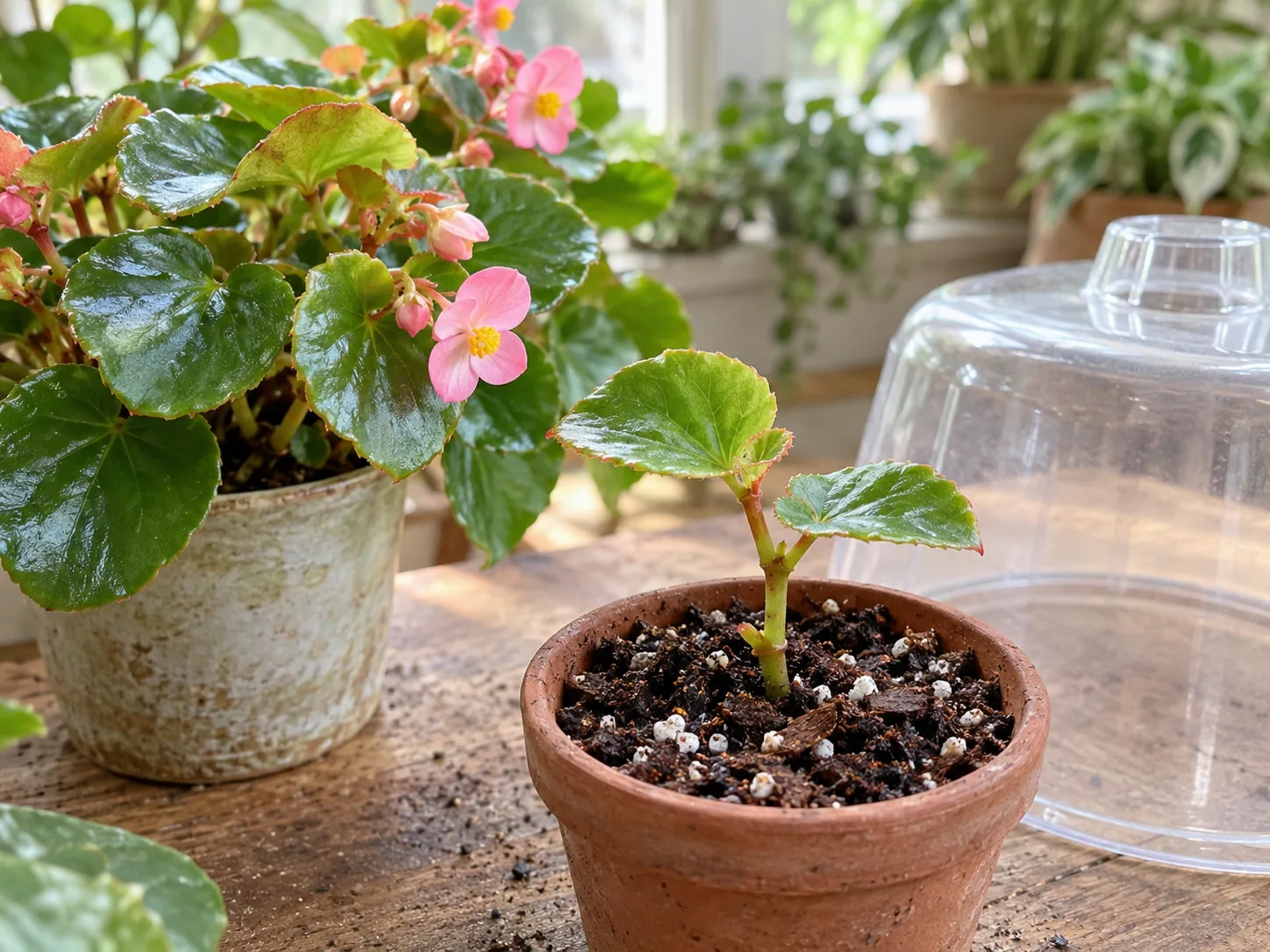
Place the cutting in a small pot of lightly moist, airy mix, with one node below the surface, and set it in warm bright indirect light. A loose clear cover can slow moisture loss while roots form, but vent it daily and remove it if condensation stays heavy or the leaves begin to rot. Keep the mix barely moist, not saturated; once you see new growth and the cutting resists a very gentle tug, acclimate it to normal room air and continue the standard care routine.
Some gardeners root stem cuttings in water first, then pot them once roots are visible. That can work, but water-grown roots must adjust to potting mix, so transition the cutting gently and do not bury a long tangle of roots in a very large pot. Avoid leaf-fragment propagation instructions intended for rhizomatous or rex begonias; for a compact wax begonia, a stem tip is the simpler, more dependable method.
Adjust care for winter and slower growth
Indoor wax begonias do not need a dormancy period, but short winter days often slow their growth and flowering. Keep the plant in the brightest available spot, water only when the mix begins drying, and stop routine fertilizer if it is no longer making new growth. A plant that pauses flowers for a few weeks in low winter light is not necessarily failing; assess stems and leaves before making a major change.
Do not compensate for a cool, dim winter room with more water or fertilizer. The pot may dry more slowly because the plant is using less moisture, and extra feeding can build salts in a mix that is not actively supporting new growth. If you use a grow light, keep its schedule consistent and move the plant away from cold window glass at night when the sill gets chilled.
Move a wax begonia outdoors gradually, if you choose
A potted wax begonia can spend warm weather outside, but the change from indoor light to outdoor sun is substantial. Wait until frost risk has passed and nighttime temperatures remain mild, then place it in a sheltered, bright-shade location for several days; gradually introduce gentle morning sun if the leaves remain healthy. Even sun-tolerant bronze cultivars need acclimation after living indoors.
Check the pot more often outdoors because wind, heat, and a smaller root volume can dry it quickly, but never water just because the plant is outside. Bring it back indoors before cold nights return, and inspect leaf undersides, stems, and the pot rim for aphids, mealybugs, thrips, and other hitchhikers. Keep the returning plant separate from other houseplants for a short observation period so an unnoticed pest does not spread through the collection.
Fix leggy growth and a lack of flowers
When the plant produces long stems, large gaps between leaves, and few buds, low light is the first condition to check. Move it closer to a bright window or add a grow light, then wait for the new growth to show whether the adjustment helped; older stretched stems will not shorten on their own. Pinch back the longest growth after the plant has settled into better light to encourage branching.
If the foliage is lush but flowers are scarce, consider three factors together: insufficient light, excess nitrogen fertilizer, and recent stress from moving or repotting. Wax begonias can flower for long periods in favorable conditions, but no indoor plant blooms continuously regardless of season; cool temperatures and shorter days may reduce buds. Improve light first, feed modestly only during active growth, and avoid changing several conditions at once so you can see what actually helps.
Read yellow leaves, wilt, and soft stems together
A few older leaves yellowing at the base may be normal turnover, but widespread yellow leaves deserve a root-zone check. If the mix is wet, heavy, or sour-smelling and stems are soft at the soil line, stop watering and inspect the roots; firm pale roots are healthy, while brown mushy roots indicate rot. Remove damaged tissue, correct the drainage, and repot into fresh airy mix only if enough healthy roots remain.
If the mix is dry well below the surface and the pot is light, wilt may be simple thirst: water slowly until the entire root ball is wet, then allow it to drain. If water beads and runs down the side without soaking in, the mix may have become hydrophobic; soak the pot briefly from below, let it drain, and reassess rather than repeatedly pouring water onto dry margins. Yellow leaves can also follow a major light change, so check the timeline before treating every symptom as overwatering.
Prevent mildew and inspect for common pests
Powdery mildew can appear as a white, dusty coating on leaves; gray fuzzy growth on damaged flowers or stems suggests a different moisture-related problem. Remove affected plant debris, keep foliage dry, improve air movement, and avoid crowding the pot against other plants. Do not respond by enclosing the begonia in a humid dome or repeatedly misting it, which can prolong the damp conditions that favor disease.
Inspect leaf undersides and new growth weekly for aphids, mealybugs, thrips, or fine webbing from spider mites. Isolate a plant with suspected pests, rinse small infestations from the foliage when practical, and wipe visible insects away; if a labeled treatment is needed, follow its instructions and test it on a small portion of foliage first. Pest problems are easier to contain when you check a new plant before it joins the rest of the collection.
Keep wax begonias away from pets that chew plants
The ASPCA Begonia entry lists Begonia species as toxic to dogs, cats, and horses because they contain soluble calcium oxalates, with the underground portion the most toxic; reported signs for dogs and cats include vomiting and salivation. That entry covers the genus, so do not assume a wax begonia is safe simply because it is a common bedding plant. Put the pot where a curious pet cannot chew leaves or dig in the soil, and remove fallen pieces promptly.
If a pet may have eaten any part of a begonia, contact a veterinarian or the ASPCA Animal Poison Control Center at (888) 426-4435 for case-specific guidance. Keep the plant label or a clear photo available to help identify it. Do not induce vomiting or try a home remedy unless a veterinary professional tells you to do so.
Conclusion: Build the routine around the plant’s response
Wax begonias are manageable indoor flowering plants when the root zone stays lightly moist but airy, the leaves receive bright filtered light, and the room remains warm. Use the plant’s growth and the mix’s moisture to set your routine: a compact plant with fresh growth and buds is doing well, while stretching, persistent wet soil, or soft stems tells you to reassess light, drainage, or watering before adding fertilizer.
Give the plant time to adjust after a move, scale back care during a winter slowdown, and use a healthy stem tip to start a replacement when an older plant becomes bare. With those decisions in place, a wax begonia can provide reliable foliage and flowers indoors without a rigid schedule or unnecessary misting.



