5 Tips for Growing Basil in Pots That Actually Work
Growing basil in pots is easier with a draining container, strong light, and soil-based watering. Learn to start, pinch, and harvest basil indoors or out.
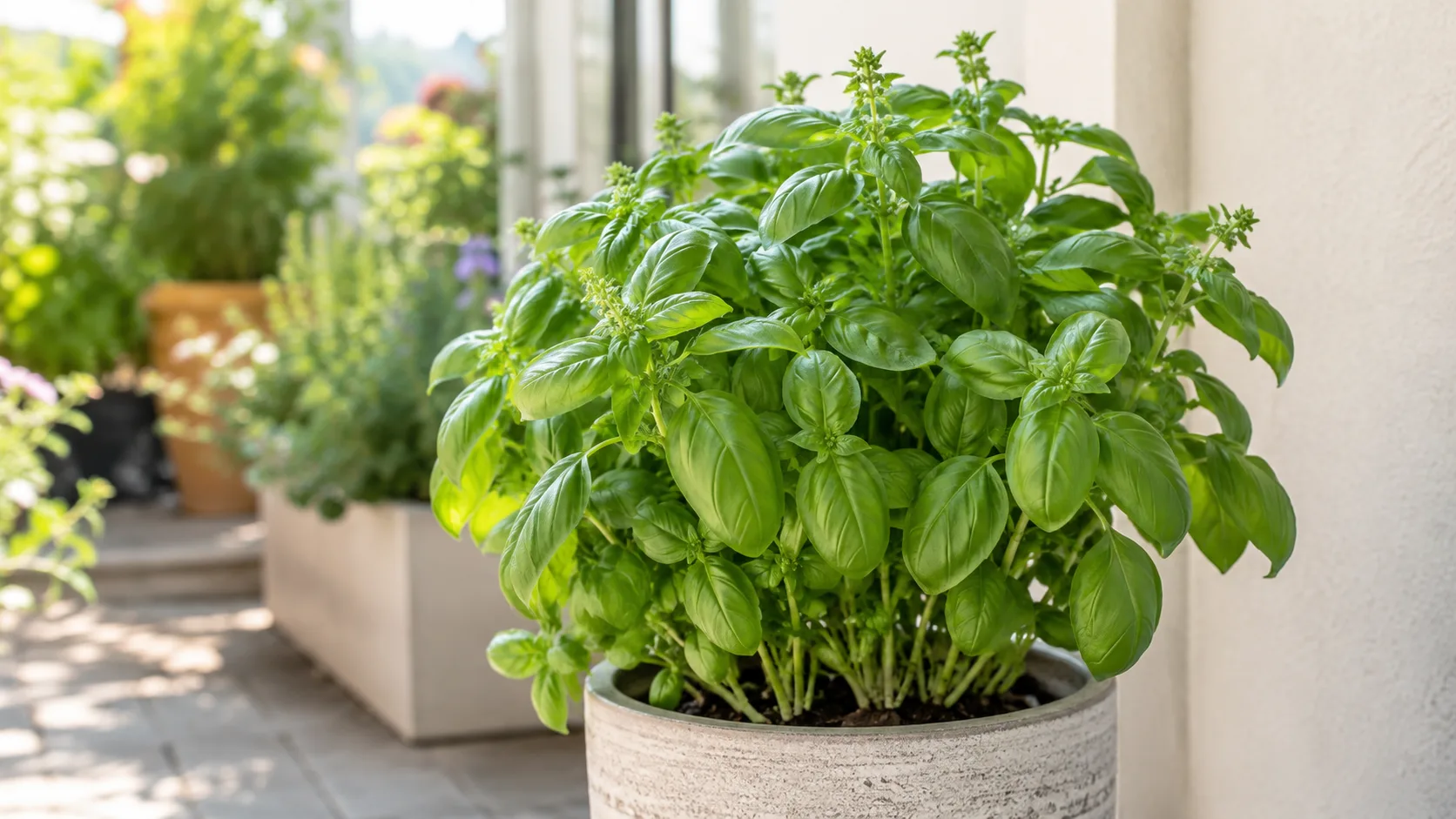
Growing basil in pots works well on a patio, balcony, or bright windowsill because you can move the plant to manage light and temperature. The trade-off is that a container holds a limited amount of water and root space, so pot size, drainage, and placement make a bigger difference than they do in a garden bed.
For a dependable start, grow one standard basil plant in a pot at least 8 inches wide and deep; a 10- to 12-inch pot is more forgiving in summer. Use fresh container mix, give the plant strong light and warmth, and water when the root-zone mix begins to dry rather than following a fixed calendar. Then pinch stem tips above leaf pairs so the plant branches instead of stretching into one tall stalk.
The quick setup for container basil
| Decision | Good starting point | Adjust when |
|---|---|---|
| Pot | 8 inches wide and deep minimum; larger for vigorous basil | Choose a roomier pot for Genovese or a hot, windy site |
| Plants | One full-size plant per small pot | Use a larger trough and allow space between plants |
| Mix | Fresh, free-draining potting mix | Replace dense or waterlogged mix |
| Light | About 6–8 hours of direct sun | Add afternoon shade in punishing heat |
| Water | Check the top inch, then water thoroughly | Check more often in small pots and hot weather |
Tip 1: Choose a pot that drains without drying too fast
The best basil pot is not one particular material. It is a pot with an open drainage hole and enough volume to keep the root zone evenly moist between checks. An 8-inch container is a practical minimum for one plant, while a larger container buffers the fast wet-dry swings that can make small patio pots stressful to manage. The RHS basil guide gives 20 centimeters (about 8 inches) as a minimum width and depth; for a vigorous sweet basil, choosing more room is a useful margin rather than a strict biological requirement.
Pick pot size and material for your variety
For most cooks, one Genovese or sweet basil plant in a 10- to 12-inch pot is easier to water and harvest than several plants crowded into one small container. Compact Greek or bush basil can suit a smaller pot, while large-leaved types need room for their broader canopy. In a trough or wide planter, leave enough space that leaves do not form a packed, damp canopy; a little crowding saves space but makes airflow and watering harder to manage. Epic Gardening’s container guide likewise emphasizes drainage and room for mature plants.
Pot material changes the maintenance, not the basil’s basic needs. Unglazed terracotta loses moisture through its walls and can be useful in a cool, wet location, but it dries quickly on a sunny balcony. Plastic and glazed ceramic hold water longer, which helps in heat but makes it easier to overwater when the weather turns cool. Fabric pots drain freely but can dry from their sides; use a larger one or check it more often in hot, windy weather.
Fill it with a loose, container-ready mix
Use a potting mix made for containers rather than digging up garden soil. Garden soil can compact in a pot, reducing the air spaces roots need after watering. A fresh vegetable or herb mix provides a lighter starting point; if the bag already contains fertilizer, note how long that feed is intended to last before adding more.
Check the pot before filling it. Water should pass through the drainage hole, and the hole should not sit flat against a sealed saucer. You do not need a gravel layer at the bottom: it takes away root space without fixing a blocked hole or dense mix. If you use a decorative outer pot, lift out the nursery pot to drain after watering and empty any standing runoff.
Tip 2: Give basil warmth and enough direct light
Basil grows best in warmth and strong light. The Penn State Extension basil guide and Joe Gardener’s growing guide both describe roughly six to eight hours of sun as a useful outdoor target. If a plant becomes tall with long gaps between leaf pairs, it usually needs more usable light; adding fertilizer will not make a dim spot bright.
Outdoors: wait for warm nights, then acclimate
Do not rush a basil pot outdoors after a cold spring night. Wait until frost danger has passed and nights are staying around 50°F or warmer; warm soil helps roots establish and seeds germinate. Penn State Extension recommends waiting for soil to warm to at least 60°F for planting. If you started the plant indoors or bought it under cover, move it outside gradually over about a week: begin in a sheltered, lightly shaded place, then increase its time in direct sun.
Choose the sunniest sheltered position you can manage, but treat reflected heat as a separate factor. A dark pot on hot paving beside a south- or west-facing wall can become much hotter than the air. In hot climates or a heat wave, give basil morning sun and light afternoon shade rather than leaving it in deep shade all day. If leaves bleach or develop crisp patches on the exposed side, reduce the harshest afternoon exposure and check soil moisture before watering.
Indoors: plan around the window you actually have
A bright kitchen label does not guarantee enough light at plant height. Observe the pot’s direct sun over the day; a nearby tree, building, screen, or winter sun angle can cut the usable light sharply. Put basil at the brightest practical window, rotate the pot occasionally so growth does not lean in one direction, and add a grow light if winter days are short or stems keep stretching.
Indoor basil also needs airflow without cold drafts. Keep leaves from touching cold window glass and do not place the plant directly in a hot, dry heating or air-conditioning stream. A sunny window can support a useful crop, but there is no reliable year-round harvest if the room is cool and light is weak. The plant may slow down or flower; a fresh sowing or rooted cutting is often easier than trying to preserve an exhausted plant indefinitely.
Tip 3: Start with seeds or divide crowded plants carefully
Basil is easy to raise from seed, and seeds let you choose a compact variety that fits the pot you own. Buy a small starter if you want leaves sooner, but inspect the plant for firm stems, fresh growth, and roots that are not packed into a soggy, sour-smelling plug. Either path works if the plant has warmth, light, and room to establish before a heavy harvest.
Sow seeds shallowly and thin seedlings early
Sow basil indoors in a small pot or cell using damp seed-starting or potting mix. Press seeds into the surface and cover them lightly, around a quarter inch; warm soil near 70°F helps them germinate. Keep the mix moist while seeds sprout, not saturated. When seedlings have several true leaves, keep the strongest one in each small cell or move them gently into their own pots. The RHS recommends successive small sowings a few weeks apart to spread the harvest.
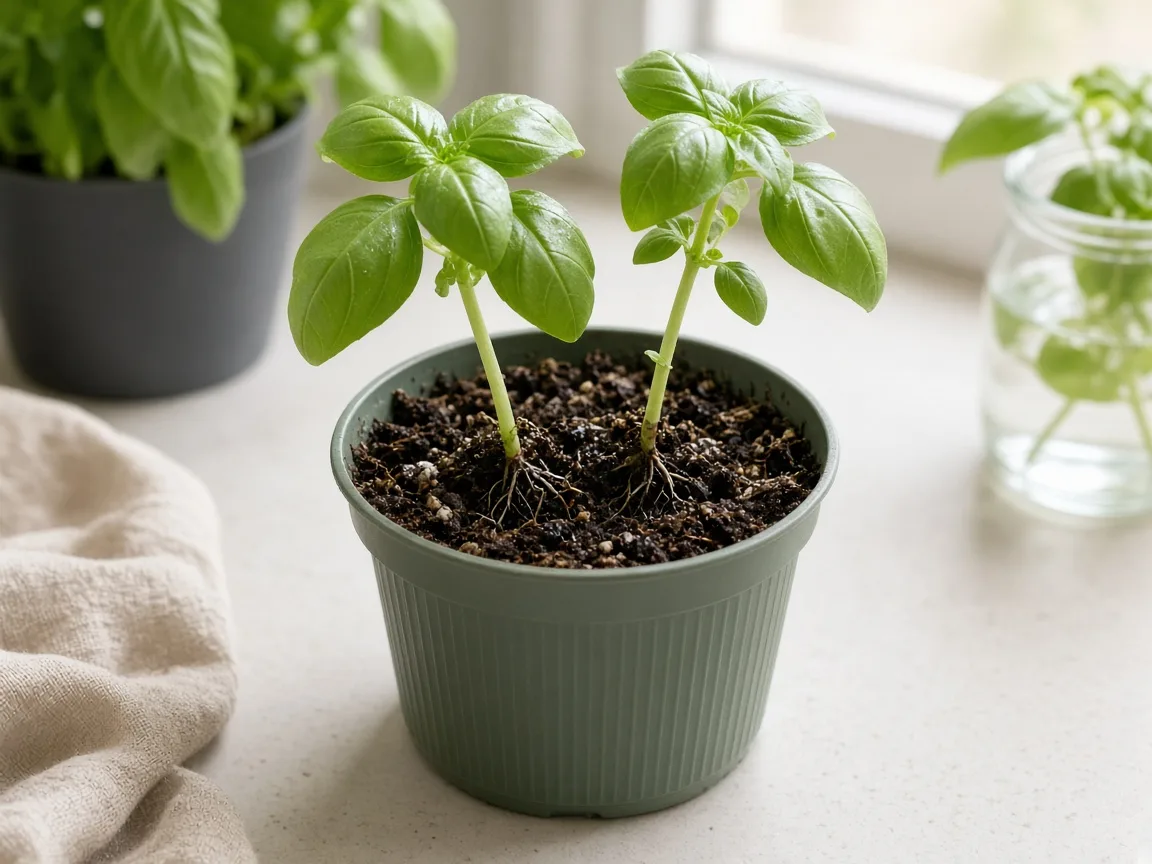
Supermarket basil is a different case: a small retail pot may hold many young plants packed tightly together. The BBC Gardeners’ World basil guide explains that these plants are often crowded and have a weak rootball. Water the pot first, ease the clump out, and separate it only as much as the roots allow. You can divide it into a few small clumps, each in its own pot, instead of teasing every fragile seedling apart. If the roots are tightly tangled, keep the clump intact and treat the basil as a short-term harvest while starting seed separately.
After repotting, water the mix through and let it drain. Give the plant a few days of bright shelter while disturbed roots settle, then move it toward stronger sun gradually. Do not fertilize immediately: fresh mix may already contain feed, and roots that have just been separated need steady conditions more than a nutrient boost. If you want to compare starting methods in more detail, see the guide to growing basil from cuttings.
Tip 4: Water by moisture, then feed modestly
Basil wants consistent moisture, not permanently wet soil. The right interval changes with pot size, material, sun, wind, rainfall, root density, and how many leaves the plant is carrying. The RHS advises keeping container-grown basil evenly moist; that does not mean leaving the pot in a saucer of water.
Adjust the check for weather and pot material
Push a finger about an inch into the mix. If that layer is dry and the pot feels lighter than it did after watering, water slowly at the soil line until excess runs from the drainage hole. Let the pot finish draining before putting it back in a cachepot or saucer. If the mix is still damp, wait and check again later; drooping leaves alone are not proof that the plant needs another drink.
During hot, windy weather, check an outdoor pot daily, especially if it is small, terracotta, or fabric. “Check daily” is not the same as “water daily.” A larger glazed pot after rain may stay moist for several days, while a small black pot on concrete may need a thorough drink much sooner. Indoors, the same pot may dry slowly because the air is cooler and wind is absent. Water at the base in the morning when possible so foliage dries quickly, and avoid splashing leaves repeatedly.
Feed only when the plant needs it. If your potting mix includes a starter or slow-release fertilizer, follow the bag’s feeding window before supplementing. If growth slows after the initial feed is used and the plant has enough light and root space, apply a balanced liquid fertilizer according to its label; Penn State notes diluted feeding for container basil during active growth. Avoid repeated heavy doses. Excess fertilizer cannot compensate for weak light or waterlogged roots and may produce soft growth rather than a sturdier plant.
Tip 5: Pinch above leaf pairs and harvest in stages
Pinching controls the shape of basil while giving you leaves to use. A basil stem has pairs of leaves at nodes. When you remove the growing tip just above a healthy pair, buds in those leaf joints can grow into side branches. Cutting only the lowest leaves gives you a small harvest but leaves the central tip in charge, so the plant is more likely to keep stretching upward.
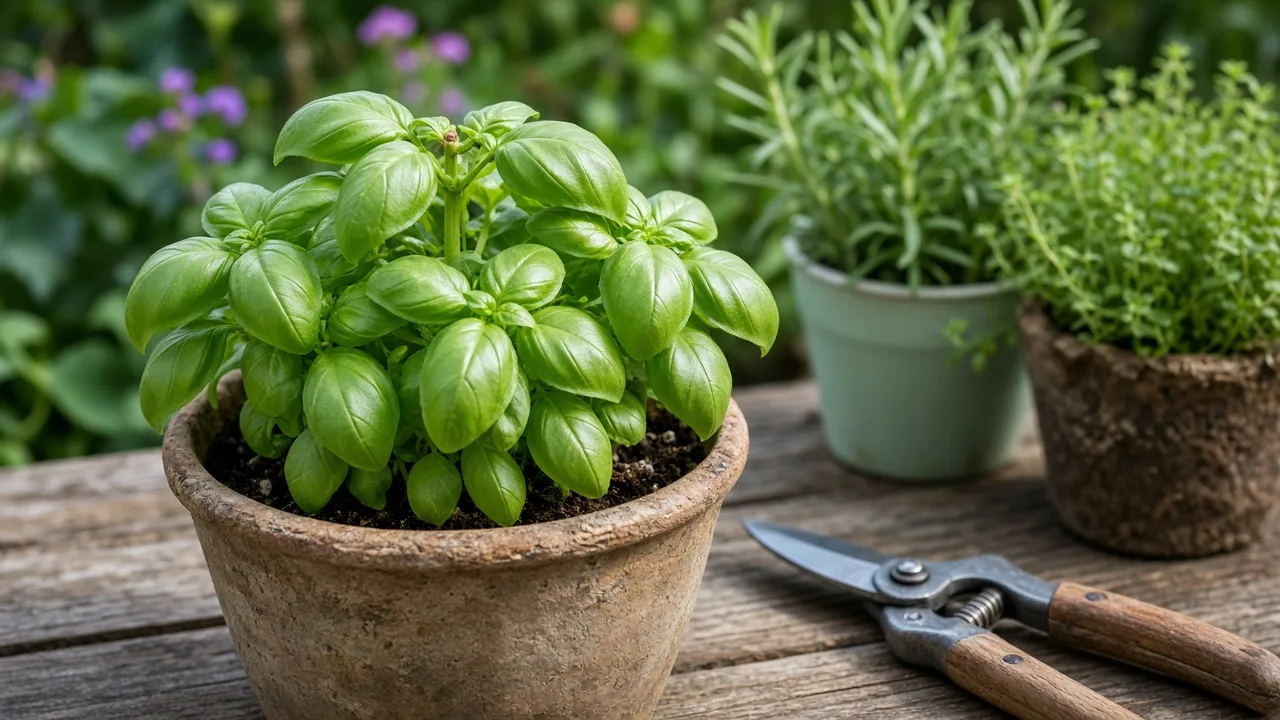
Wait until a young plant has several pairs of true leaves and is growing steadily before making the first shaping cut. Use clean scissors or pinch the soft tip just above a leaf pair. As side stems grow, repeat the cut on the longest shoots. For an established plant, remove no more than roughly one-third of its leafy growth in one session; take less if it was recently repotted, is heat-stressed, or has only a few strong branches. Penn State Extension describes repeated pruning above leaf pairs as a way to maintain branching growth.
Keep flower buds in check without stripping leaves
If you are growing basil mainly for foliage, remove flower spikes as soon as you notice them, cutting back to a healthy leaf pair rather than plucking off just the flower head. Flowering is a normal part of the plant’s life cycle, not a disease, and pinching delays rather than permanently prevents it. As the plant ages or days shorten, it may flower again even with regular care.
You do not have to remove every flower. If you have several plants, leave one to bloom for pollinators or to produce seed while you keep the others in leaf. Take harvests from the top and leave several healthy leaf pairs on each stem. For a large kitchen harvest, cut several stems across the plant instead of stripping one branch bare. The Joe Gardener guide and our own basil harvest guide describe the same basic principle: cut above a node so the plant has growth points below the harvest.
Extend the season with succession sowing or cuttings
Basil is a tender warm-season herb, commonly grown as an annual. A pot makes it easier to bring the plant inside before cold weather, but moving it indoors does not remove the need for warmth and bright light. If the plant declines or repeatedly flowers, replace it rather than expecting a tired stem to produce an endless crop.
For steady leaves, start a few new seeds every few weeks during the warm growing season, or root a healthy nonflowering stem in water. Remove lower leaves from a cutting, keep the leafless stem section submerged, and pot it into fresh mix after roots develop. The RHS propagation advice describes this water-rooting method. Cuttings give you a clone of the parent plant; seedlings give you the chance to try another variety. Before a forecast frost, harvest sound leaves and freeze them whole or chopped with a little water or oil. Basil often loses texture in the refrigerator, so use fresh leaves promptly or freeze what you cannot eat.
Diagnose weak growth before adding fertilizer
Tall, sparse basil usually needs stronger light, more frequent tip pinching, or both. Move the pot to a brighter position gradually and cut long stems back above healthy leaf pairs. If growth is slow but compact, check that the pot is not root-bound and that nights are warm enough; fertilizer is a later adjustment, not the first answer.
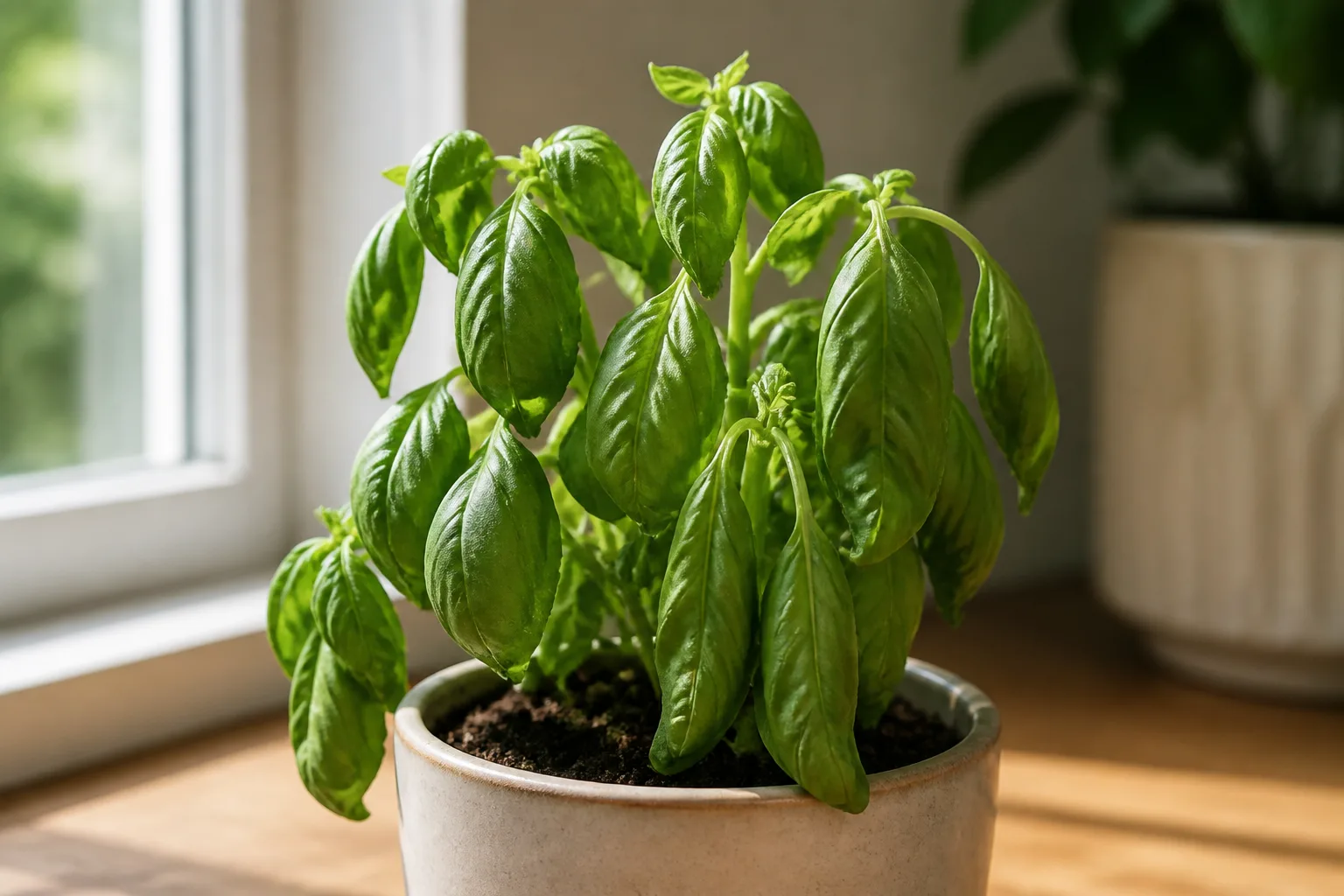
For drooping basil, feel the mix before watering. Dry mix and a light pot point toward thirst; a heavy pot with wet mix suggests poor drainage or roots short of air. A plant that wilts in intense afternoon heat but perks up later may need less reflected heat rather than more water. The related basil wilting guide walks through those checks.
If lower leaves yellow and the undersides show gray-purple fuzzy growth, consider downy mildew rather than treating the plant as simply thirsty. Penn State Extension describes that symptom pattern and recommends avoiding overhead watering and maintaining sunlight and air movement. Remove badly affected plants and do not crowd new pots in the same humid corner. For ordinary leaf damage, check both leaf surfaces for insects and remove damaged material; avoid spraying a culinary herb with a product unless its label allows use on edible crops.
Conclusion
The most reliable container basil setup is a roomy pot with drainage, fresh potting mix, warm conditions, and as much direct light as your climate allows. Start with one plant in a pot at least 8 inches wide and deep, then choose a larger container if you want a full-size basil that is less sensitive to rapid drying.
Keep the mix evenly moist by checking it rather than watering on a schedule. Pinch stem tips above leaf pairs, harvest moderately, and start a replacement before the original plant declines. Those simple choices make fresh basil manageable in a small outdoor space or a genuinely bright indoor spot.



