How to Stop Basil From Wilting All Summer
Stop guessing at a wilting basil plant. Use a soil-and-timing check, then fix watering, heat, drainage, transplant shock, or disease.
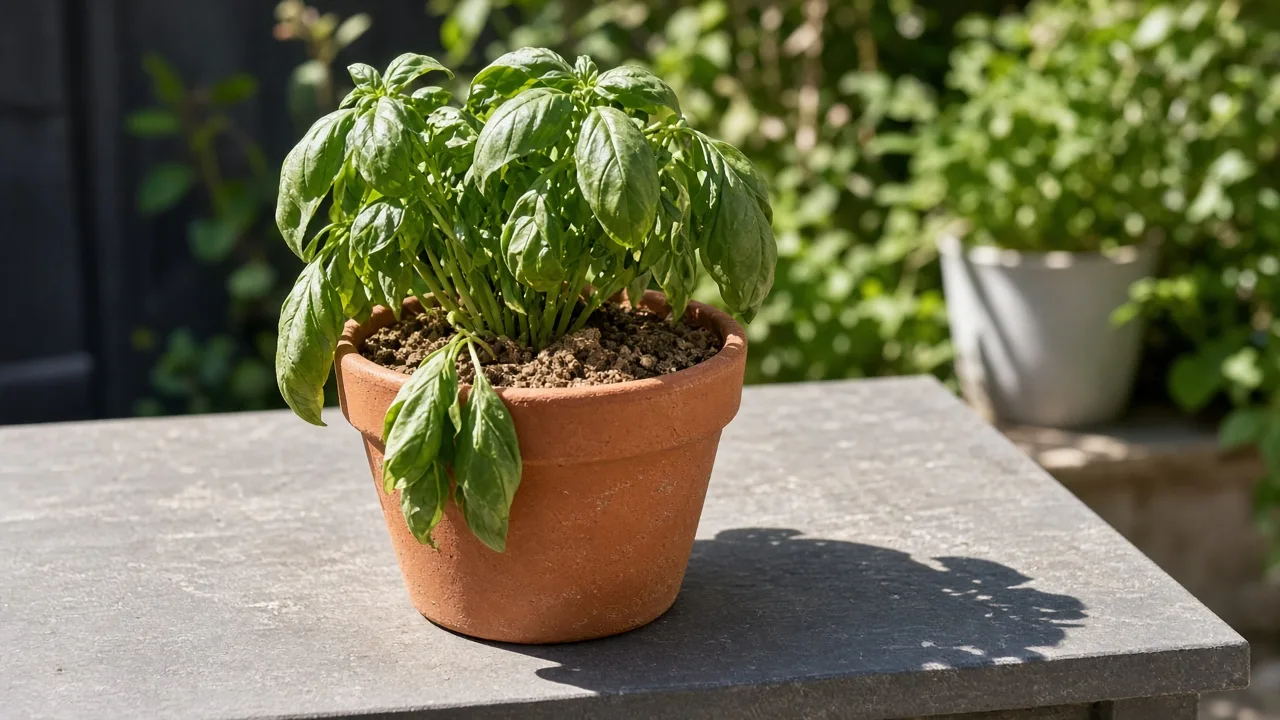
A wilted basil plant needs a diagnosis before it needs another drink. Check the soil about an inch below the surface, note whether the collapse happens only in afternoon heat, and inspect the stem base before you water. Dry soil usually calls for a thorough soak; wet soil usually calls for more air around the roots, not more water.
That distinction is what keeps a rescue from turning into a spiral. Basil (Ocimum basilicum) has soft, water-rich leaves, so it can look dramatically collapsed after a short dry spell. The same plant can also wilt while sitting in saturated mix because damaged roots cannot take up water normally. The Royal Horticultural Society describes basil as a tender annual or short-lived perennial for full sun and moist but well-drained soil—the “moist” and “well-drained” parts have to work together. (RHS plant profile)
The First Question: Is the Soil Dry or Wet?
Wilting tells you that the leaves are losing firmness, but it does not tell you why. A plant stays upright because water-filled cells maintain turgor pressure; when water leaves the leaves faster than the roots replace it, stems and foliage droop. In dry mix, the supply is missing. In waterlogged mix, oxygen is missing and the root system may be failing.
This is why a calendar such as “water every other day” breaks down. A basil plant in a small black pot on a hot balcony may need a check every day, while the same plant in a mulched bed after a rainy week may need no extra water at all. Gardenish makes the useful practical split plainly: dry-soil wilt needs water, while damp-soil wilt needs a root-zone fix. (Gardenish)
Dry Soil and Fast Rebound Point to Thirst
Underwatered basil often collapses quickly. The leaves may feel thin or papery, the pot feels unusually light, and the mix can pull away from the container wall as it shrinks. If you water the root ball thoroughly and the stems begin to lift within a few hours, that quick improvement is strong evidence that the plant was thirsty rather than suffering from root rot.
Do not confuse a dry surface with a dry root ball. A crusted top can form while the lower mix is still moist, especially in a deep pot or shaded indoor room. Push a finger into the mix near the edge of the pot, or use a wooden skewer and read the moisture along its lower inch. The decision should come from the root zone, not from the color of the top layer alone.
Repeated drought is harder on basil than a single missed watering. Leaves that have turned crisp will not become soft and green again, and a plant that repeatedly dries out may slow down even after it is watered. Your aim is not to keep the surface permanently wet; it is to stop the root zone from swinging between bone dry and flooded.
Wet Soil and Lingering Wilt Point to Root Trouble
Overwatered basil can look just as limp as thirsty basil, but the pot is heavy and the mix remains wet. Leaves often look soft, dull, or yellow rather than thin and crisp. If the plant remains wilted overnight after watering, do not keep watering in the hope of forcing a recovery; inspect drainage and the roots instead.
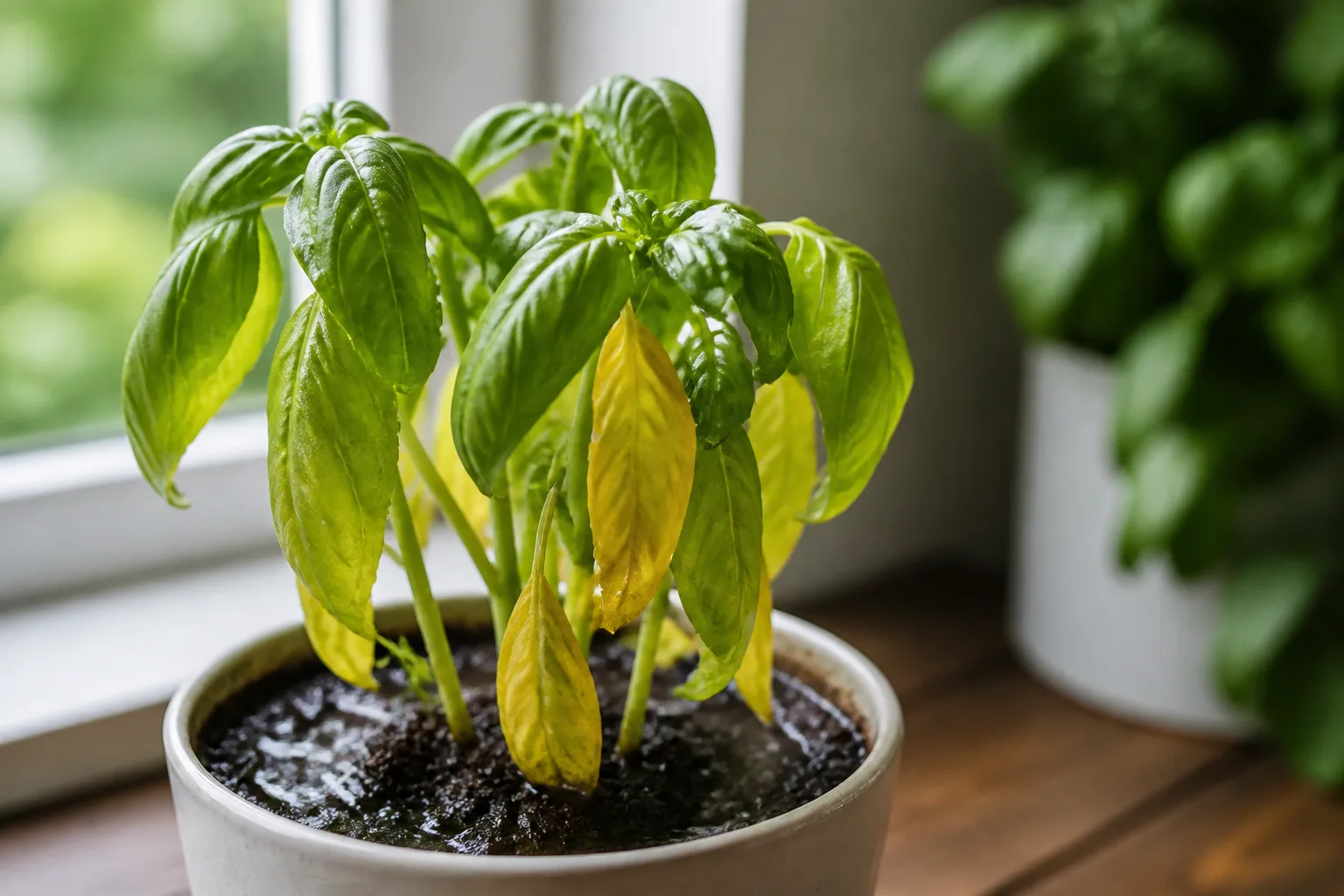
Waterlogged soil contains less air. Purdue’s Vegetable Crops Hotline explains that roots in saturated soil stop functioning normally because oxygen is displaced, and root damage can continue even after the surface begins to dry. (Purdue University on waterlogged soils) A wilting plant with a wet root ball is therefore not proof that the roots need more water. It is often a sign that they cannot use the water already present.
The Two-Minute Wilt Check
Before changing light, fertilizer, pot size, and watering all at once, gather four clues. This short check gives you a sensible first action while preserving the evidence you need to judge whether that action worked.
Test Moisture at Root Depth and Inspect the Pot
First, feel the mix one knuckle down in at least two places. If the upper inch is dry and the lower mix feels dry as well, water. If the upper inch is damp, wait and check farther down; if the entire root zone is wet, pause watering. In a garden bed, scrape aside mulch and feel the soil several inches down near the plant rather than judging from the surface.
Next, confirm that a container has an actual drainage hole. A nursery pot placed inside a decorative cachepot is fine only if excess water can leave the inner pot and the outer pot is emptied. A hole that is blocked by compacted mix, a saucer that stays full, or a cachepot that traps runoff can keep basil roots wet for days.
Finally, lift the pot. A very light pot plus shrinking mix supports the dry-soil diagnosis. A heavy pot with a sour smell, algae, or constantly glossy soil points toward poor drainage or excessive irrigation. White crust on the soil or rim can also signal fertilizer salts; Connecticut Agricultural Experiment Station lists soluble-salt injury as a root problem that can resemble root rot. (Connecticut Agricultural Experiment Station)
Compare the Time of Day With the Recovery Pattern
If basil droops in the hottest part of the afternoon and lifts again in the evening, heat and transpiration are likely contributing. Gardenish uses that evening recovery as an important clue: temporary heat wilt is different from a plant that stays limp through dusk and the next morning. (Gardenish)
Look at the direction of the stress, too. A pot against a south- or west-facing wall, on concrete, or inside a dark container can heat the root zone far more than the air temperature suggests. Wind also increases water loss. A bed plant with damp soil may simply be conserving water during the afternoon; a small pot with dry soil may be in a genuine emergency.
The last clue is the stem base. Firm green stems and flexible leaves suggest a reversible stress. A dark, soft, or pinched stem at the soil line is a warning that watering adjustments alone may not save the plant. Separate that pot from other basil while you inspect it so wet soil, insects, or disease do not spread unnoticed.
Fix Dry Basil Without Adding More Stress
Move a severely wilted container out of the hottest direct afternoon sun for the first recovery period, but do not put it in a dark room for days. The goal is to reduce the immediate water demand while the roots rehydrate. A bright, sheltered spot with gentle light and air movement is a better temporary location than deep shade.
Water slowly at the soil surface until the entire root ball is wet and a little water exits the drainage hole. If water races down the side and out immediately, the mix may have become hydrophobic. In that case, water in two or three passes a few minutes apart, or set the pot in a shallow basin of room-temperature water until the mix begins to absorb from below; then let it drain completely. Do not leave the pot standing in water.
Return the pot to its normal growing position once the leaves have regained some firmness. Remove only leaves that are fully brown, black, or collapsed, and leave healthy green leaves in place. Cutting away a large amount of foliage during a drought removes the plant’s remaining photosynthetic capacity and can create another shock.
Do not fertilize a badly wilted plant as a rescue. Fertilizer does not repair drought-damaged roots, and concentrated salts can add stress when roots are already struggling. Wait until new growth is firm and the soil is cycling normally, then use a modest, label-directed feeding if the plant needs it.
Build a Watering Rhythm That Changes With the Weather
There is no universal basil watering schedule. Use a schedule as a reminder to check, not as permission to water automatically. Temperature, wind, rainfall, pot size, pot material, root density, mulch, and the amount of foliage all change how fast basil uses and loses water.
Garden-Bed Basil Needs Deep, Infrequent Soaks
In-ground basil usually has a larger soil reservoir than container basil. Water at the base when the upper few inches of soil have dried, applying enough to wet the root zone rather than sprinkling the surface every day. A slow hose, soaker line, or drip emitter is easier to aim than a high-pressure spray.
RHS recommends growing basil outdoors in a sheltered, full-sun position with moist but well-drained soil, and its cultivation guidance emphasizes the balance between moisture and drainage. (RHS cultivation guidance) In practice, a hot, windy week may require more than one deep watering, while recent steady rain may mean you should skip irrigation. Push aside mulch and check before acting.
Apply a thin, even layer of clean organic mulch around the plant, leaving a small gap around the stems. Mulch slows evaporation and buffers the soil temperature, but it is not a cure for a wet site. If the bed drains poorly, adding more mulch can keep the root zone wet longer; solve the drainage problem first.
Water in the morning when possible. It gives leaves any accidental splash time to dry and lets you see how the plant responds during the day. If the soil is damp and the plant wilts only in the afternoon, do not add water just to make the midday leaves look upright.
Container and Indoor Basil Need More Frequent Checks
A container can move from adequately moist to dangerously dry faster than a garden bed because the root ball is small, exposed on all sides, and often warmed by the pot itself. Check a patio container daily during a heat wave, but water only when the root-zone test says it needs water. A small six- to eight-inch pot in full summer sun may need water much more often than a larger, shaded, terracotta pot.
Use a free-draining potting mix rather than dense garden soil. Choose a container with a drainage hole and enough volume for the plant’s roots and top growth; an oversized pot is not automatically better because a large mass of mix can stay wet around a small root ball. Terracotta can dry faster, while glazed ceramic and plastic often hold moisture longer.
Indoor basil needs strong light and careful spacing from hot glass. Air conditioning, a sunny sill, or a grow light can change the rate of dry-down. Check the plant at the same time each morning for a week, record whether the top inch is dry, and adjust from what the pot actually does rather than copying an online interval.
Bottom-watering can help a severely dry, compacted root ball rehydrate evenly, but it is not a magic replacement for drainage. Set the pot in a shallow amount of water for a limited period, remove it when the mix is evenly moist, and allow excess water to drain. For routine care, top-water at the soil line until runoff is often simpler and lets you flush accumulated salts.
Protect the Root Zone From Soggy Soil and Salt Buildup
If basil is wilted in wet soil, stop watering long enough for the root zone to begin drying and make the container drain. Empty the saucer, clear the hole, and move the pot where air can circulate. If the mix is dense or the container lacks a hole, repot into fresh, well-drained potting mix only after you have a suitable container ready.
Unpot a persistently wet basil gently. Healthy roots are usually light-colored and firm; rotted roots are brown or black, soft, and may pull apart. Trim only tissue that is clearly dead with clean scissors, keep the remaining root ball as intact as possible, and settle it into barely moist fresh mix. Do not water on a calendar immediately after repotting; wait until the upper layer begins to dry and the plant is stable.
Salt buildup can burn roots and create symptoms that look like a moisture problem. If the plant is otherwise sound and the mix drains freely, a thorough flush with plain water can carry soluble salts out of the pot, followed by complete drainage. If the plant is badly stressed or the mix is crusted and compacted, replacing the mix is safer. Reduce fertilizer while growth is slow or the plant is recovering.
Give Basil Enough Sun Without Baking the Pot
Basil is not a shade plant. RHS lists full sun as its position, and practical basil-growing guidance commonly aims for roughly six to eight hours of direct light. The adjustment is that a newly purchased plant, a recently moved indoor plant, or a plant in a reflective heat pocket may need gradual exposure rather than an instant jump from a dim store shelf to all-day afternoon sun.
Use morning sun and filtered or lightly shaded afternoon exposure during an extreme heat wave if the soil is moist but the plant repeatedly collapses. Move a container a few feet from a hot wall, raise it off scorching concrete, or use a light-colored outer pot to reduce root-zone heat. A shade cloth can reduce intensity without putting basil in deep shade.
Heat stress and thirst can occur together. If the soil is dry, water first; if the soil is moist, lower heat load and improve airflow instead. Brown, papery edges that worsen on the window-facing side suggest scorch or desiccation, while widespread yellowing in wet soil points more toward root dysfunction. Homes & Gardens also identifies irregular watering, root disease, temperature fluctuations, and transplant stress as overlapping causes, which is why the context around a symptom matters. (Homes & Gardens)
Prune and Harvest for Stronger Regrowth
Harvesting is part of basil care, not an afterthought. Letting a tall plant carry too much top growth while its root zone repeatedly dries can make a small container collapse faster. Regular, moderate harvests keep the plant compact and reduce the temptation to remove a huge handful all at once.
Cut or pinch just above a pair of healthy leaves. That node can produce two new branches, which creates a bushier plant over time. Remove flower buds when your priority is leaf production; RHS specifically recommends pinching out flowerheads to promote further leaf growth. (RHS plant profile)
Do not strip more than about one-third of an established plant in a single harvest, especially during a hot or dry spell. Harvest from several plants when possible, and water according to the soil rather than automatically watering heavily after every cut. The plant still needs enough leaf area to rebuild, and wetting already-moist soil after pruning can push a stressed root system toward rot.
If a plant has wilted once from thirst and still has firm green stems, wait for it to rehydrate before pruning heavily. Remove dead leaves first, then take a small shaping cut after new growth resumes. If the plant has root rot, pruning the top cannot compensate for a collapsing root system; take a healthy cutting as insurance only if the stem and leaves are disease-free.
Reset Store-Bought or Recently Transplanted Basil
Many grocery-store basil pots contain multiple seedlings packed tightly into one small container. The foliage makes the pot look full, but crowded roots compete for limited water and the dense canopy dries unevenly. If the plant wilts repeatedly despite sensible watering, divide the clump during a cool part of the day, separate only as gently as the root mass allows, and pot the strongest portions into containers with drainage.
Newly transplanted basil may droop because roots were disturbed, the plant moved from protected production conditions, or the new site has more sun and wind. Keep it evenly—not constantly—moist while it establishes, protect it from the harshest afternoon exposure for several days, and increase outdoor exposure gradually if it came from indoors.
Avoid making three major changes in one afternoon. A large pot, heavy feeding, full sun, and repeated watering can create a bigger problem than the original transplant shock. Stabilize the root zone first, then adjust light and harvest as the plant begins to grow.
Rule Out Pests and Disease Before You Keep Adjusting Water
Watering fixes environmental wilt, but it cannot diagnose every basil disease. Inspect the undersides of leaves, the stem base, and neighboring plants. Look for patterned lesions, fuzzy growth, distorted new leaves, insects, or a decline that continues while soil moisture is appropriate.
Recognize Downy Mildew and Leaf-Spot Clues
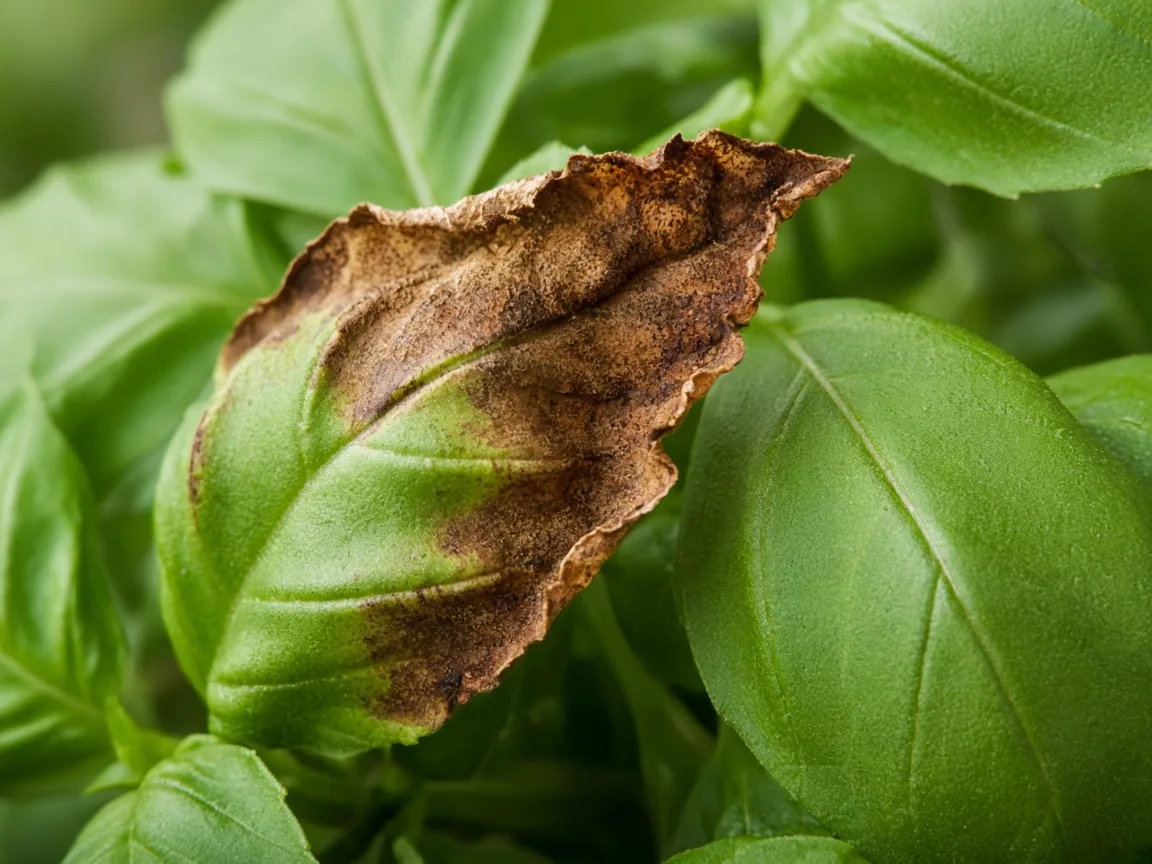
Basil downy mildew often starts as yellowing or browning on the upper leaf surface, while dark gray, purple, or brown sporulation appears underneath. NC State Extension notes that the symptoms can be mistaken for nutrition problems and that high humidity, extended leaf moisture, overhead irrigation, and crowded foliage favor the disease. (NC State Extension)
If the underside has visible dark growth or the disease is spreading, avoid wetting foliage and remove badly affected leaves or plants from the growing area. Improve spacing and airflow, water at soil level in the morning, and use clean seed and clean containers for future plantings. Cornell’s basil downy mildew guidance likewise emphasizes cultural controls such as reducing leaf moisture, increasing air movement, and choosing less susceptible material where available. (Cornell University Vegetable Program)
Brown or black spots alone do not prove downy mildew. Sun scorch, cold-water injury, physical damage, insects, and other leaf diseases can look similar. Photograph the whole plant and the underside of a fresh affected leaf, then use a local extension diagnostic service when the answer will change whether you keep a planting.
Recognize Root Rot and Fusarium Wilt Clues
Root rot is more likely when soil stays saturated, leaves yellow broadly, and the stem base or roots are soft, dark, or foul-smelling. A plant caught early may recover after damaged tissue is removed and the root zone is rebuilt, but a mushy stem base usually means the vascular connection is failing. Do not keep a hopelessly rotten plant beside healthy basil.
Fusarium wilt is a different problem. Connecticut Agricultural Experiment Station describes general or partial wilt, dark or water-soaked affected tissue, and discoloration in the plant’s water-conducting tissue; the pathogen can be seedborne and persist in soil. (Connecticut Agricultural Experiment Station) A plant that wilts persistently despite correct moisture, especially with one-sided decline or darkened stem tissue, should be treated as a disease suspect rather than repeatedly watered.
Remove confirmed or strongly suspected diseased plants and fallen tissue from the growing area; do not compost them unless your composting system is designed to destroy pathogens. Use fresh potting mix, sanitize reusable containers, and rotate the location of future basil when soilborne disease is suspected. Resistant or less susceptible cultivars can reduce risk, but no label replaces good sanitation and careful inspection.
Your Simple Summer Basil Routine
Build the following routine around observations rather than a rigid calendar:
- Each morning, check the root zone. Feel about an inch down in a container or several inches down in a bed, after moving aside mulch.
- Water dry basil deeply. Wet the root ball evenly, wait for drainage, and empty the saucer. Recheck the plant later instead of watering again immediately.
- Do not water moist basil just because it droops at midday. Reduce reflected heat, add airflow, or provide afternoon protection and see whether it lifts by evening.
- Inspect the pot weekly. Confirm the hole is open, roots are not circling a cramped container, and no saucer or cachepot is holding water.
- Harvest lightly and often. Pinch above leaf pairs, remove flower buds, and avoid stripping a drought-stressed plant.
- Inspect leaves during every harvest. Turn over a few leaves and look for dark sporulation, spreading lesions, webbing, aphids, or distorted new growth.
- Adjust after weather changes. Check more often after a hot, windy day; check less often after rain or a cool cloudy stretch.
This rhythm catches the two common failure loops: dry soil → emergency wilt → shallow splash → repeat wilt, and wet soil → root stress → wilt → more water → faster decline. A mulch layer, a correctly sized pot, a drainage hole, and regular pinching all help, but none can replace looking at the soil before you reach for the watering can.
Conclusion
To stop your basil plant from wilting all summer, start with the root zone and the clock. Dry soil and a quick rebound call for a slow, thorough watering; wet soil and a lingering collapse call for drainage, oxygen, and a closer look at the roots. Afternoon-only wilt with damp soil is usually a heat-management problem, not a signal to keep adding water.
Keep basil in bright light, protect small pots from reflected heat, water at the base, mulch beds without burying stems, and harvest above leaf pairs before flowering takes over. When a plant does not respond to correct moisture—or shows dark roots, mushy stems, spreading lesions, or downy growth—stop treating it as ordinary thirst. That simple boundary is what gives healthy basil the steady conditions it needs to keep producing leaves from the first warm weeks through the end of summer.