How to Recover Hail-Damaged Plants in Your Tennessee Garden
After hail, triage plant and tree damage safely. Use a practical recovery timeline and UT Extension resources to decide what to keep or replant in Tennessee.
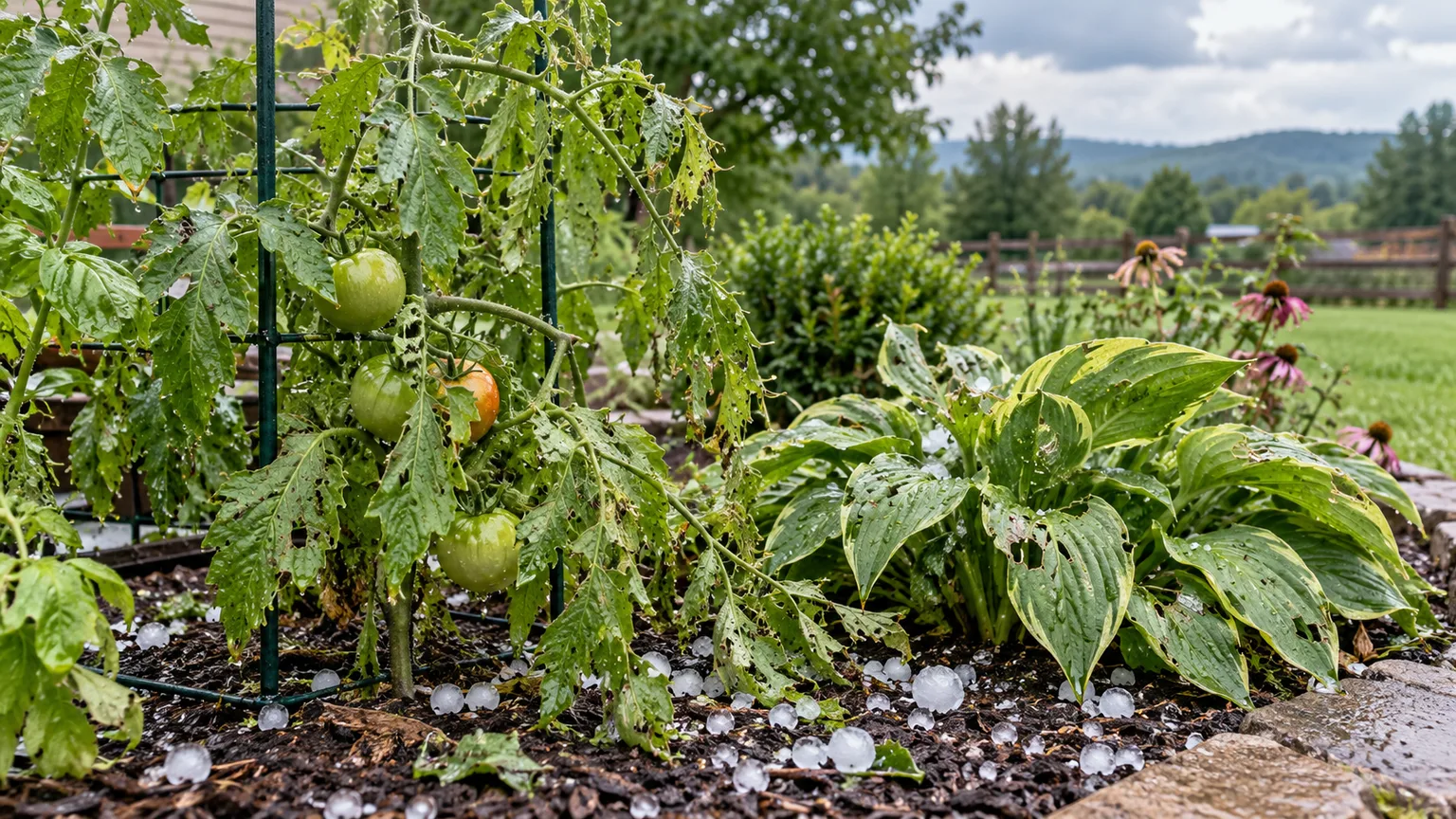
Hail can turn a healthy garden into a confusing mix of torn leaves, snapped stems, bruised fruit, and scattered branches in a few minutes. The most useful first move is to slow down. A plant that looks ragged may still have an intact crown and plenty of healthy growing points, while a branch that appears merely bent can be unsafe if it is hanging above a walkway.
Work from hazards to plant structure, then to watering and longer-term decisions. Do not strip every marked leaf or replace a whole bed before you know what is still growing. Weather injury can resemble pest or disease damage, and many plants recover without drastic treatment (RHS weather-damage guidance).
Start with safety and a quick garden survey
Wait until the storm has passed and lightning, strong wind, and falling debris are no longer an immediate risk. Do not approach a tree or limb touching a power line, and stay clear of cracked trunks, hanging branches, and unstable fences. A garden can wait; a suspended limb can shift without warning. If you have a safe view from indoors, take a few wide photographs before moving debris. They can help you remember what was damaged and show an arborist or Extension educator the original condition.
For a small garden, survey one bed at a time from a path. Note which plants have broken stems, which have only leaf holes or bruises, and whether soil has washed away or roots are exposed. Avoid walking through saturated beds. Footsteps squeeze wet soil, damage shallow roots, and make cleanup harder. If the yard also has fallen limbs or other storm hazards, use the site’s storm cleanup guide before handling debris.
Make a short list before pruning: hazards to leave alone, plants that need support, stems that are clearly broken, and plants that can wait for a second look. This keeps cleanup focused on the most important work.
Separate hail wounds from other damage
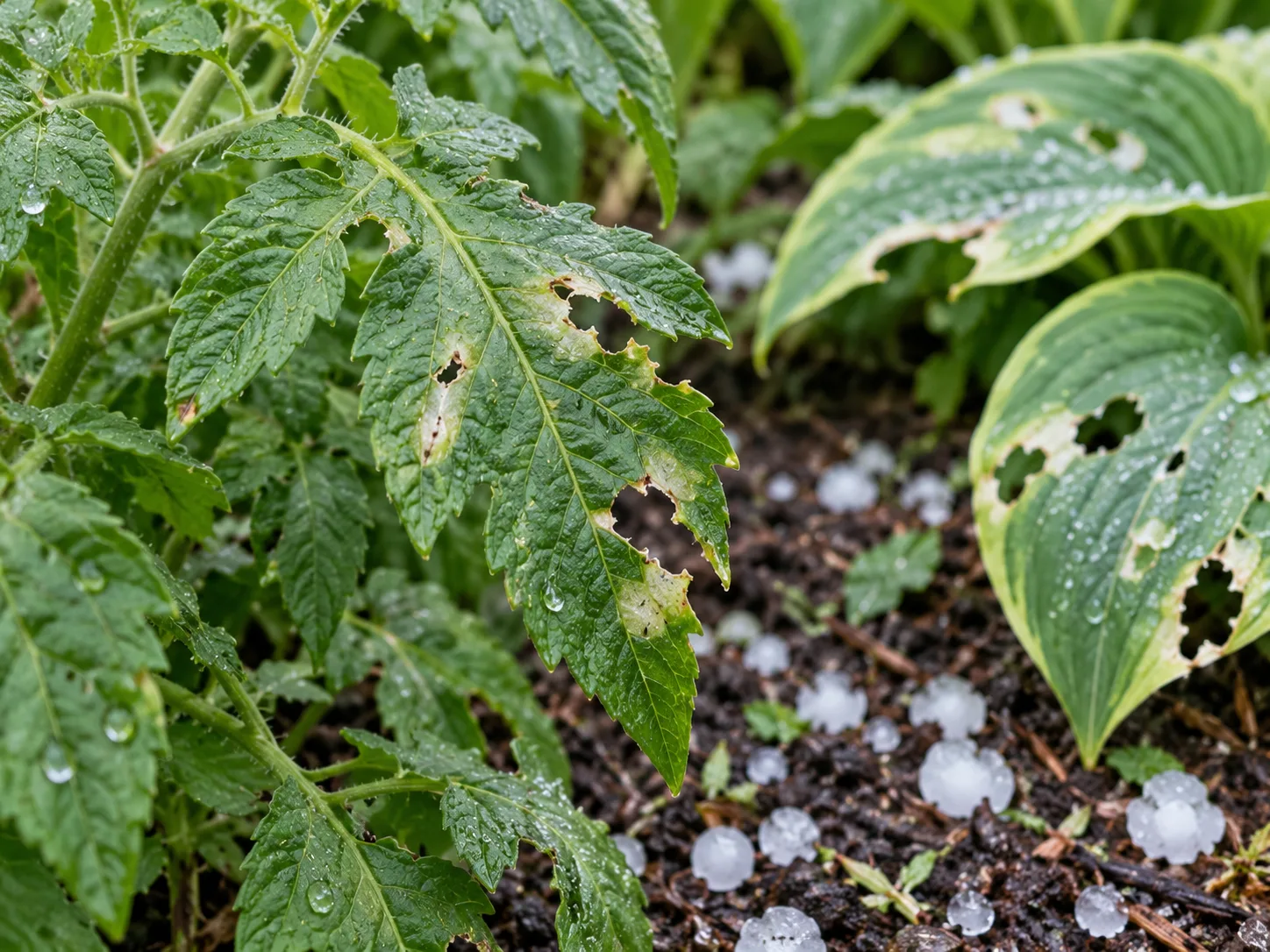
Hail often leaves repeated impact marks on exposed surfaces: holes, tears, bruises, and localized breaks. On vegetables, you may see ragged leaf edges, punctured foliage, split stems, or damaged fruit. Apple Extension describes hail injury on fruit, shoots, and limbs, which is a useful reminder to inspect more than the leaf surface when a fruit tree was struck (Extension Foundation’s apple hail-injury guide). The RHS also notes that weather damage can be confused with other problems, so consider the timing and pattern before diagnosing every hole as hail (RHS weather-damage guidance).
Compare the whole plant with nearby plants of the same kind. Fresh marks appearing after the storm suggest impact; older holes, sticky residue, webbing, chewed margins, or spreading spots may have another cause. A wound alone does not identify a pathogen or prove infection has started.
Focus on structural damage first. A leaf with a hole still has green tissue; a stem split through its length may no longer support the growth above it. If you are uncertain whether a stem is still attached and functioning, mark it or photograph it and revisit it after the plant has had time to respond. Avoid diagnosing a problem from one damaged leaf and applying a treatment before you know what you are treating.
Sort plants into recover, wait, or replace
Use three practical groups. Recover means the plant still has a stable base, living growing points, or enough undamaged foliage to continue growing. Wait means the plant is badly marked but not clearly dead; keep it in place and watch for new growth or continued decline. Replace means the plant has been uprooted, snapped below its growing point, or left with no viable crown or stem after inspection. This is a working triage, not a guarantee about survival.
The Maryland Grows article on hail in vegetable and other gardens recommends distinguishing between kinds of plants and the extent of injury rather than treating every plant the same way. Its guidance also emphasizes patient observation and basic care for the damaged garden (Maryland Grows / University of Maryland Extension). A tender annual with a severed main stem has different prospects from an established perennial with damaged leaves and an intact crown. A shrub with a few broken twigs is different from a tree with a split trunk.
Ask whether the base is firm, whether unbroken stems or buds remain, and whether the season is long enough for a replacement. Mark borderline plants and revisit them after a few days; firm shoots may keep growing while collapsing ones identify tissue to remove.
Clear debris without compacting wet soil
Remove loose hailstones, snapped plant pieces, and branches from paths so that you can move safely. Pick up debris by hand only when it is reachable without stepping into muddy beds or pulling on a plant’s remaining stems. Use gloves for sharp branches and broken stakes. Leave heavy limbs, twisted wire, and anything caught overhead for someone equipped to handle it.
Do not rake hard across damaged plants or drag a branch through a bed; either can tear attached tissue. Lift light debris in small sections. If soil is saturated, work from a path or wait until the surface firms to avoid unnecessary compaction around shallow roots.
If debris has covered a plant, uncover the growing point gently. Do not wash the whole bed with a high-pressure hose just to make it look clean; forceful water can lodge soil against wounds and flatten fragile stems. Clear what blocks airflow or covers leaves, then let the remaining foliage dry naturally. Put diseased-looking or rotting material aside rather than mixing it into compost if you do not know what caused it.
Reposition plants only when roots are exposed
Hail itself can flatten stems, but wind and runoff may also loosen a plant or wash soil away from its base. Check whether the root ball is actually lifted before pushing anything upright. If the roots are covered and the stem is still attached, a loose tie or temporary stake may support it. If roots are exposed, gently firm soil around the root zone and water enough to settle it, without packing the soil tightly.
Support a tomato, tall perennial, or young shrub with a stake placed outside the main root mass when possible. Use soft ties and leave room for the stem to move slightly; a tight wire or thin string can cut into tissue. Do not try to bend a stiff, broken stem back into place. Remove the broken portion cleanly if it cannot support itself, then support the intact growth below it. For ongoing tomato support and tie placement, see the site’s practical guide to staking tomato plants.
An uprooted annual may be replanted if its roots remain intact and the soil is workable. Firm soil around the roots, water, and provide temporary shade if it wilts in direct sun. If a plant is upright and not visibly loose, leave it undisturbed.
Prune broken stems, not every torn leaf
The temptation after hail is to make the garden look tidy by cutting away every leaf with a hole. Resist that urge. Green leaf tissue still contributes to the plant’s recovery, and ragged foliage by itself is not a reason to remove an entire shoot. Start with stems that are split, dangling, crushed, or unable to support their growth. Use clean, sharp pruners and cut back to a healthy branch, bud, or junction rather than leaving a long torn stub.
For small herbaceous plants, remove only tissue that is detached, badly crushed, or already collapsing. For woody shoots, make a clean cut at a natural branch junction when possible. Do not make large cuts just to restore a symmetrical shape. If a branch is under tension, too high to reach safely, or thick enough that the cut is beyond your tool or skill, stop and ask an arborist.
After removing a broken stem, step back and assess the plant again. The aim is stable, clean structure, not a bare plant. Gardening Know How discusses hail injury and recovery in garden crops, including the damage that hail can do to foliage and fruit; its examples are useful symptom context, but a home gardener should make cuts according to each plant’s structure rather than applying one crop-field response everywhere (Gardening Know How’s hail-damage overview). For tomatoes, keep useful side growth and learn the normal pruning choices in the guide to pruning indeterminate tomatoes.
Check fruit and vegetable crops separately
Inspect vegetables from the stem outward. A plant may have damaged leaves but an intact growing tip, or it may have a split main stem that changes how much harvest you can expect. On tomatoes, peppers, beans, and other fruiting crops, inspect fruit as well as foliage. Shallow surface marks do not automatically mean the whole plant is lost, but fruit with deep splits, crushed areas, or decay should not be left hanging where it can deteriorate and attract pests.
For apples and other tree fruit, check the fruit skin, shoots, and branches. Apple Extension’s hail article describes injury to fruit and tree growth, while the USDA Climate Hubs’ “Hail Know” resource discusses crop-stage assessment in an agricultural context (Apple Extension hail-injury guidance; USDA Climate Hubs hail resource). Field-crop decision tools are not a substitute for home-garden judgment: a commercial field may be assessed for yield, replant costs, or insurance, while a home gardener can keep a partly damaged plant for shade, pollinators, or a smaller harvest.
Harvest sound produce as it reaches normal maturity. Use promptly fruit that is clean, firm, and lightly marked; discard produce with deep open wounds, decay, or contamination you cannot safely remove. Recheck bruised fruit as the plant dries and inspect it before use.
Protect trees and shrubs from risky cuts
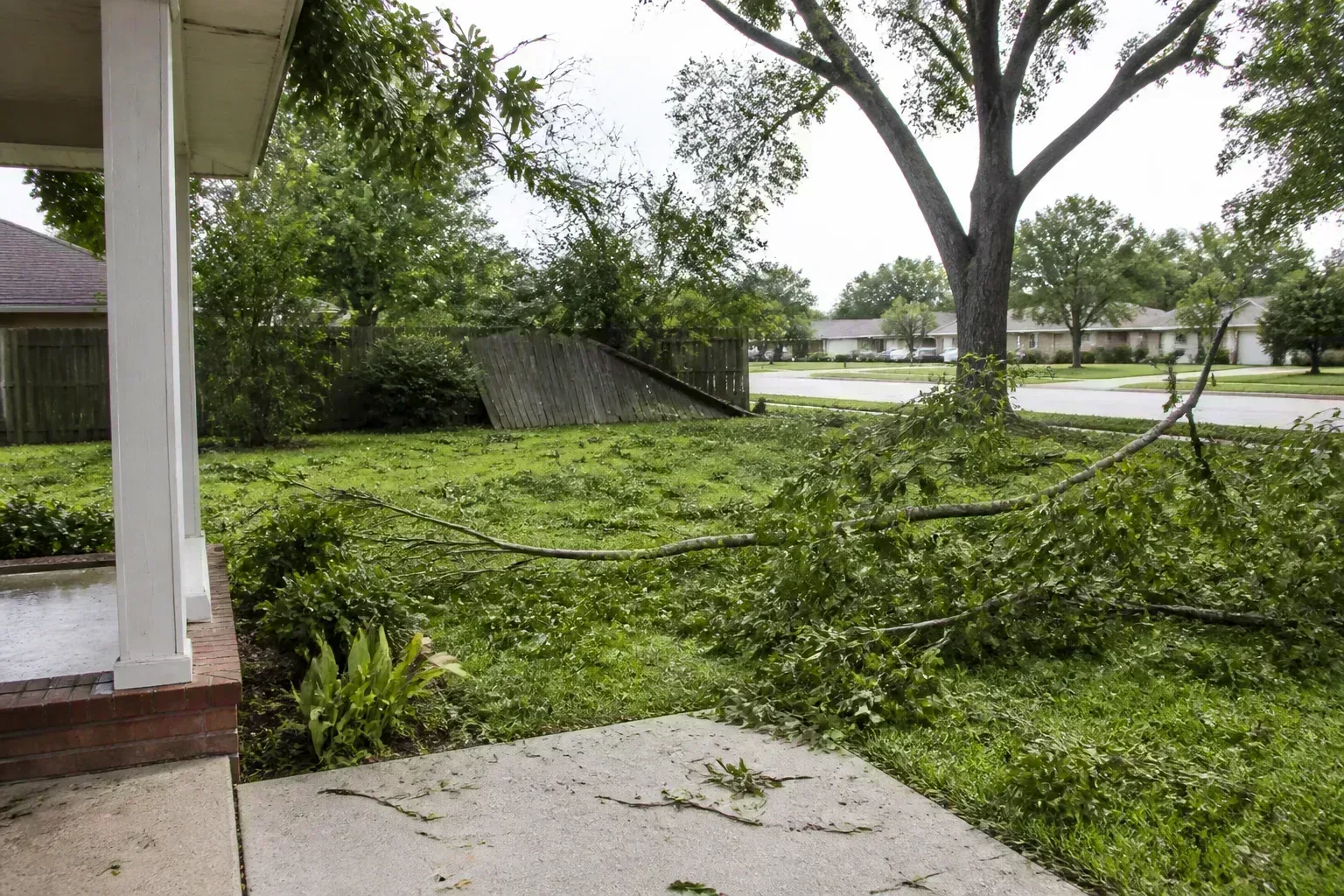
Woody plants deserve a separate safety check. Look for a split trunk, a cracked main limb, a hanging branch, a branch resting on a roof or fence, or a tree that has shifted at the root plate. Keep people and pets away from these areas. A tree can look leafy while still having a dangerous structural defect, and a damaged limb can fall during cleanup or a later gust.
For small twigs within reach, remove only broken pieces that can be cut safely without a ladder or a saw under tension. Avoid topping, flush cuts, and large corrective cuts made in haste. Better Homes & Gardens advises assessing the type and extent of storm damage before deciding what can be pruned or whether expert help is needed (Better Homes & Gardens tree-damage guidance). Penn State Extension similarly emphasizes safety and careful recovery for storm-damaged trees, including when to leave work to professionals (Penn State Extension storm-tree guidance).
If an evergreen shrub has lost a branch, do not shear the whole plant into a new shape on the same day. Identify the damaged branch and the live growth below it. The site’s arborvitae pruning guide explains selective branch removal for that specific evergreen; use it as species-specific pruning context, not as a substitute for an arborist when the plant is large or unstable.
Water to restore soil moisture, not to soothe damage
Hail may arrive with heavy rain, but the garden can still have uneven moisture: raised beds drain differently from low spots, containers can shed water, and a storm’s rain may not reach under dense foliage. Check soil with a finger or trowel near the root zone before watering. If it is moist, wait. If it is dry at root depth, water slowly at the soil line so it can soak in without washing soil away or keeping leaves wet unnecessarily.
Do not flood a bed because the leaves look wilted. Damaged leaves may droop even when the soil is already saturated, and more water can reduce oxygen around roots. The Maryland Grows hail article recommends attention to water and care after damage while warning against treating fertilizer as an automatic fix (Maryland Grows / University of Maryland Extension). The RHS also includes watering and maintaining plant health among general responses to weather injury (RHS weather-damage guidance). Use those ideas with the soil in front of you: moisture, drainage, and the plant’s normal needs should determine the next watering.
Once the ground is workable, a thin layer of mulch can help reduce moisture swings and keep soil from splashing onto low foliage. Keep mulch pulled back from stems and trunks. Do not bury a damaged crown or pile fresh mulch against a tree. The purpose is to moderate the soil environment, not to cover the evidence or force a stressed plant into rapid growth.
Hold fertilizer until plants resume growth
Fertilizer cannot mend a torn leaf or reconnect a split stem. Adding a strong dose immediately after hail may create another stress, particularly if roots are damaged or soil is already wet. Do not apply a “recovery” fertilizer simply because the plant looks battered. The University of Maryland Extension’s hail guidance specifically advises against fertilizing as an immediate response; let plants stabilize and watch for new growth first (Maryland Grows / University of Maryland Extension).
That does not mean a garden never needs nutrients. It means the decision should come from the plant’s normal schedule and, where appropriate, a soil test—not from the appearance of storm wounds. When new growth returns, follow the crop’s usual feeding plan and label directions. Avoid stacking compost, granular fertilizer, liquid feeds, and foliar sprays in an attempt to speed recovery; several treatments at once make it hard to tell what helped and can create excess salts or growth at the wrong time.
For a plant that does not recover, check its roots, water conditions, light, and growing season before assuming a nutrient deficiency. Nutrient problems usually do not explain fresh, repeated impact holes or snapped stems that appeared during a hailstorm. If symptoms continue to spread beyond the impact pattern, seek an accurate diagnosis before changing fertility.
Avoid automatic sprays and wound coatings
Do not spray fungicide, insecticide, or a wound dressing just because hail left marks. A pesticide is meant for a specific pest or disease, not as a generic bandage. First identify the plant, inspect the pattern, and check whether symptoms are progressing after the foliage dries. If a disease appears, use a reliable diagnosis and follow the product label for that plant and site. Applying products without a diagnosis can expose pollinators and other organisms while failing to address the actual cause.
Wounds on fruit or shoots can merit monitoring, but that is different from assuming infection is present. The RHS notes that weather injury can be mistaken for other plant problems, which supports checking for the cause before treatment (RHS weather-damage guidance). Apple-orchard recommendations may be designed around commercial crop protection, a specific disease risk, and a managed orchard; do not transfer an orchard spray schedule to a mixed home garden without local expert advice.
Instead, remove only broken material that cannot remain attached, keep the area accessible for observation, and avoid splashing soil over foliage. If spots expand, tissue becomes soft or foul-smelling, or a crop-specific disease concern develops, take clear photos and ask your county Extension office for identification. A precise diagnosis is more useful than a preventive spray applied to every plant.
Give perennials and bulbs time to respond
Established perennials and bulbs often look worse after hail than their underground parts are. If the crown is firm and the plant has some intact growth, leave it in place. Trim only collapsed stems that are in the way or have become mushy. A perennial can produce replacement leaves from lower buds or the crown, but the timing depends on the species, season, and how much energy it has stored. Avoid promising a full display later in the year.
Do not dig up a plant just because the top was shredded. That destroys healthy roots and removes the chance to observe recovery. Mark the spot so you do not accidentally replant over it. If the plant begins to decline, check drainage and root health before adding water or fertilizer. If it recovers, wait until new growth is strong before shaping it for appearance.
The RHS describes many weather-damaged plants as capable of growing out of injury, while recommending stronger intervention when the damage is severe (RHS weather-damage guidance). Use that as a reason to observe, not as a guarantee for every perennial. Bulbs that have finished flowering may not need their leaves removed early; leave healthy foliage to follow the plant’s usual seasonal cycle unless it is broken or diseased.
Decide whether annuals are worth keeping
Annual vegetables and flowers have a shorter window to replace lost growth. Check whether the base and growing point remain intact, then consider the time left in your local season. A plant with torn outer leaves but an intact center may still produce. A seedling snapped below its only growing point may be a better candidate for replacement, especially if a new transplant can still mature before the season changes.
Do not make the decision from appearance alone. Ask what you planted it for: a tomato grown for fruit, a marigold for color, or a leafy annual for a quick harvest each has a different threshold for being “worth keeping.” A battered plant may still provide food, pollinator value, or ground cover even if it will not return to its former shape. Remove plants that are fully detached, rotting, or taking up space needed for a realistic replacement.
If you do replant, choose a crop or flower with a suitable days-to-maturity window and conditions for the current weather. Avoid sowing into a bed that is saturated or compacted. Set out one or two replacements first, then see whether they establish before replanting an entire row. That small trial keeps a hailstorm from turning into an unnecessary full garden reset.
Stabilize containers and raised-bed plants
Containers may have tipped, lost potting mix, or collected water. Set a stable pot upright on level ground, clear blocked drainage holes, and replace only the mix that washed away. If roots are exposed, cover them lightly with fresh potting medium. Do not press the mix down hard around the stem. A pot that is cracked or no longer drains can be moved into a sound container after the plant has been assessed.
If another storm is forecast, move lightweight pots to a sheltered place before conditions deteriorate. Do not carry a heavy, waterlogged container alone or move it during thunder and strong wind. Secure tall pots so they cannot topple, and avoid placing them under a damaged tree or eave where branches or roof debris could fall. A temporary sheltered location should still provide the plant’s normal light as soon as the weather clears.
Check raised beds for washed-out soil, exposed roots, and displaced edging. After water drains, fill small channels and rebuild larger washouts in layers without burying stems. Note recurring runoff for a later drainage fix.
Track recovery in the following weeks
Use the first survey photos as a baseline. Record the plant, damage type, whether its growing point or crown is intact, and the next check date. Compare the same plant from the same angle; a short note about new shoots, softening stems, or spreading spots is more useful than trying to measure every leaf.
Treat follow-up dates as inspection checkpoints, not a deadline for recovery. Recheck after foliage dries, then schedule another look about a week later. If a plant is getting worse, fruit is decaying, or new symptoms spread beyond the hail marks, check sooner and seek a diagnosis rather than adding treatments by guesswork. For trees, a green canopy does not establish that a split or hanging limb is safe; Penn State Extension recommends patience and appropriate professional help for storm-damaged trees (Penn State Extension storm-tree guidance).
Use a plant-type recovery timeline
Use these checkpoints to decide what to inspect next; they are a practical schedule, not a promise that every plant will recover on a fixed timetable.
| Plant group | First safe survey | After foliage dries | About a week later |
|---|---|---|---|
| Annual vegetables and flowers | Check the growing point and main stem; keep attached green tissue. | Remove only snapped or detached stems and inspect bruised fruit. | Compare photos and new growth; check the local planting window before replacing. |
| Established perennials and bulbs | Check whether the crown is firm and mark the plant’s position. | Trim only collapsed or mushy tissue that blocks access. | Look for basal growth; leave a stable crown in place while it responds. |
| Containers and raised beds | Stabilize pots, clear drainage, and cover exposed roots. | Replace washed-out mix after the bed drains; check moisture before watering. | Recheck root exposure, drainage, and pot stability. |
| Trees and shrubs | Stay outside the fall zone and flag hanging limbs, splits, or root movement. | Remove only small reachable breaks that can be handled without a ladder or saw under tension. | Do not use new leaves as a safety test; get an arborist for structural damage. |
If a condition worsens before the next checkpoint, act sooner. For a large limb, unstable trunk, or tree near a building or walkway, keep people away and arrange a qualified assessment rather than waiting for the next garden check.
Replant with Tennessee’s remaining growing season in mind
Before replacing a vegetable or fruit crop, check the current UT Extension 2026 Tennessee Home Fruit and Vegetable Garden Calendar. It gives month-by-month planting, harvest, and management guidance for residential gardens and home fruit production. Treat that statewide schedule as a starting point, then compare the crop’s days to maturity with your local forecast and the time left in your season.
If hail destroys a late-planted tomato, for example, do not reset the bed just because another transplant is available. Check whether the calendar still supports that crop at this point in the year, allow time for a replacement to establish, and keep the damaged plant if its main stem and growing point remain viable. A faster cool-season crop may fit when a long-season fruiting crop does not, but choose only a crop suited to your current weather and planting window.
UT Extension’s county office directory lets you select your county and lists western, central, and eastern regional offices. Use it when a crop is near the edge of its local planting window or when you need help interpreting a disease-like symptom after the storm. The site’s first-frost gardening preparation guide can help with broader seasonal protection; use the local forecast to decide when to cover plants or move containers, and remove temporary covers after the threat passes.
How this guide was researched: This is a source-based synthesis, not a report of a Tennessee storm-site visit or a controlled hail trial. Recovery and tree-safety recommendations are checked against the cited extension and horticultural references; Tennessee replanting guidance uses UT Extension’s current calendar and county contacts. No individual specialist is identified as a reviewer for this page. The assigned Positive Bloom archive citation is listed for competitor coverage only and is not treated as evidence for the horticultural recommendations.
Prepare a better hail plan for next time
You cannot control where hail falls, but a few preparations can make the next recovery easier. Keep stakes, soft ties, gloves, pruners, and a tarp in a known place. Photograph valuable trees and beds during ordinary weather so you have a baseline. Secure lightweight containers before a storm when it is safe to do so, and identify the plants that would be easiest to move under cover.
For high-value vegetables, a sturdy frame and a properly fitted protective cover may reduce direct impact, but it must be installed before the storm and secured so wind cannot turn it into a hazard. Follow the cover maker’s instructions and remove or open it when it could trap heat or restrict light. Gardening Know How discusses protective measures for crops, but each garden’s wind exposure, structure, and plant needs are different (Gardening Know How’s hail-damage overview). Do not rush outside to build protection once hail or lightning has begun.
Prune dead or weak tree branches under suitable conditions, not during storm cleanup. Avoid tying covers to branches that may fail. Know where to shelter containers and whom to call about large limbs; no garden setup can make a yard storm-proof.
Know when to call an arborist or Extension
Call an arborist when a tree has a split trunk or major limb, a hanging branch, root-plate movement, damage over a roof or public path, or anything requiring a ladder or chainsaw. Stay outside the fall zone and do not pull a branch down with a rope. If a tree contacts electrical equipment, report it to the utility and keep away. Penn State Extension and Better Homes & Gardens both distinguish manageable small pruning from the hazards that call for professional assessment (Penn State Extension; Better Homes & Gardens).
For garden plants, ask your county Extension office if you cannot distinguish hail injury from disease, a fruit crop develops spreading symptoms, or local planting dates affect replacement. Send whole-plant and close-up photos, the storm date, the plant name if known, and recent treatments. If damage involves a large tree, utility line, or uncertain diagnosis, get qualified local help before acting.
Conclusion
Start with the next safe survey, photograph each plant you are unsure about, and use the timeline to choose a follow-up date. For Tennessee vegetables and fruit, check the current UT Extension calendar before buying replacements, then contact your county office when local timing or diagnosis is uncertain. Leave major tree hazards to qualified professionals.