How to Protect Your Garden Before the First Frost Arrives
Protect your garden from the first frost with five practical moves: harvest tender crops, cover vulnerable plants, move pots, water dry soil, and mulch roots.
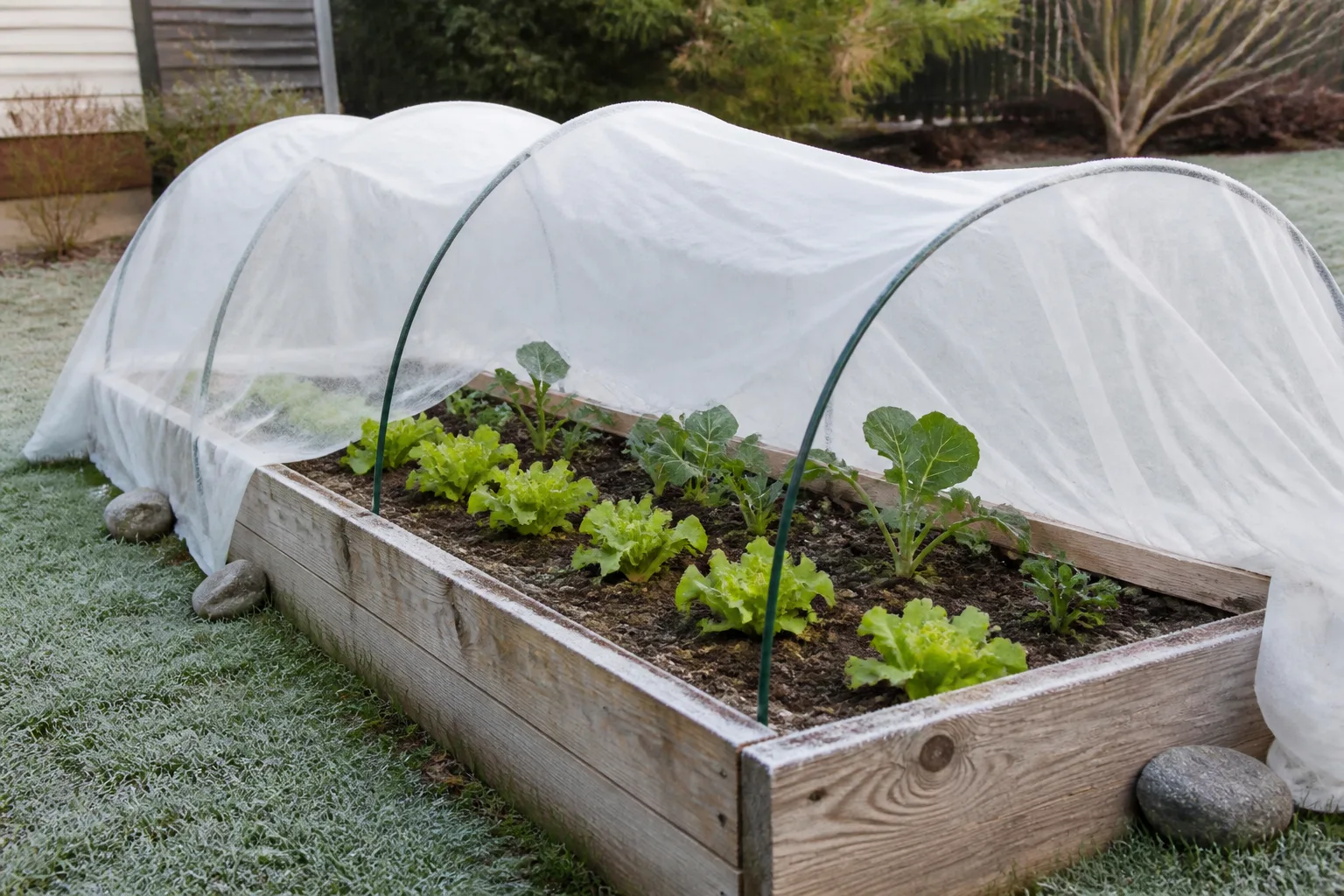
If the garden still looks lush at 4 p.m., it can be hard to believe a few cold hours will matter. But one clear, calm night can blacken basil and tomato foliage while kale a few feet away carries on. If a first frost is in the forecast, spend your time in this order: decide what is vulnerable, harvest what you cannot protect, cover tender plants, move exposed pots, water only dry soil, and insulate roots where mulch can help.
The goal is not to keep every plant looking like summer. It is to protect the crop, crown, or container most likely to be lost, while leaving cold-tolerant plants alone. A frost cloth or sheet buys a margin; it does not create heat or make a tropical plant winter-hardy.
First, check the forecast and triage your garden
Check the hourly forecast and local frost or freeze alerts for the place you garden, then think about the coldest parts of your yard. A weather-station reading is not a thermometer at leaf height: frost is localized, and a low corner, exposed bed, or open lawn may cool more than a protected spot by the house. The National Weather Service’s Northern Indiana office notes that frost can occur below 36°F in rural areas and vary across a small area; use that as a regional illustration, not a universal cutoff. NC State Extension also stresses that cold injury depends on both the actual temperature and how long it lasts.
Use the forecast as an action signal, not a promise about your garden. When a tender plant is exposed and the forecast is near 36°F, covering it is a sensible precaution, especially on a clear, calm night or in a low spot. If the forecast is at or below 32°F, treat it as a freeze for planning purposes; if it is heading toward the upper 20s for several hours, assume a sheet alone may not save tender growth. Local forecasts, cover materials, plant tolerance, and duration all change the outcome.
| What is in the garden | First move | What can usually wait |
|---|---|---|
| Tomatoes, peppers, basil, beans, cucumbers, squash, and tender annual flowers | Harvest ripe produce and cover what is still worth protecting | Do not spend the only cover on a plant that is already finished producing |
| Tropical or frost-tender plants in pots | Move them to a suitable sheltered space | A wall or porch is only a buffer, not a warm indoor substitute during a freeze |
| Established kale, collards, and spinach in the ground | Check the forecast and protect only if a hard freeze threatens | A light frost often does not justify covering every cool-season crop |
| Newly planted or high-value perennials | Protect the root zone and cover delicate new growth if needed | Do not assume every established hardy shrub needs a blanket |
NC State Extension lists warm-season vegetables such as tomatoes, peppers, beans, cucumbers, and squash among those whose foliage can be damaged around 31–33°F, while several cool-season crops tolerate colder conditions for limited periods. The exact response varies by crop, variety, maturity, and exposure, so use the table to prioritize rather than to declare any plant invulnerable. NC State Extension’s frost and freeze guidance gives the crop-specific context.
A useful urgency rule for tonight
If the event is likely to be a light, short frost, focus on tender leaves and ripening fruit that can be covered or harvested before sunset. If the forecast calls for a prolonged freeze or a hard freeze, move what can be moved and harvest what you can; improvised protection may still reduce injury but cannot reliably keep every tender plant alive. In its local guidance, the National Weather Service identifies temperatures below 28°F as a point at which a hard freeze is possible, but the label and threshold vary with region and duration. National Weather Service fall frost and freeze information
Also look at the night’s pattern, not just the low. A clear, calm night lets the garden lose heat to the open sky, which is when a ground-level cover can trap some of the soil warmth; a windy cold front can strip that warm air away and lift loose material. Check wind and cloud cover in the hourly forecast, anchor fabric more carefully if it will be breezy, and put movable pots in shelter before you start covering rows.
1. Harvest what a cover cannot save
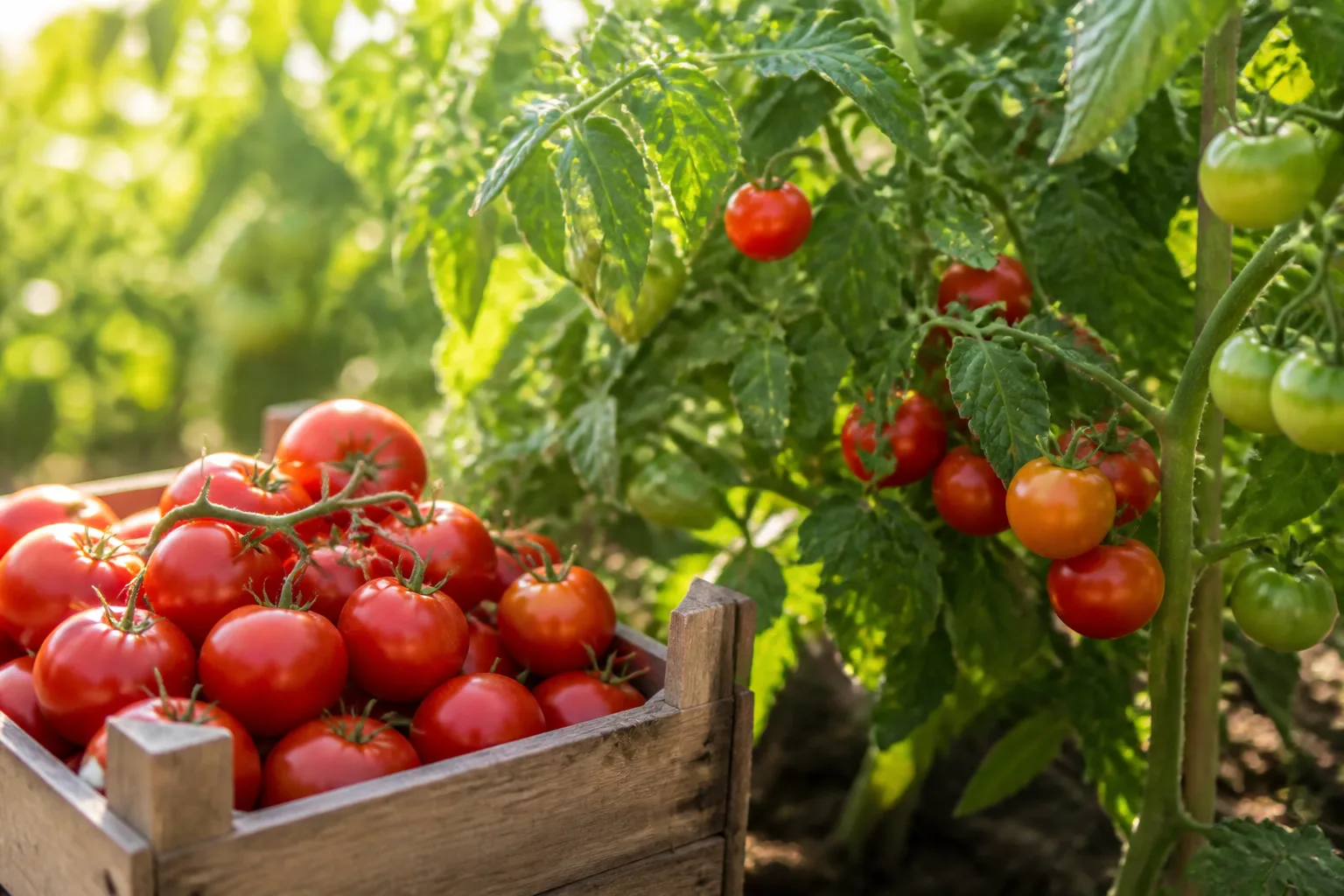
Pick ripe or nearly ripe tomatoes, peppers, beans, squash, and other warm-season produce before the cold arrives, along with any tender herbs you want to use. A cover may save leaves for one night, but it is not worth racing around to protect a plant whose useful harvest is already ready to come in. Clip produce cleanly, bring it indoors, and keep it out of the garden’s coldest pocket while you finish the rest of the checklist.
What to pick—and what can stay
Basil and other frost-tender herbs are especially good candidates for a last harvest. Take usable leaves or cut healthy stems, then decide whether the plant is worth protecting; a pot can come inside, while a basil plant in the ground may be at the end of its season. For tomatoes, prioritize fruit that is already ripe or close to it. Do not count small, immature fruit as a guaranteed indoor harvest, and do not pull every root crop just because the first frost is coming.
Tomatoes are worth sorting rather than dumping into one box. Fruit that has started to color and full-sized, glossy mature-green tomatoes are better candidates to finish ripening indoors; small, hard, dark-green fruit may soften without tasting ripe. Keep damaged or cracked fruit separate so it does not spoil sound tomatoes nearby. Planet Natural’s guide to ripening green tomatoes
Cold-season crops are a different calculation. Kale, collards, spinach, and some root vegetables can tolerate light frost, and carrots or beets may remain usable after a cold night if the soil does not freeze deeply. National Gardening Association guidance distinguishes tender warm-season crops from cool-season crops that can continue after a light frost; the variety and length of the cold still matter. National Gardening Association’s fall frost guide
2. Cover vulnerable plants before sunset
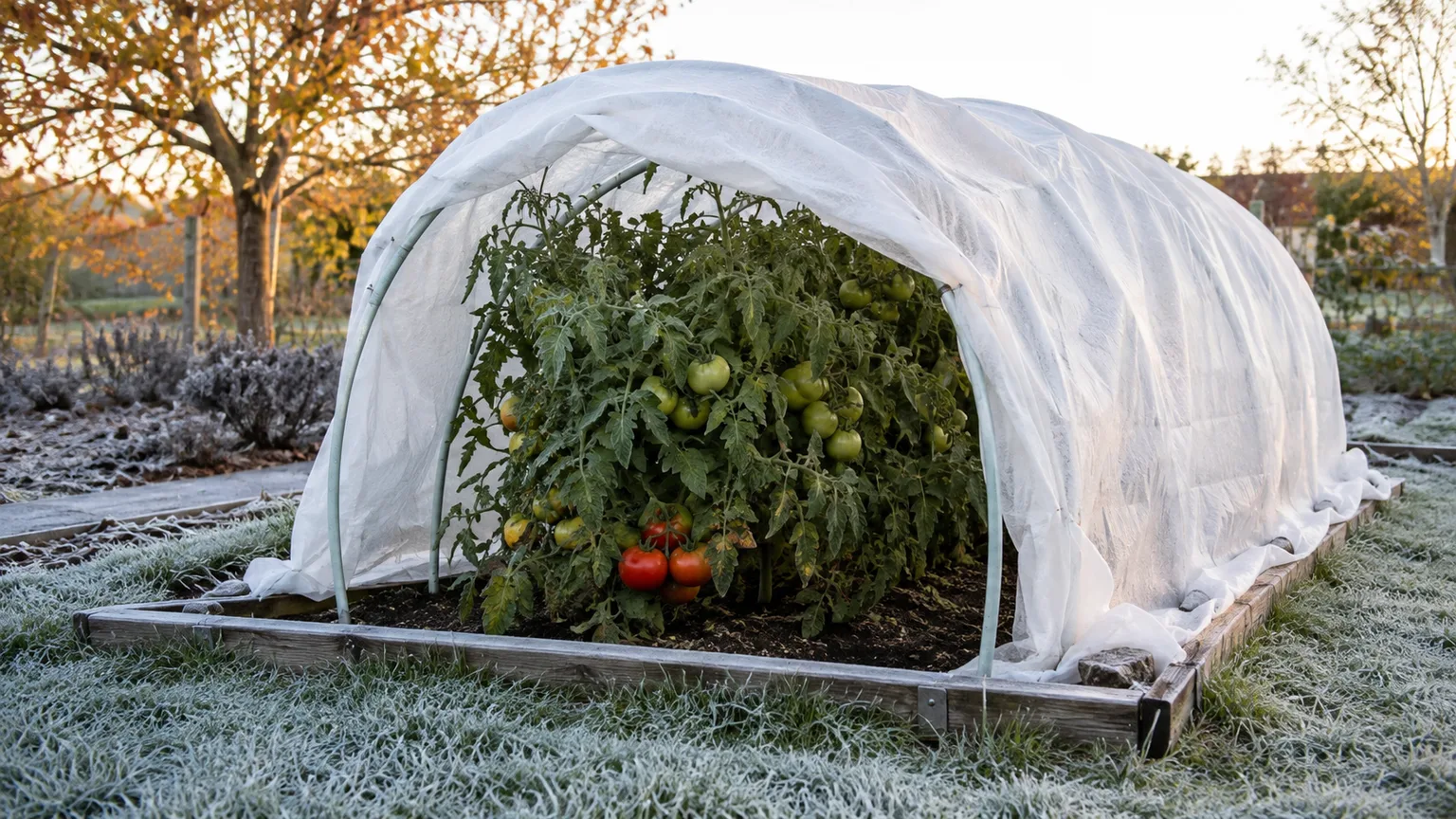
For an in-ground plant you want to keep, a dry breathable cover is usually the quickest protection. Use frost cloth, horticultural fleece, a clean bedsheet, or a light blanket; drape it loosely over the plant and carry the edges all the way down to the soil. That edge matters because a cover works by slowing the loss of heat the ground absorbed during the day, not by warming the air on its own.
Support the fabric on hoops, stakes, or a cage when you can so it does not press wet leaves against a cold surface. Secure the edges with bricks, clips, or soil so a breeze cannot lift the cover and let the warmer air escape. The fabric should be dry, and it should be large enough to touch the ground around the whole plant or bed rather than forming a small cap over the top.
Do not lay plastic directly on leaves. It can hold cold against the foliage, and a closed plastic cover can heat up quickly once the sun returns. If plastic is the only material available, keep it over a frame with air space around the plant, then open or remove it during the day. Colorado State University Extension notes that the protection from row covers depends on the fabric’s weight and grade; some can provide up to about 10°F of frost protection, but that is not a guarantee for every setup or a hard freeze. Colorado State University Extension’s frost-protection guide
Make a cover that traps ground heat
Put the cover on before sunset, while the soil can still release daytime warmth. Check that fabric reaches the ground on every side, anchor it, and leave room for the plant’s leaves and branches. If you are protecting a bed, cover the entire bed rather than wrapping only the most visible plants; cold air can still reach exposed foliage through large gaps.
Remove a bedsheet, blanket, bucket, or dark tarp after the coldest part of the night when temperatures have climbed and frost has thawed. Leaving a temporary cover on through a sunny day can trap moisture or overheat plants. Lightweight floating row cover designed to stay in place may be different, so follow its label and check the temperature underneath instead of treating all materials alike.
Use a cold frame only if it is ready
A cold frame is useful if you already have one over a bed or a few tender plants. Close it before nightfall, then prop the lid open or vent it when the sun returns; a sealed frame can become too hot even on a cool day. Colorado State Extension warns that an enclosed frame can rise above 130°F after an hour of sun, so ventilation is part of the protection, not an optional extra.
A cold frame is not a realistic last-minute build for a frost expected tonight. If one is already assembled, it is a compact shelter; otherwise, a supported sheet or frost cloth is faster. For a longer season-extending setup, see the existing LeafyPixels guide to cold frame gardening.
3. Move tender containers to shelter
Move potted tropicals, tender annuals, citrus, and warm-season herbs before temperatures fall. Even a plant that is hardy in the ground may be vulnerable in a pot because its roots are surrounded by exposed air rather than insulated by the earth. A container also cools from its sides, so covering only the foliage does not protect the root ball.
Match the shelter to the plant
Choose the shelter according to the plant, not just the building. A bright indoor room is safer for tropical houseplants; a garage, enclosed porch, or shed can work for a short event only if it stays within the plant’s safe temperature range. If the plant will stay inside for more than one night, give it light and avoid leaving a saucer full of standing water. Check for insects on stems and leaf undersides before carrying a summer pot into the house.
If a large container cannot be moved, group it with other pots against a sheltered wall, wrap the pot to insulate its sides, and cover the foliage separately. Lift pots off freezing pavement if you can and keep drainage holes open. This combination can reduce exposure, but it is a fallback for a marginal night, not a substitute for moving a frost-tender plant indoors when a hard freeze is expected.
For a plant that is coming inside for one night, there is no need to repot it or give it a full winter makeover. Move the whole pot, keep its drainage clear, and return it to its usual outdoor position once the danger passes if it is meant to grow outside. For a tropical plant that will remain indoors, choose the brightest suitable space you have and keep it away from cold drafts; a dark shed can prevent frost injury overnight but is not a good long-term home.
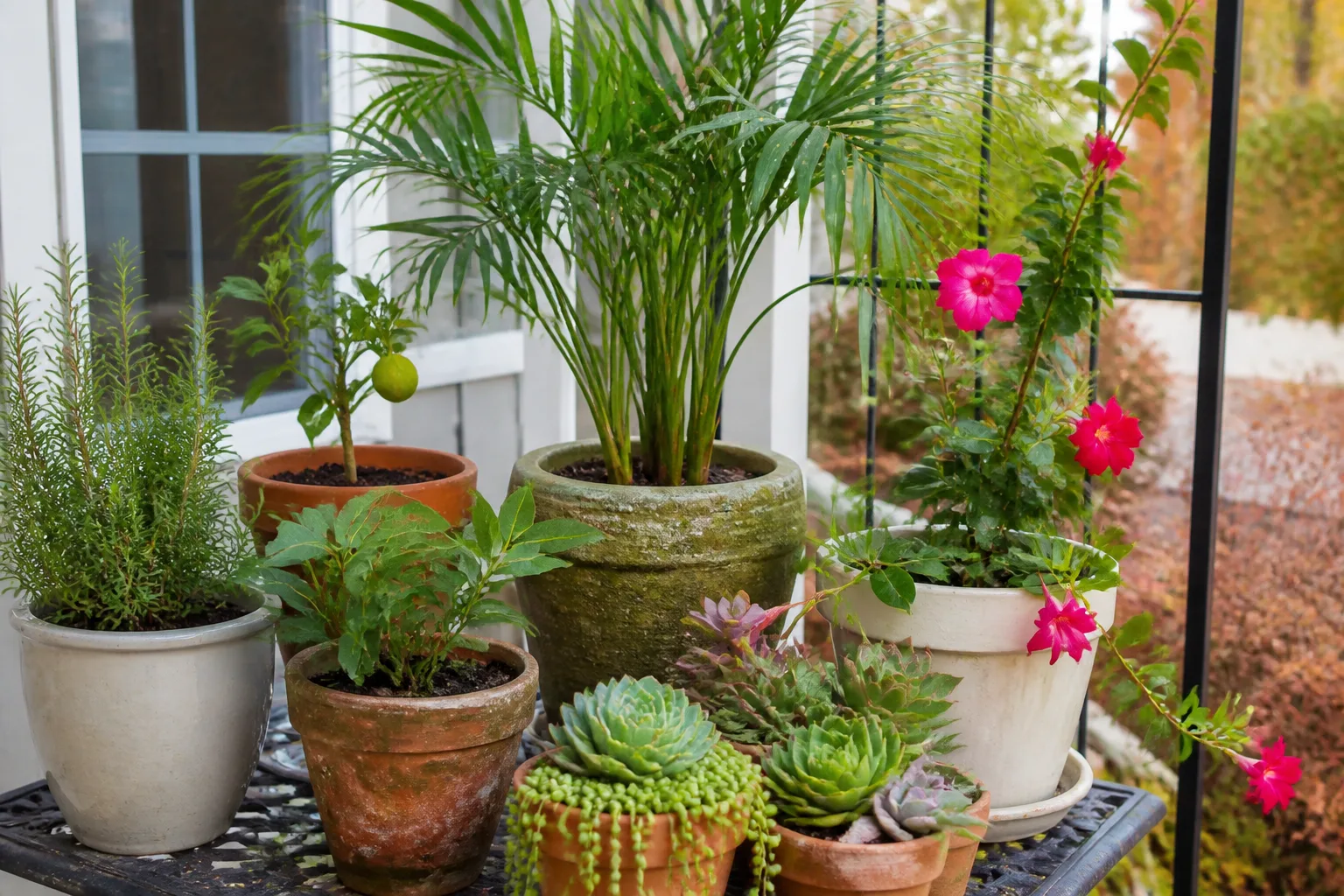
Country Living’s garden coverage and the practical container advice at Grow Forage Cook Ferment both point out that pots lose heat faster than in-ground roots and that moving containers is a useful first response. The important qualification is that a sheltered wall only changes exposure by a margin; the plant still needs a space warm enough for its own tolerance. Country Living and Grow Forage Cook Ferment
4. Water dry soil early, not the whole garden
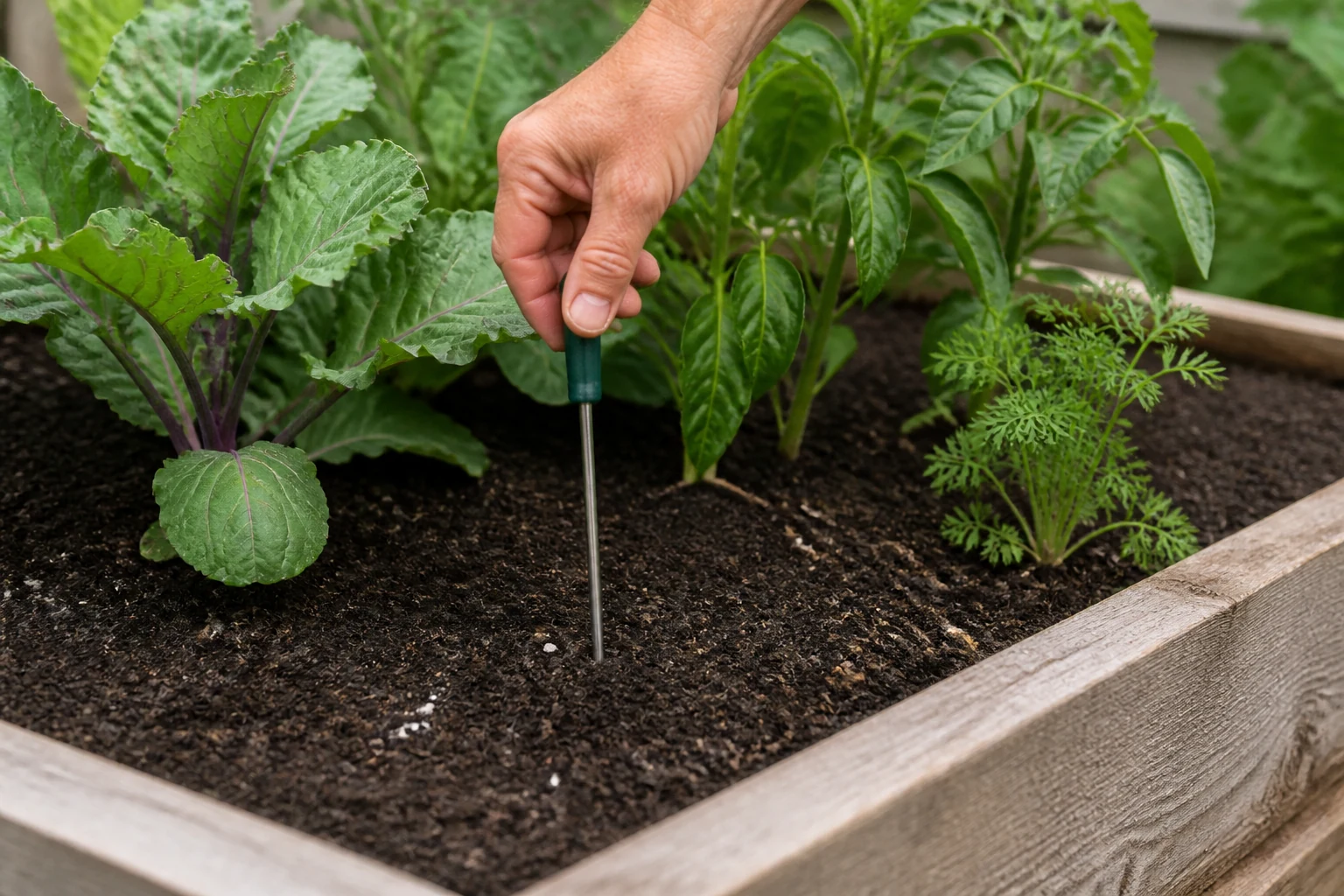
Check the soil before watering. If the root zone is dry and the soil is still workable, water it at ground level earlier in the day so moisture can soak in before temperatures drop. NC State Extension explains that moist soil retains heat longer and releases it slowly during a cold event; a well-hydrated plant is also less stressed than one already wilting from drought. This can help at the margin, but it will not keep tender foliage from freezing in a long or severe freeze.
Skip watering if the soil is already moist, saturated, frozen, or slow to drain. Do not spray the leaves at dusk or leave a cold, waterlogged bed to sit overnight. Advice on pre-frost watering is not always phrased the same way: NC State Extension describes the heat benefit of moist soil, while a recent Country Living article cautions against watering late in the day. The practical overlap is to water only dry root zones, do it earlier rather than at night, and avoid standing water or wet foliage. NC State Extension and Country Living
5. Mulch the roots that need insulation
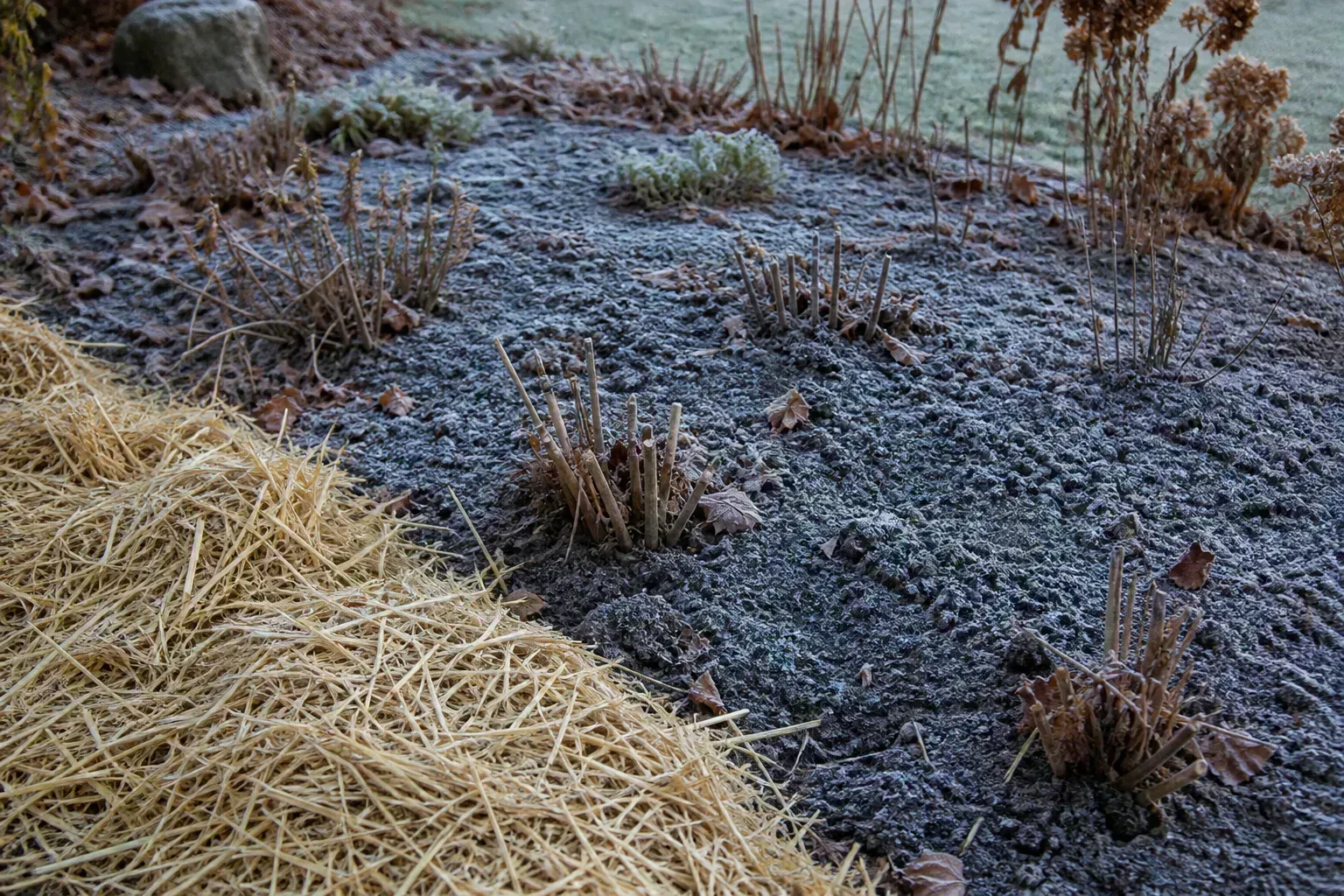
A layer of mulch is useful when the part you are trying to protect is below ground: exposed roots, the crown of a newly planted perennial, or a shrub growing in a spot where the soil cools quickly. Use loose leaves, clean straw, or an existing organic mulch around the root zone. Mulch reduces temperature swings and slows heat loss from soil, but it cannot shield leaves, flowers, or fruit from frost; those still need a cover or a harvest.
Do not dig, hoe, or cultivate the bed as part of last-minute frost preparation. NC State Extension cautions that cultivation just before cold can damage roots, dry the soil, and allow cooler air to penetrate deeper; leave the root zone undisturbed and put your time into covering, moving, or mulching plants instead. That small restraint matters most around shallow-rooted perennials and newly planted shrubs, where a quick cleanup can do more harm than a thin frost.
You do not need to blanket every bed with a deep layer in the afternoon before a first frost. Focus on plants with vulnerable roots, recent planting, or a container-like exposure, and keep the material loose enough that air and water can move through it. A hard freeze that lasts for hours can still freeze the root zone, especially in a pot, so combine mulch with a sheltered location where practical.
Keep mulch off stems and crowns
Spread mulch as a ring over the root zone, not as a mound against a trunk or stem. Leave a small clear space around woody stems and the center crown of perennials so damp material does not stay pressed against living tissue. For garden beds, a few inches of loose organic mulch is enough to cover soil; the right depth varies with the material, climate, and plant.
If your bed is already mulched, do not rake that protection away because a frost is forecast. If it is bare, add mulch where root insulation matters, but do not mistake that job for covering the canopy. Harvest to Table’s vegetable-garden mulch guidance describes straw, chopped leaves, and aged compost as common winter mulch materials; choose a clean material you already have rather than trying to apply a thick layer everywhere at once.
The morning after: uncover and inspect
When the air warms and frost thaws, remove temporary fabric covers so plants receive light and airflow. If another cold night is forecast, let the bed warm during the day, then cover it again before sunset. Keep a cold frame or plastic tunnel ventilated in sunshine and close it again before the next cold night.
Some frost-damaged leaves will look dark, limp, or water-soaked the next morning, but that does not always tell you how much of the plant is still alive. Wait until the tissue has thawed and the damage line is clearer before cutting back large stems. Keep doing normal, measured watering at the root zone, and do not try to force immediate new growth with fertilizer.
Wait before pruning uncertain damage
For a tender annual that has collapsed after a killing freeze, removing it may be the practical choice. For a perennial, shrub, or plant with a living crown, leave uncertain tissue in place until you can see whether stems and buds are still firm. A few days of waiting is usually safer than cutting back to a point that later proves alive, especially if another freeze is still in the forecast.
When the forecast calls for a hard freeze
A breathable cover works best when it can trap heat the soil stored during the day. A prolonged freeze, strong wind, or a hard freeze in the upper 20s can overwhelm a thin sheet; heavier or rated materials may add more protection, but their performance depends on installation and conditions. Colorado State Extension describes row covers that can provide measurable protection, while the National Weather Service and National Gardening Association distinguish a harder freeze from a light frost. Treat any advertised temperature rating as a guide for that material, not a promise about every garden.
When the forecast is severe, make the simplest high-value choices: bring tender pots into a suitable indoor or enclosed shelter, harvest ripe warm-season crops, cover the plants that still have a realistic chance, and leave cold-tolerant greens to fend for themselves unless the freeze is prolonged. If you cannot cover everything, protect plants that are expensive, newly planted, or actively producing before mature hardy plants. A cold frame or greenhouse that is already working may help; a sheet over a bed cannot replace heat during an extended freeze.
Conclusion
Before the first frost, do not start by buying a greenhouse or covering every leaf. Check the local forecast, harvest the warm-season produce you can use, cover tender plants with dry fabric that reaches the soil, move frost-sensitive pots, water only dry ground early, and add mulch where roots need insulation.
Then remove temporary covers after the cold passes and give plants time to show what survived. A light frost is often manageable; a sustained hard freeze may end a warm-season crop. Matching the action to the plant and the length of the cold is the best way to save what can still be saved.



