How to Grow Gooseberries: Planting, Pruning & Harvest
Learn how to grow gooseberries from planting through pruning and harvest, choose a disease-aware cultivar, and protect flowers, roots, and fruit in your climate.
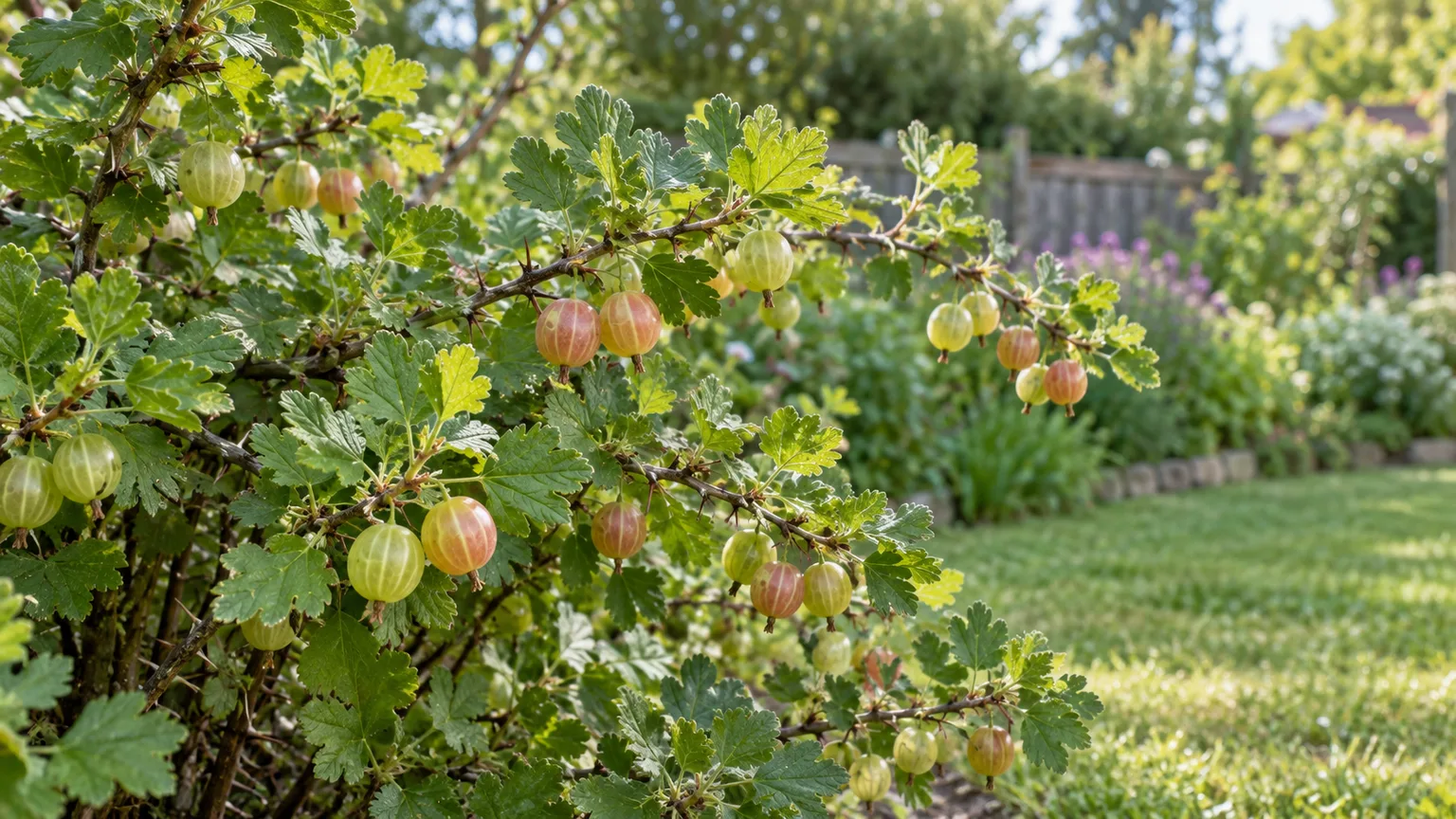
Gooseberries are compact, cold-hardy fruit shrubs that can produce for years in a home garden, but they are not completely carefree. The best results come from three linked choices: a cultivar suited to your region, a root zone that stays cool and evenly moist, and annual pruning that keeps a mix of productive cane ages without letting the center become a thorny thicket.
One plant can set fruit because most gooseberries are self-fertile. A second cultivar is optional, though cross-pollination may improve fruit size or yield in some settings. Before you buy, check local rules: gooseberries belong to the genus Ribes, which can host white pine blister rust in areas where the disease threatens five-needle pines.
Is a Gooseberry Bush Right for Your Climate?
A gooseberry bush is a strong choice for a cool or cold-winter garden where summers are not persistently hot. Many cultivars tolerate very cold winters, but winter hardiness does not make the plant suited to every climate: it needs winter chilling to break bud, and hot, dry weather can stress its shallow roots and scorch foliage. Utah State University Extension describes gooseberries as a cold-climate crop and notes that summer heat and early flowering both affect site choice. Treat zone ranges as a first screen, then check the cultivar’s local performance and your region’s winter-chill pattern.
In a warm-summer area, part shade can be more valuable than all-day exposure, especially afternoon shade that keeps the root zone and leaves cooler. In a cooler region, more sun usually supports better flowering and fruit production. The practical target is enough light for a crop without placing the plant where hot afternoon sun dries the soil every day. If your garden has long hot summers, low winter chill, or frequent spring freezes, ask a local Extension office whether gooseberries fruit reliably nearby before investing in several plants.
Check Local Restrictions Before You Buy
Gooseberries and currants can participate in the life cycle of white pine blister rust, a fungal disease that alternates between Ribes plants and five-needle pines. On gooseberries the disease may show up as leaf spots; on susceptible pines it can cause branch cankers and dieback. The ecological risk depends on local pine species, disease pressure, and cultivar resistance, so rules are not uniform across the country. Minnesota Extension explains the two-host cycle and lists resistant gooseberry cultivars, while North Carolina Extension quotes a state regulation that prohibits keeping currant and gooseberry plants. Check your current state department of agriculture or local Extension guidance before ordering, especially if you live near white pines. (UMN Extension explains white pine blister rust and resistant varieties; NC State Extension documents North Carolina’s current restriction)
Do not infer legality from a nursery listing, a neighbor’s plant, or a general hardiness map. Regulations can change and may distinguish among Ribes species or cultivars; an older article or a map copied from another state may be out of date. If planting is allowed, choosing a resistant cultivar still matters near five-needle pines. Resistance lowers risk but is not a reason to ignore local rules or assume that every cultivar has equal protection.
Choose a Cultivar for Fruit and Disease Resistance
Pick a gooseberry by matching its fruit use, disease profile, and mature size to the garden. A variety with large berries may be less convenient if the canes are exceptionally thorny; a plant with good mildew resistance may still have a different rating for blister rust or leaf spot. Ask the nursery which cultivars perform well locally and whether resistance information refers to powdery mildew, blister rust, or another disease. Those are separate traits, not a single all-purpose “disease-resistant” label.
| Cultivar | Useful starting point | Check before buying |
|---|---|---|
| ‘Invicta’ | Large green fruit; commonly selected for home gardens | Its resistance is partial and disease-specific; Ontario rates it moderately resistant to both mildew and rust |
| ‘Hinnonmaki Red’ | Red fruit and good flavor; a useful option where mildew is a concern | Ontario rates it resistant to mildew and moderately resistant to rust |
| ‘Captivator’ | American-European hybrid with fewer thorns than many cultivars | “Nearly thornless” does not mean thorn-free; confirm the local rust rating |
| ‘Pixwell’ | Productive American-derived option with medium fruit | Fruit quality and mildew resistance are described as moderate in some regional guides |
These notes are examples, not a ranking for every climate. Iowa State Extension describes American types as generally more disease-resistant and adaptable, while European types often offer larger, better-flavored fruit but can be more disease-prone. Ratings from Ontario’s agriculture ministry illustrate why one cultivar can be resistant to mildew but only moderately resistant to rust. Use local recommendations over a generic catalog description. (Iowa State Extension’s cultivar notes; Ontario’s gooseberry disease ratings)
American, European, and hybrid gooseberries
European gooseberries are usually associated with Ribes uva-crispa; American gooseberries are associated with Ribes hirtellum and hybrids descended from it. In broad terms, European types tend to produce larger berries with rich dessert flavor, while American-derived types are often hardier across North American conditions and less susceptible to powdery mildew. These are tendencies, not guarantees: modern named cultivars may combine ancestry, and growing conditions change both fruit size and flavor. Minnesota and Utah State Extension both distinguish the two groups while noting that American types are often more mildew resistant.
If you plan to eat berries fresh, flavor and ripeness matter more than maximum size alone. If you mainly make jam, pies, or sauce, a productive cultivar with reliable disease performance may be a better choice than a large-fruited variety that struggles in your summers. Consider thorn density too: a bush beside a narrow path or a child’s play area can make routine care and harvesting unpleasant, even when its fruit is excellent.
Choose a Cool, Bright Site with Drainage
Give the shrub a spot with fertile, moisture-retentive soil that drains after rain. Gooseberries have shallow, fibrous roots, so a location that swings from waterlogged to bone-dry is difficult to manage. Before planting, remove perennial weeds and work in compost where soil structure needs improvement. A soil test can tell you whether pH or nutrients need adjustment; avoid trying to correct a problem with a large dose of fertilizer before you know what the soil lacks. Oregon State Extension lists a mildly acidic soil range for Ribes, while Utah State Extension gives a broader near-neutral range, so a test and regional recommendation are more useful than chasing one universal pH number.
Full sun generally produces more fruit in cool regions, but gooseberries tolerate partial shade. In warmer areas, morning sun with afternoon protection often provides a better balance: enough light for flowering, less heat on the foliage, and slower drying of the root zone. Keep the plant out of a frost pocket where cold air collects, yet avoid the hottest reflected-heat corner beside paving or a south-facing wall. Leave open space around the bush so you can reach both sides for picking and pruning; a mature plant may spread several feet and its arching branches can snag clothing.
Plant Dormant Bare-Root or Potted Bushes Correctly
Bare-root gooseberries are commonly sold while dormant. Plant them in early spring as soon as the ground is workable, before warm weather forces new growth, or in autumn where the soil remains workable and local practice supports fall planting. Keep roots cool and damp during transport and storage; do not leave them exposed to wind or soaking in water for days. Before planting, soak dry bare roots briefly according to the nursery or regional Extension advice, then spread them naturally in a hole wide enough to avoid bending them into a tight bundle.
Follow the planting depth recommended for the stock you bought. Some North American Extension guides recommend setting bare-root plants slightly deeper than the nursery line to encourage new basal shoots; RHS guidance for container-grown plants says to keep the compost line at the same level. Those directions address different stock and growing systems. Set a potted plant at its existing soil line, and for bare-root stock use the nursery mark and local guidance rather than burying the entire crown. Space bush cultivars roughly 3 to 5 feet apart, widening that distance for vigorous plants or where you need room to work. Water the planting hole thoroughly to settle soil around roots.
Give the new shrub a first-year reset
After planting, cut back weak, damaged, or overly long canes as the cultivar instructions recommend. Bare-root plants may be headed back to a few buds or to short stubs; this reduces demand on a root system that has just been moved and encourages new shoots from the base. Container-grown plants with an established root ball may need less severe pruning. Do not remove every healthy branch simply because a pruning guide for bare-root stock says to cut hard.
During the first growing season, prioritize root establishment over fruit. Keep the root zone evenly moist, suppress weeds, and remove only damaged growth or flowers if the plant is very small and your local guidance recommends it. A light crop may appear sooner, but letting a weak transplant carry a heavy harvest can slow its establishment. Mark the planting date and cultivar so you can interpret growth next year and know whether poor fruiting is age-related or a cultural problem.
Water, Mulch, and Feed Without Forcing Soft Growth
Water slowly at the soil surface so moisture reaches the shallow root zone rather than running off the surrounding ground. Keep the soil consistently moist during establishment and especially while flowers are setting and berries are swelling. Once established, adjust irrigation to rainfall, soil texture, and heat; do not water by a fixed weekly schedule if the soil is already wet. A thick organic mulch helps conserve moisture and suppress weeds, but keep it a few inches away from the stems to reduce rot and discourage rodents.
Avoid deep digging beneath the shrub because fine roots lie close to the surface. Hand-weed carefully or renew mulch instead of cultivating aggressively. In a dry summer, a drip line or soaker hose is often more reliable than brief surface sprinkling. Overhead watering is less helpful in humid climates because wet foliage can favor disease; water the ground, preferably in the morning if foliage gets splashed.
Gooseberries do not need to be pushed with heavy nitrogen. Start with a soil test and a modest spring dressing of compost or a balanced fertilizer only if growth or test results call for it. Too much nitrogen can create long, soft shoots and dense foliage, which shade fruit and increase powdery mildew risk. Utah State Extension warns that excessive nitrogen encourages disease, while University of Minnesota Extension recommends compost and soil testing to guide feeding. If leaves are pale or growth is weak, check moisture, drainage, weeds, and nutrient results before adding more fertilizer.
Prune for an Open Center and a Mix of Cane Ages
Gooseberries fruit on spurs and the bases of shoots produced in earlier seasons, so pruning should renew wood gradually rather than shear off the whole bush. The best crop usually comes from a balanced framework of young replacement canes plus productive two- and three-year-old branches. If every year you remove all new shoots, the plant ages out of its productive wood; if you keep every shoot, the center becomes crowded and picking turns into a thorny search.
For an established bush, late winter or early spring while dormant is the main pruning window, before new growth begins. Regional advice differs on the exact cane count: Minnesota Extension and Oregon State suggest a mature framework around 9 to 12 main canes, while RHS describes an open goblet with eight to ten main branches. Treat those counts as a useful range rather than a target that overrides plant vigor or cultivar habit. Start by identifying dead, damaged, weak, crossing, inward-growing, and ground-touching canes. Then remove the oldest, least productive wood at the base while preserving a spread of younger and middle-aged canes. (UMN Extension’s pruning schedule; RHS pruning and training guide)
A simple winter pruning sequence
- Wear thick gloves and a long-sleeved shirt; inspect the shrub from several angles before cutting.
- Remove dead, broken, diseased, and very weak canes at the base. Disinfect tools between plants if disease is suspected.
- Cut out branches that cross through the center, rub one another, or bend down to the soil. Low branches can splash with soil, be damaged by mowing, or root where their tips touch ground.
- In a mature plant, remove the oldest canes that have become unproductive, usually those beyond the most productive two- to three-year window. Keep vigorous replacement shoots so the bush does not become old and barren.
- Shorten long side growth only when the cultivar’s training system calls for it, cutting to an outward-facing bud. Avoid indiscriminate heading that removes fruiting spurs.
- Step back and check for an open center, stable framework, and a reachable path to the fruit.
You do not need to label every cane with a tag. Notice the smoother, younger shoots and the darker, thicker, more branched older wood; if the ages are unclear, take photos each winter and remove only a few likely old stems in the first year. A neglected shrub is safer to renovate over two or three winters than to cut to the ground in one session. That approach preserves some harvest while reducing the risk of a large flush of unproductive regrowth.
Train a Bush or a Narrow Fan
The standard bush form suits gardeners who have room for a rounded shrub and want a simple annual pruning routine. Training is not essential for fruit, but an open, goblet-shaped framework lets light reach the middle and keeps branches from dragging fruit into weeds. Support stakes or a low frame can help a heavily laden or floppy plant, but do not tie canes so tightly that they rub against wire or one another.
For a narrow space, a fan-trained gooseberry can be tied to wires against a wall or fence. The RHS recommends fan training as a way to save space; the advantage is access and easier control of branch placement, while the trade-off is more regular tying and pruning. Place the structure where the plant still receives adequate light and airflow. A warm wall may help in a cool climate but can overheat roots in a hot-summer region, so a shaded or east-facing support may be better where heat is a concern.
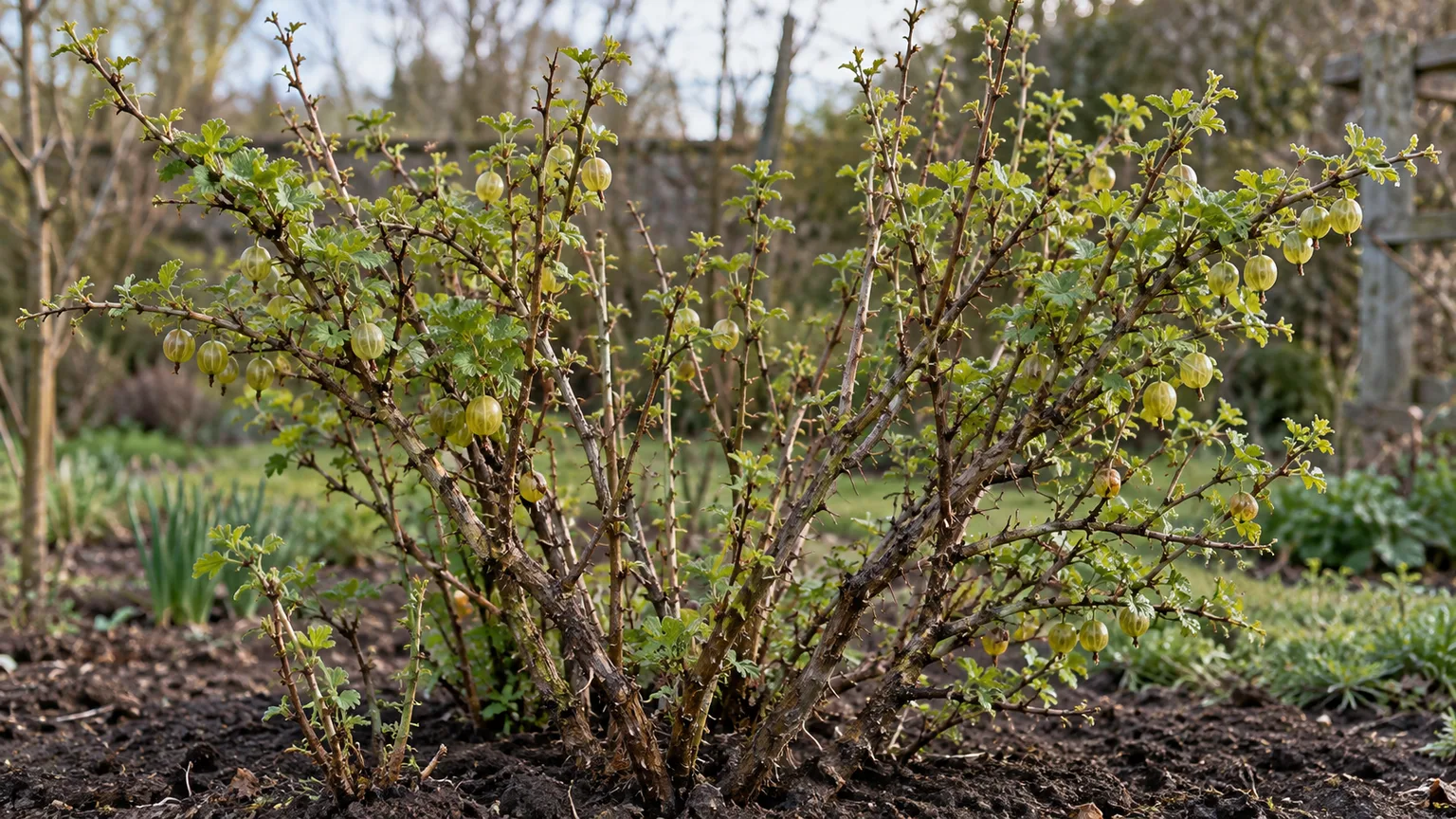
Train only a few strong canes into the desired direction while shoots are flexible. Check ties during the growing season so they do not constrict expanding stems. Whether you grow a bush or a fan, preserve fruiting side-shoots and remove clutter at the base; a decorative form that eliminates productive wood will not improve the harvest.
Grow Gooseberries in Containers with More Attention
A gooseberry can grow in a pot, but the container needs enough volume to buffer moisture and temperature swings. RHS advises a pot at least 40 centimeters wide and deep; a larger, heavier container is more forgiving if you can move it safely. Choose a compact cultivar or train a single stem as a cordon, use a free-draining loam-based or high-quality fruit-growing mix, and make sure the pot has open drainage holes. Do not put a small bush into a decorative cachepot that holds standing water.
Container roots dry faster than garden soil, especially in wind and summer heat. Check moisture regularly by feeling the mix below the surface, then water deeply until excess drains. Mulch the top of the pot and shade the container itself if it heats in afternoon sun. Feed according to the growing medium and product label rather than copying in-ground fertilizer amounts; nutrients leach out more readily from pots, but concentrated doses can still damage roots. Every few years, refresh the growing medium or pot up if the root ball has filled the container. (RHS container guidance for gooseberries)
Protect Spring Flowers and Set a Realistic Harvest Timeline
Gooseberries flower early, so the shrub may look healthy yet lose its crop when a late frost damages open blossoms. Choose a site that avoids low frost pockets and, in frost-prone regions, consider a position that warms slowly in spring. If frost is forecast during bloom, cover a compact plant overnight with horticultural fleece or another breathable cover and remove it during the day. A cover that traps heat for days or presses on delicate flowers is not a substitute for a well-sited shrub.
Expect a light crop before a full one. Many bushes begin fruiting within one to three years after planting, but establishment, cultivar, pruning, and spring weather all affect timing. The RHS reports that an established bush can produce roughly 6 to 12 pounds in its growing conditions; other regions report different yields, so do not use that as a promise for your garden. A single bush can provide fruit, while several plants are useful if you want a larger preserving crop. The most reliable measure of success is healthy new growth and a well-balanced framework, not a specific number of berries in the first year.
Troubleshoot Mildew, Sawfly, and Other Problems
Start with the pattern of damage. A white, dusty coating on young leaves, stems, or fruit points toward powdery mildew; an open canopy, resistant cultivar, and soil-level watering help reduce pressure. Remove badly affected shoots when practical and clear fallen leaves at the end of the season. Powdery mildew tends to be worse when the plant is stressed or crowded, and excessive nitrogen can produce tender growth that is more vulnerable. Minnesota Extension recommends resistant varieties, good airflow, and removing affected material rather than relying on a single treatment.
Gooseberry sawfly or imported currantworm larvae can strip foliage quickly. Check the undersides of leaves and new shoots regularly in spring and again later in the season; early detection makes it possible to pick off a small number of larvae before damage spreads. Gooseberry fruitworms may feed inside developing berries and leave webbing that joins fruit or leaves. Remove affected berries and inspect the rest of the bush. Aphids and mites may also occur, but a few insects do not automatically justify spraying. Identify the pest first, preserve beneficial insects, and follow local Extension and product-label directions if treatment becomes necessary. (Utah State Extension’s gooseberry pest and disease table)
Match the symptom to the likely problem
| What you notice | What to inspect next |
|---|---|
| White powder on leaves or shoot tips | Check for powdery mildew; improve airflow and compare the cultivar’s resistance |
| Leaves disappearing or reduced to veins | Look for sawfly larvae on leaf undersides and along new growth |
| Webbing around fruit with damaged berries | Remove affected fruit and inspect for gooseberry fruitworm |
| Angular yellow spots with orange growth beneath leaves | Ask local Extension about rust; Ribes restrictions may apply in your area |
| Scattered brown leaf spots after wet weather | Consider leaf spot or anthracnose; improve airflow and clear fallen leaves |
White pine blister rust deserves a separate check because the concern is not only the berry bush. On Ribes, Minnesota Extension describes angular yellow spots and orange pustules on leaf undersides; infected white pines can develop cankers. A symptom table can narrow possibilities but cannot confirm disease from a text description. Photograph both sides of affected leaves and contact a local Extension diagnostic service if rust is suspected, particularly near five-needle pines.
Harvest in Two Stages and Handle Berries Gently
Gooseberries do not all need to reach the same stage before picking. For pies, jam, tarts, and sauces, harvest some berries while they are still firm and green; an early picking can also leave more room for the remaining berries to enlarge. Leave the rest on the shrub until the cultivar reaches its ripe color and the fruit softens slightly. Fully ripe berries are sweeter and more aromatic, but their thin skins bruise and split more easily.
Use several small pickings rather than waiting for every berry to ripen at once. Color alone is not enough because ripe fruit may be green, yellow, pink, red, or purple depending on the cultivar. Check the nursery description, taste one berry, and look for a slight give and easy separation from the stem. The Royal Horticultural Society recommends picking the first crop for cooking and returning later for fully ripe fruit; Minnesota Extension also lists color, flavor, firmness, and ease of release as ripeness clues.
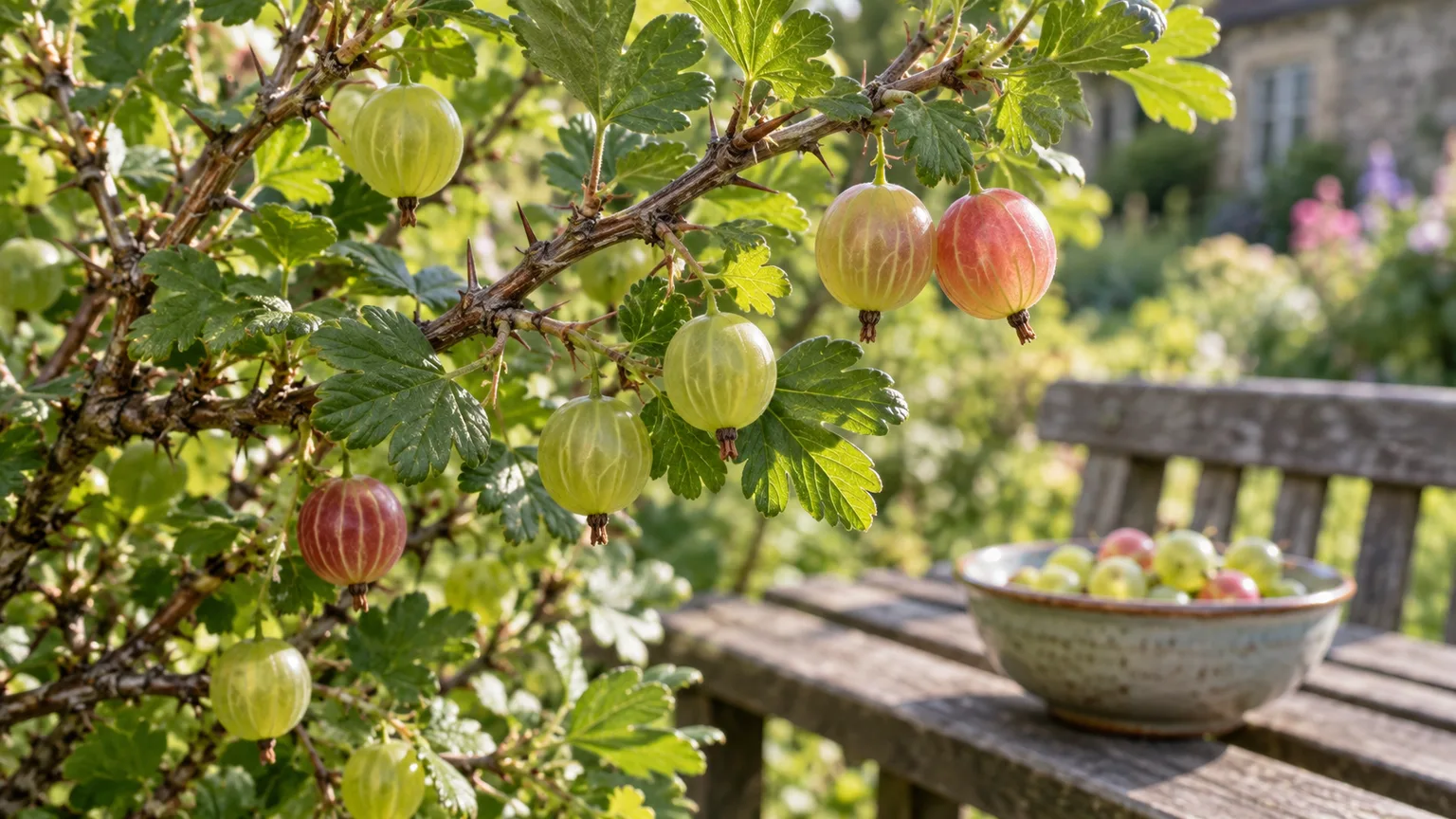
Wear thick gloves and long sleeves, then lift a branch gently to reach berries from underneath. Pinch or snip the stalk rather than pulling hard on a cane; leave the stem attached when possible to reduce skin damage. Do not shake thorny branches over a bucket if the fruit is soft, since it can bruise and the branch may break. Move picked berries into shade and chill them promptly. Wait to wash them until just before eating or cooking, and freeze extras on a tray before packing so they do not freeze into one solid clump.
Propagate with Hardwood Cuttings or Layering
Hardwood cuttings are a straightforward way to make additional plants from dormant pruning wood, although success varies by species and cultivar. Take several pencil-thick pieces from healthy one-year growth after leaf fall, keep the top and bottom ends oriented correctly, and place them in a moist, free-draining propagation bed or pot. Leave only a small portion above the soil and protect the cuttings from drying out. Rooting takes patience, so do not transplant them simply because buds open; wait for a sound root system and sustained new growth.
Layering is often easier if a low, flexible branch can reach the soil. Bend a healthy cane down, bury a short section while leaving its tip exposed, and secure it with a peg or stone. Check it the next growing season for roots, then sever it from the parent only when it can live independently. Seed is possible, but seedlings may not match the fruit quality or growth habit of the named parent cultivar. The RHS describes hardwood cuttings as a practical method, and Gardeners’ Path also explains layering as a way to reproduce a bush without relying on seed. (RHS gooseberry propagation guidance; Gardeners’ Path propagation guide)
Conclusion
A productive gooseberry begins with a locally suitable cultivar and a cool, well-drained site. Keep roots evenly moist, mulch rather than digging around them, and feed only when soil or growth indicates a need. Prune each dormant season to maintain an open center and preserve productive two- and three-year-old wood; then harvest firm green fruit for cooking and return for fully colored, softer berries to eat fresh. Check local Ribes rules before planting and seek local diagnosis if you suspect blister rust. With those decisions in place, one carefully chosen bush can provide a dependable crop without demanding elaborate care.



