How to Grow Passionflower Indoors: Light, Water & Care
Learn how to grow passionflower indoors, from choosing a species and training its tendrils to watering, winter care, propagation, and pest checks.
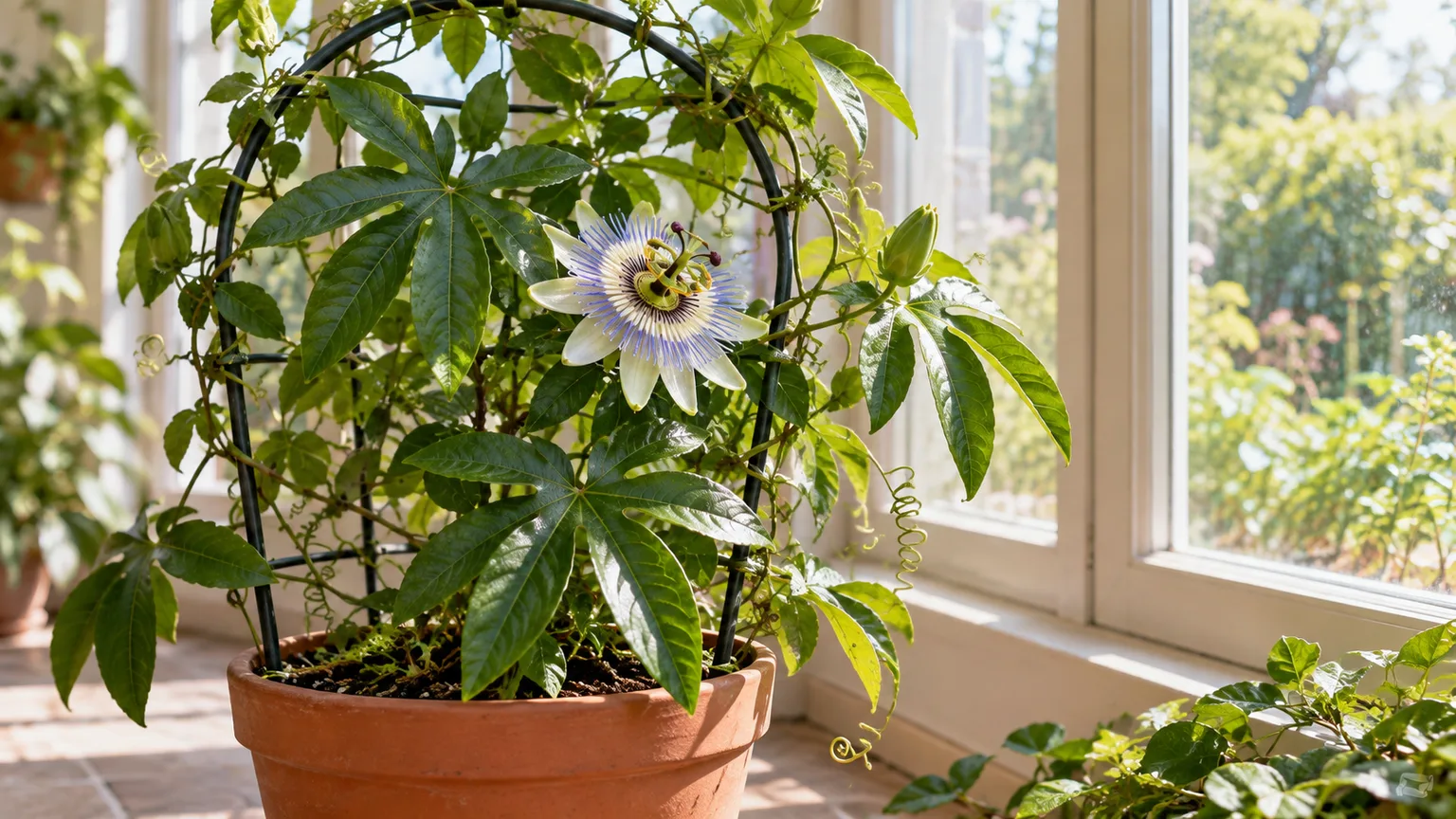
Passionflower can grow indoors, but it behaves more like a fast-growing vine than a compact windowsill plant. It needs the brightest practical light in your home, a support installed before its tendrils find curtains or nearby plants, and a potting mix that stays lightly moist without becoming waterlogged. A plant can stay attractive for foliage even when it does not flower; indoor blooms are possible, but they depend heavily on light, the plant’s age, and its growing conditions.
The name passionflower covers hundreds of Passiflora species with different temperature, flower, and fruit requirements. This guide focuses on blue passionflower (Passiflora caerulea), a vigorous vine sold for its intricate flowers. If your label says passionfruit (P. edulis) or names another species, check its needs before using a temperature or fruiting recommendation here.
Identify the passionflower before choosing a care routine
Start with the botanical name on the nursery tag. Passiflora caerulea is a fast-growing climber with deeply lobed leaves, curling tendrils, showy flowers, and orange fruit; North Carolina State Extension describes it as a perennial vine that can grow many feet long outdoors. P. edulis, by contrast, is the tropical species grown for familiar edible passionfruit. The two share a genus, but a houseplant guide that treats every Passiflora as the same plant can mislead you about winter warmth, fruiting, and how much space to provide.
The Royal Horticultural Society notes that passionflowers grown as houseplants need light and considerable room because these climbers can reach around 10 feet. Decide whether you can give a mature vine a bright window and frame, or whether you are willing to prune it more often for foliage. It will not stay naturally miniature in a pot.
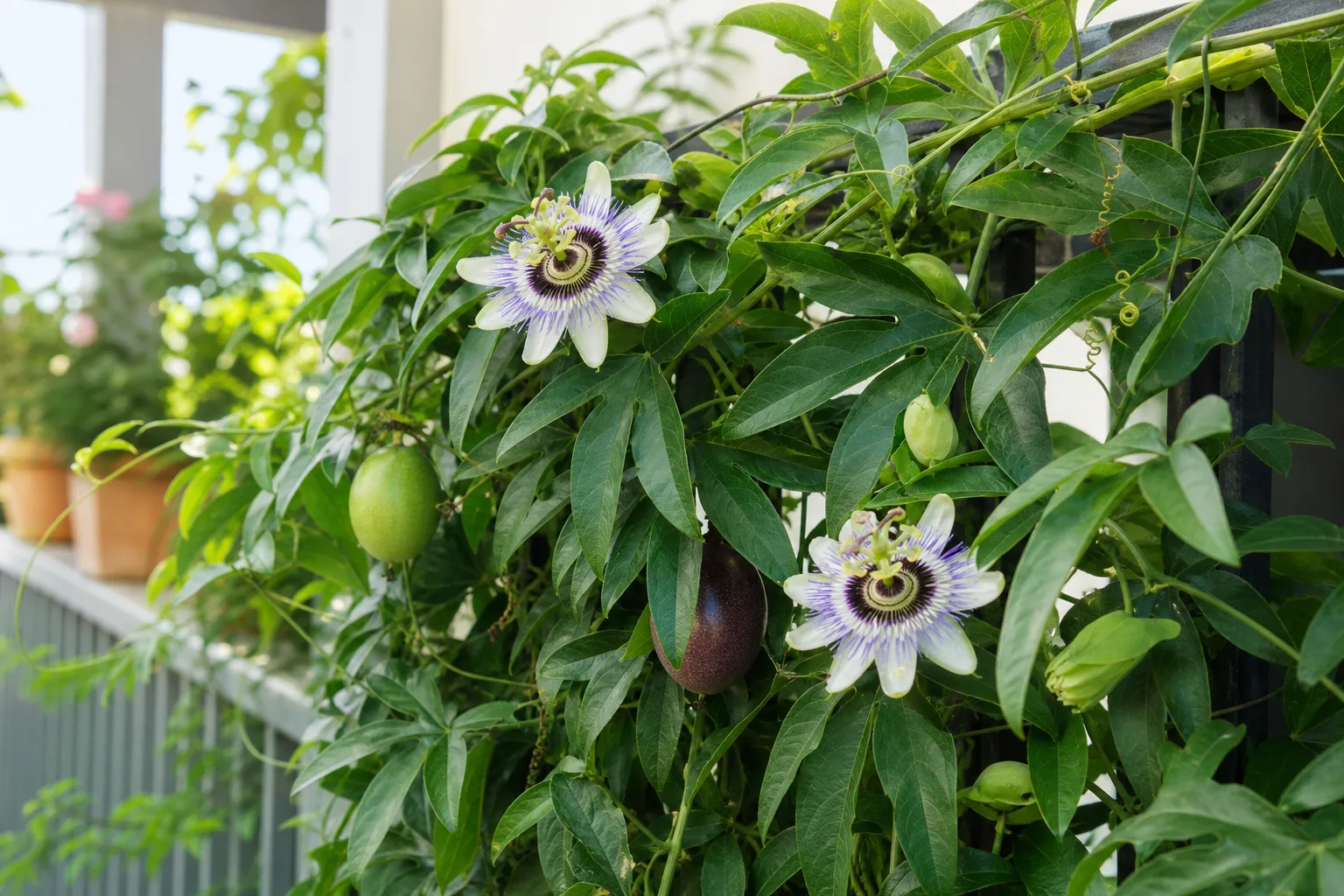
An indoor P. caerulea may be less sprawling than one planted outdoors, but root restriction is not a substitute for light or pruning. The NC State Extension Plant Toolbox profile for blue passionflower describes a rapid-growing vine suited to containers and trellises. Indoors, expect long shoots whenever light and warmth support growth; plan its place before it reaches the ceiling.
Give the vine the brightest safe indoor light
Choose the brightest window available. In the Northern Hemisphere, a south- or west-facing window often gives the strongest indoor light; in the Southern Hemisphere, reverse the directions. Trees, balconies, tinted glass, overhangs, and distance from the window matter more than the label, so check the spot across the day.
Outdoors, NC State lists blue passionflower for full sun (six or more hours of direct sun) as well as partial shade. That is a useful benchmark, not a promise that every indoor sill delivers equivalent light. If the vine stretches toward the window, produces long bare gaps between leaves, or makes smaller, thinner growth, it is telling you that light is limiting. Rotate the pot a quarter turn every week or two to balance growth, and move it closer to the window if the leaves are not touching cold glass.
A sudden shift from shade to intense sun can scorch foliage. Increase exposure over several days, and use a sheer curtain if leaves develop dry, pale patches. If leaves stay green but shoots stretch, improve the light before fertilizing or pruning hard.
Use a grow light when window light falls short
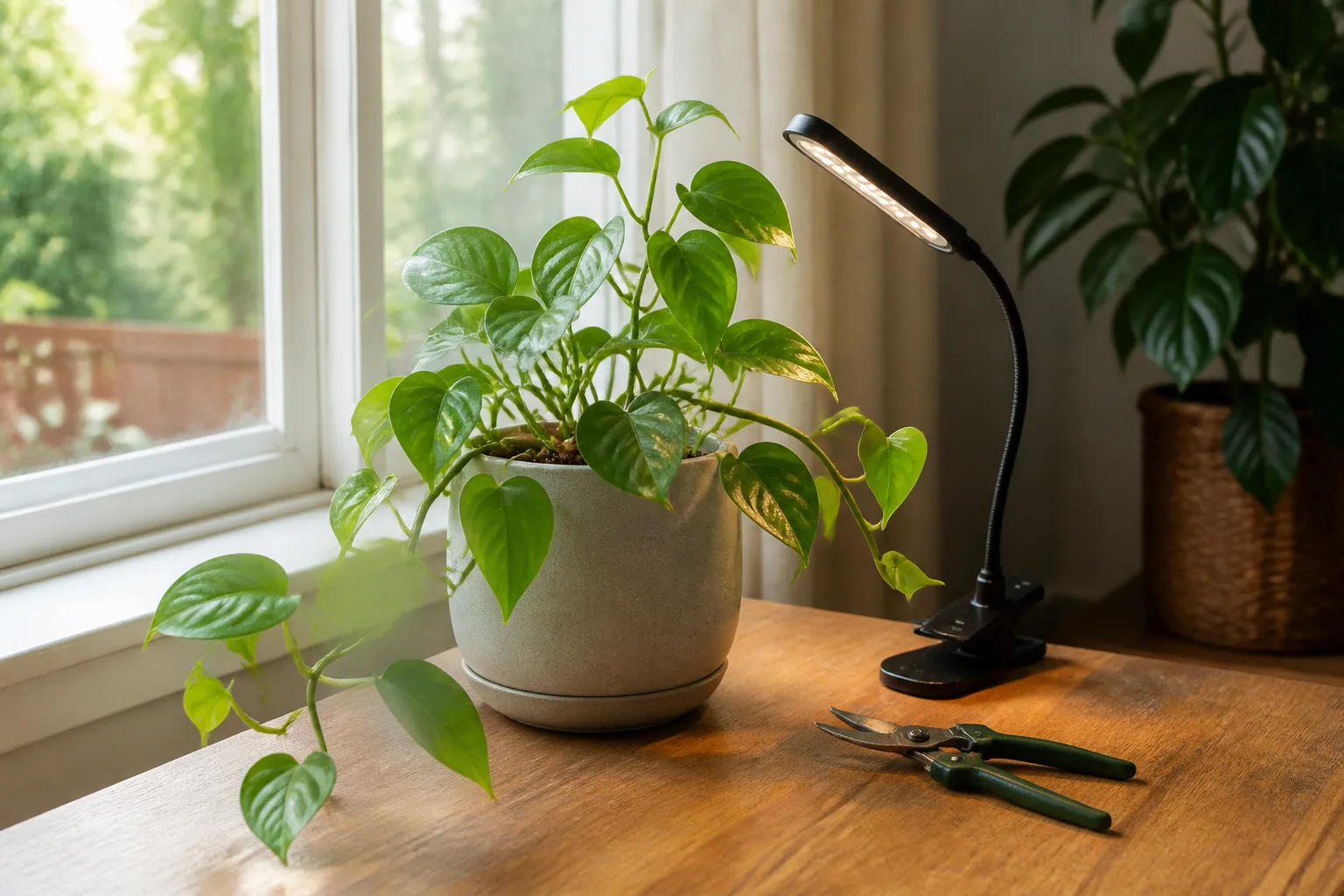
A full-spectrum LED grow light can help when winter daylight is short or your brightest window is blocked. Place it over the canopy and follow the maker’s distance and timing guidance; brightness at the leaves falls as the fixture moves away. Use a timer for a steady day and a dark night.
If new leaves remain small and internodes stay long, bring the fixture closer within its safe range or use a stronger plant light. Bleaching, crisp spots, or warm leaves suggest it is too intense or too close. Judge new growth over several weeks; a bright-looking room or ordinary desk lamp can still leave the vine short of usable light.
Set up a support before tendrils wander
Passionflower climbs by wrapping slender tendrils around nearby structures. Fine Gardening describes blue passionflower as a dense, vigorous vine, so install a small hoop, fan trellis, wire frame, or indoor obelisk before shoots reach blinds, lamp cords, or neighboring plants. Choose a stable support that fits the plant’s final location; a large pergola trellis is rarely useful beside a window.
Add the frame at planting or repotting time if possible. Pushing stakes into an established root ball can damage roots, and trying to unwind mature tendrils from curtains can break the tender shoot behind them. Guide the newest flexible growth toward the frame, then let the tendrils do the gripping. If a stem needs help crossing a gap, secure it loosely with a soft plant tie around the support; do not cinch a tie around the stem or wrap the main vine tightly around a thin rod.
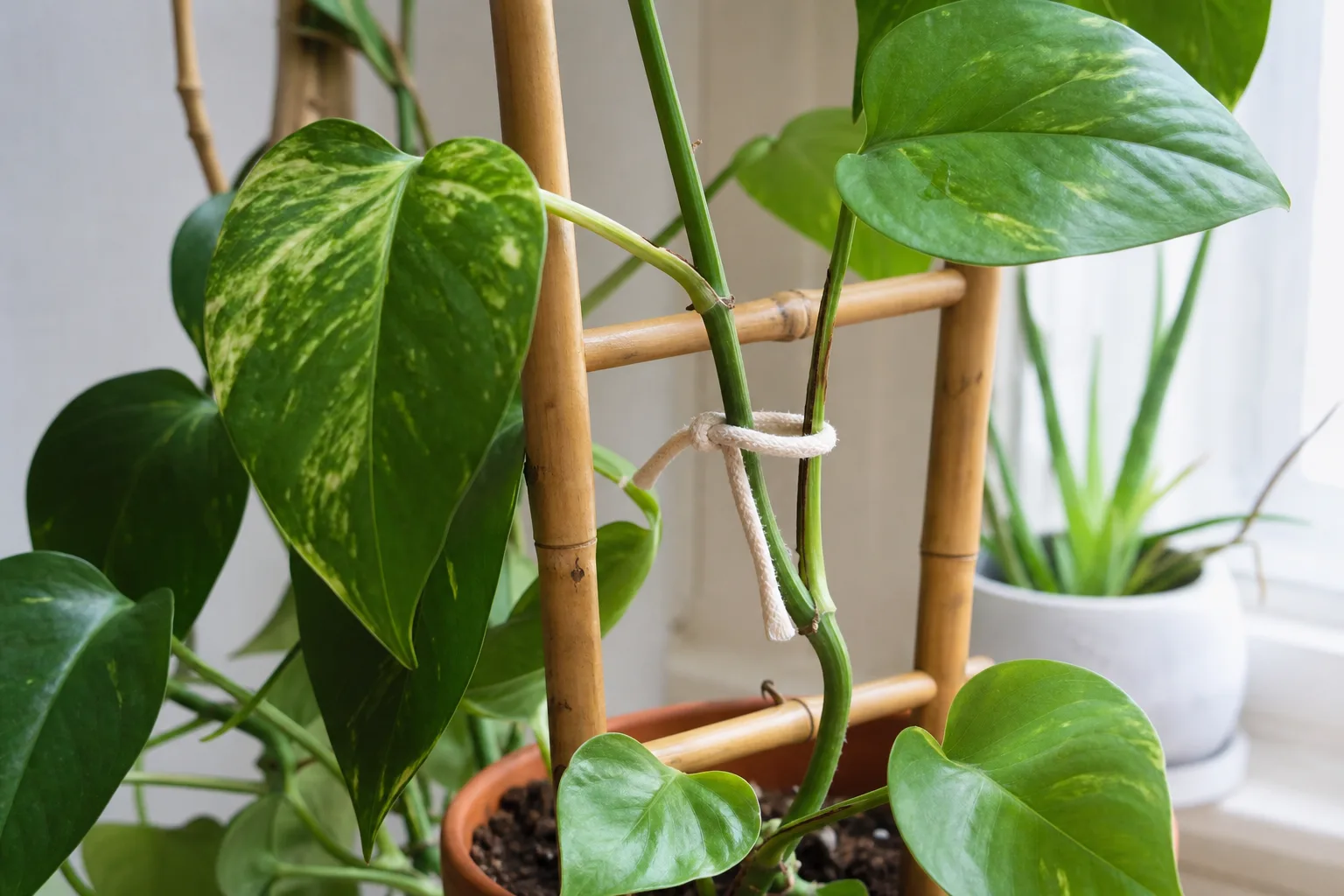
A hoop above the pot keeps foliage near a window without sending shoots across the wall. Train one or two leaders around the frame and shorten stray shoots before they tangle. If growth keeps reaching away from the support, reposition the pot or choose a roomier spot.
Choose a draining pot and airy mix
Use a container with an open drainage hole and a saucer you can empty. Choose a pot about 1 to 2 inches wider than a young plant’s root ball; an oversized volume of mix can stay wet long after the small roots have used the water near them.
A standard peat-free indoor potting mix can work if it drains readily. If yours packs down or stays soggy for days, blend in perlite, pumice, or fine orchid bark so air can reach the roots; the goal is an even balance of moisture retention and drainage, not a mix that dries in a few hours. Avoid compact garden soil and decorative pots without drainage unless the plant remains in a nursery pot that you lift out for watering.
The RHS passionflower growing guide recommends fertile, well-drained soil and emphasizes that container passionflowers should be watered as the surface begins to dry. This is why drainage and frequent checks belong together: a fast-draining mix lets you water thoroughly, while the next soil check tells you when to water again. Empty standing runoff after the pot has finished draining instead of leaving the root ball to sit in it.
Match the pot material to your routine. Plastic retains moisture longer; terracotta dries faster in a sunny room. Choose plastic if you need a longer interval between checks, or terracotta if the mix stays wet too long.
Water the root ball by checking the soil
During active growth, keep the mix evenly moist but not saturated. Press a finger into the top inch or two of mix and lift the pot when you check it. Water when the surface has begun to dry and the container feels lighter, then pour slowly until water runs from the drainage holes. Let the pot drain fully and empty the saucer. This wets the full root ball instead of delivering a small sip that leaves the center dry.
Do not water daily just because passionflower likes moisture. A small plastic pot beside a hot window dries sooner than a large terracotta pot in a cool room. Check every few days during a sunny stretch, but water only when the mix and pot weight support it.
A Natural Curiosity’s indoor-growing account notes that passionflower may drop leaves when the mix dries too far, while still needing drainage and root aeration. If a wilted plant has dry mix and a light pot, water thoroughly; if it is limp in wet mix, inspect drainage and roots before adding more.
Adjust watering as indoor seasons change
As winter light and growth slow, the pot usually uses water more slowly. Keep checking the mix, but wait longer between waterings and do not feed a plant that has stopped growing. If your plant is under a strong grow light in a warm room and still making new shoots, it may continue using water at a summer-like pace; let the soil and pot, not the calendar, set the interval.
If a pot stays heavy for days, check for a blocked hole, water in the saucer, or compacted mix. Yellow lower leaves with wet soil suggest poor drainage; curling leaves and a light pot suggest dryness. Stabilize moisture before trimming dead tissue.
Balance temperature, humidity, and airflow
An ordinary comfortable room can suit blue passionflower while it is actively growing, provided the vine gets enough light. Keep it away from radiator blasts, cold drafts, and direct contact with icy window glass. Large day-to-night temperature swings are not a useful substitute for strong light; a warm, dim room often produces long, weak shoots rather than flowers.
The genus includes both relatively hardy and tropical species. The RHS distinguishes blue passionflower from tender types that need warm greenhouse or conservatory conditions, and it gives warmer winter minimums for edible passionfruit than for some ornamental vines. Treat the plant label as important: do not assume a general “passionflower” temperature applies to every Passiflora, especially if you plan to move it outdoors or keep it in an unheated room.
Blue passionflower appreciates humid air but does not need a terrarium. If leaves crisp while the mix is moist, measure room humidity and consider a humidifier. Leave space around foliage for airflow; occasional misting will not correct persistently dry room air.
Feed only while the vine is actively growing
A rapidly growing vine uses nutrients, but extra fertilizer does not guarantee flowers. Feed during active growth with a balanced liquid houseplant fertilizer at the label’s rate or a controlled-release product as directed. The RHS recommends feeding container passionflowers every four to six weeks during the growing season.
Pause feeding when growth slows in winter. A pale crust on the mix or pot rim can signal salt buildup; flush the pot with clean water, drain it fully, and resume at a conservative rate when new growth returns.
Do not reach for a high-phosphorus “bloom booster” before checking light. Correct growing conditions first, then use a balanced feed while the plant makes healthy new growth.
Prune for shape without sacrificing the next flush
Prune to keep the vine within its frame, remove damaged growth, and maintain access to the window. Early spring before vigorous new growth is a practical time to shorten overlong stems. The RHS recommends removing old flowered stems while retaining strong framework growth; BBC Gardeners’ World also recommends early-spring trimming.
Untangle the vines gently and decide which stems will form the framework. Use clean snips to remove dead growth and shorten shoots that have crossed the frame. Avoid shearing every tip after buds form; pruning can remove flowering growth and send the plant back to making stems and leaves.
A severely overgrown vine can be renovated, but heavy cuts are a reset. The RHS notes that drastic renovation can delay flowering for a year or two. If it has only outgrown its hoop, redirect young stems and shorten the longest runners over several sessions.
Improve the odds of flowers indoors
A passionflower that grows leaves but no flowers may be healthy but short on usable light. Move it closer to a bright window or add a grow light, then let new growth mature. A young cutting or recently pruned plant may need time to rebuild stems before it blooms. The RHS notes that outdoor passionflowers bloom from early summer into autumn, but indoor conditions can shift that season.
Use this order when blooms are missing: confirm the species, improve light, check that the vine is mature and actively growing, and review recent pruning. Then check whether fertilizer has been heavy enough to favor foliage and whether the plant is stressed by repeated drying, waterlogged roots, pests, or a sudden location change. Change one major factor at a time and watch several weeks of new growth; changing light, water, food, pot, and pruning simultaneously makes the cause difficult to identify.
Indoor flowering is possible, but a stated number of sun hours does not guarantee it. Window orientation, season, shading, and lamp strength determine what reaches the leaves. A bright conservatory may produce flowers where a plant several feet back from a winter window grows foliage only; that does not mean the plant is failing.
Pollination is separate from flowering. An indoor bloom may need hand pollination if you want fruit: transfer pollen from an anther to a stigma on a fresh open flower with a clean, soft brush. Fruit set varies by species and cultivar; if you only want flowers, pollination is unnecessary.
Move the plant outside only when conditions suit it
A potted passionflower may benefit from stronger outdoor light, but moving it is optional if the indoor setup works. Confirm the species and local frost timing first. Colorado State University Extension recommends waiting until frost danger has passed and nights are above 50°F (10°C) before moving houseplants outside; treat this as general guidance, especially for an unidentified Passiflora.
Outdoors, a container can dry much faster. Check it more often in hot or windy weather, provide sturdy support, and protect it from standing water. Move the vine gradually from its sheltered indoor position; sunscald appears as pale, papery patches on exposed leaves.
Acclimate it gradually and inspect before bringing it back
Start in bright shade for several days, then increase sun exposure over a week or two. Colorado State Extension recommends this shaded start and gradual transition, with wind protection. If leaves scorch or the pot dries too quickly, step back to more shade.
Before cold nights, inspect leaf undersides, stem joints, and soil for aphids, scale, mites, whiteflies, and hitchhikers. Remove dead leaves, rinse foliage if appropriate, and isolate the plant while monitoring for pests. Colorado State Extension also recommends checking foliage and soil before plants return indoors.
Repot when roots or mix show a real need
Repot when roots crowd the drainage holes, the root ball dries unusually fast, or the mix no longer drains well. The RHS gives two to three years as a typical interval, but a fast-growing plant may need a larger pot sooner. Check the root ball rather than following the calendar.
Choose the next pot only one size larger and keep the same depth around the crown. Loosen only the outer circling roots, add fresh airy mix around the root ball, water it in, and return the plant to bright indirect light for a few days if its roots were disturbed. Refit the trellis carefully so it does not lever against the crown. A brief pause in growth after repotting is normal; wait for new growth before feeding again.
Propagate a new plant from a stem cutting
Take softwood cuttings from healthy new growth in spring or early summer. Cut a flexible non-flowering shoot with two or three nodes, then remove the lowest leaves. The RHS propagation guide recommends a warm, humid rooting environment for passionflower cuttings.
Insert the lowest node into a small pot of moist, free-draining propagation mix and cover the cutting loosely with a clear bag or propagation cover to hold humidity. Keep the cover from pressing against the leaves, and open it daily for fresh air. Set the pot in bright, indirect light and keep it warm, not in direct sun where the covered cutting can overheat. The mix should feel lightly moist; wet, airless compost can rot a cutting before it roots.
After a few weeks, test for resistance with a gentle tug. When roots hold the mix and new growth appears, remove the cover gradually and pot the young plant separately; label it if the parent’s cultivar matters.
Diagnose leaf problems and manage pests early
Passionflower leaves can decline from more than one cause, so pair the symptom with the pot and growing conditions before changing care. Check soil moisture, drainage, recent moves, light, and the undersides of leaves. Do not prune every yellow leaf immediately if the plant is still adapting to a move; first correct the condition that is causing new damage.
The RHS lists glasshouse red spider mite, whitefly, scale, and mealybug among pests that can affect passionflowers under glass. A Natural Curiosity also flags spider mites and thrips as recurring indoor challenges. Inspect leaf undersides, tender tips, tendrils, and the joints where leaves meet stems at least weekly, especially after moving a plant indoors or adding a new one nearby.
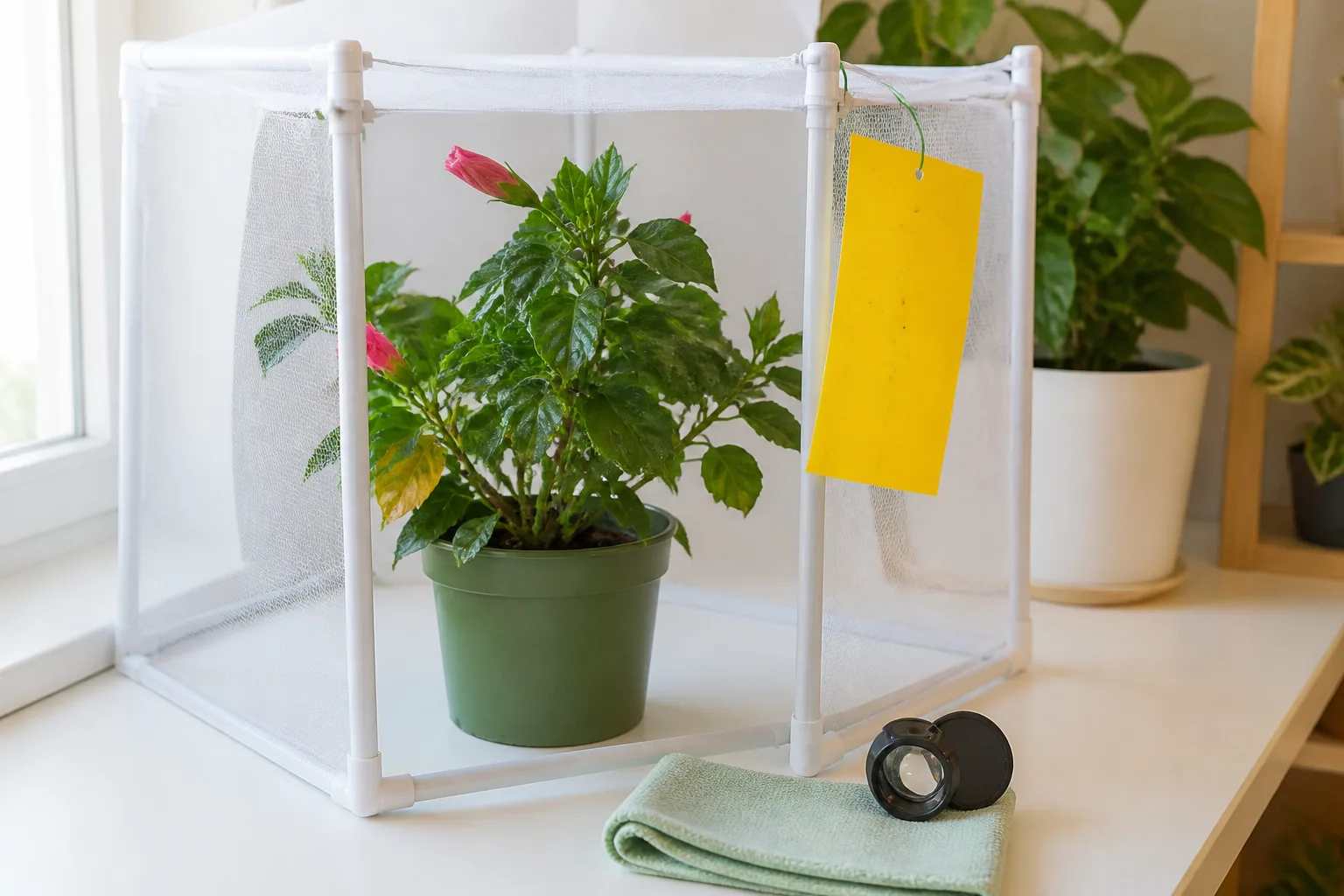
Match the first response to the symptom
| What you notice | Check first | Useful first move |
|---|---|---|
| Long, sparse shoots and smaller leaves | Light level and distance from the window | Move the plant closer or add supplemental light; wait for new growth before pruning heavily. |
| Yellow leaves with wet, slow-drying mix | Drainage hole, saucer, and root-ball condition | Stop watering until the top layer dries, clear blocked drainage, and inspect roots if decline continues. |
| Limp leaves with a very light pot | Dry mix and how long it has been dry | Water slowly until excess drains; avoid leaving the plant to dry completely again. |
| Pale, papery patches after a move | Sudden increase in direct sun or wind | Return it to bright shade and reintroduce stronger light gradually. |
| Fine stippling, webbing, sticky residue, or scale-like bumps | Undersides, stem joints, and newest growth | Isolate the plant, rinse or wipe affected areas, and identify the pest before choosing a labeled treatment. |
| Buds falling before opening | Drying episodes, a move, or abrupt temperature change | Stabilize moisture and placement; do not increase fertilizer as the first response. |
For a small infestation, isolate the plant and remove visible pests with a water rinse or damp cloth where the leaves tolerate it. Recheck new growth every few days because eggs and hidden insects may survive a single cleanup. If you use an insecticidal soap or horticultural product, choose one labeled for indoor ornamental plants and the specific pest, test a small area first, and follow the product label; do not spray a stressed plant in hot direct sun.
NC State Extension lists blue passionflower’s leaves and stems as toxic if eaten, with cyanogenic glycosides as the toxic principle. Keep fallen leaves and pruning debris away from curious children and pets, and do not assume that an ornamental passionflower is the edible passionfruit species. If a person or animal ingests plant material, contact a qualified poison-control or veterinary professional rather than trying a home treatment.
Conclusion
Indoor passionflower care works best when you plan for a vine: identify the species, give it strong usable light, install a stable support, and keep the root ball moist without letting it sit in water. Use the mix, pot weight, and new growth to guide watering, feeding, and pruning instead of following a rigid calendar. A bright summer outdoors can help, but transition the plant gradually and inspect it before it returns indoors.
Blue passionflower can flower inside, yet a healthy vine may remain a foliage plant in a dim home. If flowers matter, improve light first and give the plant time to mature; hand pollination matters only if you also want fruit. With those expectations and a weekly check of tendrils, soil, and leaf undersides, you can keep the plant vigorous without letting it take over its corner.