How to Force Paperwhite Narcissus to Bloom Indoors
Force paperwhite narcissus indoors without pre-chilling. Follow the water or soil steps, a practical bloom timeline, and a measured way to prevent floppy stems.
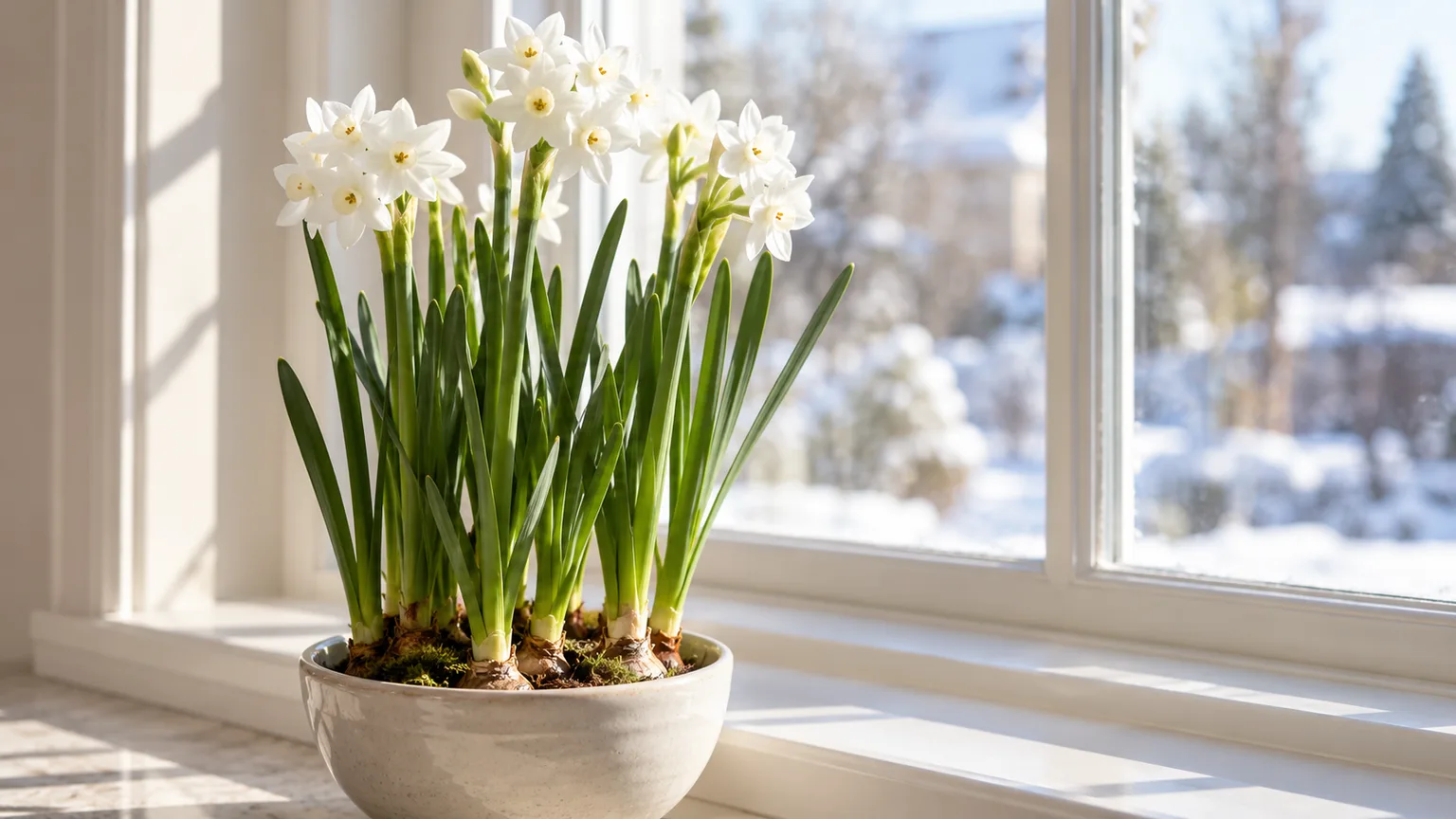
Paperwhite narcissus is one of the few winter-flowering bulbs you can bring into bloom indoors without first chilling it in a refrigerator or cold shed. Set the bulb over pebbles and water, or plant it in potting mix, then let its stored energy produce roots, leaves, and fragrant white flowers.
The part that takes judgment is not the basic planting. It is deciding how to manage water, when to move a bowl into brighter light, and what to do if the stems grow too tall. Paperwhites can bloom quickly, but warm rooms and a high waterline make a rushed display more likely to flop or rot. A steady setup gives you better odds than trying to force the calendar.
The quick answer: give roots water and shoots a cool, bright start
To force paperwhite narcissus indoors, place firm bulbs pointed end up in either a shallow bowl of clean pebbles or a draining pot of loose potting mix. In a pebble bowl, add water only to the flat root-forming base of each bulb; in soil, keep the mix lightly moist and let excess water drain. Paperwhites do not need a cold period, so skip refrigerator chilling.
Keep the container in a cool, bright place as roots and shoots develop, away from radiators and hot air vents. Check a pebble bowl often because evaporation can expose roots, but never refill it so high that water covers the bulb. Many indoor growers plan around four to six weeks from planting to flowers, though bulb size, cultivar, starting condition, and temperature can move that window in either direction. Cornell’s Flower Bulb Research Program notes that flowers may open within two to three weeks under forcing conditions, while the RHS recommends allowing six to ten weeks for winter flowering; use a range, not a promised date. (Cornell Flower Bulb Research Program; RHS guidance on bulbs for Christmas flowering)
Choose fresh bulbs and work backward from your bloom date
Buy bulbs sold for indoor forcing and choose ones that feel firm, heavy, and intact. Avoid bulbs with a soft or dark basal plate, wet mold, deep cuts, or a sour smell. The basal plate is the disk at the flat bottom of the bulb where roots emerge; damage there can prevent the bulb from anchoring or encourage rot. If the bulbs arrive in a sealed bag, take them out so air can circulate and store them in a cool, dry place until planting. White Flower Farm advises room-temperature storage in a dark place for several weeks, but bulbs are best planted while they remain firm rather than held until they begin to shrivel. (White Flower Farm’s paperwhite growing guide)
For a winter centerpiece, start with your desired display date and count back at least four to six weeks. If the date matters—a holiday meal, for example—give yourself more slack: begin six to eight weeks ahead and plant a second, smaller bowl seven to ten days later. The second batch is your backup if the first one is early, late, or uneven. Keep a label with the planting date and cultivar so you can use your own results to improve next year’s schedule.
Bulb size and storage history matter, but room temperature often determines how quickly growth moves. A warm living room may speed development and stretch foliage, while a cool room slows the plant. A bulb that has already started rooting may bloom sooner than a dry dormant bulb. Since paperwhites need no chilling, do not delay them in a refrigerator hoping to “prepare” them; that is a requirement for many other spring bulbs, not this one.
Paperwhites are sold as Narcissus papyraceus or Narcissus tazetta subsp. papyraceus; choose bulbs labeled for indoor forcing. (RHS paper-white narcissus profile)
Choose potting mix or a pebble bowl
Both methods can produce flowers. Choose pebbles if you want a decorative, soil-free display and do not mind watching the waterline. Choose potting mix if you prefer a more forgiving moisture buffer, want the bulbs to stand in a conventional pot, or may try planting them outdoors after flowering. Neither method needs fertilizer for the first indoor bloom; the bulb carries its own stored food for that flush.
Soil is easier to manage and drain
A soil pot uses regular indoor potting mix in a container with drainage holes. The mix holds moisture around new roots but allows excess water to leave, so it is usually easier to correct a watering mistake than in a bowl with no drain. Set the bulbs with their pointed ends upward and leave the upper portion exposed; do not bury the whole bulb in a wet, compact mix.
Soil is not a guarantee that the bulb will flower again next year. Indoor forcing spends stored energy, and the bulb may need outdoor growing conditions and a full season of green leaves to recover. Treat soil as the more practical choice if you want to give a spent bulb a chance outside, not as a promise of repeat blooms.
Water and stones make a visible, soil-free display
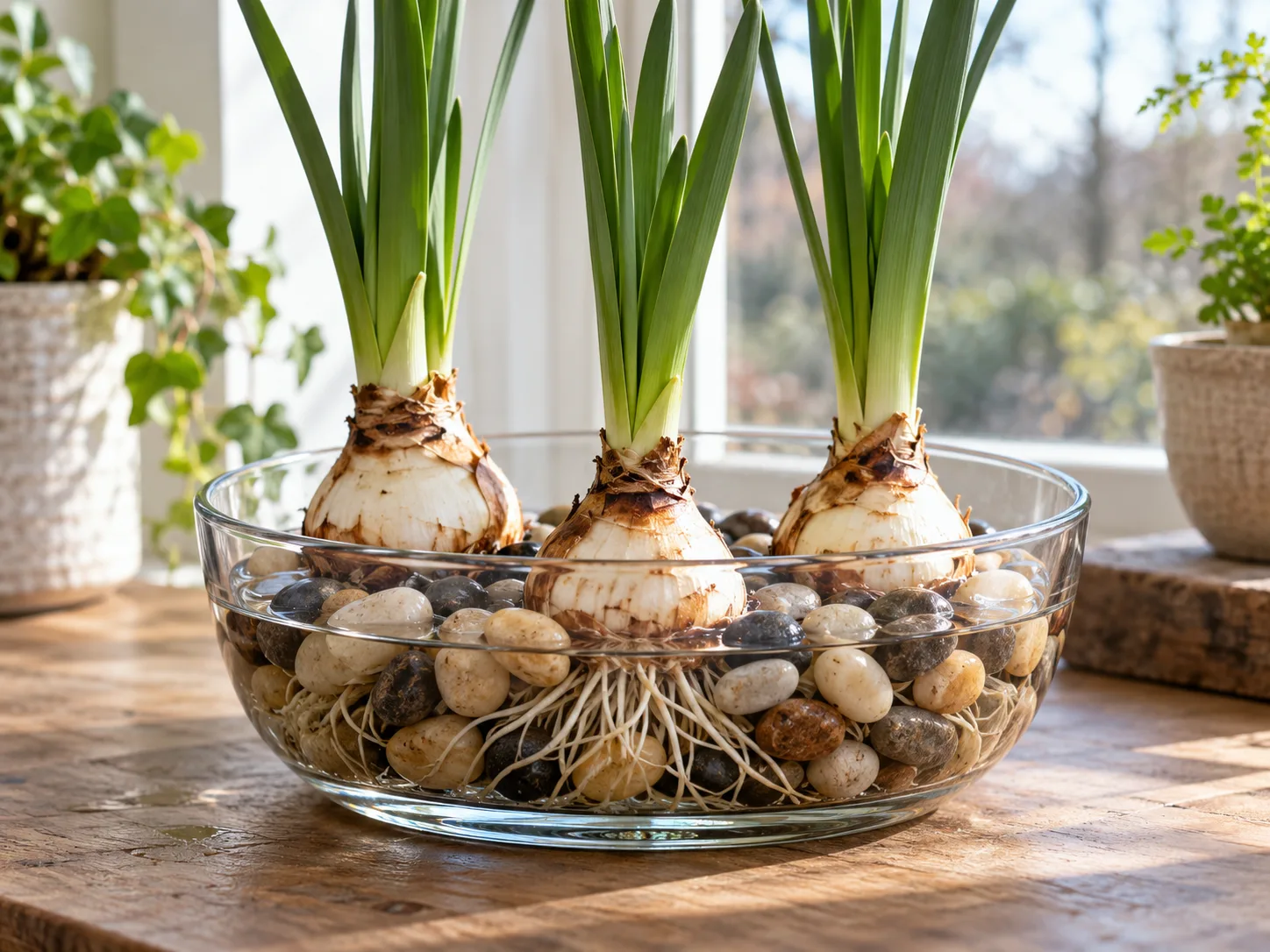
A bowl of pebbles shows the roots and keeps loose potting mix off a table, but its waterline needs attention. The bulb should be held above the water while its roots reach down; the roots can sit in water, but the bulb itself should not. This method is simple when you check the bowl every day or two and add only enough water to meet the basal plates.
Use clean gravel, aquarium stones, or small marbles to wedge around the bulbs. Avoid narrow, top-heavy containers that tall stems can tip. Water shows root growth; soil is less sensitive to small changes in moisture. The RHS and White Flower Farm describe both pot and stone-bowl methods. (RHS guidance on bulbs for Christmas flowering; White Flower Farm)
Assemble a stable container before you plant
For a pebble setup, choose a watertight bowl about three to four inches deep. A wide, low bowl is more stable than a narrow glass; it also lets several bulbs make a fuller display. Add a layer of clean stones, then test where the bulbs will sit before adding water. The basal plates should be close to the future waterline, while the rounded sides and necks remain above it.
For soil, use a pot with drainage holes and a saucer that you can empty. A shallow pot can work, but choose one wide and heavy enough to support the foliage once it reaches above the rim. Set bulbs close together for a clustered look, leaving enough space that they do not press hard against each other or the sides. You do not need a rich bulb fertilizer or extra plant food for this short indoor display.
If you are sensitive to perfume, start with one bowl in a larger room; several blooms can scent a small space.
Force paperwhites in stones and water
Water forcing is the classic paperwhite display. It works because the bulb contains enough stored energy to make a first set of roots, leaves, and flowers. The stones provide physical support; they are not a substitute for soil nutrients, so treat the bowl as a seasonal arrangement rather than a long-term growing system.
- Add stones. Cover the bottom of a watertight bowl with roughly one to two inches of clean pebbles or gravel. Choose a material that holds the bulbs upright but leaves open gaps for roots.
- Set the bulbs. Place each bulb with its flat basal plate down and its pointed tip up. Snug spacing helps the group support itself, but do not force the bulbs together.
- Anchor them. Tuck stones around the lower sides of the bulbs. Keep the necks and growing tips visible; stones should steady the bulbs, not bury them.
- Set the waterline. Add water until it just reaches the basal plates or sits a fraction below them. If water covers the bulb’s body, pour some off immediately.
- Check and top up. Inspect the bowl daily at first, then every day or two once roots are visible. Add water in small amounts when roots are no longer reaching it. If the water turns cloudy or smells stale, empty and replace it with clean water.
Root tips will start growing into the water and between the stones. If they dry out briefly, top up the bowl; if the bulb base stays submerged, lift the bulb and check that it is still firm. A waterline that remains above the basal plate can make the bulb soft and rotten. Gardening Know How and White Flower Farm both emphasize keeping the bulb above the water while the roots reach down to it. (Gardening Know How’s paperwhite forcing instructions; White Flower Farm)
Force paperwhites in potting mix
To force bulbs in soil, fill a draining pot with fresh, loose potting mix and moisten it before planting. The mix should feel evenly damp, not saturated. Set the bulbs pointed end up, close enough for a full display, and cover only the lower part of each bulb so the neck and tip are visible. Water once to settle the mix, then let the pot drain completely and empty its saucer.
Place the pot somewhere cool and bright, away from direct heat. Check the soil with a fingertip rather than watering every day by habit. When the upper layer begins to dry, water thoroughly and let excess run out. A pot without drainage can trap water around the bulb and is much less forgiving, so if your decorative container has no holes, use it as a cover pot for a draining nursery pot instead.
Do not add fertilizer to “make it bloom faster.” Fertilizer cannot replace a weak or depleted bulb, and extra feeding is unnecessary for the first flowering cycle. If the potting mix is staying soggy, improve drainage and reduce watering; if the bulb becomes mushy, discard it rather than trying to rescue tissue that has rotted.
The RHS recommends bulb fibre or peat-free multipurpose compost for pot-grown bulbs and notes that paperwhites can be planted with their tips just below the surface. Its advice also calls for support when the stems become lanky. Soil depth and exact placement can vary by pot, so keep the bulb neck clear and prioritize drainage. (RHS guidance on bulbs for Christmas flowering)
Rooting stage: what to do before shoots stretch
The first goal is a firm root system, not fast leaf growth. A cool room—around 50 to 60°F if you have one—slows the pace and helps you inspect the bowl without placing it in darkness. Paperwhites are not like tulips or many daffodils: they do not require a simulated winter chill. A cool start is simply a way to moderate growth and give roots time to establish.
Keep the container out of direct heat from radiators, fireplaces, ovens, or forced-air vents. In a water bowl, verify the waterline often; in soil, keep the mix damp but airy. Roots are a better progress signal than the number of days on the calendar. White Flower Farm suggests checking for roots by gently tugging the bulb after it has been planted; once a bulb resists because roots have anchored it, it is established enough to move into brighter light. (White Flower Farm)
Do not cover paperwhite bulbs in a dark box just because other forced bulbs are kept dark during their chill period. Paperwhites need no such cold dormancy, and leaving green shoots in dim conditions encourages them to stretch. Some growers begin them in a cooler, lower-light location for a short time, but move them into good light as soon as active shoots appear. If the container is already sprouting when you buy it, start with light rather than trying to reset its growth.
Move growing paperwhites into bright light
Once roots are developed and shoots are visible, give the container bright light and keep it in a relatively cool room. A bright window is useful, though intense midday sun through glass can heat the bowl and accelerate flowering. Turn the container every few days if the stems lean toward the window. A plant that is leaning evenly toward one side is responding to light; rotating the pot helps the next growth stay more balanced.
The growing stage and the bloom stage have different priorities. Before buds open, light and moderate temperatures help shoots stay sturdy. Once flowers are open, cooler conditions and indirect or diffused light slow fading. Move the pot away from a hot window, radiator, or sunny table when you see color in the buds. This does not stop the display; it usually gives the open flowers a longer, tidier run.
If you have no cool room, use the brightest available location that is away from heat sources and watch the water or soil closely. Warm indoor air is not fatal, but it can shorten the timetable, speed flower opening, and increase the chance of long stems. The RHS recommends a warm, sunny windowsill for forcing paperwhites, while general indoor bulb guidance notes that cooler positions keep flowers longer; in a home, the practical balance is a bright spot that is not hot. (RHS guidance on bulbs for Christmas flowering; RHS guide to creating an early spring indoors)
Keep stems shorter and flowers open longer
Paperwhite stalks can rise faster than the bowl can support them. That is common, not proof that the bulbs are unhealthy. Warmth, weak light, a tall cultivar, and an open container with little anchoring all contribute to a display that leans. You have several options, from simple growing conditions to a special growth-control method.
Use temperature, light, and simple supports first
Start with good light and the coolest comfortable place available while leaves and flower stalks are growing. A wide, heavy bowl reduces tipping, and grouping bulbs can give stems some mutual support. If the stalks already lean, insert a slim stake near the container edge or use a loose plant ring; tie stems gently, leaving enough room for the flower stalks to continue expanding. Do not cinch twine tightly around soft green stems.
Physical support does not change how tall the plant grows, but it is predictable and does not risk damaging the bulb. When buds begin to open, move the bowl out of direct hot sun and away from heating vents so the flowers last. If you plan to buy bulbs again, look for a cultivar described as compact or shorter-growing. White Flower Farm notes that ‘Ariel’ is somewhat more compact than ‘Ziva,’ though actual height still varies with conditions. (White Flower Farm)
Use the Cornell alcohol method only when you can measure it
Cornell’s Flower Bulb Research Program tested dilute alcohol as a way to shorten paperwhite foliage. In its published instructions, the bulbs first grow in plain water until roots form and the green shoot reaches about one to two inches above the bulb. Only then does the grower replace the water with a measured solution of roughly 4 to 6 percent alcohol. Cornell reports stems and leaves about one-third to one-half shorter, with flowers remaining similar in size and longevity. (Cornell Flower Bulb Research Program’s paperwhite experiment)
For a 5 percent solution made with 40 percent alcohol spirits, Cornell’s example is one part spirit to seven parts water. Use this only as a precisely measured watering solution after roots have formed, not as the initial water in the bowl. Do not use beer or wine; their sugars can harm the plant. Cornell warns that concentrations above 10 percent can cause growth problems and that much stronger solutions are toxic to the bulbs. If you do not want to measure accurately, skip the method and use a stake or ring instead.
The plant-height result is well described, but Cornell presents its explanation—that mild water stress slows cell expansion—as a working theory. Treat alcohol as an optional horticultural technique, not a general fertilizer or a reason to pour liquor into a bowl at random. Store spirits and any prepared solution away from children and pets, and never leave the treated bowl where an animal might drink from it.
Fix slow growth, rot, or floppy stems
When a bowl seems stalled, check the bulb, root contact, and room before changing several things at once. A healthy bulb stays firm. The water should meet the basal plate without covering the bulb, or the soil should be moist but not soggy. A room that is very cold can slow growth; a warm, dim room can make shoots grow quickly but weakly.
- No roots or shoots after a few weeks: Check that the bulb is firm and positioned with its basal plate down. If roots cannot reach water or the soil has dried completely, correct that condition. If the bulb is soft, foul-smelling, or visibly moldy, replace it.
- Bulb becomes soft at the base: The waterline may have covered the bulb, or soil may be holding too much water. Remove the bulb from the bowl or pot. Discard it if the basal plate is mushy; a rotted bulb will not recover by adding cleaner water.
- Long leaves before buds: Move the container to brighter, cooler conditions and rotate it for even light. If the stems have already stretched, provide gentle support; do not cut healthy leaves to make the plant look shorter.
- Flowers open too quickly: Move the bowl to a cool place away from direct sun and heat. Warm rooms speed the display, so there is no reliable way to make already-open flowers return to bud.
- No flowers, only foliage: Allow time through the reasonable forcing window, but consider whether the bulb was small, damaged, or previously forced. Extra fertilizer will not restore stored energy to a depleted bulb.
Keep the fix proportional to the symptom. Do not move an actively growing container from room to room several times a day, and do not add alcohol, fertilizer, or more water as a guess. Check one condition, make a measured correction, and give the plant a few days to respond.
Stretch a display with staggered bowls and cool placement
A single bowl often peaks all at once. To keep flowers coming, plant smaller groups at intervals rather than filling one large container. White Flower Farm suggests planting paperwhites every two to four weeks for a succession; if you want a shorter winter display, a one-week gap between two bowls is a practical starting point. Keep each bowl labeled so you can tell whether the timing changed because of cultivar, room temperature, or planting date. (White Flower Farm)
Choose a location for fragrance as well as light. A few open bulbs can perfume a small room. If the scent feels too strong, move the bowl to a larger, ventilated room or start fewer bulbs in the next batch. There is no need to mist the flowers; misting does not solve a strong fragrance or keep the petals open. Once a flower cluster is in bloom, a cool bright position away from hot direct sun is the simplest way to slow fading.
Some individual flowers may last only a week or two in a warm room, while new buds elsewhere on the stalk continue to open. This is why several smaller containers can produce a steadier display than one large bowl. The first group can be the centerpiece, and a later group can remain in its rooting stage until the first one begins to fade.
After the flowers fade: save or discard the bulb?
Do not expect a forced paperwhite to bloom again indoors the next year. The bulb has spent much of its stored energy producing roots, leaves, and flowers in a short period, and a pebble bowl supplies little beyond water and physical support. White Flower Farm recommends discarding spent forced bulbs, while the RHS advises allowing paperwhites to dry off and store for later container planting. The practical outcome depends on the starting bulb, the forcing medium, and the climate where you can grow it afterward. (White Flower Farm; RHS guidance on bulbs for Christmas flowering)
If a bulb was grown in soil and you want to try to save it, cut off the faded flower stalk but leave green leaves in place until they yellow naturally. Those leaves help the bulb rebuild reserves. In a mild-winter region with a sunny, well-drained garden, you can plant the rested bulb outside and see whether it establishes; do not count on flowers the next season. Bulbs grown only in water are especially poor bets for a repeat show, so composting them after the leaves die is reasonable.
For broader care—cultivars, outdoor growing, and the limits of rebloom—see our paperwhite narcissus growing guide. If you are forcing bulbs that do need a cold period, our guide to forcing bulbs indoors explains how their calendar differs from paperwhites.
Protect pets and children from paperwhite bulbs
Keep paperwhite bulbs, foliage, and flowers out of reach of children and pets. The ASPCA lists daffodil, narcissus, and paperwhite under Narcissus spp. as toxic to dogs, cats, and horses. Its animal-poison-control entry names lycorine and other alkaloids as toxic principles and identifies the bulb as the most poisonous part. Do not store forcing bulbs in a bag that could be mistaken for food or leave a bowl where a pet might chew the bulbs or drink the water. (ASPCA Animal Poison Control’s daffodil entry)
The ASPCA lists vomiting, drooling, and diarrhea among possible signs; larger ingestions can cause more serious effects. If you think an animal ate a bulb or plant part, contact a veterinarian or animal poison-control service promptly and keep the plant label available. Do not wait for symptoms before asking for professional guidance. The Royal Horticultural Society also warns that daffodil bulbs are poisonous if eaten, so keep them separate from food bulbs and kitchen storage. (ASPCA Animal Poison Control; RHS daffodil guide)
Conclusion
Paperwhite narcissus is easy to force when you match the method to the display you want: use pebbles and water for a clean centerpiece or potting mix for a draining, easier-to-manage container. The bulbs need no cold treatment. Keep water at the basal plate, give new shoots bright light, and plan for several weeks rather than relying on one exact bloom date.
If stems start to lean, correct warmth and light first, then support them. Cornell’s measured alcohol treatment can shorten foliage, but it is optional and must be diluted and timed precisely. After flowering, leave any green leaves intact if you want to try an outdoor recovery; otherwise, treat the bulb as a one-season display. Keep every bulb safely away from pets and children, and enjoy the flowers where their strong fragrance suits your home.