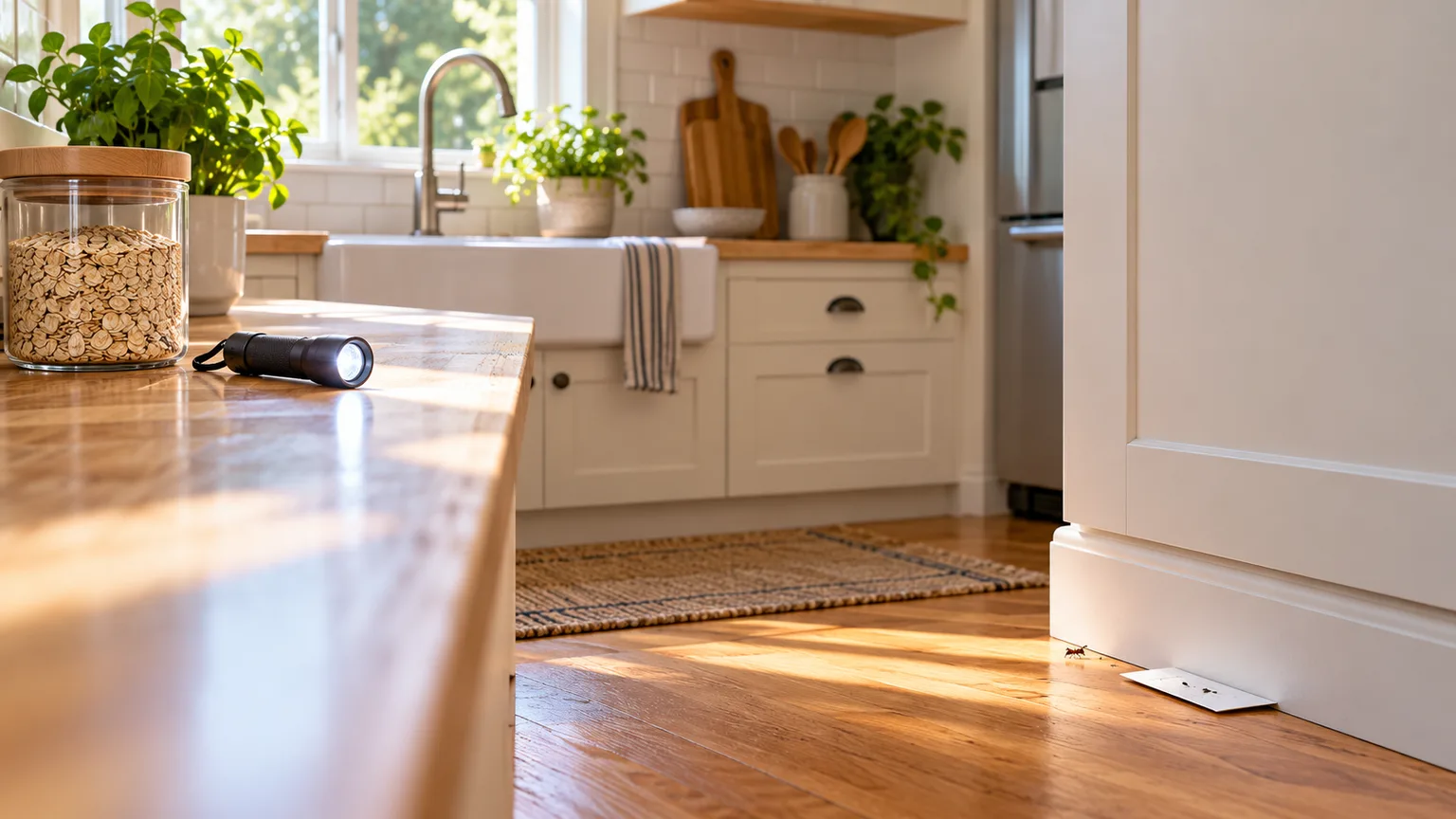
How to Get Rid of Roaches in Your Garage
Find garage roach hiding spots, remove food and moisture, seal door gaps, and use traps or labeled bait safely without fogging the whole space.
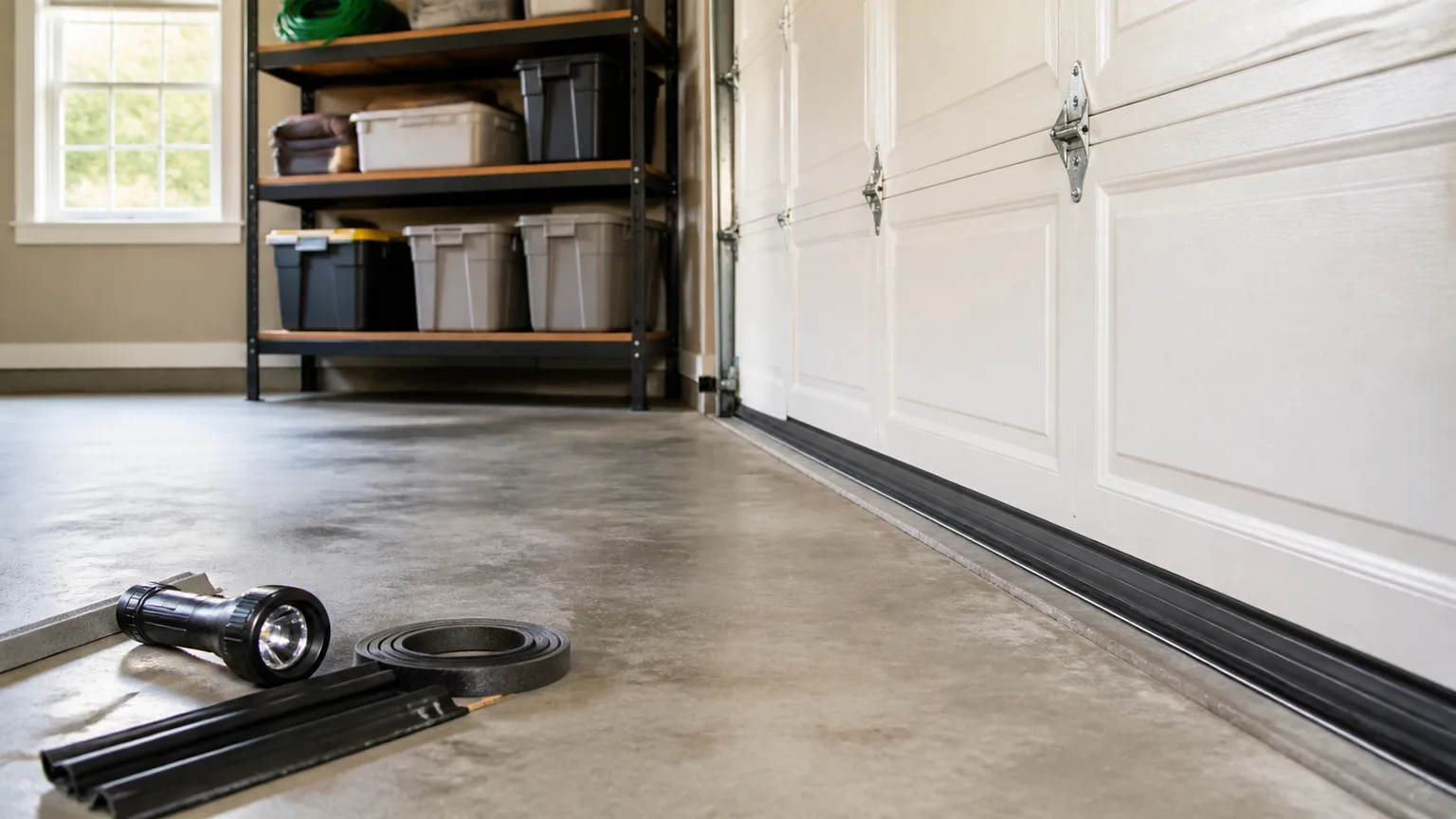
To get rid of roaches in a garage, first find whether they are entering from outdoors or living in stored clutter, then remove food and moisture, seal the route they use, and monitor the area. If traps show repeated activity, use a cockroach bait labeled for that garage site and place it only where children and pets cannot reach it. Avoid foggers and whole-room spraying: they may miss the cracks where roaches hide and add exposure or fire hazards.
A garage is often a transition zone between a yard, a house, and storage. One large roach by the overhead door can be a stray outdoor insect; repeated catches, small nymphs, or roaches appearing inside the home call for a more systematic response. The goal is not to make the garage chemically sterile. It is to remove the shelter and resources that support roaches, block entry, and treat the limited active spots only when evidence calls for it.
The fastest garage-specific plan
Start by photographing the insect or saving a clear description: approximate size, color, time seen, and exact location. Place several sticky monitors flat against walls and near likely routes, such as the overhead-door corners, a side door, a utility sink, and the wall shared with the house. Number them and check them daily for several days. Meanwhile, remove food scraps, cardboard piles, standing water, and clutter that hides the floor-wall edges.
Use what the traps show to decide the next step. A single large roach caught next to an exterior threshold, with no other signs, points first to exclusion and outdoor cleanup. Repeated catches, different life stages, or activity near stored food or the house-entry door justify closer inspection and a targeted bait program. Repair leaks and seal dry gaps as you find them. If a pesticide is needed, confirm the product label allows both cockroach control and the intended garage location before applying it.
Why cockroaches choose garages
Garages combine conditions that are easy to overlook: dark storage corners, cardboard or paper, pet food, organic debris, water from leaks or rain, and doors that open directly to the yard. A roach can feed on small crumbs, spilled birdseed, grease near a workbench, dead insects, or residue inside a trash can. Warmth from a water heater or an attached wall can make a protected corner more comfortable, while a damp slab edge or leaky hose provides moisture.
The space can also act as a corridor. Roaches may enter through a worn garage-door bottom seal, a gap around a side door, foundation cracks, pipe and cable openings, vents, or objects brought home from storage. Garage-specific pest guidance likewise identifies stored pet food, cardboard, water, clutter, and gaps around doors and utilities as common contributors (Combat Bugs). That list is useful for inspection, but it does not mean every garage sighting signals an established colony.
Inspect the garage before treating it
Choose a cool, well-lit time when you can see behind stored items. Begin at the exterior perimeter and move clockwise so no wall is skipped. Look along the foundation, door jambs, overhead-door tracks and corners, window frames, vents, and points where pipes or cables pass through. Then inspect the inside edges of shelving, under workbenches, behind bins, around utility equipment, near floor drains, and along the wall shared with the house.
Use a flashlight to inspect narrow dark spaces without reaching blindly into them. Move one shelf or box at a time and check both the floor and the item being moved. Look for live or dead roaches, egg cases, cast skins, and dark droppings or smears in sheltered corners. Note the location rather than immediately spraying or caulking it; that location can help you place a monitor. If you find a nest of another pest, a damaged electrical cord, or a gas-appliance issue while inspecting, stop and address that separate hazard safely before continuing.
Read the signs without overdiagnosing
One roach sighting is evidence of a roach, not proof of a breeding population. Roaches are mostly active at night, so seeing one in daylight may mean it was disturbed, arrived with a box, or is searching for shelter; it does not identify the cause by itself. A single sticky-board catch is also only a snapshot. Keep monitoring and compare locations before deciding where to treat.
Repeated catches in the same sheltered location, several sizes of roach, nymphs, egg cases, or activity in more than one part of the garage make a local population more likely. Droppings and shed skins add evidence, but identification can still be uncertain without a clear specimen or photo. The National Pesticide Information Center recommends identifying the cockroach and using sticky traps to find activity hot spots before choosing control measures (NPIC cockroach guidance). If the specimen is too damaged or small to identify, your county extension office or a licensed pest professional can help.
Decide whether it is a visitor or a population
Many large cockroaches seen near garages are outdoor species that wander in from mulch, drains, woodpiles, utility spaces, or the foundation. A large reddish-brown roach near the door after rain or warm weather may be an outside visitor, especially if monitors elsewhere stay clear. Darker roaches may also be associated with damp exterior or basement-like conditions. Those clues can narrow the search but are not a reliable species diagnosis on their own.
Small tan roaches, nymphs, repeated sightings, or roaches found near food storage deserve closer attention because some species commonly live and reproduce indoors. A garage population becomes more plausible when you repeatedly catch insects behind shelving or in a warm, sheltered area rather than only at the perimeter. UC IPM distinguishes outdoor species that sometimes invade structures from indoor species that breed within them, and advises using traps to help identify what is present (UC IPM cockroach management).
Do not use the size of one adult as the only decision point. Species vary by region, and young roaches look different from adults. If activity remains limited to one exterior entry point, start by removing outside harborage and improving the seal. If monitors catch several roaches or show movement toward the house, treat it as a persistent problem and inspect the connected rooms as well.
Remove food and hiding places in one cleanup
Clear a working strip along each wall so you can see the slab, baseboard, and lower edges of stored items. Sweep or vacuum crumbs, dead insects, seed, and other debris, then empty the vacuum contents into a sealed bag. Remove damp cardboard, paper bags, and piles of folded fabric that have been on the floor. Keep items you need, but place them on shelves or in closed plastic totes so the floor and wall edges remain visible.
Clean sticky spills and food residue from work surfaces, recycling bins, and the floor beneath storage. Rinse drink cans and food containers before they go into recycling, and do not leave an open garbage bag or pet-food scoop beside a bin. Use a lidded trash can, empty it regularly, and wash out residue if liquids or food have leaked. The aim is not a spotless showroom; it is to remove dependable food and reduce the number of dark, undisturbed hiding spaces.
When roach debris is present, avoid dry sweeping it into the air. Use gloves, damp wiping, or a vacuum with a suitable filter, and bag debris promptly. UC IPM notes that cockroach debris can contain allergens and recommends a HEPA-filtered or well-filtered vacuum for cleanup (UC IPM). If there is extensive contamination or anyone in the household has asthma or severe allergies, ask a pest professional about safe cleanup rather than disturbing a large accumulation.
Store pet food, seed, and recyclables safely
If pet food, chicken feed, wild-bird seed, grass seed, or fertilizer is stored in the garage, check the packaging for tears and spills. Transfer edible dry goods to sturdy, tightly lidded containers that roaches cannot easily chew through; thin bags and cardboard do not provide the same barrier. Wipe the shelf and floor before restocking, because spilled crumbs under a sealed container can still attract insects.
Keep the container lid shut after every use, and avoid leaving a full food bowl on the garage floor overnight. If an animal needs continuous access to food, keep the routine your veterinarian recommends and move the feeding station indoors or to a place that can be cleaned and monitored. Put dirty recyclables in a container with a lid and rinse food residue from jars, cans, and bottles before storing them. Avoid keeping compost, open produce, or grease-soaked rags in the garage.
If the garage must hold garbage, choose a clean, closed bin with a tight-fitting lid and keep it away from the door that leads into the home. When practical, move it outside to a stable, covered location away from exterior doors and follow local rules for storage. A pest-management provider also recommends sealed storage for food and avoiding indoor garage garbage where feasible; these measures address the food source instead of relying on bait alone (Combat Bugs).
Dry the garage and fix moisture sources
Check for damp patches along the slab, under a utility sink, around a water heater, beneath a refrigerator or freezer, and near hose connections. Look up as well: roof or window leaks can wet cardboard long before water pools on the floor. After rain, inspect the overhead-door corners, side-door threshold, and wall where downspouts or gutters direct runoff. Condensation on cold pipes or equipment can also create recurring dampness.
Repair the source instead of repeatedly wiping the same spot. Tighten or replace a leaking hose connection, fix a plumbing leak, clear a clogged downspout, and redirect surface water away from the foundation where appropriate. Dry wet floor mats, mop up vehicle drips, and improve ventilation if condensation persists. Do not block a floor drain, combustion-air opening, or required ventilation while trying to make the room drier; use a qualified contractor if the source involves building drainage or fuel-burning equipment.
Moisture management is especially useful when catches cluster at a drain, water heater, or damp wall. But a dehumidifier will not fix a leaking pipe, and sealing a crack will not remove water trapped behind a wall. Recheck the area after the next rain or after the equipment has run. A dry surface with a persistent damp odor or recurring stain deserves a building repair, not just a pesticide treatment.
Seal the garage door, side door, and foundation
Close the overhead door and inspect its bottom seal from inside with a flashlight. Gaps at either corner, a torn seal, or an uneven section where daylight shows can give insects an entry route. Replace a worn bottom seal with a compatible door part, and have the door adjusted if it does not sit evenly. Do not bend tracks or alter a spring yourself; garage-door springs are under tension, so use a qualified repair technician for mechanical adjustments.
Check the side door for damaged weatherstripping, a loose threshold, or a gap beneath the sweep. Close openings around pipes and cables with a sealant suited to the material and location. Use screening on vents where permitted, but do not cover ventilation openings required by code or the appliance manufacturer. Exterior cracks should be repaired with an appropriate material after the area is dry; large foundation movement or recurring water intrusion needs a building professional.
Finish by checking the interior door between the garage and home. Repair its weatherstripping and closer if the door fails to latch, and keep it closed. Do not add a sweep or alter a fire-rated door in a way that conflicts with its listing or local code. UC IPM recommends door sweeps, weatherstripping, and sealing access cracks as part of exclusion, while pest-prevention guidance similarly emphasizes door and utility gaps (UC IPM; Terminix prevention guidance).
Map activity with sticky monitors
Sticky monitors help answer the practical question: where are roaches walking? Place boards flat against walls, with an open end aligned to the wall edge. Use a few at a time near the overhead-door corners, the side-door threshold, storage shelves, utility equipment, floor drains, and the shared house wall. Avoid placing every monitor in one corner; a spread-out map helps you compare perimeter activity with activity deeper in the garage.
Number each monitor and write down its location and date. Check it daily at first, record whether it caught anything, and note approximate size or life stage. If one monitor catches roaches repeatedly, inspect the nearest shelf, gap, food source, or damp spot and move any bait plan toward that route. If the only catches are beside the outside door, focus first on the threshold and exterior harborage. Replace or discard used boards according to their instructions and keep them away from children and pets.
Sticky monitors are for detection and tracking, not proof that every roach has been eliminated. A trap with no catch may simply be outside the insect’s route. Keep the map for several days before and after making changes so you can tell whether catches are declining. UC IPM recommends placing traps near walls and suspected activity, checking them daily until the hot spots are clear, and keeping records to evaluate control (UC IPM).
Use bait only where roaches travel
If monitoring confirms repeated activity, a cockroach bait can be more useful than spraying the open floor. Choose a product whose current label lists cockroaches and allows the intended application site in a residential garage. Place it close to a confirmed route or harborage, such as behind a shelf near droppings or beside a monitor that catches roaches. Bait does not draw insects from every part of a garage; good placement and removal of competing food matter.
Use only the amount and placement directed by the label. Keep bait off worktops, vehicle surfaces, food shelves, and places where a child, pet, or wildlife can reach it. A protected station may help limit contact, but it still needs to be inaccessible and inspected on the schedule printed on its label. Do not put bait where it can get wet, be crushed, or be contaminated by cleaners, dust, or other pesticides.
Avoid spraying over or beside bait unless both products’ labels allow it. Some pesticides repel roaches or interfere with their movement, which can scatter them rather than resolve the source; the NPIC recommends using IPM and following the product label when pesticides are selected (NPIC). If a bait is not being eaten or catches do not decline after the label’s stated period, reassess the species, placement, food competition, and product choice instead of adding more pesticide automatically.
Choose a station, gel, or dust by site
An enclosed bait station is often the simplest option for an accessible garage because it keeps bait contained, although it is not childproof or pet-proof in every situation. Set it in a protected location that roaches can reach along a wall, while people and animals cannot. Gel bait may fit a narrow crack or crevice, but it is exposed during application and should be used only at label-approved sites where it cannot be touched, washed away, or contaminated.
Insecticidal dust is intended for specific dry, undisturbed voids and should not be scattered in visible piles across a garage floor, workbench, or storage shelf. Dust can become airborne when disturbed, and dampness can reduce performance. A garage has frequent movement, sweeping, vehicles, and stored belongings, so a void treatment may be more appropriate for a licensed professional than a do-it-yourself application. Never treat a wall cavity, drain, or exterior perimeter unless the product label allows that precise site and method.
Skip foggers and broad spraying
Foggers and aerosol sprays can look like an easy way to treat a large garage, but they may not reach the narrow cracks where roaches hide. UC IPM notes that foggers can be hazardous, may repel and disperse roaches, and are often ineffective against protected harborages (UC IPM). A garage can also contain fuel-burning appliances, electrical equipment, vehicles, paints, solvents, or other materials that make an airborne pesticide or flammable aerosol a poor choice.
Do not assume that leaving the garage door open makes a fogger safe or effective. Follow the label’s limits for room size, ignition sources, ventilation, re-entry, and cleanup; if those directions do not clearly allow the garage setup, do not use the product there. Broad sprays can also leave residues on tools, stored items, or surfaces people touch without improving access to a hidden nest. The better first move is a trap map, source removal, exclusion, and a labeled targeted product only if monitoring supports it.
Follow the pesticide label and protect people and pets
Before buying a pesticide, read the current label and confirm the pest, site, and application method. “Indoor use” does not automatically mean that every indoor space or surface is permitted; look for language that applies to residential garages or the exact site you intend to treat. The label controls how much to apply, where to place it, whether people must leave, how long to wait before re-entry, what protective equipment is needed, and how to store and dispose of leftovers.
The National Pesticide Information Center explains that pesticide labels can have multiple versions and that users are responsible for following the directions on the product container they have (NPIC label and SDS database). If you cannot tell whether a use is allowed, contact the manufacturer or NPIC before applying it. Never mix products or transfer pesticide into a food or drink container. Store the original container upright and locked away from children, pets, animal feed, and food, following its label instructions.
Move toys, leashes, pet bowls, gardening supplies, and frequently handled tools away from any treatment area. Keep children and pets out for the full label interval, not merely until the odor fades. Avoid applying products near drains or where runoff can reach soil, stormwater, or surface water unless the label specifically permits that use. If a spill, exposure, or accidental ingestion occurs, use the product label’s emergency directions and contact poison control or the appropriate emergency service.
Keep garage roaches from entering the house
Check the door between the garage and the living space even if the main sighting is outside. Keep that door closed and make sure its latch catches. Seal suitable gaps around the frame without altering a fire-rated assembly. Do not leave pet food, garbage, recycling, or cardboard against the shared wall, and place a monitor just inside the home near that doorway if you have seen roaches crossing it.
If a monitor inside the house catches roaches, expand the inspection to the adjoining kitchen, laundry, and utility areas rather than assuming the garage is the only source. Pay attention to pipe penetrations, baseboards, and appliance gaps. Clean any food or water sources nearby and seal pathways that do not need to remain open. In apartments, townhomes, or homes with shared utility spaces, notify the owner or manager when roaches may be moving through connected walls or service areas; treating only one side may not address a shared source.
Outdoor maintenance matters too. Move firewood, leaf litter, and stored lumber away from the foundation, keep vegetation from touching walls or blocking vents, and keep trash lids closed. These steps reduce sheltered routes toward the building without requiring pesticide across the yard. A garage control plan should protect the house-entry door as carefully as the overhead door because roaches can use either path.
Follow up and decide when to call a professional
Check monitors at the same time each day for the first several days, then compare catches after cleanup, repairs, and any label-compliant bait placement. Mark each action on a simple calendar: when you removed clutter, fixed a leak, replaced a seal, or placed a bait station. It may take seven days or longer before bait-based control shows a clear decline, so judge the pattern across traps instead of expecting an overnight result (UC IPM). Continue routine monitoring after activity drops so a new entry is noticed early.
Call a licensed pest professional if you find nymphs or egg cases, catch roaches repeatedly in multiple locations, see them inside the house, or cannot locate the moisture or entry route. Professional help is also sensible when someone in the household is especially vulnerable to pesticide exposure, when the garage has complicated fuel-burning equipment, or when label-compliant products and repairs have not reduced activity. Ask the technician to identify the roach, show you the monitoring evidence, explain the likely route, and specify what they will apply and where.
What a professional inspection should cover
A useful inspection should go beyond spraying the perimeter. Ask for a review of the overhead-door seal, side door, foundation and utility gaps, stored food, damp areas, floor drain, and the door into the home. The technician should tell you whether evidence suggests an outdoor invader or a population, which traps or locations support that conclusion, and what sanitation or repair work is still needed.
Before treatment, request the product name, label-approved site, application method, re-entry interval, and any steps needed to protect pets, children, or stored items. If the technician recommends a fogger or a broad application, ask how it reaches the suspected harborage and what the label requires for your garage’s appliances and contents. A plan that combines inspection, repairs, monitoring, and a targeted treatment is easier to evaluate than a one-time application with no follow-up.
Conclusion
The most reliable way to get rid of roaches in a garage is to identify where they are moving, remove the food and moisture supporting them, and close the specific route they use. Start with a flashlight and numbered sticky monitors, clear cardboard and food debris, dry leaks, and repair the overhead-door or side-door seal. Then use a labeled bait only if the trap pattern shows repeated activity and you can place it safely.
One large roach at the threshold may be an outdoor visitor, but recurring catches, nymphs, egg cases, or activity in the house deserve a stronger response. Skip whole-room fogging, follow every pesticide label, and call a licensed professional when activity persists or the source is hidden. Keep monitoring after the garage is clean and dry so the next insect is evidence you can act on, not a reason to treat the entire space blindly.