Complete Guide to Pest Control at Home and Prevention
Use a practical home pest-control plan for ants, roaches, pantry pests, and rodents, including safe pesticide steps, follow-up checks, and when to call a pro.
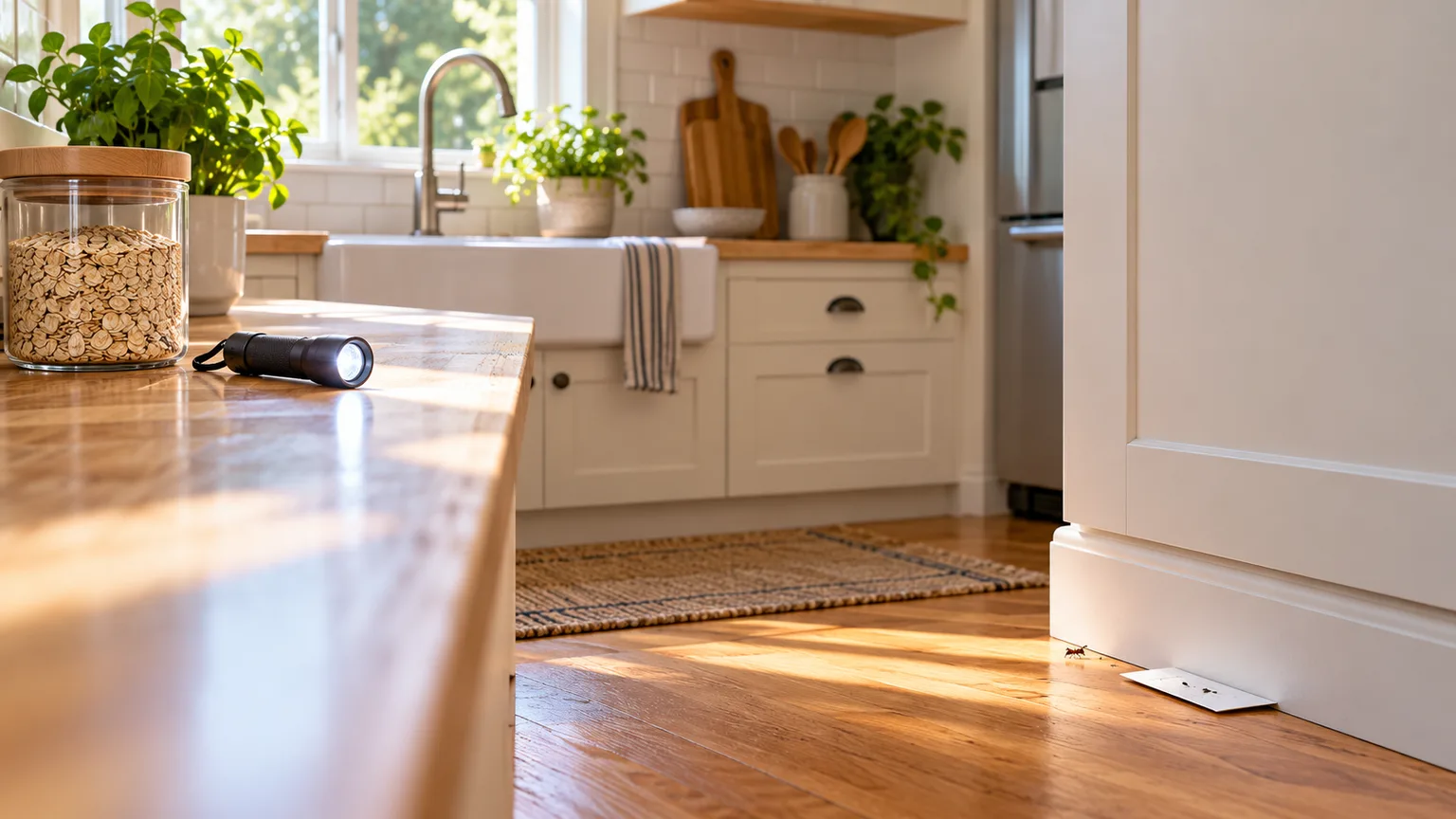
Start by identifying the pest, not by spraying the room. A sound home pest-control plan confirms what is present, finds the food, water, shelter, or opening that supports it, corrects that condition, chooses a method suited to the pest, and checks whether activity declines. That is integrated pest management (IPM): a process for solving the cause while reducing unnecessary pesticide use. Penn State Extension describes household IPM as identification, prevention, exclusion, and nonchemical control first, with carefully chosen pesticides only when needed (Penn State Extension’s household IPM guide).
A single moth by a porch light, a line of ants that appeared after a spill, and repeated cockroach sightings in a kitchen are different problems. The first may need no treatment; the second may stop when its food trail is removed; the third needs identification, monitoring, and a plan that reaches the hiding place. The steps below help you make that distinction without treating every insect as an emergency.
What effective pest control actually means
Pest control is not the same as making a home sterile. It means preventing or reducing a pest that is damaging food or property, creating a health concern, or making a space unusable. If an occasional outdoor insect wanders indoors and leaves no repeated signs, sealing a screen or simply removing the visitor may be a more sensible response than applying pesticide.
IPM treats the pest problem as a system. You gather evidence, identify the organism as accurately as possible, remove the conditions it uses, block access, and then use a targeted control if the problem still warrants it. UC IPM describes this approach in multi-unit housing as science-based, built around monitoring and records, and coordinated across the building because pests can move between units (UC IPM’s pest-prevention guidance). A homeowner can use the same logic on a smaller scale.
The practical advantage is that each action has a job. A sticky monitor can show where insects travel; it does not tell you to spray. Caulk closes a gap; it does not remove a mouse already inside a wall. A bait may control a particular insect when placed correctly; it will not fix a leaking pipe or open bag of pet food. Keeping those jobs separate helps you spend effort where it changes the outcome.
Step 1: Identify the pest and confirm active signs
Write down what you saw, where you saw it, and whether it happened once or repeatedly. Take a clear photo beside a familiar object for scale if the pest is visible, but do not handle an unknown insect, nest, droppings, or animal. Identification changes the plan: moths flying near a pantry may point to stored food, while moths near wool or a closet suggest a different source.
Look for evidence that tells you whether the pest is active and where it is traveling. Depending on the pest, that may include live insects, droppings, shed skins, webbing in a food package, gnaw marks, a nest, damaged material, or repeated catches. A single sighting is weak evidence by itself. Fresh signs in the same area, small young pests, multiple trap catches, or activity in more than one room make a persistent population more likely.
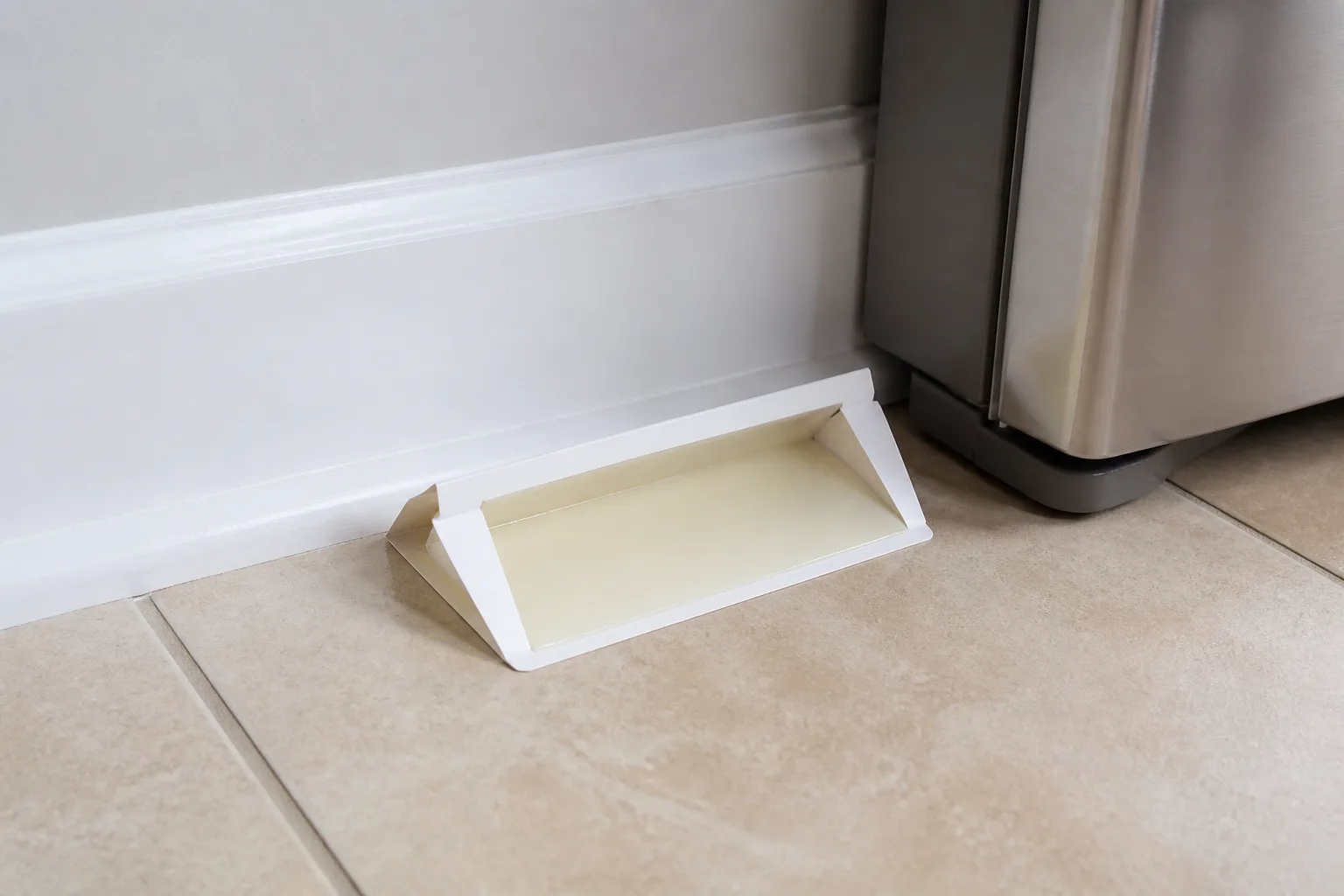
Use monitoring tools as evidence, not as a complete treatment. Sticky monitors or glue boards can help map insect movement when placed along walls, under sinks, or near suspected routes; check them regularly and record where catches occur. Penn State Extension recommends identification and monitoring as the first IPM steps, and notes that rodent signs and insect traps can help show what is present (Penn State Extension). If you cannot confidently identify a pest and the distinction affects health, safety, or the product you would use, ask a local cooperative extension office or qualified professional before treating.
Step 2: Trace food, water, shelter, and entry routes
Inspect the room where you saw the pest first, then check connected spaces. Look behind and beneath appliances, around plumbing penetrations, under sinks, inside pantry corners, near pet-food storage, along baseboards, and around exterior doors and windows. In a multi-unit building, note shared walls, utility chases, and common areas; activity can originate outside your unit.
Think in four categories: food, water, shelter, and access. Crumbs, open dry goods, pet food, grease, and uncovered trash can provide food. Leaks, condensation, damp cardboard, plant saucers, and standing water can provide moisture. Clutter, stored boxes, insulation, and undisturbed gaps can provide hiding or nesting places. Screens, door gaps, cracks, and openings around pipes can provide access.
A flashlight and a short written map are often more useful than a broad spray. Mark each sighting or trap location, then look for the route that connects them: a gap behind the stove, a wet cabinet floor, an exterior threshold, or food stored near the evidence. EPA’s consumer pest-control guidance also centers on removing the food, water, shelter, and entry conditions that allow pests to stay in a home (EPA’s Smart Pest Control guidance).
Step 3: Remove what supports the pest
Start with the source you can correct today. Put dry foods and pet food in tight-fitting containers, wipe spills, remove rubbish regularly, and avoid leaving pet food out overnight. Fix plumbing leaks and dry damp areas rather than repeatedly spraying the wet cabinet or floor. These changes reduce what is available to pests and make later monitoring more informative.
Reduce hiding places without turning every storage area into a demolition project. Break down excess cardboard, store items off damp floors, keep frequently inspected areas accessible, and vacuum or wipe visible crumbs from edges and crevices. In a garden or around a home’s exterior, pick up fallen food and standing water, keep refuse containers closed, and avoid piling debris directly against the building. Make the change that relates to the pest you identified; unnecessary pruning or stripping of a yard does not substitute for a plan.
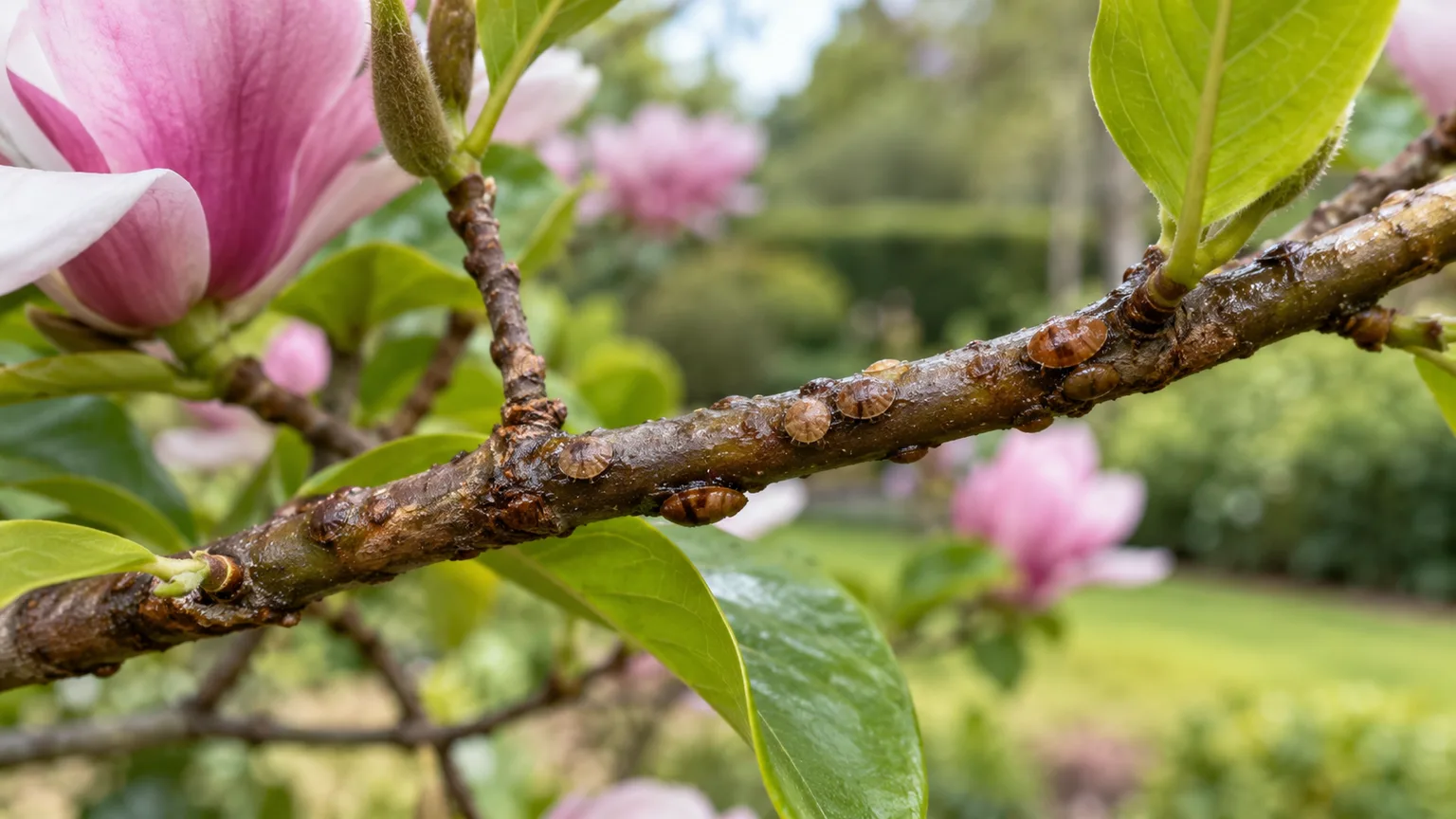
Outdoor pest management has a different goal from treating an indoor infestation. If the issue is damage to garden plants, identify the organism and assess the amount of damage before intervening. The RHS recommends monitoring, suitable plant choices, garden hygiene, and a balance that does not remove all wildlife; the Old Farmer’s Almanac describes physical barriers and beneficial predators as practical parts of garden pest management (RHS advice on preventing pest problems; The Old Farmer’s Almanac garden pest guide). Those practices can help with outdoor plant pests, but they do not replace indoor pest identification or exclusion.
Step 4: Close routes into and through the home
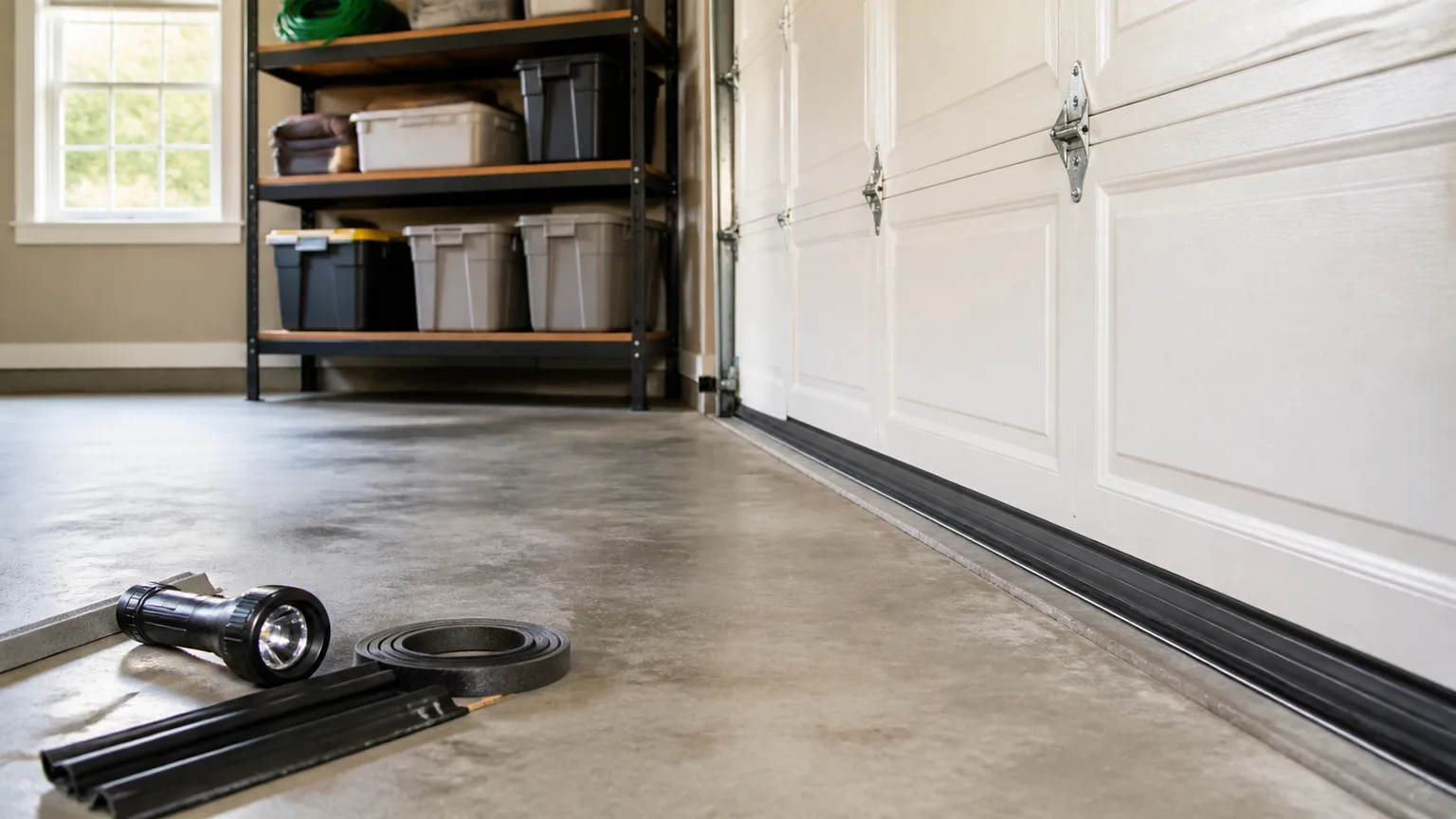
Repair damaged screens, add or repair door sweeps, and seal small gaps around trim, cabinets, and utility openings with a material suitable for the surface. Fit the repair to the route: a screen helps with flying insects, while a sweep closes the light gap beneath an exterior door. Check the garage, basement, and utility entries as well as the room where activity first appeared.
Do not seal an opening blindly if an animal could be trapped inside, or if the gap is part of a vent, drain, or required service clearance. For an active rodent problem, inspect for signs and use a removal plan alongside exclusion; blocking one visible hole may simply redirect movement to another opening. In apartments and attached homes, tell building management about repeated activity in shared spaces so access points and neighboring units can be considered together.
Exclusion works best when paired with food and moisture control. UC IPM warns that trapping or baiting alone will not solve pest issues if the building still offers access and favorable conditions (UC IPM pest-prevention guidance). After repairs, keep the monitoring points in place long enough to see whether fresh signs stop appearing.
Step 5: Choose a control method that fits the pest
Use the least disruptive method that can reach the pest in the location where it lives. Physical removal, cleaning, exclusion, and a pest-specific trap may be enough for a small, clearly identified problem. A bait can be appropriate for some pests when its label matches the site and target; a contact spray may only affect exposed insects and can miss hidden activity. Choose by pest behavior and location, not by the product’s broadest claim.
Placement matters. Traps and baits are generally more useful along a travel route or near a hiding area than in the middle of an open room, but the product label controls where and how each one can be used. Keep any bait inaccessible to children and pets, and check it as directed. A child-resistant station reduces access risk but does not make a product harmless or appropriate everywhere; the National Pesticide Information Center explains that pets can be exposed by breathing, skin contact, or ingestion and advises following the label and keeping animals away for the specified interval (NPIC’s Pets and Pesticide Use fact sheet).
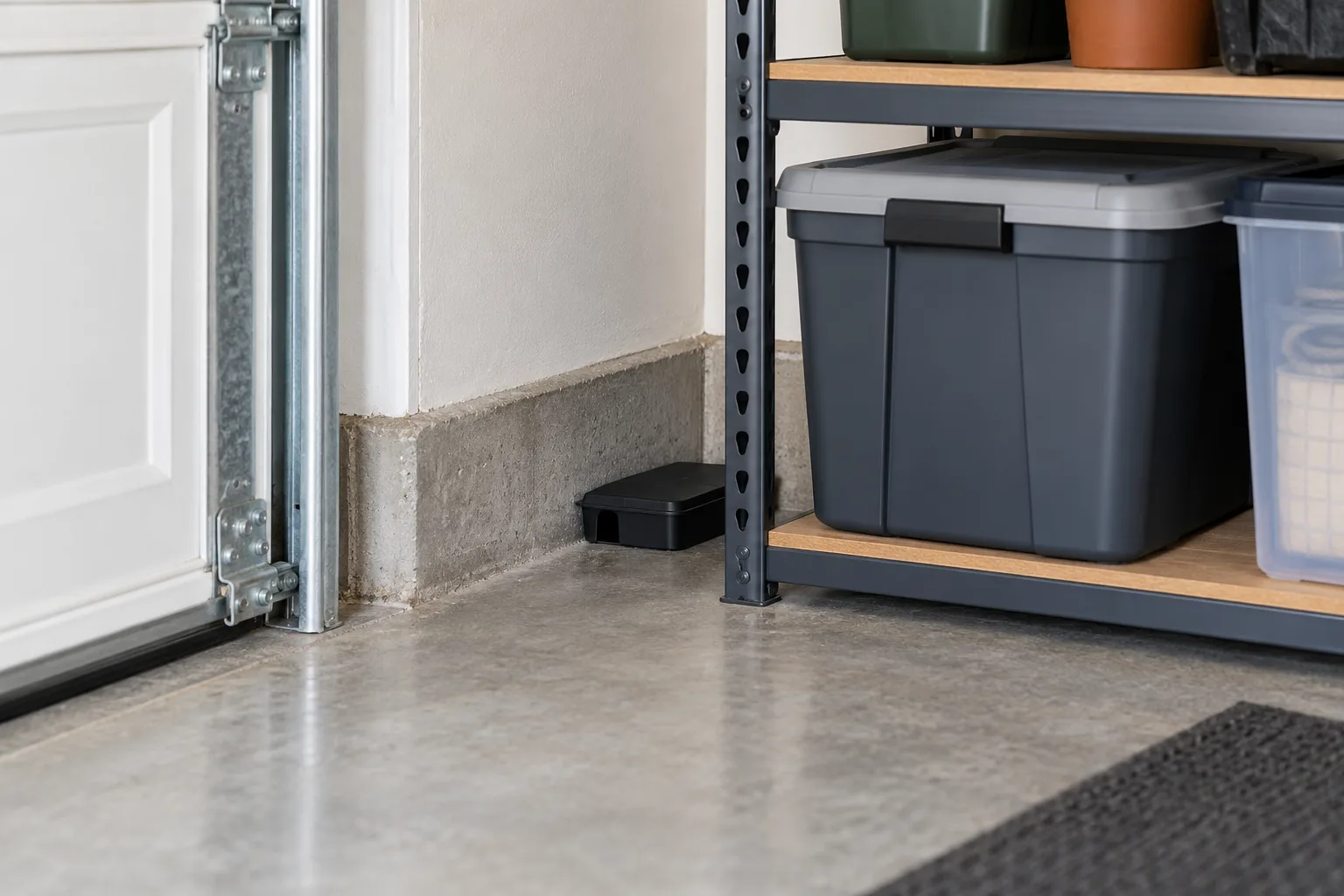
Quick decisions: match signs to a first move
| What you notice | First move | Escalate when |
|---|---|---|
| One insect near an open door, with no new signs | Remove it if safe, then check the screen, sweep, and nearby lights or food | The same pest appears repeatedly or you find fresh evidence indoors |
| Ants following a narrow route to a counter | Clean the trail and food residue, store food tightly, and monitor where the line begins | Activity continues, spreads, or the nest appears to be inside a wall or inaccessible structure |
| Small insects or webbing in dry food | Isolate the package, inspect neighboring foods, discard infested products, and clean the storage area | Activity continues after the source is removed or the pest cannot be identified |
| Rodent droppings or gnawing | Keep people and pets away from the evidence, find likely access points, and arrange safe control | Droppings are widespread, contamination is heavy, or rodents have entered ducts or inaccessible spaces |
| Repeated bites, a nest, or damage to building materials | Do not guess at the species or spray broadly; document what you see | Get qualified identification and treatment advice promptly |
The table is a triage aid, not a substitute for local rules or pest-specific treatment instructions. A product label may prohibit use in a food area, around a particular animal, or on the surface you planned to treat. If the pest presents an immediate health or safety concern, use the appropriate local health, animal, or emergency service rather than waiting for a general household plan to work.
Common household pests and the right first response
The same sequence applies to every pest, but the clues and first action differ. The examples below help narrow the next step without pretending that one product or recipe controls every species.
Ants and cockroaches
For ants, follow the trail to its food or entry point. Clean up the source, seal exposed food, and note whether the trail returns from an exterior crack, a window, or a gap around plumbing. If you use a bait, use one labeled for the pest and site, place it where children and pets cannot reach it, and do not assume that killing visible workers means the source has been controlled. If ants keep returning from a wall or shared building space, ask for a coordinated inspection.
For cockroaches, repeated nighttime sightings, droppings, egg cases, shed skins, or small young insects are stronger evidence than a single large roach near a doorway. Place monitors near likely routes and correct food, moisture, and clutter conditions before choosing a labeled bait or other targeted tool. Avoid scattering powders or spraying every surface: those moves can increase exposure while leaving inaccessible harborages untreated. For a focused plan, see our guide to getting rid of cockroaches at home.
Pantry moths and beetles
Stored-food insects may arrive inside a package, so a clean kitchen can still have a pantry pest. Check open grains, flour, cereal, nuts, dried fruit, spices, and pet food for webbing, larvae, tiny beetles, or damaged packaging. Isolate suspicious packages, inspect nearby shelves, discard food with evidence of infestation, and vacuum corners before washing the storage area.
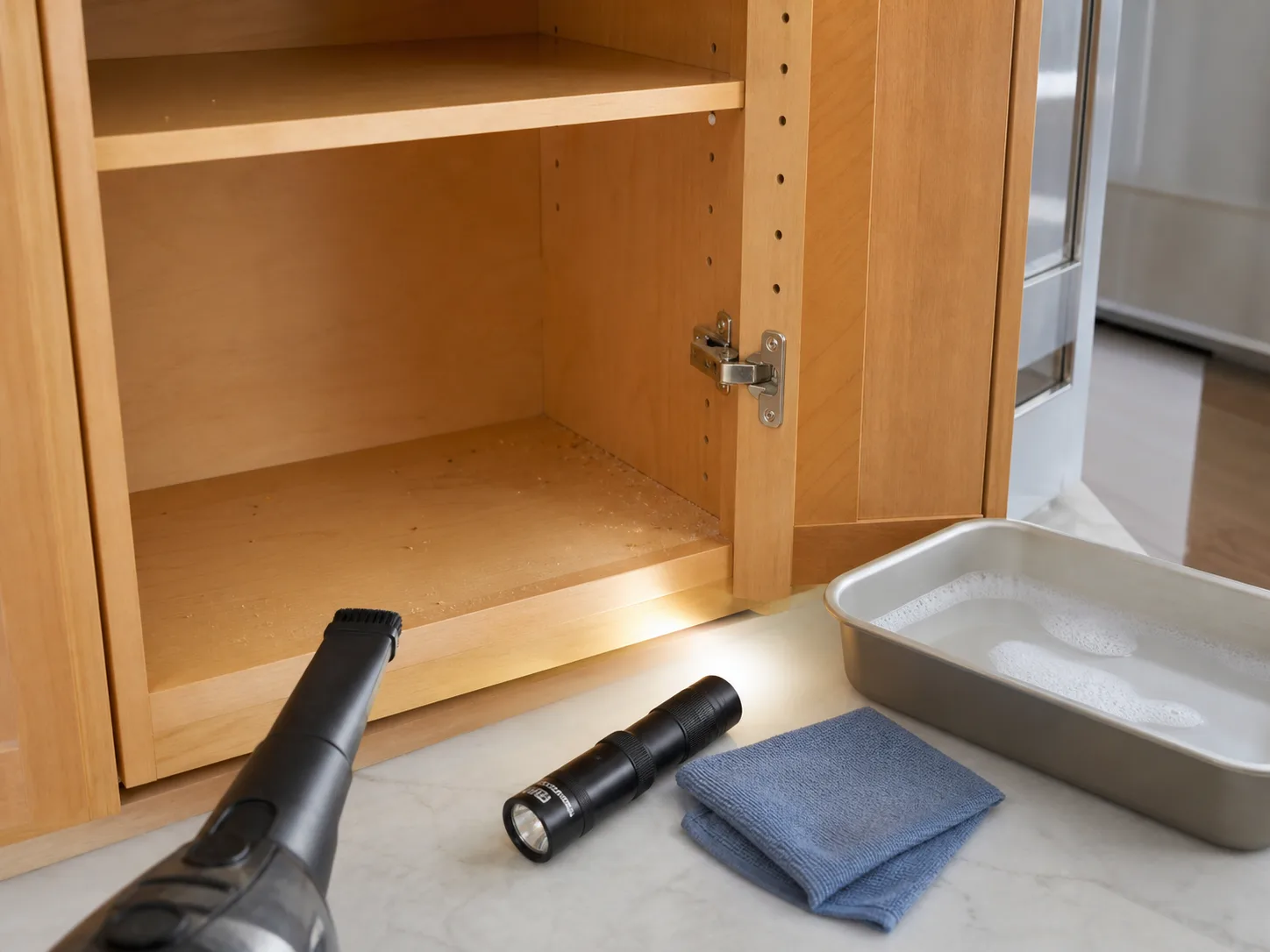
Move sound dry goods into containers with tight-fitting lids and clean containers before refilling them. UC IPM says pantry-pest infestations are best managed by removing infested food, cleaning storage areas, and sealing stored goods; it does not recommend routine insecticide use in the pantry because spraying near food may create a greater risk than the pest itself (UC IPM’s pantry-pest guide). Pheromone traps labeled for pantry pests can help monitor for continued activity, but they do not replace finding and removing the infested food. For a detailed cleanup sequence, see how to get rid of pantry moths.
Mice and rats
Look for droppings, gnawing, nesting material, food packages with holes, or oily rub marks along a wall. Store food and pet food securely, remove accessible water and rubbish, and inspect low openings around foundations, doors, pipes, and garage entries. Use a control method appropriate to the species and location, and place any trap or bait where children, pets, and wildlife cannot contact it. If activity persists or you cannot reach the likely route, involve a qualified pest professional or building manager.
Rodent waste needs a separate safety step. Do not sweep or vacuum dry droppings, urine, or nesting material; CDC warns that those actions can put contaminated particles into the air. For a small, accessible amount, wear rubber or plastic gloves, wet the material with an appropriate disinfectant as directed, let it stand for the label or CDC-recommended time, and wipe it up. Heavy infestations, contamination in ventilation systems, or inaccessible nests need professional advice; follow the CDC’s rodent cleanup guidance for the situation. For access-point details, see how mice get inside and how to keep them out.
Bed bugs, termites, stinging insects, and other high-stakes pests
Some problems deserve identification before any do-it-yourself treatment. Bed bugs, termites and other wood-destroying insects, a nest of stinging insects near a doorway, and wildlife in an attic or wall can be difficult or unsafe to handle with a general household product. A broad spray can miss hidden areas, contaminate surfaces, or delay the inspection that the problem needs.
Photograph signs from a safe distance, keep the affected area undisturbed when possible, and contact a licensed pest-management professional or the relevant local service for identification. If you rent, report the activity to property management in writing and ask about inspection and coordination across connected units. In the U.S., the EPA recommends checking a pest-control company’s license and asking whether it uses IPM; requirements and credentials vary by state and country (EPA’s Smart Pest Control guidance).
Use pesticides only when the plan calls for them
Pesticides include more than spray cans: baits, dusts, repellents, and rodent products also count. Use a product only when its label includes the pest, the location, and the method you intend to use. In the United States, follow the product label and applicable state rules; elsewhere, follow the local regulator and the instructions for the product sold in your area. Never transfer a pesticide to a drink or food container, mix products, use an outdoor product indoors, or apply more than the label allows.
Before treatment, remove food, dishes, toys, pet bedding, and water bowls from the area when the label requires it. Keep people and animals out during application and for the label’s re-entry period. Ventilate only as the label directs, and never assume that a product is safe because it is labeled natural, low-odor, or child-resistant. EPA’s label guidance explains that labels set product-specific directions and precautions; NPIC advises keeping pets away for the time on the label or until sprayed material is dry, whichever is longer (EPA pesticide-label guidance; NPIC’s pet fact sheet).
Avoid using foggers or room-wide aerosols as a default response. Penn State Extension lists aerosols, foggers, concentrated liquids, and loose bait forms among products that can be more accessible to children if mishandled. A room treatment may expose more air and surfaces than a contained, pest-specific method, and it does not automatically reach the location where insects are breeding. If a professional recommends a broad application, ask what problem it addresses, what must be removed or covered, how long people and pets must stay out, and what follow-up will show success.
Store leftover products in their original container, with the label intact, locked away from children and pets, and separate from food, feed, and medicine. Buy only what you can use according to the label and dispose of unused products through the local hazardous-waste program or directions on the label. If anyone may have been exposed, follow the product’s first-aid instructions and contact local poison control or the appropriate medical or veterinary service; do not wait for symptoms to become severe.
When to call a pest professional
Call when the pest is hard to identify, the signs suggest a substantial population, the likely nesting place is inaccessible, or the problem involves health, structural damage, or a risk of stings or bites. Professional help also makes sense when carefully chosen, label-compliant measures do not reduce activity within the time the product or local extension guidance describes. Waiting until pests spread through several rooms can make the inspection and control job more complex.
Ask the company to explain its inspection findings before it recommends a treatment. A useful plan should identify the pest, point to evidence and contributing conditions, describe nonchemical repairs or sanitation steps, name any products and the locations they would be used, explain precautions for children and animals, and include a way to check results. Ask whether the applicator is licensed where required and what credential or experience applies to the work; EPA advises consumers to verify licensing and look for IPM experience (EPA’s consumer pest-control guidance).
In apartments, condos, schools, and attached housing, ask about building-wide inspection and communication. Treating one kitchen may not solve a pest moving through utility spaces or adjoining units. Keep a dated record of sightings, trap catches, repairs, and service visits; it helps residents, landlords, and professionals see patterns instead of relying on memory.
Check whether the treatment worked
Set a baseline before you make several changes at once. Record the date, room, pest or sign, and monitor location. After the intervention, use the same locations and inspection routine so you can tell whether fresh evidence is declining. If you remove food, fix a leak, and use a trap all at once, note each action and the day it changed; otherwise you will not know which condition needs maintenance.
Follow the product label and pest-specific guidance for timing. Some pests have life stages or hidden activity that make an immediate empty trap an unreliable sign of success. Look for fewer fresh sightings and catches, no new droppings or damage, and no return of the original food or moisture source. When signs continue, reassess the identification and route instead of automatically applying more product.
Keep prevention in place after activity stops. Continue storing food tightly, repairing leaks, closing gaps, and checking high-risk areas on a routine that suits the building and season. In shared housing, tell management when signs stop or return so work in connected spaces can be coordinated. Monitoring and records are part of IPM, not paperwork after the treatment.
Mistakes that keep pests coming back
Treating the insect you saw without confirming the source can leave the actual problem untouched. A flying pantry moth may have emerged from a bag of food, and an ant trail may be following a spill that is no longer visible. Take a few minutes to inspect nearby packages, cracks, and moisture before choosing a method.
Using more product than the label allows does not make a treatment more reliable. It can expose people or animals, contaminate food-contact surfaces, and still miss hidden pests. The label’s target, site, application method, and safety directions are part of the treatment—not optional fine print.
Mixing products or pairing a spray with a bait without checking labels can create a new hazard or interfere with the plan. If you are not sure whether two methods can be used together, ask the product manufacturer, local extension service, or licensed applicator rather than experimenting.
Expecting one action to fix a multi-part problem is another common failure. A trap may catch a mouse while a gap remains open; cleaning may remove crumbs while a leak continues; a treatment may reduce visible insects while a nest remains in a wall. Repeat the inspection, repair the contributing condition, and escalate if the evidence does not improve.
Finally, do not confuse “chemical-free” with a complete plan or “natural” with risk-free. Physical exclusion, food storage, and monitoring are useful because they address the problem directly, not because every home remedy has been proven. If a treatment is needed, a targeted, properly labeled product used as directed is a more defensible choice than an improvised mixture.
Conclusion
A reliable pest-control plan at home follows a simple order: identify the pest, confirm active signs, trace the food-water-shelter or entry condition, correct that condition, choose a targeted control, and monitor the result. Use pesticides only when the label fits the pest and the site, and take extra care around children, pets, food, and shared living spaces.
For a one-time visitor, repair the route and keep watching. For repeated signs, a hidden nest, a rodent-waste cleanup, structural damage, or a pest you cannot identify, get qualified help early. A good result is not just fewer pests today; it is a home that no longer gives that particular pest an easy way in or reason to stay.