How Mice Get Inside and How to Keep Them Out
Learn how mice get inside through utility gaps, roofs, doors, boxes, and gardens—and follow a practical sealing, trapping, and cleanup plan to stop them.
A mouse does not need a dramatic hole in the siding to get indoors. An adult house mouse can squeeze under a gap about 1/4 inch high, climb rough surfaces, balance along cables, and jump onto a low ledge. That makes a home’s least glamorous details—pipe openings, door sweeps, roof vents, storage boxes, and dense garden cover—more important than a spotless kitchen.
The durable fix is a three-part job: find the route, block the route with a material a mouse cannot chew, and reduce the food and shelter that make the building worth revisiting. Traps may be needed when mice are already established, but peppermint, noise devices, and one quick caulk patch cannot replace exclusion.
First, know whether you have mice or another rodent
House mice (Mus musculus) are small, gray to brown rodents with relatively large ears and a lightly furred tail. Adults are usually about 5 to 7 inches long including the tail, but size alone is not a reliable identification because young rats, deer mice, voles, and shrews can look similar. The UC Statewide Integrated Pest Management Program recommends using the overall body shape, tail, droppings, tracks, and setting together rather than guessing from one sighting.
The most useful clues are scattered, pointed droppings; fresh, clean gnaw marks; shredded paper or insulation; a musky odor; and scratching in a wall or ceiling. Nebraska Extension notes that house mice can leave roughly 50 to 75 pellets in a day, usually while moving through their territory rather than in one neat pile. If the evidence is large, blunt-ended, or accompanied by heavy structural damage, broaden the diagnosis before buying mouse-size traps.
The five-minute inspection that finds the route
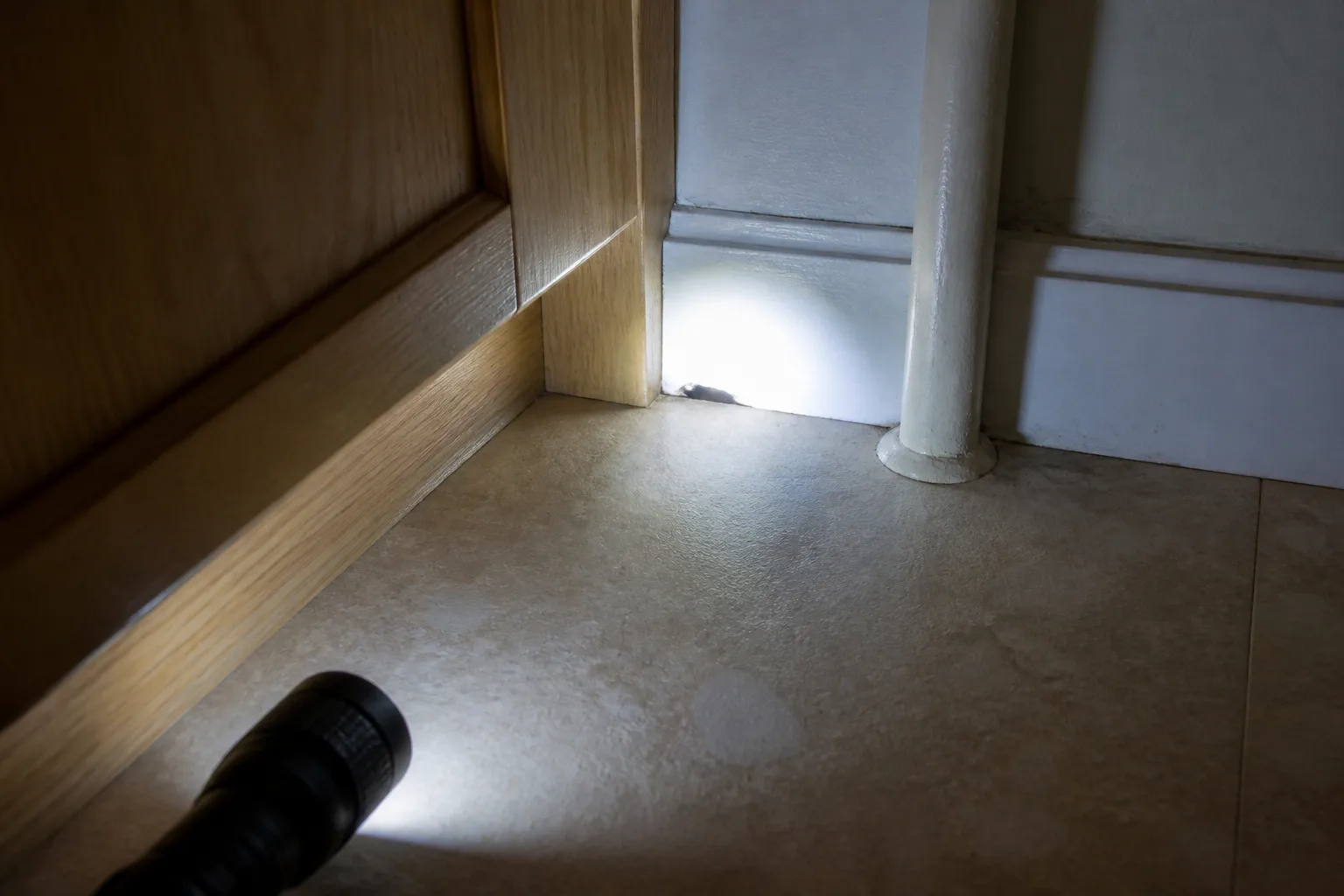
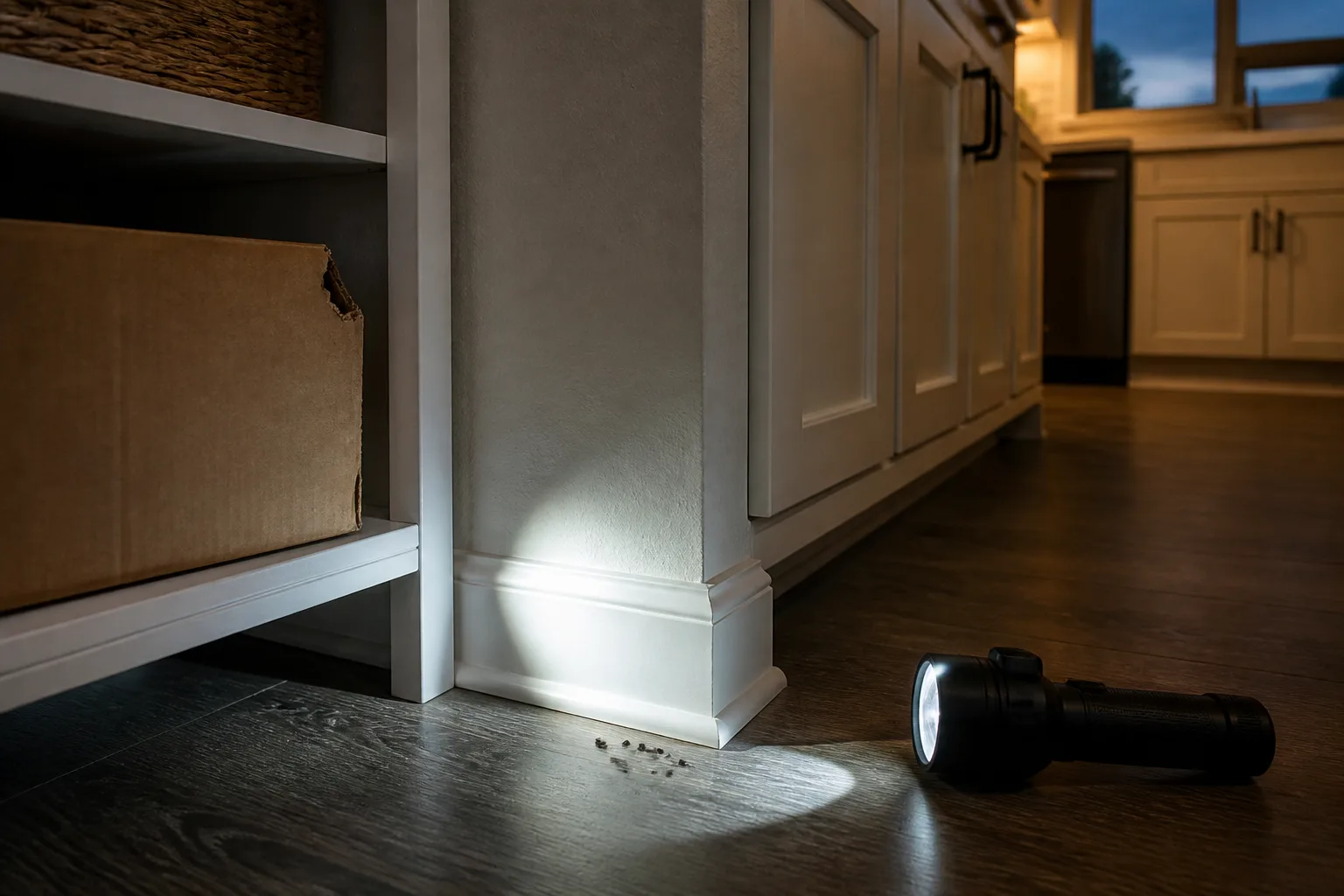
Start indoors where evidence is freshest, then work outward. Use a bright flashlight at floor level and look for a dark rub line, droppings, chewed edges, or a narrow opening behind appliances and cabinets. Mice tend to travel beside walls and objects, so a room’s center can look clean even when the perimeter is active.
Next, inspect the matching exterior location. If you find droppings under the kitchen sink, look outside for the pipe penetration and foundation joint on that side of the house. If you hear scratching above a bedroom, check soffits, attic screens, roof returns, and branches touching the roof. A useful test is to mark a suspect gap with a removable bit of painter’s tape, repair it, and watch for new evidence; do not seal a hole blindly if an animal may be trapped inside a wall or appliance.
Take the 1/4-inch threshold seriously. The UC IPM guidance says house mice can squeeze under gaps about 1/4 inch tall and through openings roughly 3/8 inch wide. Check every place two materials meet: foundation and siding, siding and utility lines, door and threshold, screen and frame, vent and wall, and cabinet back and floor.
1. They follow utility lines through tiny foundation gaps
The surprising part is not that mice like plumbing; it is that the pipe or cable is often already a convenient route through the building envelope. A small unsealed ring around a water line, drainpipe, electrical cable, gas line, air-conditioner conduit, or dryer vent gives a mouse a dark edge to follow and may leak the warm air it detects from outside.
Under-sink cabinets are common interior checkpoints, but do not stop there. Inspect around the water heater, furnace, washing-machine hookups, hose bibs, exterior outlets, cable boxes, and the point where a deck, porch, or addition meets the foundation. In older houses, a gap can be hidden behind trim or a loose escutcheon and may not be visible until a cabinet is emptied.
Seal pipe, cable, and HVAC penetrations with chew-resistant materials
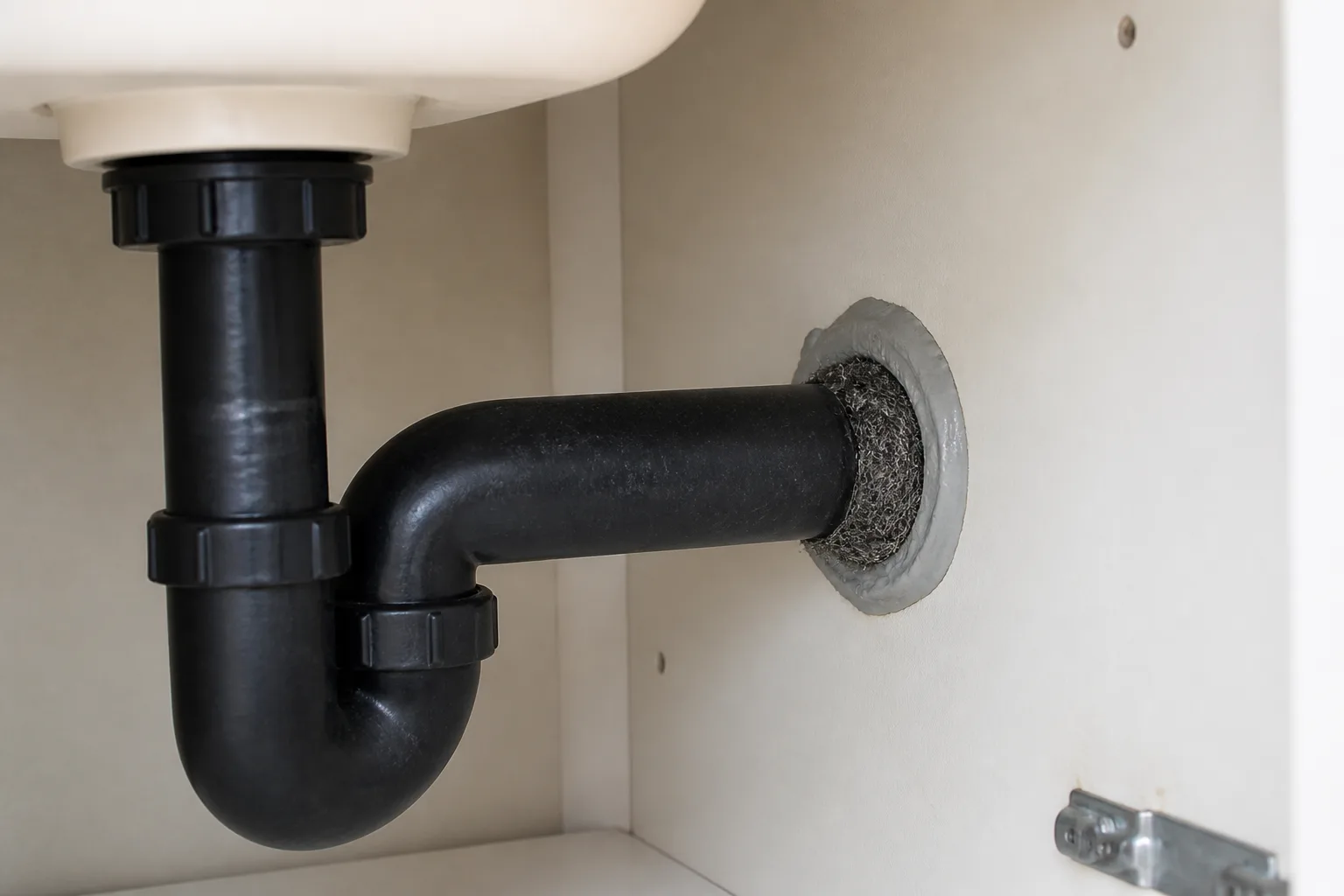
For a small opening, pack a chew-resistant metal mesh tightly into the void and finish the surface with an appropriate caulk or mortar. NC State Extension specifically warns that loose steel wool can rust or be pushed aside, so it should be secured with caulk rather than left as the entire repair. Copper mesh is another flexible option for small, irregular gaps; larger holes need securely fastened 1/4-inch hardware cloth, sheet metal, or another rigid barrier before the joint is sealed.
Do not use expanding foam as the only defense. It closes airflow for a while, but mice can chew through it. The NC State Extension exclusion guide also cautions against relying on soft plastic, rubber, vinyl, wood, or other gnawable materials. Keep sealant away from moving plumbing joints and do not block a required drain, combustion-air opening, or dryer exhaust; when a repair affects a safety system, hire the relevant trade.
2. They use doors, windows, and pet-access openings
The most obvious entry point is easy to overlook because it moves every day. A garage door that closes against a worn bottom seal, a back door with a daylight line below it, a torn window screen, or a pet door left open overnight can provide a direct route into a warm building. A mouse does not need the door to be wide open for long; a flexible sweep and a slightly uneven threshold are enough.
Windows that appear too high to matter deserve an exterior look. House mice can climb rough brick, textured siding, trellises, and nearby vegetation, then use a window screen or frame gap once they reach the sill. Trim plants that touch the building, but repair the screen and frame too—removing the “ladder” is a helpful reduction in risk, not a substitute for a tight barrier.
Fix the bottom edge first
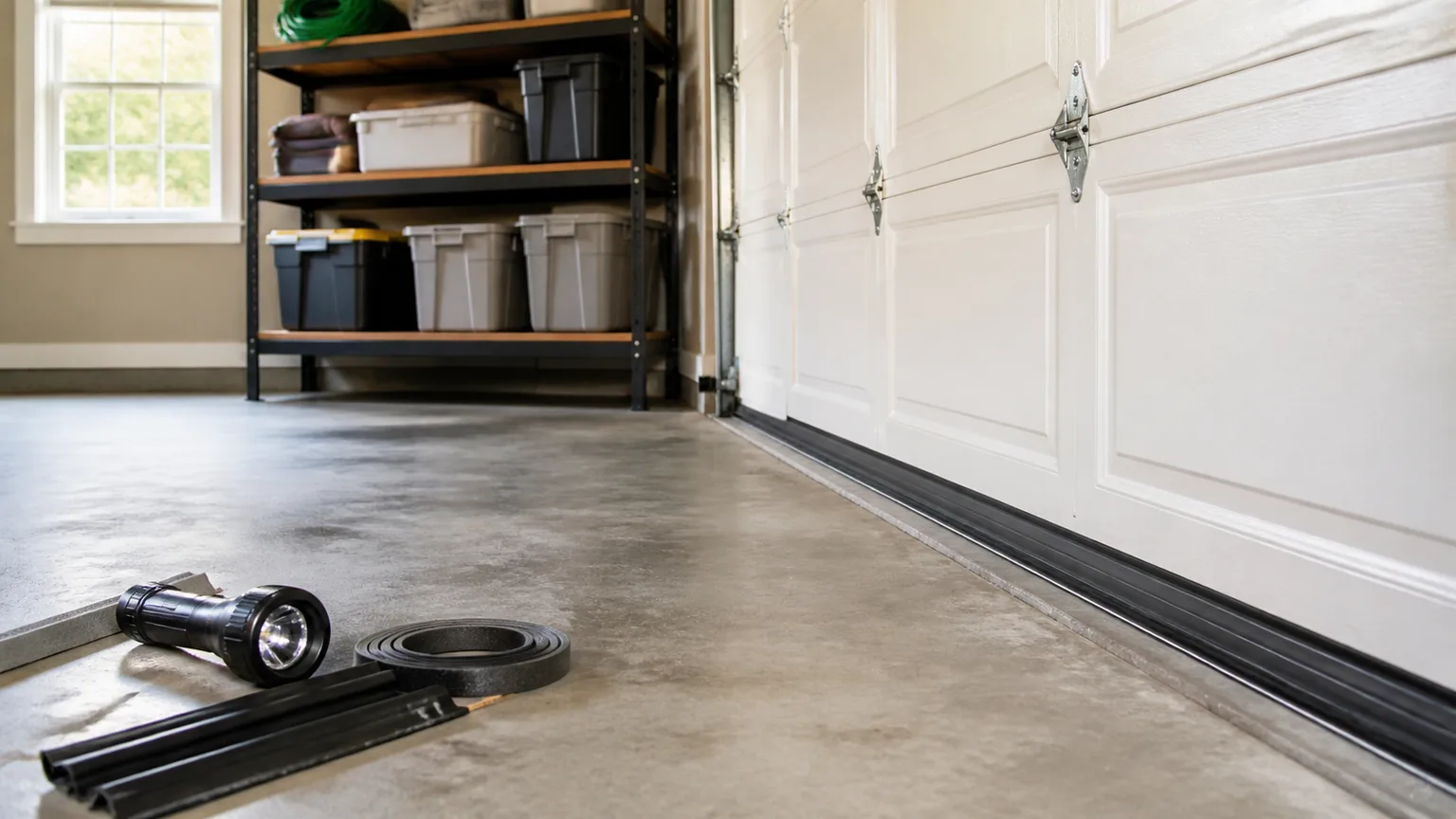
Close an exterior door on a sheet of paper. If the paper slides out easily at a corner, air and small rodents may be able to pass there. Install a properly fitted door sweep or threshold seal that leaves no mouse-sized gap, and use a metal-backed or rodent-resistant product where gnawing is a concern. Ordinary weather stripping may stop a draft while still leaving a soft edge a mouse can work around.
For pet doors, choose a model that closes firmly and inspect the frame for a gap behind the flap. If pets can go in and out at night, move food and water away from the door and monitor the threshold for droppings. The UC IPM prevention checklist recommends sealing food and garbage and thinning plants that climb against buildings; these small changes make the doorway less rewarding while the hardware is being repaired.
3. They climb to roofs, vents, and attic openings
A roof route sounds improbable until you map the connections: a branch touches the eave, a vine reaches a gutter, a cable runs past the wall, or a rough downspout gives a small animal a vertical handhold. From the roof, an unprotected attic vent, soffit, gable opening, chimney gap, or damaged screen leads into a quiet cavity filled with insulation and nesting material.
Inspect from the ground first. Look for branches within jumping distance, leaves packed into gutters, missing vent screens, lifted flashing, and daylight around roof penetrations. Then inspect the attic or crawl space only if it is safe to enter; never walk on unsupported ceiling material, and do not disturb a nest before planning cleanup. A camera or professional roof inspection is safer than climbing onto a wet or steep roof.
Screen attic and crawl-space vents with securely fastened 1/4-inch hardware cloth or a purpose-made metal screen that preserves ventilation. Repair soffits and eaves with rigid material, and cap chimneys according to local fire and building requirements. A patch that blocks airflow but leaves a chewable edge will not last, and a screen that is loose at one corner is still an entry point.
4. They arrive inside boxes, furniture, and garden supplies
Not every indoor mouse crossed your foundation. A nest can travel in a cardboard box from a shed, an upholstered chair stored in a garage, a bag of birdseed, a stack of newspapers, or a seldom-used vehicle. Boxes and soft goods offer darkness, fibers, and a ready-made cavity; once they are placed in a quiet basement or closet, the mouse may leave the container and explore the house.
Before carrying stored items indoors, open boxes outside or in a bright, easy-to-clean area. Look for droppings, gnawing, shredded paper, seed dust, and a warm musky smell. Shake out washable textiles outdoors, inspect furniture undersides and hollow bases, and transfer seed, pet food, and potting supplies into hard-sided containers with tight lids. A cardboard box that has been contaminated should not be “saved” by taping the corner; discard it after following safe cleanup guidance.
A safer garage-to-house transfer
Create a staging zone just inside or outside the garage. Put incoming items there for inspection, keep them off the floor on a clean shelf, and move them one at a time after checking seams and undersides. Sweep and vacuuming may be appropriate for ordinary dust, but never dry-clean visible rodent urine, droppings, or nest material; wet contamination first as described below.
Garden supplies need the same attention. Bags of seed, straw, loose mulch, compost ingredients, and empty pots can hide rodents or provide nesting material. Gardening Know How’s practical fall-cleanup advice emphasizes clearing debris, securing food, and removing cover near the foundation (Garden Mouse Control); treat that as a property-maintenance layer that supports, but does not replace, structural exclusion.
5. They turn gardens, mulch, and feeders into a launch pad
The garden is not usually a mouse “door,” but it can be the staging ground beside one. Dense groundcover, stacked firewood, fallen fruit, spilled birdseed, open compost, and thick mulch provide food and cover within a few steps of the foundation. When temperatures drop, a mouse already living beside the house has less distance to travel to find a warm wall void.
Move firewood and unused lumber away from the foundation, pick up fallen fruit, clean seed from beneath feeders, and keep compost enclosed. Thin vegetation that touches siding and leave a visible strip around vents and utility penetrations so you can inspect them. You do not need a sterile yard; you need fewer uninterrupted hiding places beside the building.
Mulch is a trade-off. It protects soil and plants, but a thick, fluffy layer against the foundation can conceal holes and offer cover. Use only the depth needed for the planting, keep it away from siding and door thresholds, and check beneath it before the first cold spell. Gardening Know How likewise recommends avoiding excessive mulch and removing unused material when rodent cover is a concern (Keeping Mice Out of Mulch).
Why warmth, food, water, and shelter make a house worth entering
Mice are not evaluating your housekeeping; they are matching a building to four needs. UC IPM explains that house mice can live close to people, eat many kinds of food, and survive without drinking water when they get enough moisture from food. They still seek liquid when conditions are hot or dry, so a dripping tap, pet bowl, condensation, or wet basement can make an already accessible house more attractive.
Warm appliances and quiet voids matter because they combine heat with protection. Nebraska Extension’s house-mouse guide identifies spaces near refrigerators, ovens, water heaters, furnaces, stored goods, and insulation as places to inspect. Store grains, birdseed, and pet food in glass, metal, or heavy-duty plastic containers; feed pets only what they will eat at a sitting; repair leaks; and remove food residue from under appliances.
Sanitation is not a magic eraser. The UC IPM management guidance says good housekeeping reduces shelter and food but seldom controls an established population by itself. Think of it as turning down the reward while exclusion closes the door and traps deal with mice already inside.
Seal the house in the right order
Repair the highest-confidence route first, then complete a perimeter pass. If you patch only the hole beside the freshest droppings, mice may simply use the next opening along the same wall. A useful order is: exterior foundation and utility penetrations; doors, windows, and pet doors; attic, crawl-space, and roof vents; interior pipe and cabinet gaps; then the landscape conditions that hide or feed the route.
Use a simple repair record: location, gap size, material used, date, and whether new evidence appeared afterward. Recheck repairs after heavy rain, foundation movement, HVAC work, cable installation, or a season of temperature changes. At the same time, keep traps active in the rooms where evidence was found so a successful seal does not get confused with a population that has simply gone quiet.
Temporary plugs versus permanent repairs
A temporary plug is appropriate when you need to stop a draft or verify a route before a proper repair. Press metal mesh into a small hole, but schedule the caulk, mortar, flashing, or fastened hardware-cloth finish promptly. Loose mesh, tape, paper, plastic bags, and foam are clues that a hole has been noticed—not proof that it is mouse-proof.
The permanent repair must resist chewing and stay attached to the surrounding structure. For a wide opening, cover the void with rigid metal mesh or sheet metal, fasten all edges, and seal the perimeter without covering a required vent or drain. If you cannot see where the opening leads, if wires are involved, or if water is entering, stop and call a qualified professional rather than packing the cavity blindly.
If mice are already inside: trap, monitor, then close the loop
Fresh evidence means exclusion and population reduction need to happen together. Use traps in the active zone while you seal the route and remove food; otherwise, one mouse may be caught while another remains in a wall, attic, garage, or appliance void. If you hear activity but cannot safely access the space, get help rather than dismantling electrical or heating equipment.
For most small indoor infestations, a properly placed snap trap is easier to monitor than poison. It lets you see the result and avoids the odor of a carcass dying inside an inaccessible wall. Keep any trap away from children, pets, and non-target wildlife, and follow the manufacturer’s directions for setting and disposal.
Place traps where mice naturally travel
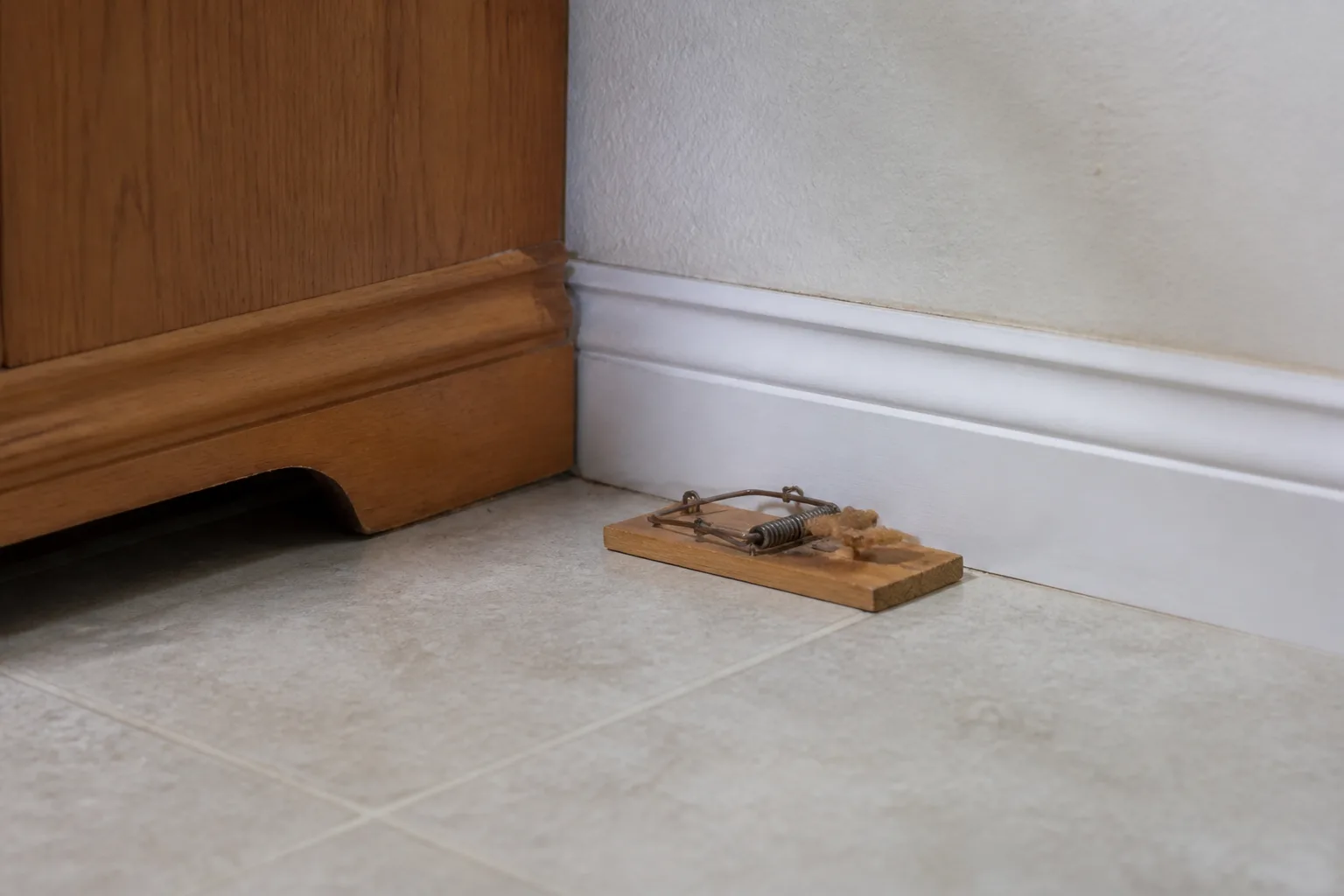
Set mouse-size traps tight to walls, behind objects, in dark corners, and near fresh droppings or gnaw marks. UC IPM recommends spacing traps no more than about 10 feet apart in active areas because house mice usually stay close to their nest and food. A trap in the open center of a clean room may be ignored even when the same trap tucked beside a baseboard works quickly.
Use a small amount of a food the mice are already eating, or a small bit of nesting material such as cotton. Too much bait can be stolen without triggering the trap. Check traps every day; if bait disappears, move the trap a short distance along the wall or use a lighter-trigger design. Live traps require frequent checking and create a release and handling problem, so research local rules and humane options before using one.
Rodenticide is not a shortcut around exclusion. Baits can harm children, pets, and wildlife, and a poisoned mouse may die inside a wall or ceiling. If bait is necessary because the infestation is large or inaccessible, use only a legal, ready-to-use product in the required tamper-resistant station and follow its label; a licensed pest professional is the safer choice when risk or access is uncertain.
Clean droppings, nests, and contaminated food safely
Do not sweep or vacuum dry droppings, urine, or nesting material. Disturbing dry waste can put contaminated particles into the air. The CDC’s rodent-cleanup instructions recommend opening doors and windows for 30 minutes before cleaning an outbuilding or poorly ventilated space, leaving the area while it airs, and wearing rubber or plastic gloves.
Spray droppings and the surrounding surface until very wet with an EPA-registered disinfectant or a fresh bleach solution made from 1 part household bleach to 9 parts water. Let it soak for five minutes or for the disinfectant label’s stated contact time, wipe it up with paper towels, bag the waste, then disinfect the hard surface again. Wash gloved hands before removing gloves and wash bare hands afterward.
For a nest or dead mouse, wet the material first, wait the label time, place it and any disposable cleanup materials in a plastic bag, then double-bag and put it in a covered outdoor trash can. Cardboard or porous items contaminated with urine or droppings are often best discarded; hard plastic, glass, and metal can be cleaned and disinfected. If contamination is extensive, insulation or air ducts are involved, or anyone develops illness after exposure, contact a healthcare provider or qualified cleanup professional.
Food packaging with droppings, urine, gnaw marks, or direct contact should be treated as contaminated rather than wiped and returned to the pantry. Clean the shelf and nearby hard surfaces after removing it. Keep new food, treats, and seed in sealed containers so the next mouse finds no easy meal while you finish the repairs.
What does not keep mice out for good
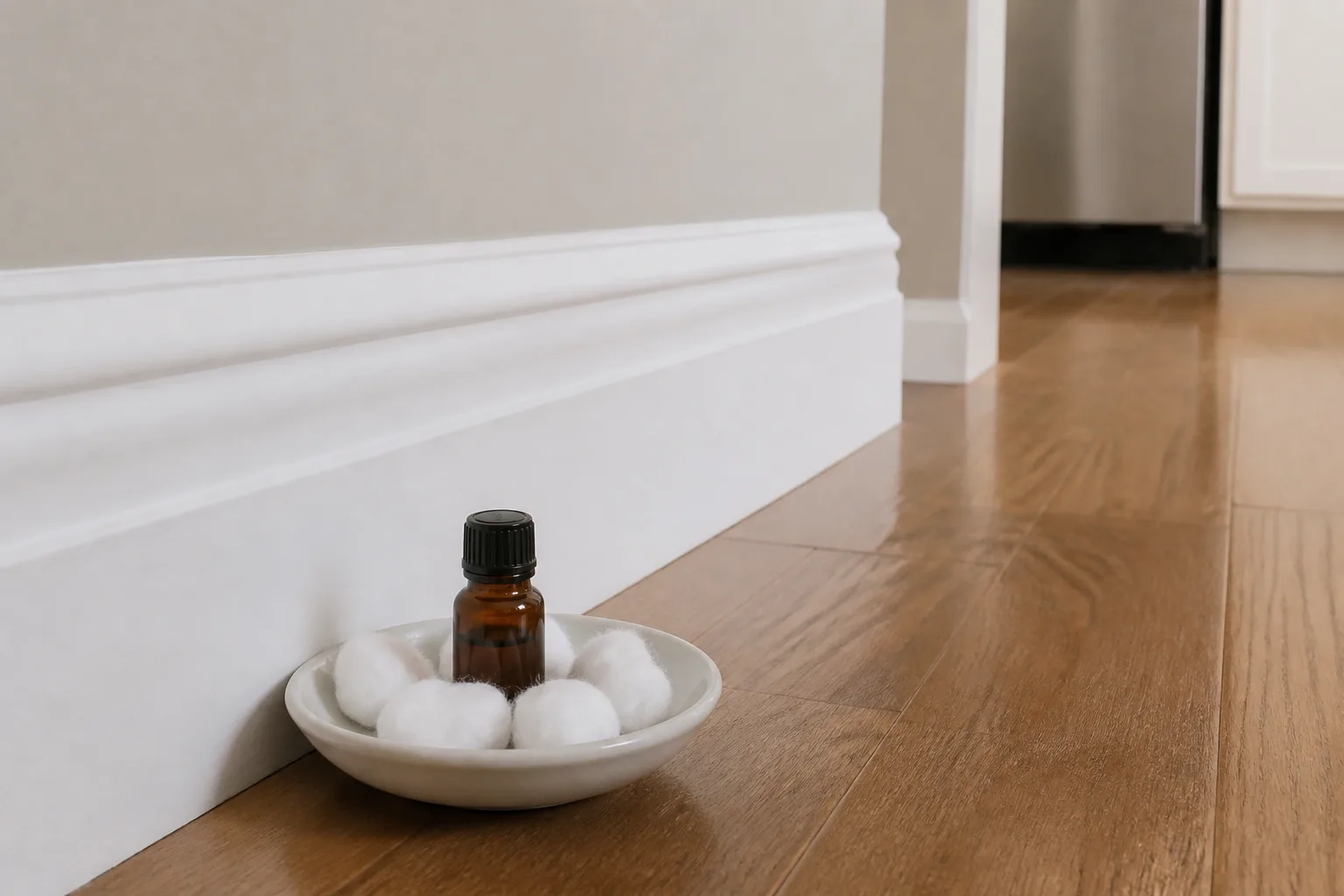
Peppermint oil, mothballs, ammonia, predator scents, and ultrasonic devices are appealing because they feel easier than opening a wall or repairing a threshold. In practice, odors fade, sound is blocked by objects and walls, and a hungry mouse can tolerate a temporary nuisance to reach warmth or food. NC State Extension describes repellents as unreliable for prevention, while UC IPM says high-frequency electronic devices have little evidence behind them for established house mice.
That does not mean every scent has zero short-term behavioral effect. It means a scent should never be the only barrier, especially at a foundation gap, attic vent, or garage door. If you enjoy peppermint, use it as a reminder to inspect the route—not as proof that the route is closed.
Cats and dogs may catch an occasional mouse but rarely control a population hidden in walls, cabinets, or insulation. Likewise, cleaning one room while leaving birdseed, pet food, or a dense debris pile beside the foundation simply shifts the pressure. A durable plan is less glamorous: hard barriers, sealed food, reduced cover, correctly placed traps, and follow-up checks.
When a plumber, roofer, or pest professional should take over
Call a plumber if a mouse appears to come from a sink, tub, or floor drain, if a drain opening is broken or uncapped, or if you find a leak or cracked pipe. Do not pour poison, bleach, or drain cleaner into plumbing to deal with a rodent. Most plumbing-related entries are gaps around pipes or damaged building materials, but a recurring sighting at a fixture deserves a proper inspection of the trap, pipe, wall cavity, and exterior penetration.
Use a roofer or building professional for damaged flashing, soffits, steep roofs, chimney caps, or attic vents that cannot be screened from a safe position. Get an electrician involved if gnaw marks reach wiring, junction boxes, or appliance cords. Contact a pest professional for repeated activity after sealing, a large or inaccessible infestation, rodents in HVAC ducts, extensive droppings, or a situation involving vulnerable occupants.
The handoff is especially important when you cannot identify the rodent, cannot reach the nest, or cannot clean without disturbing a large amount of contamination. A good professional should explain the entry route, exclusion materials, monitoring plan, and safety precautions—not simply scatter bait and leave the hole open.
Conclusion
Mice get inside through ordinary building weak points: gaps around utilities, loose doors and screens, roof and attic openings, stored items, and garden cover that brings them close to the foundation. The most useful first move is a flashlight inspection that follows evidence from an indoor wall or cabinet back to the matching exterior penetration.
Seal openings about 1/4 inch and larger with chew-resistant metal mesh, rigid barriers, and a finished seal; reduce birdseed, pet food, fallen fruit, debris, and thick foundation mulch; then trap and clean safely if mice are already active. A house becomes much harder to invade when the route is closed, the reward is smaller, and every repair is rechecked after the next cold snap or storm.



