12 Perennial Vines for Full Sun Gardens
Compare 12 perennial vines for full sun by bloom, foliage, climate, support, and spread to find one that suits your yard and maintenance routine.
A sunny fence can support a lot more than a privacy screen. A flowering vine can soften a hard boundary, bring blooms above eye level, or shade a seating area, while a foliage vine can cover a plain wall or provide a seasonal backdrop. The best choice depends on your winters, summer heat, available support, and how much pruning or containment you are willing to do.
The twelve vines below span cold-hardy garden plants and tropical choices that are perennial only in warm climates. Some are dependable bloomers; others earn their place with colorful leaves, winter flowers, or wildlife value. “Best” is conditional: a vigorous vine may be ideal for a large arbor but a poor choice beside a small patio.
How to choose a perennial vine for a sunny spot
For most garden plants, a practical definition of full sun is at least six hours of direct sun a day. Measure the light where the leaves will grow, not just at the plant’s base: a tall fence or building can cast a long shadow over the upper canopy in the morning or afternoon. A south- or west-facing wall can also reflect heat and dry the root zone quickly, so a vine that thrives in sun still needs soil and watering suited to its species.
A useful test is to observe the site in the season when the vine should flower, not only on a bright spring day. Deciduous trees cast more shade after leaf-out, and a pergola may block midday light once its own canopy fills in. If the location gets sun in the morning but shade after lunch, a clematis or wisteria may still perform; a bougainvillea that receives only a short sun window is less likely to make the vivid display gardeners expect.
First decide whether “perennial” means it survives your winter outdoors. Clematis, hops, perennial sweet pea, hardy kiwi, and several native woody vines can return after cold winters when matched to their climate. Bougainvillea and star jasmine are reliably perennial in mild regions; in colder areas they need a protected container, a greenhouse, or should be treated as seasonal patio plants. Check the cultivar label and local extension advice rather than assuming that every vine sold as perennial will overwinter in your garden.
The same plant can also behave differently in a humid coastal garden and a dry inland one. A hot, reflective wall intensifies water stress, while a windy corner can shred tender leaves or dry a newly planted root ball. Before buying, note the summer heat, winter lows, wind exposure, soil drainage, and whether you can reach the vine for pruning. Those conditions often narrow the shortlist faster than flower color does.
Next choose the job. Clematis and sweet pea give you flowers without building a massive woody framework. Hardy kiwi is a foliage and screening vine. Summer Shandy hops brings gold leaves but needs containment. American wisteria and bittersweet supply long-term structure and have fruit or wildlife value, yet both demand thoughtful placement. If fragrance matters, winter jasmine is an early yellow display but is not the same scented evergreen vine as Confederate jasmine.
Flowering perennial vines for a sunny trellis
These four are the most direct choices when the goal is flowers. Their bloom times, pruning, and climbing methods differ, so choose by the season and maintenance style you want rather than by flower color alone.
Jackman’s clematis for rich summer color
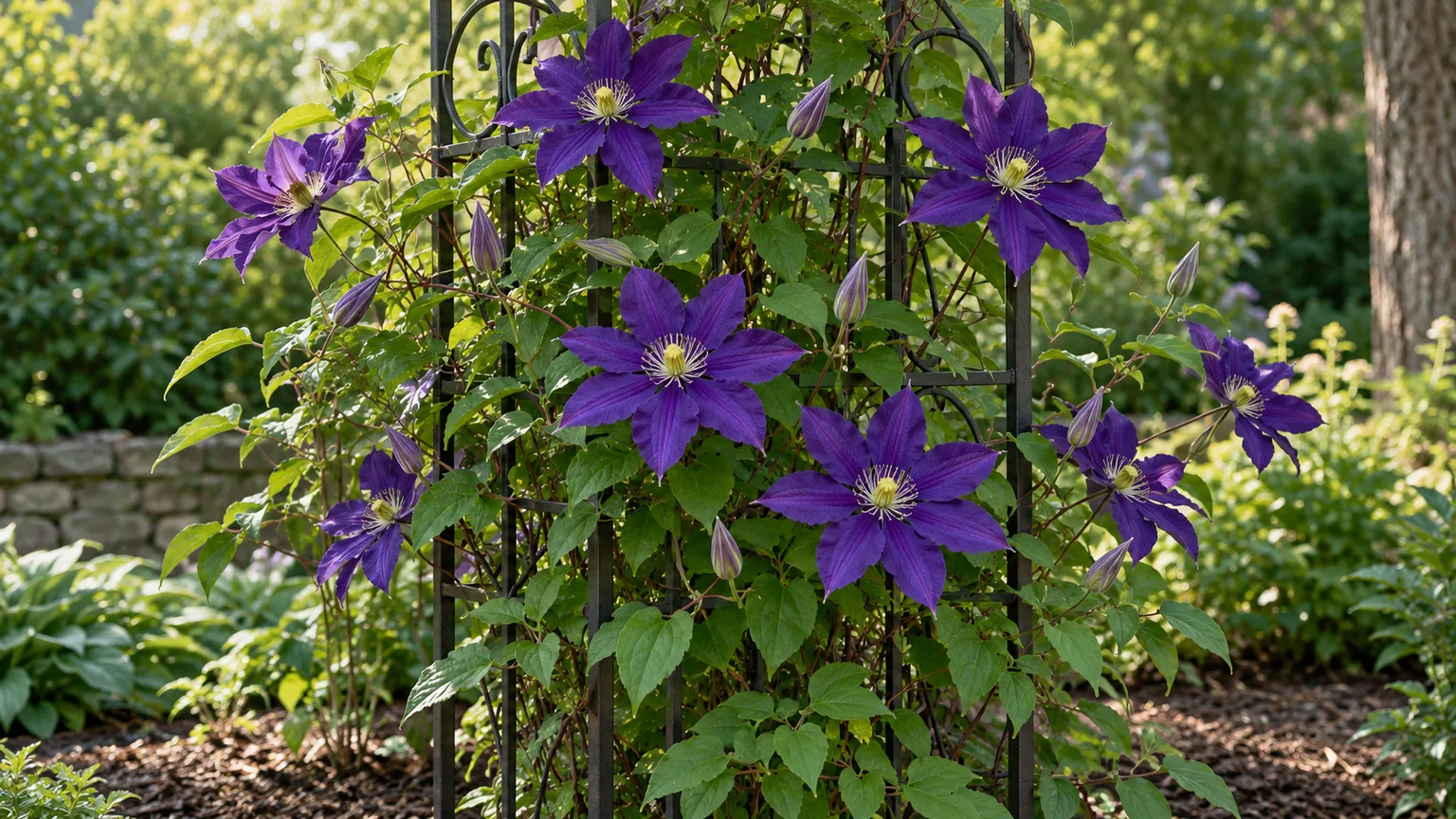
Jackman’s clematis, usually sold as Clematis ‘Jackmanii’, is a classic large-flowered climber with deep purple blooms that stand out against green leaves. It works on a fence, arbor, or trellis where the narrow leaf stalks can wrap around slender wires or mesh. The stems do not attach securely to a wide post by themselves, so add a small grid or tie young growth into place until it reaches a climbable support.
The main mistake is pruning it like every other clematis. ‘Jackmanii’ is commonly managed as a late-flowering type: flowers form on the current season’s growth, so a late-winter cutback to a low pair of healthy buds is a practical way to renew the plant and keep flowers within reach. The Royal Horticultural Society’s clematis pruning guide explains why the correct pruning group matters; if a plant label specifies a group, follow that cultivar-specific direction. In a hot, dry site, water the root area deeply when it begins to dry and use a modest mulch layer to limit rapid moisture loss.
‘Dr. Ruppel’ clematis for pink repeat blooms
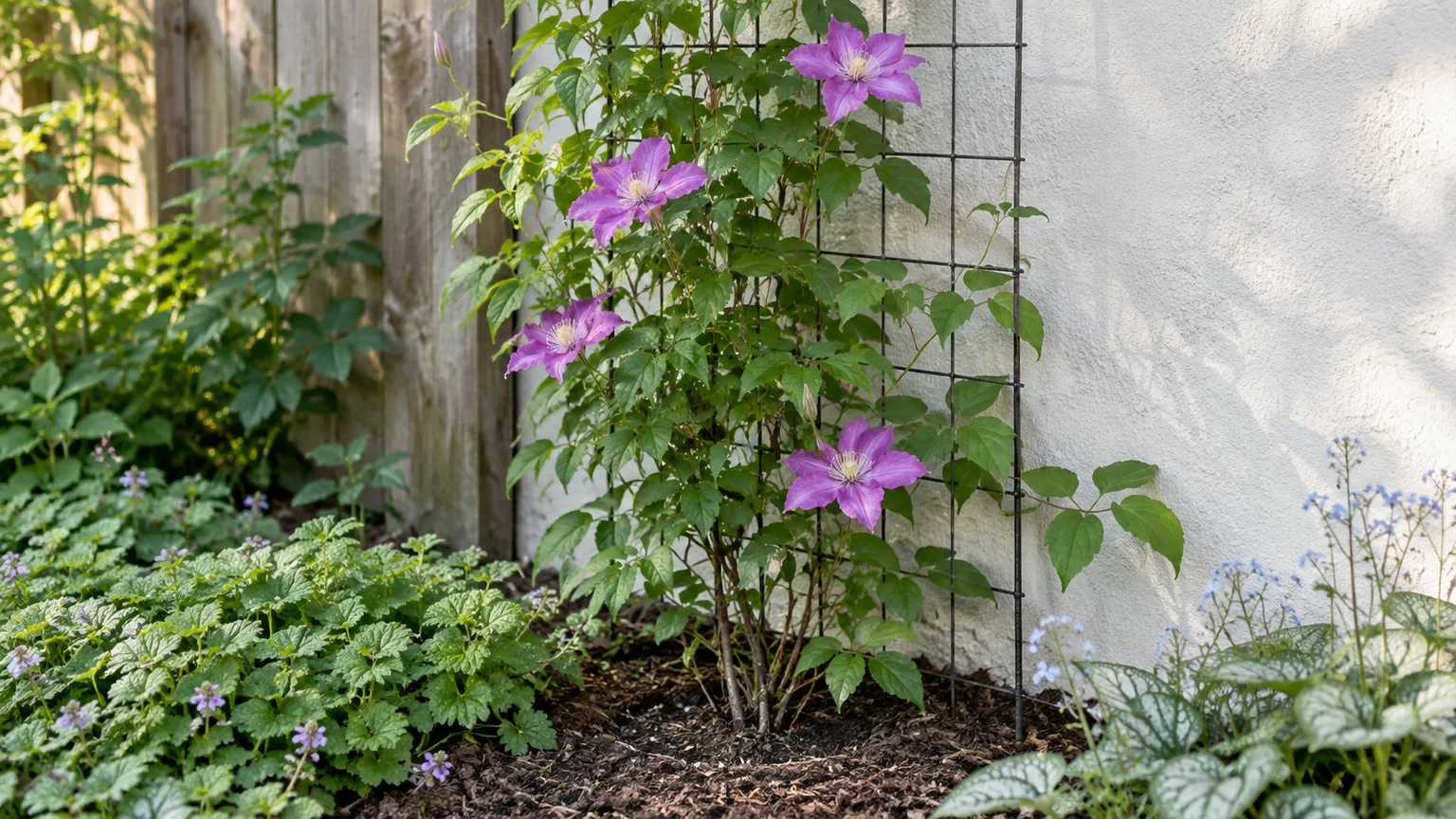
‘Dr. Ruppel’ offers large pink flowers with darker pink bands, making it a useful choice when purple clematis feels too cool or formal. It is a large-flowered hybrid that can give an early flush from retained older stems and then another round on new growth. Give it a trellis with fine supports and enough room to spread its shoots instead of letting several stems tangle into one dense knot.
This cultivar is in clematis pruning group 2. In late winter, remove dead or weak stems and trim carefully to a pair of healthy buds; after the first flush, shorten spent flowering shoots lightly if you want to encourage later growth. A hard annual cut can remove the early bloom. The Royal Horticultural Society lists ‘Dr. Ruppel’ as a group 2 clematis and advises preserving older stems for the first flowers. Group 2 is a better fit for a gardener willing to do two light seasonal trims than for someone seeking a single annual cutback.
‘The President’ clematis for purple-blue flowers
‘The President’ is another large-flowered clematis, with rich violet-purple flowers and a prominent center. It is often chosen for a focal point on a post, fence panel, or arch where the blossoms can be seen close up. The flowers can repeat, but the strongest first display depends on keeping enough previous-season stems alive through winter and avoiding a severe early cut.
Treat ‘The President’ as group 2: tidy dead growth in late winter, retain healthy stems, then prune lightly after the first flowering if the vine needs shaping. The RHS includes ‘The President’ among group 2 cultivars. This cultivar and ‘Dr. Ruppel’ may look like similar clematis choices in a catalog, but their colors differ; the more important similarity is their pruning need. If you do not know a clematis cultivar’s group, identify it before cutting. A generic late-winter hard prune can cost you that season’s first flush.
Perennial sweet pea for informal summer color
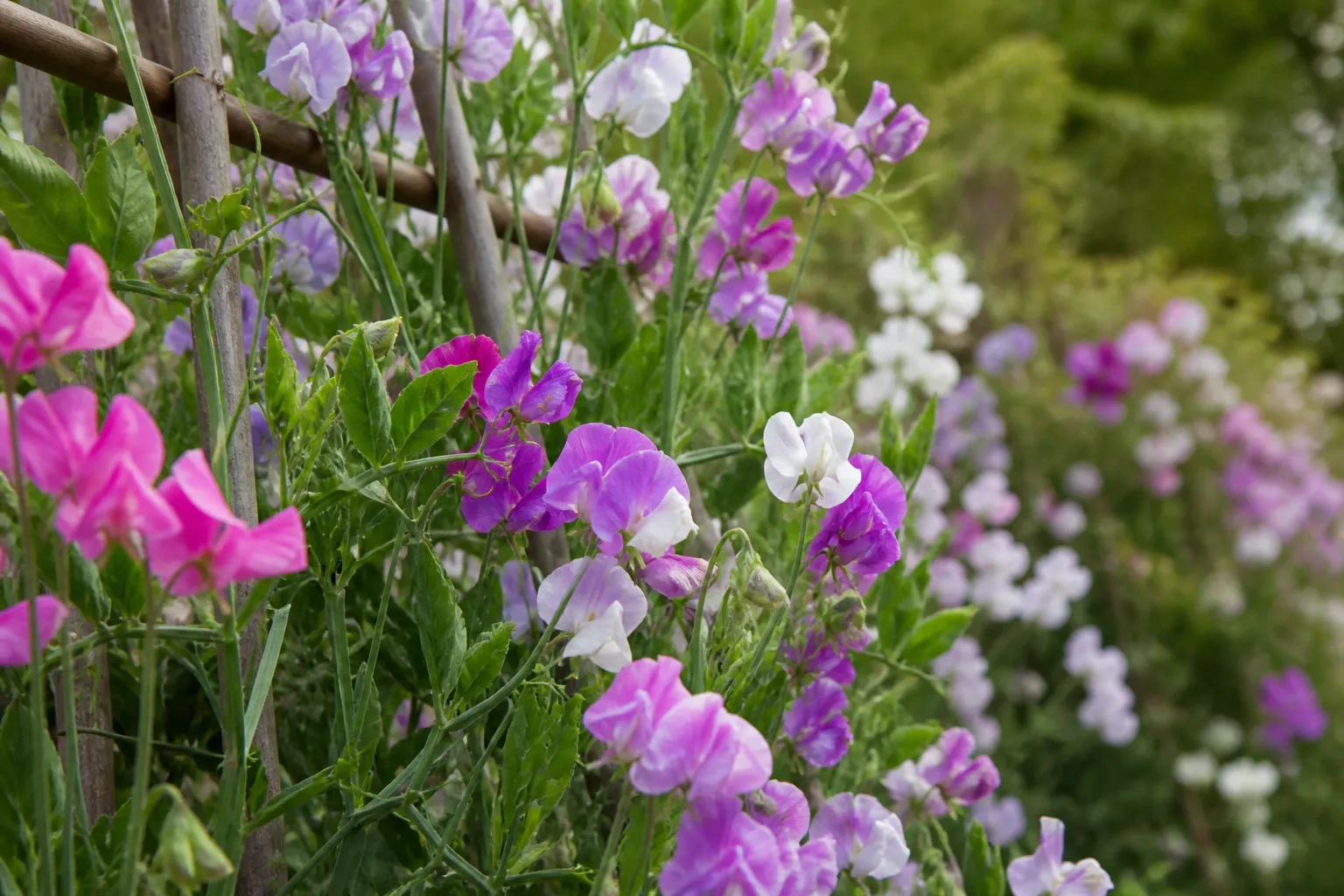
Choose perennial sweet pea, Lathyrus latifolius, when you want a loose screen of pink or white flowers rather than a rigid evergreen wall. It climbs by tendrils, so it needs thin netting, brush, or a narrow-wire trellis it can catch. Its herbaceous stems die back in cold weather and regrow from the roots, which makes it easier to remove or renew than a large woody vine.
Do not confuse it with annual sweet pea, Lathyrus odoratus. The annual species is known for its perfume; perennial sweet pea is a different plant and is usually grown for its flowers and easy coverage. Keep it watered while it establishes and during extended dry spells, but avoid constantly wet soil. If you do not want seedlings in nearby beds, remove seed pods before they mature and split. It is a better fit for a cottage border, informal fence, or temporary summer screen than a formal pergola that must look full year-round.
Perennial vines for foliage, privacy, and fall interest
A vine does not need showy flowers to earn space. These five offer distinctive leaves, a wildlife connection, or a seasonal display, but several grow large enough that support and spread should be decided before planting.
Hardy kiwi for variegated leaves
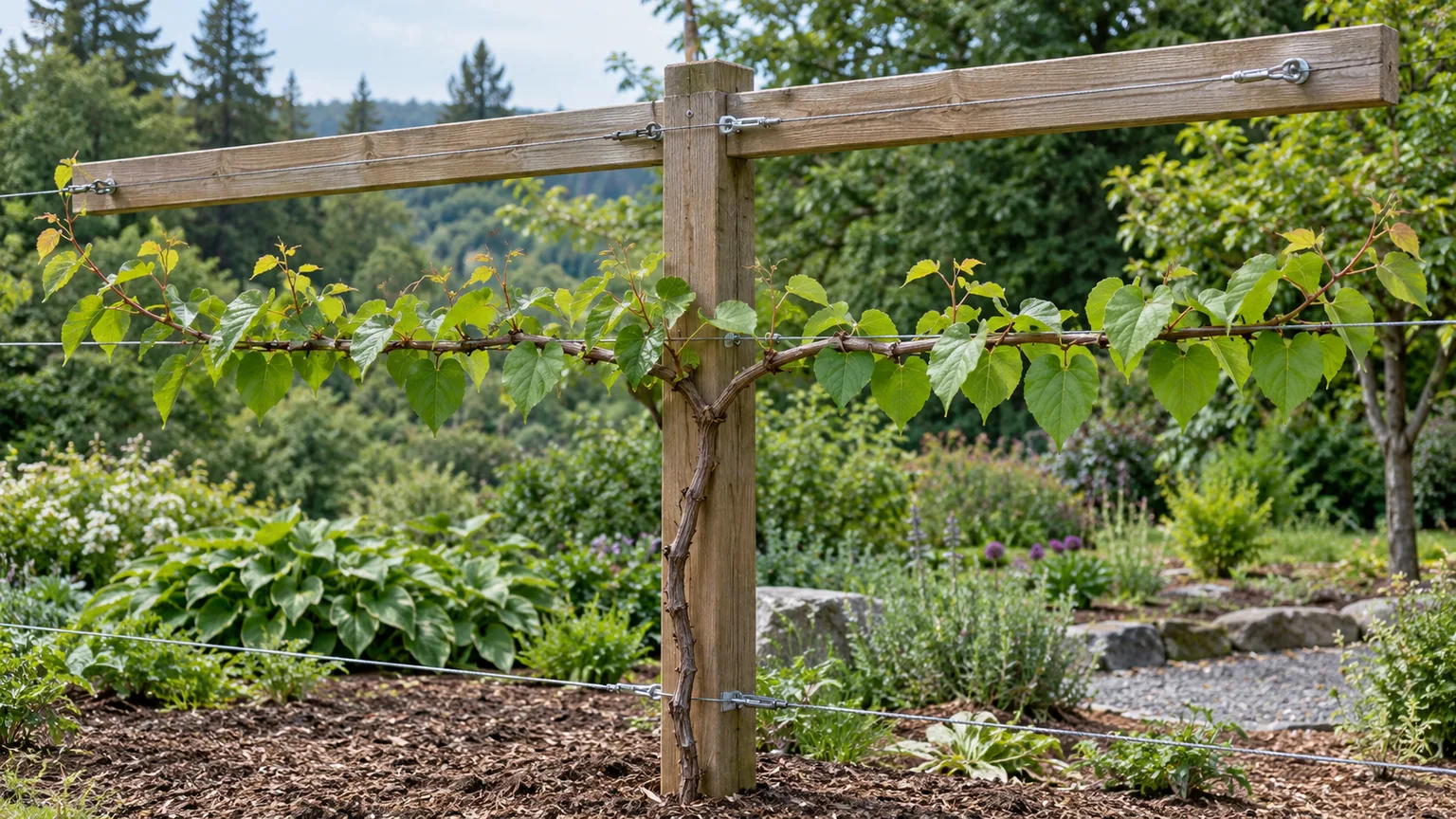
Arctic or hardy kiwi, Actinidia kolomikta, is a woody climber grown mainly for its heart-shaped foliage. Mature leaves may show white and pink variegation, especially on male plants; the flowers are small and less conspicuous. NC State Extension reports that the vine can reach about 15 to 20 feet and prefers fertile, evenly moist soil with little shade. It needs a sturdy trellis, wires, or an arbor designed for a long-lived woody vine, not a lightweight seasonal obelisk.
For leaves alone, a male plant is usually the straightforward choice because the male foliage is typically more colorful. For fruit, the species has separate male and female plants, so a compatible male is needed near females; NC State recommends about one male for every three to four females. Do not buy a single plant expecting a crop unless its label confirms it is self-fruitful. In regions with very hot afternoon sun, some afternoon protection can help preserve foliage quality, while in cooler summers the sun brings out the leaf color.
Summer Shandy hops for golden foliage
Summer Shandy is the ornamental trade name for the golden-leaved hop cultivar ‘Sumner’. Its yellow-green leaves emerge bright and mature to a richer gold, giving a fence or arbor summer color even when flowers are not the main attraction. The Missouri Botanical Garden lists the cultivar at roughly five to ten feet tall, with full sun to part shade, and notes that its roots are rhizomatous. In other words, it spreads by underground stems rather than relying on seed.
That spread is the reason to plan carefully. Put hops where stray shoots can be found and removed, or grow it in a large container with reliable drainage. A narrow bed against lawn or groundcover can turn a decorative vine into a recurring digging project. Its stems die back after frost and the perennial roots send up new growth in spring, so the winter framework is not permanent. Missouri Botanical Garden also notes that skin contact can cause dermatitis in some people; gloves are sensible if handling the foliage or stems irritates your skin.
Dutchman’s pipe for a native butterfly host
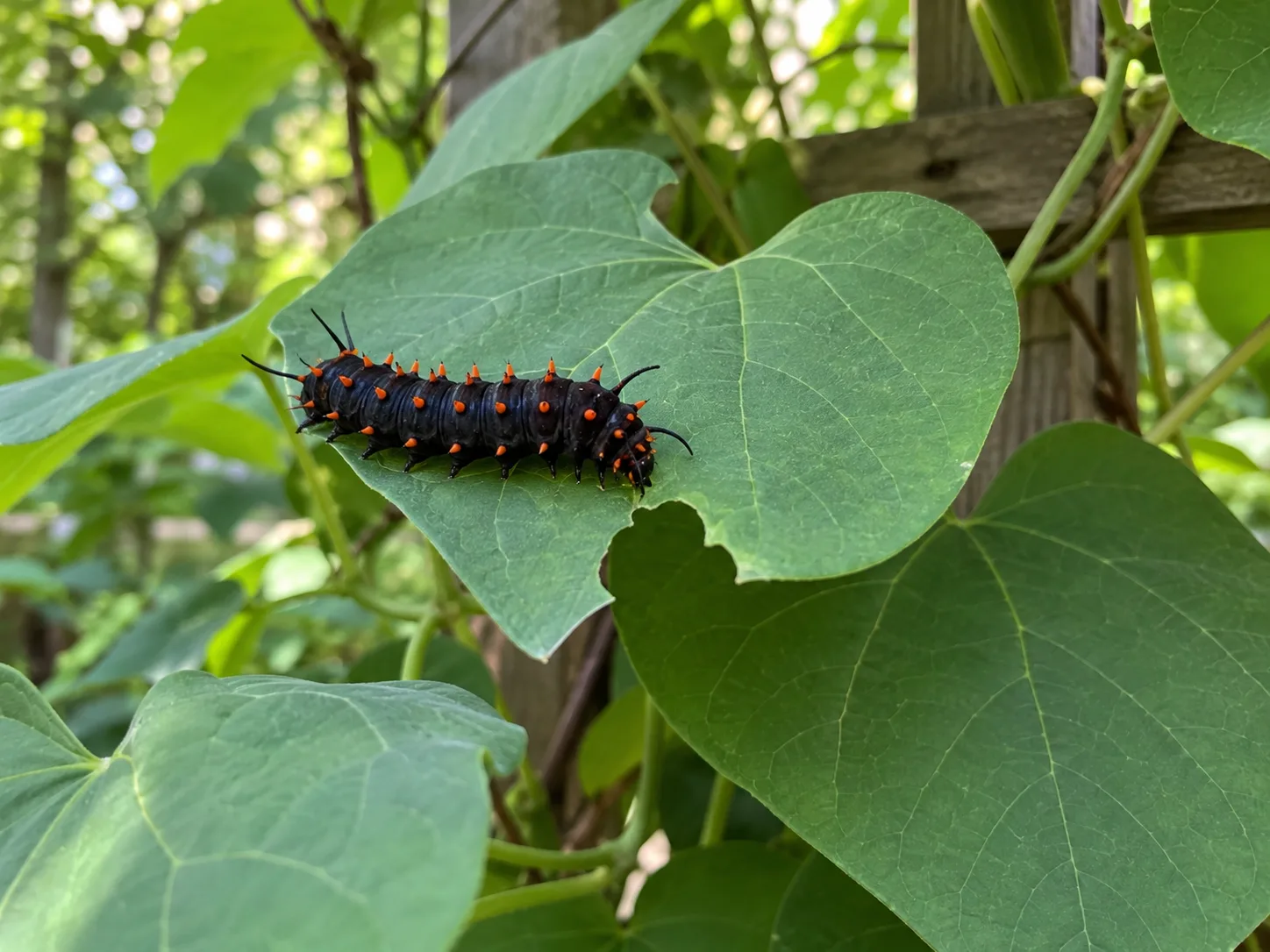
Dutchman’s pipe, Aristolochia macrophylla, is a vigorous native vine with broad, heart-shaped leaves that can make a dense summer screen. Its unusual pipe-shaped flowers are mostly hidden by foliage, so choose it for leaf cover and wildlife value, not a long, showy flower display. It prefers rich, moist, well-drained soil and can take full sun when moisture is adequate. A substantial arbor or freestanding trellis is a better match than a thin wire panel.
The leaves are an important food source for Pipevine Swallowtail caterpillars, a valuable ecological role for a native garden. There is a major household safety tradeoff: NC State Extension classifies all parts as highly poisonous if ingested and says ingestion may cause irreversible kidney failure. Do not plant it where small children may chew foliage, and keep it away from any setting where people could mistake it for an edible vine. If that risk does not fit your household or site, choose another leafy screen.
American wisteria for fragrant hanging blooms
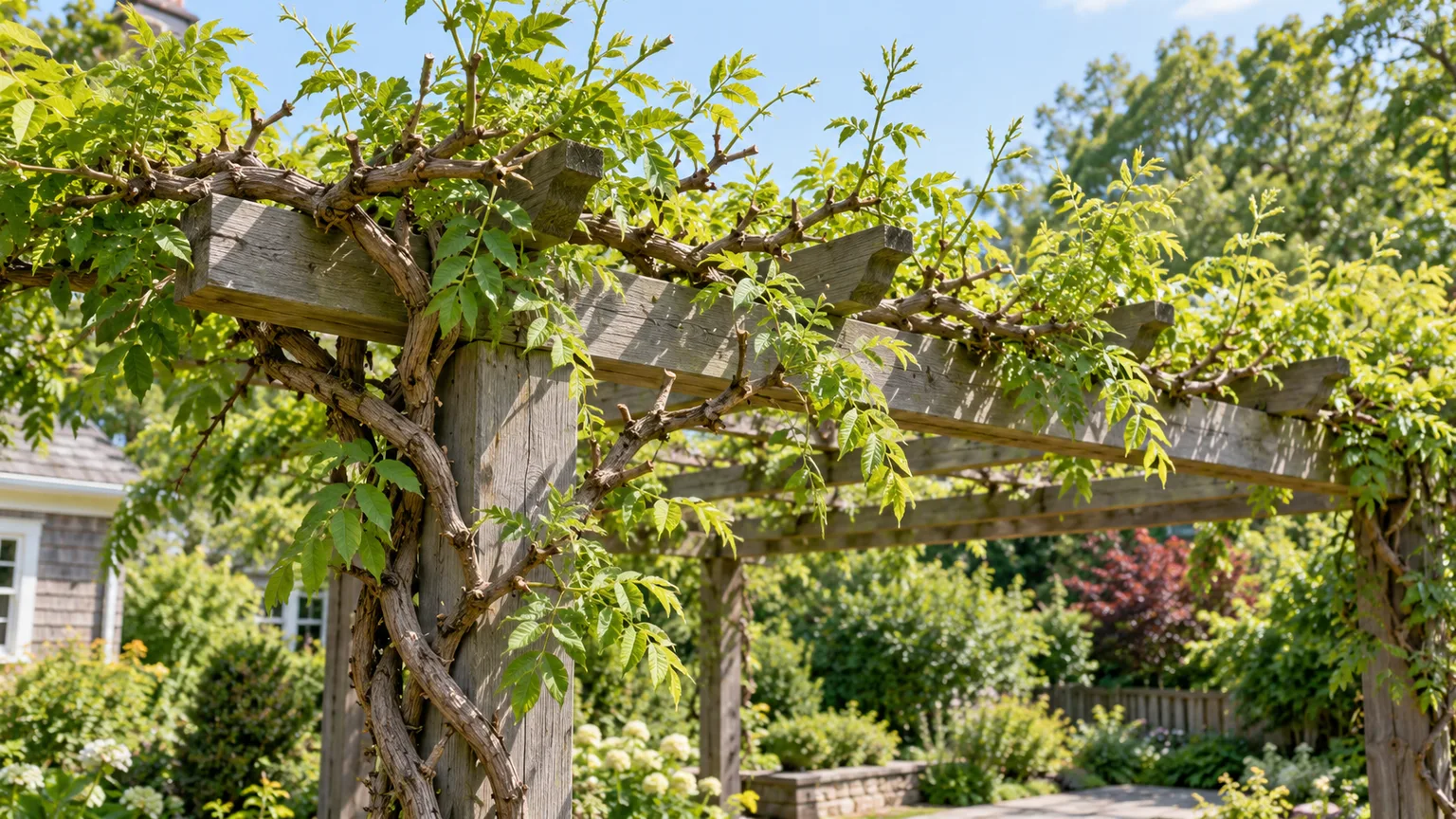
American wisteria, Wisteria frutescens, is a native alternative for gardeners drawn to hanging lavender-purple flowers but concerned about the aggressive spread of some Asian wisterias. It still becomes a substantial woody vine, so “less aggressive” does not mean small or self-maintaining. Give it a strong, permanent structure, keep shoots away from gutters and roof edges, and prune each year to preserve access and keep growth within bounds.
Fine Gardening’s horticulturist-author describes American wisteria as a tamer choice than Asian species, while stressing that it still needs sturdy support and regular pruning. Plant it in a sunny spot for the best bloom, and do not expect a newly planted wisteria to flower immediately. A vigorous young plant may spend its first years building roots and stems. If the goal is reliable flowers, buy a named cultivar suited to your region and avoid high-nitrogen feeding that pushes leafy growth at the expense of bloom.
American bittersweet for fall fruit
American bittersweet, Celastrus scandens, is a twining native vine valued for yellow fall leaves and orange-red fruit capsules. It is a large woody plant, best suited to a roomy fence line or strong freestanding support where its stems will not wind into shrubs or tree trunks. NC State Extension notes that female plants usually need a male pollinator for the characteristic fruit display. A single unsexed nursery plant may therefore give you foliage without berries.
Before buying, ask whether the plant is male or female and whether a compatible pollinator is available. The native species is often confused with invasive Oriental bittersweet, Celastrus orbiculatus. NC State points to a useful identification clue: native American bittersweet tends to have leaf tips that taper to a point, while Oriental bittersweet leaves are more rounded at the tip. Do not collect or plant wild vines based on fruit color alone; confirm the species and check your state’s guidance before introducing it to a naturalized edge.
Vines for warm climates and seasonal color
These choices suit regions with mild winters or gardeners prepared to move containers out of freezing weather. In a cold climate, they can still decorate a sunny patio during the growing season, but they are not dependable outdoor perennials without protection.
Bougainvillea for hot, bright patios
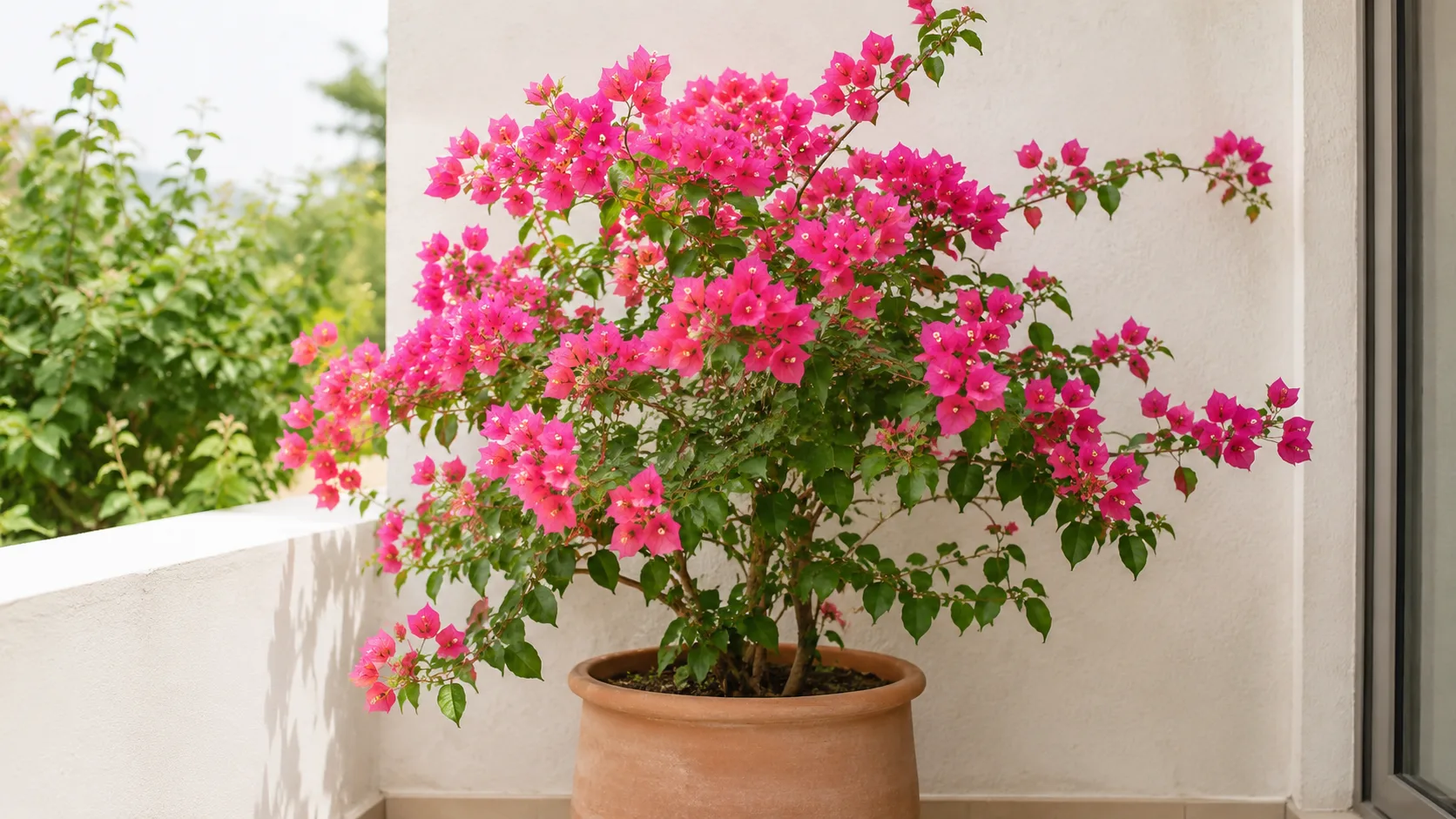
Bougainvillea produces a vivid wall of color in places where summers are long and winters rarely freeze. The vivid magenta, pink, orange, or white display comes from papery bracts around small flowers, and it is strongest with abundant sun. Its thorny, arching stems need training and can snag clothing, so keep the plant away from narrow walkways and children’s play areas.
In mild climates, plant it in the ground where it has room and fast-draining soil. In colder regions, grow it in a container and bring it into a bright, frost-free place before temperatures fall below its tolerance; a pot on an exposed patio is not winter protection. Let the mix dry somewhat between waterings rather than keeping the roots constantly wet. Avoid rich, frequent feeding that produces leafy growth without the flower-bract display you bought it for.
Winter jasmine for early yellow flowers
Winter jasmine, Jasminum nudiflorum, is valued for clear yellow flowers that open on bare stems in late winter or early spring, before many other plants wake up. It is naturally a sprawling, arching shrub, not a vine that grips a trellis on its own. If you want it vertical, tie the long stems loosely to wires or a fence; otherwise, let it spill over a retaining wall or bank.
This is the choice for gardeners who want an early-season color accent and can accept a looser silhouette. It tolerates sun or some shade, but a sunny position typically produces a fuller display. Shape or thin it soon after bloom, not in late summer when you could remove next season’s flower-bearing shoots. Winter jasmine is not the fragrance choice in this trio; for fragrant white flowers and evergreen foliage, consider Confederate jasmine instead.
Confederate jasmine for evergreen fragrance
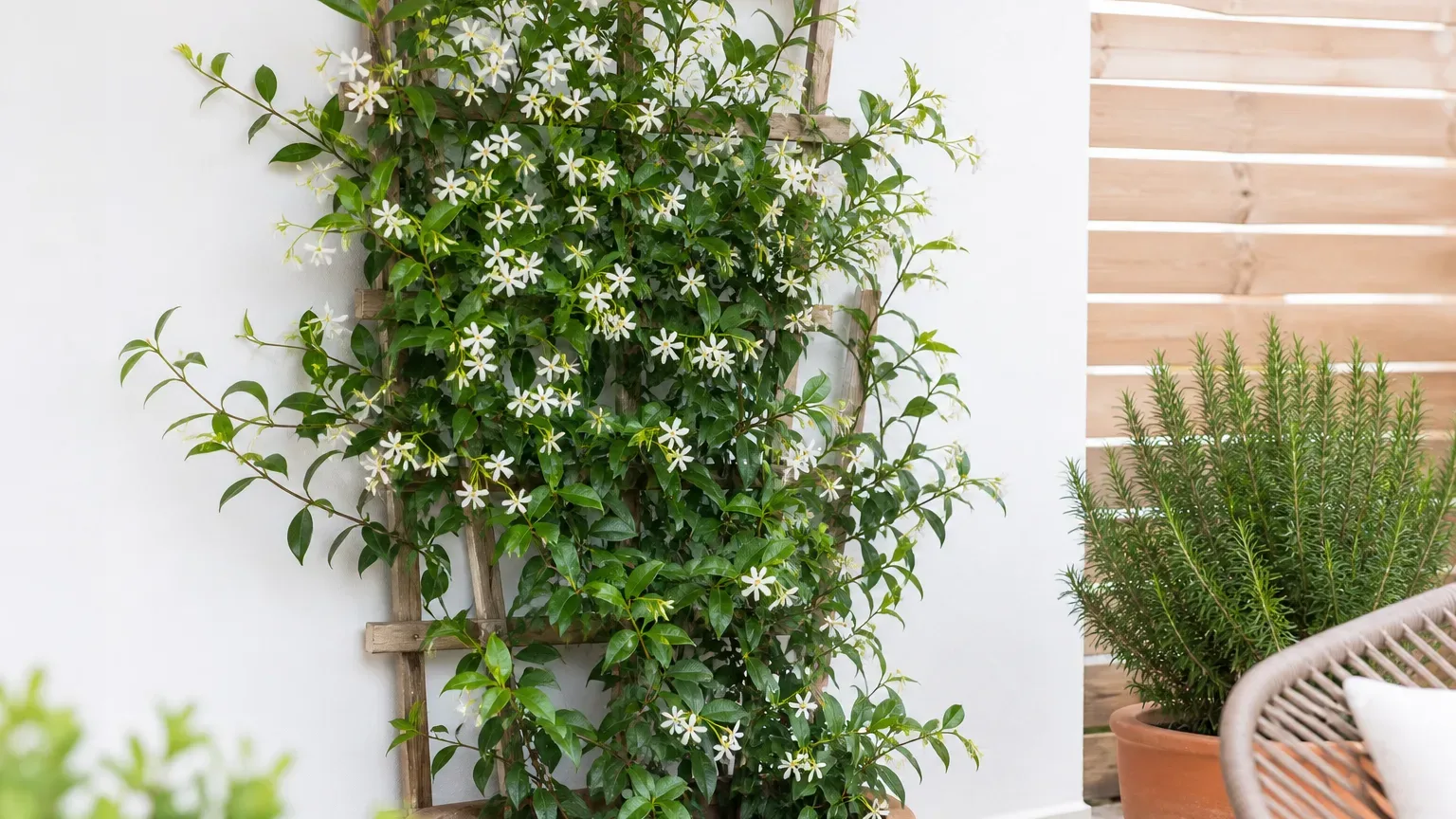
Confederate jasmine, also called star jasmine, is Trachelospermum jasminoides, not a true Jasminum. Its glossy evergreen leaves and highly fragrant white spring flowers suit a sunny fence, patio screen, or trellis in a mild-winter region. It climbs by twining stems and needs a support it can wrap around; it does not attach to a smooth wall by itself.
It is less cold-hardy than the clematis, hardy kiwi, and native woody vines in this guide. In a climate with regular hard freezes, grow it in a container and move it to a protected, bright location before winter, or select a truly hardy vine. Do not overwater it in a pot: drainage matters as much as sun. A warm, sheltered wall may help near the edge of its hardiness range, but it does not make a container root ball frost-proof.
Match the vine to its support before planting
A vine’s climbing method determines what structure will work. Clematis leaf stalks and sweet pea tendrils need narrow supports such as mesh, fine wire, or netting. Twining vines such as kiwi, wisteria, bittersweet, and hops wrap around a support, so they need posts, cables, or a trellis with openings they can reach. Winter jasmine and bougainvillea often need their stems tied into position; do not assume every plant will grip masonry or a smooth post.
Set the support before planting so you do not have to dig around established roots later. Space wires or trellis panels so you can reach behind the vine, and use loose, soft ties to guide young shoots without cutting into them. Train a few main stems in the direction you want, then shorten or redirect side growth before it crosses gutters, windows, neighboring shrubs, or a walkway. A once-a-season check is easier than untangling a woody mass after it has grown through the structure.
Match the mature vine’s weight to the structure, not the small nursery pot. Hardy kiwi and wisteria can build thick, heavy stems. Anchor a permanent trellis securely and keep it accessible for pruning. Where you want a vine on a house wall, use a separate trellis with space behind it so air can circulate and stems can be inspected; do not let a vigorous woody vine invade rooflines, gutters, vents, or damaged siding. A vine can hide a maintenance problem as quickly as it hides an unattractive wall.
Plant after the soil is workable and the main risk of frost has passed for tender vines. Set the root ball at the depth recommended for that species, water deeply after planting, and check moisture regularly during the first growing season. Once established, water according to the plant and soil rather than by a fixed calendar: a sunny, windy site and sandy soil dry faster than a sheltered bed with loam. Avoid using fertilizer as a substitute for sun, drainage, or pruning. If a vine is growing strongly but flowering poorly, first check its light, maturity, pruning timing, and nitrogen input.
Conclusion
The strongest perennial vines for full sun are the ones that match both the climate and the structure. For flowers, choose among Jackman’s clematis, ‘Dr. Ruppel’, ‘The President’, and perennial sweet pea; for foliage or fall interest, consider hardy kiwi, hops, American wisteria, or bittersweet. Bougainvillea and star jasmine bring a tropical look where winters are mild or containers can be protected, while winter jasmine fills the early-season gap.
Before planting, confirm the botanical name, estimate the mature weight and spread, and choose a support you can maintain. Then check the clematis pruning group, contain rhizomatous hops, pair male and female plants when fruit depends on pollination, and avoid Dutchman’s pipe where ingestion is a realistic risk. Those few decisions make a sunny vine far more likely to become a long-lived garden feature than a yearly repair job.
Sources: NC State Extension: Arctic kiwi Missouri Botanical Garden: Humulus lupulus ‘Sumner’ SUMMER SHANDY NC State Extension: Dutchman’s pipe NC State Extension: American bittersweet Royal Horticultural Society: Clematis pruning groups Fine Gardening: 7 Gorgeous Climbing Vines That Won’t Take Over Veranda: Fragrant Flowering Vines