How to Grow and Care for Common Juniper in Your Yard
Learn how to grow common juniper with the right cultivar, sunny exposure, sharp drainage, careful first-year watering, light pruning, and propagation steps.
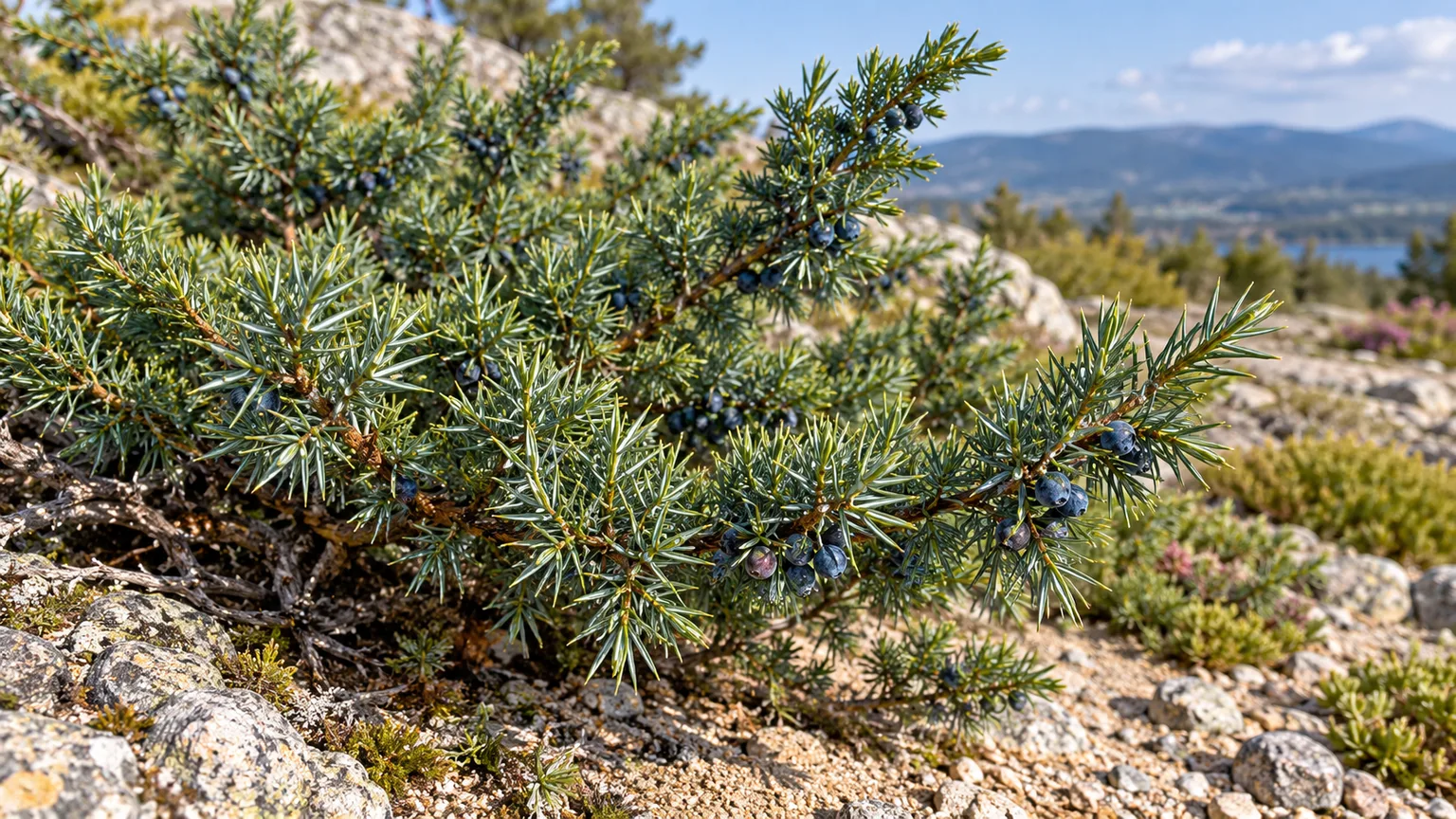
Common juniper (Juniperus communis) can be a low mat on a rocky slope, a rounded shrub, or a narrow upright accent. That range is useful only if you choose the right cultivar: the species is slow-growing, and an upright plant sold simply as “juniper” may not be common juniper at all. Start with the botanical name and the mature height and spread on the nursery label, then match those details to your climate and soil.
The care is straightforward once the plant is established: give it full sun and fast-draining soil, keep water moving through the root zone, and leave its natural shape mostly alone. The point that catches new owners is establishment. Drought tolerance describes a settled-in shrub, not a fresh root ball that has not yet grown into the surrounding soil.
Is Common Juniper the Right Juniper for Your Site?
The common juniper is a Northern Hemisphere evergreen in the cypress family. Its foliage is made of pointed, prickly needles, commonly arranged in whorls of three; a pale stripe on each needle helps distinguish it from many junipers that carry scale-like foliage. The plants are usually dioecious, meaning an individual plant produces male or female cones rather than both. Female plants form the blue-black, berry-like seed cones, but only when pollen is available from a male plant nearby. Oregon State University’s plant profile and NC State Extension’s species record describe this variation in habit and reproduction.
This is a good choice for a sunny, well-drained border, rock garden, open slope, or other site where a tough evergreen can take its time filling in. It is a poor choice for a low spot that stays saturated, a shaded courtyard, or a narrow bed where the plant’s eventual width is an afterthought. Established plants can handle dry periods, but “low maintenance” does not mean that they will tolerate standing water or neglect immediately after planting.
Climate deserves more thought than a single hardiness-zone number suggests. Common juniper has forms adapted to very cold regions, yet local heat, humidity, rainfall, and disease pressure also affect performance. NC State notes that common juniper can struggle in the South, while Oregon State lists the species as cold hardy to USDA Zone 2. Those statements address different sides of the map: winter minimums do not predict whether a plant will thrive through a hot, humid summer. In warm or humid regions, choose a cultivar proven locally, favor excellent air movement and drainage, or ask a nearby extension service before buying.
Choose a Form That Fits the Space
Do not buy by the generic word “juniper.” Check that the tag says Juniperus communis, then read the cultivar name and mature dimensions. Common juniper includes upright, compact, and spreading selections, and a slow growth rate will not rescue a plant that eventually outgrows the site. If the label gives only a pot size or a height at sale, ask the nursery for its mature width as well.
Upright, spreading, and compact types
Use the plant’s shape to decide where it belongs. ‘Compressa’ and ‘Hibernica’ are narrow, upright choices for a vertical accent; ‘Gold Cone’ has an upright habit and yellow-toned growth; ‘Green Carpet’ and ‘Repanda’ stay low and spread across the ground. Cultivar dimensions vary across references and growing conditions, so treat a catalog estimate as a planning range, not a guaranteed final measurement. UConn’s Plant Database and Oregon State’s cultivar notes offer examples of how widely the forms differ.
For spacing, use the cultivar’s expected mature spread, not the nursery pot’s width. A low selection may eventually cover several feet; a columnar selection needs less side-to-side room but still needs open air around its foliage. If a shrub is meant to become a continuous ground cover, account for the eventual spread and how quickly you want the bed to close. Planting closer makes the display fill sooner but can crowd branches, complicate maintenance, and increase the time foliage stays damp after rain.
Common juniper also differs from other plants sold as junipers. Creeping juniper (J. horizontalis), Blue Star juniper (J. squamata), and Rocky Mountain juniper (J. scopulorum) are separate species with different foliage, habits, and site tolerances. If you want common juniper’s needle texture, distinctive cones, or a particular cultivar, do not rely on a photo or the word “juniper” alone; confirm the botanical label.
Give It Sun and Fast Drainage
Full sun produces the densest, most reliable growth, although the species can tolerate some light or dappled shade. In deeper shade, expect a looser shape and slower growth; do not try to compensate by feeding it more. The Royal Horticultural Society’s profile lists full sun or light dappled shade and well-drained soil, while NC State describes tolerance for a broader range of soils but still favors a sunny, drained site.
Drainage is the condition to get right before planting. Common juniper can grow in sand, loam, or some clay, but roots that sit wet are more vulnerable to decline. After heavy rain, notice whether water drains away or remains pooled around the planting area. If the spot stays saturated, choose another location or build a broad raised mound; adding a little gravel beneath the root ball does not fix a high water table and can leave roots sitting in the wettest part of the hole.
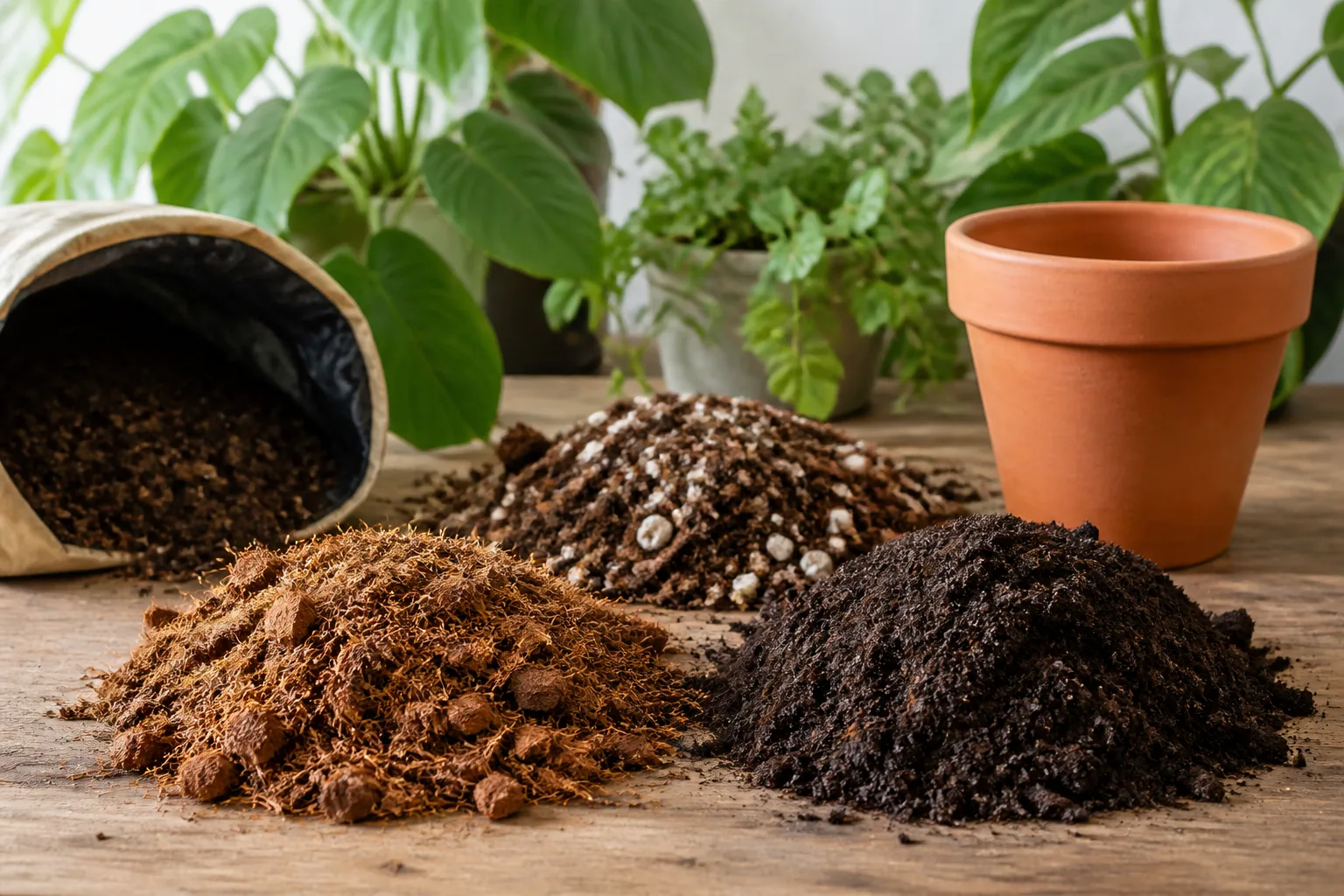
A fertile, amended planting pocket is not the goal. Match the soil to the plant by ensuring it drains; do not create a rich, water-holding basin inside a heavier native soil. When the wider bed is compacted, improve the whole planting area or raise the planting grade instead of filling only the hole with a different mix. The common juniper tolerates lean soil better than a wet root zone.
The species tolerates a wide range of soil reactions, so routine pH correction is rarely useful unless a soil test identifies a specific issue. A shaded, damp site is usually a bigger problem than whether the soil is slightly acidic or alkaline. If you are choosing between two locations, favor the sunnier site with faster drainage over a richer bed that stays wet.
Plant at the Right Depth
Plant in spring or early autumn when the weather is mild and the soil is workable. In a mild-winter region, a cool-season planting window can also work; avoid planting when the ground is frozen, saturated, or in the middle of extreme heat. The BBC Gardeners’ World growing guide recommends avoiding frozen or waterlogged soil and watering during dry periods while the roots establish.
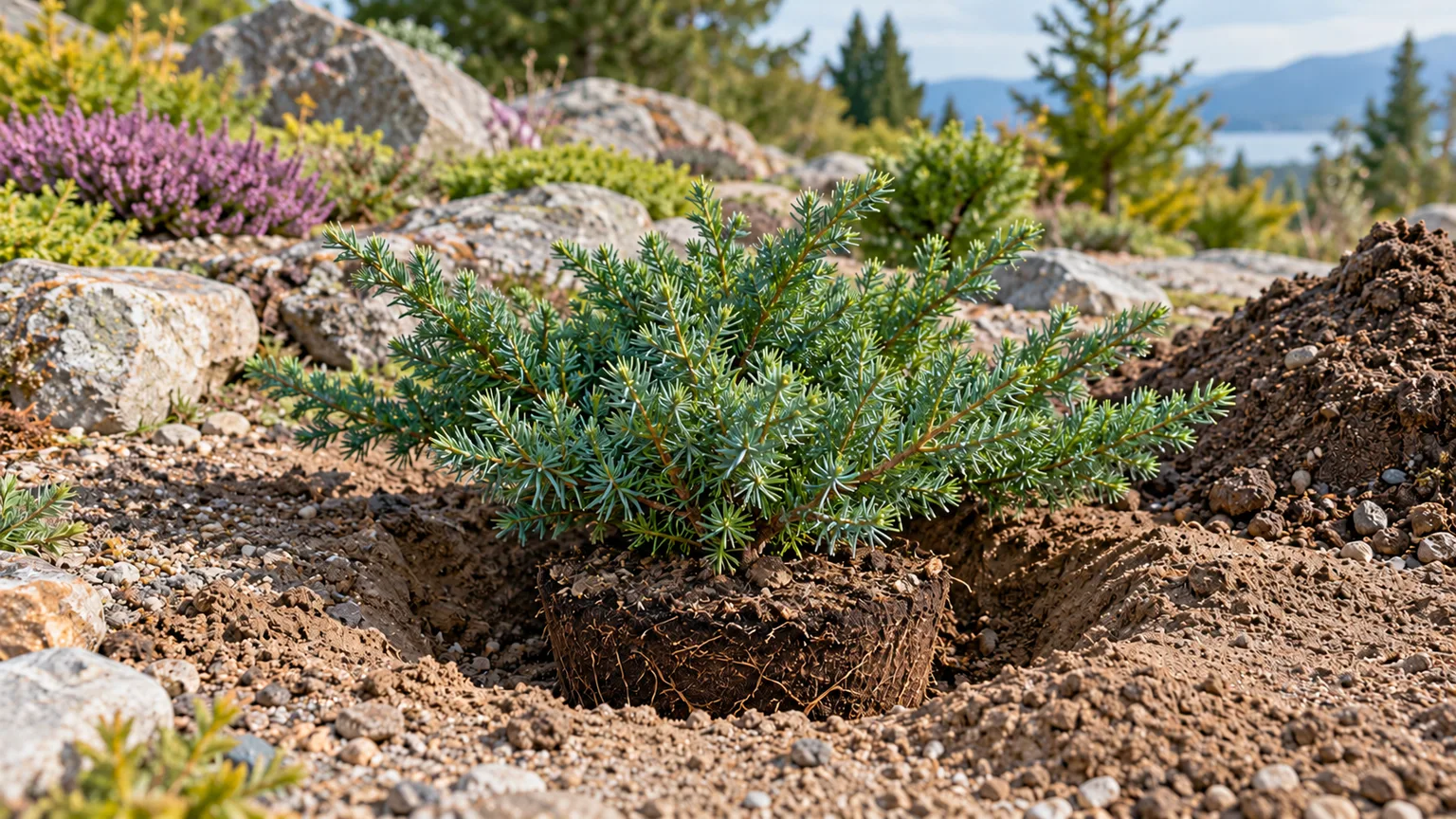
Prepare the plant and hole before you open the container. Water the root ball so it is evenly moist, remove the pot, and loosen only roots that circle tightly around the outside. Dig a hole roughly twice as wide as the root ball and no deeper than its height. The top of the root ball should finish at the surrounding soil level; setting it too low traps moisture against the crown and makes later watering harder to judge.
Set the shrub upright, backfill with the soil you removed, and firm it gently so there are no large air pockets. Water slowly enough to settle the soil around the roots, then check that the plant has not sunk. Spread a thin layer of mulch over the root zone to limit weeds and evaporation, keeping it a few inches away from the trunk and lower branches. Do not build a mulch mound around the stem.
Water During Establishment
For the first growing season, check the root ball itself rather than watering on a fixed calendar. The nursery mix can dry faster than the surrounding soil, so a damp-looking bed does not always mean the roots are moist. If the root ball is drying several inches below the surface, water slowly and deeply; if it is still wet, wait. During hot, windy weather or a long rainless stretch, check more often.
Continue this check-based routine through dry spells while the roots expand, often into the second growing season depending on plant size, soil, and weather. The goal is consistent moisture during establishment without keeping the soil saturated. A low-flow hose at the root zone is more useful than repeated light sprinkling over the foliage, which wets needles but may not reach the active roots.
Watering and Feeding After Establishment
Once the root system has spread into the surrounding soil, common juniper is notably drought tolerant. In a normal season, a well-sited landscape plant often needs little supplemental water. In prolonged drought, give it a slow, deep drink when the root zone is dry rather than a small daily splash. Water less often in cool, rainy weather and more attentively in fast-draining sand or a container.
Too much water is a more common mistake than too little after establishment. If the soil stays damp for days, check drainage, irrigation overspray, and nearby downspouts before assuming the plant needs fertilizer. Persistent wetness can damage roots, and aboveground browning may appear only after the roots have already been under stress.
Established shrubs usually do not need routine fertilizer. If growth is weak, first check light, drainage, planting depth, and whether the cultivar naturally grows slowly. A soil test can show whether a nutrient is actually deficient; adding a high-nitrogen product without evidence can stimulate weak growth and will not repair poor drainage. Keep mulch light and away from the base, and replenish it only when it has thinned.
Prune Lightly Without Exposing Bare Wood
Common juniper generally needs no scheduled shaping. Remove broken, dead, crossing, or clearly diseased branches when necessary, and preserve the plant’s natural outline. For a light size adjustment, cut a branch back to a living side shoot with green foliage rather than shearing the outside into a dense shell.
The important limit is old, leafless wood. Junipers do not reliably push new shoots from bare interior stems, so a hard cut into brown wood can leave a permanent hole instead of a smaller shrub. Before cutting, part the foliage and trace the branch to a healthy green lateral. If no green growth remains where you would need to cut, accept the plant’s size, remove the whole branch at its origin if appropriate, or replace it with a cultivar that fits the space.
Late winter or early spring is a practical time for selective pruning in many climates, after the harshest cold has passed and before strong new growth. Local weather matters more than a calendar date. Avoid heavy late-season pruning that leaves fresh cuts exposed to winter stress, and do not remove a large share of the plant’s live foliage in one session. Epic Gardening’s pruning guide also emphasizes working with living growth and avoiding cuts that leave junipers bare.
Use clean, sharp pruners for small branches and a saw for larger limbs. Juniper needles can be sharp, and some people find the foliage irritating, so gloves and eye protection make the job more comfortable. If you are removing disease-affected branches, clean tools between cuts and dispose of infected material rather than leaving it beneath the shrub.
Propagate a Named Cultivar From Cuttings
For a named cultivar, a cutting is usually the more useful home-garden method because it can preserve the parent plant’s traits. Seedlings are genetically variable and may not keep a compact shape or foliage color. The RHS profile lists semi-ripe cuttings in early autumn as a propagation option, while UConn’s database distinguishes cultivar propagation by cuttings from seed-grown plants.
A reliable cutting routine
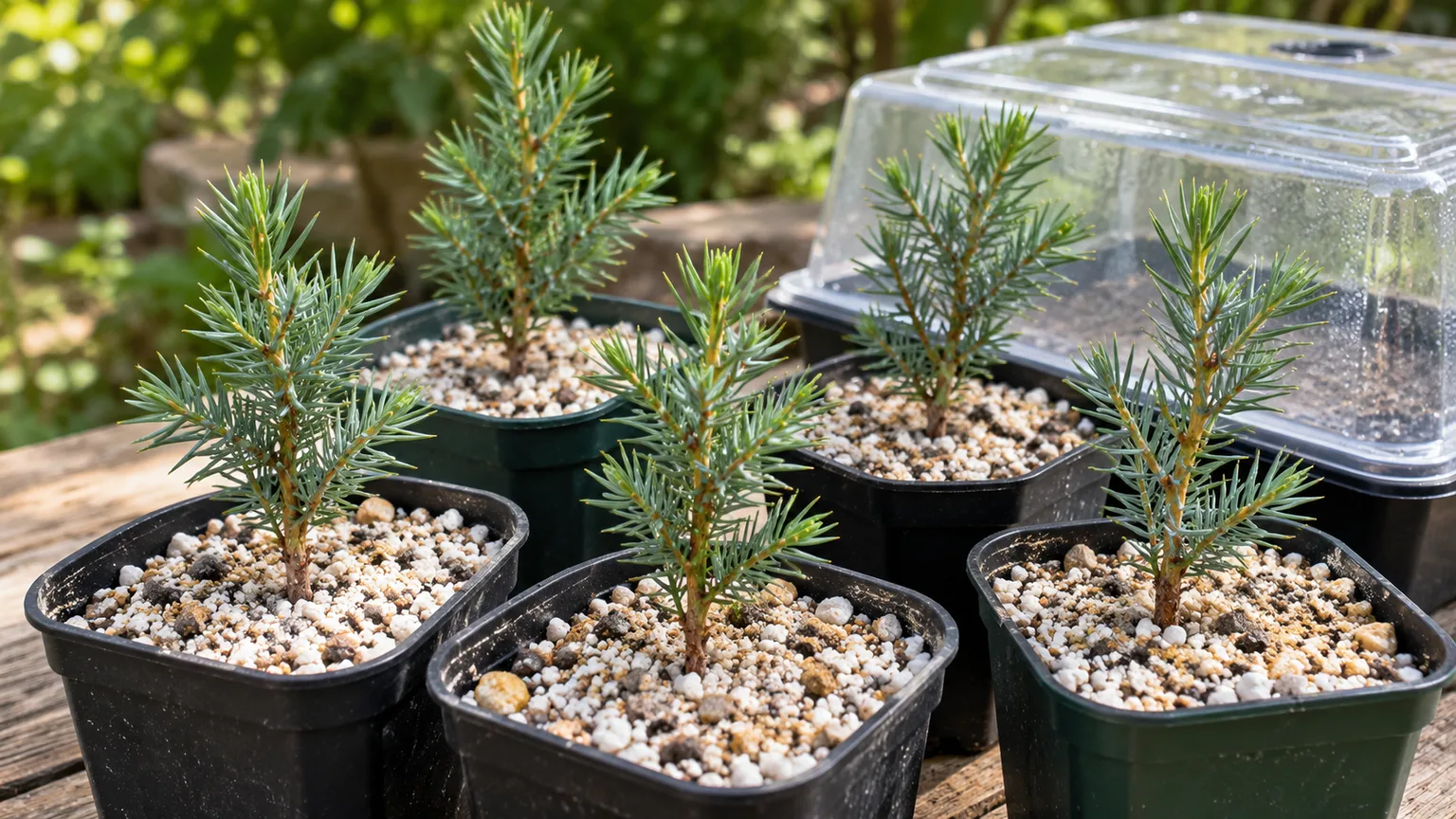
Take several cuttings because rooting is not guaranteed. Choose healthy current-season shoots that have begun to firm at the base but are still flexible near the tip. Avoid weak, diseased, or heavily shaded growth, and label each cutting with the cultivar and date so you can identify it later.
Remove needles from the lower portion of each cutting, leaving enough foliage at the top to support the shoot. Dip the base in rooting hormone if available, then insert it into a clean, free-draining medium such as a propagation mix with perlite or coarse sand. Firm the mix around the stem, water it in, and let excess water drain; a wet, airless medium encourages rot before roots form.
Keep cuttings bright but out of harsh direct afternoon sun. A clear cover can slow moisture loss, but it should not remain sealed and dripping: open or vent it regularly, and remove fallen foliage promptly. Maintain evenly moist medium, not standing water. Rooting can take months, so use gentle resistance or look for fresh growth before potting up rather than tugging every week.
After roots form, pot each cutting separately and let it grow on in a sheltered outdoor spot. Protect young plants from hard freezes and drying wind, but do not keep them in a heated room all winter. Give them time to build a root system before moving them into the landscape, and plant them at the same depth they grew in their nursery pots.
Growing Juniper From Seed
Seed propagation is possible, but it is slow and unpredictable. Common juniper is usually dioecious, so a female plant needs pollen from a male for fertile cones. The fleshy blue-black cones are not true berries; they are seed cones that develop over more than one season. A plant grown from seed may differ from the parent in form, vigor, or sex, so seed is a poor shortcut when you want a particular cultivar.
Plan for Slow, Uneven Germination
Collect cones only when they are fully mature and dark, and clean the seeds from the fleshy tissue before storage or sowing. Wear gloves when handling the prickly plant, and keep collected material away from children and pets. Do not gather cones from an unknown ornamental juniper for food: species identification matters, and the common juniper itself has cautions around large-dose ingestion. NC State Extension flags low-severity poison characteristics and possible kidney harm from large amounts; the Gardeners’ World guide advises against using the berries during pregnancy or with kidney disease. For a garden planting, there is rarely a reason to eat the cones.
Juniper seed has dormancy that can make sowing more complicated than covering a seed tray and waiting. The RNGR seed-collection and stratification guidance is written for propagation and restoration work, a useful signal that treatment is not a universal one-step recipe. Follow a protocol suited to the seed source and your growing conditions; cold, moist stratification is commonly part of the process, but duration and success can vary. Sow more than you need, keep the medium airy and evenly moist, and expect a long wait rather than a quick flush of seedlings.
Keep seed pots outdoors in a sheltered location so they experience natural seasonal conditions, while protecting them from waterlogging and disturbance. Mark the pot clearly and do not discard it after a few weeks; germination may be staggered and can take more than one season. Once seedlings are large enough to handle, pot them individually and grow them on for another season before planting out. If you need a predictable landscape plant, buy a correctly labeled cultivar or root a cutting instead.
Grow in a Pot Only If You Can Protect It Outdoors
A compact, slow-growing cultivar can work in a large outdoor container, but a pot is less forgiving than a garden bed. Choose a cultivar whose mature dimensions suit the container, use a pot with generous drainage holes, and fill it with a durable mix that drains freely without drying to dust in a few hours. A heavy pot is less likely to tip, but weight does not substitute for drainage.
Water when the upper mix has begun to dry and then water thoroughly until excess drains. Check more often during heat and wind, since a container has less soil volume to buffer moisture changes. Do not leave the pot in a water-filled saucer, and do not treat a brief dry interval as proof that the root ball is dead. If roots circle the pot or water runs straight down the sides, move the plant to a slightly larger container or refresh the mix during mild weather.
Keep container junipers outside year-round. In winter, their roots are more exposed to temperature swings than roots in the ground, so place the pot in a sheltered position and insulate the container if severe cold is expected. Do not bring the shrub into a warm room for the season; it needs outdoor light and a winter rest. If your region’s summer heat or winter cold is beyond what the cultivar tolerates, a pot will not make the species a better fit.
Troubleshoot by Pattern, Not by Guess
A browning juniper does not automatically need fertilizer or fungicide. First look at where the damage begins, whether it is spreading, how recently the shrub was planted, and whether the root zone is dry or wet. Check the undersides of shoots and branch forks for insects, then compare the symptoms with a local extension diagnosis before applying a treatment.
Pests and disease
Common juniper can be affected by mites, scale, borers, midges, bagworms, rust, and other fungal problems. The NC State Extension profile lists several of these pests and diseases, and the RHS profile notes susceptibility to Phytophthora, canker, and honey fungus. Look for the pest or disease sign itself: webbing or stippling, attached scale, bag-like cases, a localized gall, or a branch that is dying back from its tip.
Start with a close inspection and correct the growing conditions that are stressing the plant. Improve airflow by avoiding crowding, keep irrigation off the foliage where practical, and remove only confirmed dead or infected branches. Because similar symptoms can come from drought, wet roots, winter damage, or pests, do not spray by default. If damage continues or spreads, take a sample or clear photos to a local extension office or qualified arborist and follow local pesticide labels if treatment is warranted.
Brown foliage and branch dieback
A small amount of older foliage inside a dense evergreen can age and drop without meaning the whole plant is failing. More concerning patterns include browning at branch tips, a whole branch dying, one side turning brown after a cold windy winter, or progressive browning across the outer canopy. Each pattern points to a different set of checks, not a single cure.
For an established plant that is brown on the side facing winter sun or prevailing wind, consider winter desiccation: frozen roots cannot replace moisture lost through exposed foliage. For a recently planted shrub with general browning, check whether its root ball dried out or sat in wet soil. For branch-by-branch dieback, inspect for pests, cankers, root stress, and pruning damage; cutting off symptoms alone may hide the cause without fixing it.
Wait for clear evidence before removing large sections. Scratch a small area of a questionable twig to see whether tissue beneath the bark is green, and compare it with healthy growth farther back. If only the tip is dead, cut back to a living side branch. If a branch is brown into the interior and no green shoots remain at the intended cut, do not shear the whole shrub to that height; juniper often cannot fill the bare gap.
Conclusion
Common juniper is easiest when you make the important choice before planting: select Juniperus communis by its cultivar name and mature spread, then put it in a sunny site where water drains freely. Water the root ball while it establishes, ease off once roots reach the surrounding soil, and prune only where green growth gives you a safe place to cut.
Choose cuttings when you want a named plant to resemble its parent; use seed when you have patience for dormancy, uncertain germination, and variable seedlings. If the site is waterlogged, deeply shaded, or climatically wrong for the cultivar, choose a better location or another plant instead of trying to fix the mismatch with more fertilizer or pruning.