Jade Plant Watering: How Often and How Much
Skip a rigid jade plant watering schedule. Use soil depth, pot weight, drainage, and leaf cues to decide when to water and when to wait.
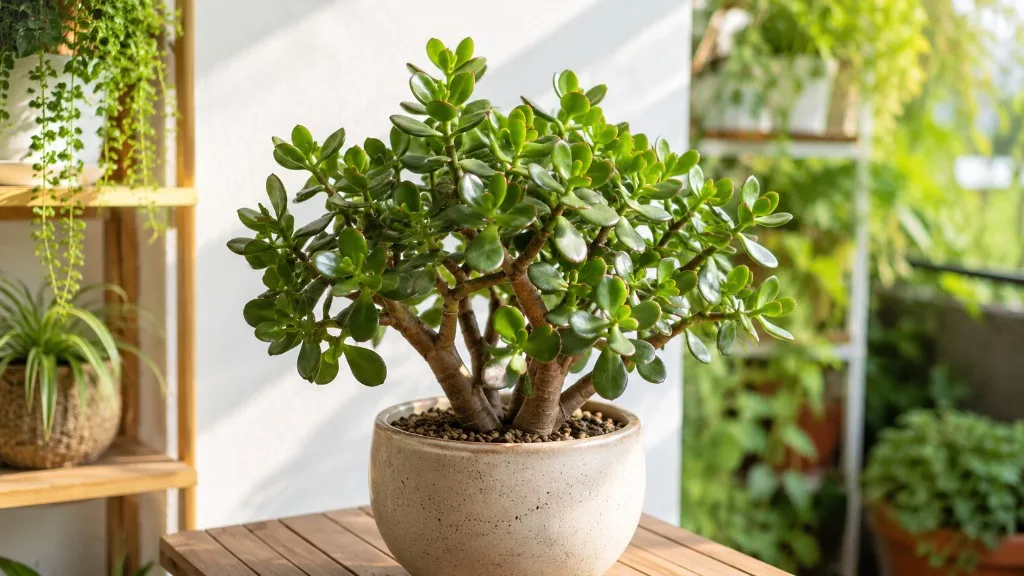
A jade plant is a succulent, but “water it every two weeks” is a reminder at best, not a reliable schedule. The same plant can dry at different speeds after a move, a season change, or a repotting, and two jade plants on the same windowsill may need water on different days if their pots and soil are different.
The useful rule is simple: check the growing mix, water when most of the root zone has dried, and let the pot drain completely. For many indoor jade plants, that means inspecting about once a week during bright, warm growth and watering every couple of weeks or less often; a cool, dim winter room may stretch the interval to a month or longer. Treat those as planning windows, not promises. The mix and pot tell you what to do today.
The short answer: water when the root zone has dried
Jade plants store water in their fleshy leaves and stems, so they tolerate a dry interval better than a constantly damp root zone. University of Wisconsin–Madison Extension recommends letting the soil dry between deep waterings, giving plants more water during active growth and restricting it in winter. That guidance is more useful than a fixed day count because indoor conditions vary widely.
As a practical starting point, check a small or medium jade every seven to ten days while it is in a bright, warm spot. If the potting mix is still cool or damp below the surface, wait and check again several days later; if it has dried through most of the root ball, water thoroughly. A healthy plant does not need to look wrinkled before you water it. Waiting for severe dehydration is no safer than watering merely because a calendar reminder appeared.
The University of Wisconsin–Madison Extension jade plant guide notes both sides of the problem: overwatering can lead to leaf drop and stem rot, while prolonged drought can cause stunting, leaf spots, leaf drop, and eventually plant death. A good routine avoids both extremes by responding to the soil before the plant is badly stressed.
Why a fixed schedule misses the mark
“Every 14 days” assumes that the pot, soil, light, temperature, and growth rate stay the same. They do not. The room’s brightest window changes with the sun’s angle, heating or air conditioning alters evaporation, and a newly repotted plant has a different soil-to-root ratio than it did before.
Instead of trying to memorize an exact frequency, separate how often you inspect from how often you water. A weekly check is easy to maintain; the actual watering may be weekly in a tiny terracotta pot or monthly in a large plastic pot in winter. That way you stay attentive without turning a calendar into an instruction to add water.
Light and temperature set the drying speed
A jade in strong light and a warm room can use water faster than one in a dim corner. Light also supports active growth, which changes how much moisture the plant draws through its roots. NC State Extension lists jade as preferring well-drained soil and recommends moderate watering when the soil is dry, with reduced watering from fall through late winter.
A move can change the rhythm quickly. After bringing a jade outdoors for summer, bright light, wind, and warmer days may shorten the dry-down; after moving it back inside, the same pot can stay wet longer. Increase light gradually when moving a plant outdoors and inspect the soil more frequently during the transition, but do not increase watering until the root zone actually dries faster.
Cool air alone does not mean the plant needs less water if it is still growing under a bright grow light, and a warm house does not guarantee active growth when daylight is weak. Let the plant’s location and new growth inform your expectations, then verify with a moisture check.
Pot size and mix change how long moisture lasts
A small pot contains less soil and usually dries faster, while a large pot can hold moisture in its center long after the surface looks pale and dry. This is why checking only the top layer can lead to repeated watering while the lower roots remain wet. A heavy ceramic cover pot can also conceal standing water beneath the inner nursery pot.
The medium matters just as much. A porous cactus or succulent mix with mineral particles and a drainage hole usually releases excess water more quickly than dense, peat-heavy houseplant soil. Terracotta can dry faster than glazed ceramic or plastic, but the pot material cannot compensate for soil that stays soggy or a drainage hole that is blocked.
The NC State Extension Plant Toolbox describes jade as a plant for well-drained soil and dry conditions, while Clemson Extension’s indoor-plant watering guidance explains why species, soil, container, and environment all affect watering needs. If your jade stays wet for weeks, fix the setup before deciding that it simply needs less water.
Check the mix below the surface
The surface dries first, so it is a poor stand-alone signal for a succulent. Slide a clean wooden skewer into the soil near the pot’s edge, about halfway between the stem and the rim. If it comes out cool with dark, damp particles attached, leave the plant alone and check again after a few days.
For a deep pot, test in more than one place. One dry pocket does not mean the whole root ball is ready, especially if the mix has settled unevenly or a thick layer of decorative stones obscures the soil. A moisture meter can add context, but probes can produce misleading readings in coarse mix or when placed near a dry pocket, so do not let a single number overrule a skewer and the pot’s weight.
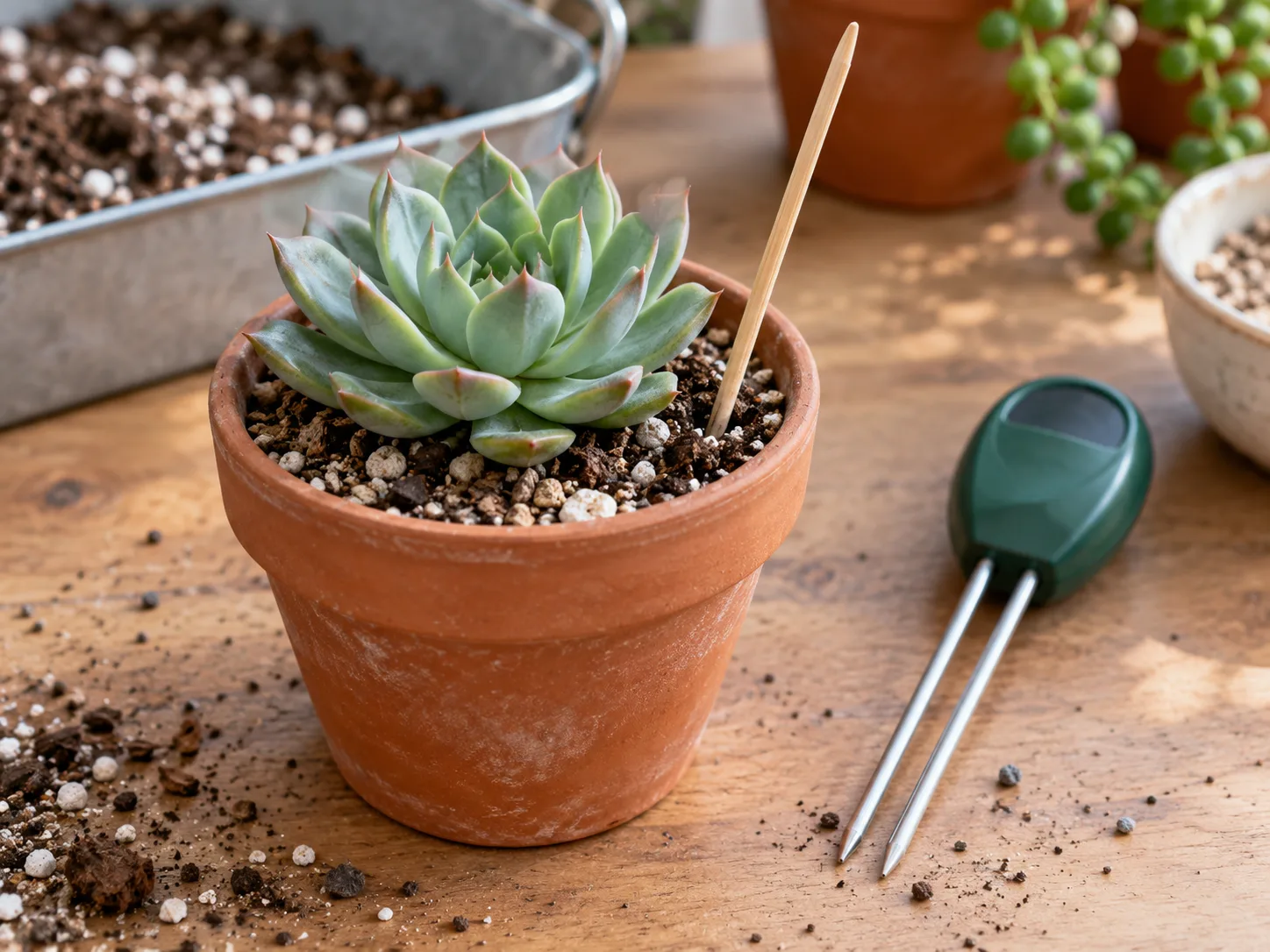
Combine a skewer check with pot weight
Lift the pot shortly after watering and again as it dries. The difference is often easier to notice than the difference between “a little damp” and “nearly dry” by touch, especially when the container is too deep for a finger test. Lift the inner pot alone if it sits inside a heavy decorative cover.
Over time, you will learn the weight of that particular pot when it is wet and when it is dry. The goal is not to use weight as a precise measurement; it is a second clue that helps confirm what the skewer shows. If the skewer is dry but the pot still feels unusually heavy, wait rather than watering on one signal.
Jade leaves are a third clue, not a substitute for checking the soil. Plump, firm leaves usually mean the plant has adequate reserves, but soft or wrinkled leaves can result from either drought or damaged roots. Read leaf texture together with soil moisture and weight before deciding whether more water will help.
Water fully, then drain completely
When the root zone is dry enough, water the soil evenly until water flows freely from the drainage hole. Pour slowly around the surface instead of dumping water in one place, so the mix has time to absorb it rather than channeling it down the pot’s edge. If the soil has become water-repellent and water races through, pause briefly and make a second slow pass.
Let the pot drain, then empty the saucer or cachepot. The goal is a full drink followed by an airy dry-down, not a pot that stays wet at the bottom. The Royal Horticultural Society’s guide to growing houseplant cacti and succulents likewise advises allowing the growing medium to dry between waterings and avoiding waterlogged conditions.
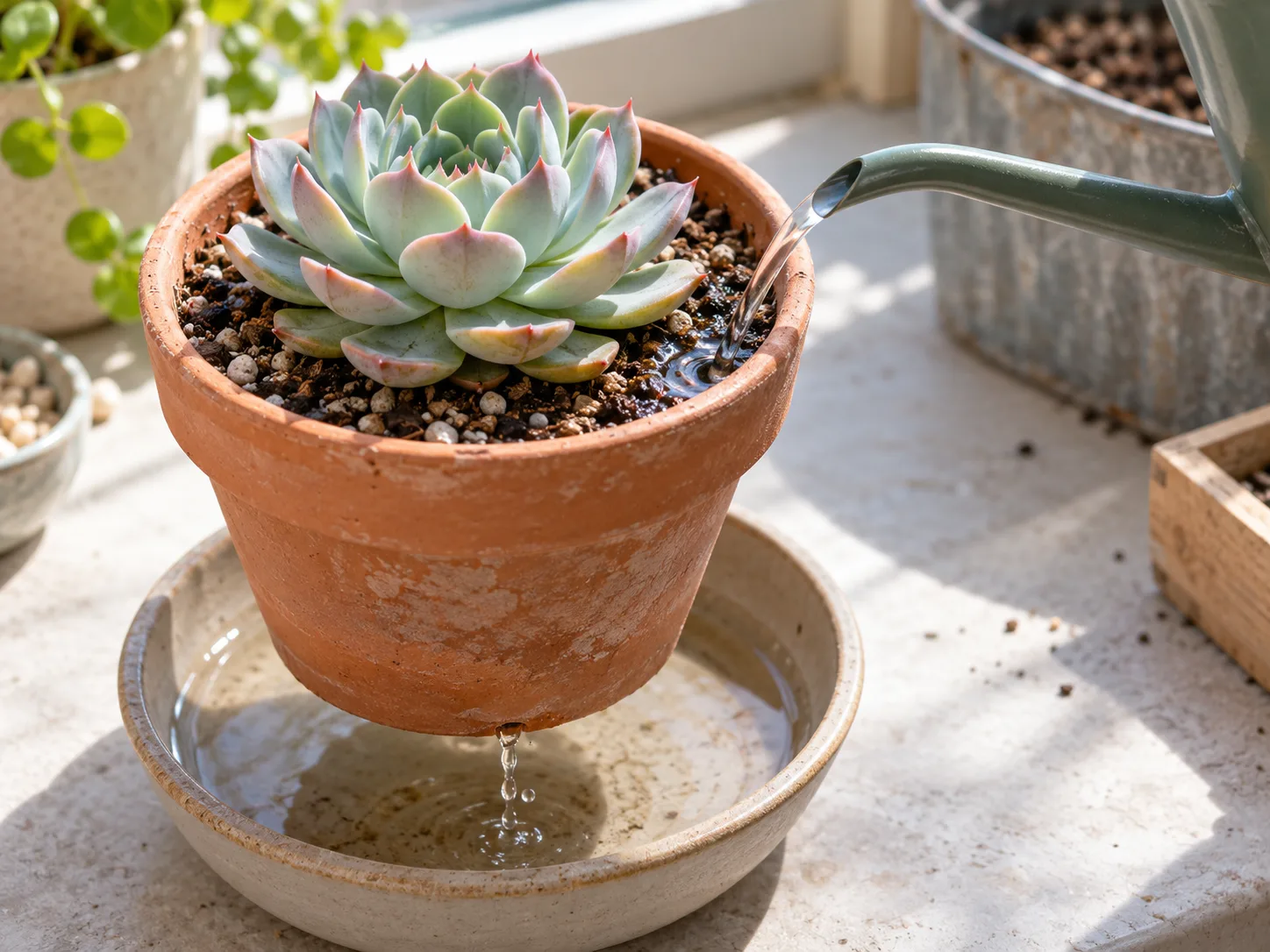
For a very dry, compacted mix that will not absorb water from the top, a brief bottom soak can help rewet it. Set the pot in shallow water until the upper soil begins to feel damp, then remove it and let every drop drain; do not leave the container standing in water afterward. Bottom watering is a tool for a hydrophobic root ball, not a way to make a pot without drainage safe.
Aim the water at the mix, not into the crown or between clustered leaves. Jade foliage is waxy and can hold droplets at stem joints; keeping water on the soil also makes it easier to know that the roots, rather than just the leaves, received the drink. Do not mist the plant as a substitute for watering.
Adjust watering through the seasons
Jade plants often grow more actively in brighter spring and summer conditions and slow down as days shorten. During active growth, the plant may use water more quickly, but the soil still needs to dry between thorough waterings. In late fall and winter, reduced light and cooler conditions often mean a longer interval; the University of Wisconsin–Madison and NC State Extension both describe reducing water as the plant moves into its slower season.
A realistic indoor starting range is about every two to four weeks during brighter, warmer growth and every four weeks or longer in a cool, low-light winter room. Those numbers are not a target to hit. If a small pot in a sunny window dries in ten days, water sooner; if a large pot remains damp after three weeks, wait. Better Homes & Gardens’ year-round succulent watering guide also cautions that winter may stretch watering to about monthly depending on the home and the container.
If your jade stays warm and brightly lit under a grow light through winter, it may continue growing and use more water than a plant resting on a dim sill. Conversely, a jade in a chilly room with short days can remain wet even when the thermostat elsewhere in the home feels comfortable. Use the calendar to remind you to check, not to decide in advance.
Handle winter light and outdoor rain differently
A jade outdoors in summer may dry faster because of sun, wind, and heat, but rain can reverse that pattern overnight. Count a soaking rain as a watering and check the pot afterward rather than automatically watering again. If the container is exposed to repeated rain, move it under cover when the forecast is wet, especially in cool weather when evaporation slows.
Jade is not a frost-hardy garden succulent in most climates. Bring a container indoors before freezing weather, and inspect the mix after the move because indoor light and air circulation may be lower. A jade that has been acclimated to outdoor sun can also suffer leaf scorch when it is suddenly moved back into strong indoor window light or vice versa; the watering schedule should not be the only thing you adjust.
Indoors, keep the plant away from cold drafts and from hot air blowing directly from a heater. These extremes can stress foliage, but they do not justify watering more often unless the potting mix is drying at a faster rate. In winter, a jade with some shriveled leaves and bone-dry soil may be thirsty, while one with similar leaves in a heavy, wet pot may be suffering root damage.
Read the plant without trusting one symptom
A jade’s leaves store water, so they can show changes in the plant’s reserves, but appearance alone can mislead. A soft leaf may be thirst-related, and it may also signal roots that cannot absorb water because they have stayed too wet. Start with the soil and drainage, then interpret the leaves in that context.
An occasional older leaf turning yellow and dropping is not enough to diagnose a watering problem. Look for a pattern: several leaves changing at once, stems becoming soft, soil staying wet unusually long, or a pot that is dramatically light. Changes in light, temperature, transplant stress, and pests can also affect foliage, so avoid treating every leaf drop with an extra drink.
Underwatering: dry mix and gradually thinning leaves
When a jade is too dry, leaves may become thinner, less firm, wrinkled, or slightly droopy as stored moisture is used. The pot will often feel light, and a skewer will come out dry. Prolonged severe drought can stunt growth and cause leaf spotting or leaf drop, as described in the University of Wisconsin–Madison Extension guide.
If the mix is dry and the roots appear sound, give one thorough watering and let the plant drain. Do not respond to dry leaves with repeated small splashes every day; that keeps the top layer inconsistently damp without reliably wetting the whole root ball. After a proper soak, give the plant several days to rehydrate before judging whether the leaves are improving.

If the soil is dry but the plant does not recover after watering, examine drainage and roots rather than continuing to pour water onto it. A severely dry or damaged root system may not absorb moisture evenly, and dense soil can become hydrophobic. In that case, a slow rewetting or a careful repot may be needed instead of a larger dose.
Overwatering: wet mix and soft or dropping leaves
Overwatering is not simply “one large watering.” It usually means the mix stays wet too long for the roots to get enough air, often because water is applied too frequently, drainage is poor, or the container is much too large for the root ball. Jade leaves may yellow, turn translucent, soften, or drop; a dark, mushy stem base is a more urgent sign that rot may be spreading.
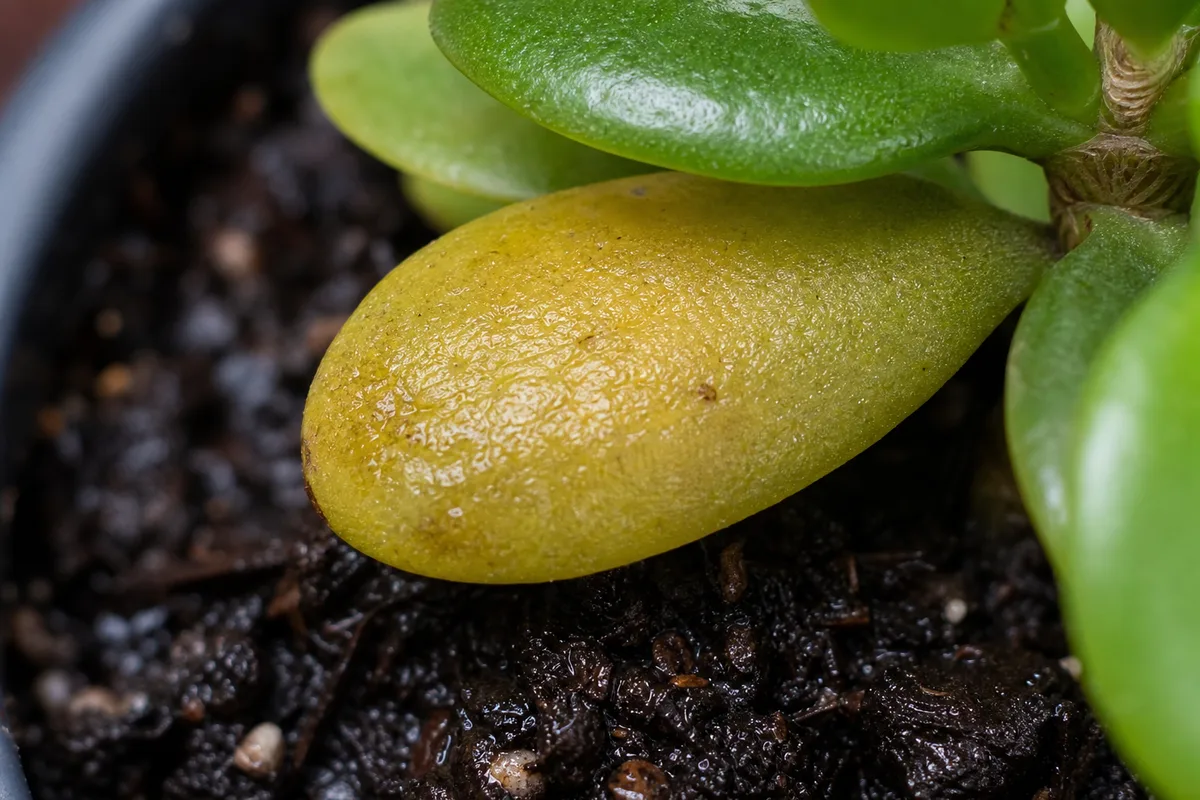
When leaves are soft, check the mix before adding water. If it is damp and the pot feels heavy, stop watering, remove the plant from its cover pot, and let excess water escape. NC State Extension’s jade plant profile lists leaf fall and root rot among problems caused by excessive water.
Do not assume that a wrinkled jade needs water until you inspect the soil. If the mix is wet, watering again makes the original problem worse; if the mix is dry and the pot is light, a proper soak may help. When symptoms and soil condition disagree, inspect the roots.
Rescue a jade plant that has stayed too wet
First remove standing water from the saucer or decorative pot and stop watering. If the plant is stable, the mix drains freely, and the stems remain firm, allow the pot to dry in bright indirect light with normal airflow. Avoid placing a wet, stressed jade in harsh direct sun or beside a heater; neither will fix poor drainage, and both can add another stress.
If the soil remains soggy for many days, smells sour, or the plant continues to soften, slide it out of the pot and inspect the roots. Healthy roots are firm; rotted roots are soft, dark, and may smell unpleasant. A drainage hole blocked by compacted soil, a container without a hole, or a heavy mix calls for repotting even if the plant has not yet collapsed.
Decide whether it needs drying out or repotting
A temporarily wet pot is not always an emergency if the drainage hole is open and the plant is still firm. Let it drain, keep it out of any standing water, and wait until the root zone dries before watering again. Recheck in a few days, and note how long the pot takes to become light; that tells you more about the setup than a generic schedule can.
Repot if the medium is dense and sour, if water cannot exit freely, or if the bottom of the root ball stays wet long after the surface dries. Use a pot only slightly larger than the remaining root system and a porous succulent mix. A large pot does not give a small jade “extra room to grow” in a useful way if it leaves excess soil wet around its roots.
Remove rot while firm tissue remains
If roots are mushy, trim the damaged sections with a clean blade and discard the soggy old mix. Keep the firm, healthy roots and stem; if rot has reached the stem, cut above the soft area until the cut surface is clean and firm. Let cut surfaces dry before potting into fresh, dry mix, and do not water simply because the plant has been repotted.
For a plant with extensive root loss, the remaining healthy stem may be easier to save as a cutting than as a whole plant. Allow the cut end to dry, then set it into a free-draining medium and wait for roots to develop before returning to a normal watering rhythm. If the entire base is soft or discolored, recovery is unlikely, so avoid repeatedly soaking tissue that is already breaking down.
Rehydrate a severely dry jade plant carefully
If the mix is bone-dry, pulls away from the pot, and sheds water straight through, the root ball may not be absorbing a normal top watering. Pour slowly in two or three passes, pausing between them so the medium can take up water. If that fails, use a short bottom soak, then let the pot drain fully and return it to its usual bright position.
Do not compensate for weeks of neglect by leaving the plant in a bucket or saucer overnight. A brief, controlled rewetting is enough; prolonged submersion replaces drought stress with oxygen-starved roots. If the plant has lost many leaves or has limp stems, check that the roots and base are still firm before repeating the process.
A dry jade may not look perfect the day after watering. Judge recovery over the next several days by whether leaves regain firmness and new decline stops, not by expecting old damage to disappear. If the soil is wet after a careful soak but the plant keeps worsening, the roots may be damaged and need inspection.
Build a setup that makes good watering easier
Use a pot with at least one open drainage hole and a mix that dries evenly. A commercial cactus and succulent blend can work; if it holds water for too long in your home, amend it with a suitable coarse mineral component such as pumice or perlite. Avoid adding a layer of gravel at the bottom as a substitute for drainage; water still needs a clear way out of the container.
Choose a pot that fits the root system rather than the height of the plant’s canopy. A very top-heavy jade may need a stable, heavier pot, but that does not require a huge amount of wet soil. Terracotta can help a slow-drying pot release moisture, while plastic or glazed ceramic may need longer intervals; regardless of material, the mix and hole matter.
Keep a simple record for the first month after moving or repotting: date watered, how many days until the pot feels light, and whether the plant is growing. That record creates a useful range for your conditions. Recheck it when you change the plant’s location, pot, mix, or seasonal light.
A jade does not need a complicated device to stay healthy. A skewer, a pot you can lift, and an unobstructed drainage hole are enough for most small and medium plants. The Epic Gardening jade plant guide and its practical succulent watering guide both emphasize the same useful combination: let the medium dry between drinks, then water the root zone thoroughly rather than keeping it damp with frequent surface splashes.
Conclusion
Water a jade plant when the mix has dried through most of the root zone, then soak it evenly and let the pot drain. In a typical home, that may mean watering every couple of weeks during brighter growth and less often in winter, but the soil, pot, light, and temperature determine the actual interval.
Check below the surface, compare the pot’s weight, and use leaf changes as supporting evidence. If the soil is wet and leaves are soft, do not add water; if the mix is dry and the pot is light, give one thorough drink. That short check is more reliable than any fixed jade plant watering calendar.