How Often to Water Banana Plants Indoors and Outdoors
Learn how often to water banana plants indoors and outdoors, how soil should feel, and how heat, rain, pot size, and winter change your watering routine.
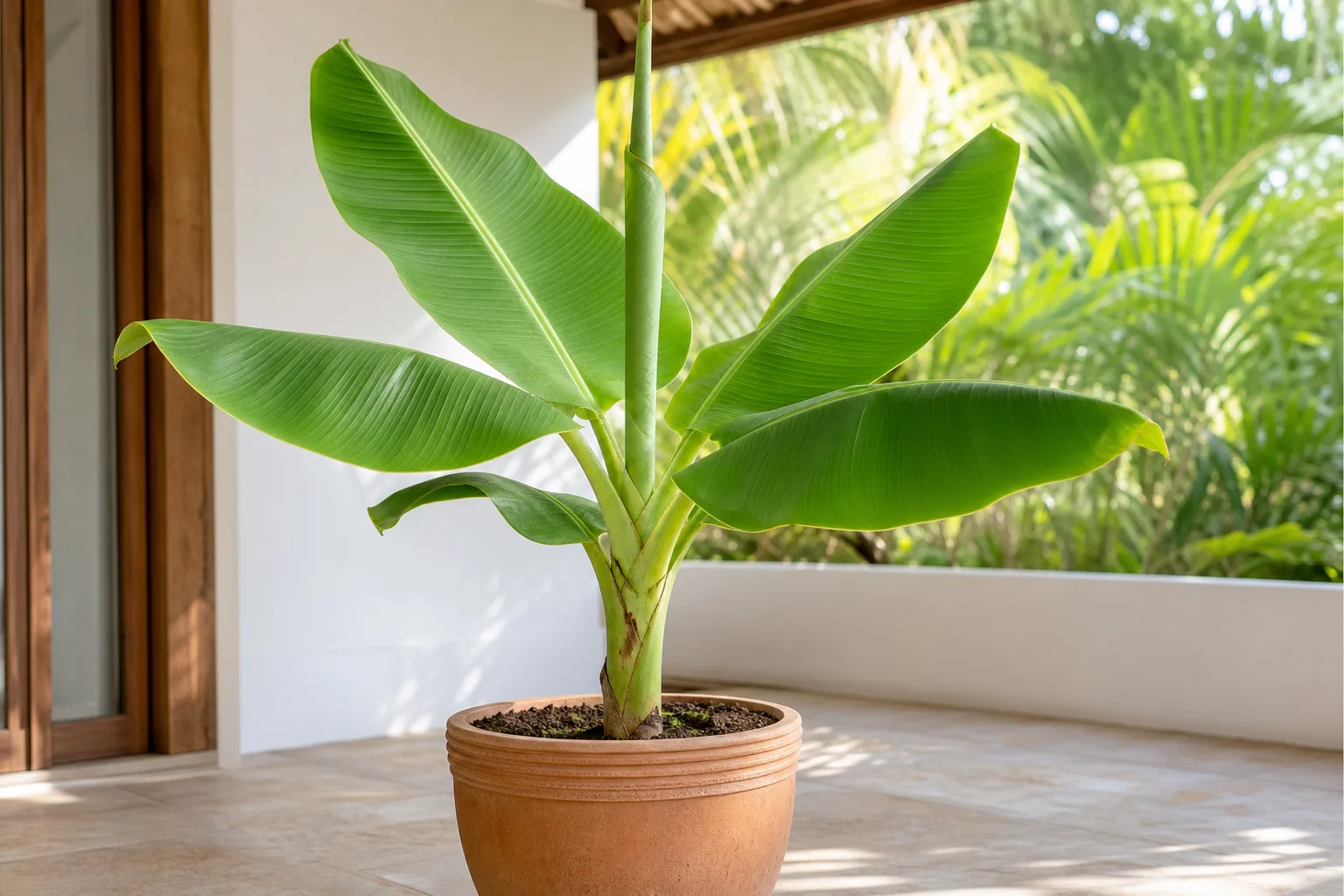
A banana plant can use water quickly when it is warm and growing, but that does not mean it should sit in wet soil. Water when the root zone is beginning to dry, then soak it thoroughly and let excess water drain away. That simple rule works better than a fixed number of days because light, temperature, pot size, soil and rainfall all change how fast moisture disappears.
A potted banana in a bright, heated room may need frequent checks and can dry much faster than a plant in a cool room. An outdoor banana in a deep garden bed may draw on a wider store of soil moisture, while a newly planted specimen needs closer attention as its roots establish. The right question is not “Did I water yesterday?” but “How damp is the soil where the roots are?”
Banana plants are moisture-loving, fast-growing tropical herbs with broad leaves, yet their roots still need air. Penn State Extension notes that a container banana may need water every day in some conditions, while also warning growers to avoid waterlogging. That is a useful possibility, not a daily rule: check first, then decide.
The Short Answer: Water by Moisture, Not a Calendar
For a banana plant in a pot, check the upper inch or two of potting mix and a little deeper if the container is large. If that layer is drying and the pot feels noticeably lighter, water slowly until the whole root ball is moist and some water exits the drainage holes; then empty the saucer. In a garden bed, check several inches down near the root zone and water when that soil is drying, especially during warm, rainless weather.
This means a small or sun-exposed container might need watering every day or two during active summer growth, while a larger pot indoors may need it less often. Treat those as inspection intervals, not promises that the plant must receive water on that schedule. The RHS watering guidance advises avoiding routines such as watering once a week because weather, soil, plant size and establishment change demand.
Banana roots prefer consistently moist, not continuously saturated, soil. If the mix is cool and damp below the surface, wait even if the top looks pale; if it is dry through the root zone, water thoroughly rather than sprinkling the surface. ProMusa’s banana water-management guidance frames irrigation as balancing plant water needs with drainage: too much water can deprive roots of oxygen, while too little leaves plants short of moisture.
What Changes a Banana Plant’s Watering Interval
There is no single frequency for all banana plants because the water leaving a pot or bed depends on both the plant and its setting. A broad, fast-growing plant in strong light can use moisture faster than a small plant in dim winter conditions, and a pot that drains freely may dry sooner than dense, poorly aerated soil. Change the checking rhythm when any of these conditions change.
Container Size and Material
The amount of potting mix around the roots acts as the plant’s water reserve. A root-bound banana in a small pot has less reserve and may dry quickly; an oversized pot holds more mix, but the unused lower portion can stay wet longer than the roots can use it. Choose a container with open drainage holes and enough room for roots without moving a small plant into an enormous, slow-drying pot.
Pot material and exposure matter too. Unglazed terracotta loses moisture through its sides, while plastic or glazed ceramic usually holds it longer; a dark pot in sun can warm the mix and speed drying. A basket or fabric pot can also dry more rapidly in wind. If the plant suddenly needs water much sooner, compare its pot, root crowding, location and weather before simply increasing the amount.
Light, Heat, Wind, and Airflow
Warmth and bright light usually mean faster growth and water use. Outdoors, hot sun and dry wind pull moisture from large banana leaves and warm the soil; indoors, a sunny window or a nearby heater can dry one side of the pot while the room’s air remains comfortable. A banana placed in a cooler, lower-light room over winter uses water more slowly because growth has slowed.
Airflow can help leaves dry and reduce stagnant conditions, but a strong draft or gusty patio can increase water loss. If a plant’s leaves droop in the afternoon but recover overnight, do not immediately assume it needs a daily soak; check the soil and compare the morning and evening condition. A plant wilting while its mix is wet may have a root problem rather than a shortage of water.
Soil Texture, Drainage, and Root Space
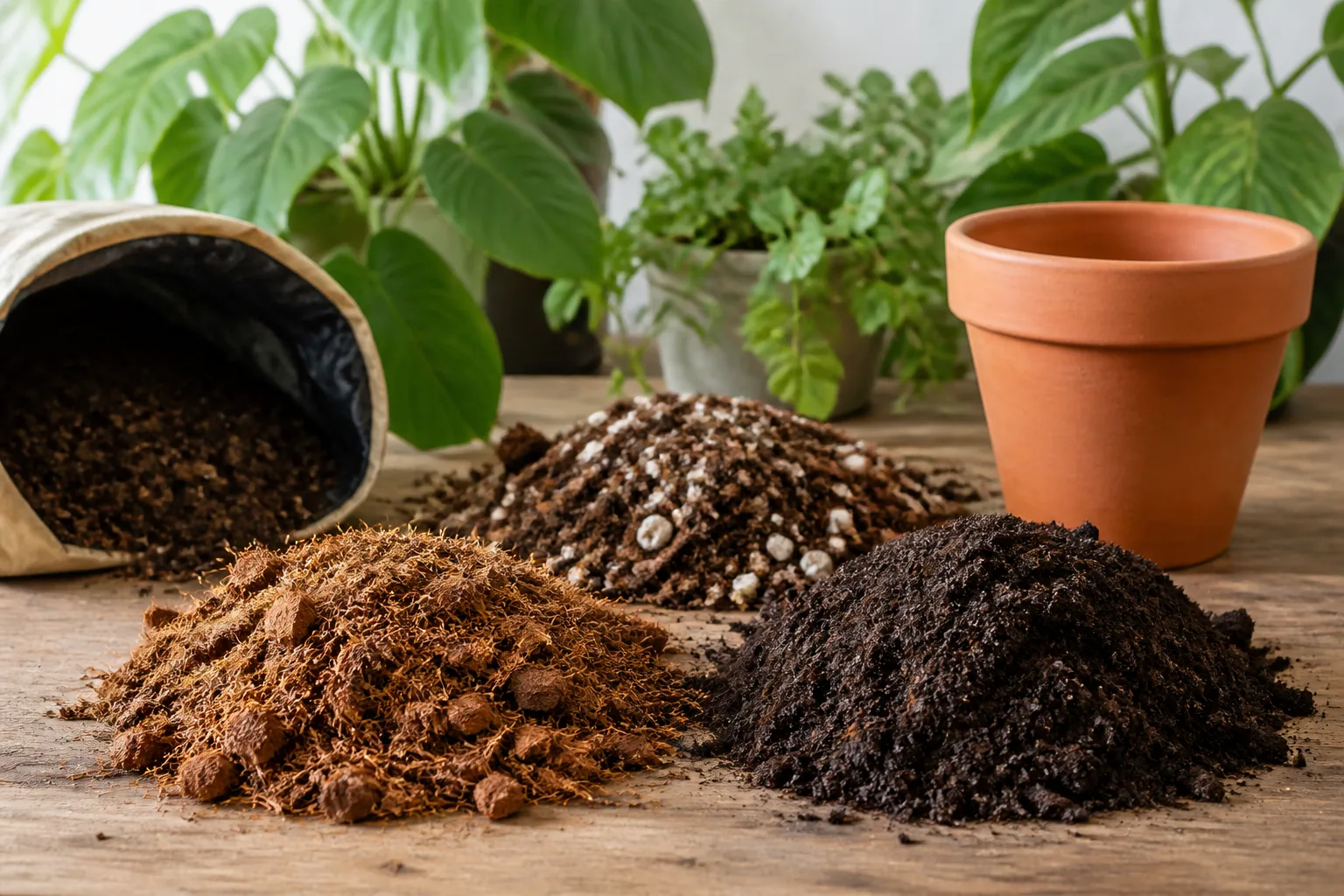
A loose, well-draining mix lets extra water move out while retaining some moisture for the roots. Sandier or bark-rich mixes may dry faster and need more frequent checking; dense clay outdoors can stay wet after rainfall, especially where water collects. Compost improves soil structure, but adding more water-holding material to an already slow-draining container is not a substitute for a drainage hole.
Drainage is not the same as making the soil dry. Water should reach the active root zone, then excess should move away so roots can exchange gases. ProMusa describes drainage and irrigation as complementary parts of banana water management, while Penn State Extension likewise recommends well-draining soil and cautions against waterlogging.
Watering an Indoor Potted Banana Plant
Indoor banana plants often need a different routine from outdoor plants because their roots are confined to a pot and they receive no rainfall. Check more often during spring and summer, after moving the plant into brighter light, or when the room is warm and dry. In fall and winter, reduce the frequency if growth and light levels drop, but do not let a warm, actively growing plant become bone-dry simply because it is winter.
A banana may have a tall canopy that makes the soil surface hard to inspect, so use a finger, wooden skewer or the weight of the pot rather than guessing from leaves. Better Homes & Gardens recommends checking houseplant potting mix about an inch below the surface and watering thoroughly until water drains; for a large banana, checking slightly deeper helps catch a dry core or a wet lower layer. A moisture meter can add information, but readings vary with the mix and placement; use it alongside a physical check.
How to Check Moisture Before Watering
Push a clean finger into the mix near the edge of the root ball. If the top inch is dry but the mix below still feels cool and slightly moist, check again the next day rather than soaking the plant automatically; if the mix is dry farther down and the pot feels light, it is a better time to water. This is especially useful in a large pot where the surface can dry while the bottom remains damp.
For a deep pot, insert a plain wooden skewer partway down, leave it for a moment, then pull it out. A skewer that comes up dark or damp suggests the lower mix still holds moisture; a nearly clean, dry skewer suggests that the root zone may need water. Compare the pot’s weight immediately after a full watering with how light it feels as the mix dries, and you will learn the rhythm of that particular container.
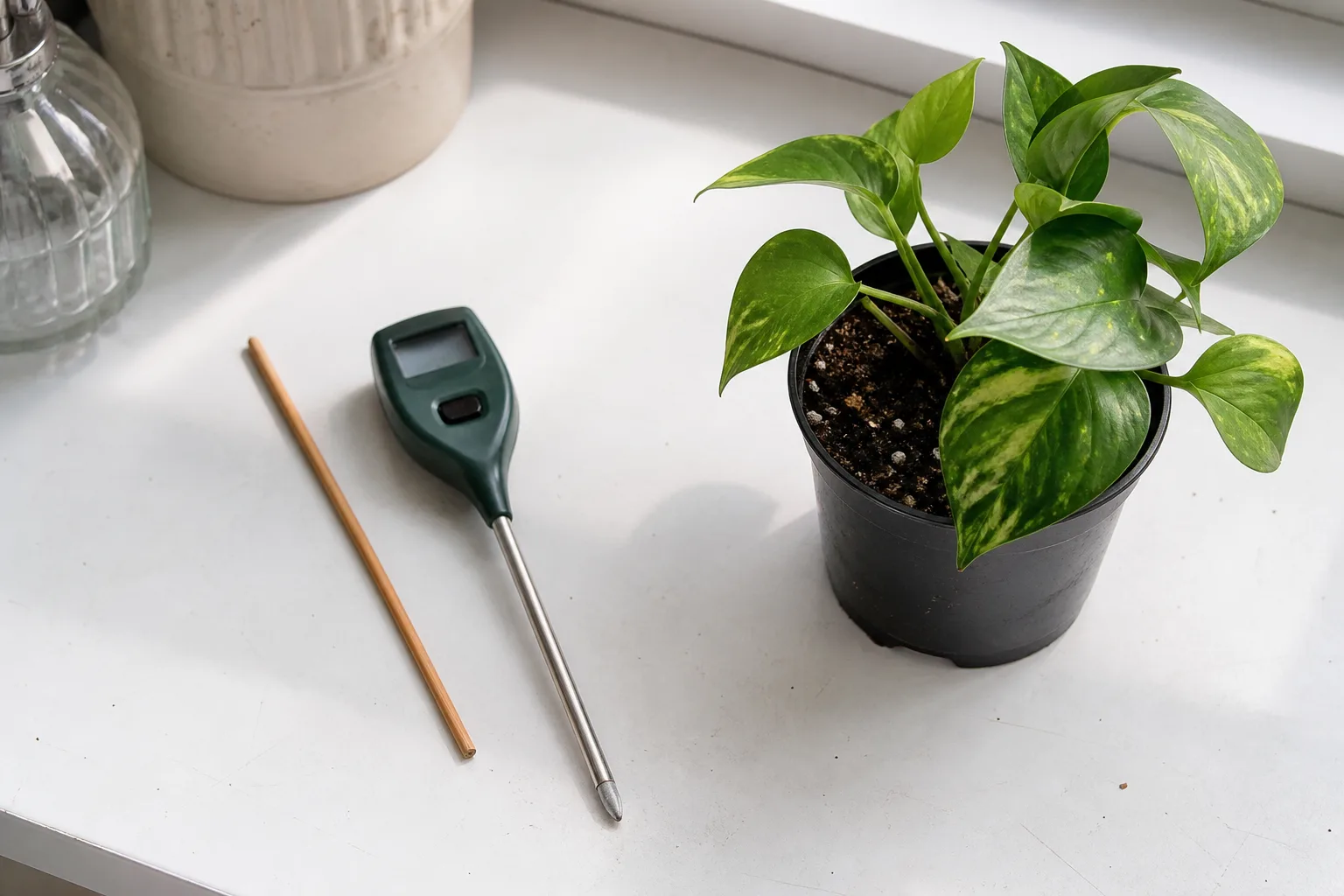 Use a depth check, not a dry-looking surface alone, to decide whether a potted plant needs water.
Do not use leaf droop as the only trigger. A thirsty banana may look limp, but waterlogged roots can also fail to supply leaves with water; yellowing can also follow low light, natural leaf aging or other stresses. Check the potting mix and drainage before changing the schedule.
How to Water the Root Ball Fully
When the mix is dry enough to water, pour slowly over the soil surface, moving around the pot instead of aiming at the pseudostem. Pause if water starts running down the sides, then add another slow pass after it soaks in. Continue until water emerges from the drainage holes; this confirms that the root zone has been wetted through rather than receiving a quick splash on top.
Let the container drain freely before returning it to a decorative cover or saucer. Empty the saucer or cachepot after about 10 minutes so the roots are not left standing in water; the Gardening Know How banana guide and BHG indoor watering guidance both warn against wet roots and trapped runoff. If the plant has become so dry that water races around the edge, use a few small pours spaced several minutes apart to help the mix rewet.
Water at the soil line, not by misting the leaves. A mist can temporarily wet foliage and may change local humidity briefly, but it does not provide the root-zone moisture that watering is meant to supply. If dry indoor air is causing crispy edges, consider humidity and airflow separately instead of increasing root watering when the soil is already damp.
Watering Outdoor Banana Plants
Outdoor bananas may be planted in the ground, grown in large patio containers or moved outside for the warm season. The bed gets rainfall and can hold a larger root-zone reservoir; the pot dries from every exposed side and depends on you. Check each plant’s soil rather than copying the routine of a banana in another part of the garden.
Newly Planted Banana Plants
A recently planted banana has a limited root system and needs moisture around the original root ball while new roots move into nearby soil. Check the planting area frequently during the first few weeks, especially after a hot, windy day, but water only when the root zone is starting to dry. Penn State Extension notes that watering may be needed daily for container bananas in summer, but the soil should not be waterlogged; daily checks are safer than automatic daily watering.
Apply water slowly around the root ball so it soaks in rather than running across the surface. If the site slopes or the soil is very dry, make a shallow basin around the plant to hold water while it infiltrates, then level it later if it collects rain or stays saturated. A plant that is settling in should show renewed leaf growth; a lack of new leaves is not proof of thirst, so check moisture and growing conditions before adding more water.
Established Plants in Garden Beds
Once an outdoor banana is established, its roots can use a wider area of soil than a container plant. During dry weather, check beneath the surface near the plant and water slowly enough to wet the root zone; shallow, frequent sprinkles may dampen only the top layer and disappear before deeper roots benefit. Water at the base in the morning when practical, and use a mulch layer to slow evaporation without piling it against the pseudostem.
Rain counts only if it reaches the soil around the roots. A plant under an eave, tree canopy or dense leaves may remain in a rain shadow, and a brief shower can wet the surface without replenishing deeper soil. After substantial rain, check the soil before irrigating; if it is still damp several inches down, skip watering and recheck later.
A table can help you interpret the setting without turning it into a rigid timetable:
| Situation | What to check | Practical response |
|---|---|---|
| Small outdoor pot in hot sun | Mix at the start of the day and again if it dries quickly | Water deeply when the root zone is dry enough; check more often during heat |
| Large indoor pot in moderate light | Surface and lower mix with a finger or skewer | Wait while the lower mix is damp; soak and drain when the root zone is drying |
| Newly planted banana in a bed | Original root ball and nearby soil | Keep it evenly moist while roots establish, without leaving the planting area soggy |
| Established banana after rain | Soil several inches below the surface | Skip irrigation while the root zone remains moist |
| Cool, resting banana | Moisture below the surface and drainage | Water less often; do not keep a dormant root system saturated |
Adjusting for Season and Weather
Banana plants do not keep the same water use all year. They grow fastest in warm, bright conditions and slow as temperatures and light decrease, so a summer routine can become excessive in winter. Conversely, a hot spell, a move outside or a strong dry wind can make a previously reliable interval too long.
Hot, Dry, or Windy Spells
During a heat wave, inspect potted bananas daily, ideally in the morning; small pots may need a second check later if they are in direct sun and the mix dries quickly. Do not automatically water twice a day: if the soil remains damp at root depth, another soak can displace needed air. If it repeatedly dries in a single day, improve the setup as well as the watering—use a larger appropriate pot, group containers, provide temporary afternoon protection or add mulch to outdoor soil.
For in-ground plants, rainfall, soil texture and wind exposure determine whether water is needed. Slow irrigation at the base reduces runoff and puts water where the roots can use it; drip irrigation is useful when it wets the root zone uniformly, but inspect emitters because a clogged line can leave one plant dry. If foliage is hot and droopy but soil is damp, temporary shade during extreme heat may help more than pouring in additional water.
Cool Weather and Winter Dormancy
A banana kept as a houseplant in winter may continue growing if it has warmth and strong light, or slow considerably in a dim, cool room. Follow the plant’s actual growth and soil moisture: let the surface layer dry a little farther than during vigorous summer growth, then water thoroughly and drain. Do not keep applying summer-sized amounts at summer intervals when the plant is barely producing leaves.
Some outdoor bananas in cold climates are cut back or allowed to rest under winter protection, while others remain in mild frost-free gardens. Their water needs depend on the local overwintering method and whether soil is frozen, wet or sheltered. Avoid irrigating frozen ground or keeping a protected, dormant root zone soggy; for a container stored in a cool garage, check occasionally and give only enough water to prevent the root ball from becoming completely dry.
Do not confuse dry indoor air with dry potting mix. A banana can have crisp leaf margins in a heated room even when the lower soil is moist; adding more water in that situation can cause root trouble without fixing the air. Improve humidity or reduce a harsh draft separately, while using the soil check to decide when to irrigate.
Recognizing Too Little Versus Too Much Water
Banana leaves can show stress before the root cause is obvious, but individual symptoms rarely identify a watering problem on their own. Pair the plant’s appearance with soil moisture, pot weight and drainage. If the evidence conflicts—such as limp leaves above wet mix—stop and investigate the roots or container instead of pouring in more water.
Signs of Underwatering
A banana that is too dry may have a light pot, dry mix several inches down, leaves that lose firmness, or edges that turn brown and crispy after repeated dry spells. New leaves can emerge slowly when the plant is under stress, but slow growth also follows low light, cool temperatures or a recent move. Check the root-zone mix before deciding that a brown edge means the plant is thirsty.
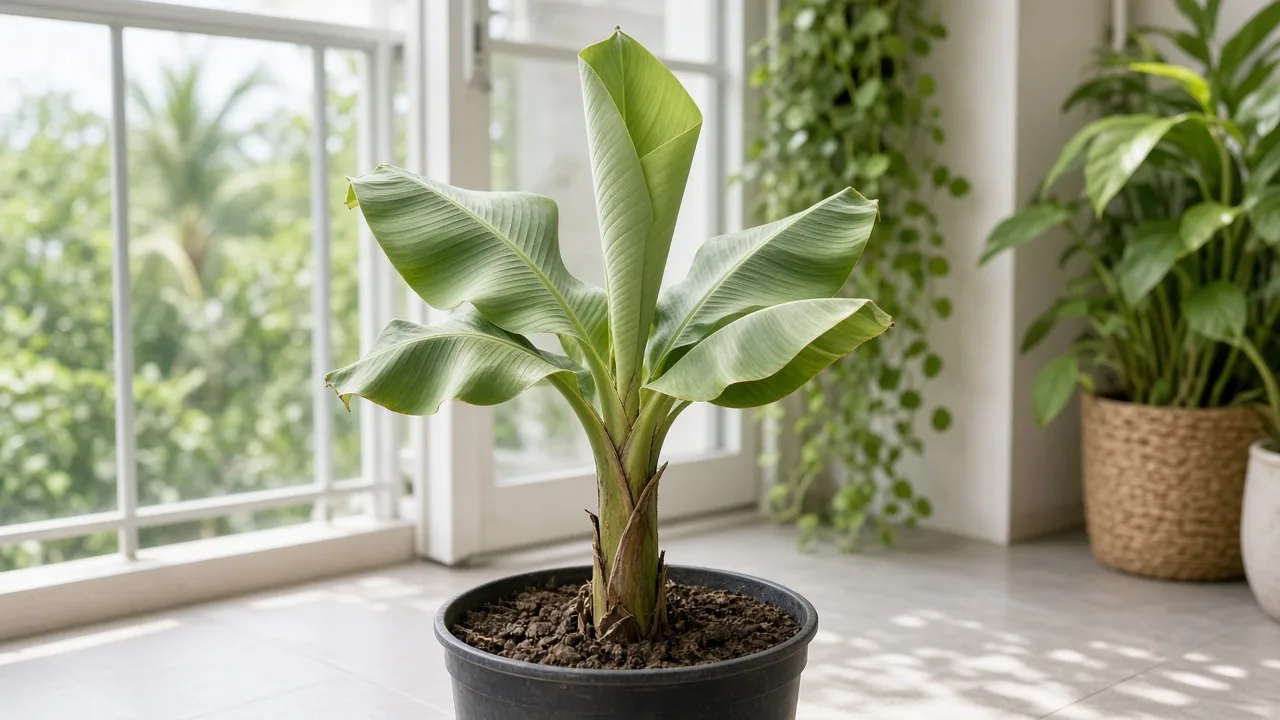 Dry soil and a lighter-than-usual pot support an underwatering diagnosis; leaf appearance alone does not.
If the root ball is dry, water in several slow passes so the mix can absorb it. Confirm that moisture reached the center rather than running around the pot wall, and allow excess to drain. A severely stressed plant may not regain damaged leaf edges, so judge recovery by whether newer leaves emerge healthy and the plant regains firmness.
Signs of Overwatering
Overwatering is often a combination of watering too frequently and a container or soil mix that cannot drain well. Warning signs include mix that stays wet for days, yellowing lower leaves, a sour smell, slow growth, fungus gnats, or wilting even though the pot is heavy. Persistent saturation limits oxygen around roots; ProMusa’s banana water-management guidance explains why drainage is essential alongside irrigation.
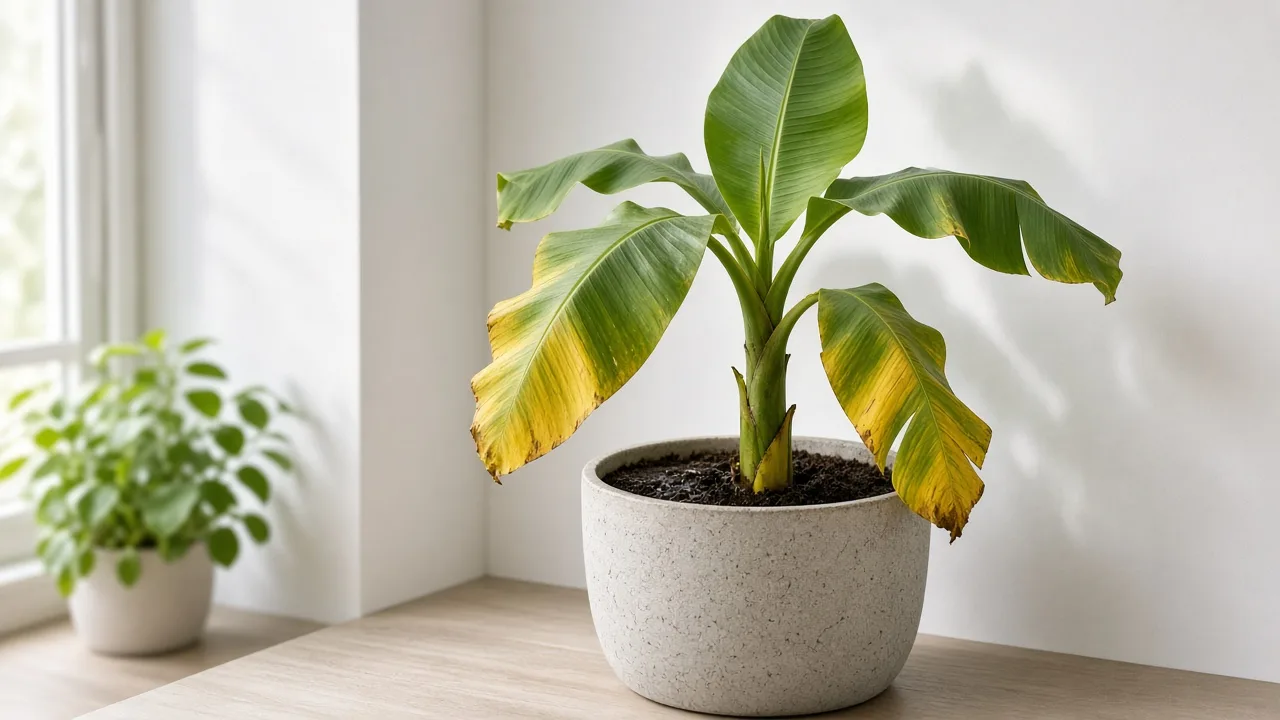 Yellowing can accompany persistently wet roots, but confirm the soil is staying wet before changing your routine.
First stop adding water and remove any standing runoff. Check that the pot has open drainage holes and that its mix is not compacted or packed into a decorative cachepot; let the upper mix dry before watering again. If the plant continues to wilt in wet soil or the mix smells sour, inspect roots: firm, pale roots are healthier than soft, dark, mushy ones, and extensive rot may require removing damaged roots and repotting into fresh, airy mix.
Do not attempt to fix every yellow or brown leaf by changing the watering interval. Older banana leaves naturally age, and dry air, salt buildup, cold, pests and nutrient issues can also affect foliage. When the soil feels appropriate but symptoms continue, inspect light, temperature, humidity and roots rather than repeating the same watering adjustment.
Common Watering Mistakes and How to Correct Them
The most common mistake is choosing a frequency first and checking the soil afterward. A calendar reminder can be useful as a prompt to inspect the plant, but it should not tell you to water regardless of what the mix feels like. Log the date, moisture depth, rainfall and weather for two or three weeks; that small record reveals whether the pot dries in two days or holds moisture for a week.
Another mistake is giving small sips often. A shallow pour may wet only the top layer, leaving lower roots dry, while frequent moisture near the surface keeps roots from experiencing a useful wet-to-drying cycle. When the root zone is ready, water thoroughly and let the container drain; in a bed, apply enough slowly that moisture reaches below the surface rather than running off.
Also check the container itself. No drainage hole, a saucer that never gets emptied, compacted peat-heavy mix or a pot far larger than the root ball can all make watering unreliable. Correct the drainage problem first; a watering meter cannot compensate for water trapped at the bottom of a sealed pot.
Finally, remember that humidity and irrigation are different jobs. A banana’s large leaves may benefit from a less-dry indoor environment, but misting does not replace watering the roots, and a pebble tray cannot correct soil that is actually dry. Keep the soil decision and the air-humidity decision separate so that solving one problem does not create another.
Conclusion
Water banana plants when their root zone is beginning to dry, then water deeply and let excess drain. Check pots more often than garden beds, inspect newly planted bananas closely, and expect hot, bright, windy weather to shorten the interval; cool, low-light growth usually lengthens it.
Use the surface as a clue, not the whole diagnosis. Feel farther down, compare pot weight, account for rainfall and look at drainage before you water. A banana likes steady moisture, but healthy roots need oxygen too, so aim for damp soil that drains—not a fixed schedule or a permanently wet pot.