Lion's Tail Care: Sun, Soil, Water, and Pruning Guide
Grow lion's tail for vivid orange flower whorls. Get practical advice on planting, containers, propagation, pruning, and cold-weather care in one place.
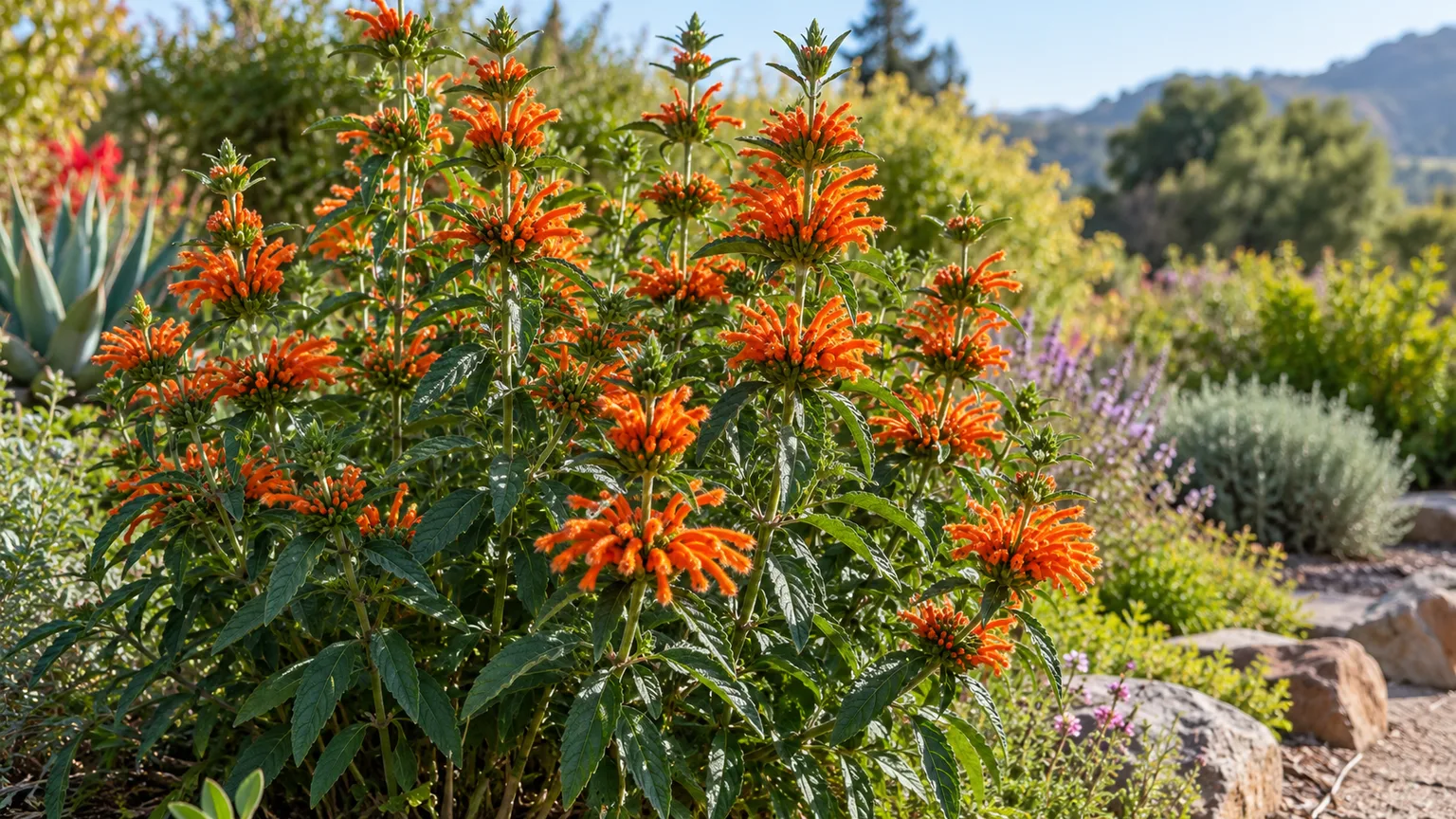
Lion’s tail, or Leonotis leonurus, is a soft-woody South African shrub with upright stems and bright orange-red flower clusters arranged in tiers. It can be a perennial shrub in mild climates, a seasonal container plant where winters freeze, or an annual grown for one season of color. The central care decision is not a rigid watering calendar: it is whether your site drains quickly and whether you can protect the roots and woody base from the coldest part of winter.
This plant can reach 2 to 3 meters tall in favorable conditions, and its stems may be brittle in strong wind. Before you buy one, decide where a tall shrub can stand without leaning into a path, blocking a window, or taking a direct hit from winter wind. Then match sun, soil, pruning, and overwintering to your local conditions instead of expecting one care schedule to work everywhere.
Quick Care at a Glance
Give lion’s tail a sunny, sheltered position with free-draining soil. It grows in average garden soil if water does not remain around its roots; in heavier ground, improve drainage across the planting area or grow it in a container rather than digging a small pocket of loose mix into dense clay.
Water a new plant regularly enough to keep the root ball from drying while it establishes, then water more deeply but less often. Established plants tolerate dry periods, but drought tolerance is not the same as a preference for prolonged dryness: water during extended hot, rainless weather if the soil is dry well below the surface and the shrub is actively growing.
In warm regions, lion’s tail can remain in the ground and be pruned after flowering or during late-winter renewal. In colder regions, grow it in a large pot that can move to a bright, frost-free space. Published cold guidance differs: some horticultural references describe protection or regrowth after a brief freeze, while the RHS treats it as a tender perennial in the United Kingdom. Treat any low-temperature survival claim as a possibility, not a promise.
Confirm You’re Buying Leonotis leonurus
Common names are not dependable labels. Lion’s tail, lion’s ear, lion’s claw, and wild dagga can be applied loosely to members of the Leonotis genus, so check the botanical name on the nursery tag: Leonotis leonurus. This species belongs to the mint family, Lamiaceae, and is a perennial shrub native to southern Africa. Its upright, square stems carry long, lance-shaped leaves and distinctive whorls of tubular, two-lipped flowers. PlantZAfrica and NCBI Taxonomy support the species and family identification.
The flowers are not single fuzzy balls. Each tier is a ring of narrow tubes around the stem, and several tiers may form along a mature flowering shoot. That detail matters when you compare a nursery plant with a photo: a young plant may have only a few flower whorls, while a mature shrub can develop a tall, branched framework carrying many tiers.
A mature shrub may stand roughly 5 to 10 feet tall and 3 to 5 feet wide, depending on climate, age, and pruning. Give it space and shelter from strong wind; PlantZAfrica notes that its stems are brittle, so a site that is sunny but exposed can still be a poor choice. If your garden has a narrow border or frequent gusts, a container near a protected wall may be easier to manage than an unrestrained in-ground shrub.
Choose a Climate-Appropriate Site
Lion’s tail behaves differently according to winter conditions. In warm areas it can develop into a semi-evergreen woody shrub; in colder gardens, the top may be damaged or killed by frost even when the crown survives, and the plant may need to be lifted into shelter or replaced the following season.
Hardiness listings do not agree. Gardening Know How places it in USDA Zones 9 through 11, while Gardenia describes survival around 20°F and possible regrowth from hardened wood, and the RHS recommends treating it as a tender perennial and growing it under cover or planting it outside after frost. Those are not interchangeable guarantees: regional climate, duration of cold, drainage, protection, and whether a source counts crown resprouting all affect the result. Gardening Know How, Gardenia, and RHS show why gardeners should make a local winter plan rather than rely on one zone number.
Sun, Heat, and Wind
Choose a spot with full sun for the strongest flowering and sturdier growth. A little light shade can be acceptable where afternoon heat is severe, but persistent shade often produces a taller, looser plant with fewer flowers; if flowering is weak, check light exposure before adding fertilizer.
The plant also benefits from shelter from strong winds. Its mature, leafy stems can catch gusts, and tall flowering shoots may bend or snap, especially when the soil is saturated and the root system has not anchored well. A sunny position near a warm wall, fence, or dense but non-shading shrub can reduce wind exposure without trapping the plant in damp, stagnant air.
Soil and Drainage
Aim for soil that drains freely and is neutral to alkaline. RHS lists chalk, loam, and sand as suitable soil types and specifies well-drained conditions; PlantZAfrica recommends rich, well-drained loam for vigorous growth. The shared requirement is drainage, not a single ideal soil recipe. RHS and PlantZAfrica support this practical reading.
If water puddles after rain or the soil stays sticky and wet for days, do not solve the problem by adding sand to one planting hole. A small amended pocket can act like a basin inside surrounding clay. Instead, raise the bed, improve the whole planting strip with suitable organic matter, or choose a pot with several open drainage holes and a coarse, airy container mix.
Plant in the Ground or a Pot
Plant outdoors after the danger of frost has passed and the soil is warming. Water the nursery pot first, slide the root ball out gently, and set it at the same depth it was growing before. Firm the soil around the roots without compacting it into a hard, airless ring, then water thoroughly to settle the mix.
Choose in-ground planting when winters are mild, the soil drains well, and the shrub has room to spread. Planting against a sunny, sheltered wall can create a warmer microclimate, but avoid a low pocket where cold air and runoff collect. Space the plant so air moves through its branches; crowded stems stay wet longer and make pruning and inspection harder.
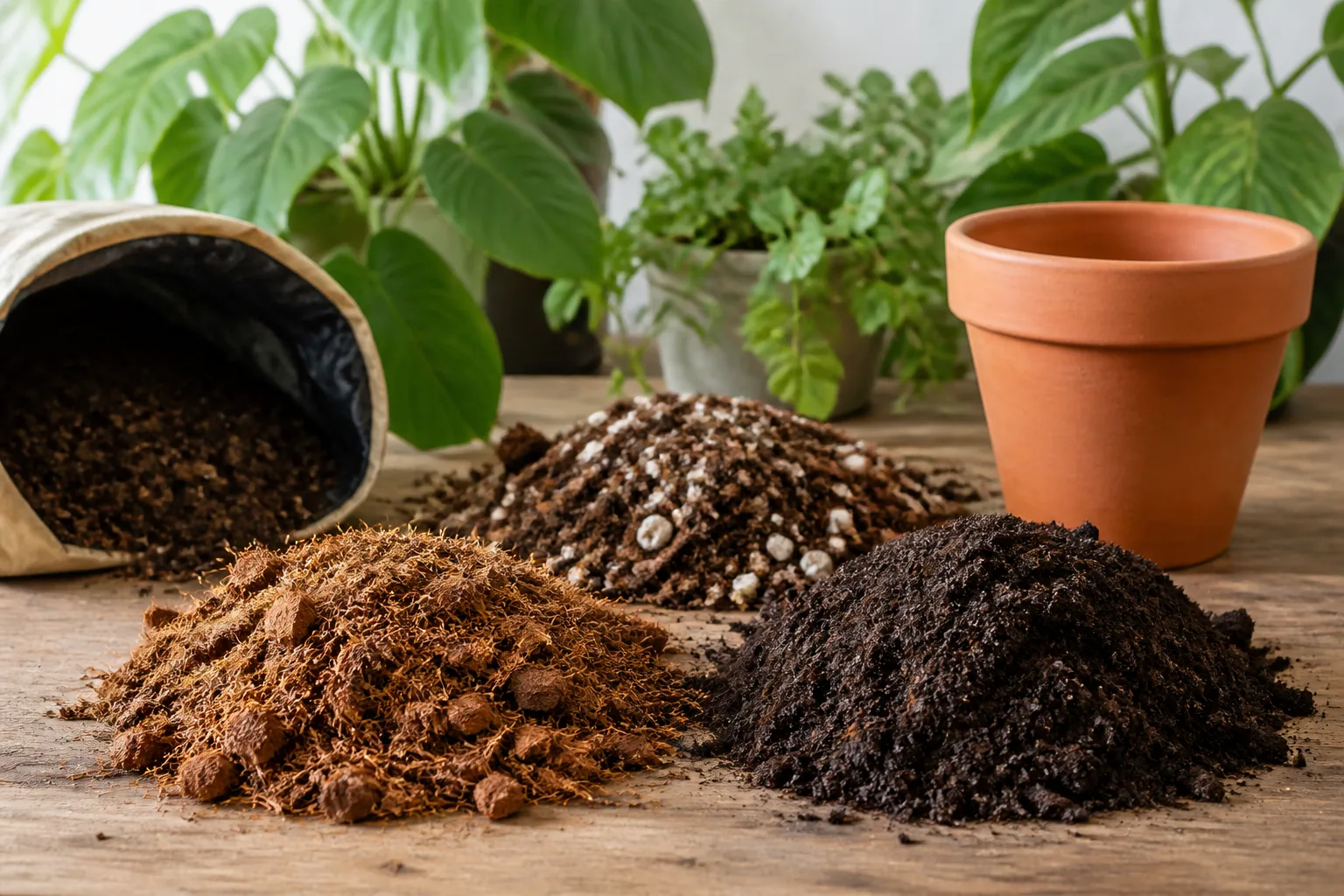
A container gives you more control over drainage and winter location. Use a sturdy, generously sized pot with multiple drainage holes because this fast-growing shrub can become top-heavy; a light plastic pot may need a heavier outer planter or a protected position to avoid tipping. Fill it with quality potting mix amended with coarse perlite or pumice if the mix holds too much water, and do not leave the pot standing in a water-filled saucer.
When planting in a pot, leave a little room at the rim for watering and set the crown at its previous depth. After the plant establishes, move it into a larger container only when roots fill the pot or water runs through unusually quickly. An oversized pot filled with wet mix can stay damp longer than the root system can use, so step up gradually rather than jumping into the largest vessel available.
Water by Establishment and Season
Water new transplants more consistently than mature shrubs. For the first several weeks, check the root ball and surrounding soil rather than watering on a fixed weekday: when the upper layer begins to dry and the root zone is no longer evenly moist, water slowly enough to wet the full root area. In hot, windy weather, a newly planted shrub may need more frequent checks than one in a cool, sheltered bed.
Once established, lion’s tail tolerates dry spells and does not need constantly moist soil. During active growth, give a deep drink when the soil has dried several inches down and rainfall has been scarce; then allow the surface to dry before watering again. This encourages a deeper root zone and avoids the common pattern of frequent shallow splashes that keep the surface damp but leave deeper roots thirsty.
Season changes matter. In warm climates where the plant grows through summer, it benefits from adequate water during the growing season, as PlantZAfrica advises. If it enters winter dormancy or is kept cool under cover, growth and water use slow down; reduce watering and let more of the mix dry between drinks. A cool plant in wet soil is more at risk than a dormant plant that is kept on the drier side.
For a container, check moisture more often because sun and wind dry a pot faster than a garden bed. Water until a small amount drains from the bottom, empty any catch tray, and check again before watering. If the potting mix has pulled away from the pot wall or water races down the sides, rewet it slowly in two or three passes instead of assuming one quick pour has reached the roots.
Feed Lightly, Only When Needed
Lion’s tail does not need a heavy fertilizer program. PlantZAfrica recommends compost or organic fertilizer at the start of the growing season in its South African gardening context, while the plant also performs naturally in relatively lean conditions. A thin compost top-dressing in spring is a reasonable first choice for a plant growing in ground; container plants may need a balanced, slow-release feed if they have been growing in the same mix for a long time.
Avoid applying a high-nitrogen fertilizer just because leaves look pale or flowers are absent. Nitrogen can push leafy growth at the expense of flower production, and yellowing can also be a sign of wet roots, cold damage, natural aging, or a nutrient issue unrelated to nitrogen. First check drainage, recent weather, and whether new growth is healthy. Feed only if the plant is actively growing and those checks suggest poor soil fertility.
Do not fertilize a cold, dormant shrub or a plant with damaged roots. Fertilizer cannot repair rot or frost injury and may add salts around roots that are not growing. Resume light feeding when new growth begins and the plant can use the nutrients.
Understand the Blooming Season
The orange-red flowers appear in whorls around the upright stems and can draw nectar-feeding birds and insects. In South Africa, PlantZAfrica describes flowering across multiple months, with local timing ranging from summer to mid-autumn and winter; the RHS records flowers in autumn and early winter in Britain, while Gardenia describes a late-spring-to-fall season for its broader garden profile. Bloom timing therefore follows local latitude, hemisphere, climate, and the plant’s growth cycle rather than one universal calendar. PlantZAfrica, RHS, and Gardenia describe different regional seasons.
For more flowers, prioritize sun, healthy growth, and drainage. A plant that is too shaded, repeatedly waterlogged, or recently stressed by cold may spend the season rebuilding roots and stems instead of flowering. Give a newly planted shrub time to establish before expecting a full display, and avoid pushing it with frequent fertilizer applications.
Deadhead individual flower tiers after they fade if you want a tidier plant or do not want seed to mature. Use clean pruners to remove the spent portion back to a leaf pair or healthy side shoot, rather than cutting every stem short while lower tiers still have unopened flowers. Deadheading is optional: leave some heads if you want to observe seed formation or collect seed later.
Prune for Shape Without Exposing the Crown
Lion’s tail responds to pruning, but the best time depends on whether it remains outside through winter. In a mild climate, trim after the main flowering period to shorten awkward stems, remove spent flower heads, and encourage a denser shape. Avoid shearing the whole shrub into a tight ball; selective cuts preserve the natural upright structure and leave air circulating through the branches.
For established outdoor plants that go partly dormant in winter, wait until late winter or early spring to renew the framework. PlantZAfrica recommends cutting the shrub back to about 4 to 8 inches at the end of winter in its regional context, and the RHS similarly places hard pruning in spring for outdoor perennial plants. In a colder garden, do not cut the plant to the ground in fall: standing stems and leaf litter can help shield the crown, and you can assess winter injury before removing material.
Use sharp pruners or loppers and cut just above healthy buds or a branching point. Remove dead, broken, crossing, or wind-damaged stems first. If the shrub is large and has not been pruned for years, reduce its height over more than one season rather than removing most of the woody framework at once; gradual renovation is less disruptive and lets you see where fresh growth emerges.
Propagate From Seed or Cuttings
Seed and greenwood cuttings are practical ways to make new lion’s tail plants. Use seed when you want several plants or are growing the shrub as an annual; take cuttings when you want a closer copy of a selected plant and can keep the young material warm and evenly moist. PlantZAfrica also describes division of large clumps, which is most useful for a mature, established shrub rather than a young nursery plant. PlantZAfrica and RHS describe seed and cutting propagation.
Start Seeds in Warm, Even Conditions
Collect seed only after the flower heads have dried, or buy seed sold under the botanical name Leonotis leonurus. Sow in a clean seed-starting mix and cover lightly; seeds need contact with damp mix, not a deep burial. Keep the tray warm and bright but out of harsh direct sun, and keep the medium evenly moist without leaving it waterlogged.
After seedlings emerge, increase air circulation and reduce watering so the roots do not remain saturated. Move each seedling into an individual pot once it is large enough to handle, then grow it on until the root ball holds together. Harden it off gradually before planting outdoors after frost danger has passed. Under suitable conditions, seedlings may bloom in their first or second growing season, but the plant’s size and flowering date depend on the length of the warm season. PlantZAfrica
Root Greenwood Cuttings and Divide Mature Clumps
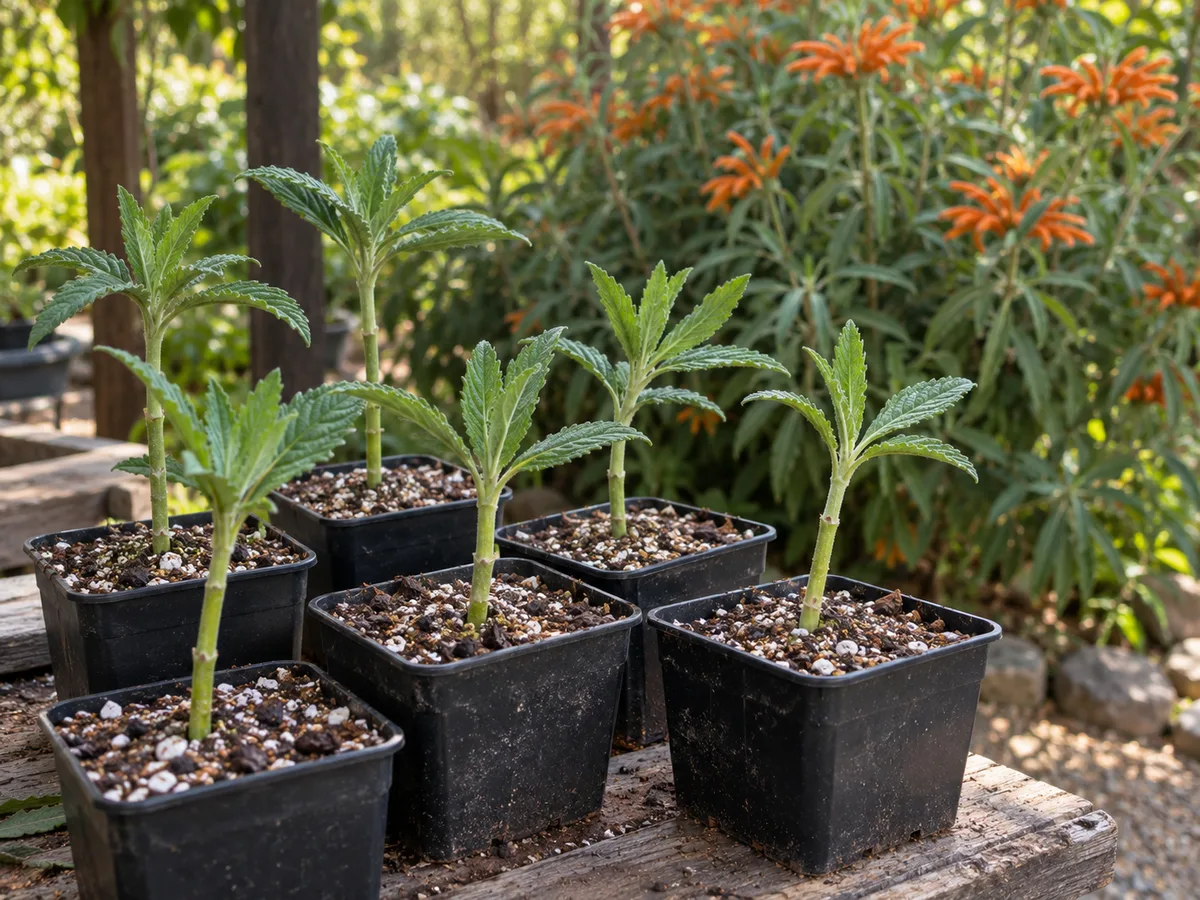
Take greenwood cuttings in late spring or summer from healthy, non-flowering shoots. Cut several inches below a node, remove leaves from the section that will sit in the mix, and insert the bare lower stem into a clean, airy propagation medium. Keep the mix lightly moist and place the pot in bright shade; intense sun can wilt a cutting before it has roots.
Check for resistance with a gentle tug after a few weeks rather than repeatedly pulling the stem out to inspect it. Once roots have formed and new growth is evident, pot the cutting on and let it establish before moving it into full outdoor sun. If dividing a large clump, replant vigorous sections immediately and water them carefully during establishment; division can set an older plant back, so do it only when the shrub is healthy and the timing suits your local season.
Overwinter the Plant According to Your Winter
Cold tolerance is the most variable part of lion’s tail care. SANBI describes the species as able to tolerate moderate to severe frost in its native South African gardening context, while recommending thick organic mulch in extreme cold; the RHS treats it as a tender perennial in the United Kingdom and recommends a cool greenhouse or outdoor planting only after frosts. Gardenia reports that some plants survive around 20°F and may resprout from hardened wood. Taken together, these sources support a cautious conclusion: a brief freeze may damage the top while the crown survives, but a cold, wet, prolonged freeze can kill the plant. Do not interpret a minimum temperature from one garden reference as a guaranteed limit for your yard. PlantZAfrica, RHS, and Gardenia offer regionally different guidance.
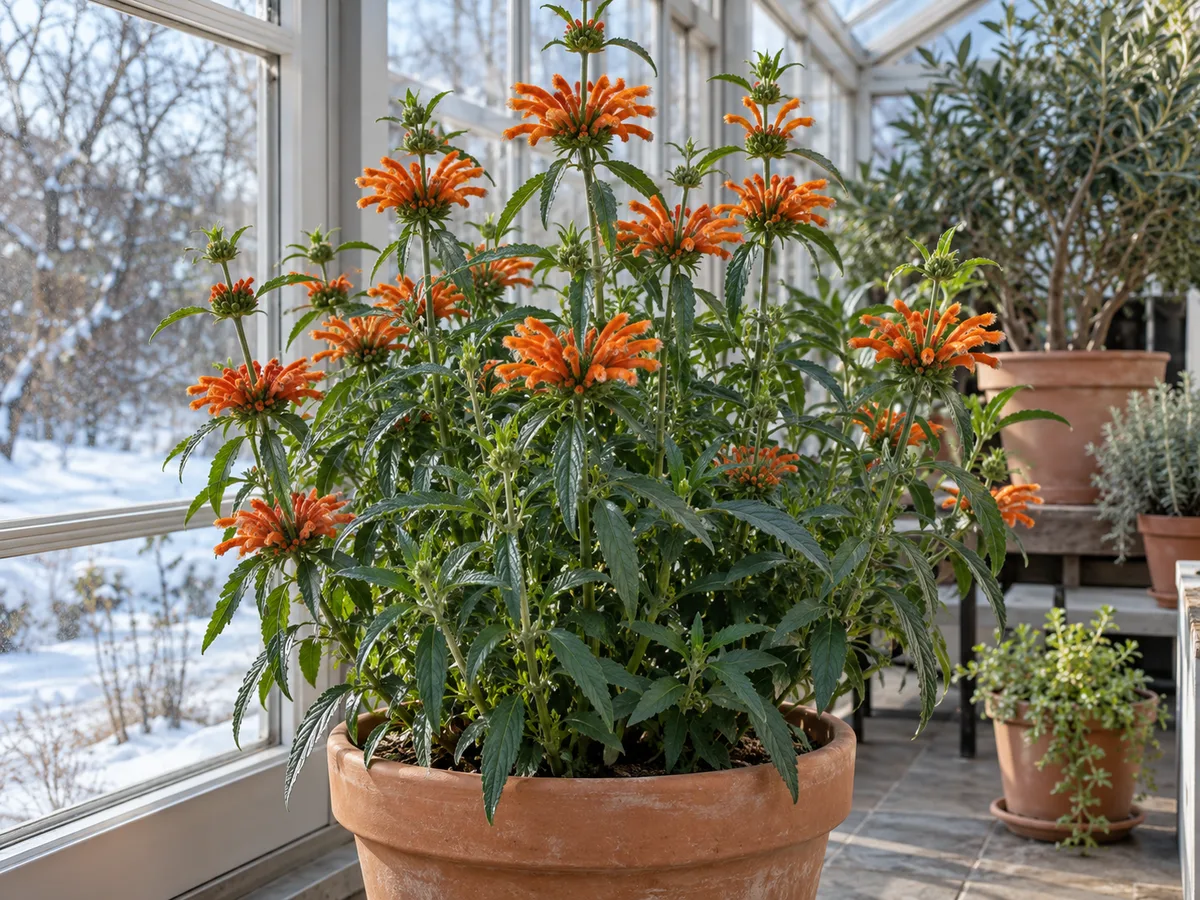
If winter lows regularly fall below freezing, a container is the safer option. Before the first frost, move it to a bright, cool, frost-free greenhouse or sunroom, and reduce watering as growth slows. A cool rest is easier to manage than trying to keep a large shrub actively flowering in a dim, warm room; remove dead leaves, inspect for pests, and water only when the mix begins to dry.
In a mild climate, leave an in-ground shrub in place, keep the soil from staying saturated, and mulch around the root zone before the coldest weather. Do not pile wet mulch against the woody stems. If frost burns the top growth, wait until late winter or early spring to see where live buds remain, then prune back to healthy wood. A plant that has not resprouted immediately after a cold spell is not necessarily dead; check the crown and give it time to respond as temperatures rise.
Troubleshoot Growth Before Reaching for Fertilizer
Read the whole plant and the soil together. A few yellow lower leaves on an otherwise vigorous shrub may be normal aging, while widespread yellowing after rain or a cold snap points toward a different problem. Note whether the soil is wet or dry several inches down, whether the symptoms appear on old or new leaves, and whether stems remain firm before choosing a remedy.
Yellow Leaves, Wilting, and Sparse Flowers
Yellow leaves plus persistently wet soil suggest poor drainage or root stress; adding fertilizer may make the situation worse. Let the mix dry somewhat, check that water can drain from the pot, and move a container out of standing water. If the plant continues to decline, inspect the roots for dark, soft, foul-smelling tissue and remove badly rotted material before repotting into fresh, free-draining mix.
Wilting can indicate dry soil, waterlogged roots, or cold damage. If the root zone is dry, water thoroughly and reassess later; if it is wet, do not add more water simply because the leaves droop. After frost, wait for new buds before pruning, since damaged-looking foliage can obscure which stems are still alive.
A tall shrub with few flowers usually needs more direct light or time to mature. Also consider whether it was heavily pruned at the wrong time, had a short warm season, or received repeated high-nitrogen feeding. Correct one likely cause at a time and observe the next flush rather than changing light, water, and fertilizer simultaneously.
Pests and Gray Mold Under Cover
Outdoor lion’s tail is generally trouble-free, but plants overwintered indoors or in a greenhouse can attract spider mites and whiteflies; gray mold can develop in stagnant, humid conditions. Inspect leaf undersides and the points where stems meet, especially after bringing the plant inside. Gardenia identifies these as concerns under glass.
If you find pests, isolate the pot, rinse leaf undersides, and improve air movement. Recheck new growth over the following week; if the infestation persists, use only a product labeled for the plant and pest, following the label exactly. For gray mold, remove affected material, reduce overhead wetting, and give the shrub more ventilation rather than sealing it into a humid cover.
Use Lion’s Tail Where Its Height and Flowers Help
Lion’s tail works as a tall accent at the back of a sunny border, beside a warm wall, or as a seasonal focal point in a patio container. Its tiered orange flowers provide a strong vertical shape that pairs well with lower, fine-textured plants; PlantZAfrica describes it as useful for adding height, screening, and attracting nectar-feeding wildlife. PlantZAfrica notes its landscape and wildlife value.
Allow enough space for air and for the shrub’s mature width. In windy locations, combine it with a sheltered position rather than staking every branch, since brittle stems can still snap at the top. If you want to attract native pollinators and birds, select companion plants suited to your region that flower at other times of the year, so the garden offers more than a short burst of nectar.
Gardeners with cold winters can still enjoy the plant without pretending it is reliably hardy in every zone. A large container lets you place it outdoors for the warm months and move it under cover when frost threatens. If even that winter routine is impractical, treat lion’s tail as an annual and collect seed from mature heads for a fresh planting next season.
Conclusion
Grow lion’s tail in sun, protect it from waterlogged soil and strong wind, and adjust watering as the plant moves from establishment into mature growth. Use the botanical name Leonotis leonurus when buying seed or plants, and choose between in-ground planting and a movable container based on your actual winter lows, not a single hardiness number.
In warm climates, a late-winter renewal prune can keep the shrub compact and productive; in colder ones, preserve the crown, move a potted plant into a cool bright shelter, or grow it for one season. The most dependable route to healthy growth is simple: establish it in a well-drained site, avoid overfeeding, and let local weather—not a fixed calendar—set the care.