Munstead Lavender Care for Fragrant, Lasting Blooms
Munstead lavender thrives in full sun and lean, fast-draining soil. Get a season-by-season care plan for planting, pruning, pots, and winter protection.
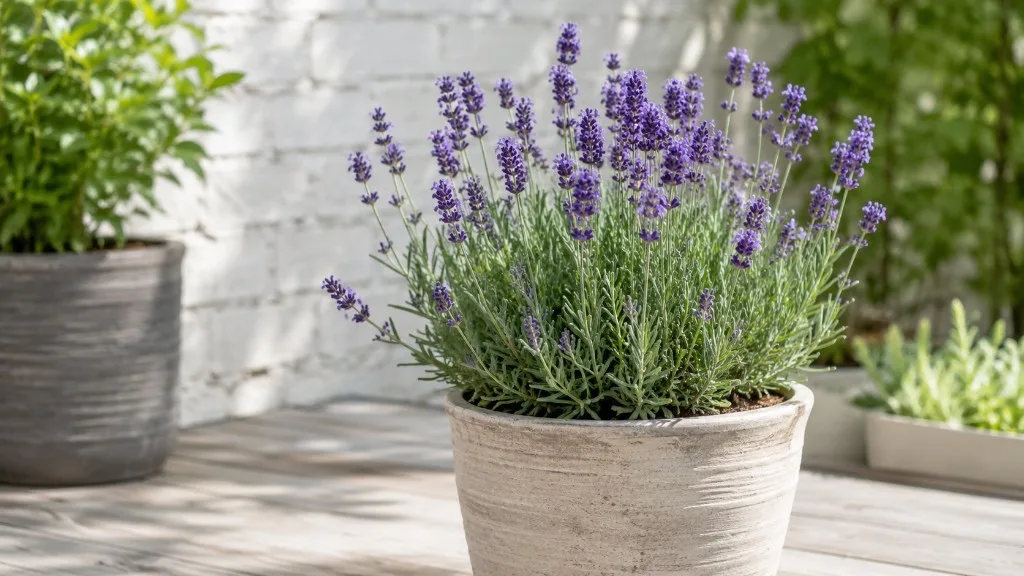
Munstead lavender is a compact English lavender for sunny gardens, gravel beds, and patio pots—but it only stays compact and floriferous when its roots drain quickly. Give it at least six hours of direct sun, lean soil that does not stay wet, and a light annual trim that stops above bare woody stems. Those three decisions solve more problems than extra fertilizer or frequent watering.
The botanical name is Lavandula angustifolia ‘Munstead’. The Royal Horticultural Society describes it as a compact evergreen shrub, generally around 45 cm (18 in) tall, with aromatic gray-green leaves and blue-purple flower spikes in mid to late summer. Mature width varies by site and reference, so allow room for air to move around the plant instead of crowding it into a damp corner. (RHS cultivar profile; Purdue Arboretum)
What Makes Munstead Lavender Different?
‘Munstead’ is a named cultivar of English lavender, not a separate species. Its appeal is a relatively compact, bushy habit, aromatic evergreen foliage, and fragrant blue-purple flowers. It can suit borders, low edging, rock gardens, and containers where a larger lavandin would take up too much room. Purdue Arboretum lists the cultivar at about 1 to 1.5 feet in height and spread, while the RHS lists a potential spread of 0.5 to 1 meter. Those ranges reflect differences in growing conditions and how sources record mature size; use the plant tag and local nursery description as a guide, then leave extra space if your site is humid or crowded.
The name matters when you buy or propagate it. A tag reading only “lavender” could refer to English lavender, lavandin, Spanish lavender, or French lavender, which differ in size and cold tolerance. Look for Lavandula angustifolia ‘Munstead’ on the label. Delaware Cooperative Extension’s lavender fact sheet also describes Munstead as compact and bushy, a useful check when comparing young plants at a nursery. If you raise plants from seed saved from a named cultivar, the seedlings may vary from the parent; the RHS notes that cultivar seed does not reliably produce identical plants. A cutting from a correctly labeled ‘Munstead’ is the better route when you want the same habit and flower traits. (Delaware Cooperative Extension)
Choose a Sunny, Dry Site Before You Plant
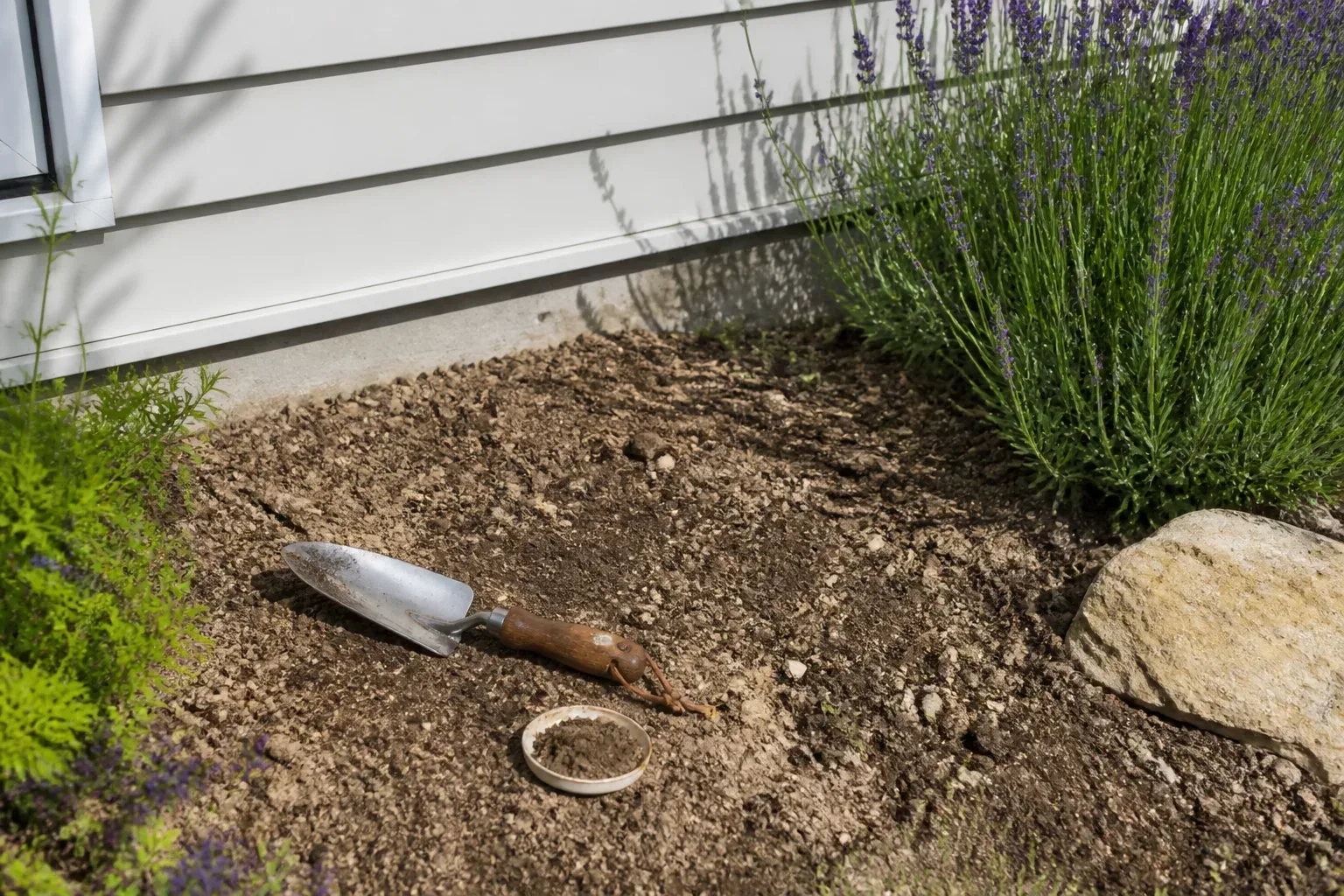
Find a spot that gets full sun for most of the day and dries soon after rain. English lavender needs full sun and sharply drained soil; NC State Extension warns that it will not tolerate wet feet and can fail in heavy clay. (NC State Extension) A bright patio, raised bed, gravel border, or south-facing slope can work well. A shaded bed beneath shrubs, the low point of a lawn, or a planting strip beside a downspout usually does not.
Watch the site during and after rain before digging. If water puddles for hours, soil stays tacky the next day, or runoff flows toward the proposed planting hole, choose another place or build a raised mound. Air movement is equally useful: give plants room to dry after rain, and avoid placing them where dense hedges trap humid air around the foliage. Gardeners’ Path notes that cold-hardy lavender still prefers low humidity and can struggle when cold weather combines with wet soil. (Gardeners’ Path)
In warm, humid regions, the right position may matter more than a hardiness label. Favor a raised or sloped bed, open spacing, and morning sun that dries dew. Munstead is not a magic solution for a wet climate; if the garden stays humid and the soil is heavy, a pot that can be sheltered from winter rain may be more dependable.
Plant Munstead Lavender in Spring or Early Fall
Spring planting gives roots a full growing season to settle before winter. In regions with mild autumns and well-drained soil, early fall planting can also work, provided the plant has time to establish before frost and winter rain. The RHS recommends spring planting and cautions against putting young lavender into cold, wet winter soil. (RHS growing guide) In colder locations or wet-winter climates, plant in spring rather than gambling on a late-season start.
Water the nursery pot first, then slide out the root ball and loosen only roots circling tightly around the outside. Set the crown at the same height it sat in its pot; burying the base in wet soil can encourage rot. Backfill with the site soil, firm gently, and water to settle the root zone. Do not add a pocket of rich compost to the hole. A sudden difference between amended soil and surrounding ground can hold water where roots need it to drain.
Space Plants for Their Mature Width
For a single specimen, leave enough open ground that the foliage can expand without touching a wall, dense shrub, or neighboring plant. RHS suggests about 90 cm (3 ft) between grouped lavender plants, while Purdue’s cultivar listing gives a narrower mature spread. In a dry climate or a formal edge, spacing can be closer; in humid weather, wider spacing improves air movement and makes annual trimming easier. Follow the wider spacing when uncertain.
If you are planting a low hedge, think about whether you want an immediate solid line or healthy individual mounds. Tighter spacing closes the gap sooner but also reduces airflow and can make the bottom foliage sparse as the plants mature. Do not use a hedge spacing recommendation as a universal single-plant spacing rule. For a small garden, one well-sited plant usually performs better than several crowded plants.
Build the Fast Drainage Lavender Needs
Munstead lavender tolerates several soil reactions, but it does not tolerate roots sitting in saturated soil. The RHS lists chalk, loam, and sand with well-drained conditions and notes that the cultivar prefers neutral to alkaline soil while tolerating acidic ground. That makes drainage more important than trying to force an exact pH with amendments. If your bed drains naturally, avoid heavy feeding and let the plant grow in the soil you have.
For heavy clay, do not dig a deep isolated hole and fill it with loose potting mix. The amended pocket can act like a basin surrounded by slow-draining clay. Instead, plant on a broad mound about 20 to 30 cm (8 to 12 in) high, use a raised bed, or choose a container. The RHS specifically recommends mounds or raised beds for heavy soil so roots sit above the wet layer. (RHS growing guide)
A light gravel or mineral mulch around the plant can reduce weeds without holding moisture against the crown. Keep mulch a few centimeters away from the woody base. Bark, compost, and thick leaf mulch may be useful around moisture-loving perennials, but they are a poor match for a plant that needs a dry crown and open air. A surface dressing does not correct a waterlogged bed; address grade and drainage first.
Give the Plant a Full Day of Sun
Aim for six or more hours of direct sunlight each day; eight hours is often helpful where summers are mild. NC State Extension lists English lavender for full sun, and the RHS cultivar profile also specifies full sun. In too much shade, Munstead can lean toward the light, develop loose growth, and produce fewer flower spikes. Morning sun with some late-afternoon shade may be acceptable in a hot inland climate if the plant still receives enough direct light to flower well.
Do not confuse bright ambient light with direct sun. A bed beside a bright wall may still receive only a few hours of rays if trees or buildings cast long shadows. Check the space at morning, midday, and afternoon before planting. If an established plant is leggy, remove nearby shade where practical and wait for new growth to respond; cutting the old bare stems will not make them sprout leaves again.
Good airflow complements sunlight. Leave space around the mound, avoid wetting leaves late in the day, and remove weeds that crowd its base. This is especially useful in humid summers, when lingering moisture can contribute to leaf spot and weak growth. If six hours of sun is impossible, choose a shade-tolerant perennial instead of trying to rescue lavender with extra fertilizer.
Water by Establishment and Growing Conditions
Watering depends on whether the roots are new, established in the ground, or confined to a pot. Keep a newly planted Munstead lavender from drying completely during its first growing season, but let the top layer of soil dry between thorough waterings. Once established in the garden, it is drought tolerant and usually needs supplemental water only during a prolonged dry spell or while flowering in unusually hot, dry weather. The RHS makes the same distinction between first-season watering, established in-ground plants, and summer watering for containers. (RHS growing guide)
Use the soil, not the calendar, as your signal. Push a finger into the soil near the root zone or use a wooden skewer. If it comes up cool and damp, wait. If the upper several centimeters are dry and the plant is newly planted or showing drought stress, water slowly at the base so moisture reaches the roots. A quick splash across the foliage wets the wrong part of the plant and may not soak the root ball.
A mature plant may droop slightly in peak afternoon heat and recover by evening; that alone does not prove it needs water. Check the soil first. Limp foliage over wet soil, yellowing at the base, or a crown that looks dark and soft are reasons to stop watering and inspect drainage. Persistent wetness is more dangerous than a short dry interval for established lavender.
Grow Munstead Lavender in a Pot
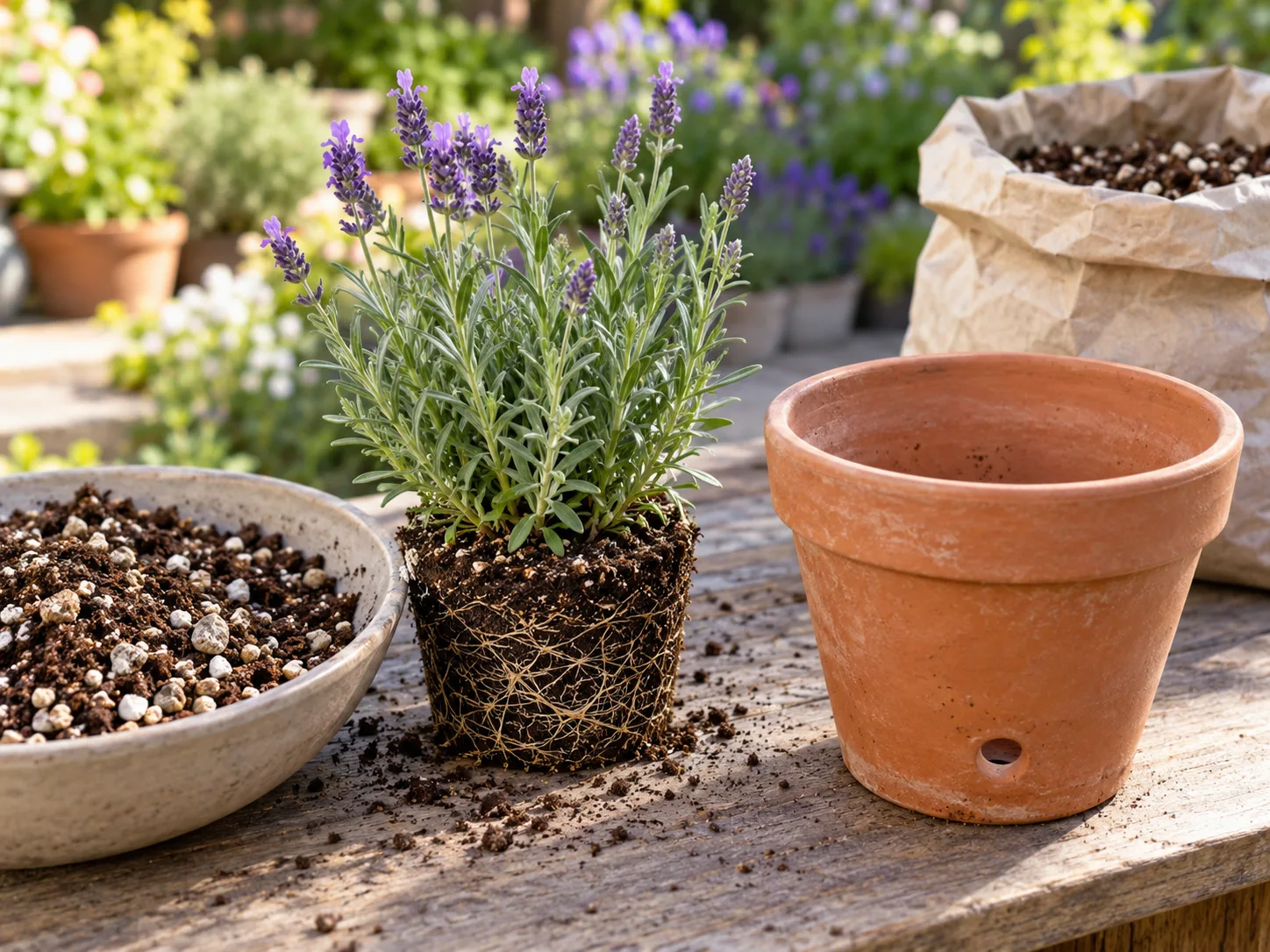
A pot makes sense when the garden soil stays wet, the site lacks good drainage, or you need to move the plant under shelter from winter rain. Choose a sturdy container around 30 to 40 cm (12 to 16 in) wide with several large drainage holes. A pot that is only slightly wider than the root ball reduces excess wet mix around a small plant; as it grows, move it into the next size rather than a very large tub.
Use a free-draining container mix, not dense water-retentive compost. The RHS recommends adding coarse grit, up to about one-quarter by volume, and planting the lavender at the same level as in its nursery pot. Water thoroughly after planting, then let the mix begin to dry before watering again. Empty the saucer and never leave the pot standing in runoff. A terracotta pot loses moisture faster than plastic, so it may need more frequent checks in hot weather.
Place the pot in direct sun with enough space around the foliage for air to move. Containers dry faster than garden beds during summer, but they are also more vulnerable to freezing and winter rain. In winter, move the pot to a sheltered, bright, unheated location or the rain shadow of a wall where it stays cold but does not remain saturated. Bringing it into a warm, dim room is not a substitute for winter protection.
Skip Heavy Feeding and Moisture-Holding Mulch
Munstead lavender grows in lean conditions and rarely needs routine fertilizer. The RHS warns that high-nitrogen fertilizers and manure can make growth floppy, while the cultivar profile notes that potash can encourage flowering. Do not use that as a reason to feed every plant. If the soil is fertile and foliage is healthy, leave it alone. Excess feed can produce soft growth with fewer flowers and greater sensitivity to wet or cold conditions.
A container grown for several years may need a modest nutrient refresh if growth is weak and the roots are healthy, but first rule out shade, waterlogging, and root crowding. Use a low-dose, balanced product only as directed on its label, preferably in spring, and skip feeding a plant that is declining. Fertilizer cannot repair root rot or make a dark site sunny.
Keep the surface open and the crown dry. Gravel or fine stone is a practical mulch around lavender because it suppresses weeds while allowing quick surface drying. Leave bare space around the woody stem base. If the garden already has bark mulch, pull it back from the plant rather than piling more material around the crown.
Prune Lightly After Flowering
Annual pruning keeps Munstead lavender from becoming a tall, open, woody mound. Trim after the main flowering period, generally in late summer once most flowers have faded. The RHS recommends removing spent flower stems and about 2.5 cm (1 in) of leafy growth, and cautions against cutting into bare old wood. In a cold or wet region, avoid a late-autumn haircut that leaves fresh growth exposed before winter. (RHS cultivar profile; RHS growing guide)
Use clean, sharp shears and take a little at a time. Follow the natural mound rather than shearing it into a tight ball. Remove spent flower stalks and shape the soft leafy outline while leaving a green cushion on every stem. A light spring tidy can remove winter-damaged tips after you can see which growth is alive, but major shaping belongs after bloom.
You may encounter more aggressive advice for rejuvenating old lavender. Purdue Arboretum’s Munstead listing recommends cutting it to the ground every three to four years, while the RHS says not to cut into old wood because lavender may not produce new growth from bare stems. The sources do not explain how to reconcile those approaches. For a home garden, the lower-risk choice is to keep every cut in leafy growth; if a plant is already mostly bare and woody, take cuttings or replace it rather than relying on a severe cut.
Keep Every Cut in Leafy Growth
Before you cut, part the foliage and find where a stem changes from green and leafy to thick, bare, and woody. Stop above that transition. Lavender often does not produce new shoots from old leafless wood, so a hard cut can leave a permanent gap or kill a branch. If a plant is already mostly woody with little green growth, do not try to reduce it to a low stump in one go.
If the mound has become too old or misshapen to trim without cutting into bare stems, take healthy cuttings before replacing it. This is a more dependable way to preserve the cultivar than repeatedly making severe cuts and hoping it resprouts. Use our lavender pruning guide for broader timing and cut-placement details.
Encourage Flowers and Harvest at the Right Stage
Munstead typically flowers in mid to late summer, although local climate, spring temperatures, and plant maturity shift the calendar. Purdue Arboretum describes fragrant lavender-blue spikes beginning in June and continuing into fall; the RHS lists mid to late summer. That difference is a reminder that flower timing is regional, not a fixed date. A young plant may spend its first season establishing roots and produce fewer spikes than a mature mound. (Purdue Arboretum; RHS cultivar profile)
Full sun, lean soil, and an annual trim support flowering. If a mature plant has lots of leaves but few blooms, first check whether it is shaded or overfed. If flowers are sparse and stems are sprawling, improve light and prune the plant correctly after bloom. Do not try to force flowers with heavy fertilizer.
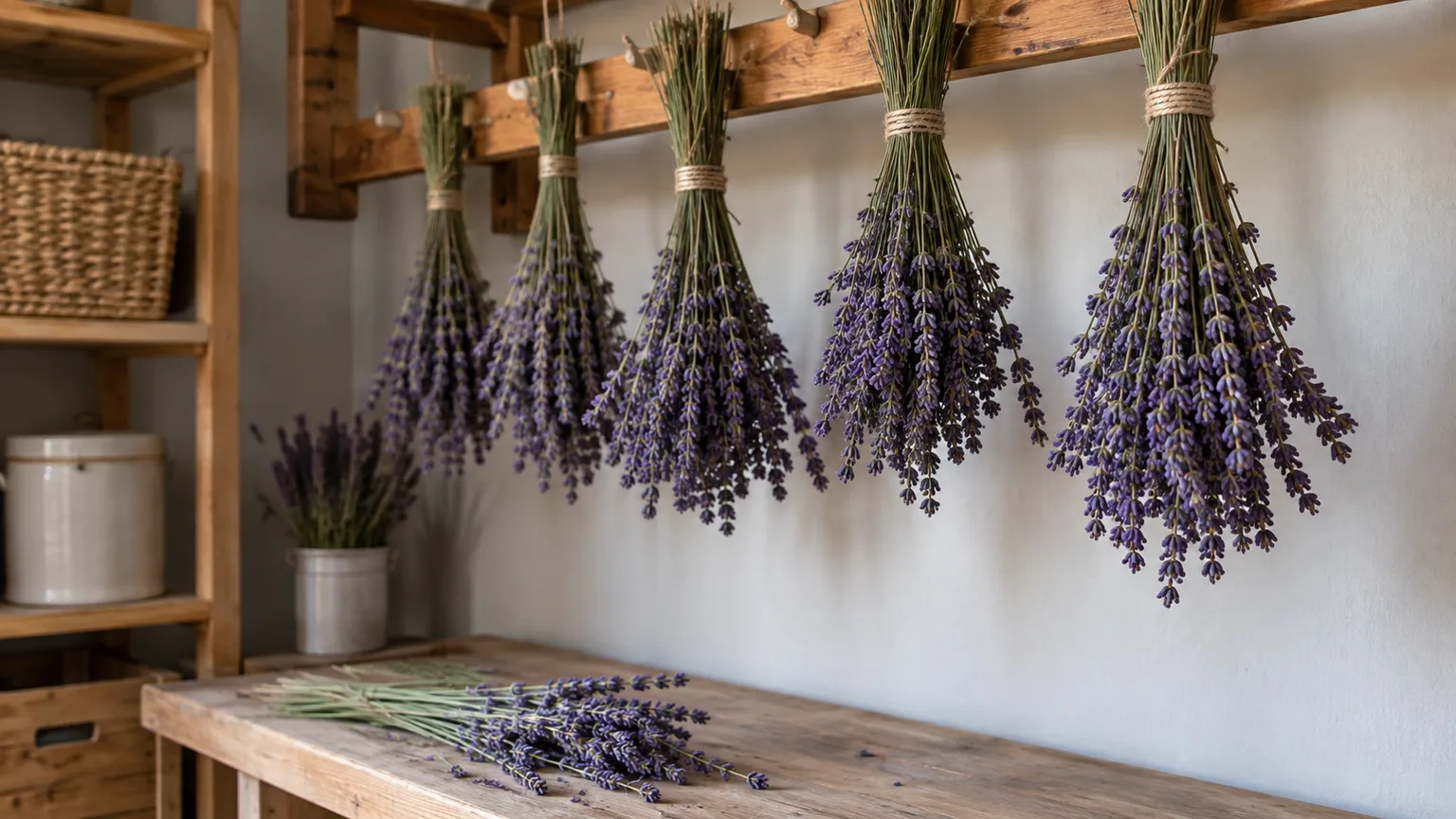
For dried bunches, cut stems when buds show color and some flowers have begun to open, after morning dew has dried. Tie small bundles and hang them in a dry, ventilated place out of direct sun. For fresh display, cut longer stems and place them in water. Take only a portion of the flower stalks at once so pollinators can continue visiting the remaining blooms. Our lavender harvest guide and drying guide cover preserving flowers for different uses.
Propagate the Named Cultivar Reliably
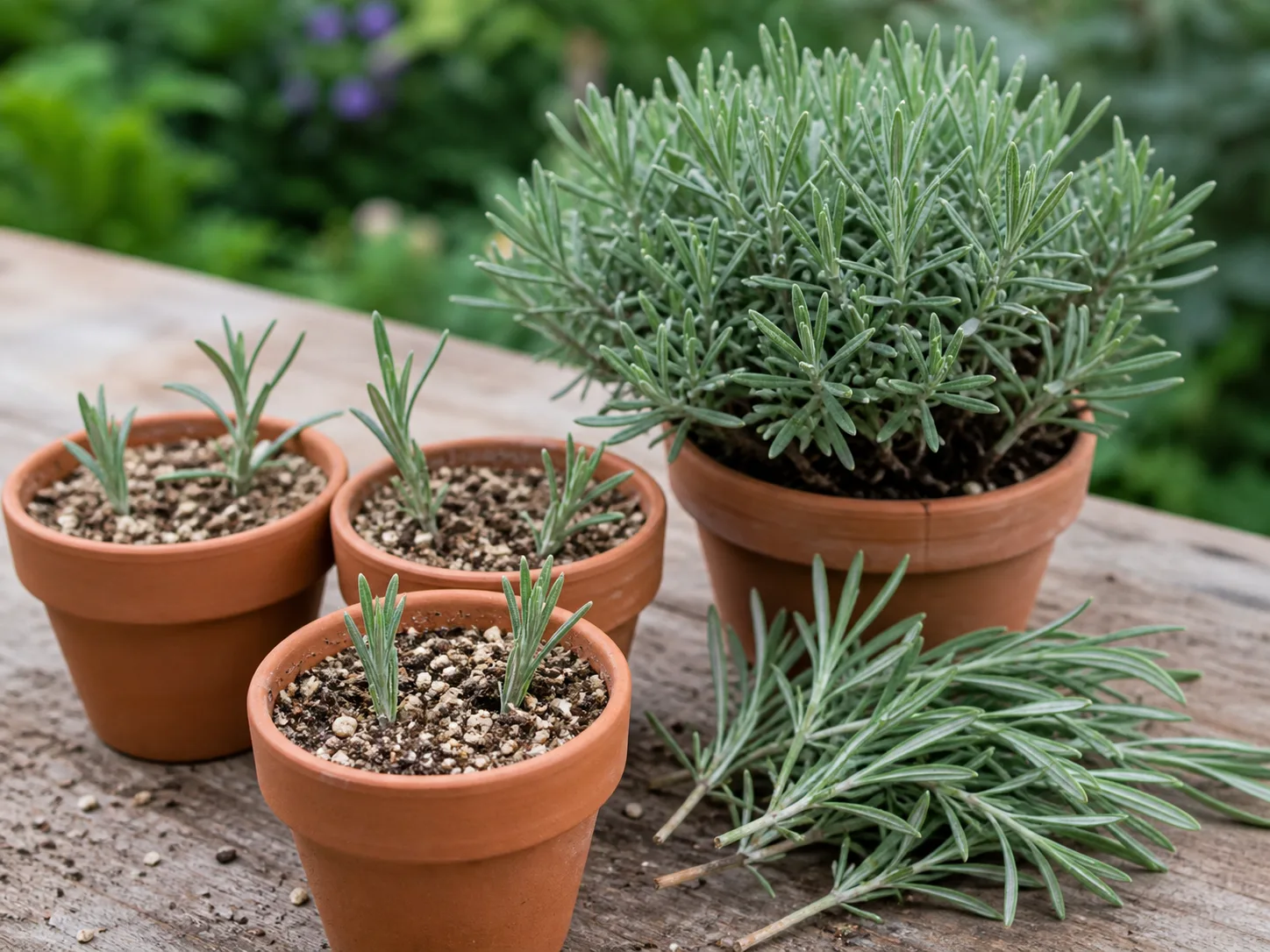
The most reliable way to make more Munstead plants that match the parent is by cuttings. Take semi-ripe stem cuttings in summer from healthy, nonflowering growth. Use a clean blade, remove leaves from the lower part of the stem, and insert the cutting into a small pot of free-draining propagation medium. Keep the medium lightly moist, not soaked, and place the pot in bright shade while roots form. Once new growth and resistance to a gentle tug indicate rooting, gradually move the young plant into more sun.
Choose Cuttings for a True-to-Type Plant
A cutting is a clone of the parent plant, so it preserves the named cultivar’s form and flower traits when the parent is correctly labeled. RHS identifies semi-hardwood cuttings in summer as a way to propagate ‘Munstead’ and notes that plants from cuttings are identical to the parent. Seeds collected from cultivar plants may not be true to type. (RHS cultivar profile; RHS growing guide)
You can sow lavender seed if you enjoy experimenting, but do not count on every seedling being ‘Munstead’. Germination can be slow and uneven, and seedlings need time to grow before flowering. For a seed-starting trial, PureWow’s general lavender guide suggests sowing indoors about eight to ten weeks before the last spring frost, but local germination and transplant timing vary. If the cultivar label matters, buy a plant from a reputable nursery or root a cutting from a known plant. For detailed propagation steps, see our lavender propagation guide. (PureWow)
Protect the Plant Through Winter
In-ground ‘Munstead’ is generally a better cold-climate choice than tender Spanish or French lavenders, but a zone rating is not a guarantee. Purdue lists this cultivar for USDA Zone 5, while plant labels and references may give broader ranges. Soil drainage, snow cover, exposure, and the length of winter wetness all affect survival. The RHS rates the cultivar H5 in the UK system, a different scale from USDA zones; do not treat those labels as interchangeable. (Purdue Arboretum; RHS cultivar profile)
Keep the soil around an in-ground plant free of wet leaf piles and thick organic mulch. Do not prune it hard in fall; leave the leafy mound intact through the coldest weather. If you live where winter rain is persistent, plant on a raised, sharply drained site. In a very exposed garden, a loose covering of evergreen boughs can reduce desiccating wind, but do not wrap the plant in plastic or trap moisture against it.
Container roots experience colder temperatures than roots in garden soil. Move the pot against a sheltered wall, under a roof overhang, or into a cold greenhouse where rain cannot saturate the mix. Keep it cool rather than warm and dark, and water sparingly when the potting mix is dry at depth. Remove any winter covering as the weather warms so new growth receives light and air. See our lavender winter care guide for broader cold-season planning.
Troubleshoot Yellow Leaves, Dieback, and Few Flowers
Start with the site and root zone before changing fertilizer or reaching for a spray. Lavender problems often share a cause: low light, slow drainage, too much water, or a pruning cut that removed the plant’s leafy growth. Look at the whole plant, then check the base and soil.
| What you see | Likely cause to check | First response |
|---|---|---|
| Yellowing lower leaves and a soft, dark crown | Soil stays wet; possible root or crown rot | Stop routine watering, clear wet mulch, and check drainage and roots |
| Brown, crisp tips after a dry spell | Root ball may be too dry, especially in a pot | Check moisture several centimeters down and water thoroughly if dry |
| Long, open stems with few flowers | Not enough direct sun, excess nitrogen, or missed pruning | Improve sun and airflow; stop feeding; trim only leafy growth after bloom |
| Sudden winter collapse | Cold wet soil, exposed container roots, or wind damage | Wait for new growth before pruning; improve drainage and shelter next winter |
| Healthy leaves but few flowers on a young plant | Roots are still establishing or light is inadequate | Keep care steady, confirm sun hours, and allow another season |
Check Roots and Crown Before Adding Water
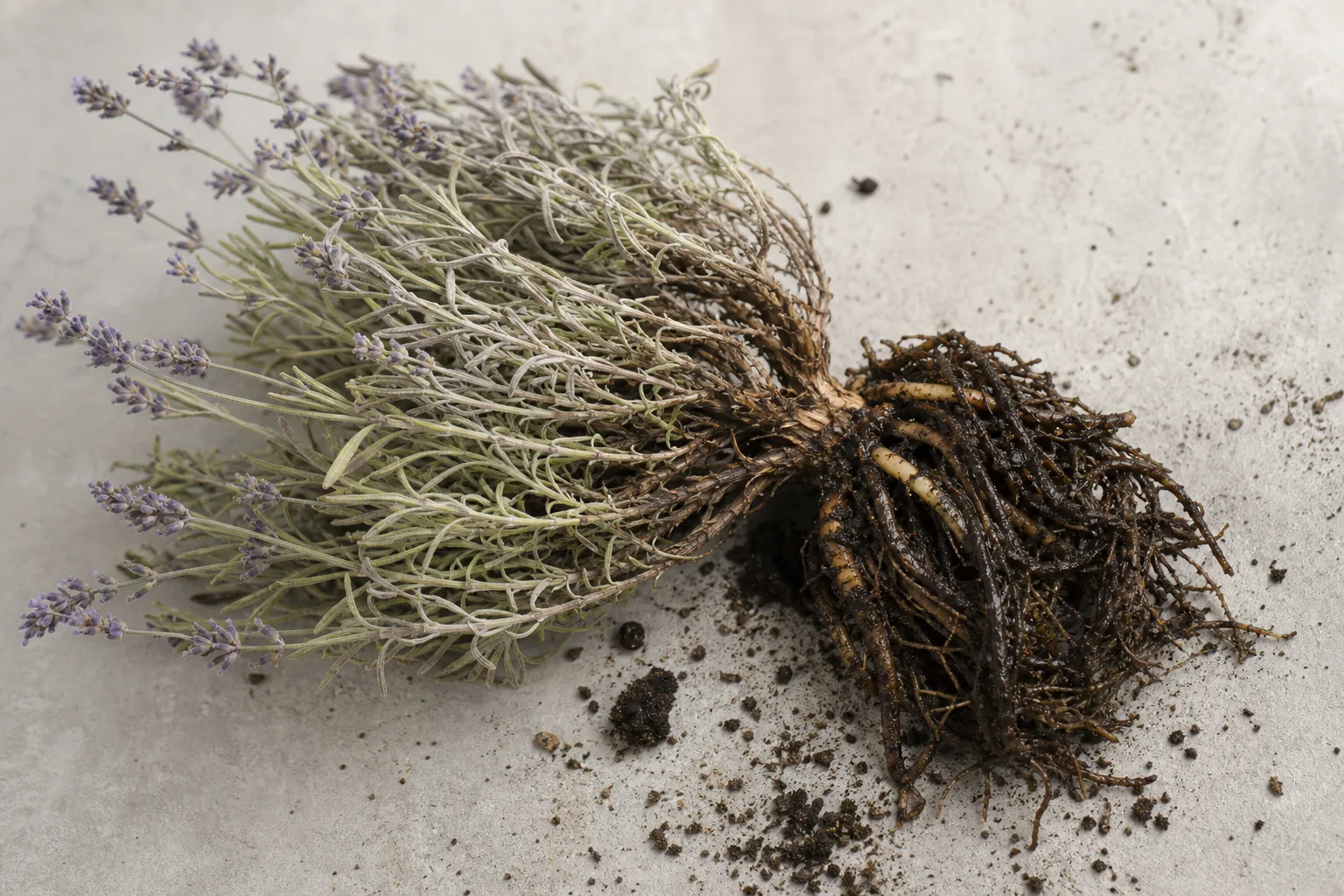
Root rot is more likely when a plant wilts while the soil remains wet than when the soil is dry. NC State Extension lists root rot among English lavender problems and links it to overwatering; it also notes that good air circulation helps prevent leaf spot. (NC State Extension) If the plant is in a pot, slide the root ball out gently if possible. Healthy roots are firm; rotten roots are dark, soft, and may smell sour. If most of the root system is damaged, recovery is uncertain. Improve drainage and remove dead tissue with clean tools, but do not expect a severely rotted plant to rebound.
If foliage browns after a cold winter, wait until active spring growth shows which stems are alive. Scratch a small area of stem bark: green tissue beneath indicates a living section. Prune only dead ends back to living leafy growth. A healthy root system may push new shoots, but bare old wood can remain bare. For unexplained decline, photograph the plant and ask a local extension service to identify whether the problem is disease, winter injury, or site stress.
Watch for Pests, Disease, and Pet Exposure
Lavender is relatively trouble-free when it has sun, drainage, and air movement. NC State lists leaf spot and root rot among potential issues; the RHS cultivar profile also notes possible rosemary beetle and cuckoo spit, the foamy covering made by spittlebugs. Check leaf undersides and new growth during routine pruning. A few insects do not justify broad treatment. Identify the pest first, remove a small affected section when appropriate, and ask a local extension service before applying a pesticide.
Keep pets from chewing the plant or sampling dried flowers. The ASPCA lists lavender as toxic to cats, dogs, and horses and identifies linalool and linalyl acetate as toxic principles; reported signs include nausea, vomiting in dogs and cats, and reduced appetite. Contact a veterinarian or animal poison-control service if a pet eats the plant. (ASPCA Animal Poison Control)
Some English-lavender flowers are used as culinary herbs, but that does not make every garden specimen suitable for food. Use only correctly identified plants grown without pesticides or other treatments that are not labeled for edible crops, and keep them away from pets. The simpler choice for a mixed-use garden is to grow culinary lavender in a clearly labeled, untreated spot and keep harvest tools separate from ornamental pesticide use.
Conclusion
Grow Munstead lavender as a sun-loving, dry-rooted subshrub. Plant it in spring in a sunny spot where rain drains away, water while it establishes, and then water only when conditions call for it. In containers, provide large drainage holes and protect the roots from winter rain. Trim lightly after flowering while every cut can still reach leafy growth. If a plant begins to decline, inspect sun, soil, and roots before adding water or fertilizer. Those choices let this compact English lavender keep its shape, fragrance, and summer flowers for years.